

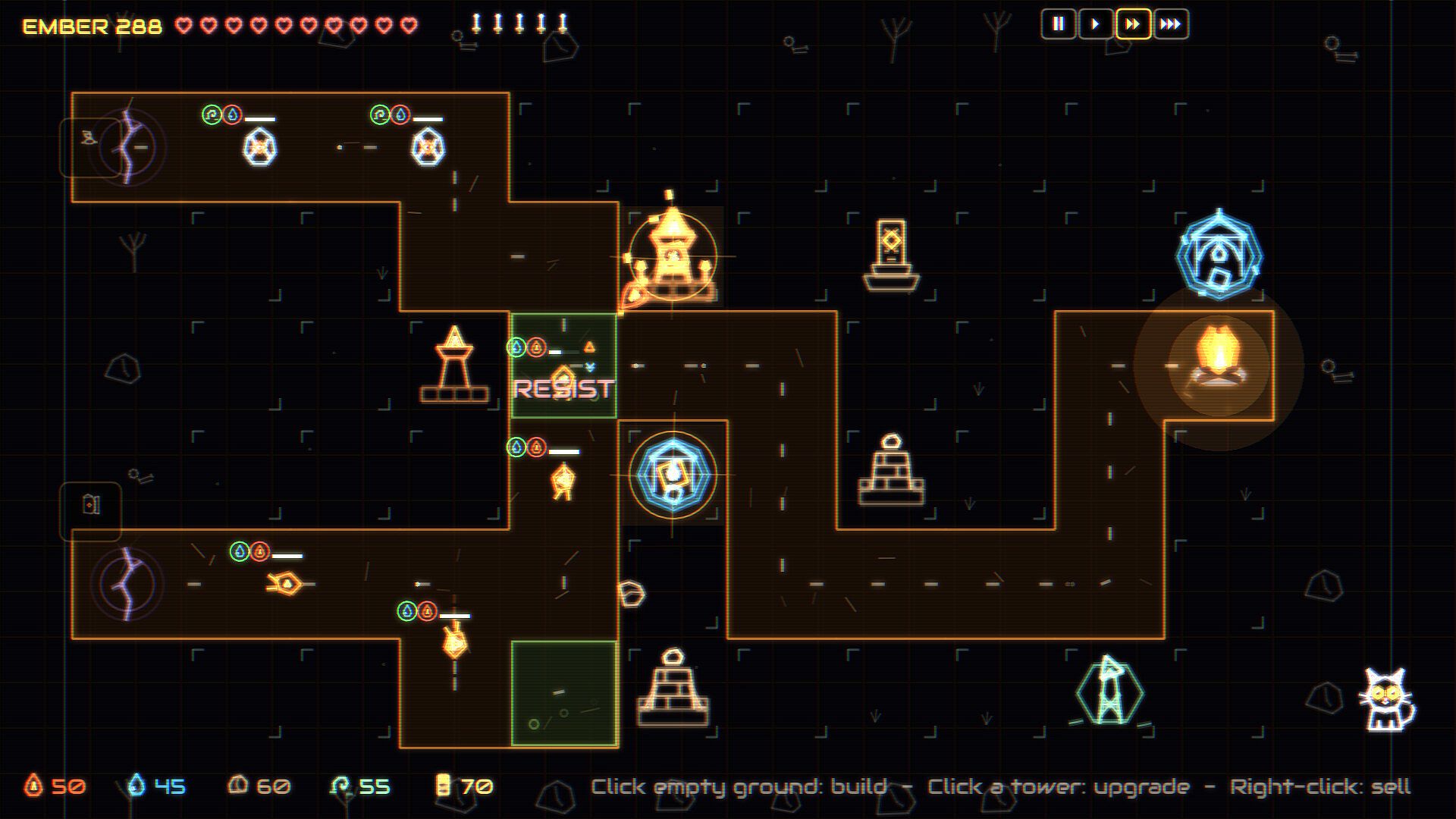
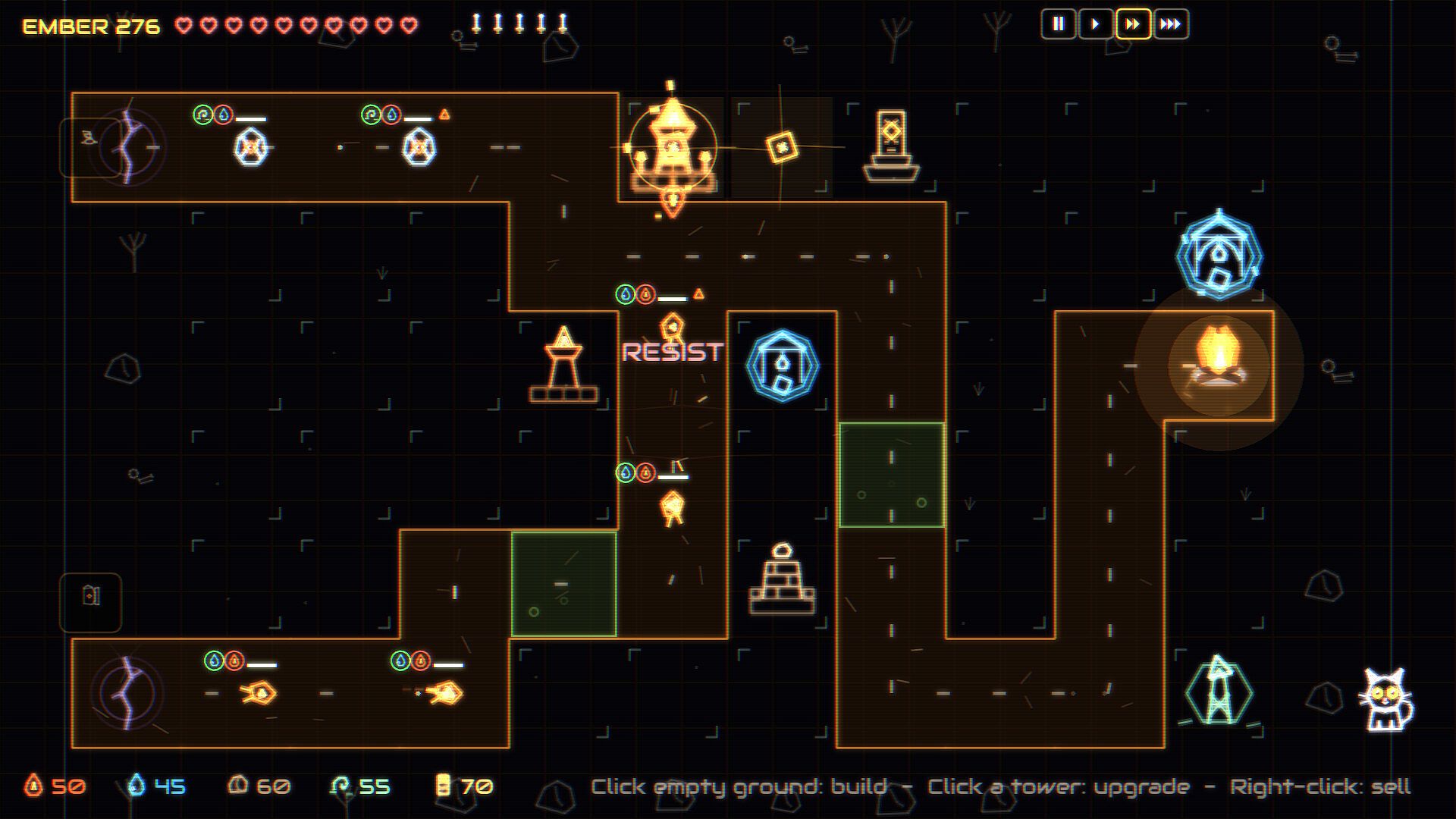
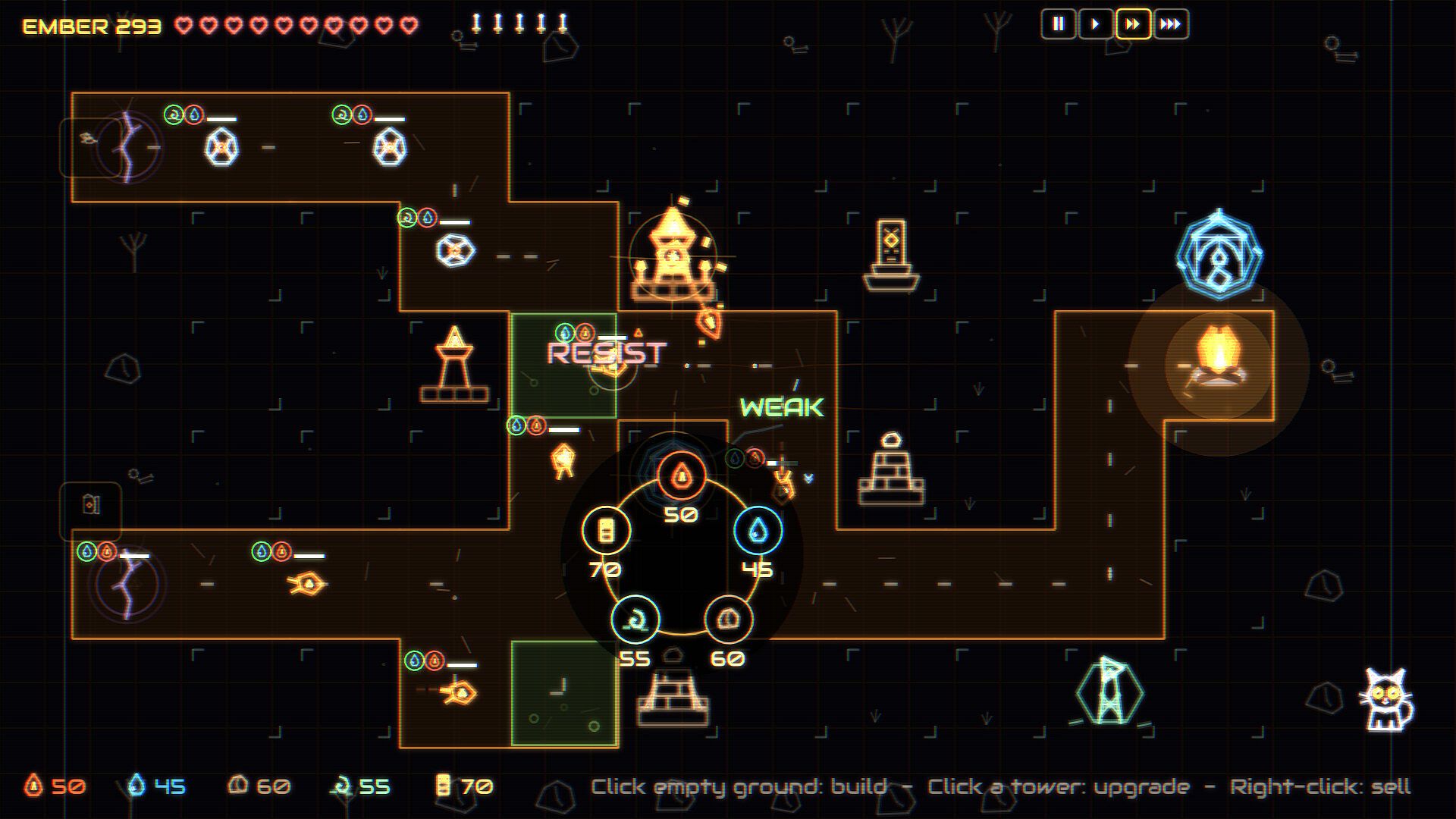
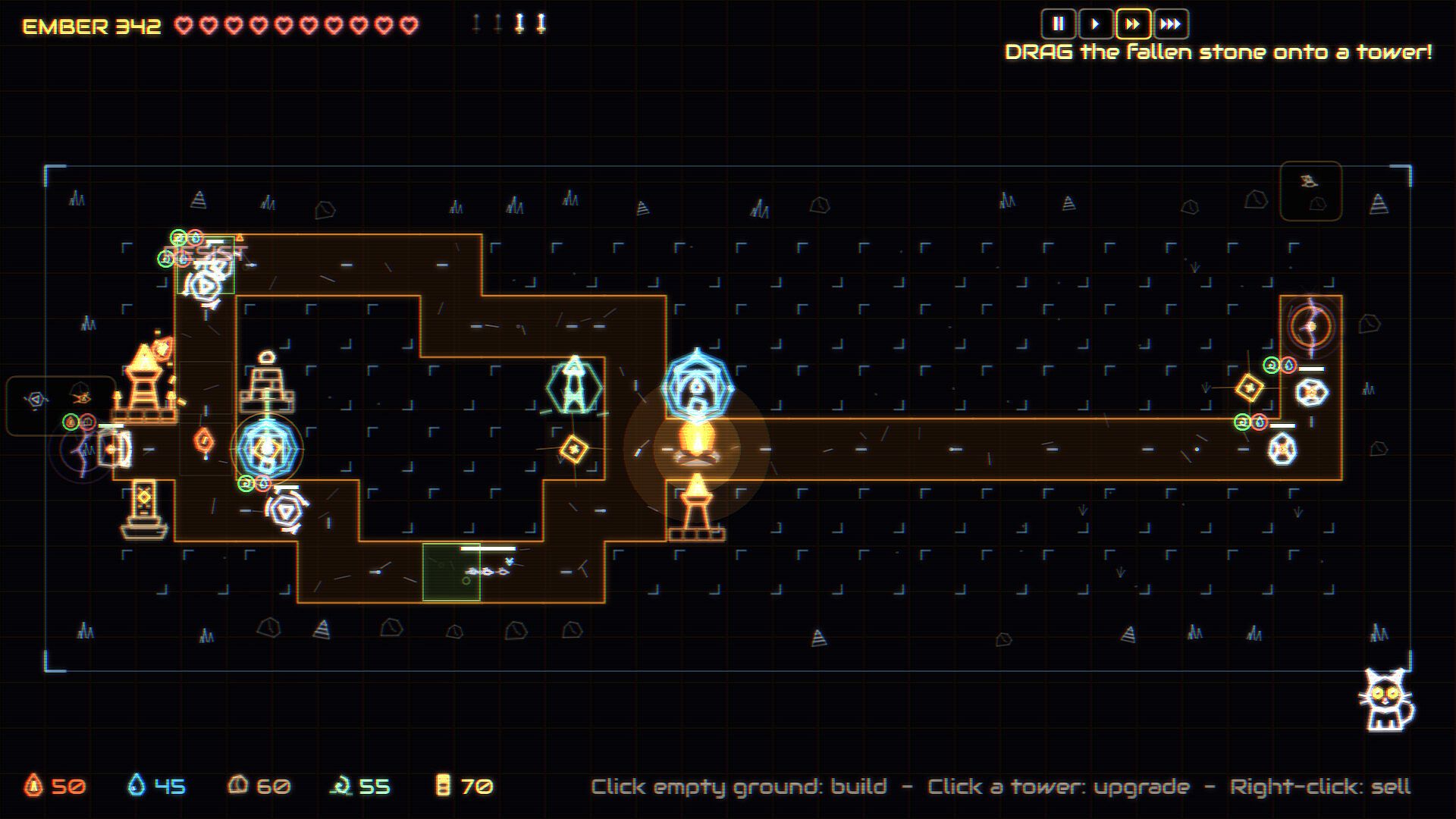
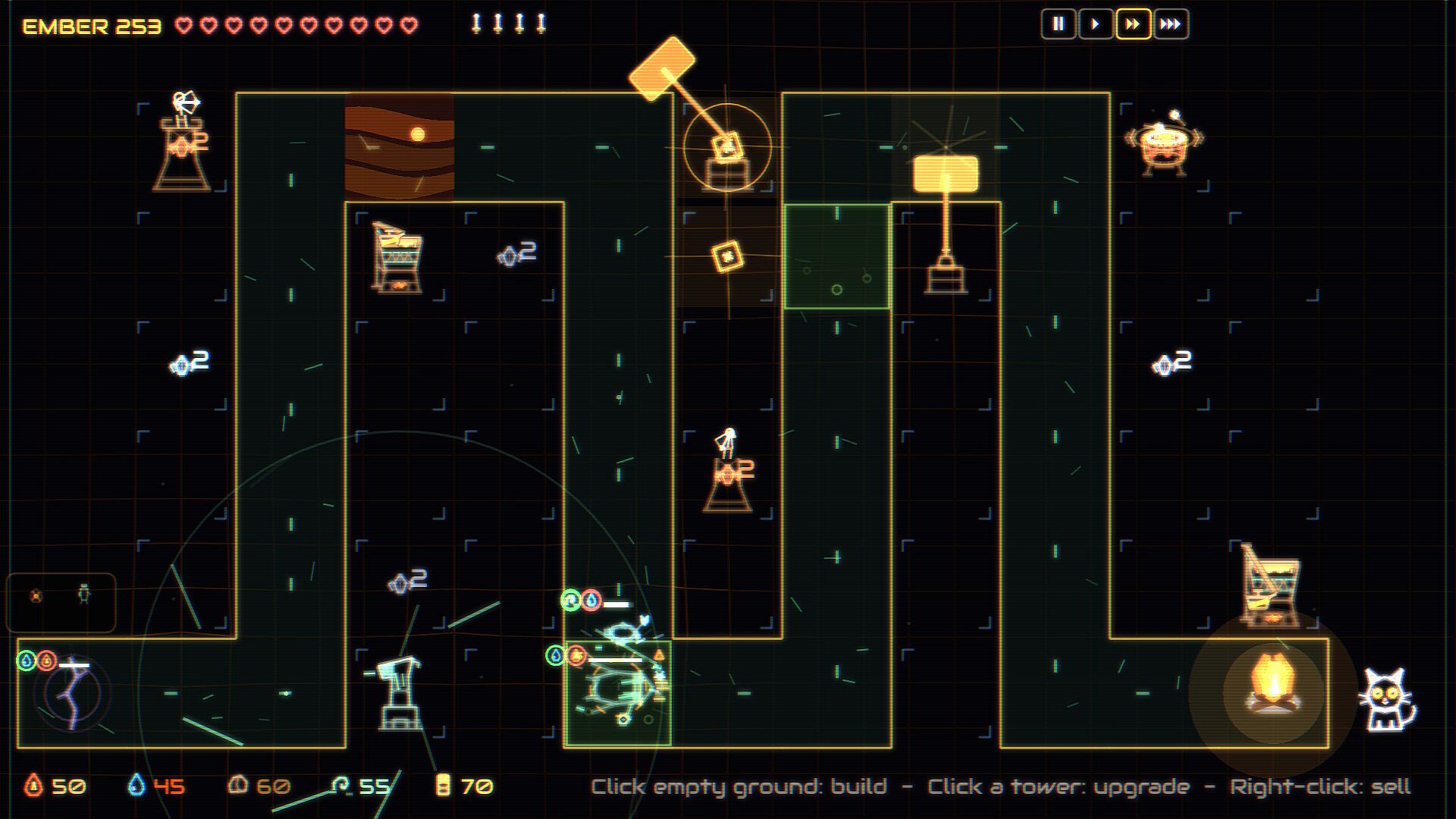

HEARTHWATCH is a tower defense strategy game for PC in which players serve as the Keeper, protecting the Hearth from waves of Ashen enemies that emerge from the Ash Rift. The core loop involves placing towers on a board that changes during combat, fusing elemental effects into hybrid towers, and progressing through branching campaigns that span two distinct ages with separate mechanics and card pools.
Gameplay
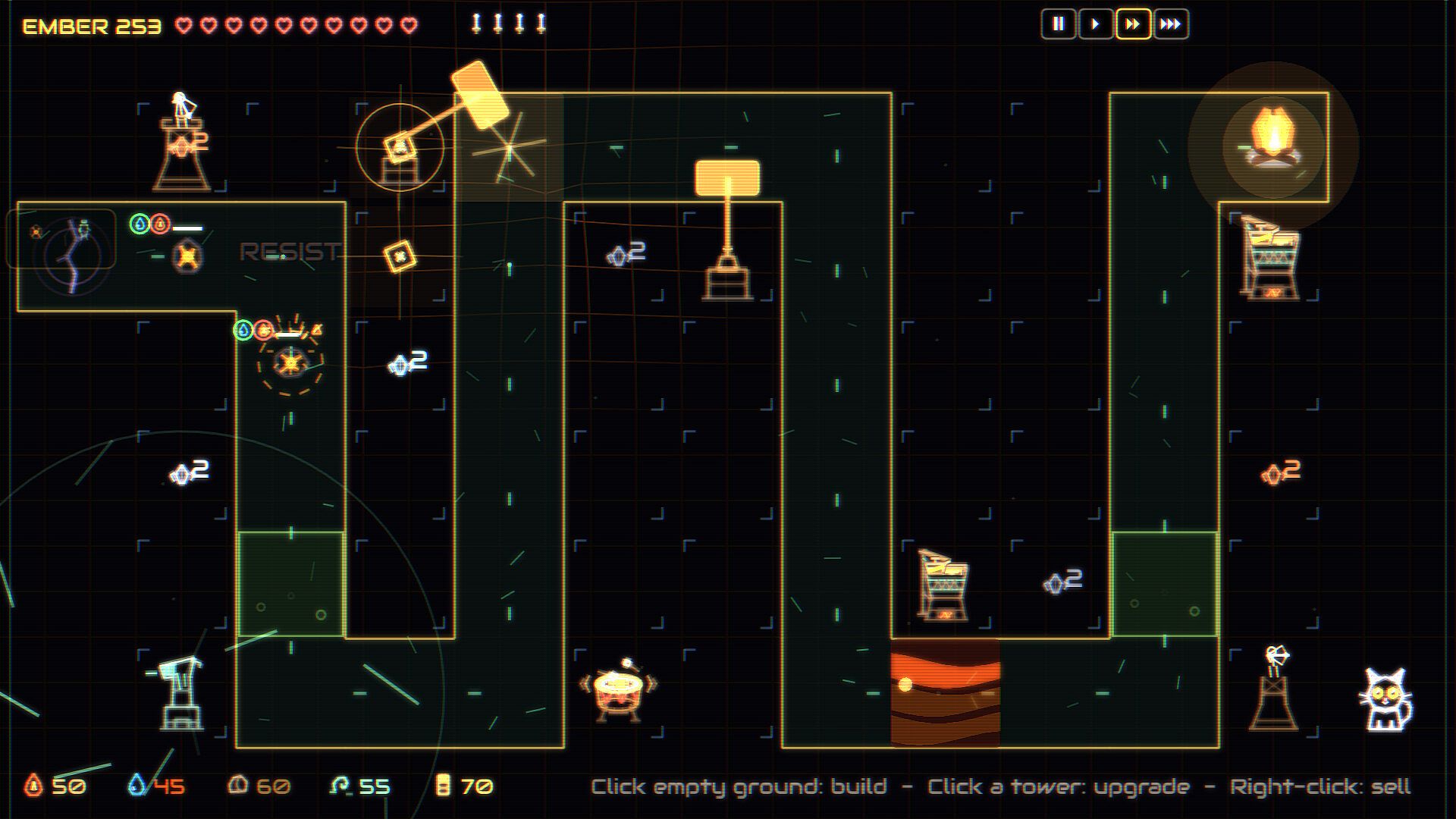
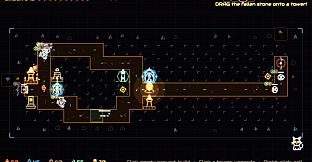
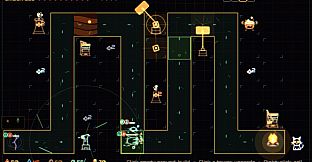
The battlefield does not remain fixed. When pressure builds against the Ashen, the Rift can split the ground and introduce a new lane already occupied by enemies. Players receive a telegraph warning and compensation for lost ground before adapting their defenses to the altered layout.
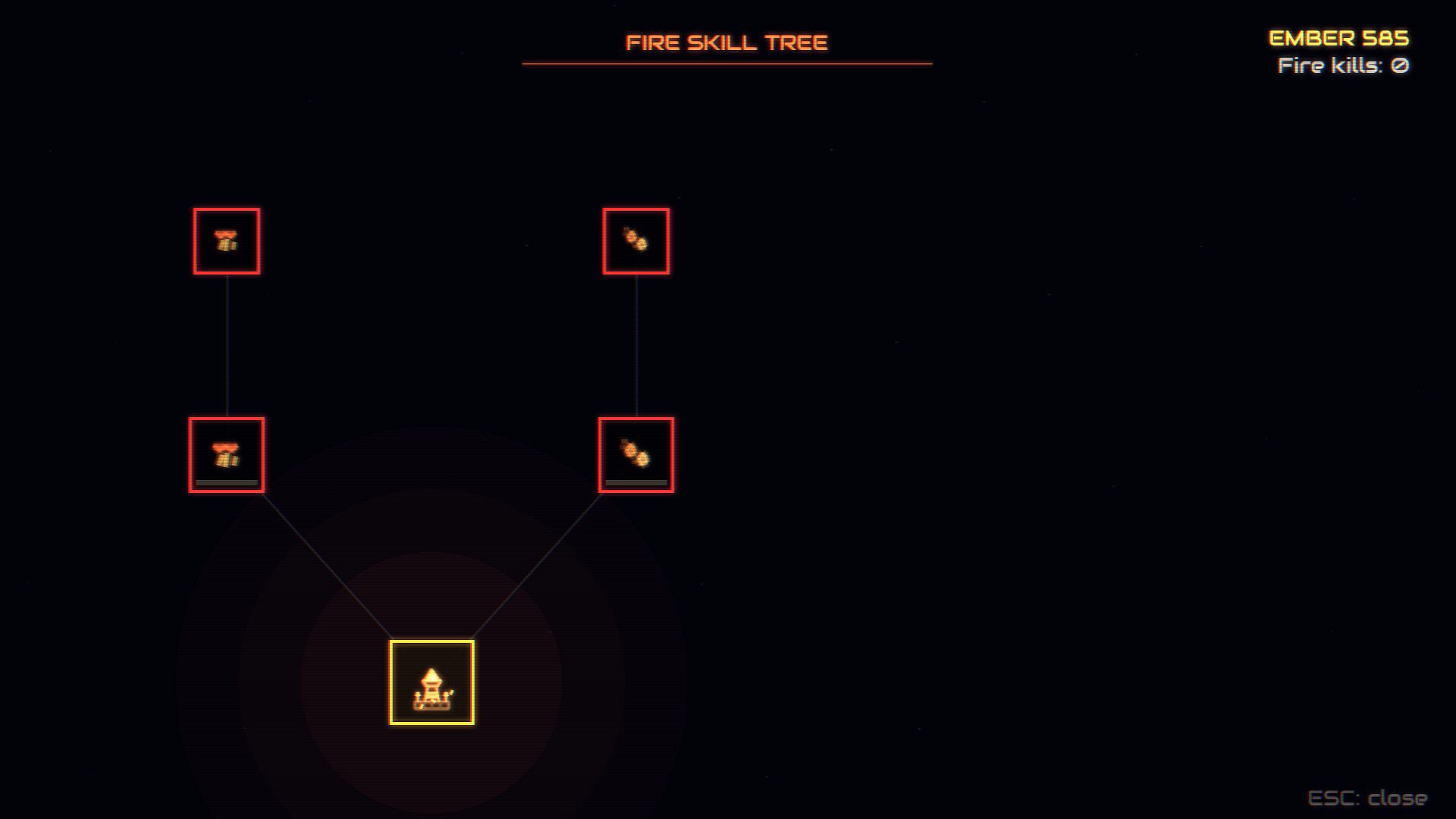
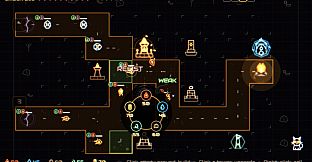
Towers operate within an elemental cycle of five elements that create six possible hybrid fusions when placed adjacent to one another. These combinations include Steam, Magma, Wildfire, Mire, Storm, and Sandstorm. Hybrids bypass many enemy resistances that limit single-element setups and provide the primary solution to certain Rift threats.
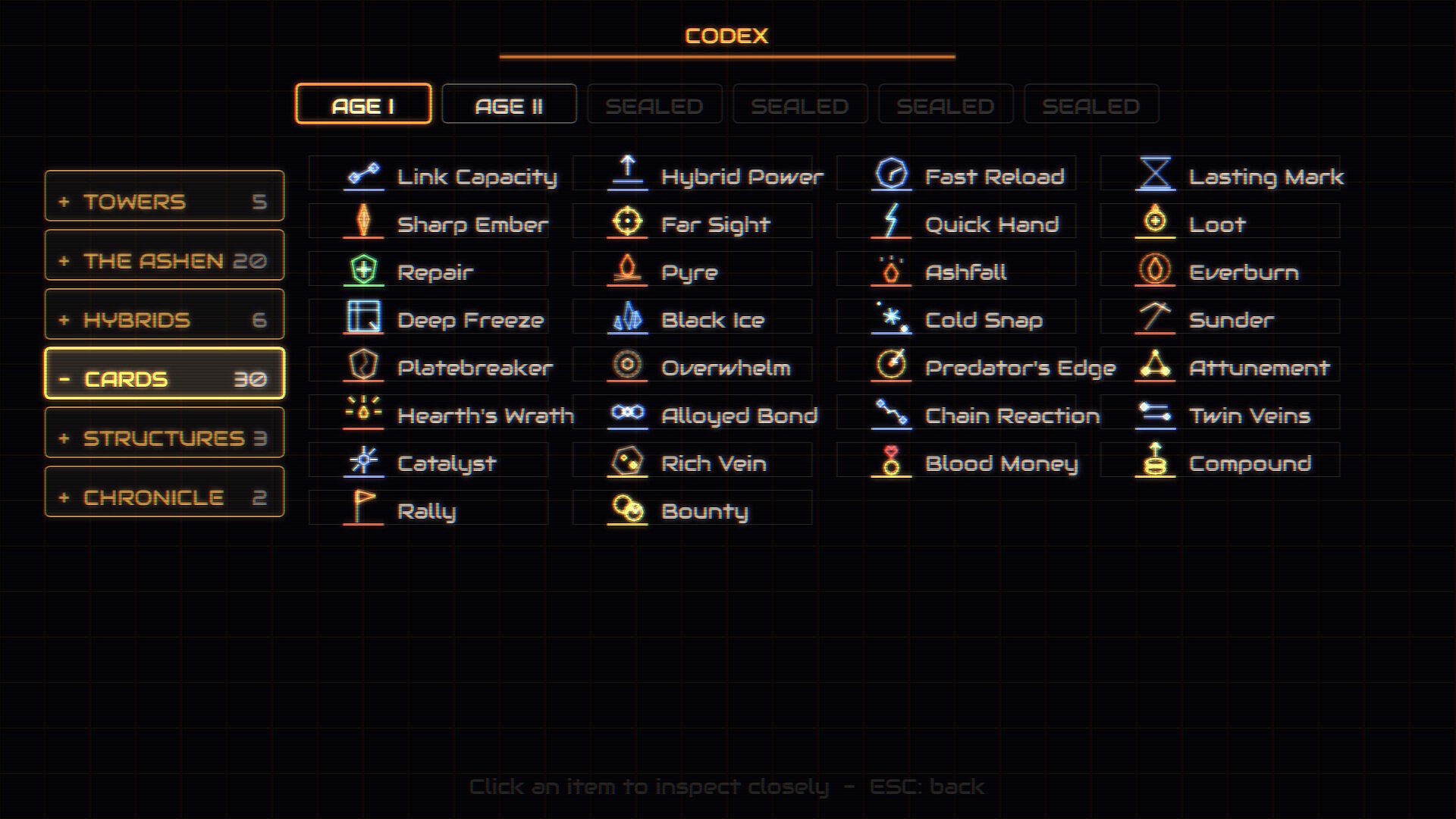
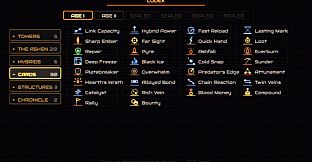
Age I uses stone, wood, and fire towers that emphasize the elemental cycle. Age II shifts focus to material properties and armor interactions. Towers in this age draw from named alloys smelted in a crucible between waves. Heat and brine states accumulate on enemies and can be spent for effects, while mobile warbands advance along lanes rather than remaining stationary. Twenty-two cards appear only in Age II and have no counterparts in the first age, requiring players to adjust established habits.
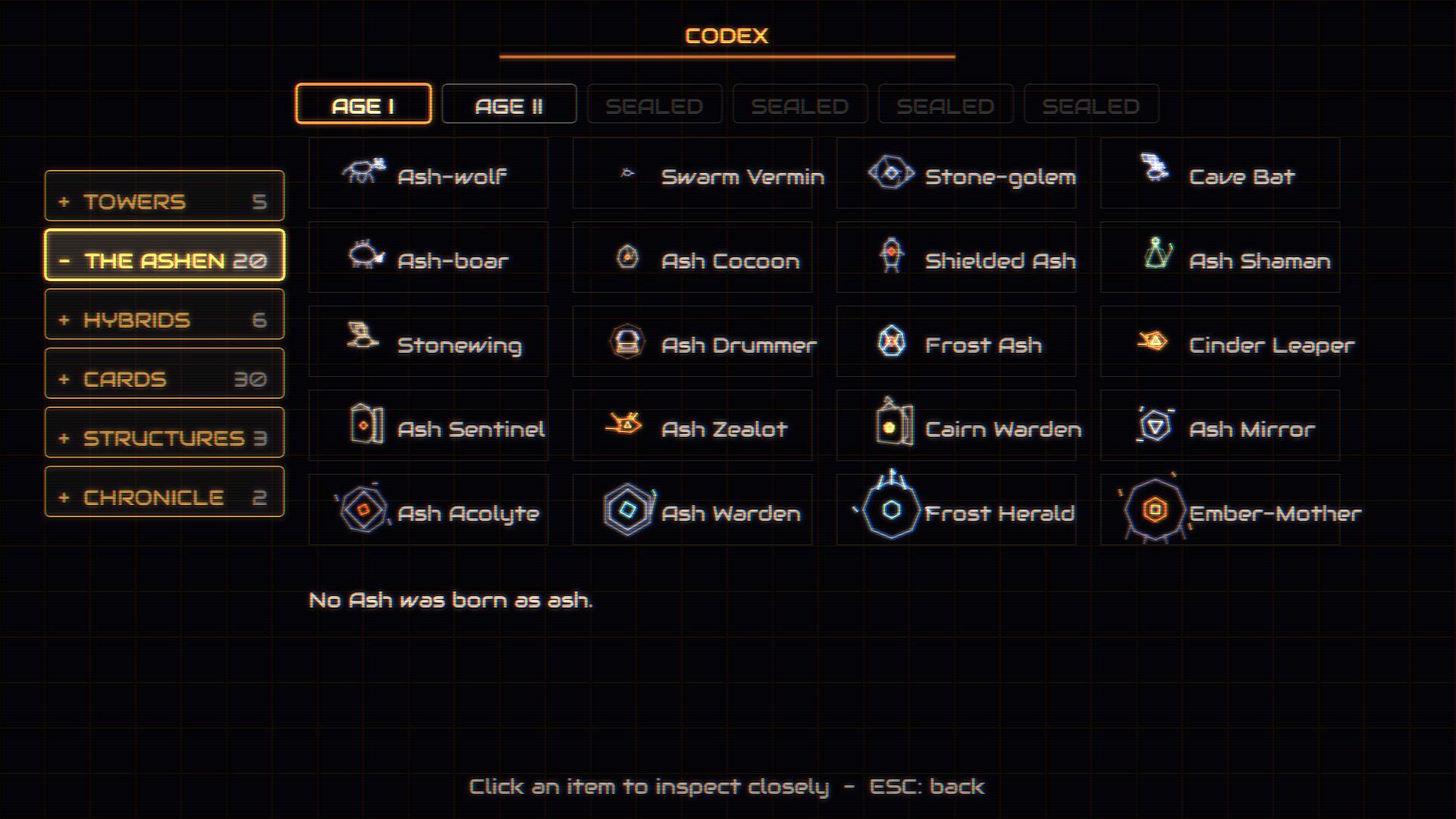
Between battles, players draft from an age-specific deck. Rewards favor conditional triggers such as hybrid kills or warband survival. Rarity increases with depth in the run. Boss encounters feature the Ash Warden, the Frost Herald, and the Tarnished King. Each boss alters resistances across phases and brings escorts, turning the fight into a sequence of distinct problems rather than a single damage check.
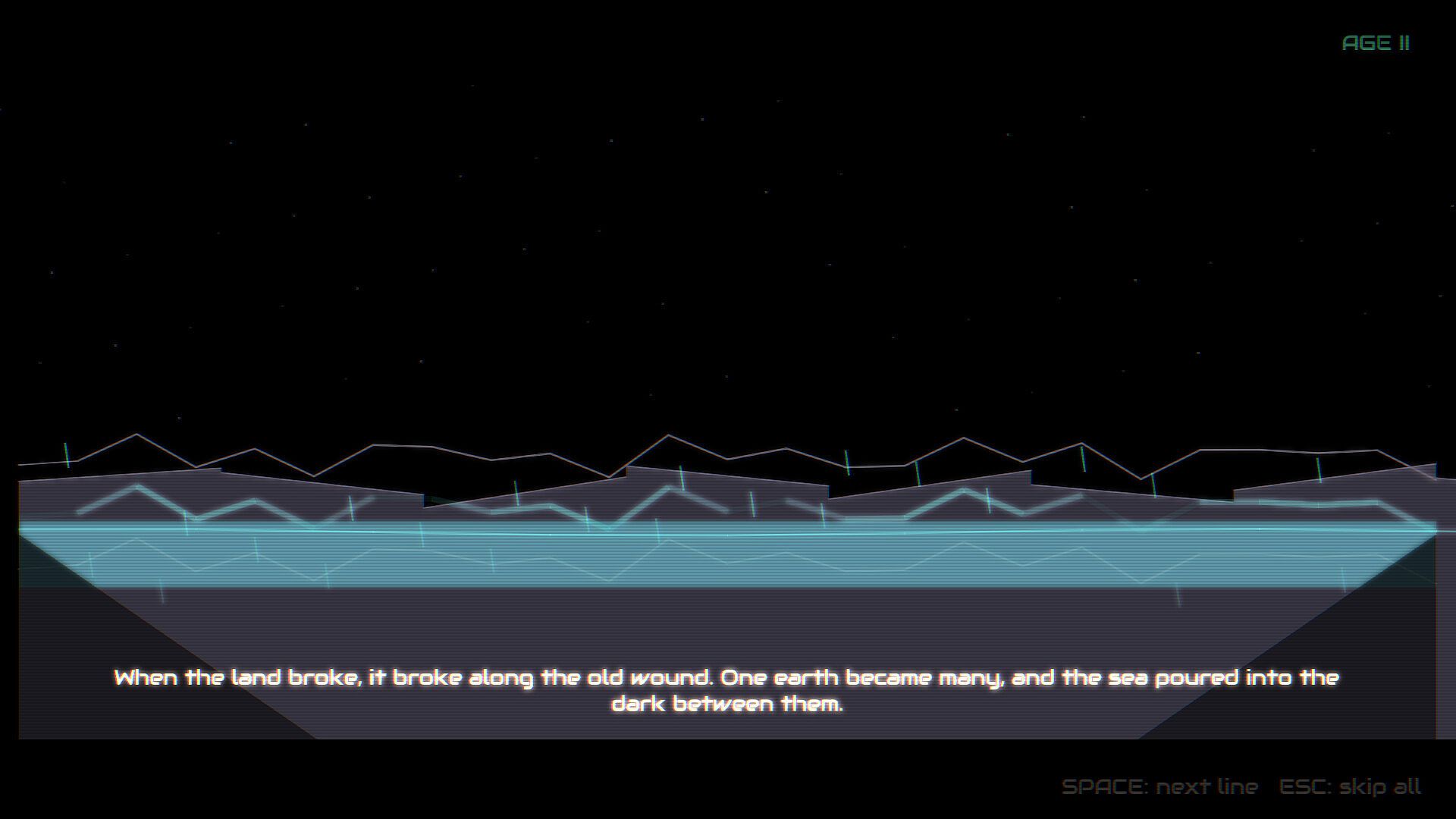
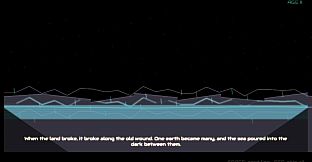
A companion cat named DUMAN observes tower placement, announces leaks, and provides commentary without offering direct assistance. The presentation uses live-rendered vector art with every line generated at runtime, accompanied by narrated chronicle interludes.
Game Modes
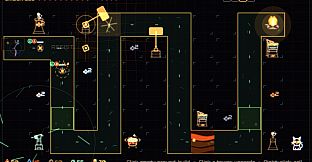
HEARTHWATCH offers a single-player experience built around two fourteen-layer branching campaigns, one for each age. Players select paths through sequences of battles, ember veins, warded chests, and gates that restrict passage based on build compatibility. The structure functions as a roguelite run rather than a traditional level select, with drafting and progression tied to the chosen age.
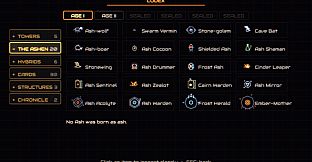
Multi-route maps and telegraphed waves form the foundation of each encounter. Early calls on incoming threats provide bounties. The two campaigns maintain separate towers, enemies, bosses, and cards, with a total of ten towers, twelve hybrid fusions, and thirty-nine enemies across both ages. Fifty-two upgrade cards support the drafting system that grows stricter in rarity as runs advance.
Visual Style and Presentation
Live-rendered vector artwork defines the aesthetic, eliminating pre-baked textures in favor of runtime line drawing. Interface and subtitles support English and Turkish, while full narration appears in English. The system requirements remain modest, with minimum specifications including a 2.0 GHz dual-core processor, 2 GB RAM, and OpenGL 2.1 compatibility on Windows, macOS, or Linux.
Is It Worth Playing?
HEARTHWATCH targets players who enjoy tower defense combined with roguelite progression and adaptive board management. The mid-battle map changes and age-specific rule shifts create repeated need for fresh strategies within a single run. The branching campaign structure rewards experimentation with hybrid towers and conditional card effects while presenting multi-phase bosses that test board flexibility rather than raw output.
With no user reviews available ahead of the planned March 2027 release, reception remains unconfirmed. The game supports single-player only and includes Steam achievements along with cloud saves. Those drawn to elemental fusion systems, dynamic lane creation, and the contrast between the two ages will find the most direct appeal in its verified mechanics.