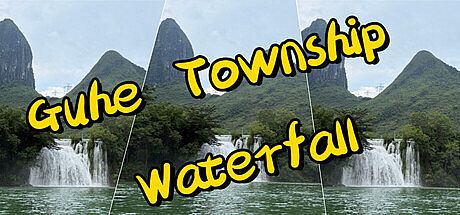


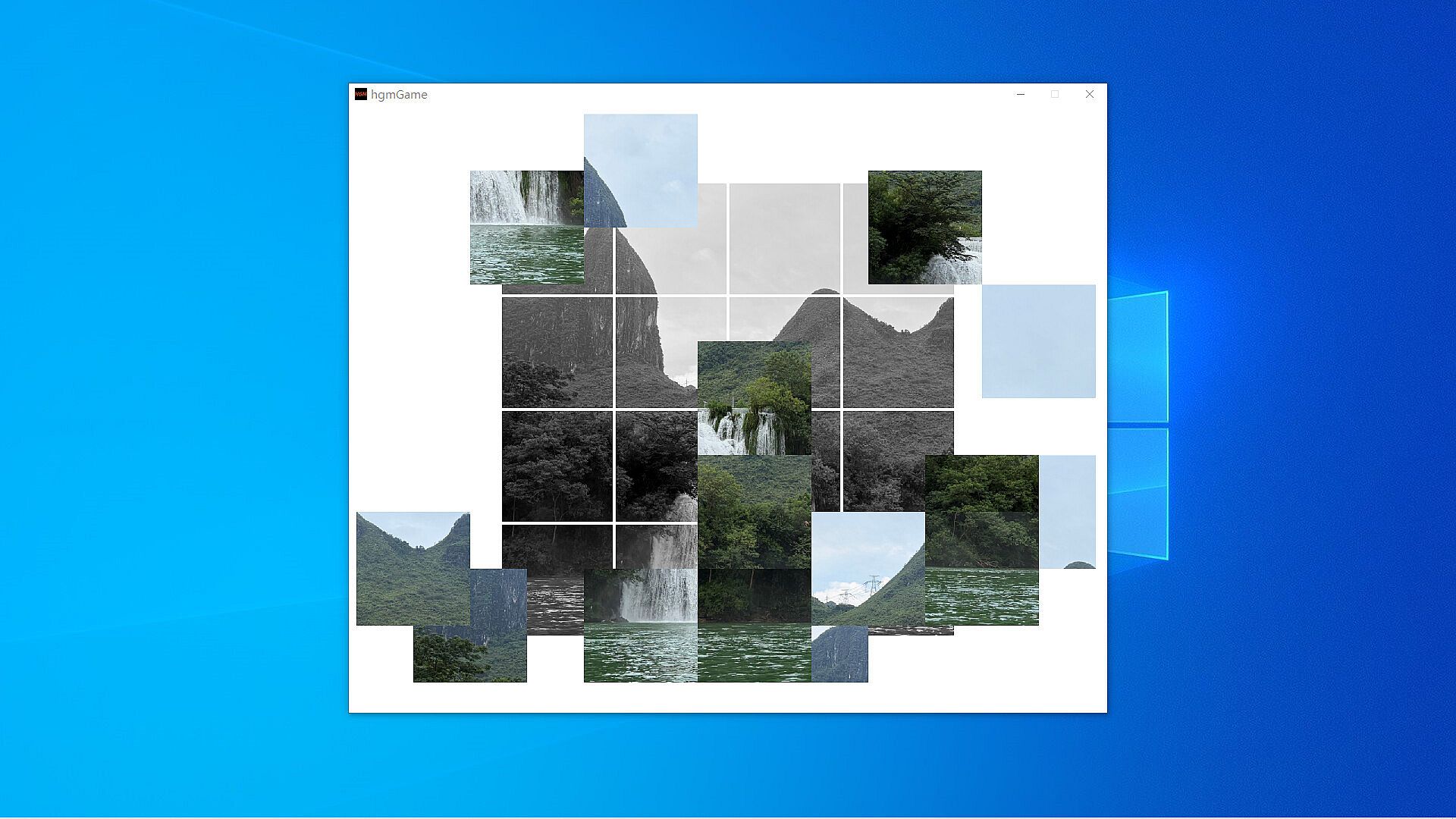
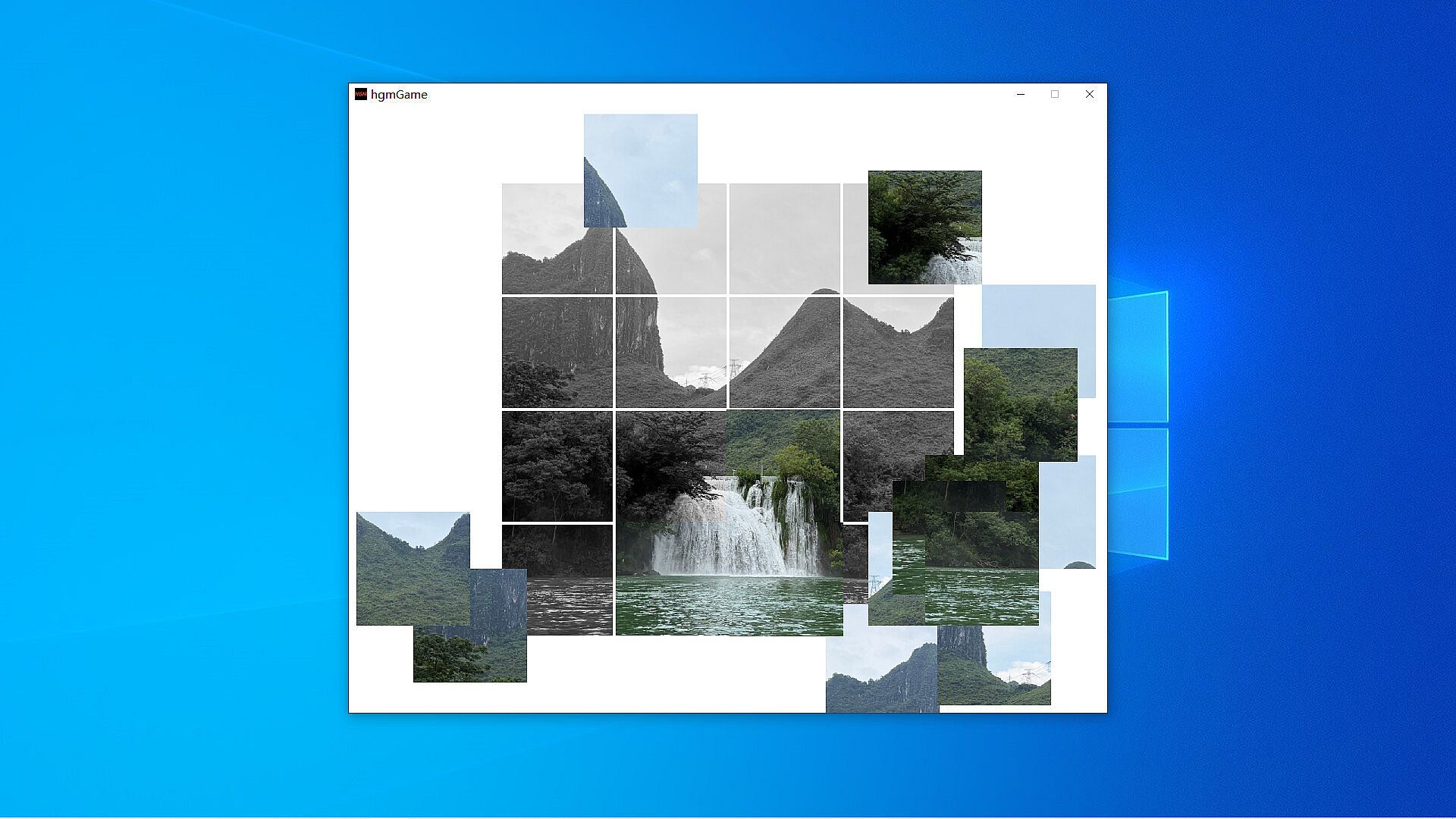
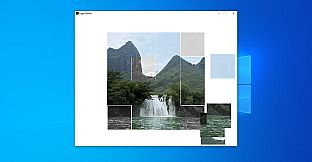
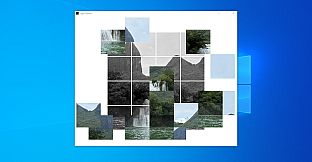
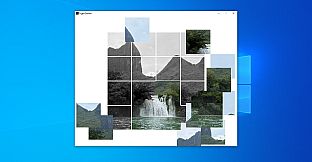
Guhe Township Waterfall is a casual puzzle game developed for PC that challenges players to reassemble a scenic image of a real-world waterfall through straightforward piece placement. The title draws from the actual Guhe Township Waterfall, also called the Qingshui River Waterfall, situated in Dahua Yao Autonomous County within Hechi City, Guangxi, inside the Hongshui River Hundred-Mile Gallery scenic area. Players restore a photograph of this natural landmark by manipulating sixteen scrambled fragments until the full picture returns to its original state.
Gameplay
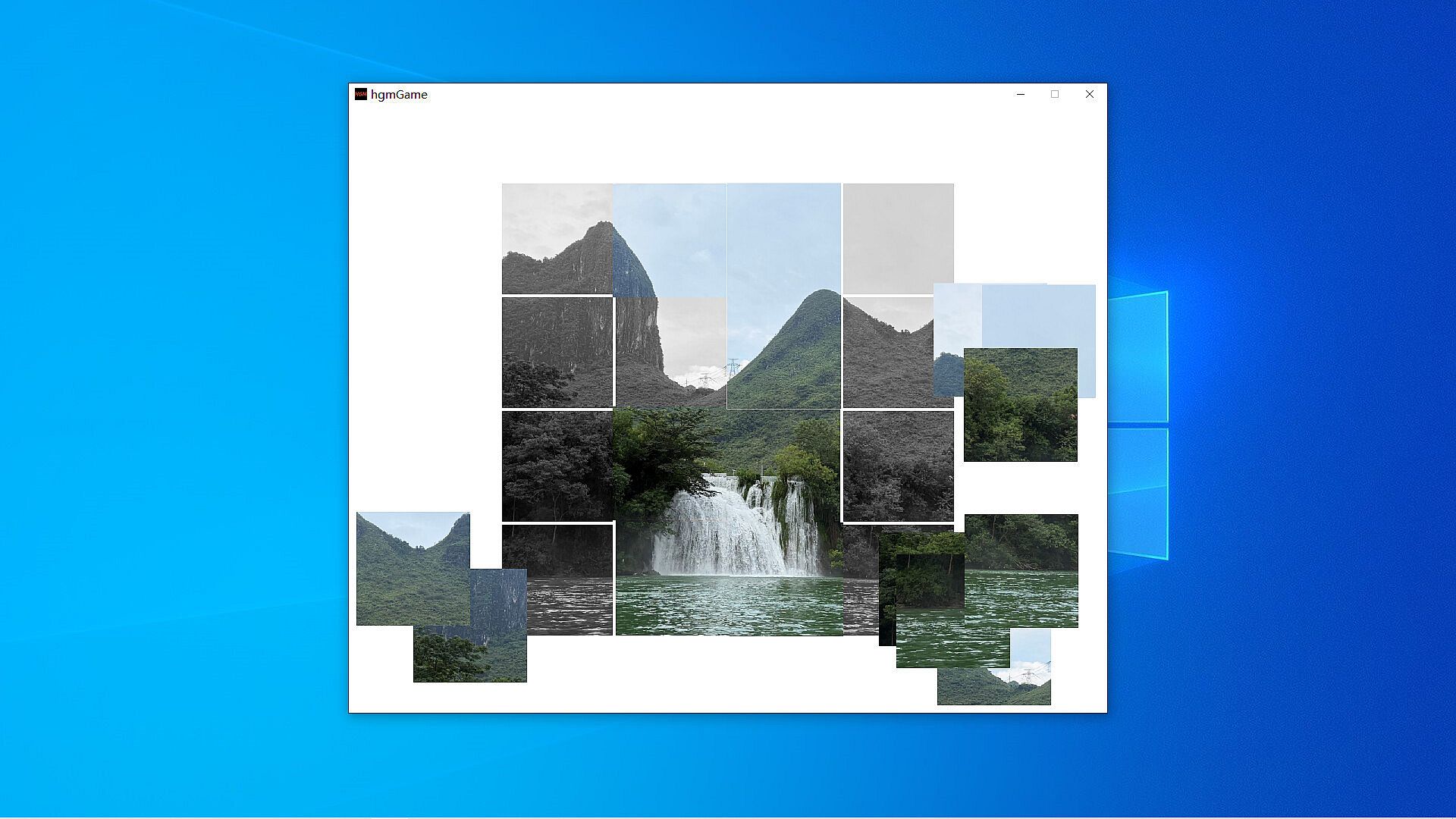
The core loop centers on visual restoration of the waterfall photograph. After selecting start, the main image fades to grayscale while the sixteen colored fragments scatter across the screen in random positions. Each fragment represents a portion of the original scene, and the objective requires matching every piece exactly to its correct location through direct dragging.
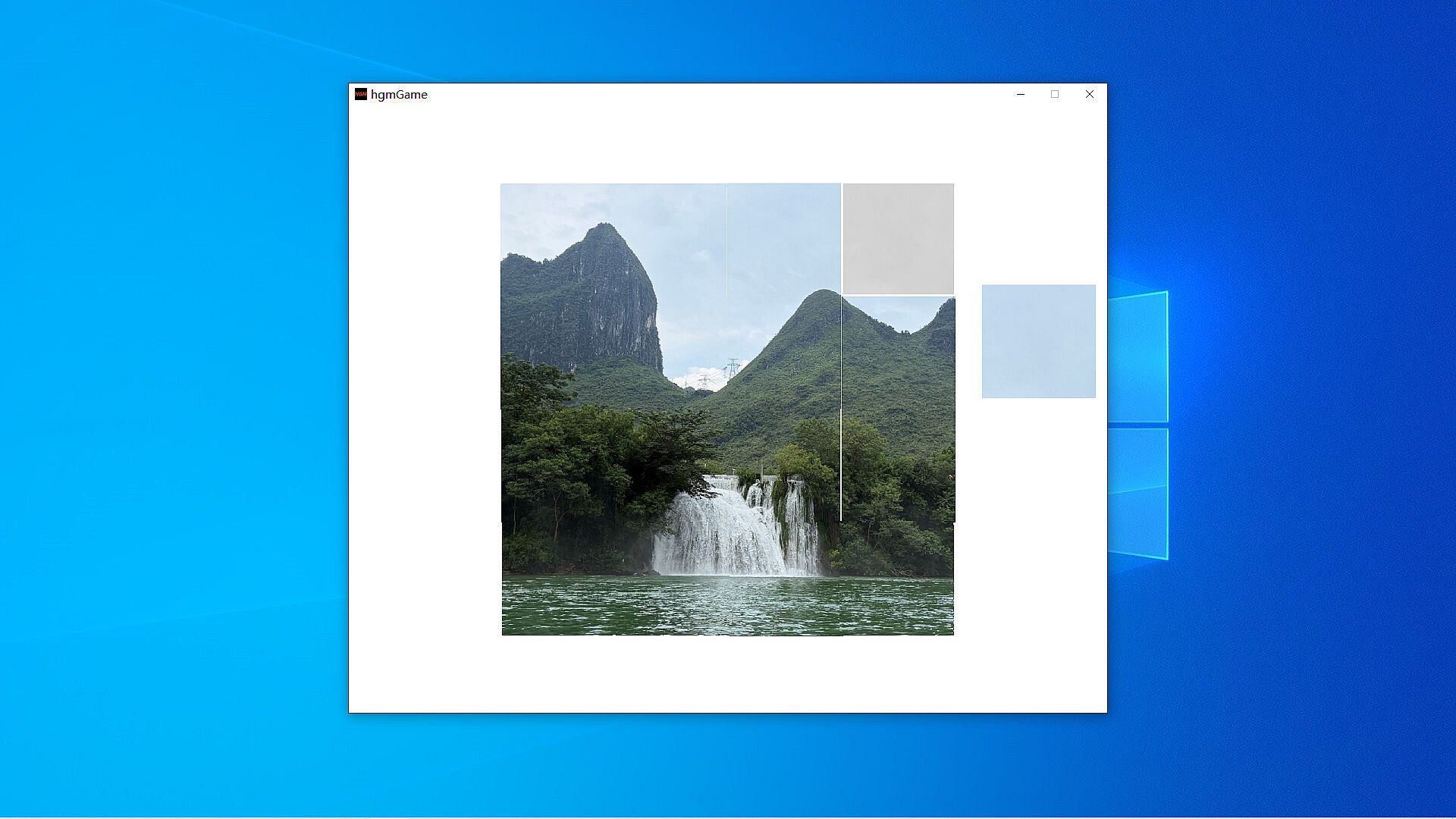
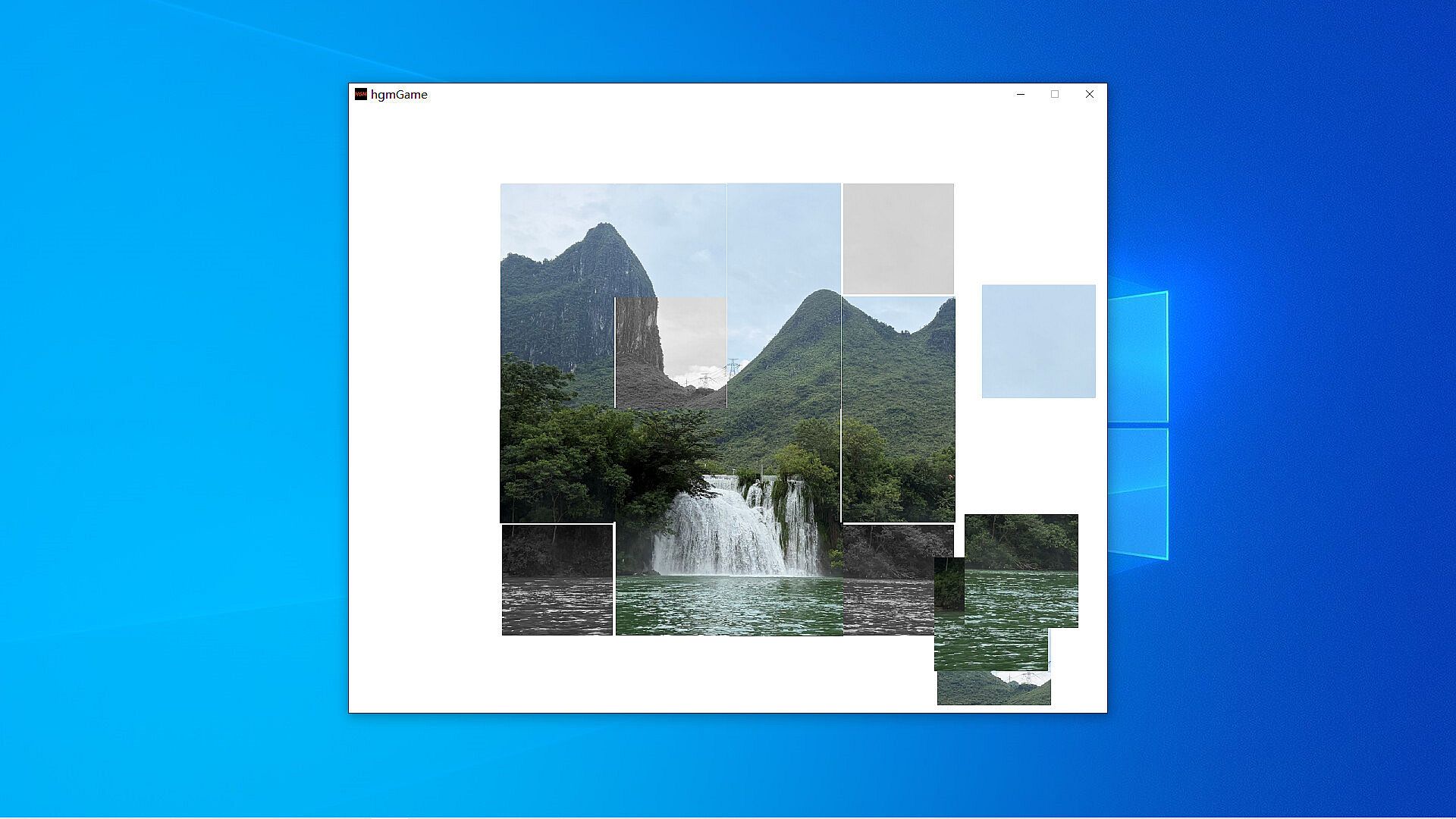
Interaction stays minimal and precise. Selecting a fragment allows free movement across the play area, with placement succeeding only when the piece aligns perfectly with its intended spot. The process continues sequentially or in any order until the complete image snaps into clarity and color returns. No timers, scoring systems, or additional constraints appear during a session, which keeps the focus on spatial recognition and steady progress.
Graphics emphasize the waterfall's natural beauty, with the fragments preserving fine details of water flow, surrounding rock formations, and vegetation once correctly positioned. The low system demands make the experience accessible on modest hardware, suiting short play sessions or repeated attempts without performance concerns.
Game Modes
The game operates as a single continuous puzzle experience without separate named modes or variations. Each session follows the same scramble-and-restore structure, with the random distribution of the sixteen fragments providing natural replay differences from one attempt to the next.
Completion triggers an end state where the full colored image displays. From there, the option to repeat the puzzle immediately restarts the process with a fresh random arrangement. This built-in repetition serves as the primary way to extend playtime, allowing players to refine their approach or simply enjoy the visual reveal multiple times in succession.
No cooperative, competitive, or alternate rule sets exist. The design remains strictly single-player and self-contained, centered entirely on the one waterfall image and its fragment mechanics.
Visual Presentation and Accessibility
The title prioritizes clean presentation of the landmark photograph. Fragmentation into exactly sixteen pieces balances challenge with approachability, avoiding overly complex divisions that might frustrate casual users. Piece edges align clearly once placed correctly, giving immediate visual feedback on accuracy.
Controls rely on standard mouse input for selection and dragging, with no keyboard requirements or layered menus interrupting the flow. The interface stays minimal, directing attention to the puzzle itself rather than navigation elements. This simplicity extends to all age groups, including those seeking light mental engagement without steep learning curves.
Is It Worth Playing?
Guhe Township Waterfall suits players who enjoy short, focused puzzle sessions built around scenic imagery. The straightforward drag-and-place mechanic delivers consistent satisfaction through incremental progress toward the restored photograph, and the random scrambling ensures each attempt feels distinct despite the fixed image.
Its low hardware requirements and absence of time pressure or failure states make it particularly fitting for relaxed play, quick breaks, or repeated short sessions. Those drawn to casual puzzle titles that highlight real-world locations will find the core loop reliable and undemanding. The experience offers no ongoing updates or additional content layers, remaining a self-contained puzzle centered on one landmark.
Overall, the game provides steady value for its narrow scope. Puzzle enthusiasts seeking uncomplicated restoration challenges with attractive natural visuals will likely appreciate the direct approach and easy accessibility on PC.