


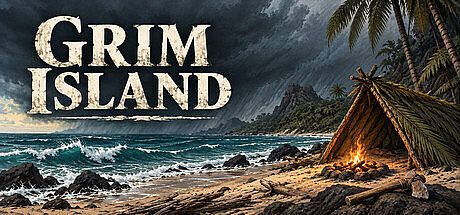


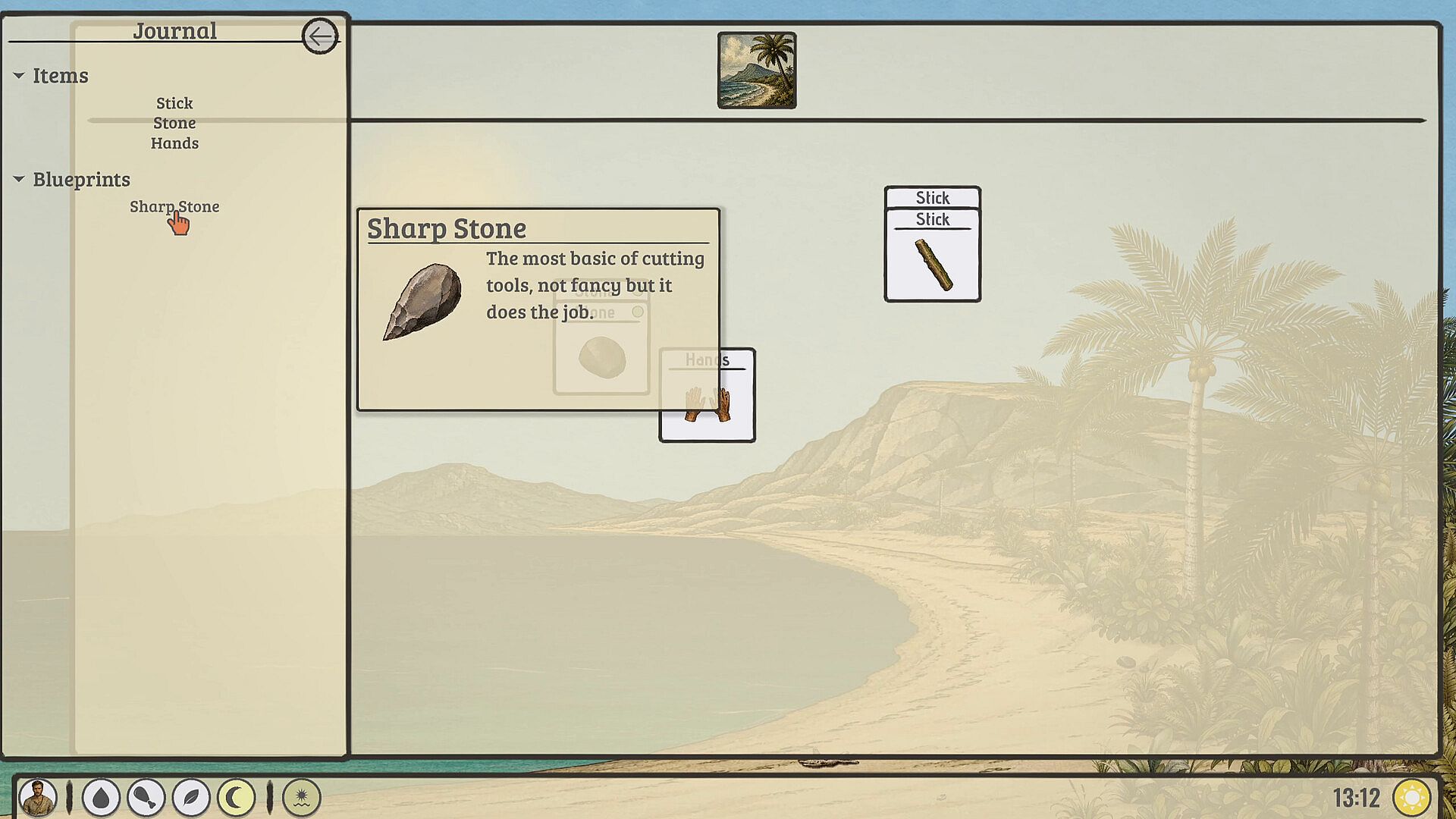
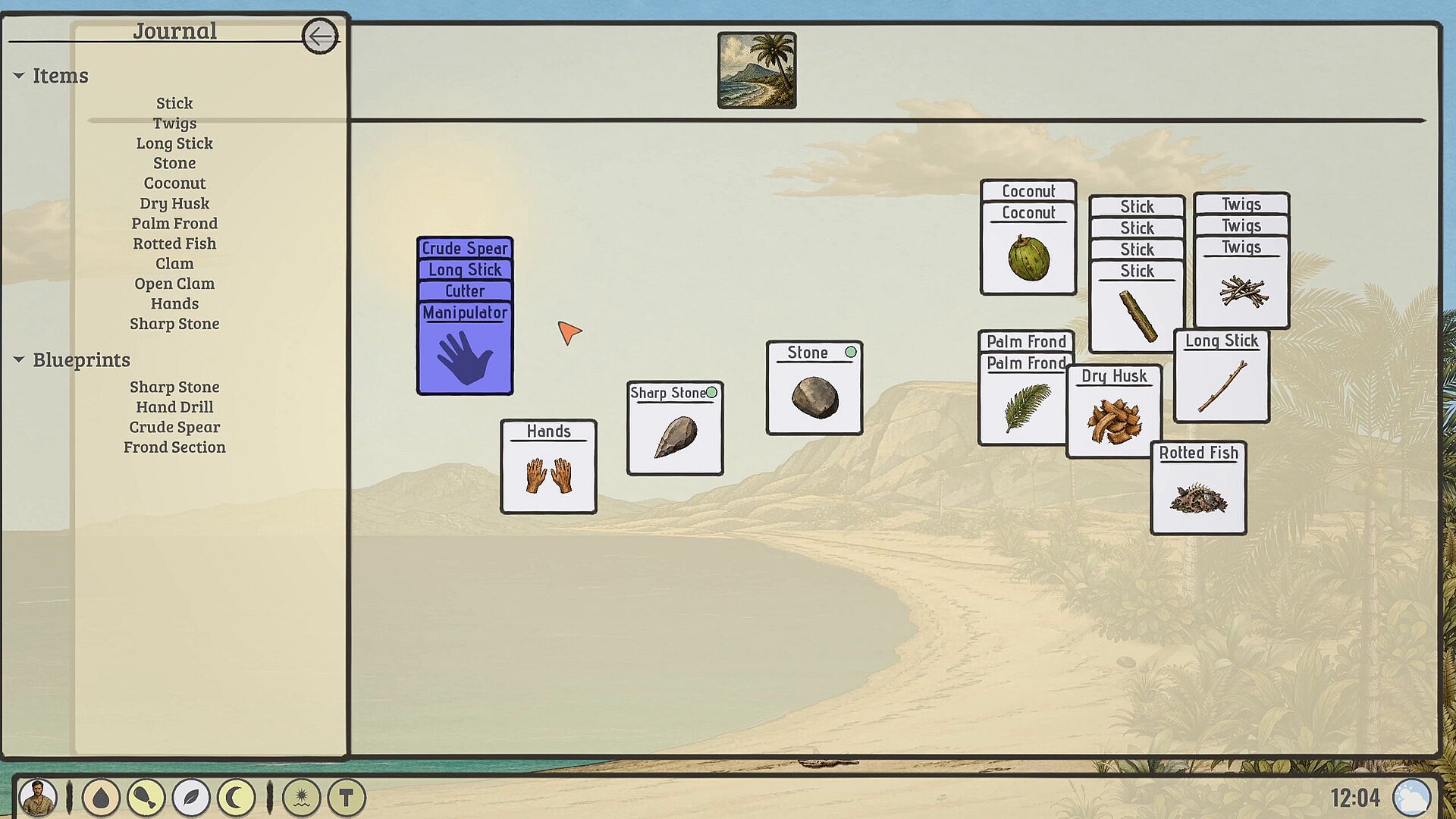
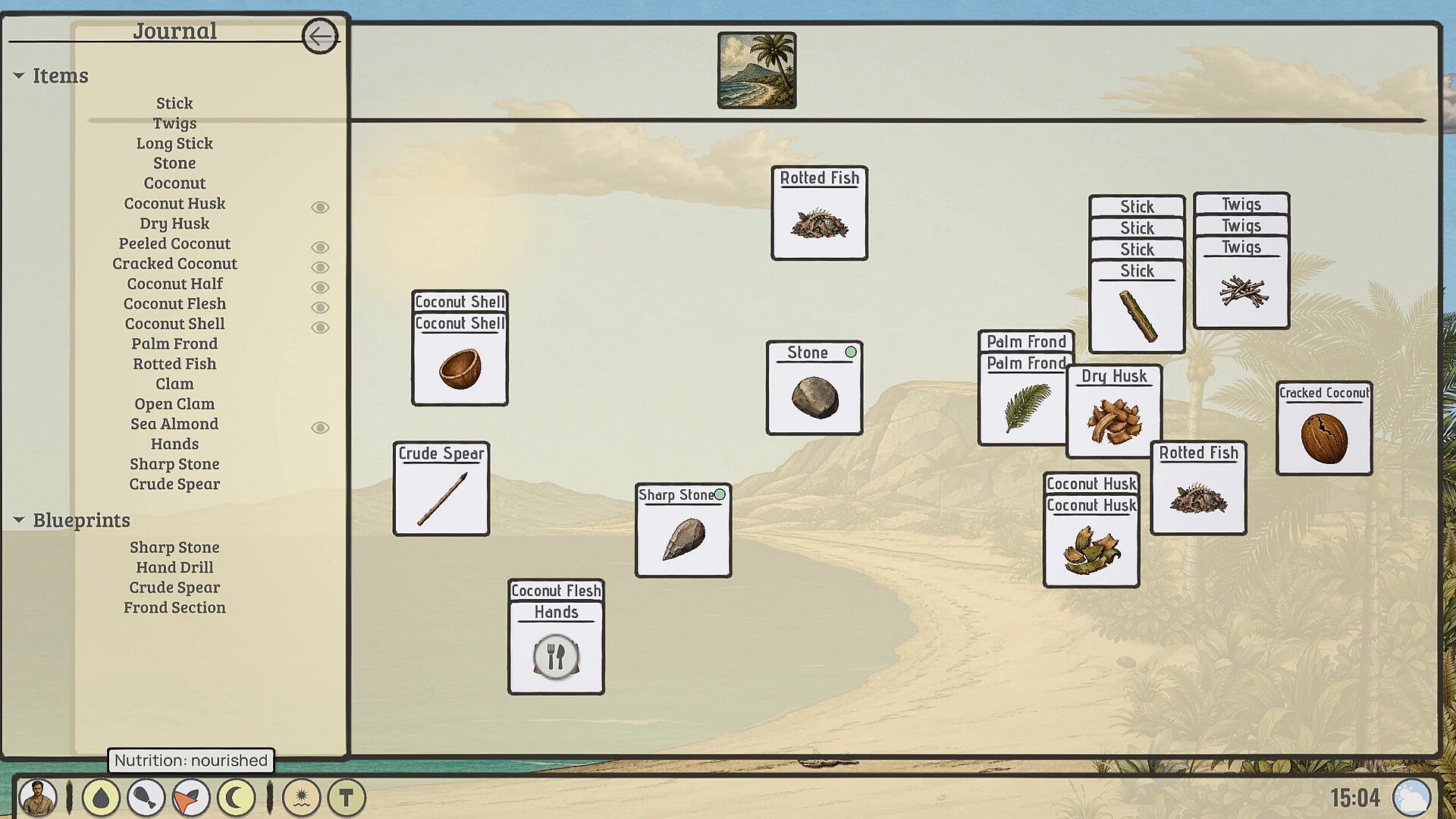
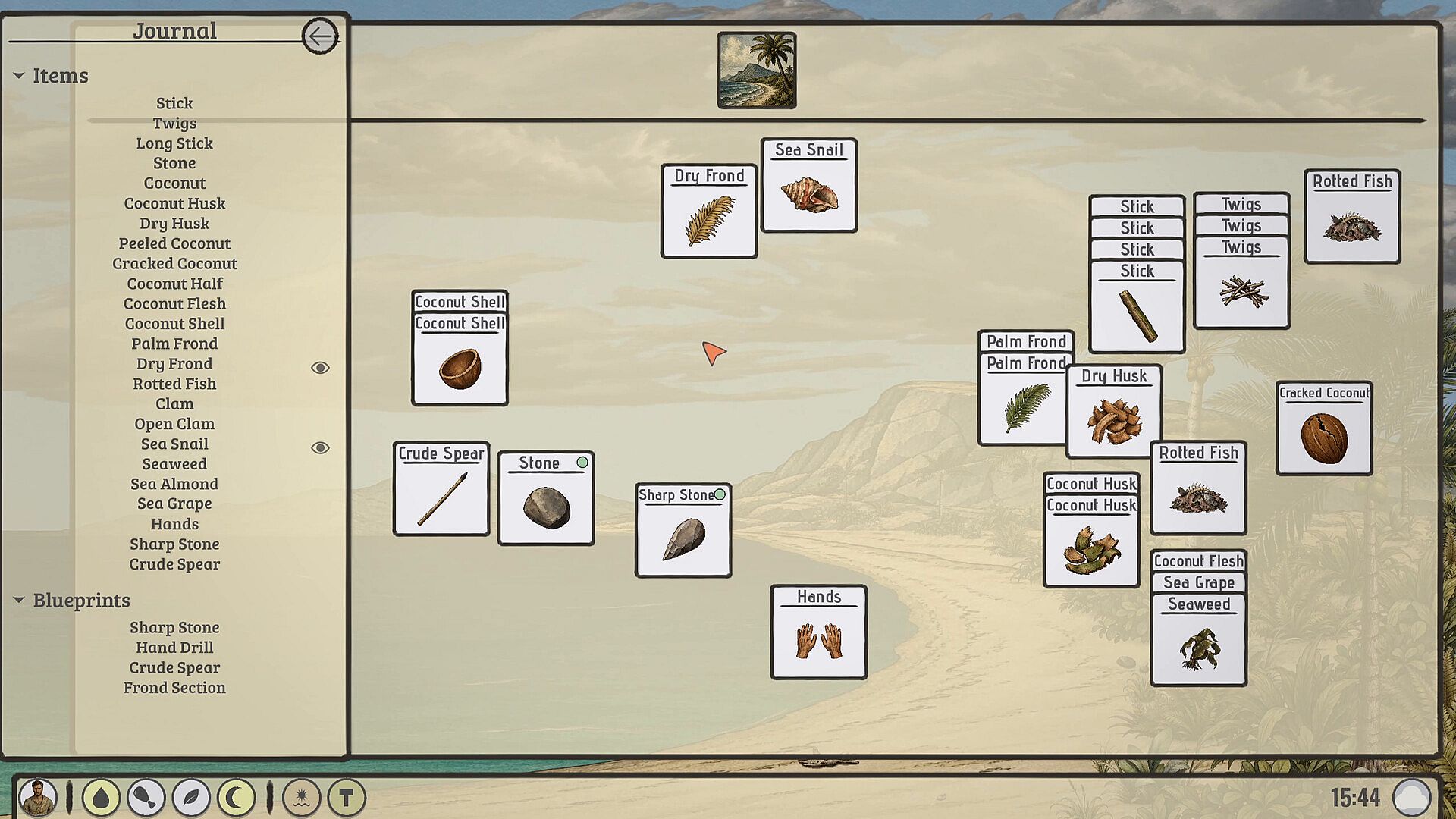
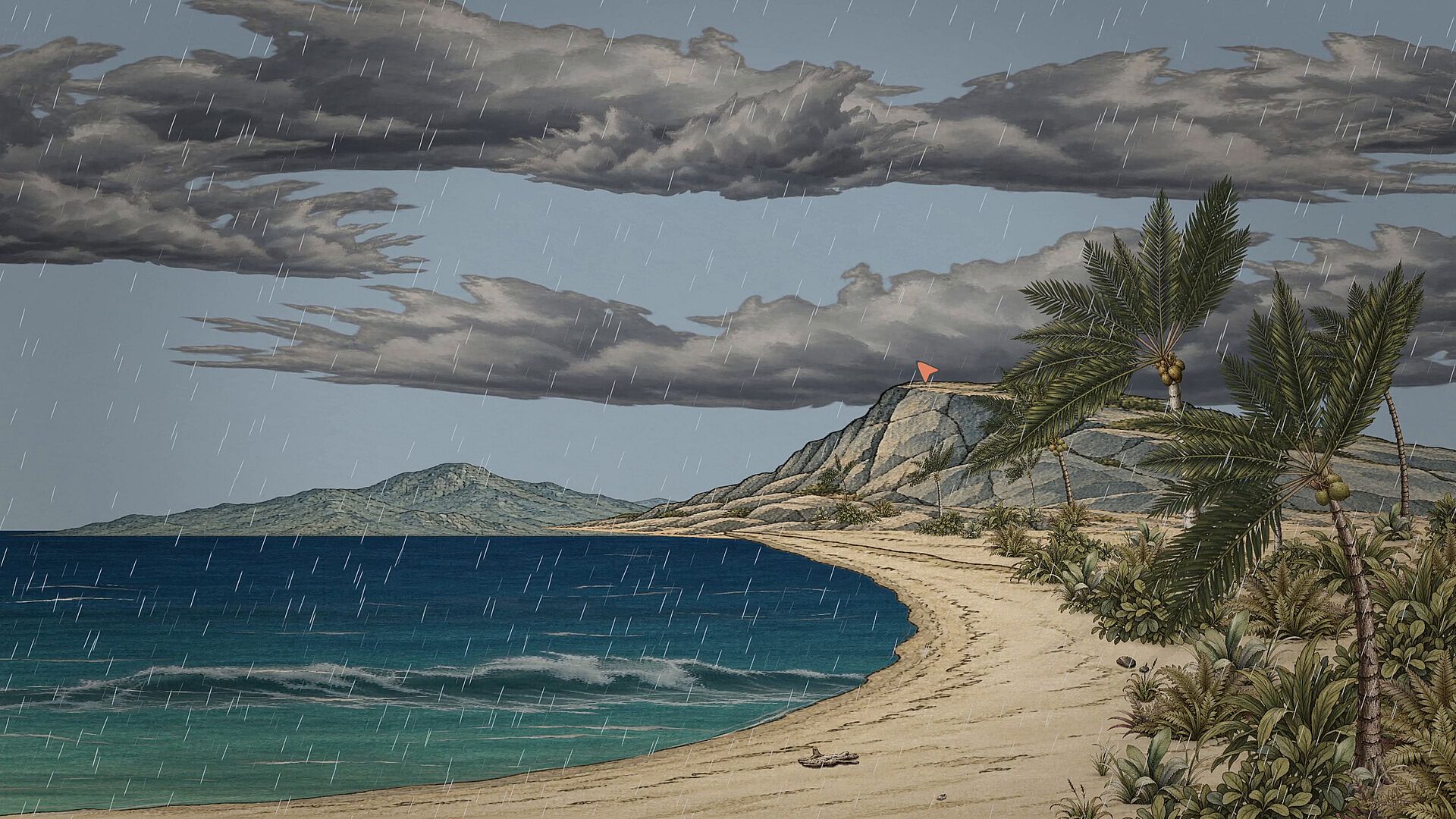
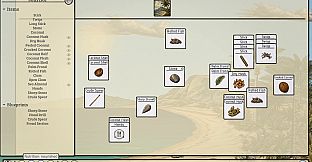
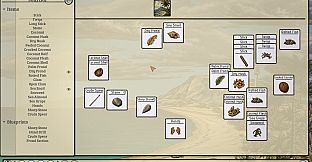
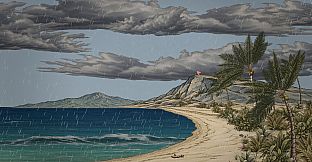
Grim Island is a strategy, indie, and simulation game set on a remote island where every object functions as a card. Players combine these cards to uncover resources, craft tools, and build structures while managing limited time and survival needs. The experience emphasizes careful planning in a turn-based system that allows unlimited thinking time between actions.
Gameplay
The core loop revolves around stacking cards to reveal new possibilities. A sharp stone placed on a fish produces butchered meat, while hands on a palm tree enable climbing for coconuts or fronds. Each successful stack advances discovery, but every action consumes time, forcing players to weigh short-term gains against long-term progress. Early combinations like a crude spear open basic fishing or hunting, yet deeper chains require locating ingredients such as clay for bricks, a kiln for firing pots, and further processing steps that unlock advanced blueprints.
Exploration reveals distinct locations including rocky shores, riverbanks, caves, and swamps, each supplying unique materials. Discoveries populate a journal with blueprints and items, turning the island into a growing toolkit. Structures built in camp continue operating unattended, such as rain catchments that collect water, drying racks for materials, smokers for preserving food, and baited traps that gather resources passively. This automation offsets the cost of poor decisions on any given day.
Survival tracking covers thirst, hunger, nutrition, energy, sleep, and stress alongside ailments like sunburn, heat stroke, hypothermia, food poisoning, venom, and infections. Raw fish risks illness the next day, while injuries from climbing or encounters demand timely remedies including charcoal for poison, bandages for wounds, and poultices for venom or infection. Weather shifts from intense sun to storms that complicate movement, and a full day-night cycle brings out threats such as coconut crabs after dark.
Game Modes
Grim Island operates as a single-player turn-based survival simulation without separate named modes or multiplayer components. The entire experience centers on one continuous campaign of exploration, crafting, and camp management on the island. Players progress at their own pace through discovery chains and resource systems, with no competitive, cooperative, or alternative scenarios confirmed in available details.
Key Systems and Features
Over 400 cards represent everything from basic items like stones and fish to complex tools and environmental elements. More than 150 blueprints cover progression from simple sharp stones and spears to multi-step constructions involving kilns and storage solutions. Thirty-plus structures provide ongoing benefits once placed, while 30-plus ailments create layered health management challenges. Ten or more distinct locations encourage repeated exploration for new ingredient combinations and resources.
Tool progression includes items such as hand drills alongside fire-starting methods that produce embers and charcoal for further crafting. The journal records every new blueprint and item, rewarding thorough investigation. Weather simulation and the day-night cycle add environmental pressure that affects action efficiency and introduces nocturnal risks.
Is It Worth Playing?
Grim Island suits players who enjoy deliberate, systems-driven survival experiences with heavy emphasis on experimentation and resource chains. The card-stacking mechanic rewards learning combinations and optimizing camp layouts to reclaim time lost to setbacks. Those seeking fast-paced action or structured multiplayer will find the turn-based, single-player focus less engaging. The depth of crafting, passive structures, and survival tracking offers substantial replay value through different approaches to the same island challenges, though the absence of updates or additional content means the experience remains fixed at its described scope.












