

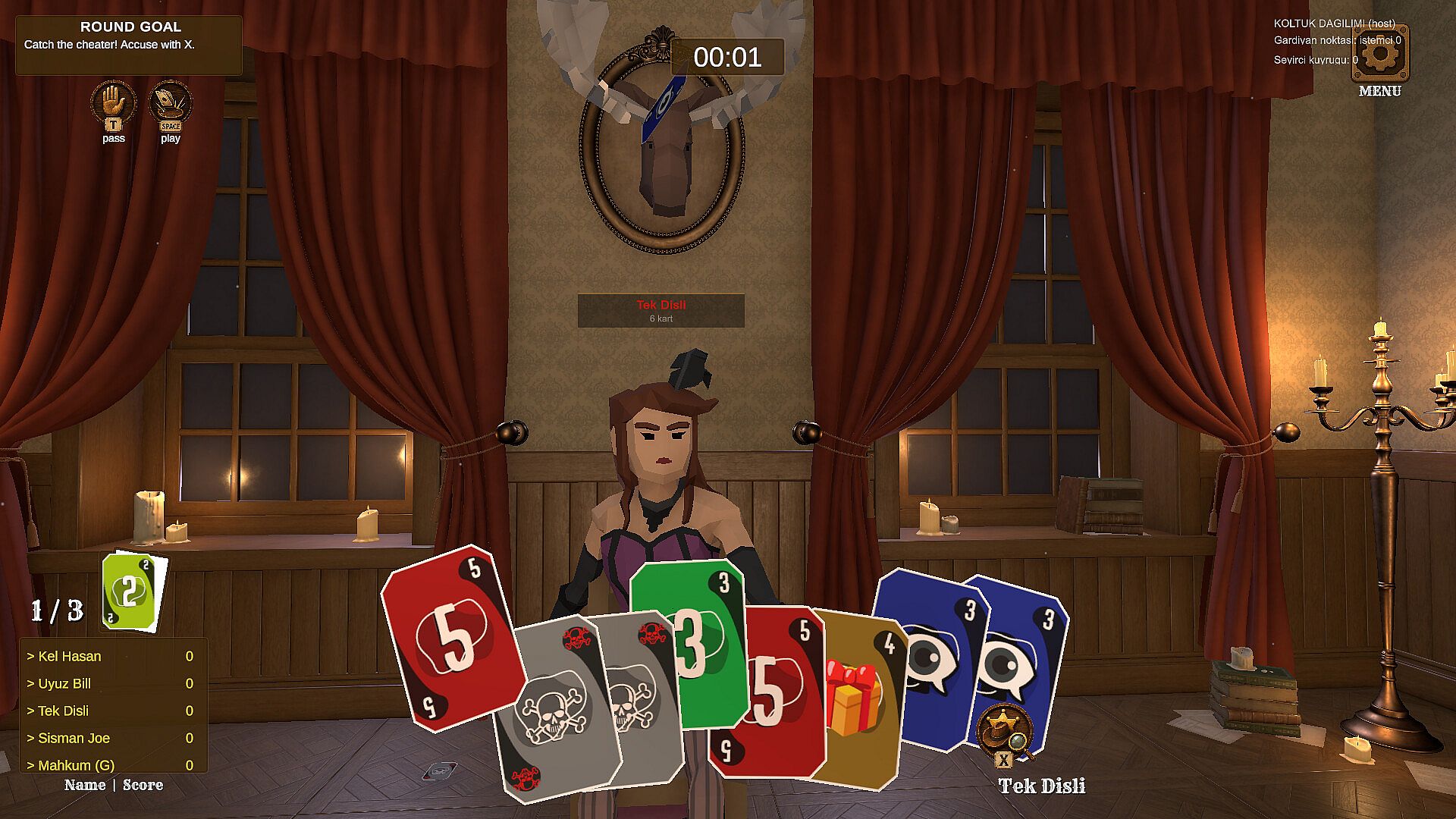
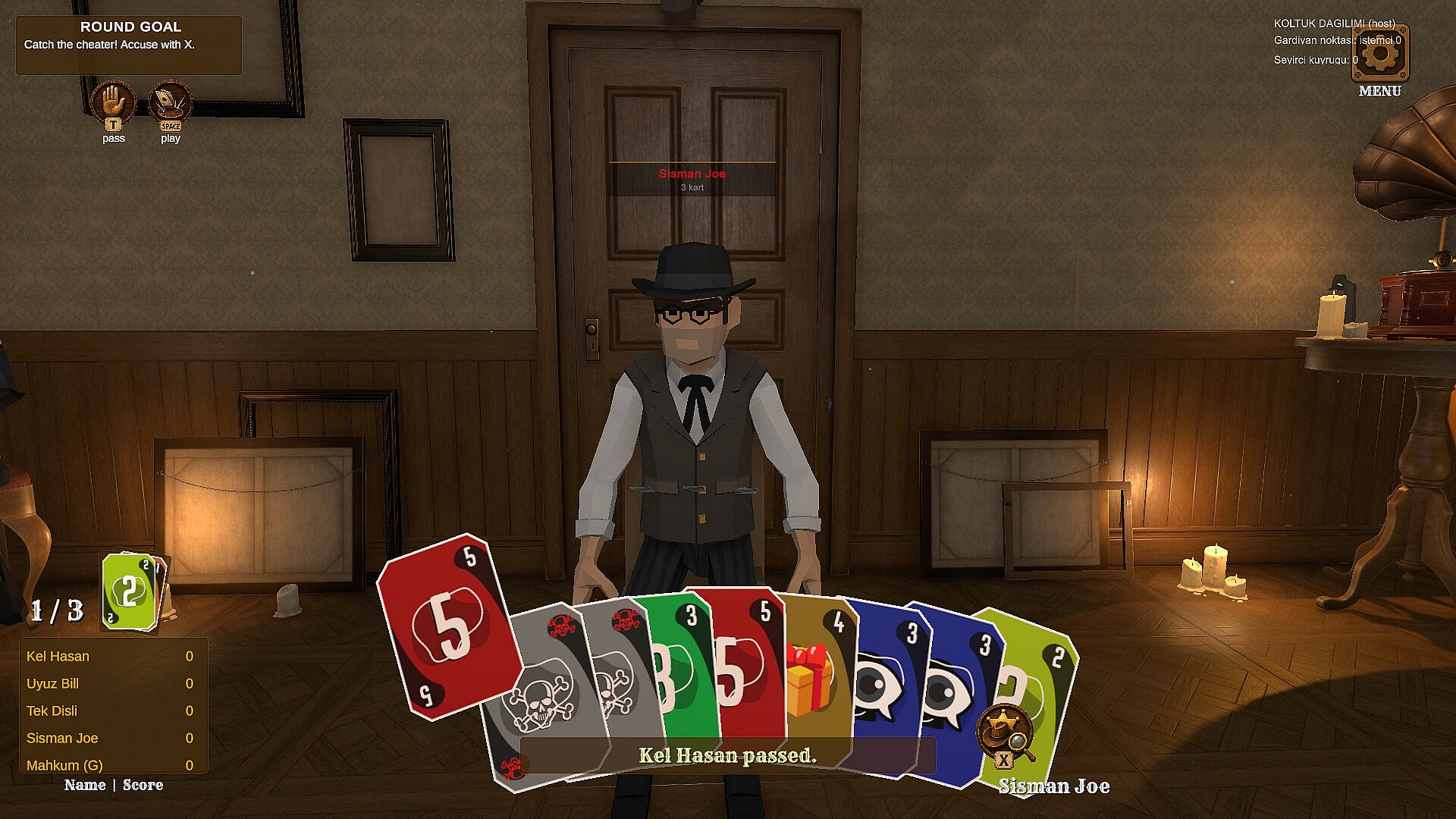

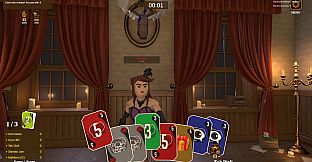
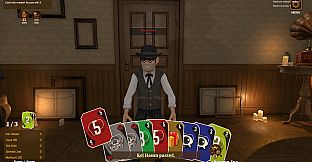
GOTCHA PARDNER is a casual indie multiplayer card game built around deception and risk on PC. Players gather at a virtual saloon table where the objective centers on outmaneuvering others through lies and hidden actions rather than straightforward play. The lowest score at the end determines the winner, which flips typical card game expectations and rewards clever misdirection over honest competition.
Gameplay
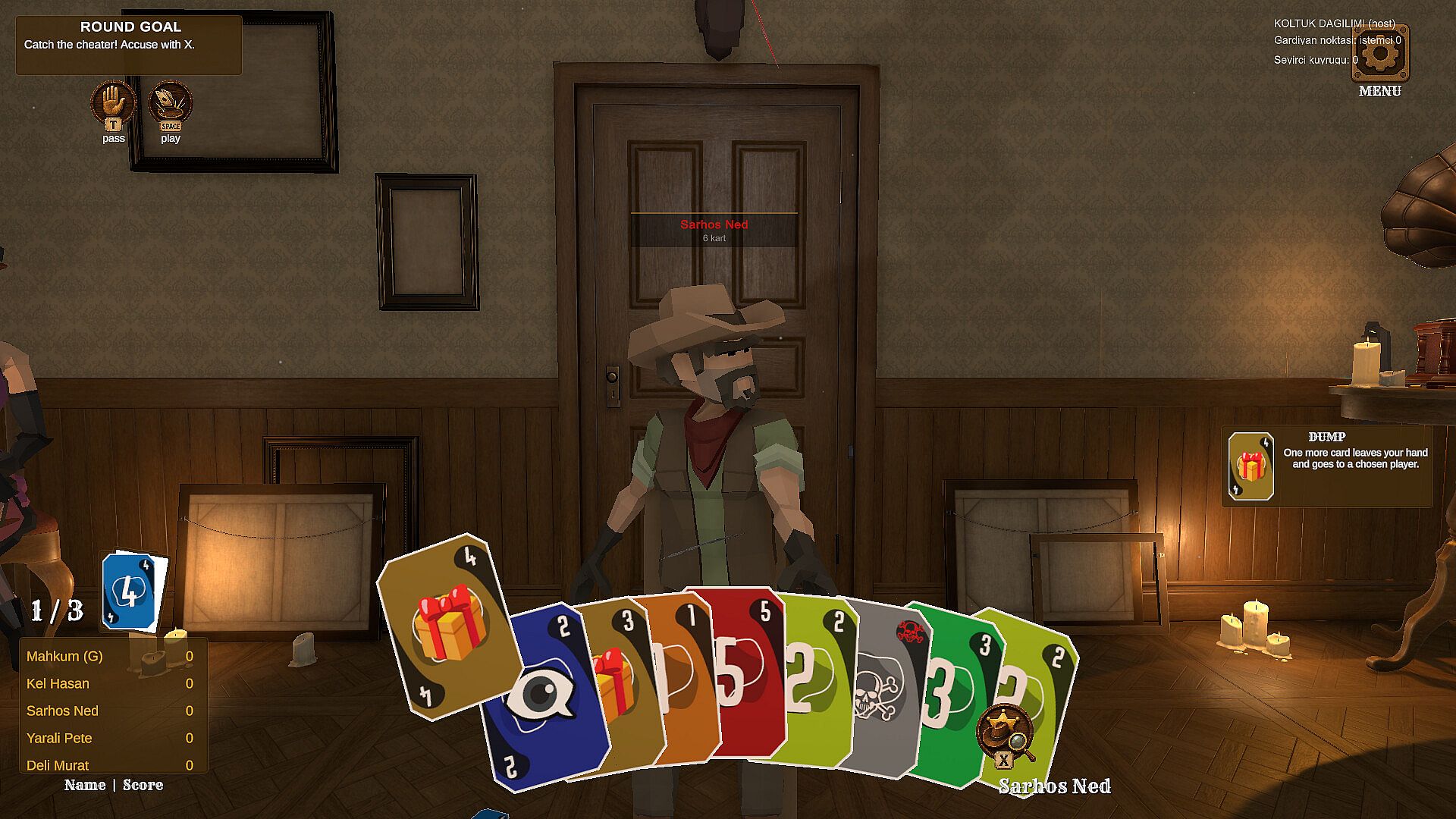
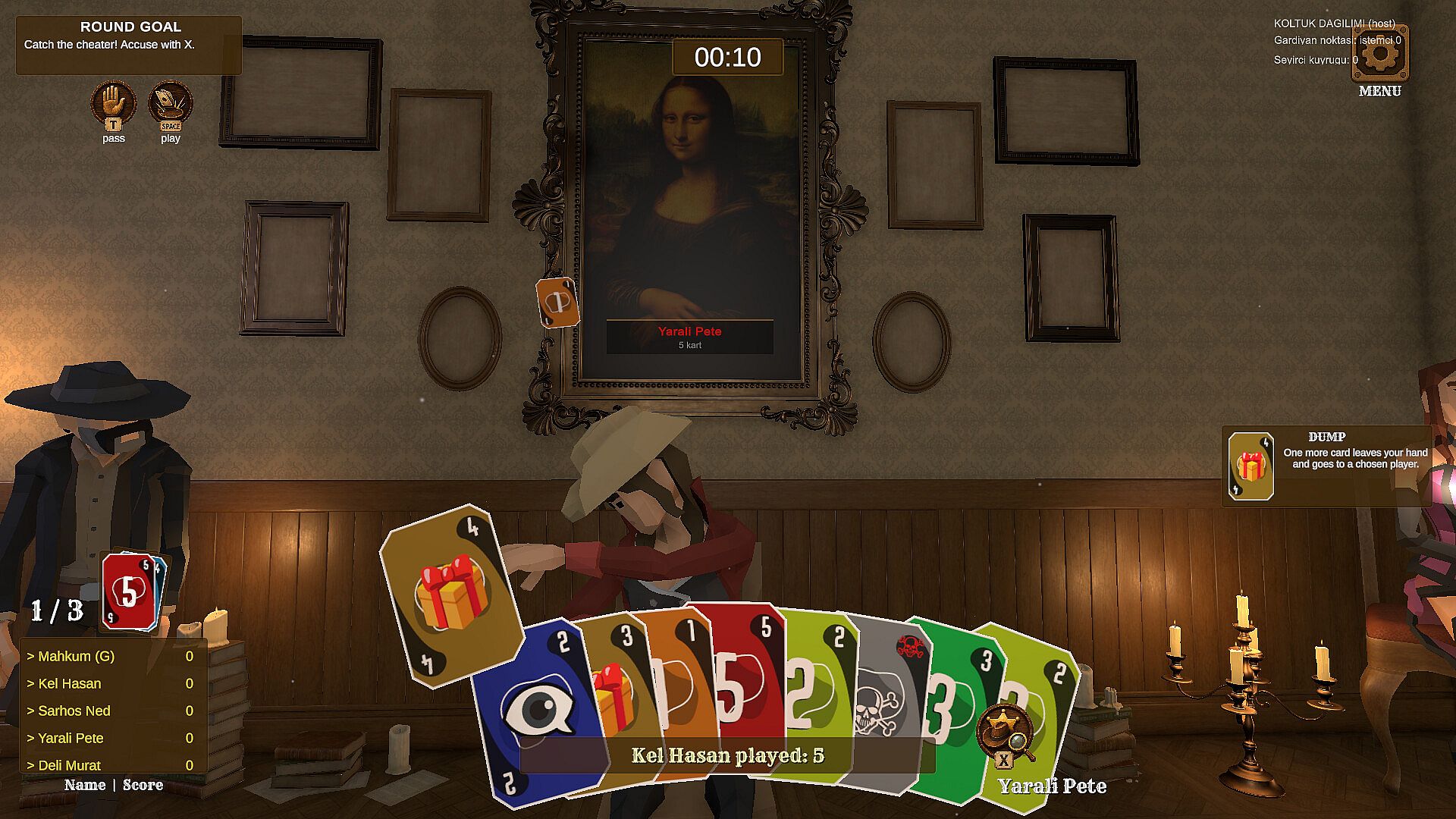
Core play revolves around managing a hand of cards while attempting to discard them without detection. Participants can throw cards forward in plain view, slip them beside their chair, or toss them behind their back to remove them from play. Each attempt carries immediate consequences because success advances a player toward victory while failure ends their involvement for that round.
One participant assumes the Sheriff role and monitors the table for violations. The Sheriff must correctly identify cheaters to penalize them, yet an incorrect accusation shifts the penalty back to the accuser. This creates constant tension as everyone at the table observes hands, timing, and reactions to gauge intent.
Bluffing adds another layer when a player lacks certainty about an opponent's move. Faking a cheat can provoke the Sheriff into a mistaken call, turning uncertainty into an advantage. Success depends on reading subtle cues from friends or opponents, such as hesitation or overly confident gestures, to determine who is executing the most convincing deception.
Game Modes
The primary experience places one Sheriff against the remaining players at a shared table. Everyone competes to shed cards through any means necessary while the Sheriff attempts to enforce rules. The setup supports repeated rounds where roles can rotate, keeping the focus on social deduction and quick decisions.
Online sessions rely on room codes that friends enter to join the same table. This structure emphasizes group play with no single-player option, ensuring the mechanics of watching and reacting to others remain central throughout every match.
Multiplayer and Social Elements
Matches unfold in real time with participants connected over the internet. The design encourages repeated sessions because each table produces different outcomes based on who occupies the Sheriff seat and how aggressively others pursue hidden discards. LAN support extends the options for local groups who prefer direct connections without external servers.
Communication stays minimal by design. Success comes from visual observation of physical card movements and behavioral patterns rather than verbal coordination. This keeps rounds brisk while amplifying the humor and frustration that arise when a well-timed bluff succeeds or backfires.
Is It Worth Playing?
The game targets groups that already enjoy social deduction titles and party games centered on lying. Its mechanics reward quick thinking and close attention to others, which suits casual gatherings where laughter from failed accusations or successful sleights of hand becomes the main draw.
Because the title remains unreleased, no player reception data or long-term update history exists yet. Those drawn to bluffing card experiences with asymmetric roles will find the core loop matches the described focus on cheating and detection. Availability on PC through standard digital storefronts will determine access once it launches.