


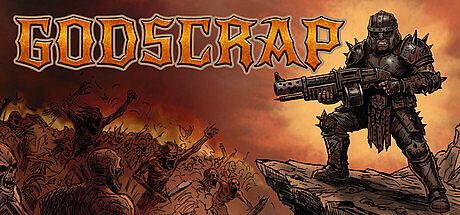


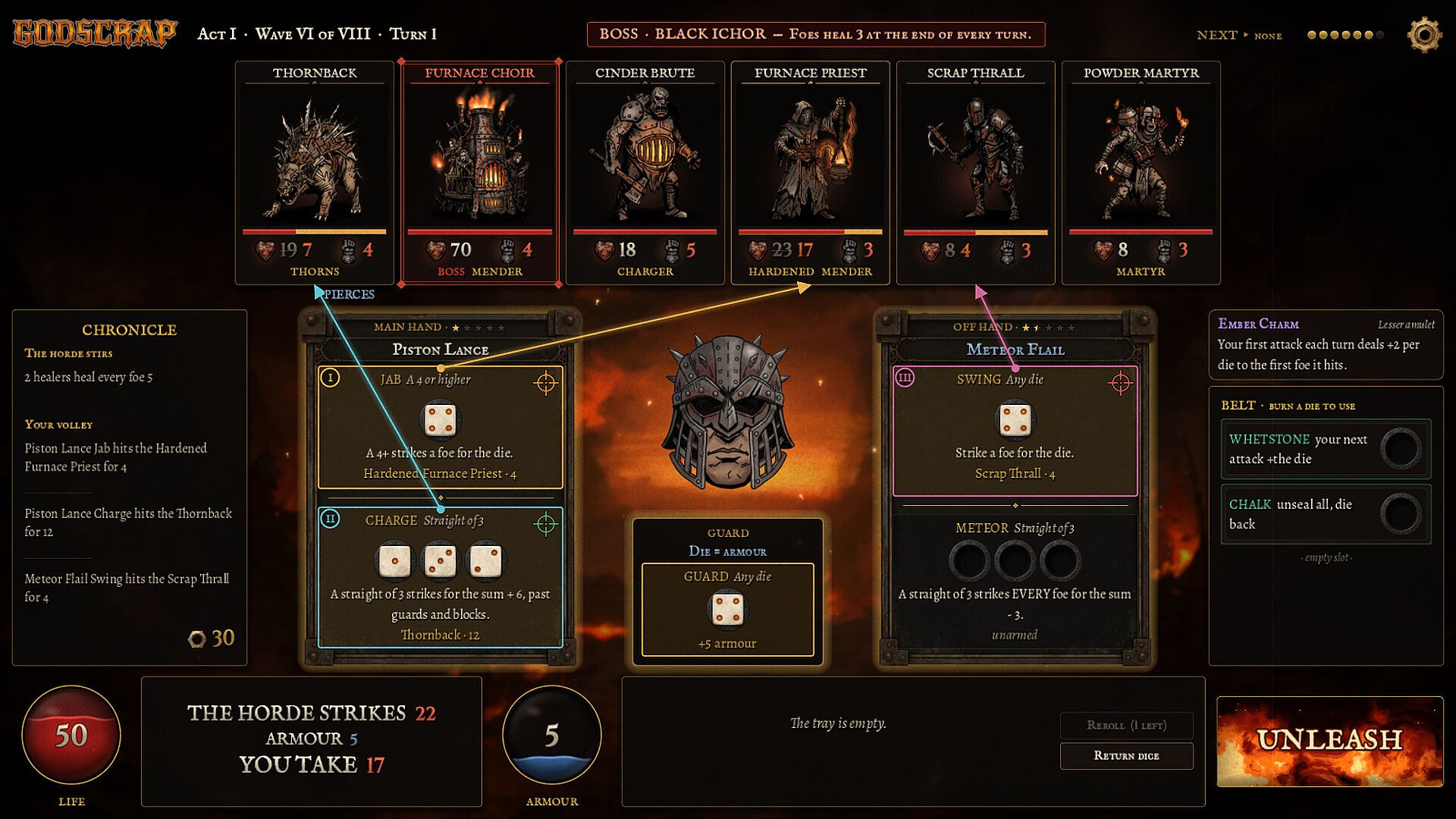
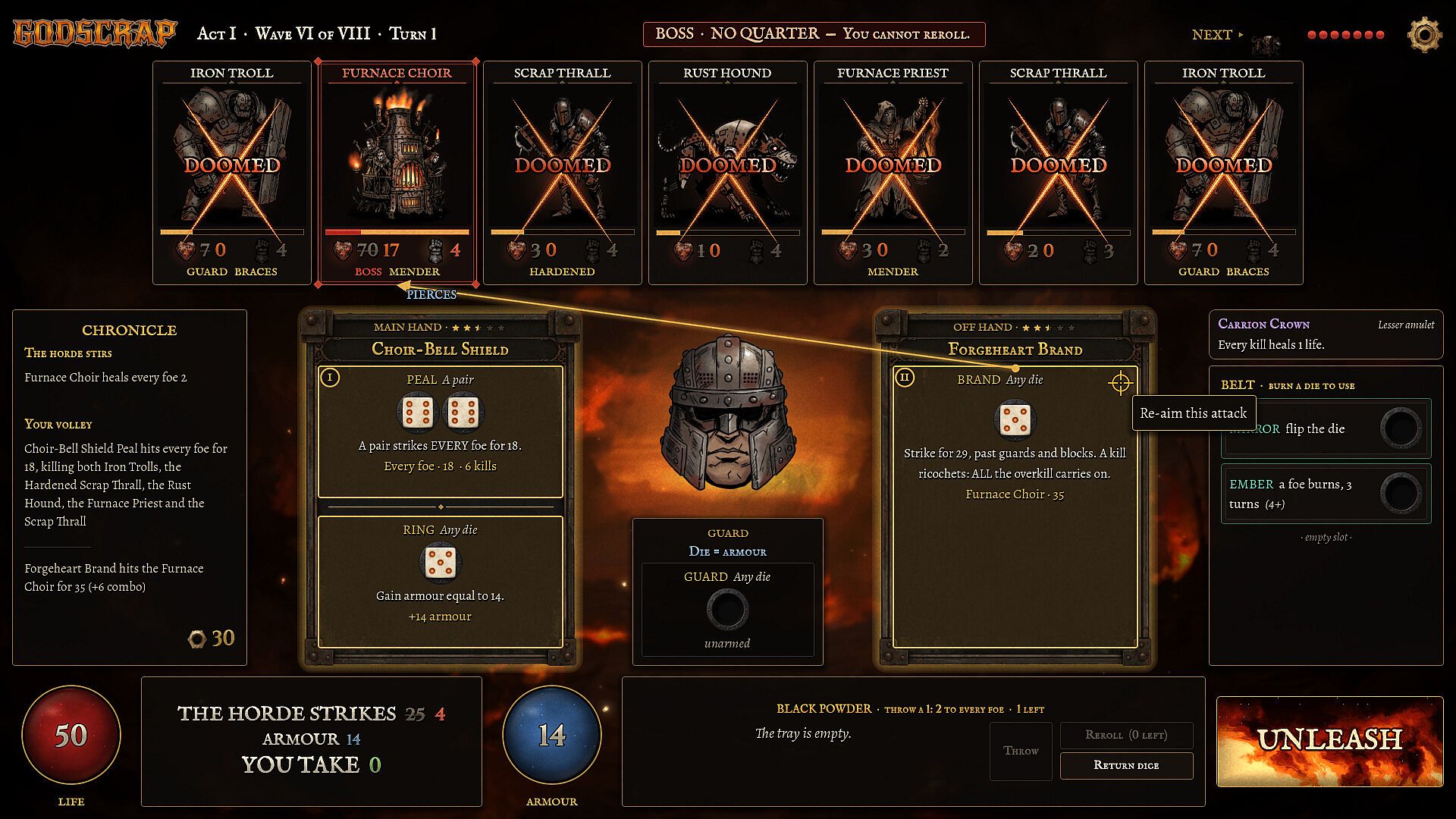
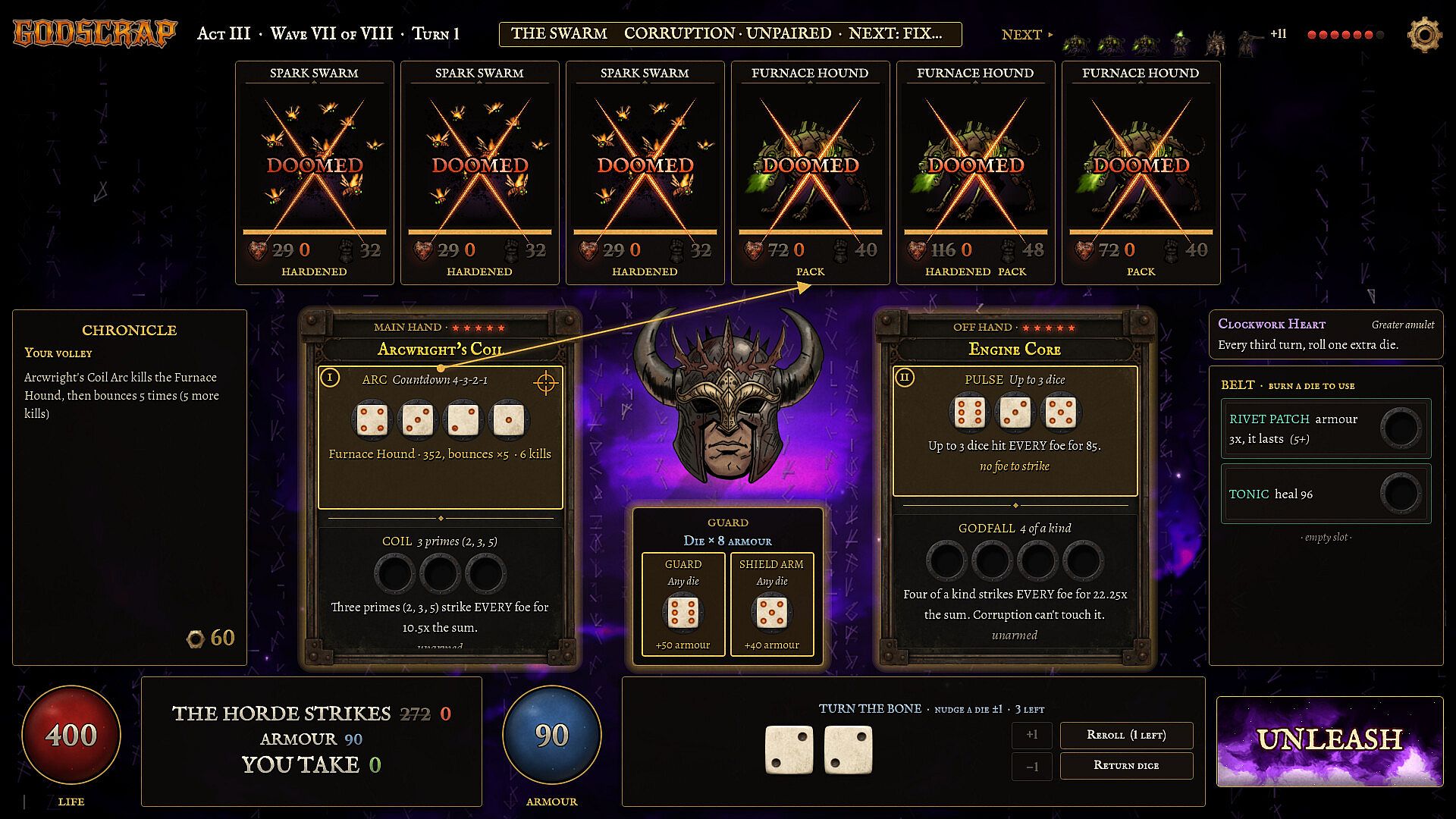
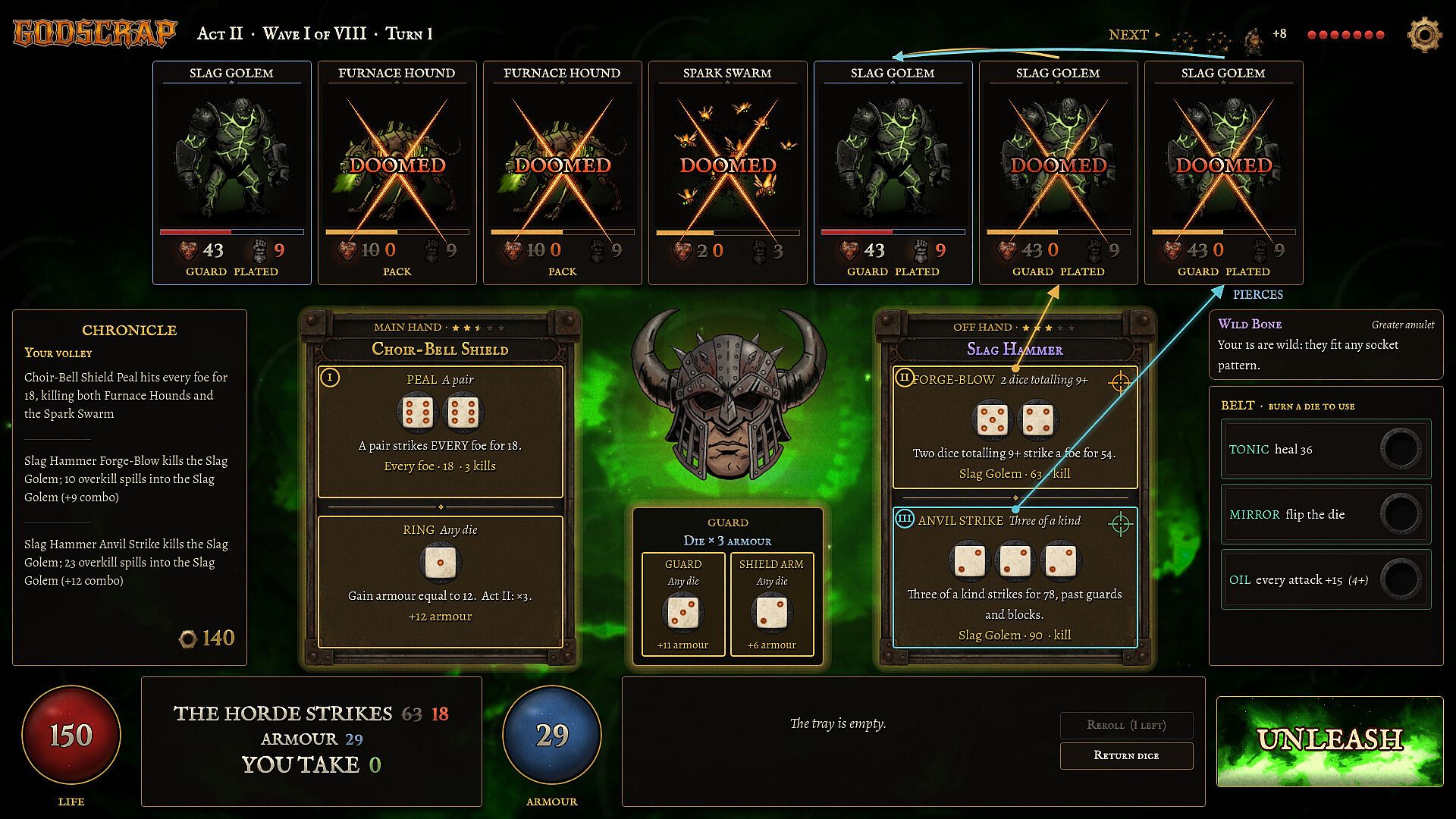
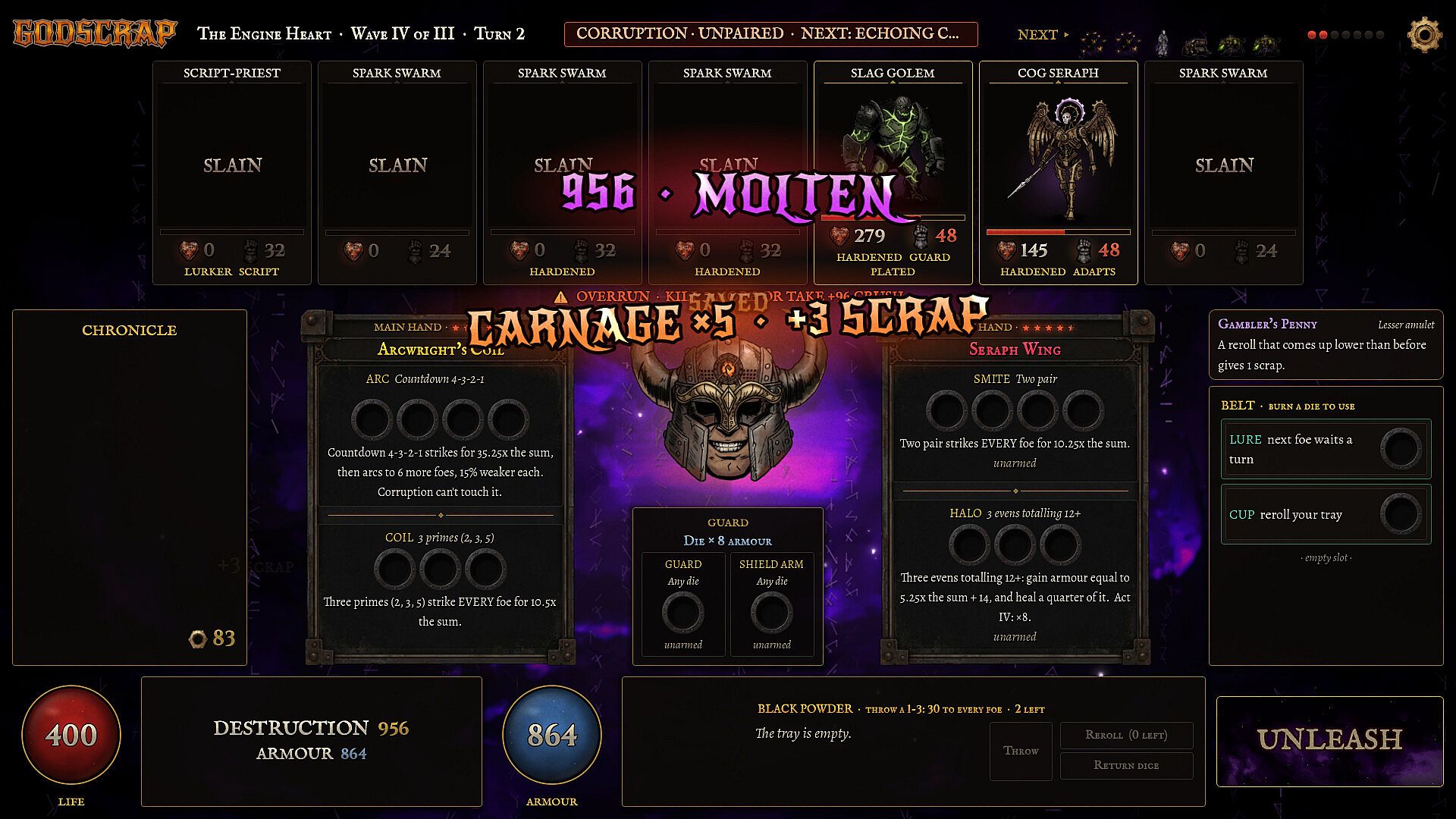
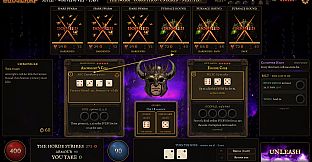
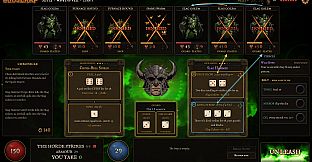
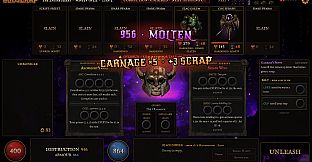
GodScrap is a single-player turn-based dice roguelike that blends strategy and RPG elements on PC. Players roll dice each turn and assign them to weapons for patterned attacks, to Guard for defense, or to belt items for temporary effects while facing a queuing horde of enemies across three acts.
Gameplay
The core loop centers on dice management in a turn-based system. Each round begins with a roll of bones, and the player must decide the placement of every die. Weapons require specific patterns such as pairs, straights, or exact totals that match a changing forge number. Stronger patterns deliver greater damage, turning the assignment process into a spatial puzzle across two hands.
Defense comes from allocating dice to Guard as armor, while belt items consume dice for one-time effects. After the player's actions, the horde advances. Enemies arrive steadily and form a line, with overcrowding leading to crushing pressure if not cleared quickly enough through multi-target strikes or sustained defense.
Between waves, the Camp provides opportunities to spend earned scrap. A merchant offers new weapons, amulets, and belt items, while the Armourer strengthens Guard capacity. Purchases alter future roll values, encouraging adaptation over successive runs. Three orders shape long-term progression: Ironsworn gain extra dice from precise kills, Powderwrights convert low dice into area grenades, and Cogwitches adjust die faces up or down. These abilities scale as acts are completed.
Progression spans ten weapon ranks from Rusty to GodScrap across the acts. The Scrapyard, City-Forge, and God-Engine each feature waves ending in boss encounters, culminating at the Engine Heart. No two turns repeat the same constraints due to shifting weapon demands and enemy queues.
Game Modes
GodScrap operates as a single-player roguelike experience with no separate multiplayer or alternate modes. Runs consist of sequential acts filled with waves, where the player selects one of the three orders at the start and builds through the Camp upgrades. The structure emphasizes repeated attempts, with each run varying based on dice outcomes, purchases, and order-specific growth.
Progression through the three acts builds toward deeper challenges, with bosses guarding each section. The focus remains on managing the horde line while optimizing dice across weapons and defense, without branching into distinct game types or co-op elements.
Progression and Systems
Weapon patterns form the foundation of combat variety. A rivet pistol accepts any die, while an anvil maul demands dice summing to the current forge number. Larger or more complex patterns scale damage output, rewarding careful fitting of the rolled results. The horde mechanic adds tension through accumulation rather than individual enemy turns, pushing players toward efficient clears or reinforced Guard.
Order powers expand over the course of a run, tying character choice to long-term strategy. Scrap collection funds Camp improvements that reshape viable dice combinations for later waves. This creates a feedback loop where early decisions influence mid-run options and act transitions.
Is It Worth Playing?
GodScrap suits players who enjoy turn-based strategy with dice-driven puzzles and roguelike progression. The single-player format delivers consistent runs focused on pattern recognition, resource allocation, and horde management across its three acts. With the game listed as coming soon and no reviews available yet, interest depends on preference for indie dice roguelikes that emphasize adaptive builds through merchant and Armourer interactions at the Camp.
Those drawn to systems where every roll presents a fresh assignment challenge, combined with growing order abilities and weapon rank progression from Rusty to GodScrap, will find the core loop engaging. The absence of established player feedback means waiting for release provides the clearest sense of fit, particularly for fans of deliberate, pattern-based combat without real-time pressure.












