





Goblin Industries is an indie simulation game that puts players in charge of a pixel-art goblin factory deep underground. The core loop revolves around digging deeper into a cave system, automating production lines, and managing a workforce of goblins while fending off threats from the darkness.
Gameplay
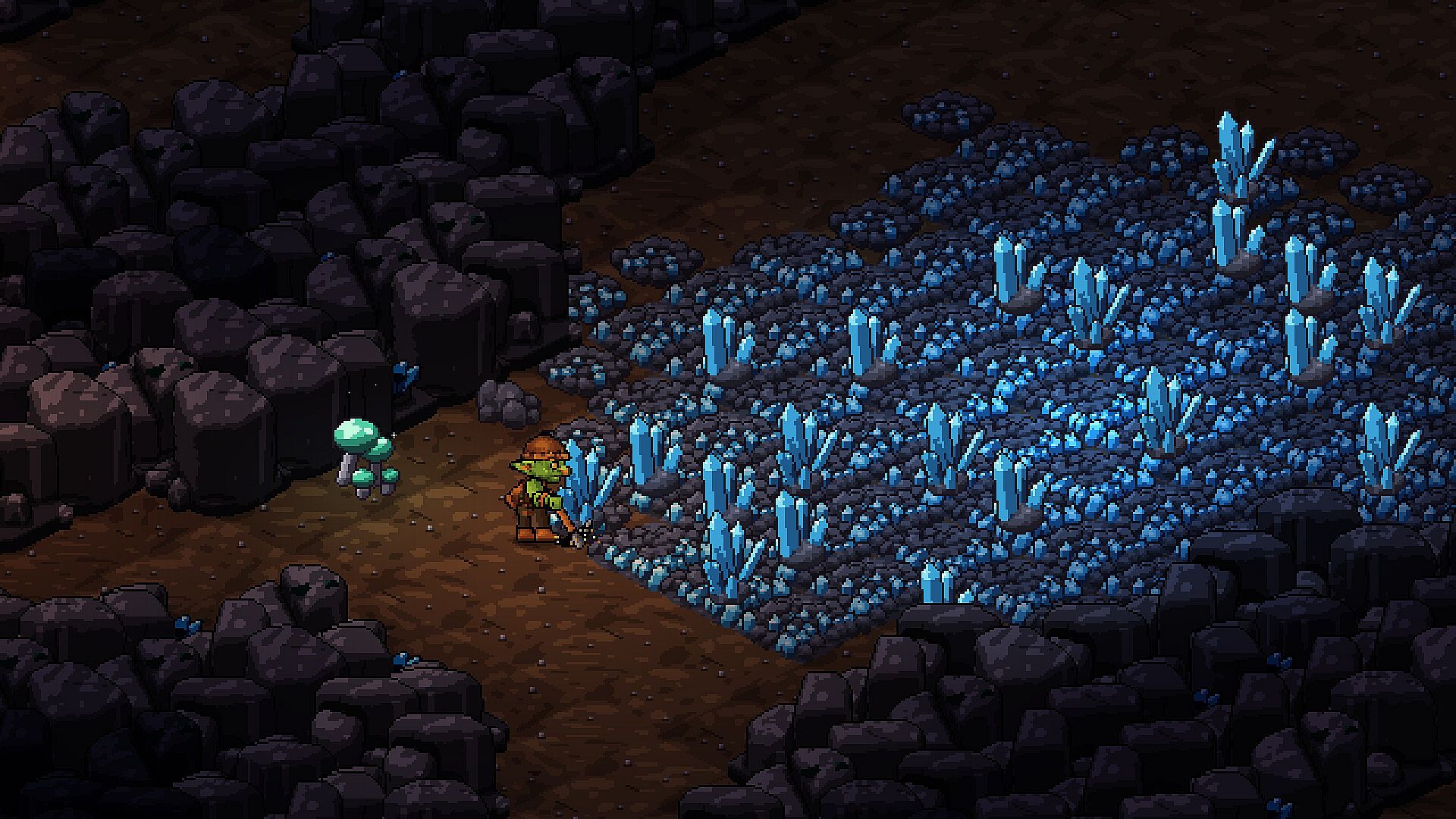
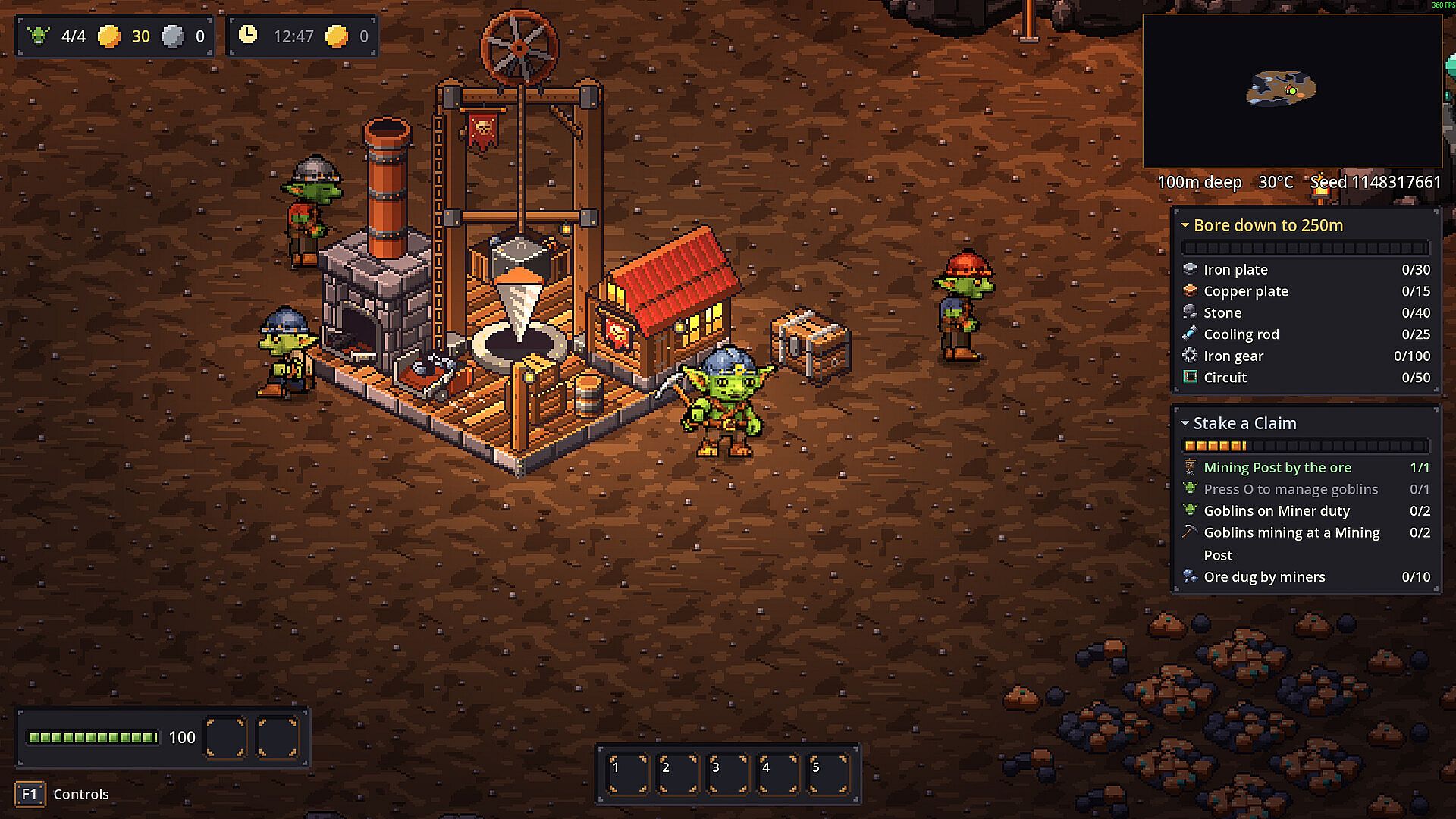
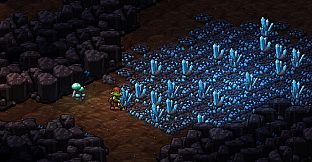
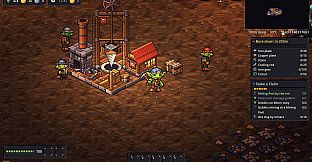
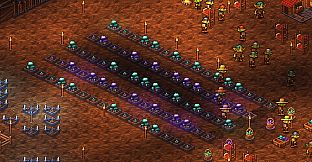
Players begin by hacking through rock with a pickaxe and placing Mining Posts near veins of iron, copper, and coal. Goblins assigned to these posts extract resources, with more skilled miners working longer shifts before needing rest. Crystal Drills can be positioned on glowing deposits to boost output further. Every excavated wall creates space for additional machines and infrastructure.
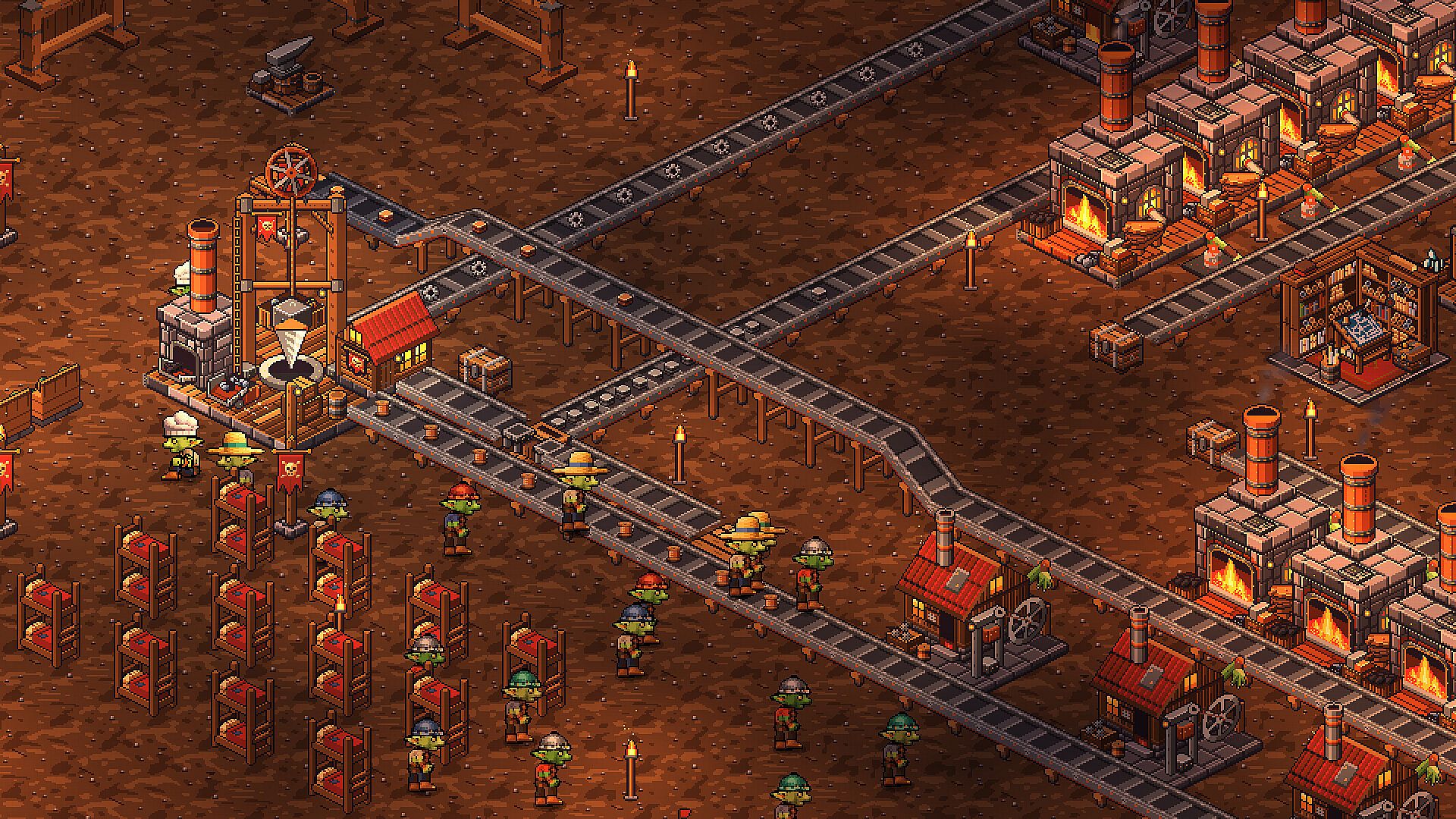
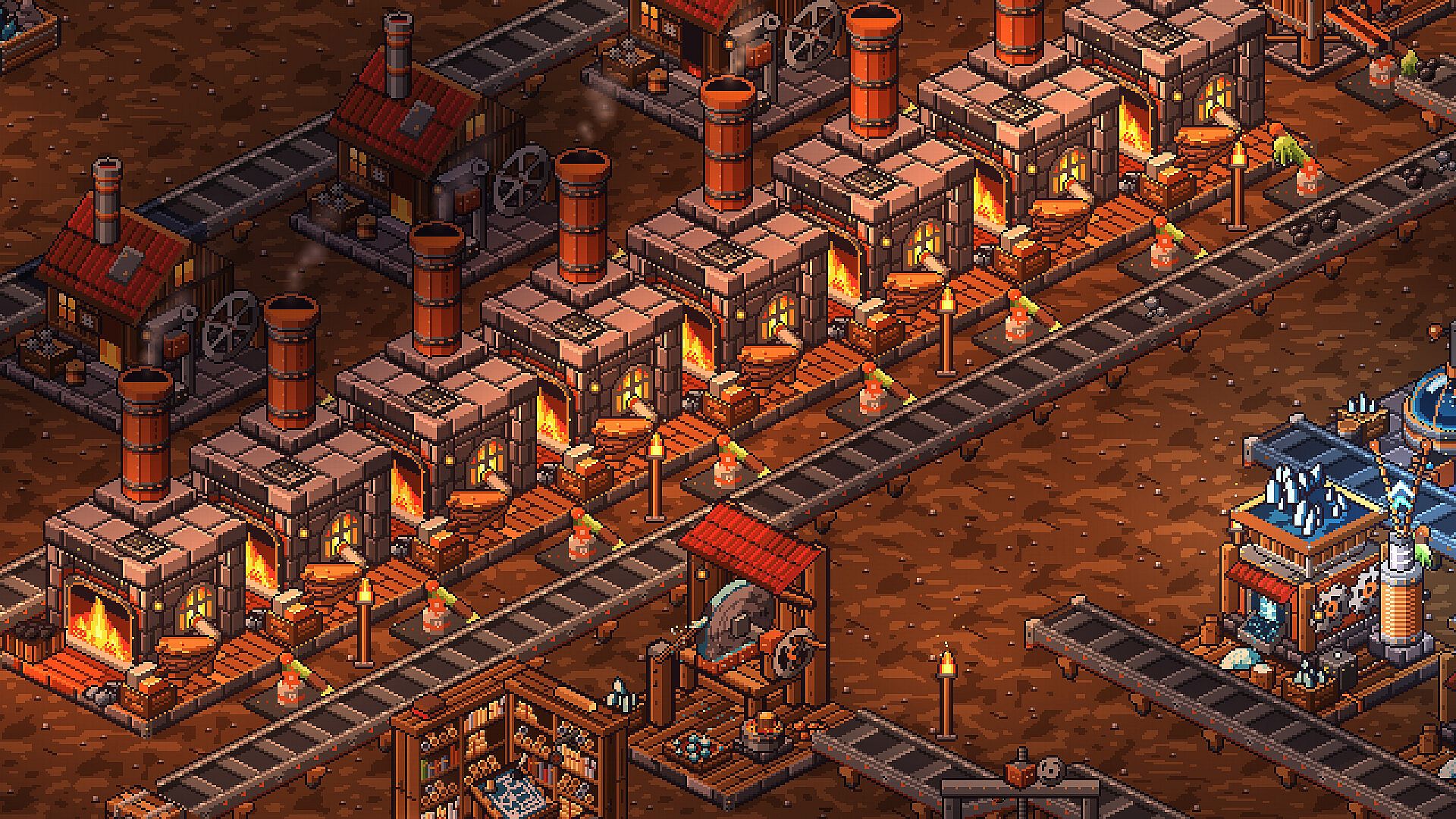
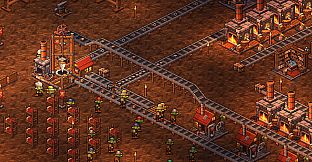
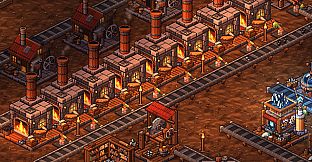
Automation forms the backbone of operations. Ore moves from hoppers onto conveyor belts that feed smelters and factories, producing plates, wire, and gears. Rails and stations allow a steam engine to haul large loads of ore and rock between floors, with passenger carts enabling goblins to commute efficiently across the expanding camp.
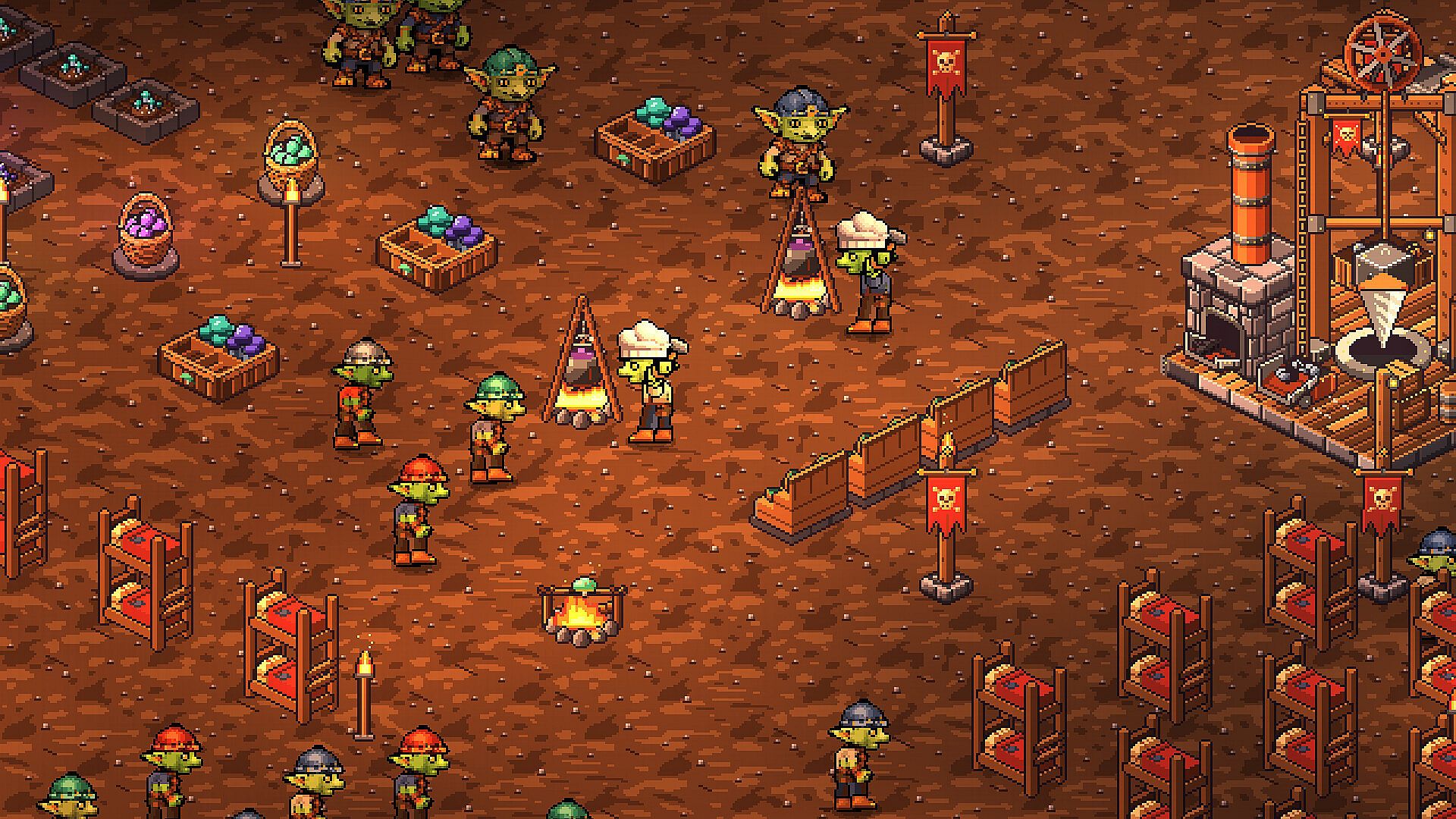
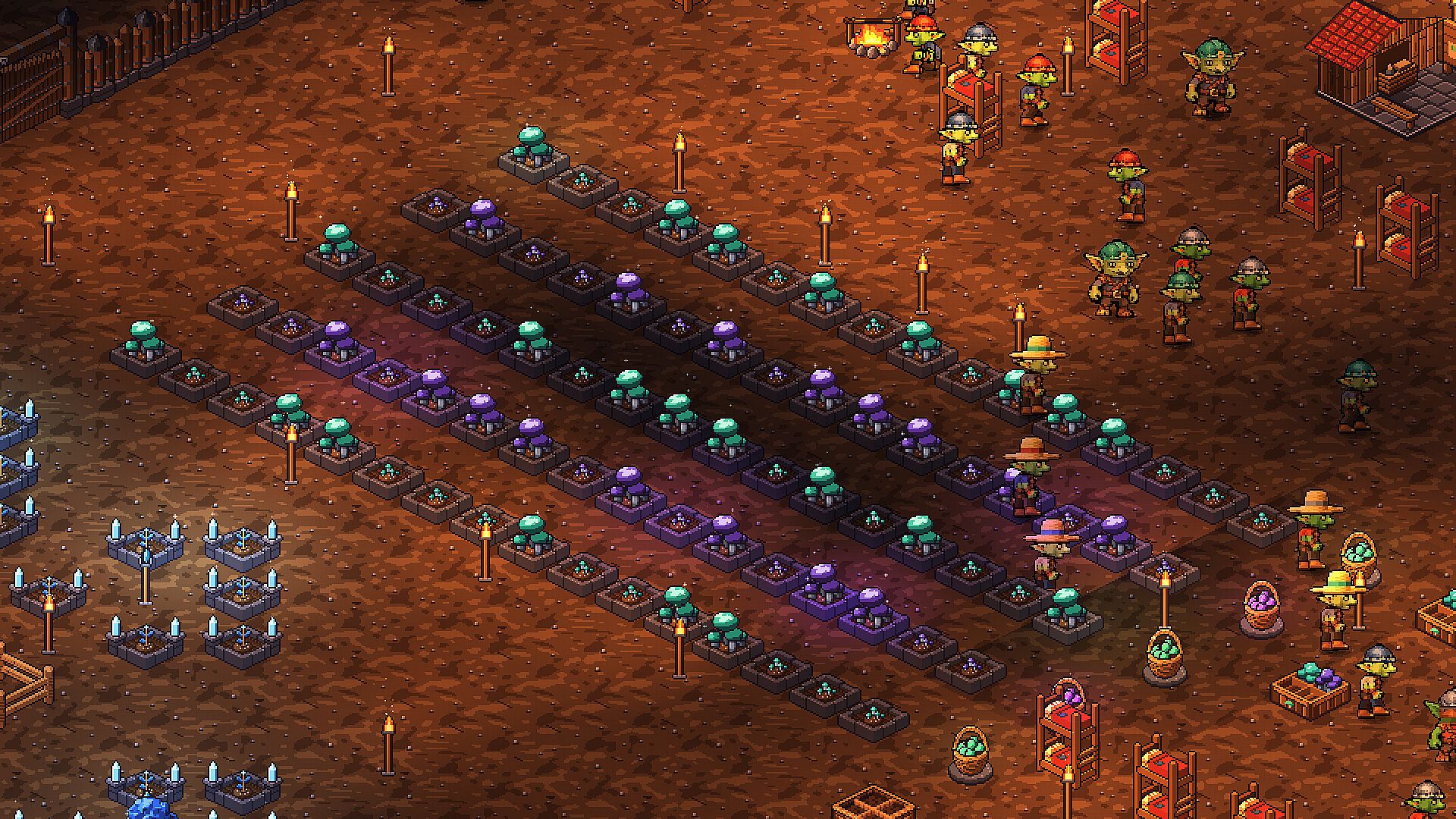
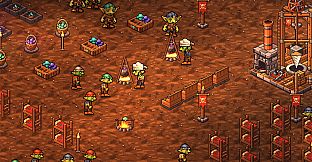
Camp management requires attention to goblin needs. Workers must receive bunks, meals from the camp pot, and scheduled naps. Glowing mushrooms support farming, while duties range from mining and crafting to guarding and engineering. New goblins can be hired at the Workers' Station, each bringing unique skills and personalities. Payday must be met on time, or unpaid goblins leave. Banners and a fighting pit help maintain morale.
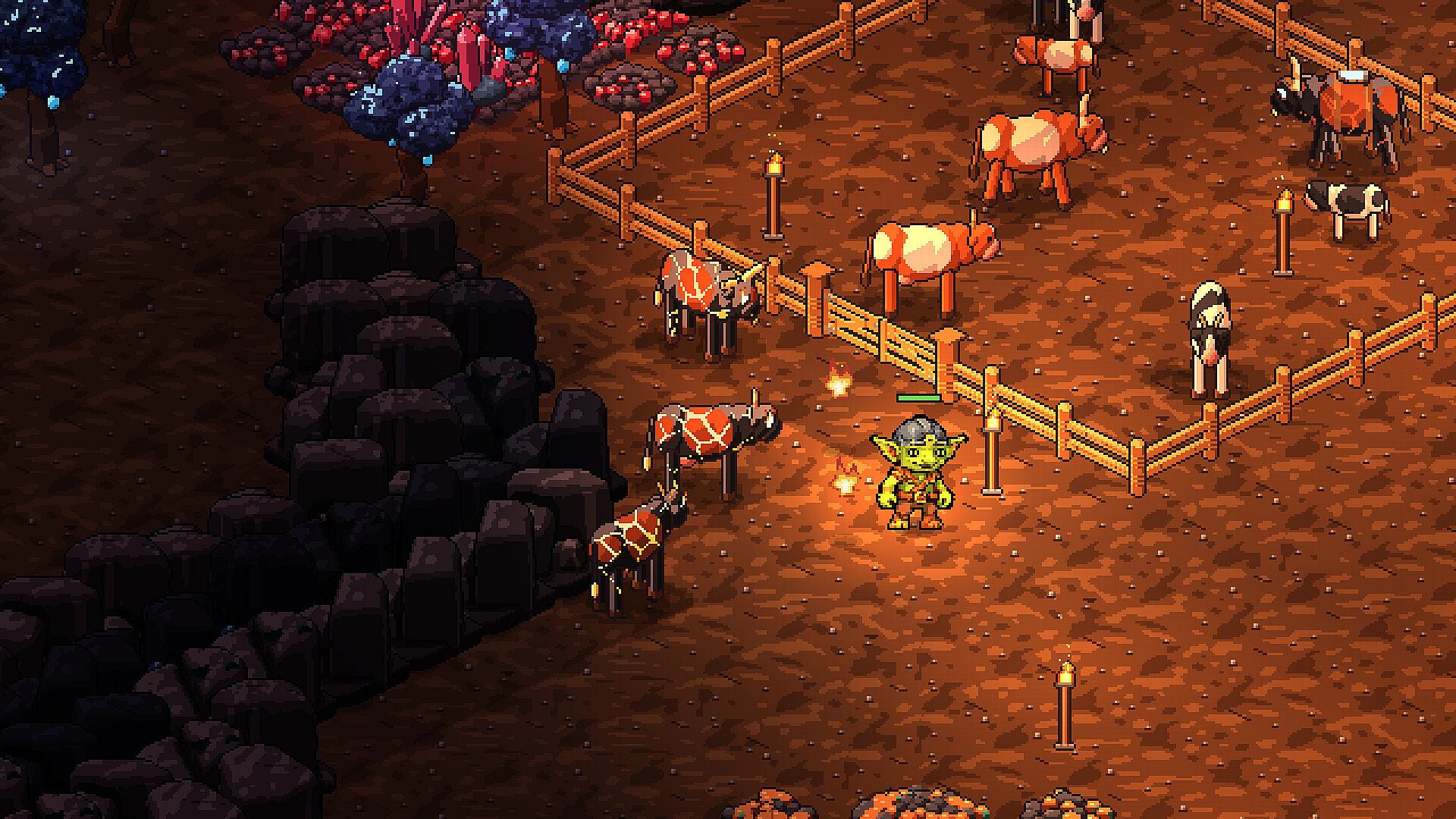
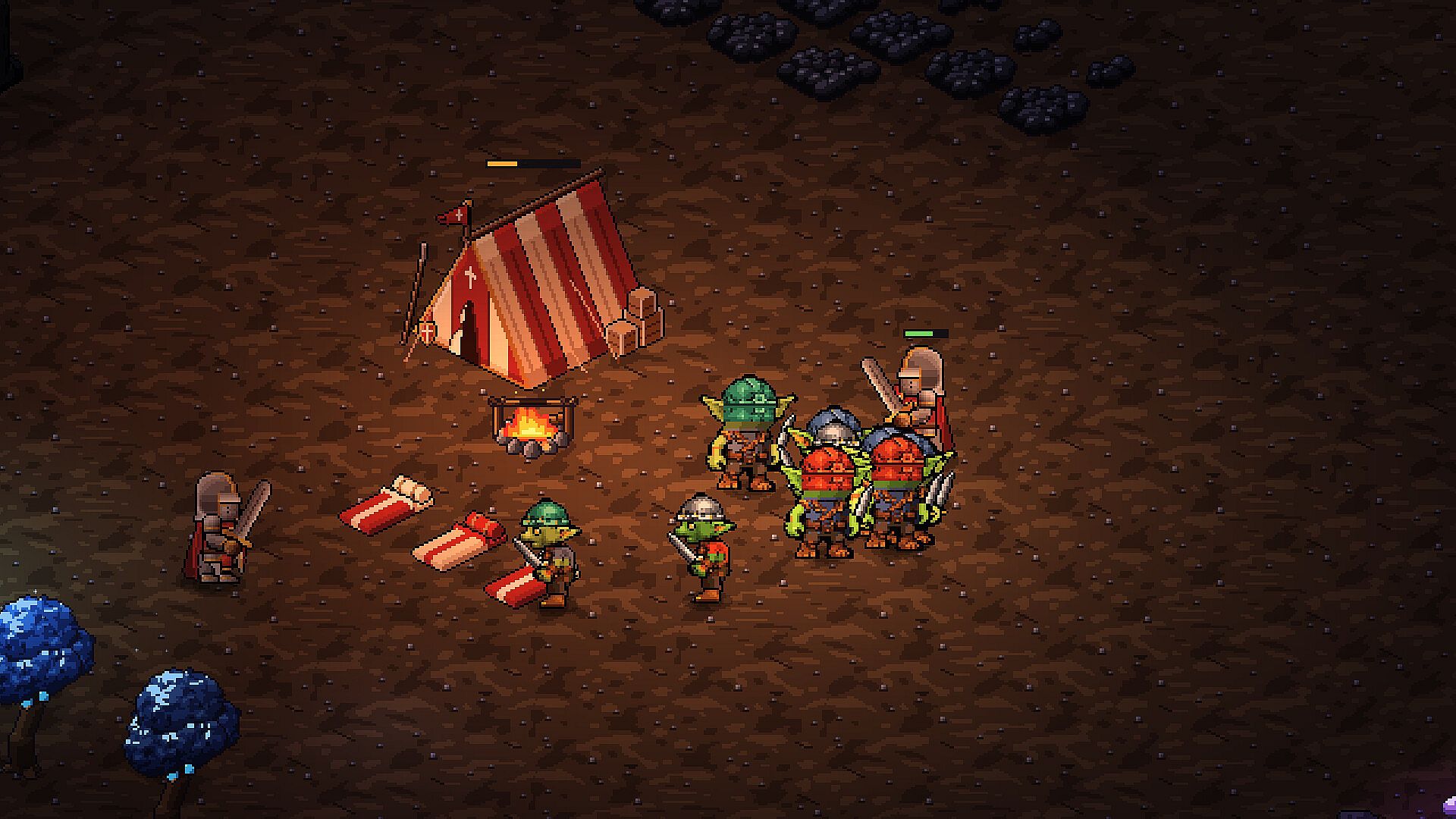
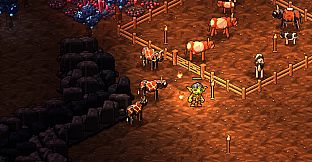
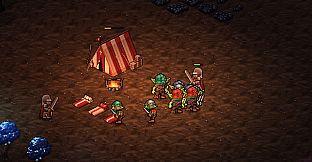
Defense integrates with production. Hostile knights, mages, and priests establish camps that grow bolder over time and may raid the player's walls. Forging weapons and building archer towers or guard posts counters these incursions. A warband can be raised to strike enemy tents for loot. Hospitals revive fallen goblins, preventing permanent losses. At deeper levels around 250 meters, fire cows appear and can be tamed using cryo-harnesses for herding alongside chickens, though separate pens are required.
Progression unlocks through the Library, where gems crafted from crystal fund research into new machines, recipes, and belt configurations. Trading posts sell excess goods to surface brokers under timed contracts that pay gold for wages. The Factory Drill consumes specific resources to bore down to hotter floors with richer ores, requiring lifts and tunnels to connect levels while the upper camp continues running. At the deepest point, molten gold from the core can be pumped and cooled into valuable rocks.
Game Modes
The game supports single-player campaigns focused on steady expansion and resource management. Co-op allows up to four players to join the same camp at any time via direct invites, enabling shared digging, building, and defense tasks. A sandbox camp option lets players operate without aggressive external threats, keeping hostile camps at their own fires so the focus stays on internal growth and automation.
Key Mechanics and Progression
Resource chains start simple and scale in complexity as research opens higher belt heights and advanced factories. Goblin assignments adapt to camp needs, with roles like animal handler or driver becoming relevant once herds and rail systems are established. Defense scales with depth, encouraging balanced investment in both production and combat readiness. The multi-floor structure demands ongoing maintenance of upper levels while pushing downward, creating a layered management challenge.
Is It Worth Playing?
Goblin Industries appeals to players who enjoy factory-building simulations combined with workforce management and light survival elements. The pixel-art style and goblin theme deliver a distinct atmosphere, while the co-op support adds flexibility for solo or group sessions. Those interested in automation loops, camp defense, and incremental deepening of a base will find a focused experience here. As an upcoming title with no released version yet, its value will depend on how well the systems integrate once available, but the described mechanics suggest strong potential for fans of similar indie simulation games.












