

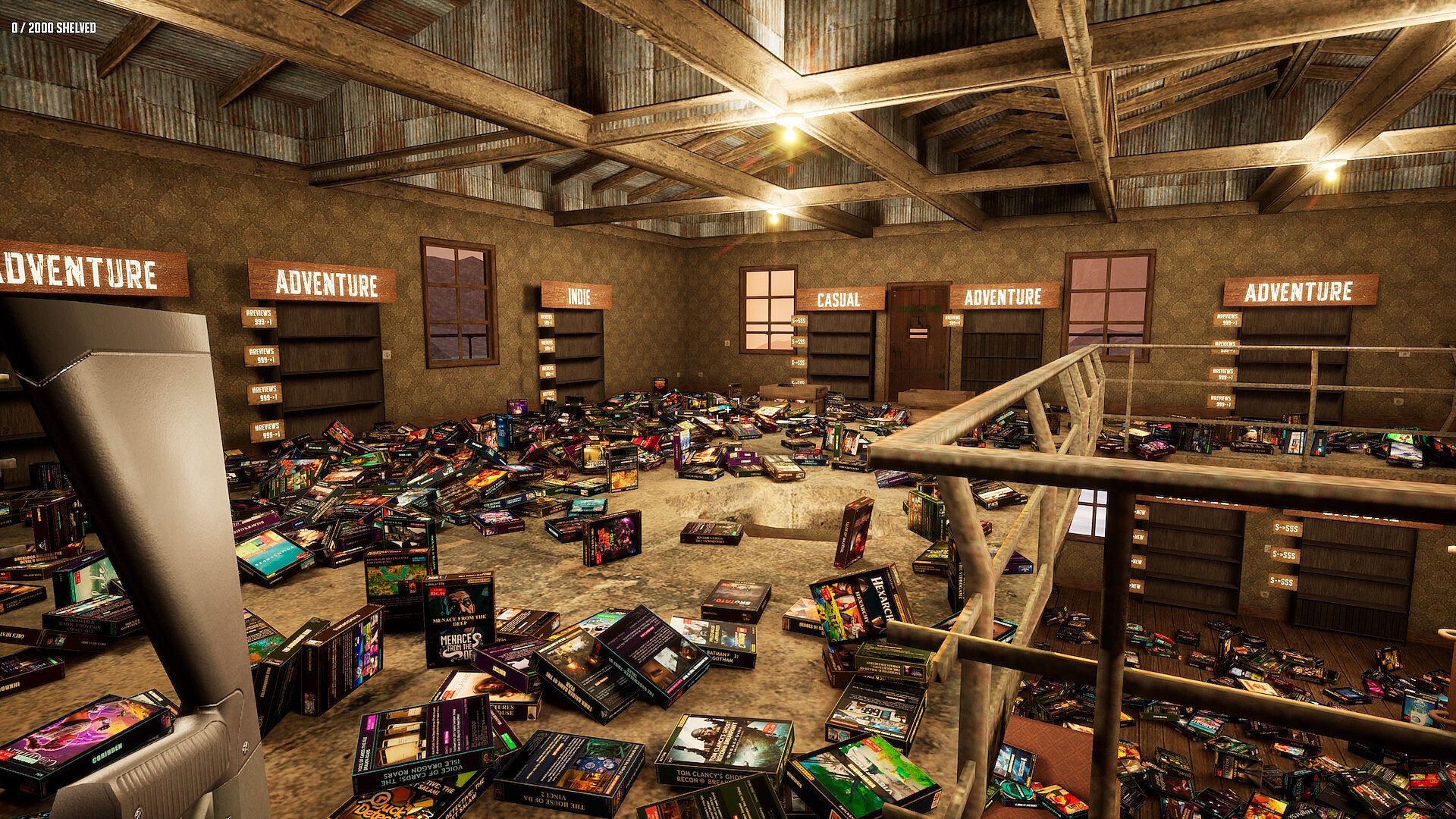
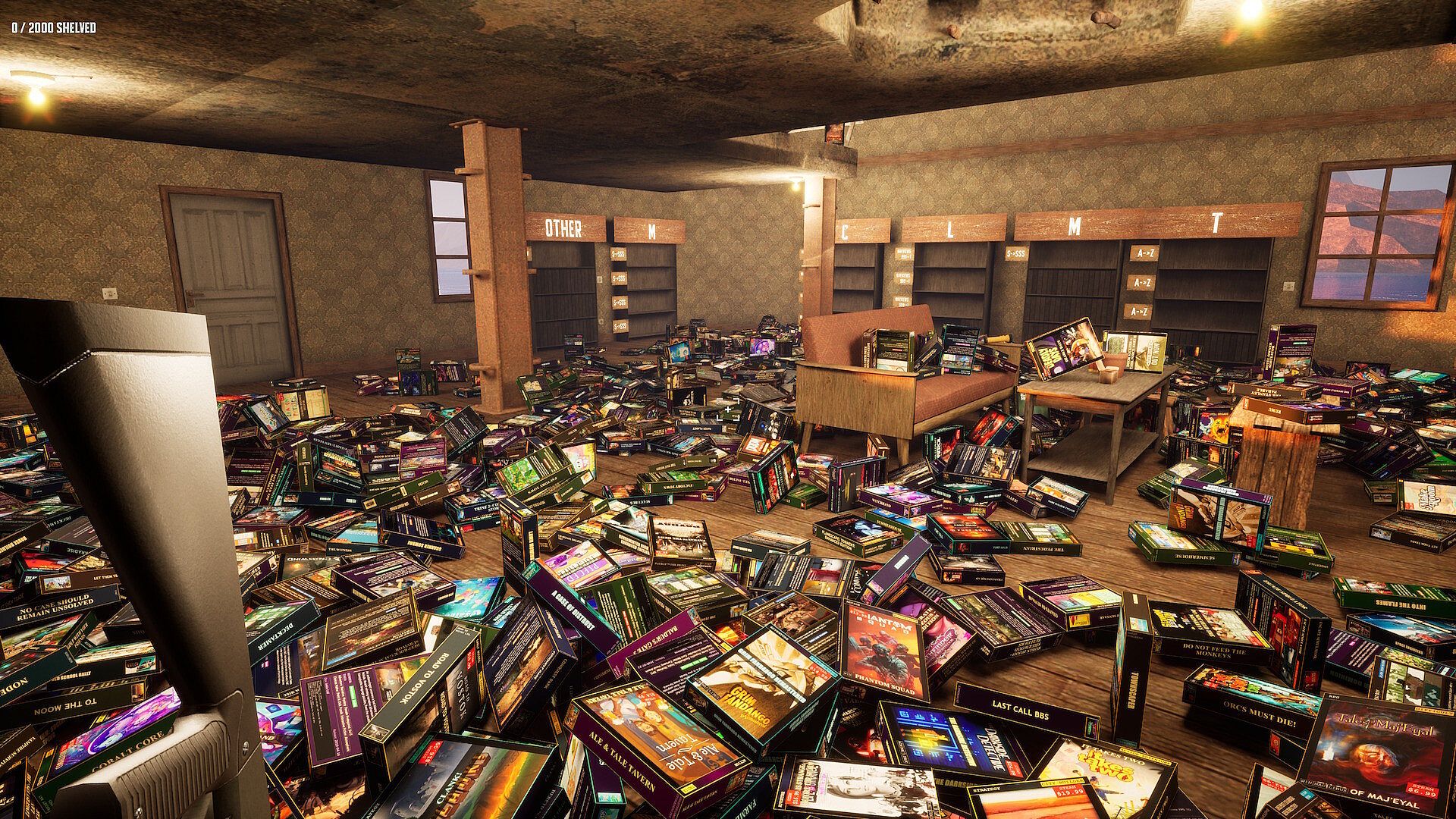
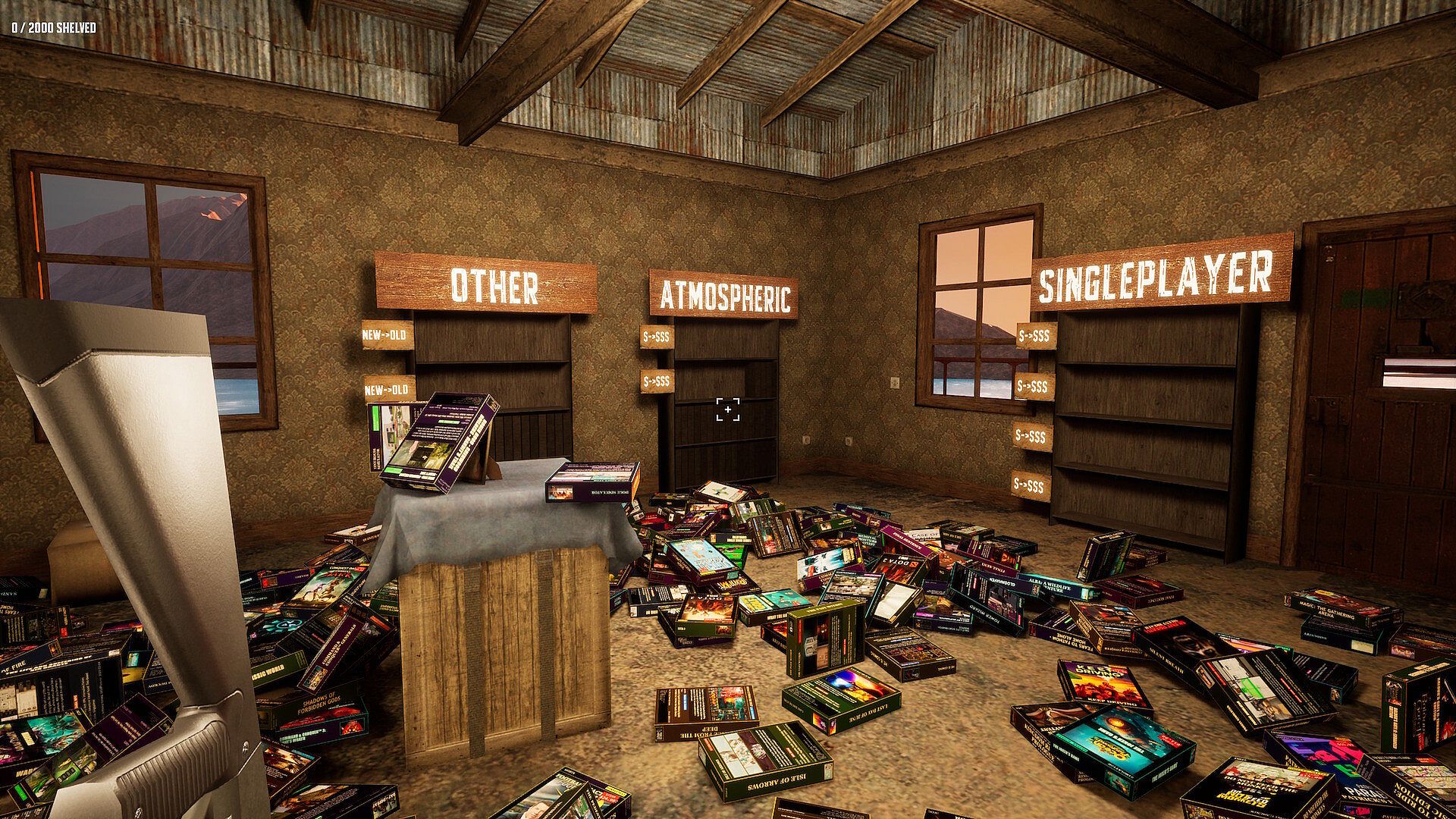
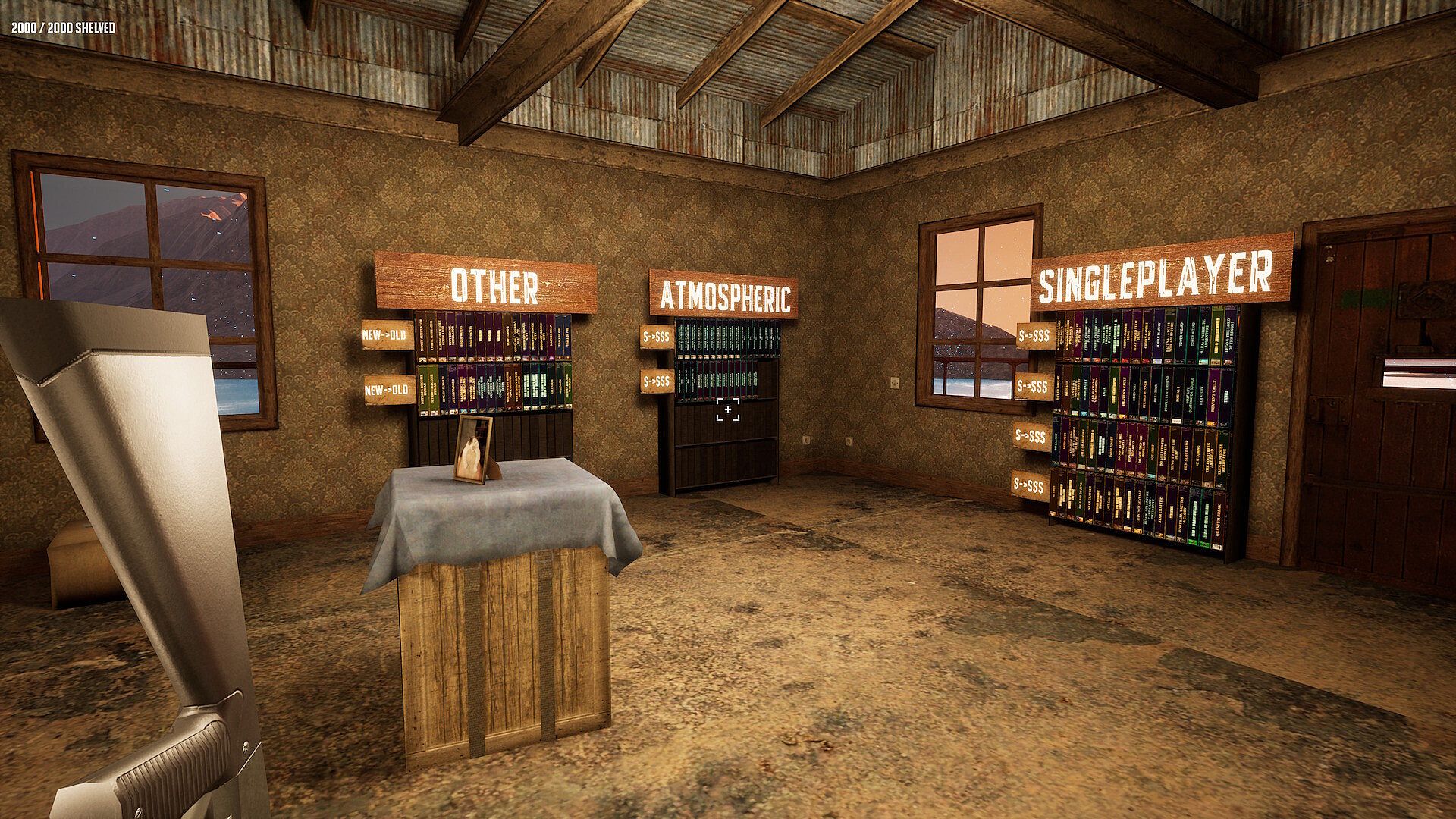
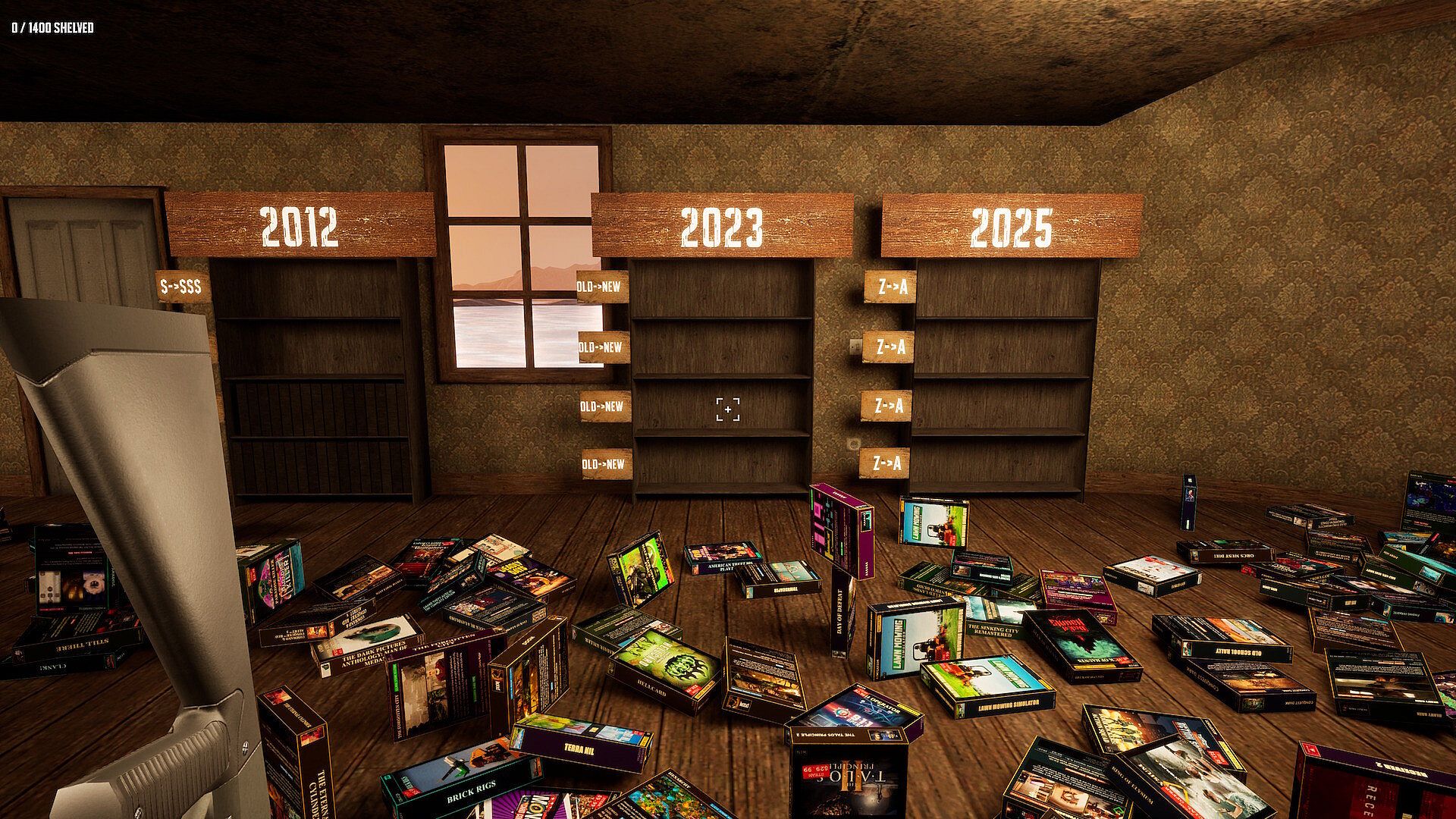
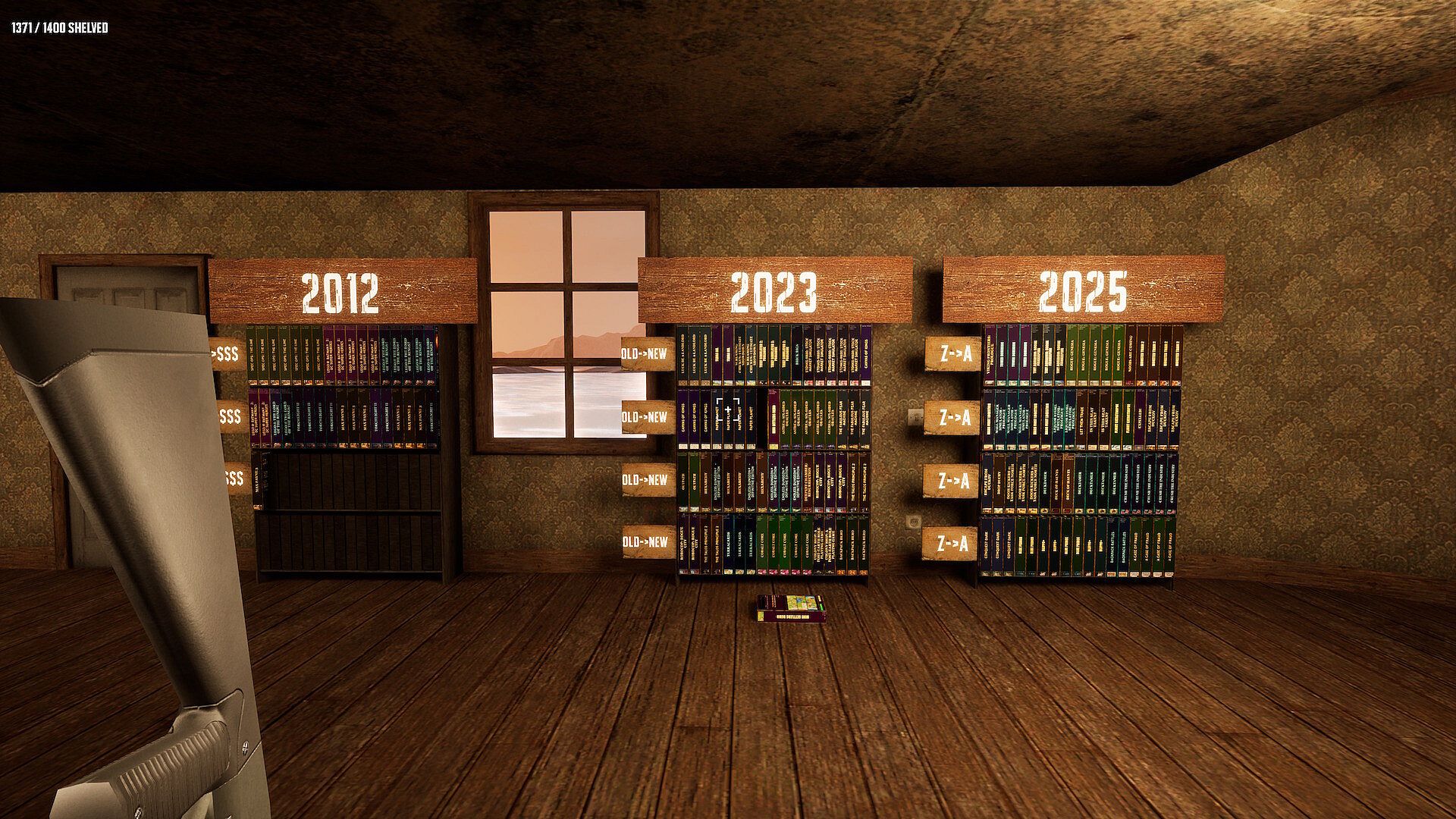
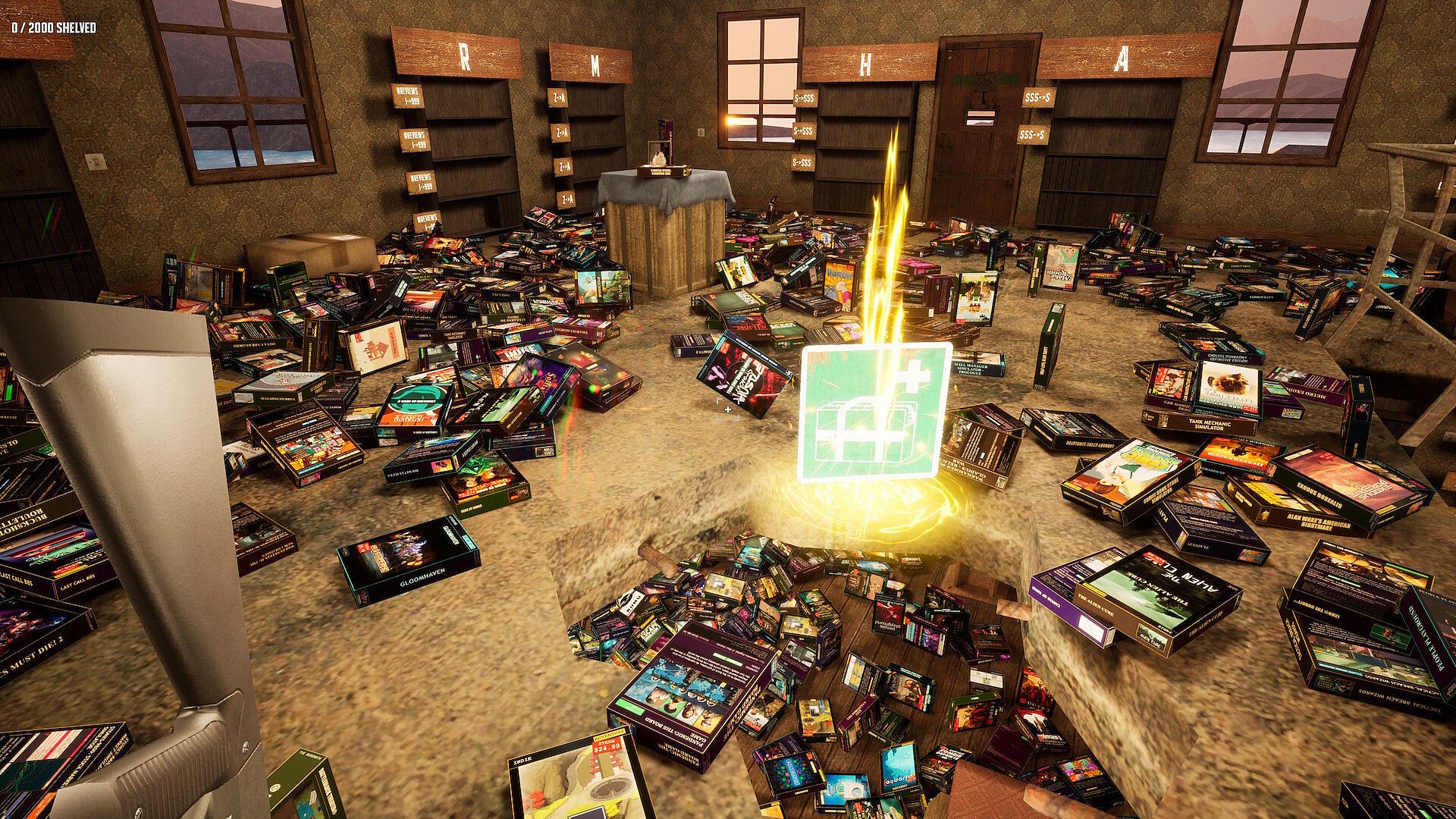
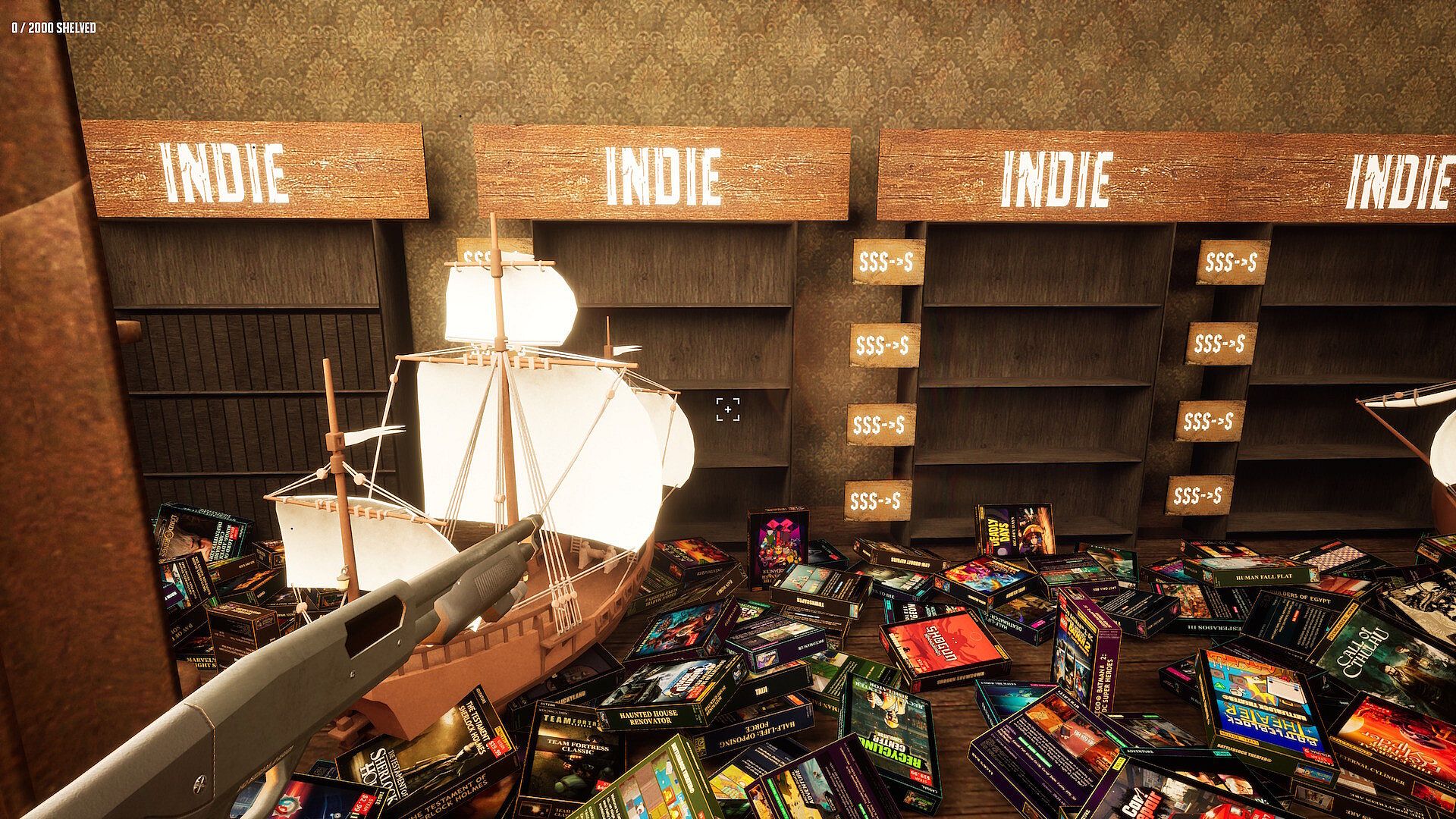
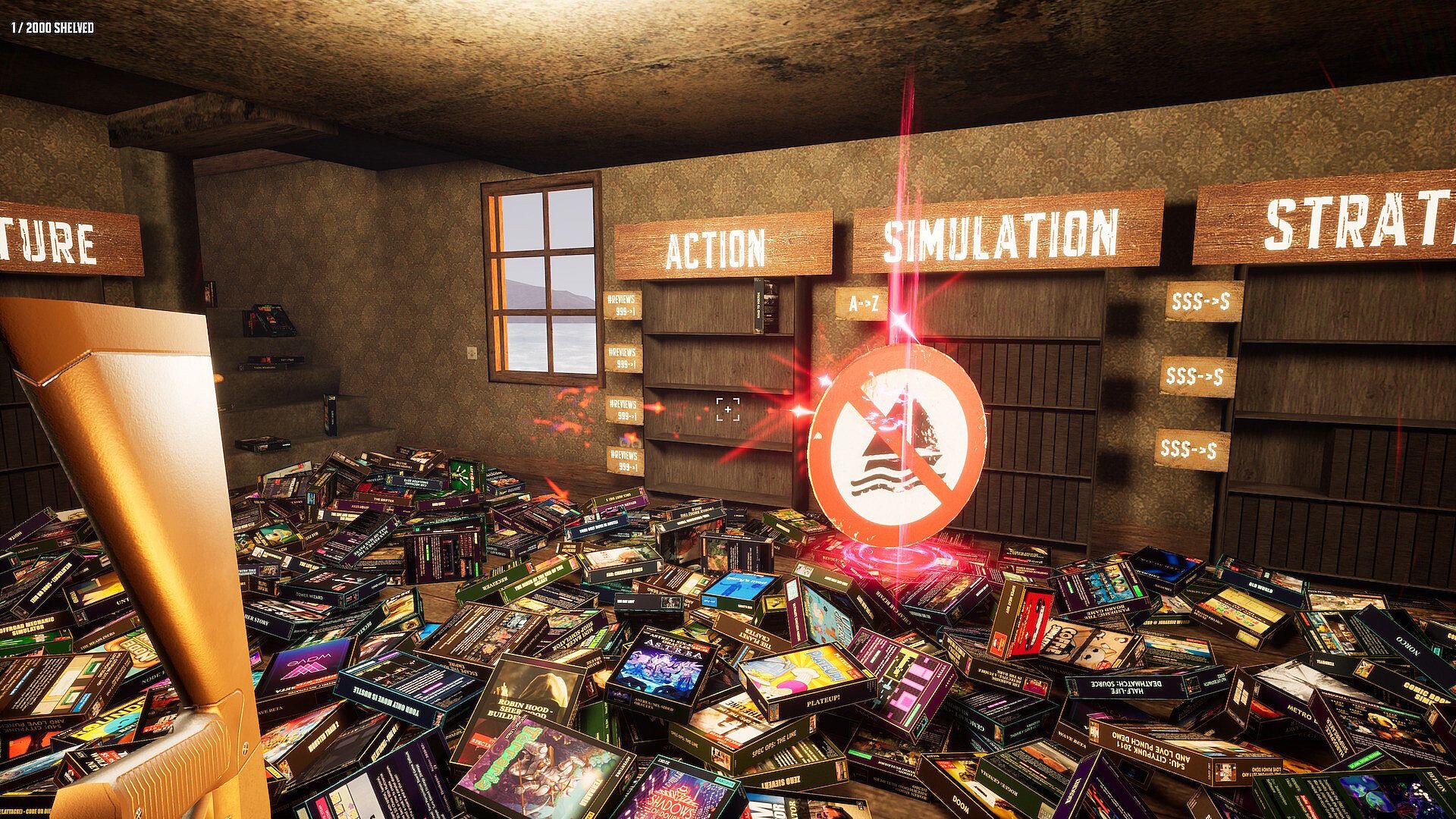
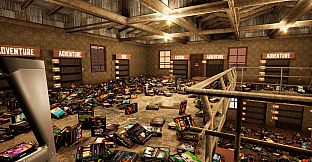
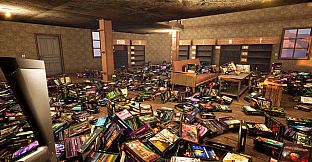
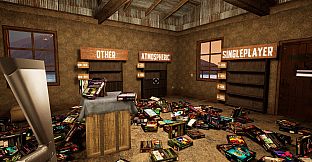
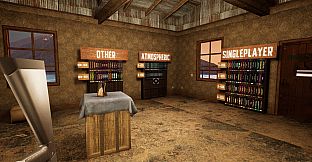
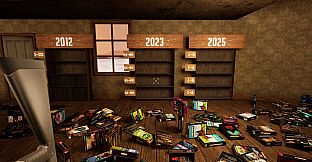
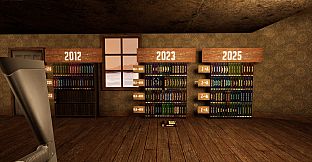
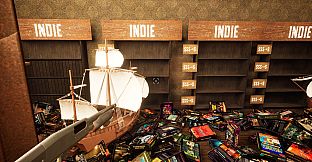
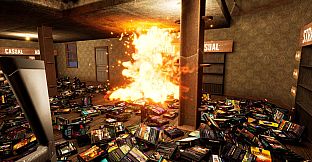
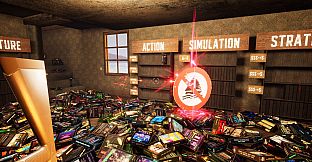
Game Shelver 99 is an indie simulation title that blends meticulous organization mechanics with first-person shooter wave defense. Set in a 1999 PC game store, players sort titles from their personal Steam library onto shelves while fending off software pirates who disrupt the carefully arranged displays.
Gameplay
The core loop centers on pulling games from a collection and placing them in the correct spots based on criteria such as genre, tags, release year, developer, title, or price. Procedural store layouts and categorization challenges draw directly from the player's own library, creating varied setups with multiple valid arrangements that support repeated playthroughs. Adjustable parameters let users scale the number of games to sort, shelf capacity, and other variables to match their preferred pace.
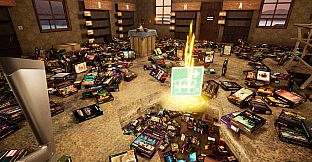
Power-ups appear in the style of classic first-person shooters to aid sorting efficiency. These include increased carry capacity for handling more boxes at once, visual highlights for matching items, and auto-shelving tools that place games automatically once criteria are met. The retro late-90s aesthetic mixes nostalgic store visuals with exaggerated modern effects during action sequences.
Game Modes
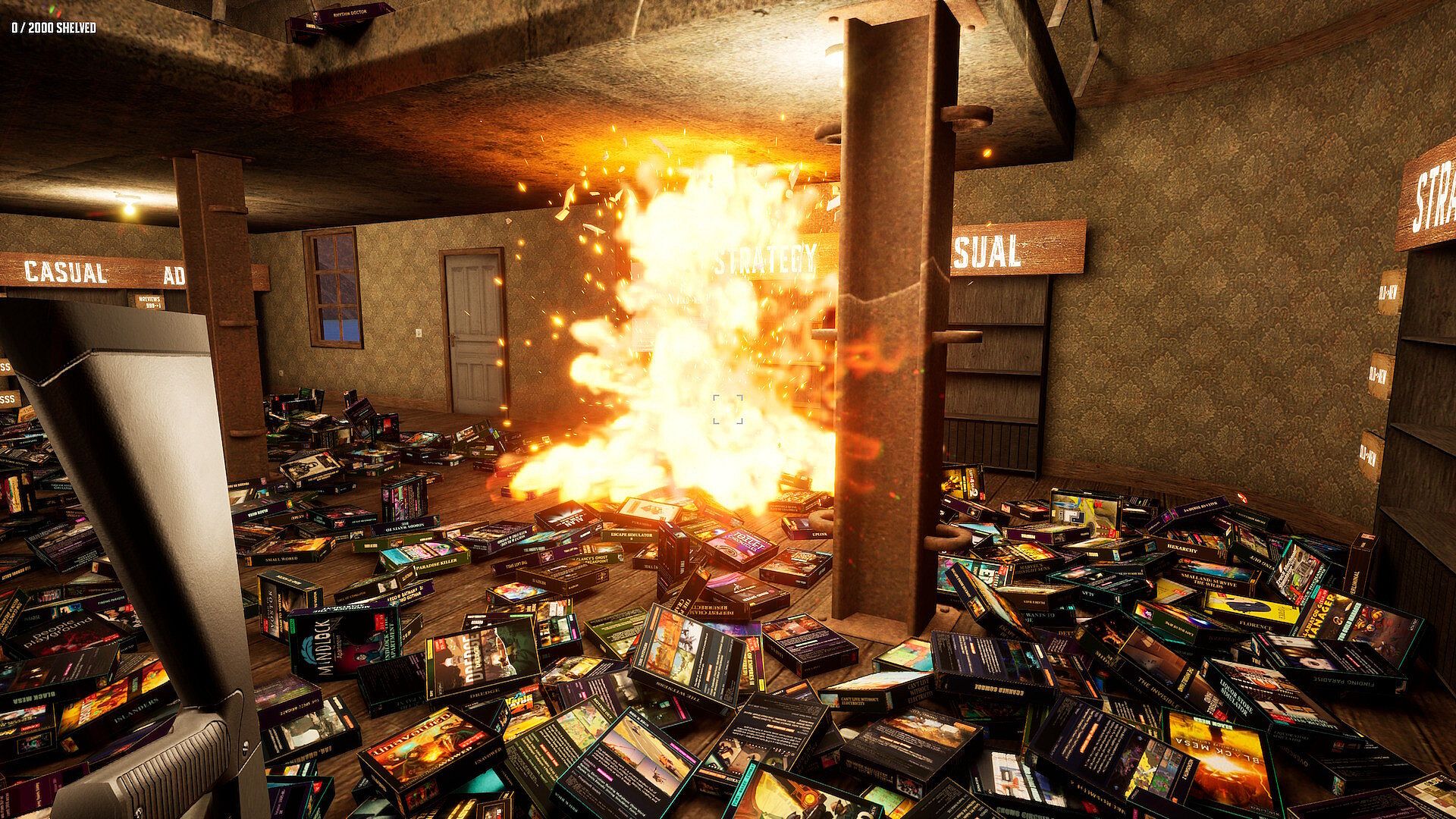
Peaceful mode removes all threats and focuses exclusively on the satisfaction of sorting and arranging games without interruptions. The alternative mode introduces waves of software pirates that loot shelves and scatter organized titles, requiring players to switch between shelving and using a shotgun for defense. Difficulty scales through options that control pirate numbers and spawn rates alongside the organizational demands.
Both modes support single-player sessions or online co-op for up to four participants. In co-op, the combined libraries of all players feed into the procedural challenges, adding variety and occasional humorous discoveries of unexpected titles among friends.
Key Mechanics and Features
Procedural generation ensures each session differs based on the specific Steam collection in use, with categorization rules that allow flexibility in how games fit together. The shotgun serves as the primary tool for repelling pirates, delivering direct feedback through impact effects that clear threats quickly. Difficulty sliders cover multiple aspects of both organization and combat, letting players fine-tune the experience from relaxed sorting to intense defense waves.
Single-player runs emphasize personal library management, while co-op sessions highlight teamwork in maintaining order across larger or more chaotic setups. The satirical tone pokes fun at digital ownership and piracy through the store owner narrative and pirate encounters.
Is It Worth Playing?
Players who enjoy simulation games centered on sorting and categorization will find the organization systems rewarding, especially when the challenges adapt to their actual game collection. The addition of wave defense adds tension and variety without overshadowing the core tidy-up loop. Those who prefer pure relaxation can stick to peaceful mode, while fans of light shooter elements gain an outlet through pirate encounters and power-ups.
The game launches with single-player and co-op support already built in, and a demo is scheduled for Next Fest in October ahead of the full November release. With no user reviews available prior to launch, the appeal rests on how well the blend of library management and defensive action matches individual tastes for indie simulation experiences. Adjustable difficulty and procedural variety position it as a title suited to short sessions or longer cooperative play with friends.