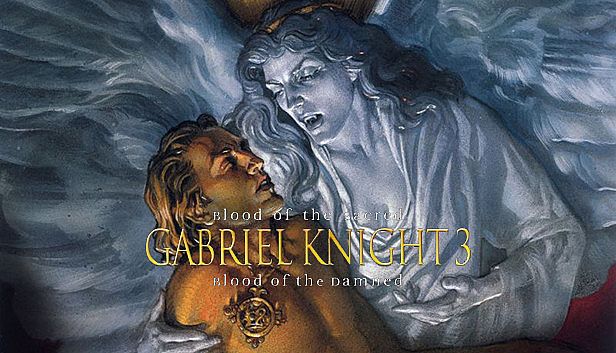











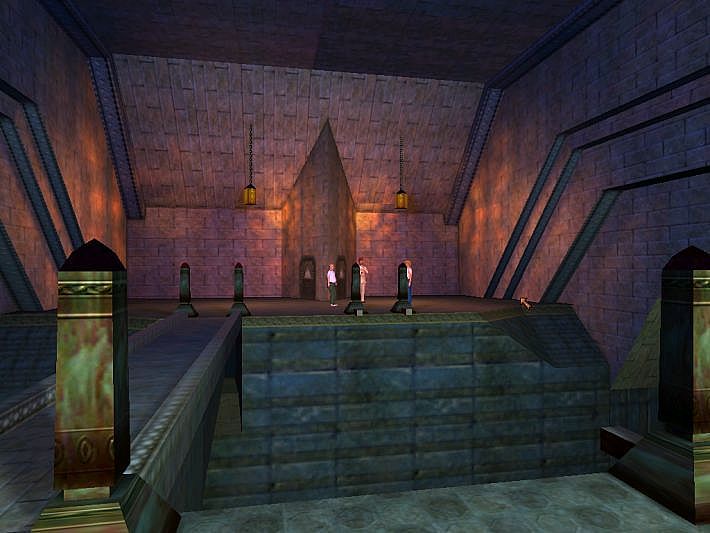
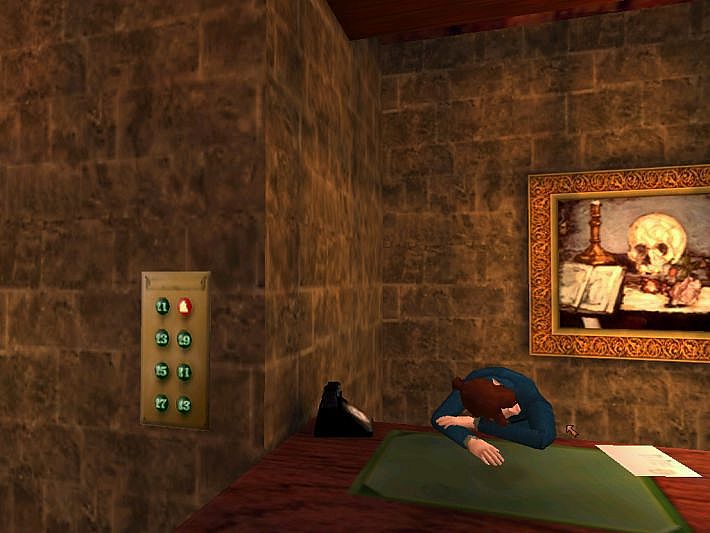
Gabriel Knight 3: Blood of the Sacred, Blood of the Damned is a point-and-click adventure game set in the remote French village of Rennes-le-Château. Players follow shadow hunter Gabriel Knight and his companion Grace Nakimura as they investigate a kidnapping that uncovers layers of conspiracy involving an ancient bloodline, vampires, and hidden treasure. The narrative unfolds over three days divided into time blocks that advance only after key actions and discoveries occur, creating a structured progression tied directly to the plot.
Gameplay
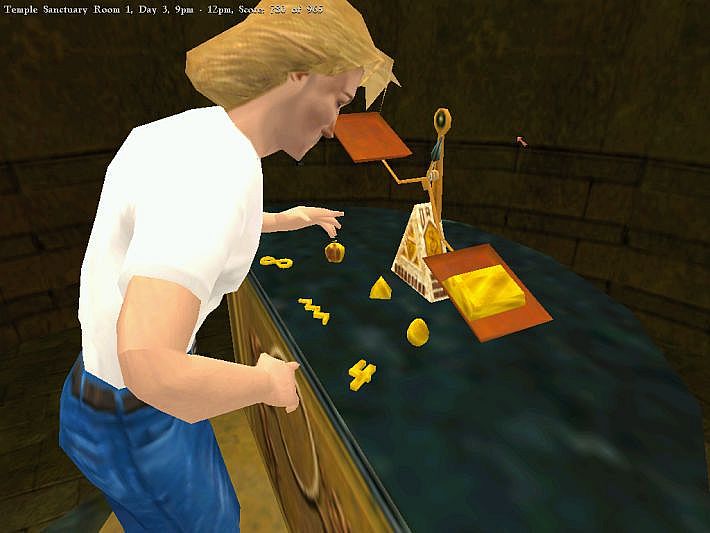
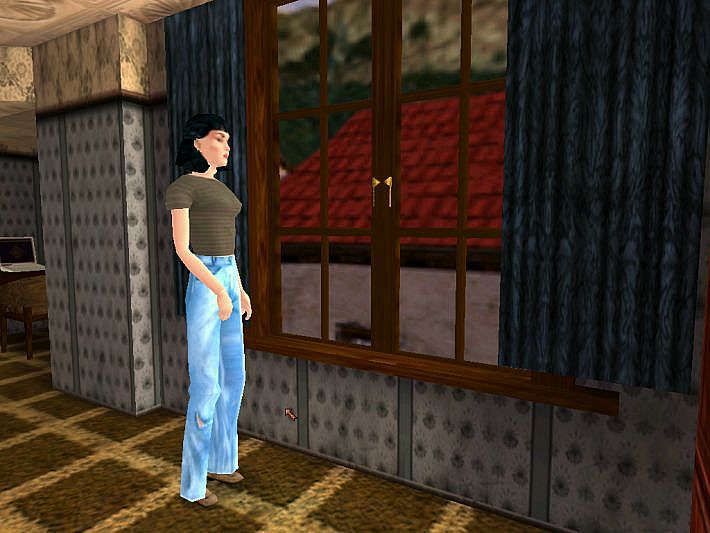
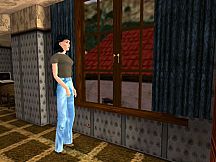
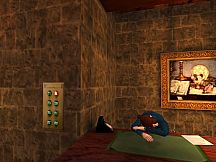
The core loop centers on exploration, conversation, and puzzle solving within detailed 3D environments. Players control the camera freely and direct Gabriel or Grace through hotel rooms, village streets, and surrounding hills to gather clues. Inventory management plays a central role, as characters collect and combine items such as tools, documents, and disguises to progress. Talking with an array of locals reveals information, while specific actions like fingerprint collection or room searches feed into a database system for cross-referencing evidence.
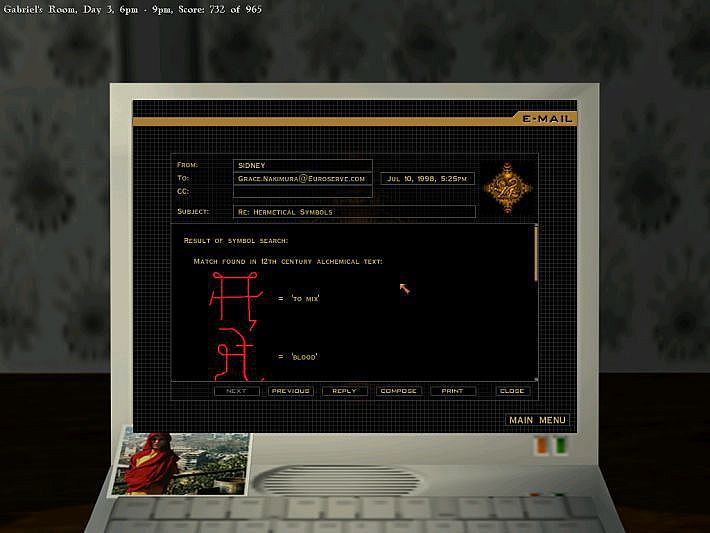
Switching between the two protagonists adds variety. Gabriel focuses on practical investigation and direct encounters, whereas Grace handles deeper research and logical deduction tasks. Time blocks shift NPC positions and available opportunities, requiring players to revisit locations and time actions carefully to avoid missing sequences. Puzzles range from straightforward item use to more involved sequences that demand observation of environmental details and character behaviors.
Game Modes
The game operates entirely as a single-player experience with no multiplayer options or separate modes. All content unfolds in a linear story structure that alternates control between Gabriel and Grace across the three-day timeline. Progression depends on completing objectives within each time block rather than any competitive or cooperative elements.
Story and Setting
The plot draws players into the mysteries of Rennes-le-Château through whispers of sacred lineage and forbidden knowledge. Gabriel arrives first in pursuit of a missing child, soon joined by Grace whose research skills uncover historical connections to the Grail legend and local legends. Interactions with residents who each hold partial truths drive the investigation forward, while the village itself serves as a contained hub for exploration. The narrative builds tension around themes of faith, destiny, and hidden dangers that affect both protagonists personally.
Is It Worth Playing?
This title appeals to players who enjoy classic point-and-click adventures with strong emphasis on story, character dialogue, and methodical puzzle solving. The dual-protagonist structure and time-block mechanics provide a distinct rhythm that rewards careful observation and repeated exploration of the same areas. Some sequences involve precise timing or creative item combinations that reflect the game's 1999 origins, which can feel deliberate or occasionally frustrating depending on individual tolerance for older design conventions. Availability on modern platforms allows access to the original experience with potential compatibility adjustments for current systems. Those drawn to narrative-driven mysteries set in atmospheric real-world locations will find the central conspiracy and its resolution engaging throughout the campaign.