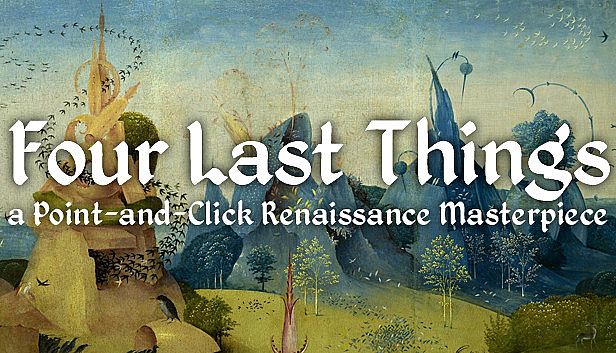



















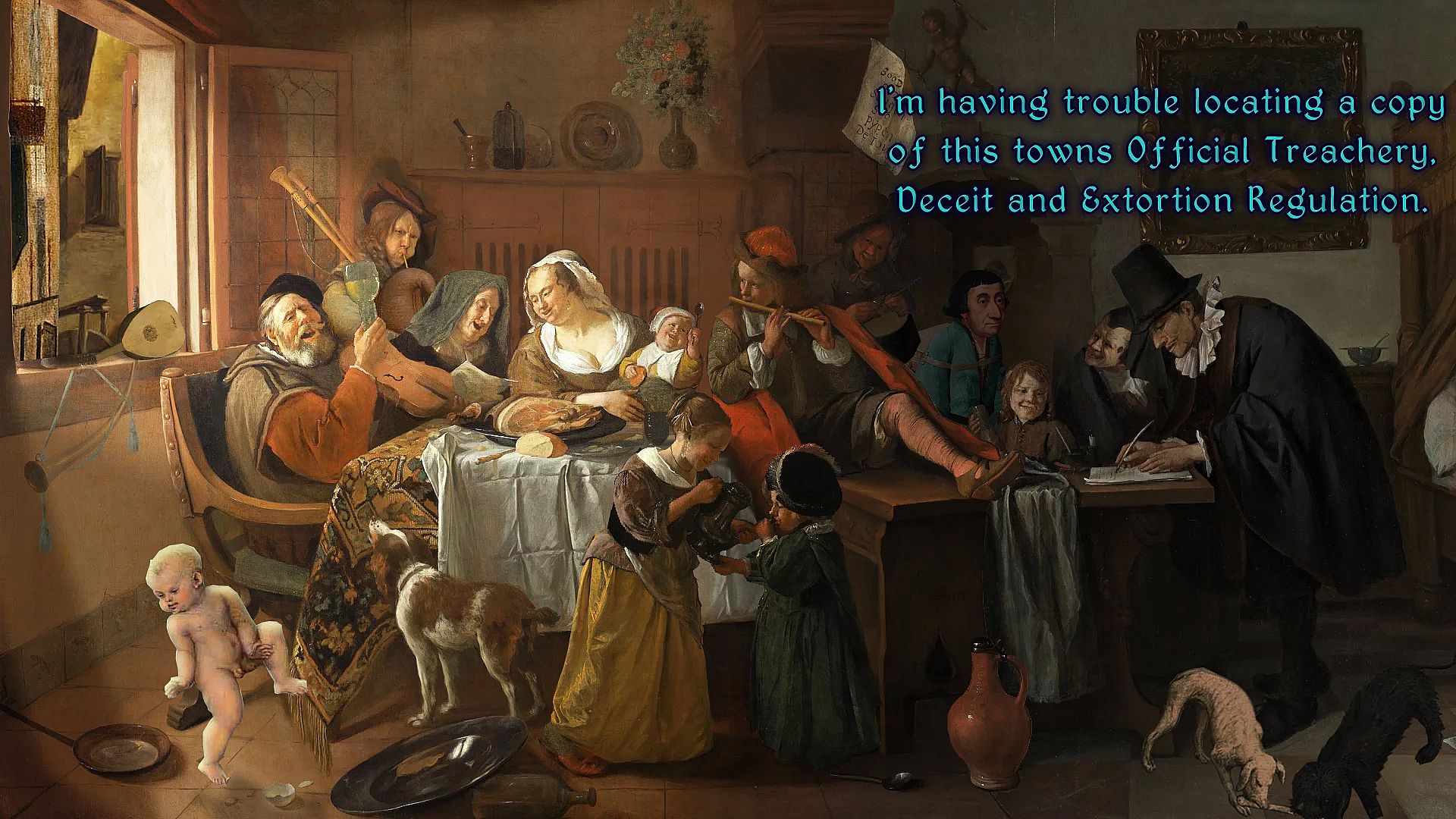
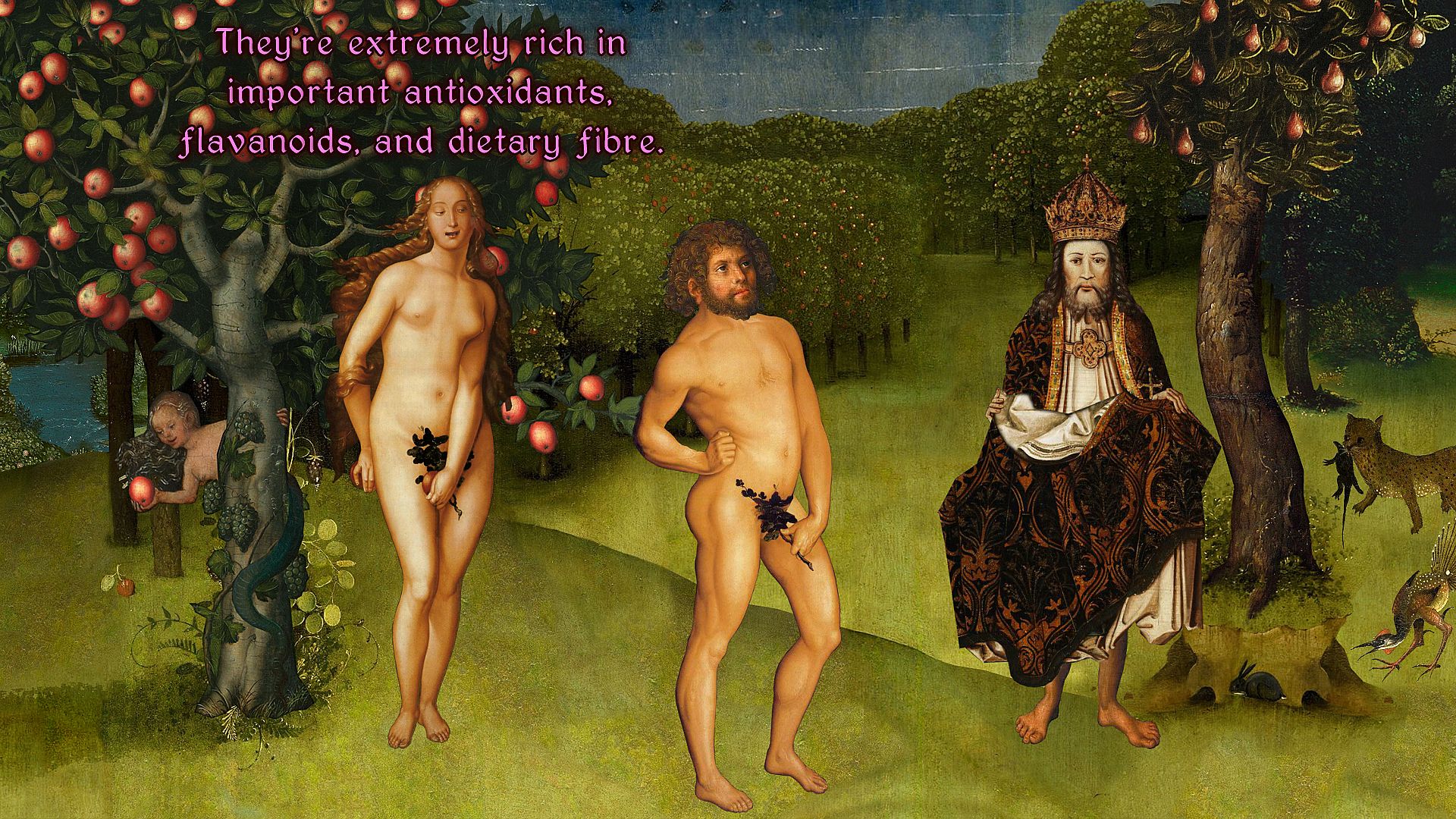
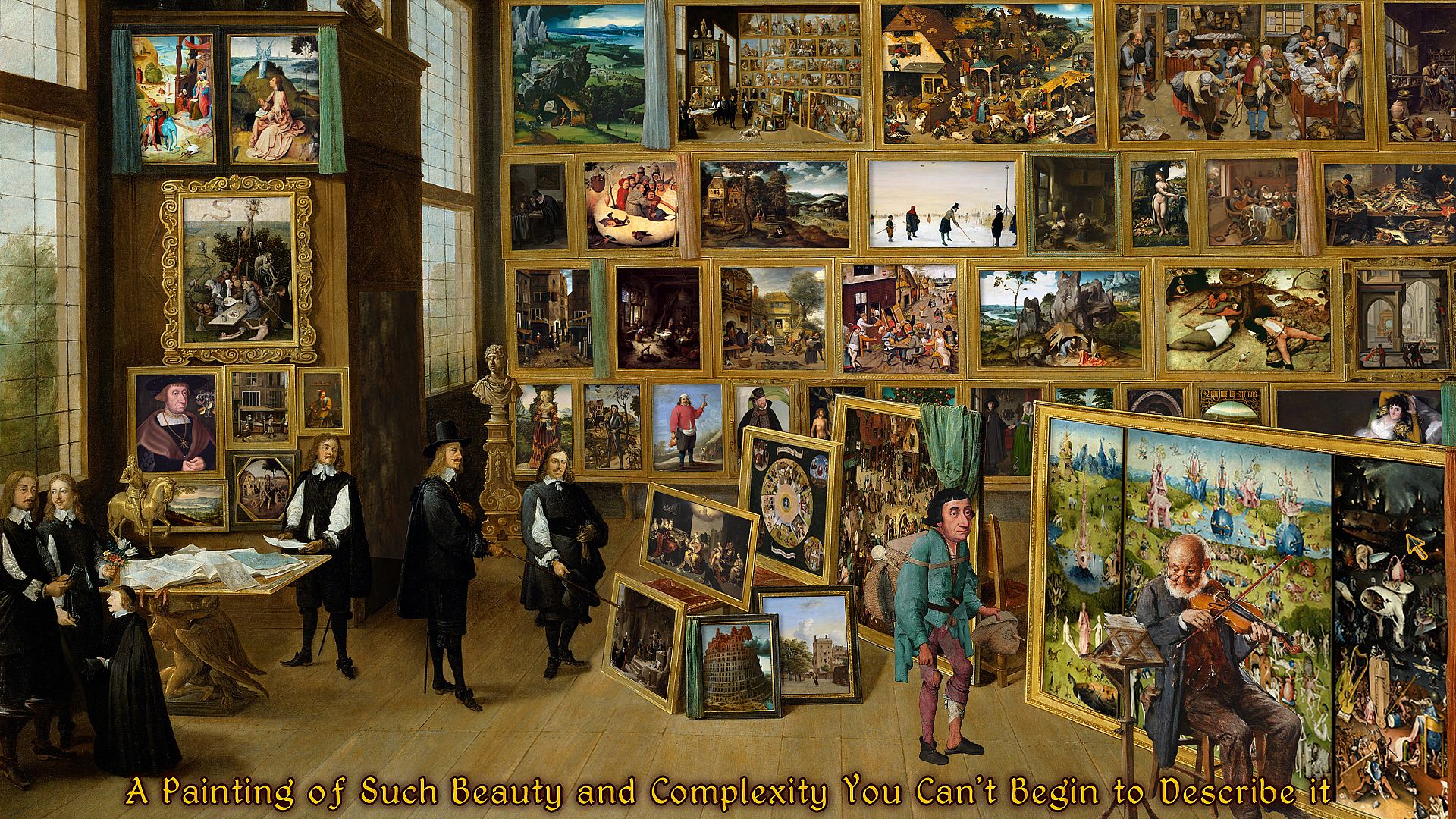
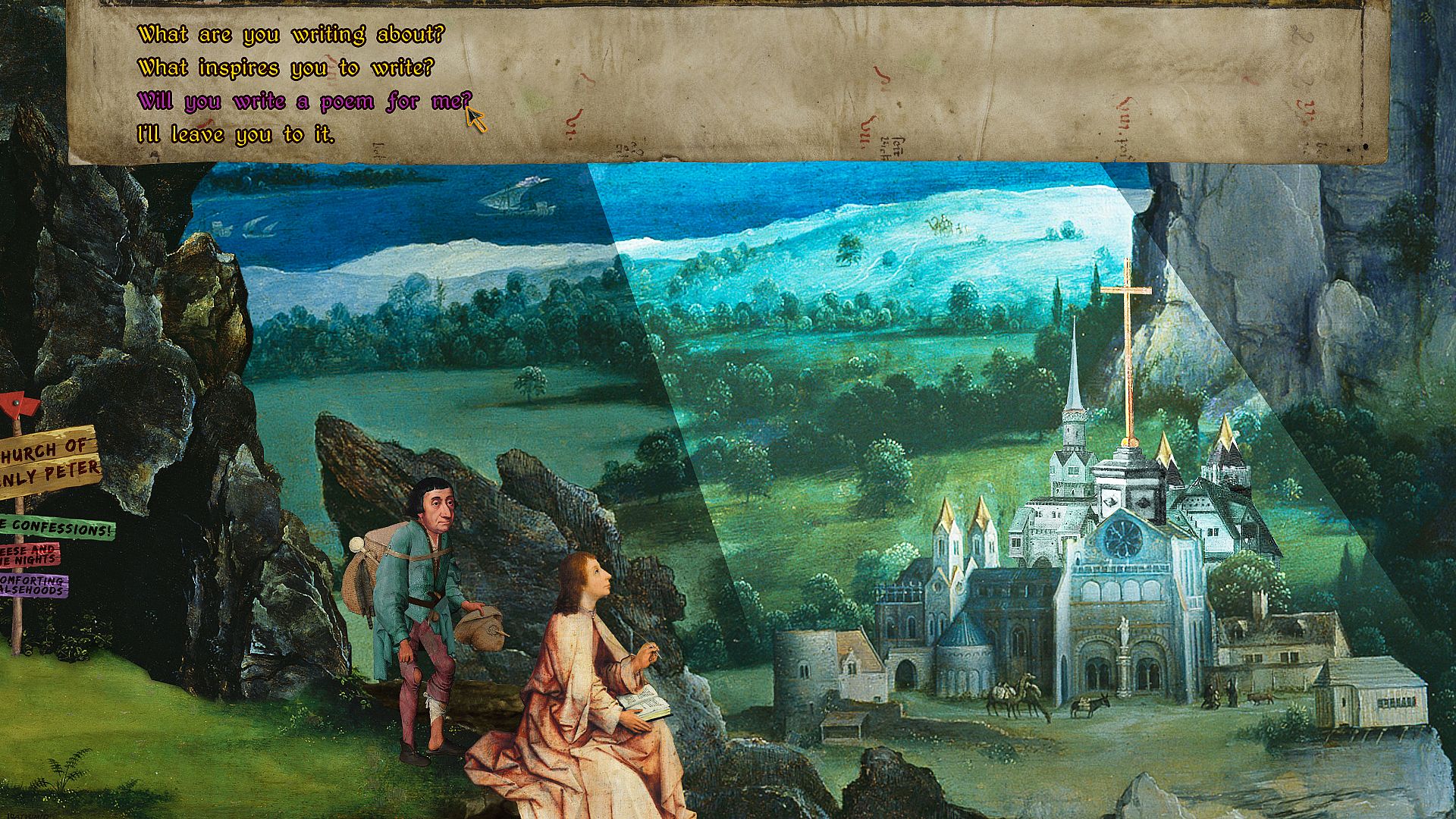
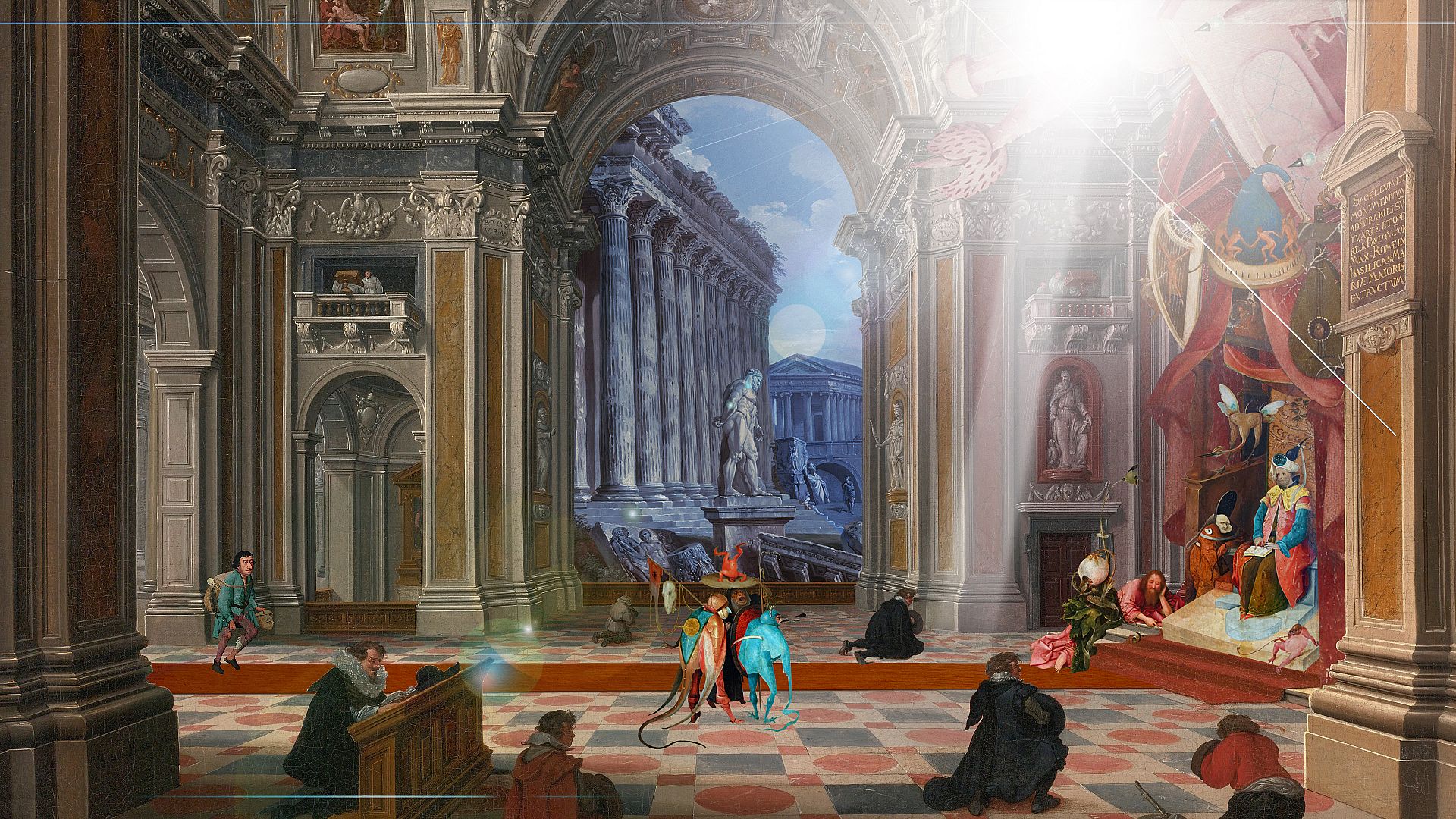
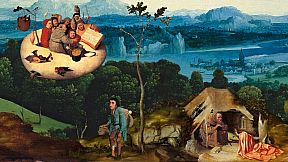

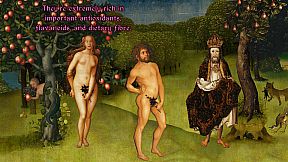
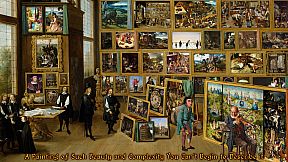
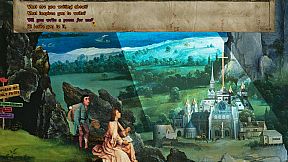
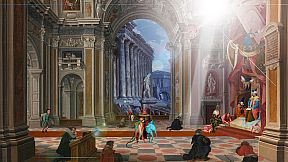
Four Last Things stands as a distinctive indie point-and-click adventure game available on PC. Players navigate a world assembled from Renaissance paintings while pursuing a path of sin and eventual salvation through the themes of death, judgement, heaven, and hell. The experience blends traditional adventure mechanics with a surreal sense of humor that draws from classic comedy traditions.
Gameplay
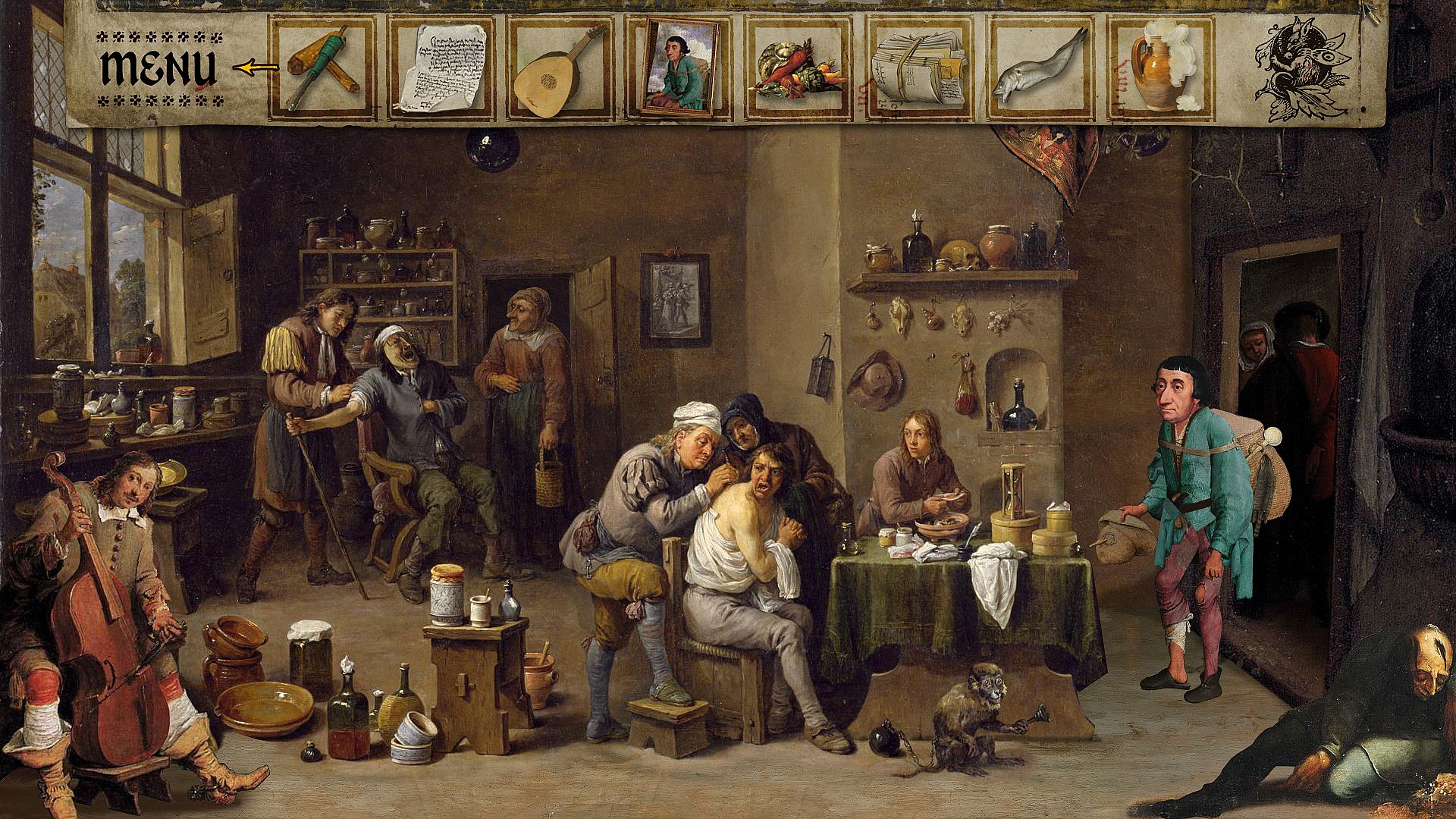
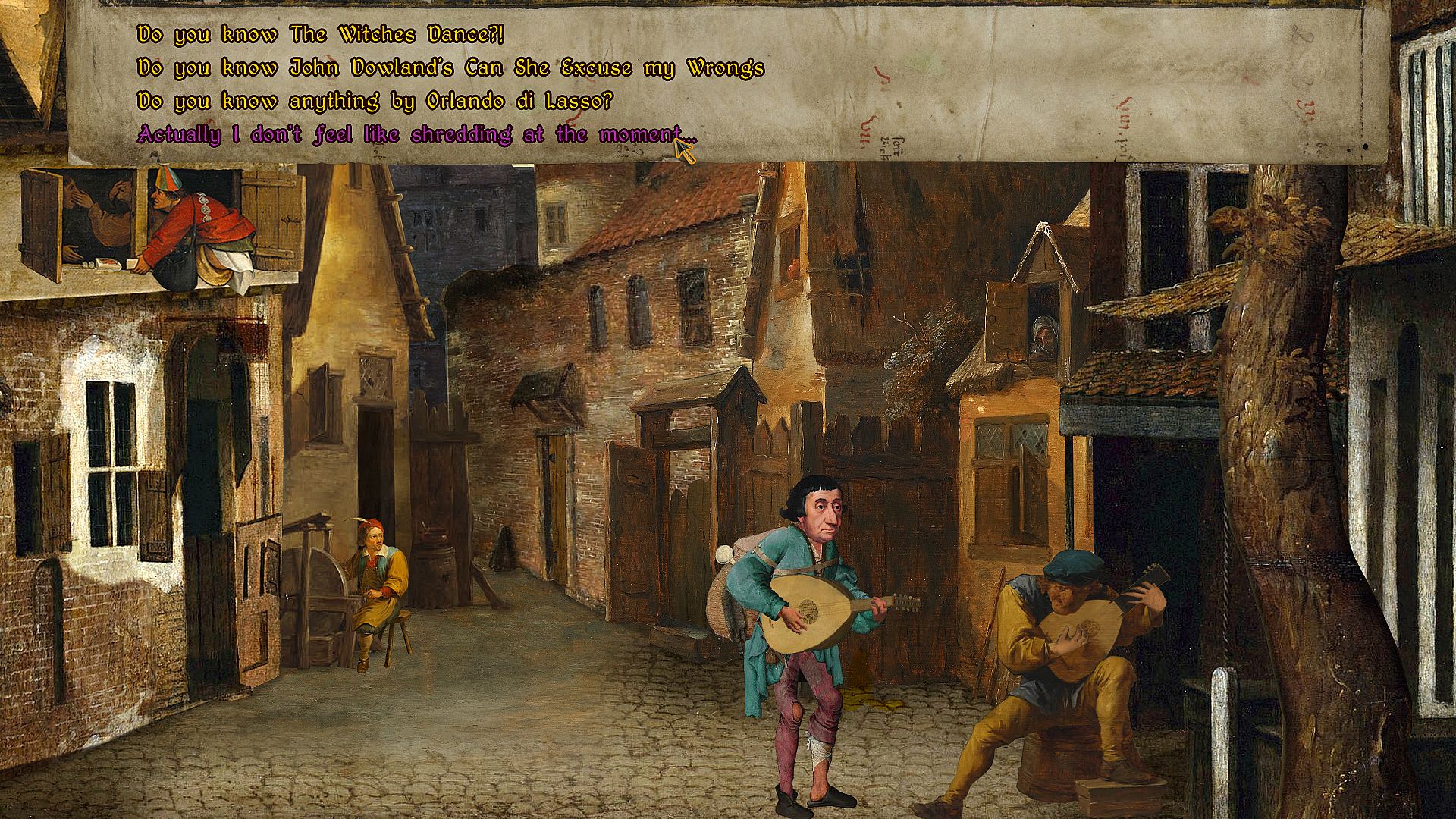
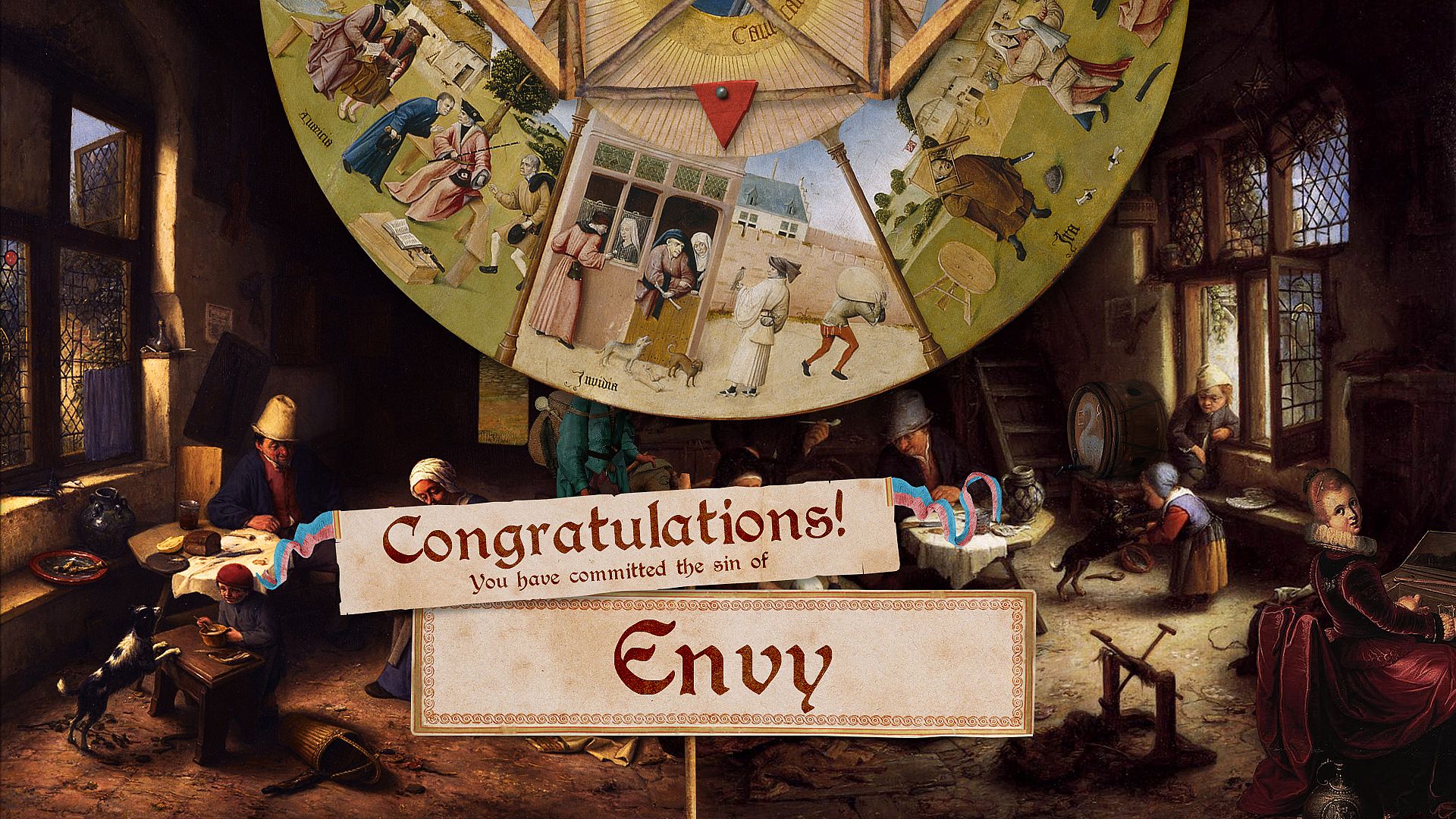
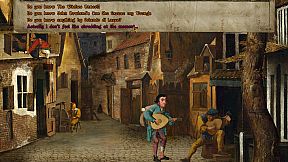
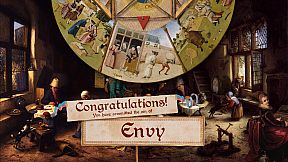
The core loop centers on exploration and interaction within detailed scenes built from historical artworks. A verb coin menu handles actions such as examining objects, using items, or talking to characters, while an inventory system allows players to drag and drop collected objects into the environment. Progression relies on careful observation of the painted backgrounds and logical connections between items and situations. Sinful opportunities appear throughout the streets and locations, encouraging players to seek out and commit various misdeeds that later tie into the confession process for salvation.
Puzzles follow consistent internal rules without requiring item combinations in most cases. Each challenge fits the setting and rewards attention to the visual details of the Renaissance compositions. The interface remains straightforward, focusing attention on the artwork rather than complex controls.
Game Modes
Four Last Things offers a single-player narrative experience with no additional modes or multiplayer options. The entire journey unfolds as one continuous story that players complete at their own pace through sequential scenes and interactions. There are no separate difficulty settings, challenge modes, or branching campaigns beyond the main path.
Art and Sound Design
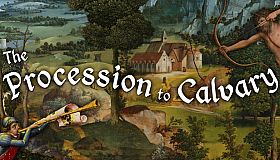
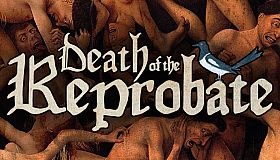
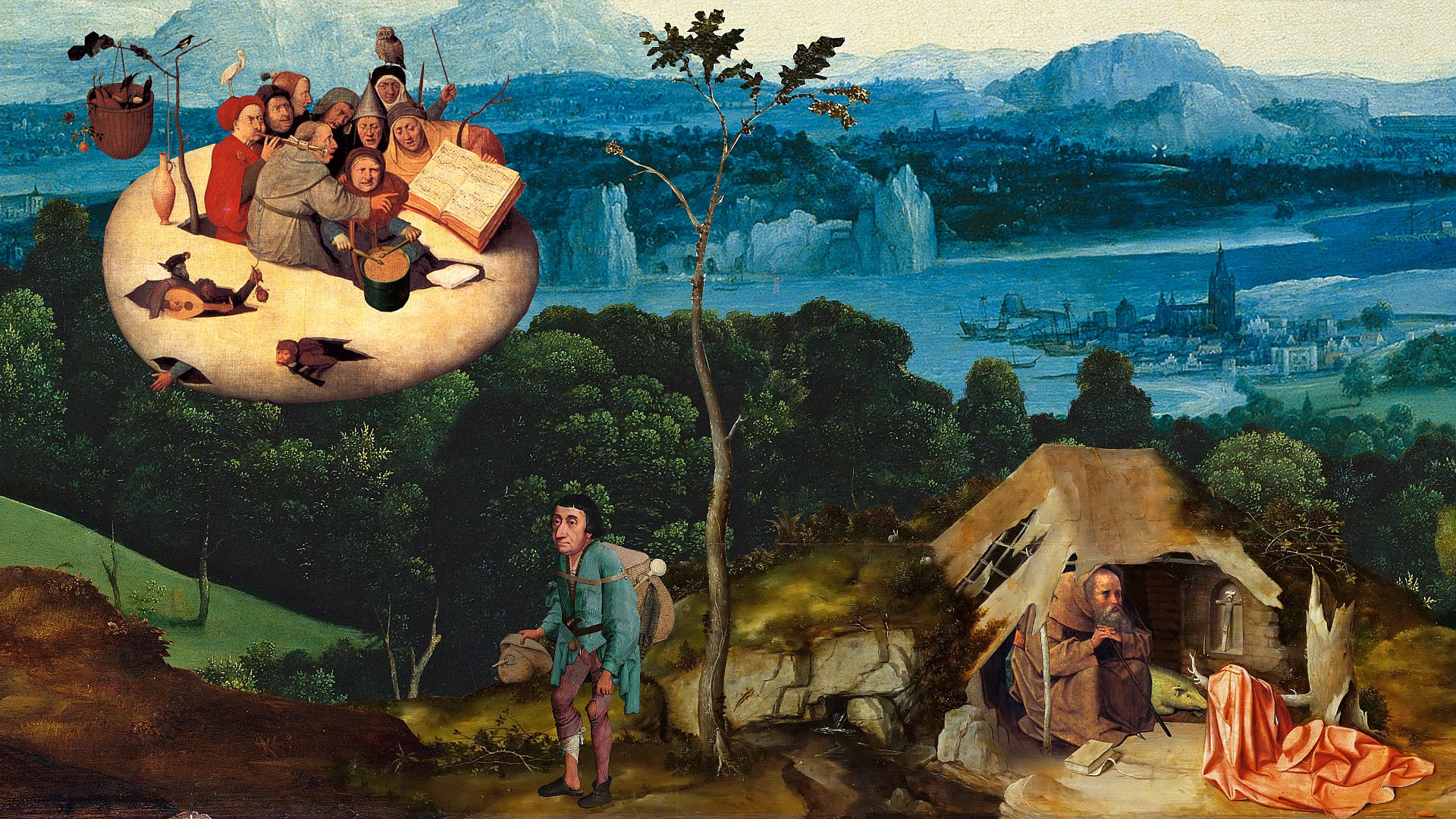
Every location draws from works by artists including Hieronymus Bosch, Pieter Bruegel, and Jan van Eyck, combined into a cohesive environment that respects the original paintings. The visual style creates a unified world where figures and settings interact in new ways while preserving their historical character. A soundtrack of public domain classical pieces from composers such as Bach, Erik Satie, and Claudio Monteverdi plays throughout, matching the tone and period of the artwork.
These elements support the game's focus on both visual appreciation and audio atmosphere without modern graphical effects or voice acting.
Humor and Themes
The narrative treats lofty religious concepts with flippant, anarchic comedy that echoes Monty Python sketches. Jokes range from absurd situations to pointed observations about human folly, often involving bodily humor treated with equal seriousness to the more philosophical moments. The story begins with a creation tale that quickly turns irreverent, setting the tone for the player's journey through sin and the four last things.
Despite the ridiculous elements, the puzzles maintain logical consistency that prevents the humor from undermining progress. Players encounter moments that balance silliness with occasional unexpected depth, though the overall approach stays light and satirical.
Is It Worth Playing?
Four Last Things appeals most to players who enjoy classic point-and-click adventures, Renaissance art, and irreverent humor. The short length and focused design make it suitable for a single sitting or relaxed play sessions. Reviews consistently highlight the clever puzzles, distinctive visuals, and consistent comedic voice as strengths that set the game apart from typical adventure titles.
Those seeking modern graphics, extensive replayability, or multiplayer features will find little here. The game remains a complete, self-contained release from its original launch with no further updates or expansions. It suits fans of intelligent yet ridiculous storytelling who appreciate the unique blend of historical art and Monty Python-inspired wit.