

Forgery is a single-player strategy roguelike with simulation and casual elements set in a dark medieval world. Players take on the role of a former royal coin maker seeking revenge by counterfeiting coins and navigating a branching path to confront the king. The core experience revolves around resource management, precise timing, and calculated risks in short, repeatable runs that build toward permanent progression.
Gameplay
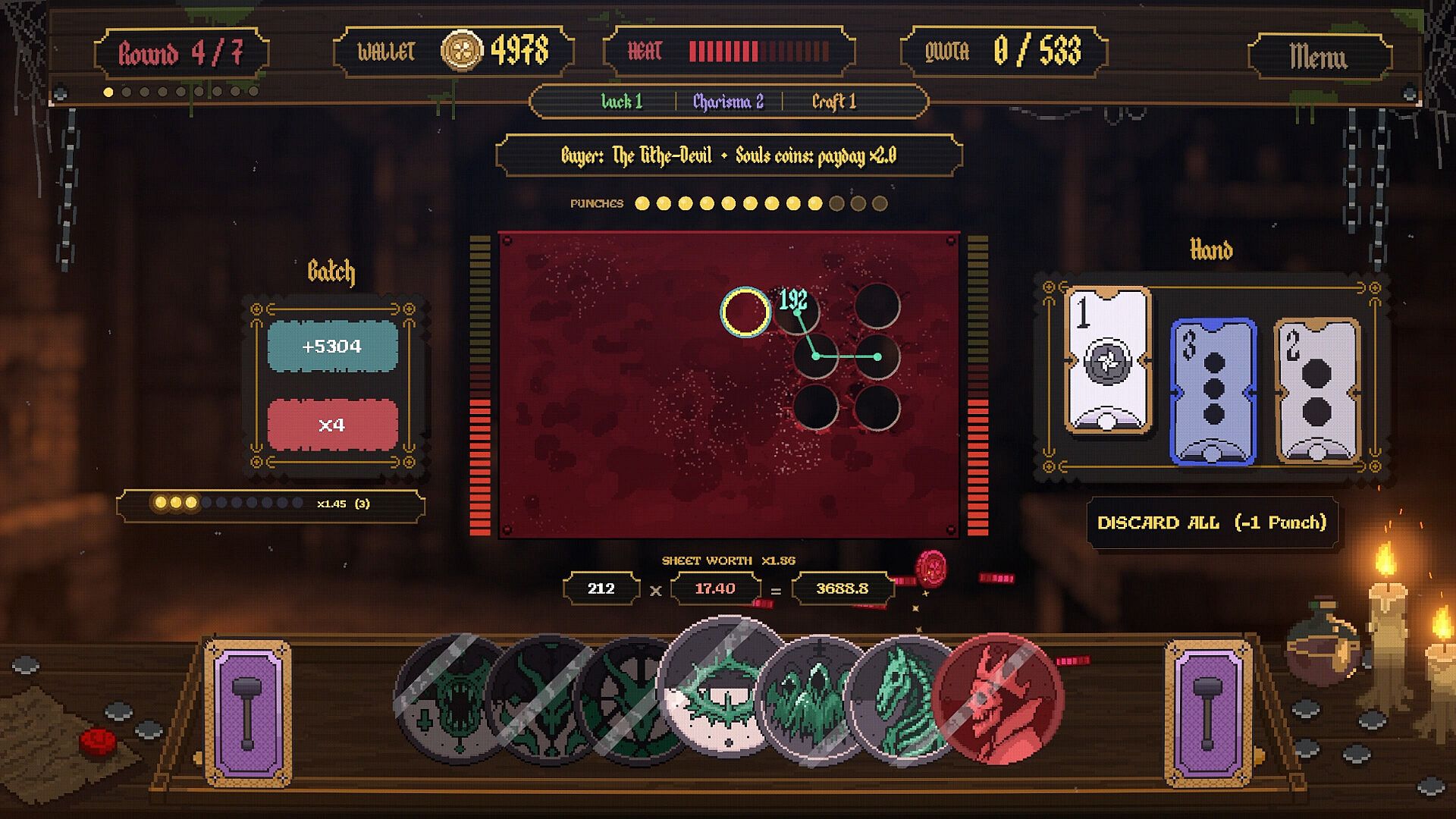
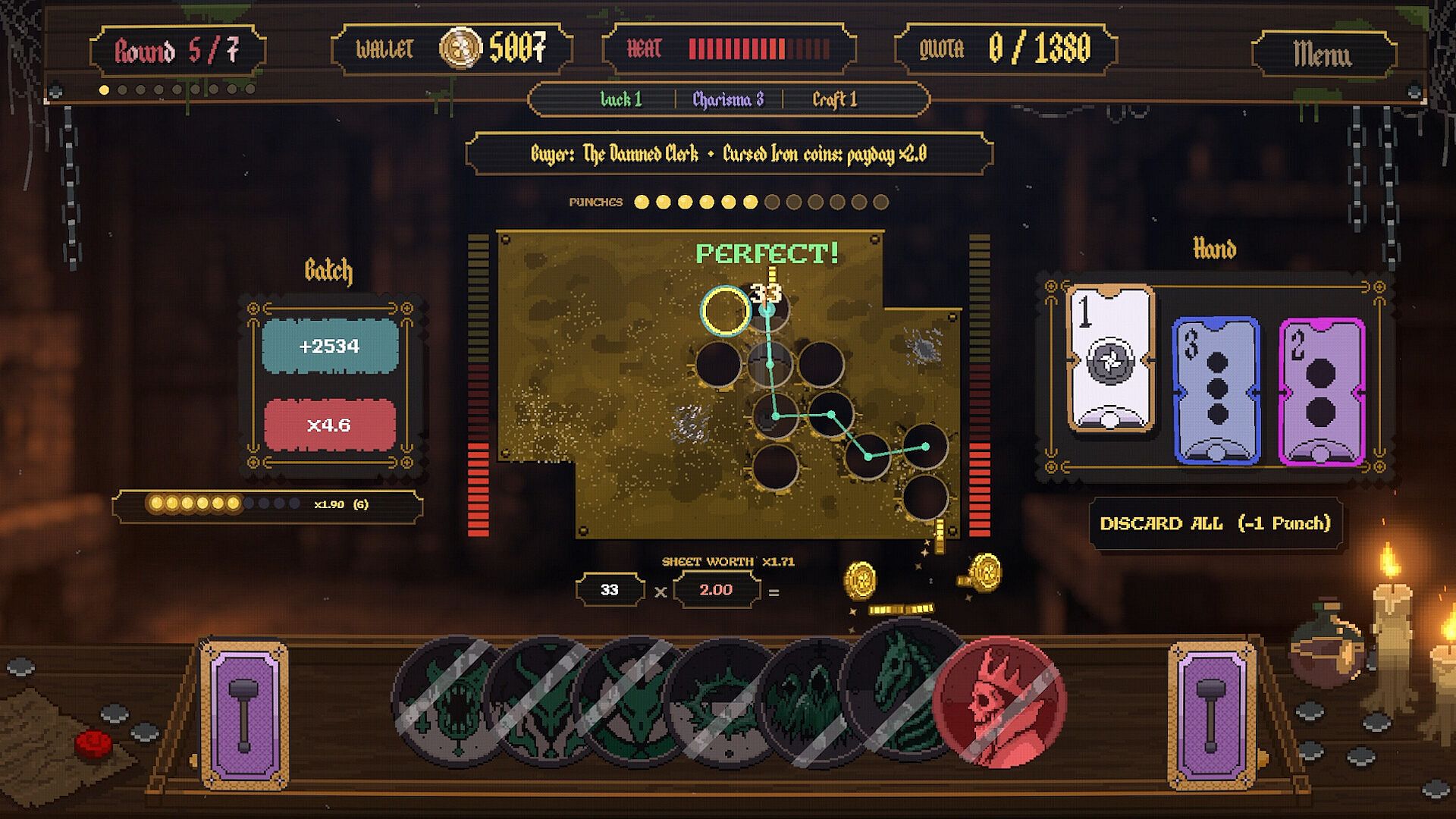
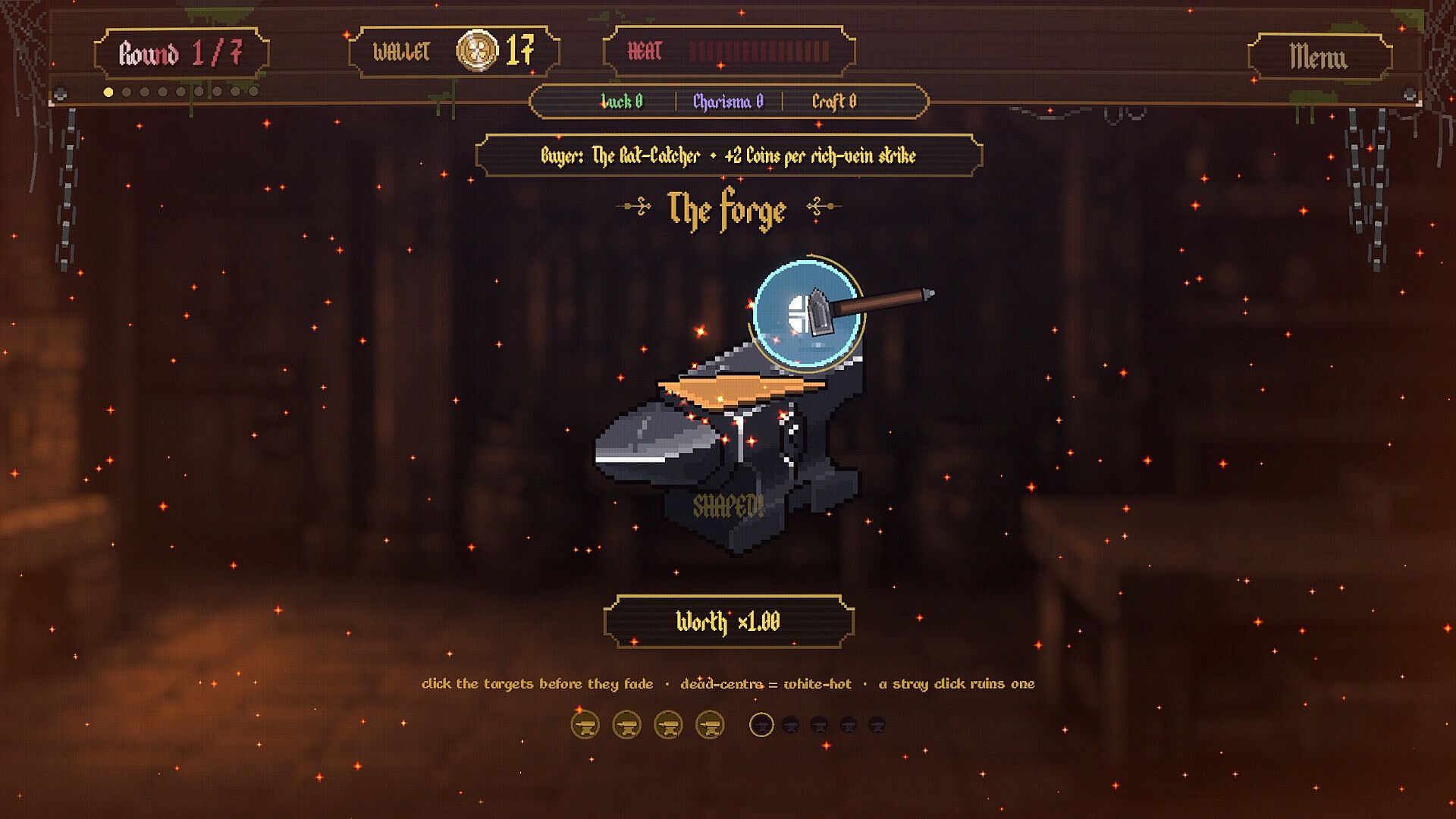
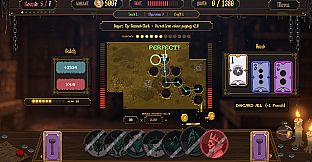
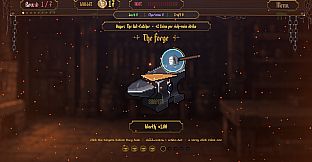
The central loop involves forging metal sheets at an anvil by selecting a material and timing hammer strikes to create higher-quality sheets that yield more valuable coins. Players then punch coins from the sheet by clicking on it, aiming for pure veins to gain bonuses while avoiding cracks. Punches build combo chains when kept close together, and the value of each punch appears next to the cursor for clear decision-making. Stamp dies activate on every punch, allowing combinations that multiply coin output through chaining and echoing effects.
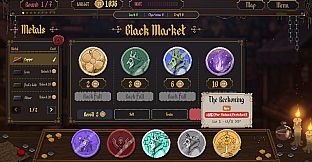
Each round begins with contract offers from buyers who have specific preferences, such as rejecting flawed coins or paying premiums for speed. Riskier deals offer higher rewards, and players can pay a fence to refresh the options. Heat accumulates with every coin produced, and exceeding the limit ends the run. Cooling down involves removing wanted posters along the roads, while skimming funds from contracts carries long-term consequences due to the law's memory.
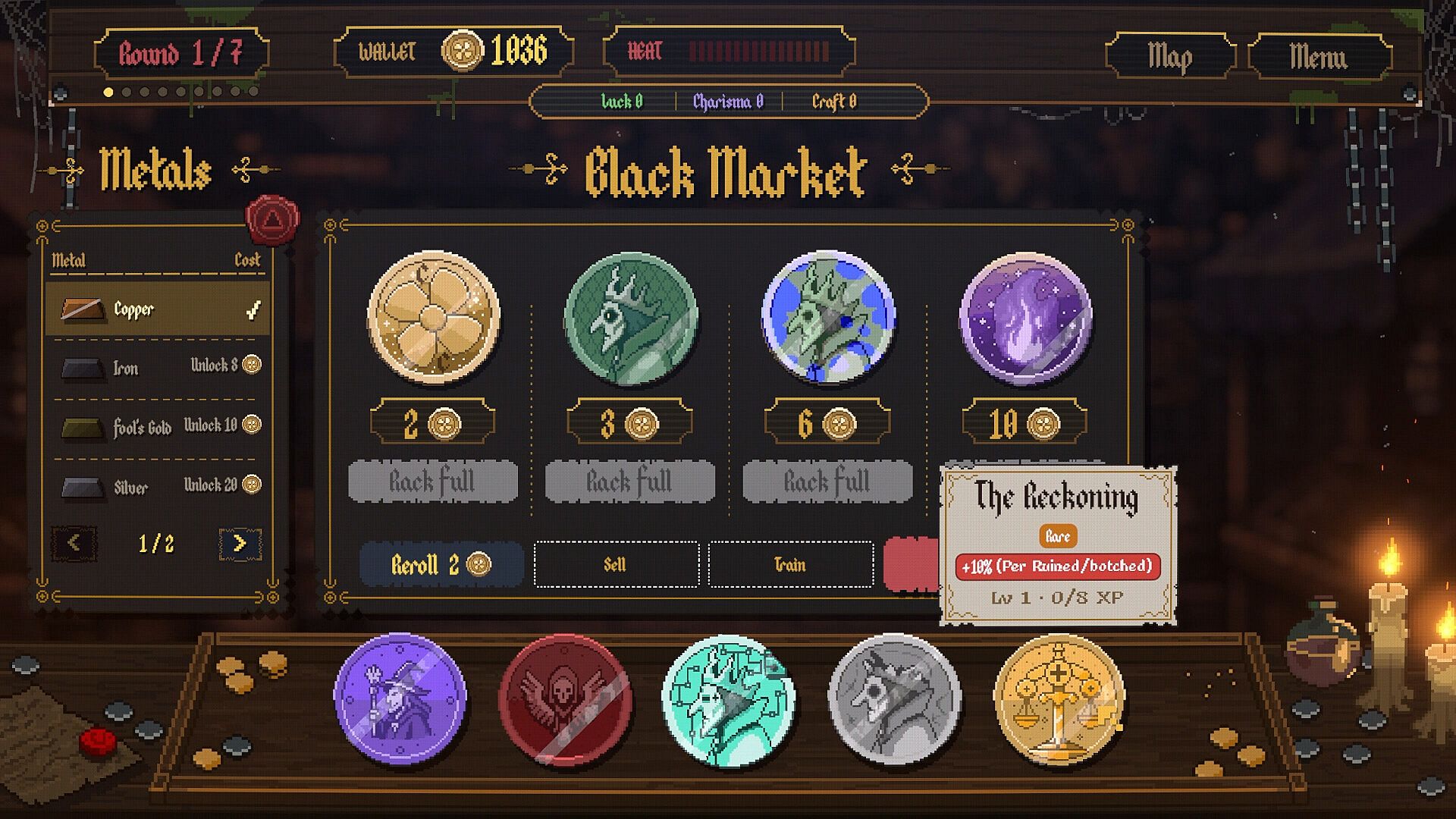
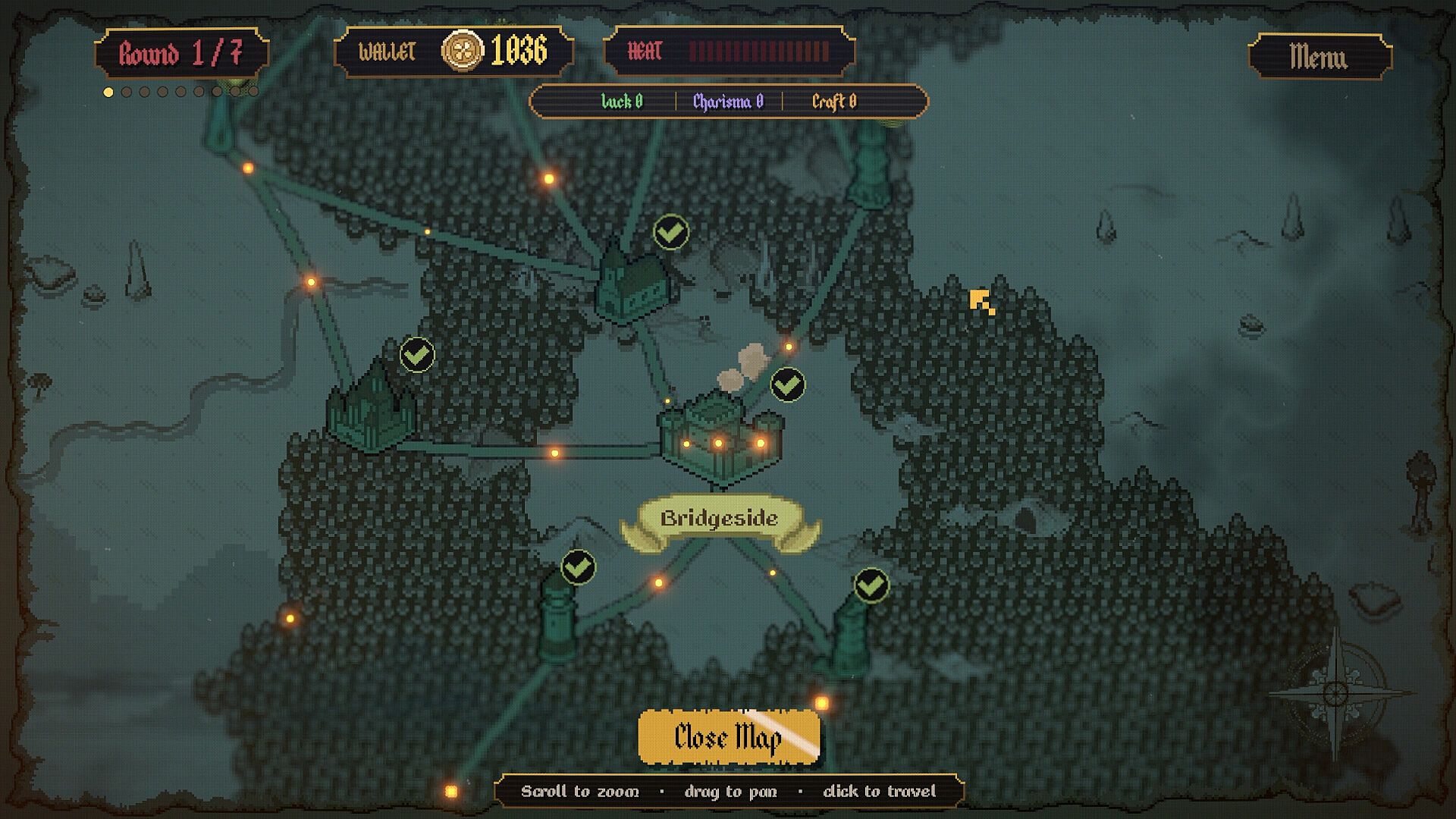
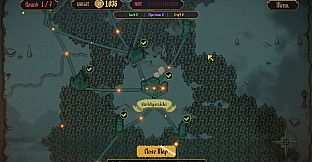
Between acts, travel occurs on a branching world map spanning nine cities from the Gutter to Castle City. Roads provide upgrades that shape the build for that run, and each city gate features a law boss that alters round rules. An alternate downward path allows trading with the dead. Over 100 stamp dies can be collected, and more than 50 buyers and bosses each introduce unique rules and weaknesses. Two hidden realms lie below the surface cities.
Game Modes
Forgery centers on roguelike runs that emphasize incremental building and risk assessment. Every attempt starts fresh with a contract and progresses through the map, but success or failure banks Grudge currency for permanent upgrades across runs. The structure supports varied paths and die combinations without filler activities, keeping focus on the forge-and-punch cycle and buyer negotiations.
Progression ties directly to map choices and heat management, with bosses enforcing rule changes that demand adaptation. The downward road option introduces alternative trading mechanics for those seeking different strategies. No separate multiplayer or competitive modes exist; the experience remains single-player focused on personal run optimization and long-term Grudge investment.
Progression and Upgrades
Grudge earned from completed runs funds permanent upgrades that carry over between attempts. This system rewards consistent play by improving access to better dies, reduced heat penalties, or enhanced buyer options over time. The handmade pixel art style supports the medieval setting and highlights the satisfying mechanical feedback during forging and punching.
Players collect and experiment with stamp die synergies to create powerful multipliers. Buyer and boss variety encourages testing different contract risks and path selections on the map. The law's persistent tracking adds tension to every decision about skimming or heat accumulation.
Is It Worth Playing?
Forgery suits players who enjoy roguelike runs built around crafting loops, precise timing, and resource trade-offs in a single-player format. The short core cycle of forging, punching, and selling delivers immediate feedback without unnecessary steps, while the branching map and boss variations provide replayability through different builds and strategies.
The Grudge system ensures that every run contributes to long-term growth, appealing to those who value incremental progress alongside high-stakes decisions. With its focus on strategy and simulation elements, the game targets fans of thoughtful risk management in a compact package. Availability on PC aligns with its precise controls and visual style. Those drawn to counterfeiting themes and roguelike structure will find a cohesive experience centered on outwitting the system one coin at a time.