

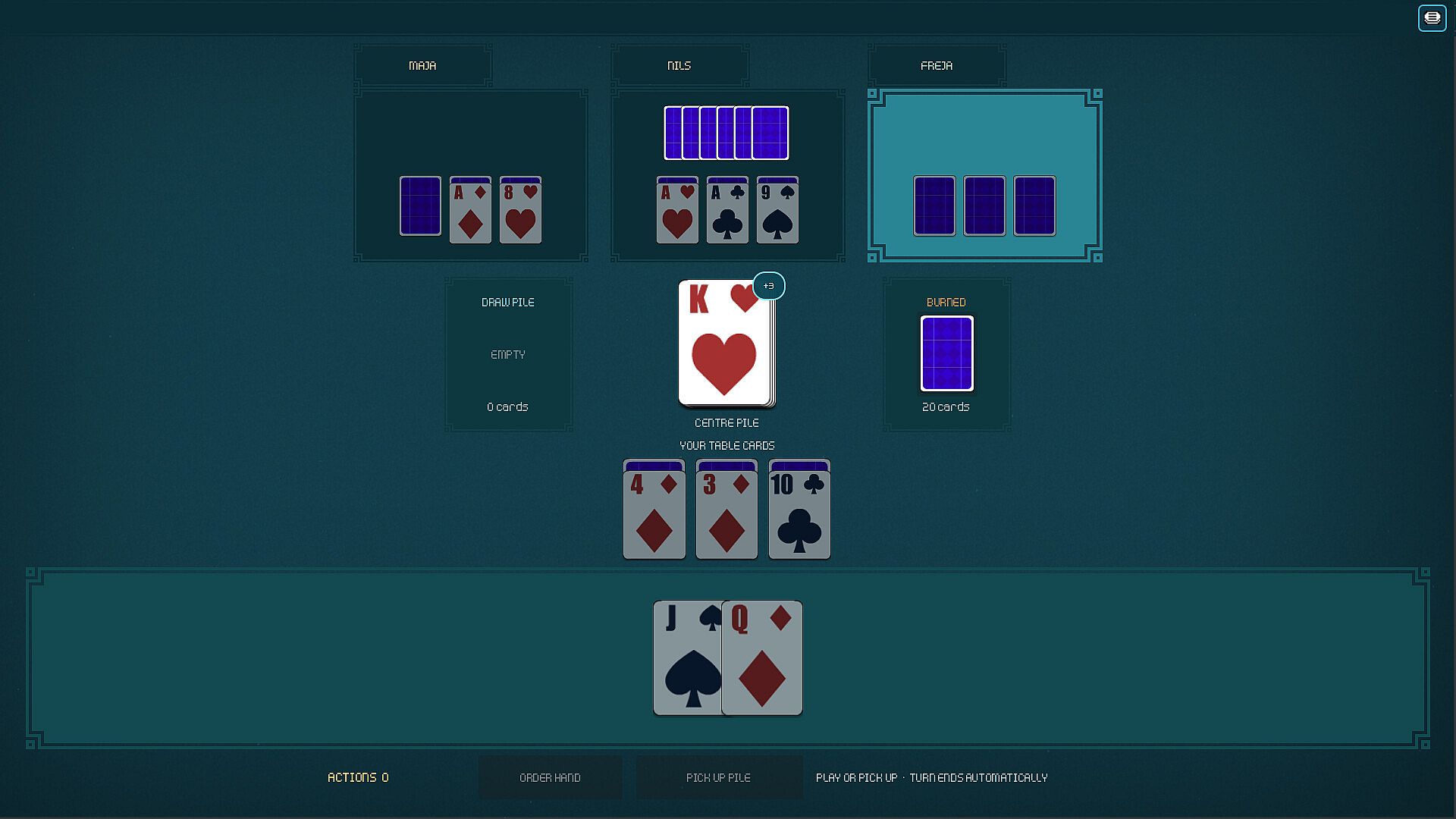
Flurst is a strategy card game that blends casual accessibility with deep tactical decisions. Players compete to shed every card from their hand and table piles before the central pile turns against them. Built for PC, the game emphasizes careful play with equal or higher cards, grouping matching ranks, and strategic use of special cards that can reset or burn the pile.
Gameplay
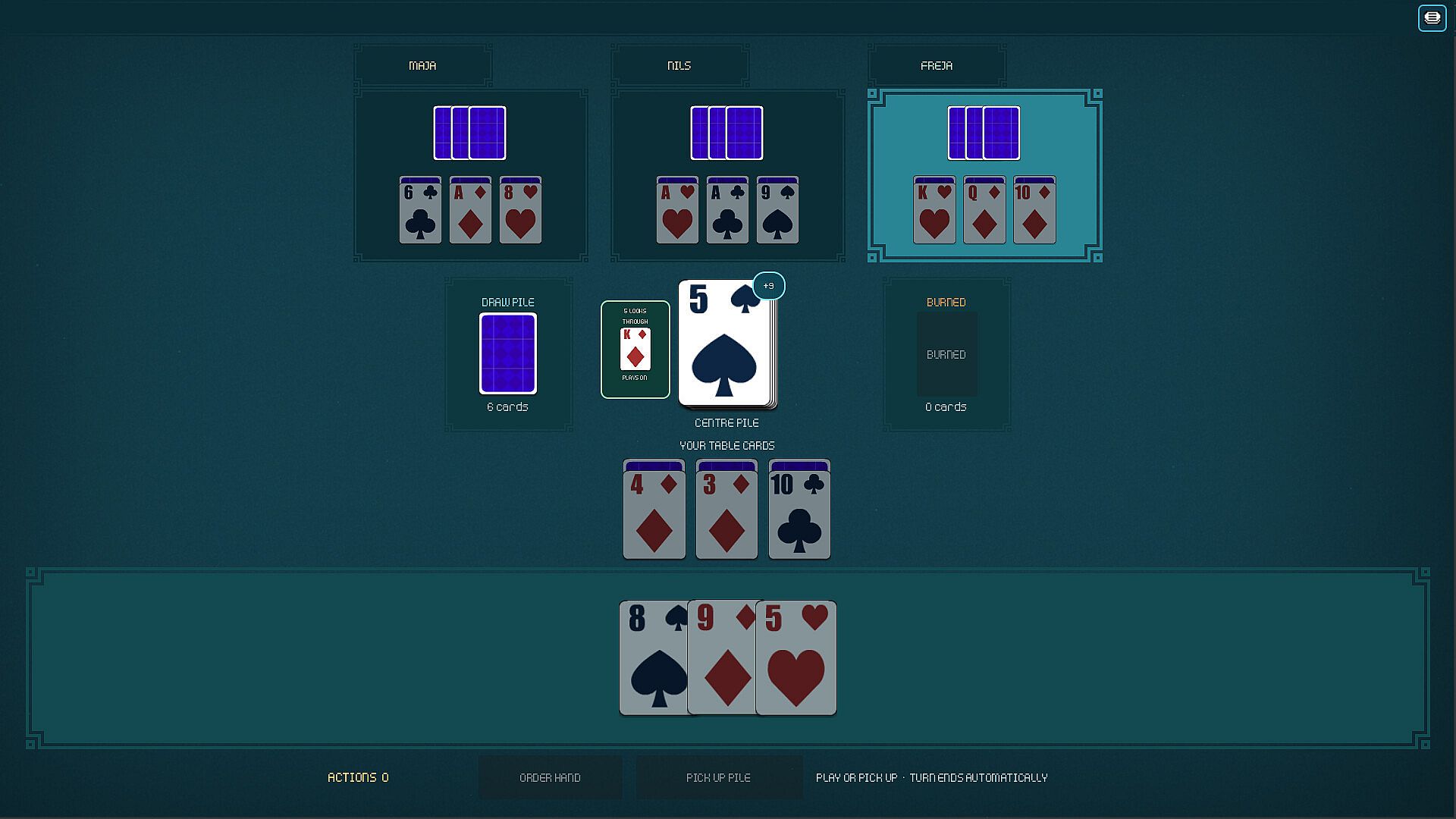
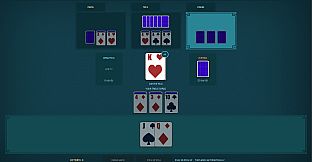
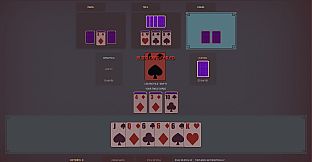
The core loop revolves around a single central pile that grows as players add cards. Each turn requires playing a card of equal or higher rank than the top of the pile, or combining multiple cards of the same rank for efficiency. When no valid play exists, the entire pile returns to the player's hand, creating high-stakes moments that punish poor planning.
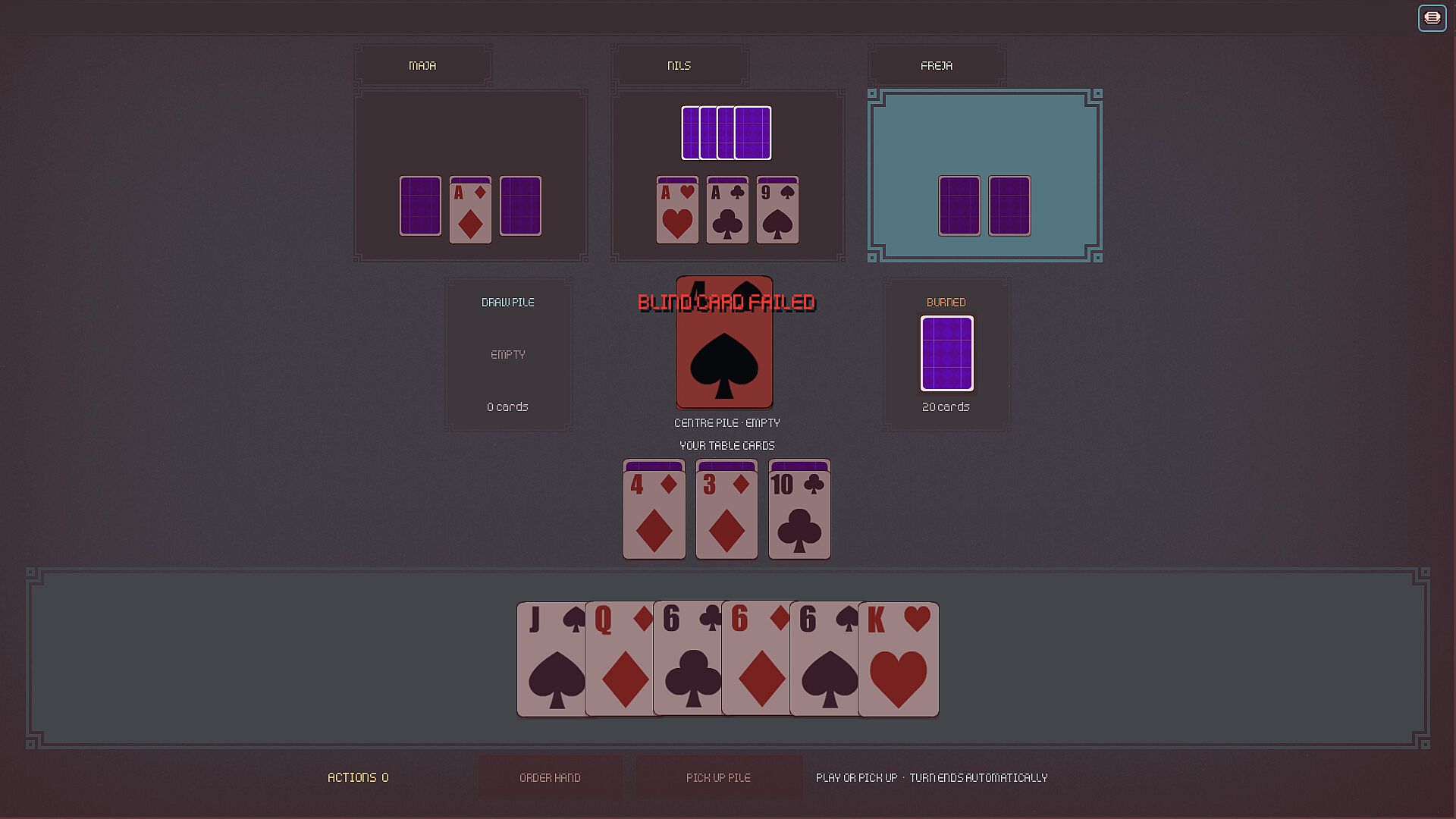
Hands start from a draw deck and must be managed carefully while the deck lasts. Once empty, attention shifts to face-up table cards and then the hidden face-down cards below them. Blind plays from the bottom layer add tension, as an incorrect card immediately returns the full pile to the player.
Special cards introduce swings and options. A 2 resets the pile and grants an extra action. A 10 burns the pile entirely and allows another play. A 5 reveals the next card in the pile for information. Four cards of matching rank can also burn the pile. All special rules remain optional, letting groups adjust the intensity to suit their preferences.
Game Modes
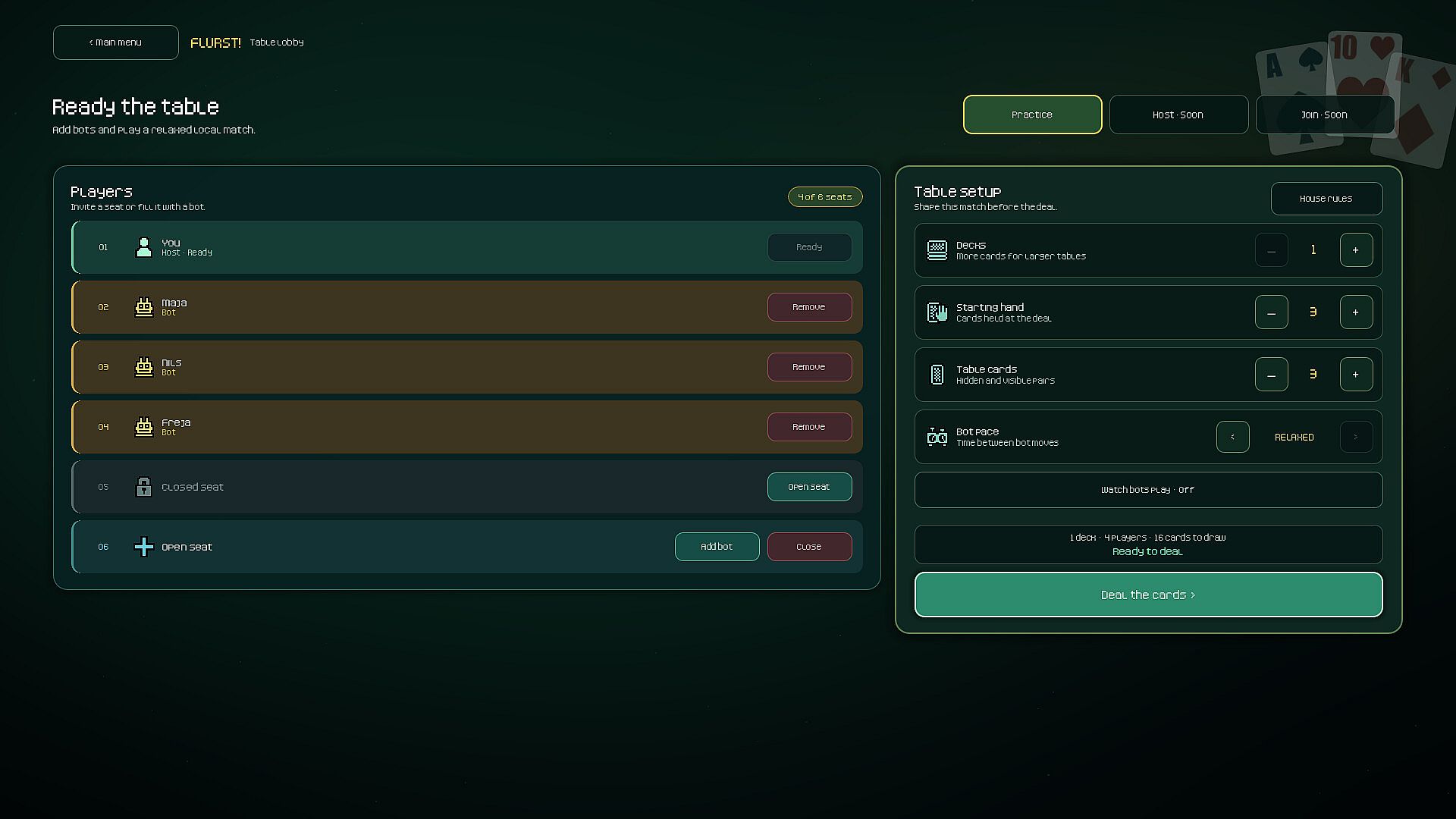
Flurst supports matches against one to five computer opponents or local and online friends. Sessions scale with customizable rules that alter the pace and complexity without changing the fundamental objective of emptying every card layer.
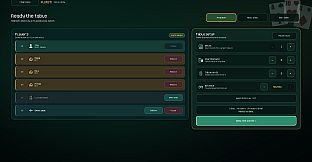
Players select between one and ten decks to control game length. Starting hand sizes range from one to thirteen cards, while table-card slots can be set from one to five. Bot difficulty adjusts through three speed settings: Fast, Normal, or Relaxed. Visible table cards can be arranged before the first turn or left to chance by disabling planning.
Spectator mode lets interested players watch the action unfold with bots filling all seats. This setup encourages experimentation with different configurations, from quick two-player duels to chaotic five-opponent free-for-alls.
Customization and Strategy
Extensive options let groups tailor each session. Fewer decks and smaller hands create shorter, more aggressive games, while larger setups reward long-term planning and pile management. The ability to disable table planning removes preparation and forces reactive play throughout.
Strategic depth comes from balancing immediate plays against future risks. Holding special cards for the right moment or forcing opponents into bad positions requires reading the table and anticipating when the pile might return. The three-layer system adds layers of foresight, as early decisions affect the blind plays that close out each round.
Who Flurst Appeals To
The game suits players who enjoy card-shedding mechanics with added strategic weight. Its casual genre tag reflects the straightforward rules, yet the indie strategy focus rewards repeated play and rule tweaks. Groups that like adjustable difficulty and variable session lengths will find the customization tools particularly useful for keeping matches fresh.
Is It Worth Playing?
Flurst delivers a focused card-shedding experience centered on timing, special-card management, and pile control. The optional rules and extensive customization support both quick sessions and longer strategic battles. Players seeking a PC card game that balances accessibility with meaningful choices will find the core loop engaging across different group sizes and rule sets. Those who prefer rigid rulesets or heavy narrative elements may want to sample the mechanics first through its flexible bot matches.