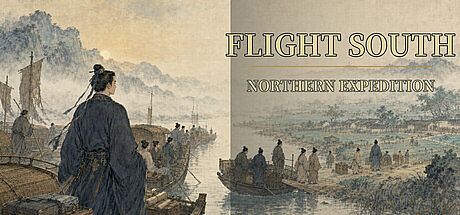


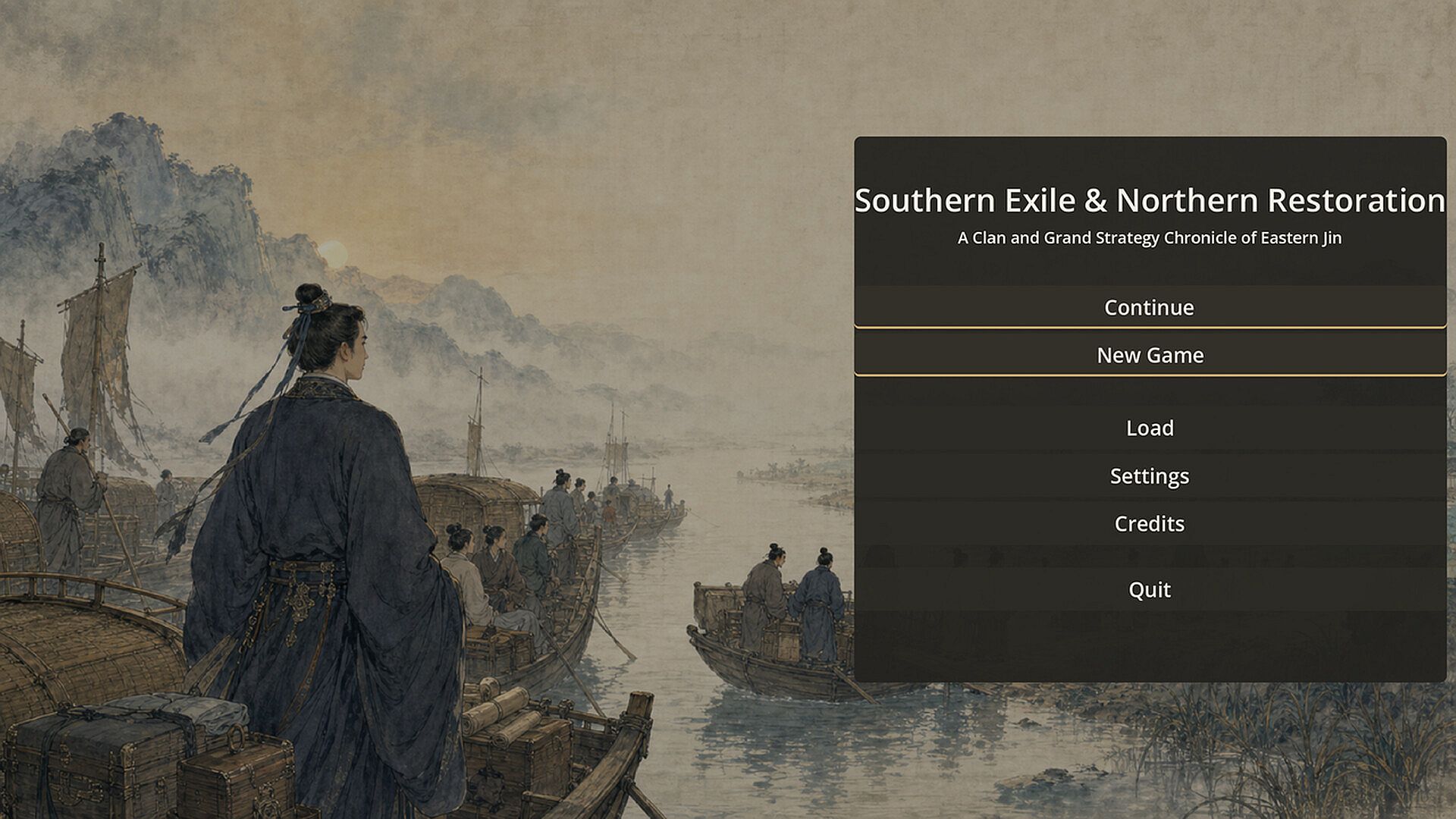
Flight South: Northern Expedition is a strategy game set in the turbulent years following the collapse of the Western Jin dynasty. Players take on the role of a clan head establishing a new house in the Jiangnan region during the early Eastern Jin period, beginning in 317 CE. The experience centers on resource management, territorial governance, and political maneuvering amid historical events such as Zu Ti's northern expedition and Wang Dun's rebellion.
Gameplay
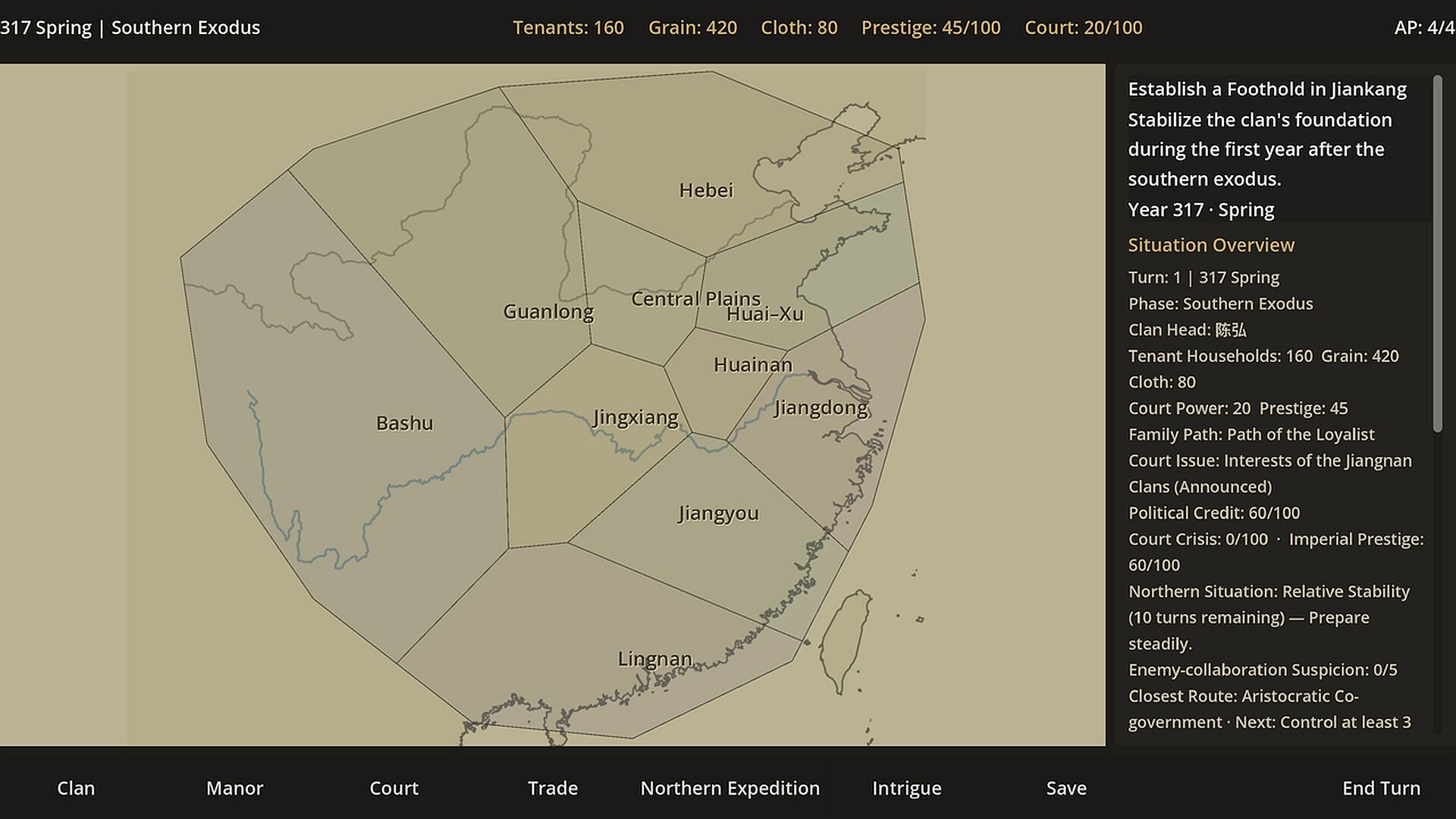
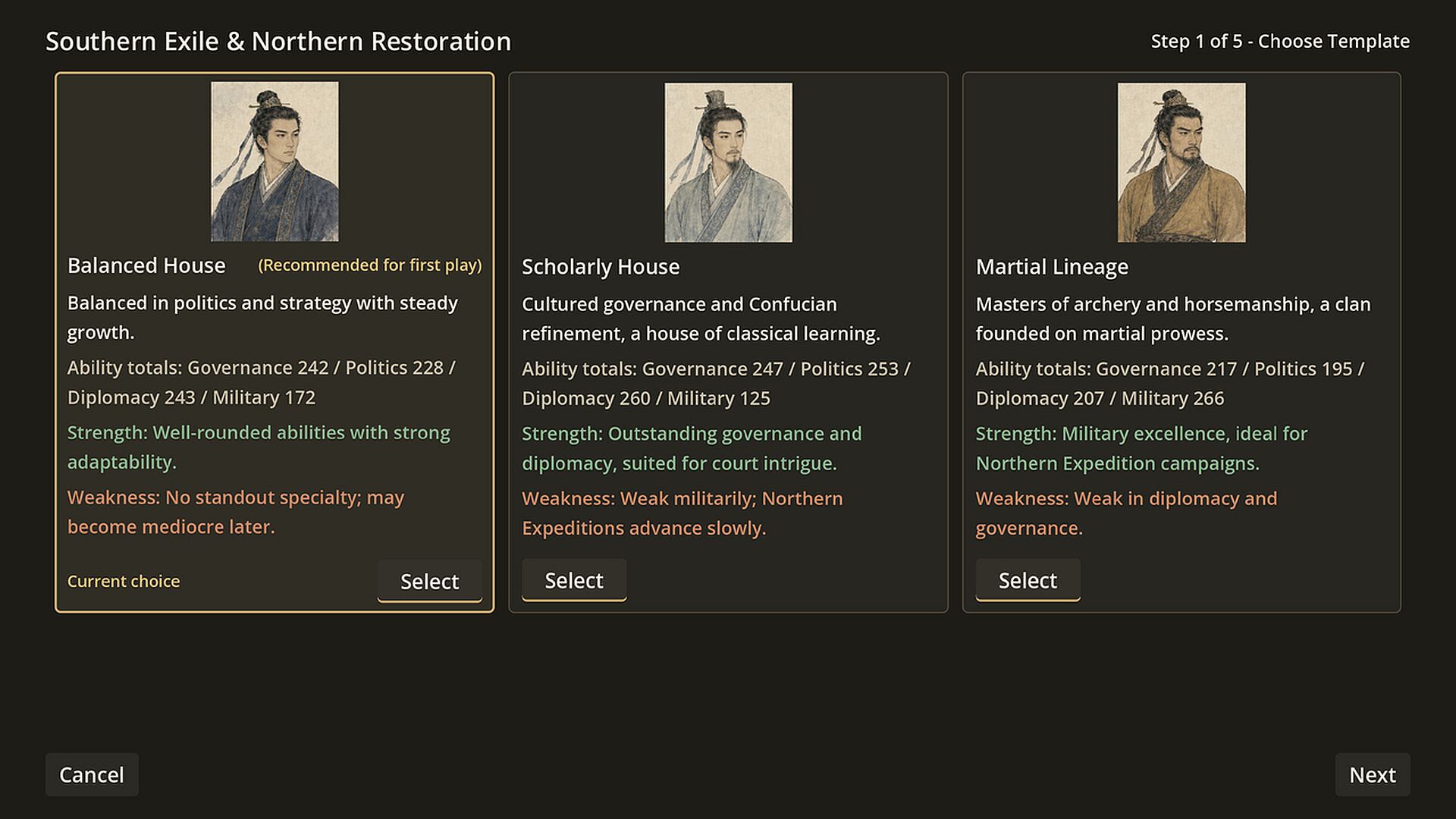
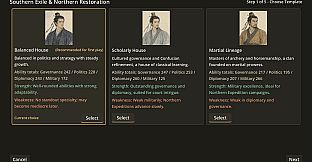
The core loop revolves around clan management and territorial expansion. Players create a clan head and select family traits, backgrounds, and starting conditions that influence long-term options. Resources including grain, cloth, population, prestige, and political credit interconnect across quarters of in-game time, so choices made early carry consequences years later. Settling relatives and dependants requires balancing order and security while developing fields, resources, and workshops to support growth. Clan members receive education and appointments that integrate into broader plans for influence and survival.
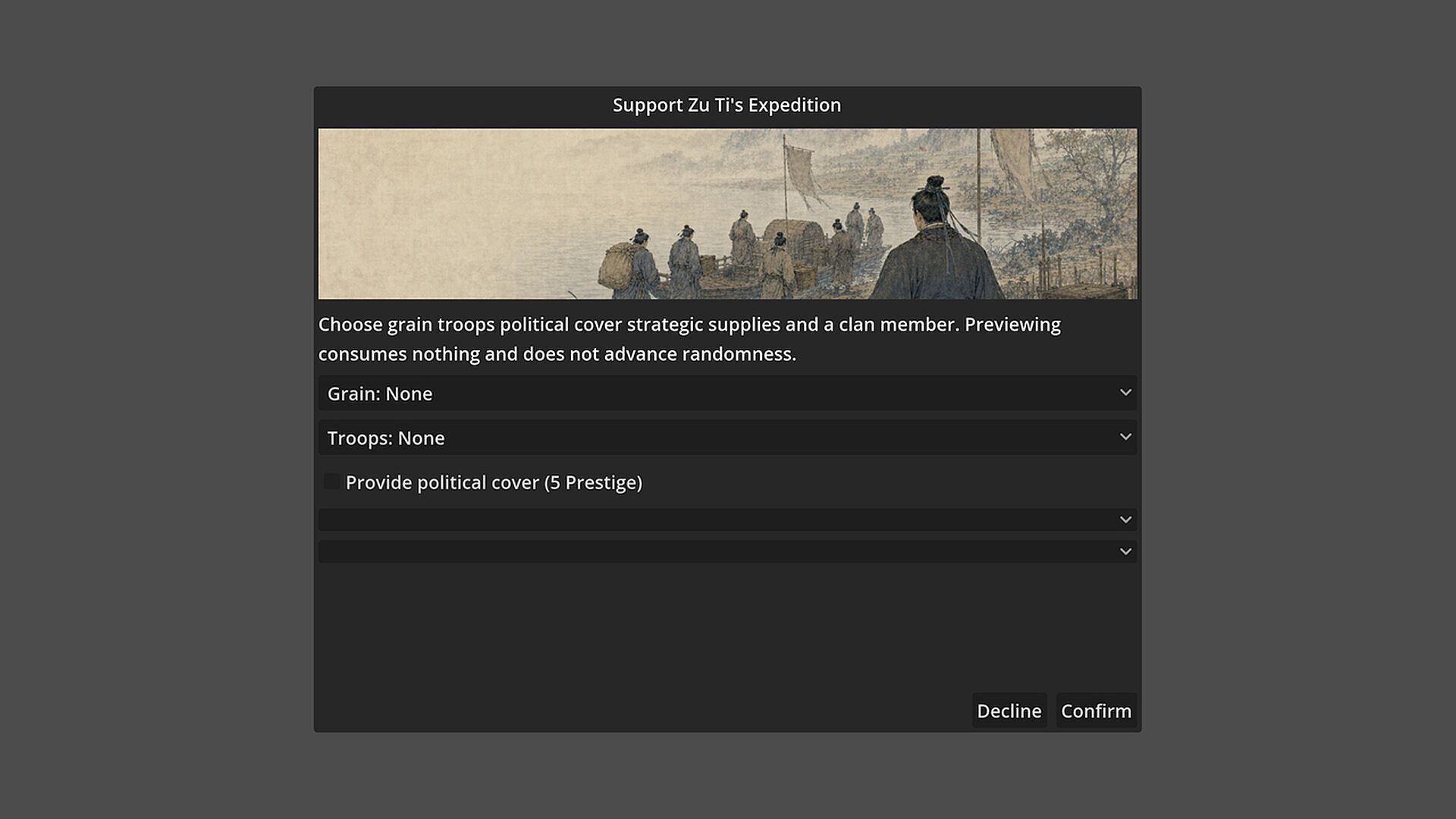
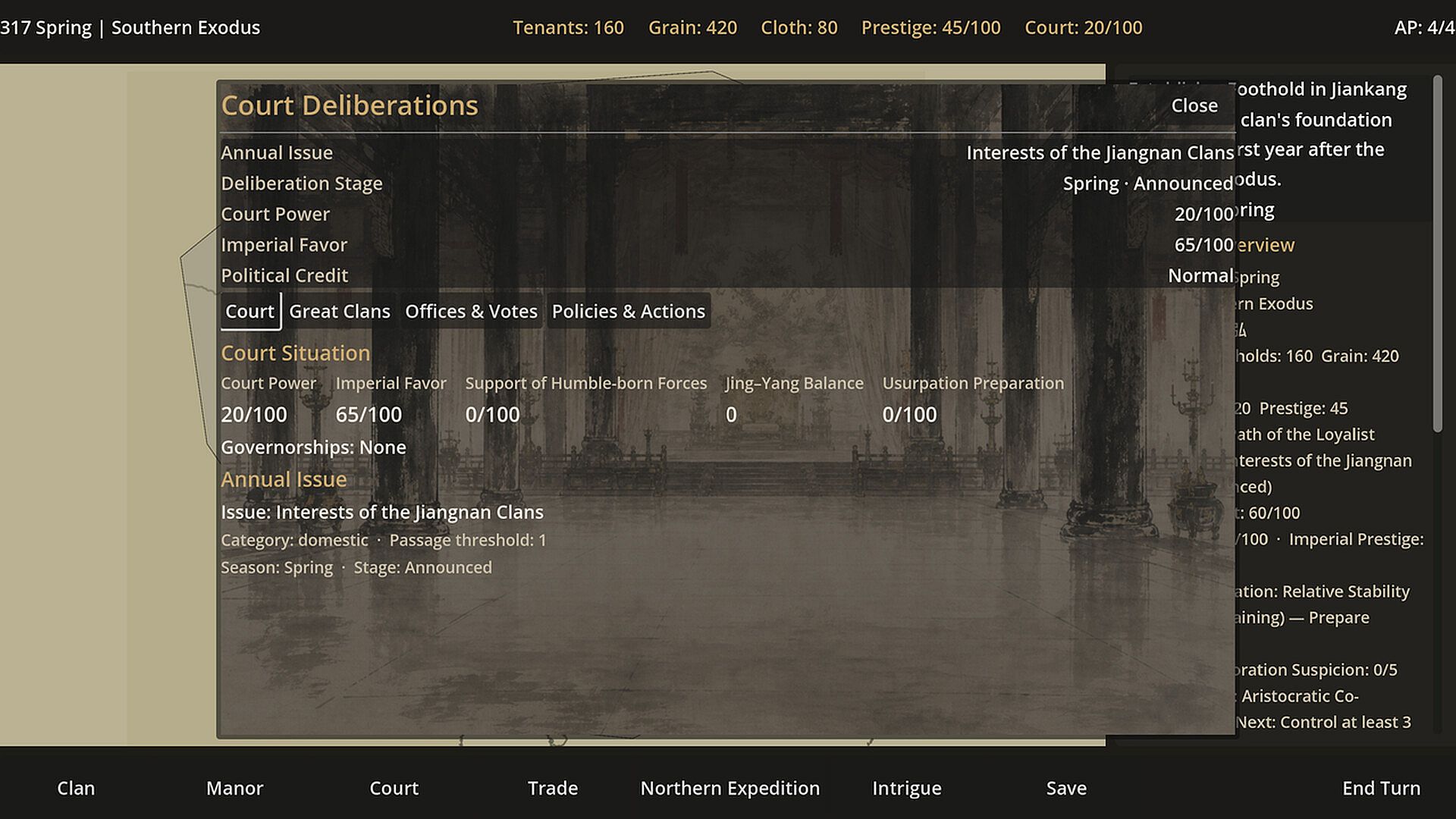
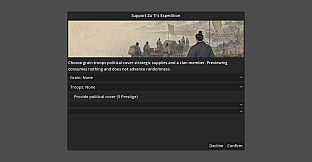
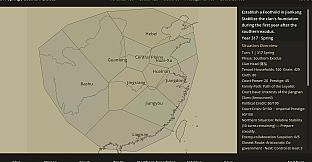
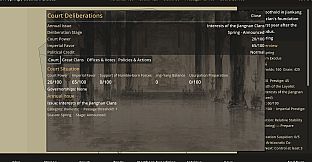
Expansion involves reading a theatre map of provinces and landmarks to address local issues. Governance demands resources and carries visible costs, benefits, and risks when dealing with displaced populations, powerful interests, and fragile institutions. Court navigation adds another layer, as players join deliberations, pursue offices, and weigh alliances with great clans or imperial authority. Support for historical campaigns like Zu Ti's expedition can take the form of supplies, troops, or personnel, shaping relationships and future opportunities through 324 CE.
Game Modes
The game operates through a single continuous historical campaign that advances by quarter from 317 to 324 CE. Players manage their clan across this timeline, responding to events and crises as they unfold without separate standalone modes or branching scenarios. All activity ties into the ongoing story of exile, settlement, and efforts toward restoration in the Eastern Jin court and provinces.
Historical Setting and Clan Development
The narrative begins with northern elites fleeing south after the Western Jin falls. Establishing a foothold in Jiangnan demands careful attention to manor operations, labor allocation, and provincial governance. Named historical figures appear as players navigate court politics and decide how much their house risks in support of larger expeditions or responses to rebellions. Background choices at the start affect political ties and available paths, encouraging repeated playthroughs to explore different family identities and dispositions.
Is It Worth Playing?
This title suits players who enjoy detailed grand strategy combined with personal clan management in a historical context. The interconnected systems reward long-term planning, as short-term solutions can create lasting effects on prestige and alliances. Active development means systems and content continue to evolve beyond the current 317 to 324 CE coverage. Those drawn to political navigation, resource balancing, and stories of survival during dynastic upheaval will find substantial depth here, while those seeking faster-paced or multiplayer-focused experiences may prefer other options.