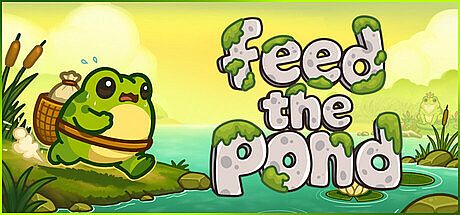


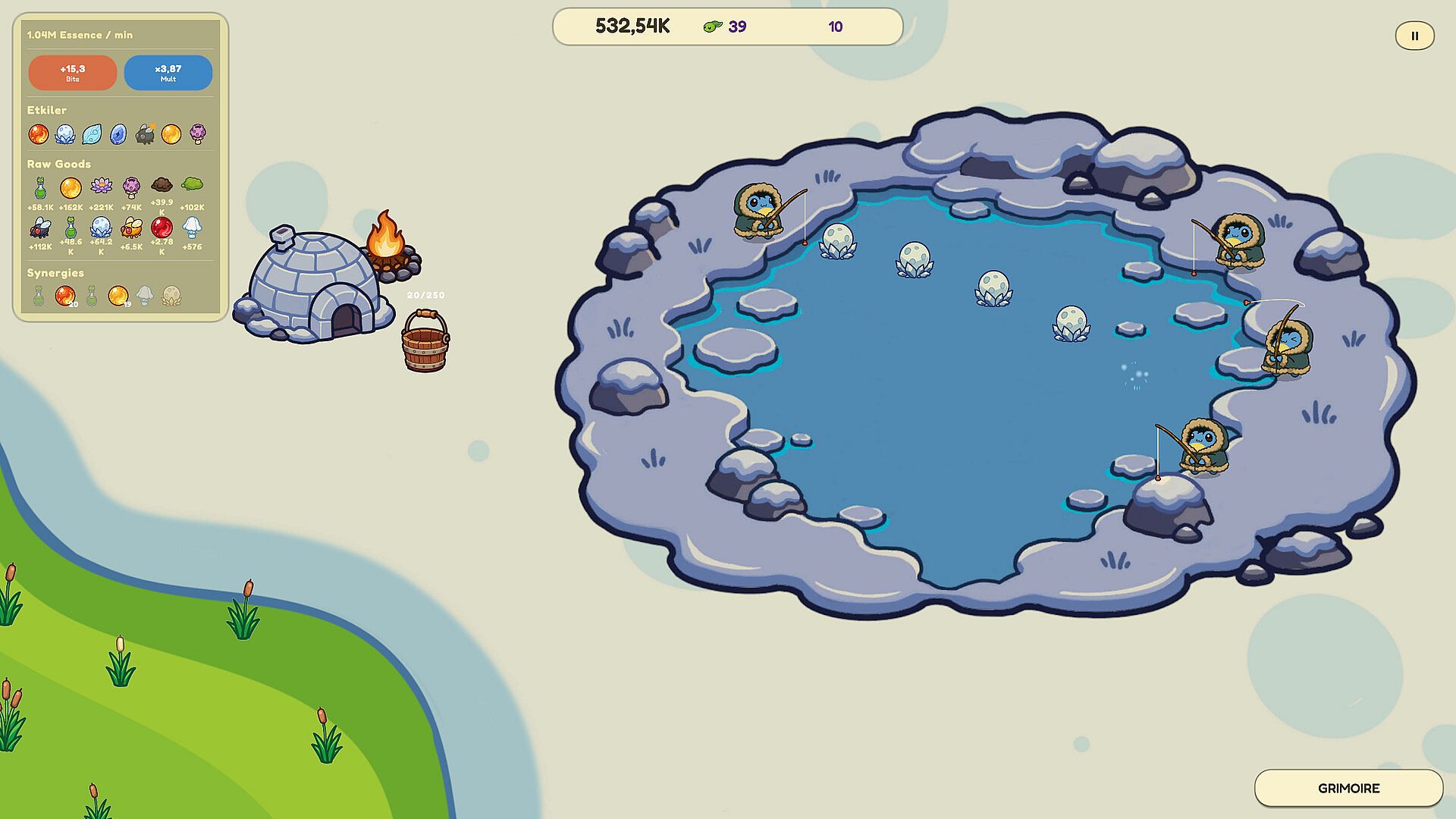
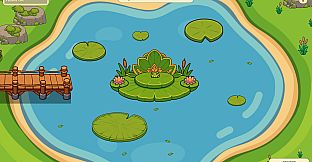
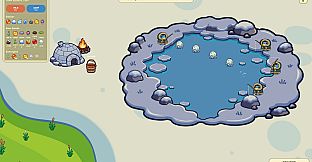
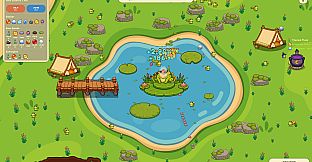
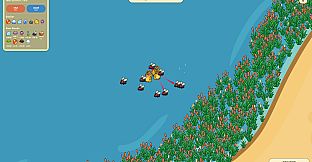
Feed the Pond is a strategy, indie, casual, and simulation game built around incremental progression on PC. Players manage a swamp ecosystem centered on a large, hungry creature known as the Wart, focusing on feeding mechanics, worker automation, and resource combination to expand and optimize the pond over multiple runs.
Gameplay
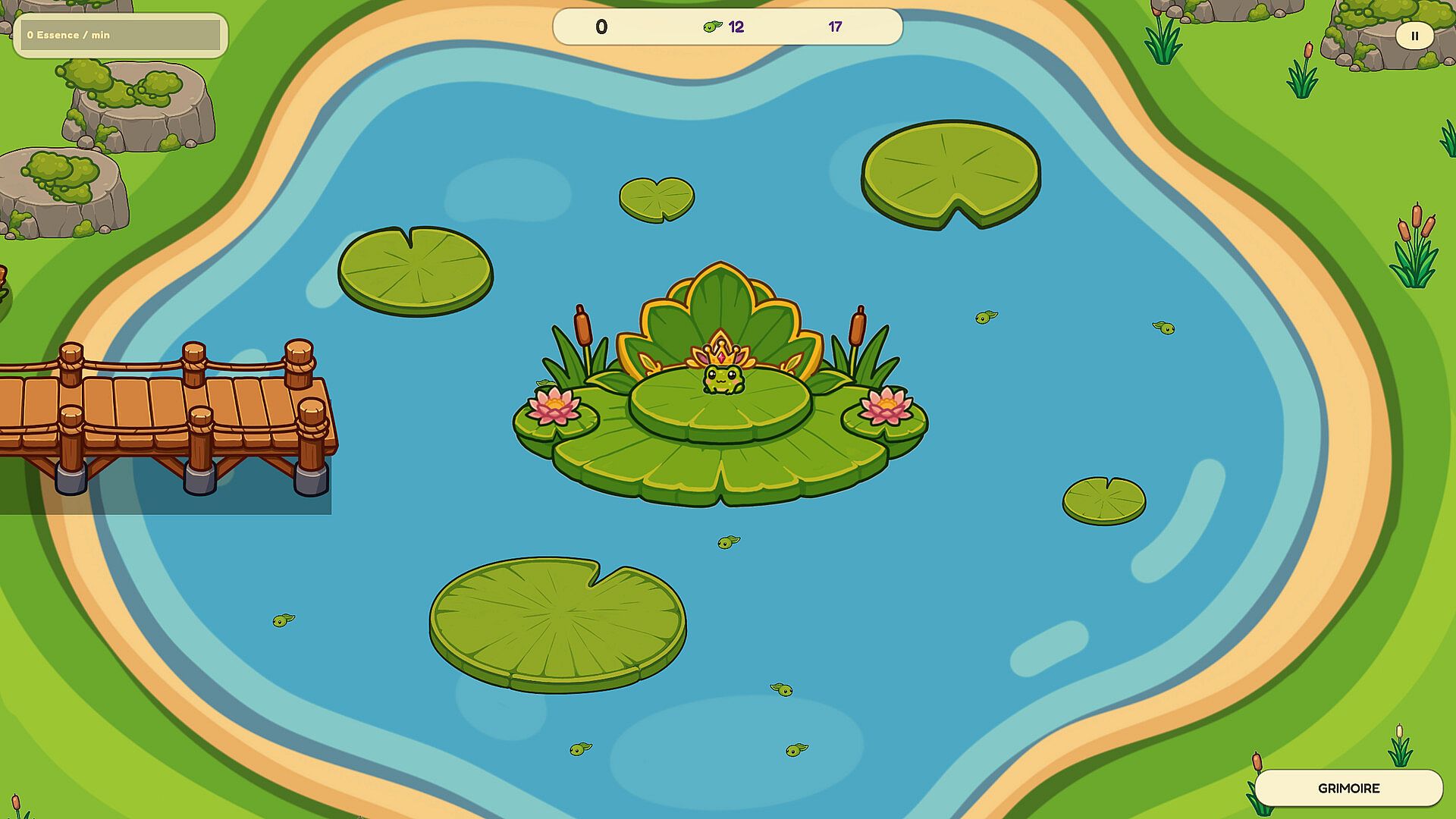
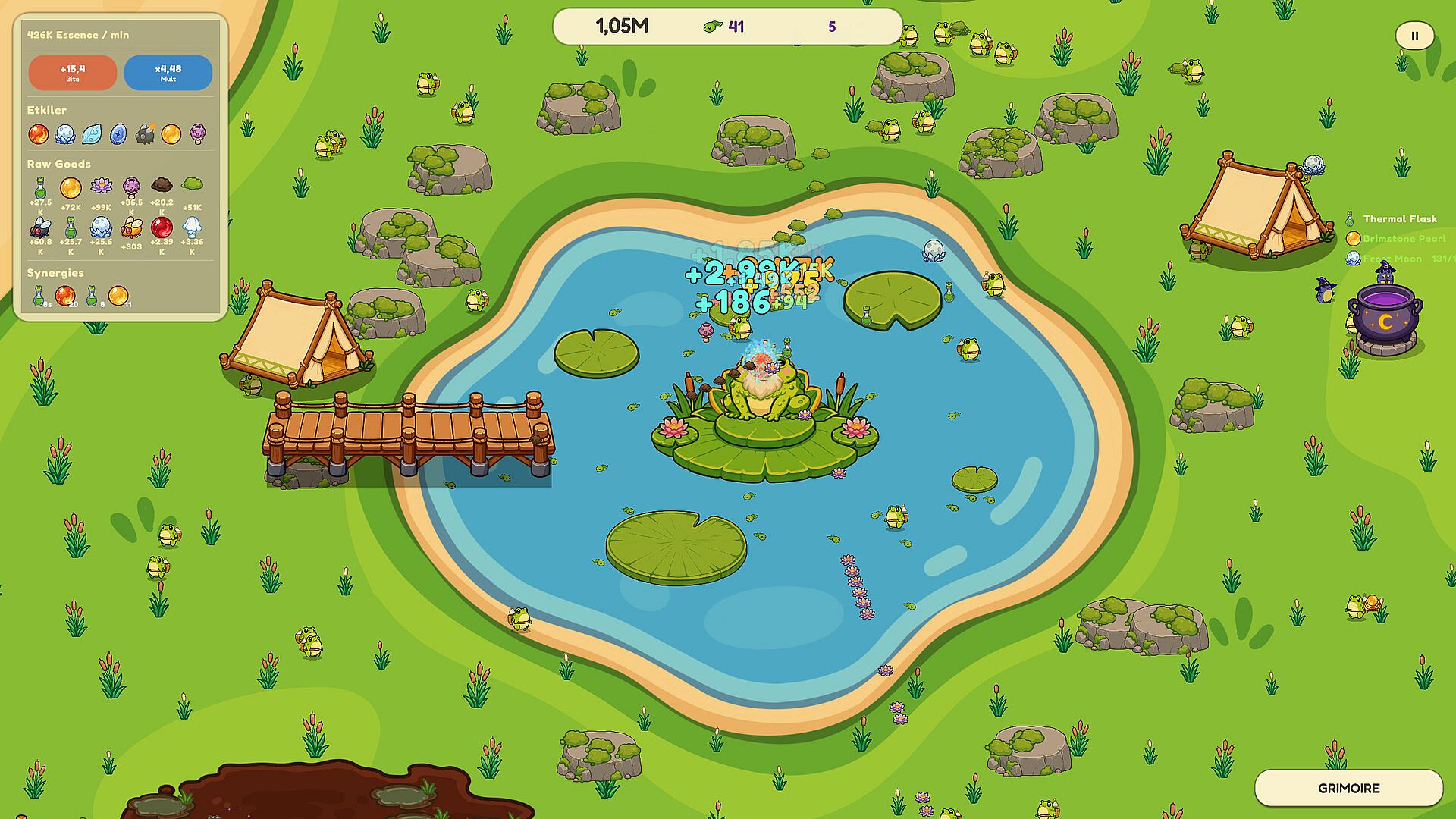
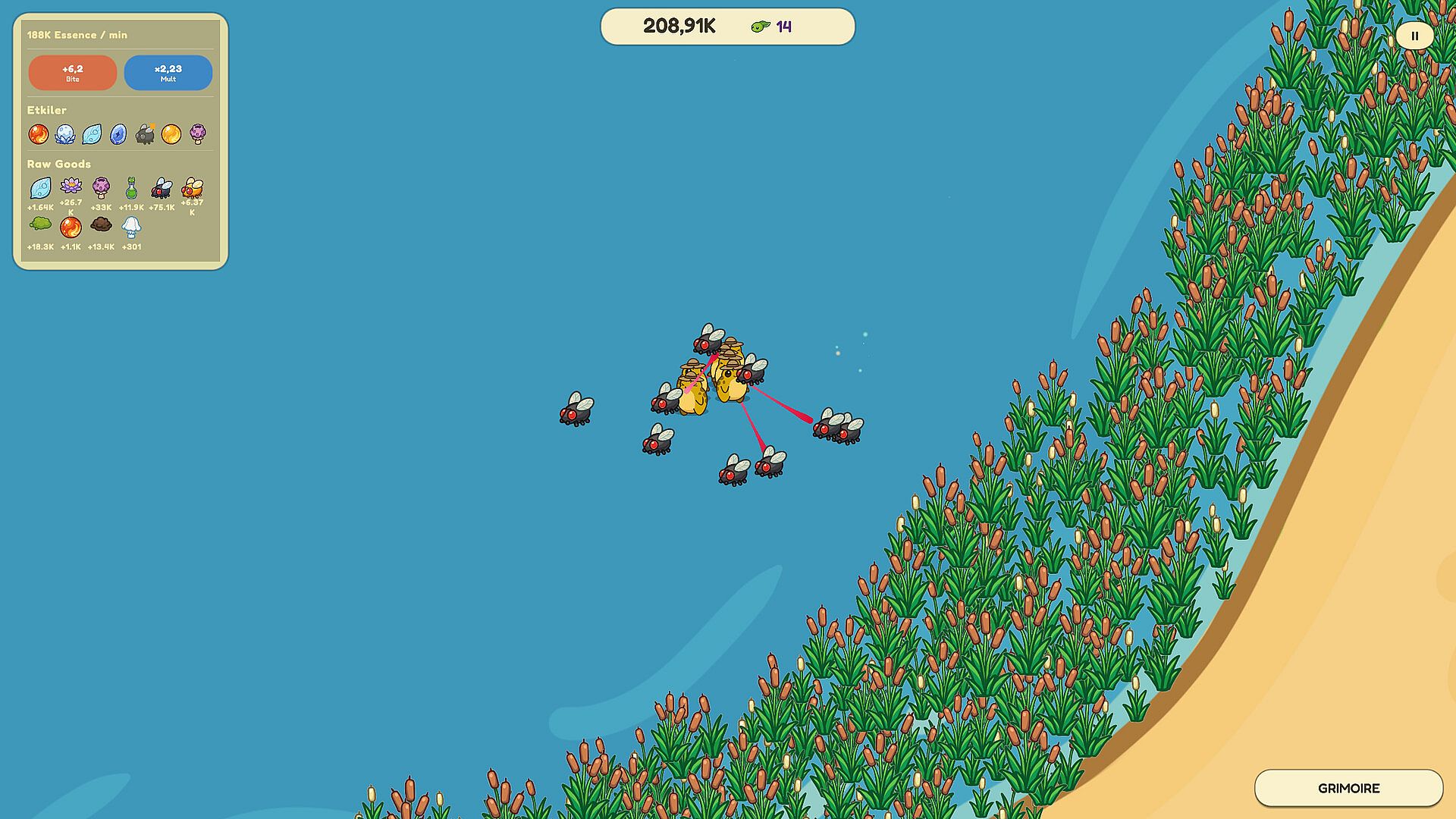
The core loop revolves around keeping the Wart fed while expanding the swamp's productivity. Players begin by tossing algae directly to the creature, which rewards bites with resources that fuel further growth. As the Wart consumes more, it increases in size and develops unusual traits that influence later stages.
Hatching tadpoles introduces automation. These develop into frogs that handle gathering tasks independently, collecting flies, flowers, mushrooms, and other materials before delivering them straight to the Wart. Once enough workers are active, the system runs with minimal input, allowing players to observe the swamp operate on its own.
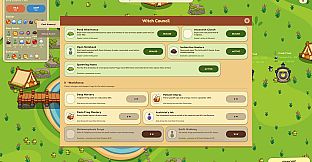
A cauldron adds depth through potion crafting. Ingredients gathered from the pond combine in various ways, with different effects based on the mix. Some combinations prove stronger than others, encouraging experimentation to discover efficient recipes that accelerate feeding and growth. There is no single optimal path, so each pond develops its own character through player choices.
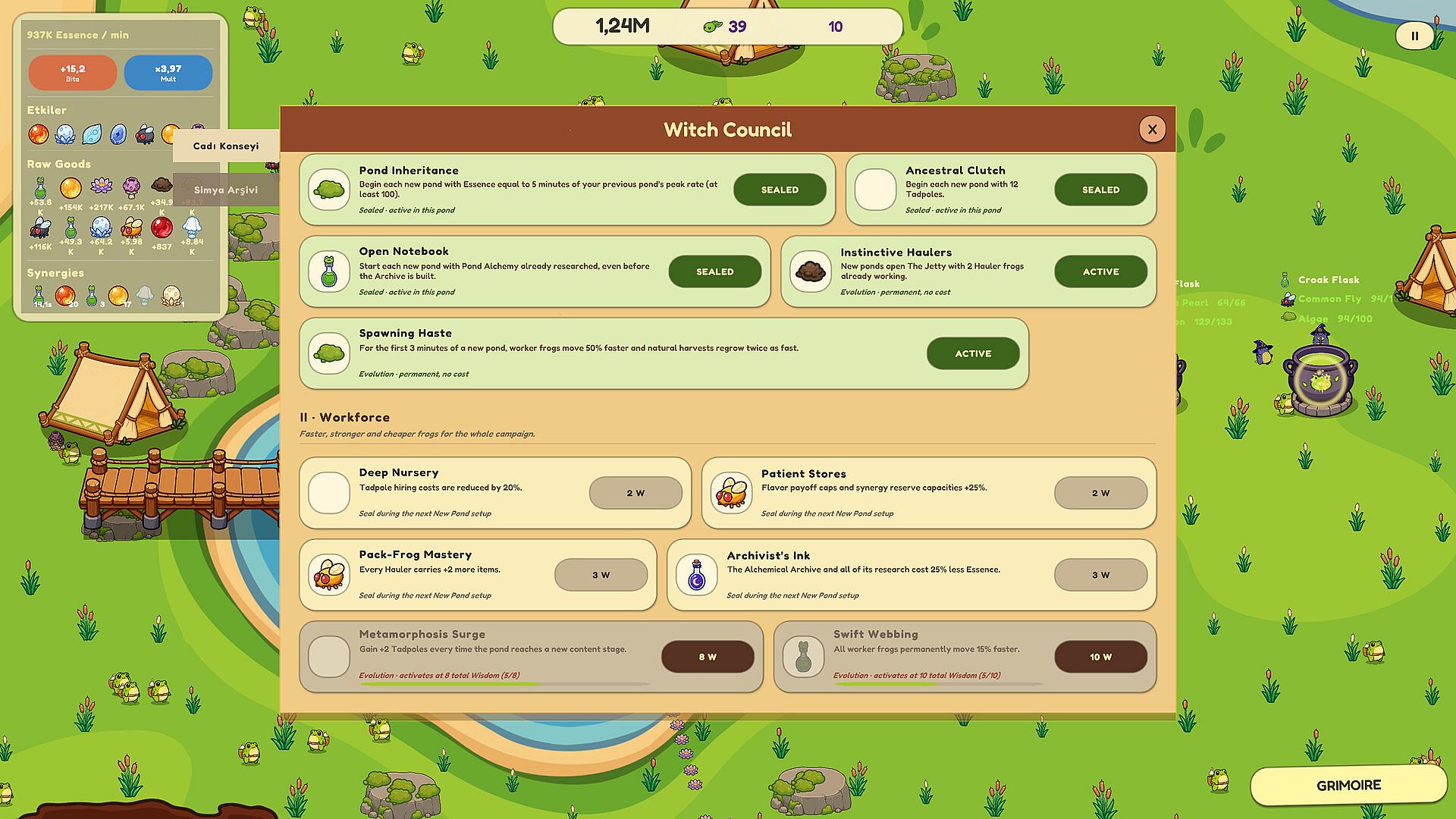
Progression follows an incremental structure. When the current pond reaches its maximum size, players start a new one while retaining knowledge from previous attempts. Each reset allows faster expansion and more advanced setups, building toward larger and more complex swamps.
Game Modes
Feed the Pond operates as a single-player incremental experience without separate named modes. The gameplay centers on one continuous loop of feeding, automation, and crafting that evolves through repeated pond resets. Players focus on optimizing their approach across runs rather than switching between distinct play styles or competitive formats.
Pond Building and Automation
Building a functional pond requires balancing direct feeding with indirect systems. Early stages rely on manual algae tossing, but tadpole hatching quickly shifts emphasis to frog labor. These workers scale up collection rates, reducing the need for constant clicks and turning the swamp into a self-sustaining operation.
Potion mixing serves as the main customization layer. Ingredients interact in unpredictable ways, so testing different combinations reveals synergies that boost output. Stronger potions feed the Wart more effectively than raw materials alone, speeding up the cycle of growth and resource gain.
The incremental resets reward long-term planning. Knowledge carried forward lets players unlock efficient setups sooner in each new pond, creating a sense of steady improvement without requiring perfect execution on the first attempt.
Is It Worth Playing?
Feed the Pond suits players who enjoy short, focused incremental games with light strategy elements. The combination of feeding mechanics, worker automation, and potion experimentation provides a relaxing yet engaging loop that rewards experimentation over many runs. Those who appreciate casual simulation titles with steady progression and minimal pressure will find the core systems satisfying, especially once the swamp begins running largely on its own. The game remains a straightforward, self-contained experience on PC with no additional requirements for enjoyment.