


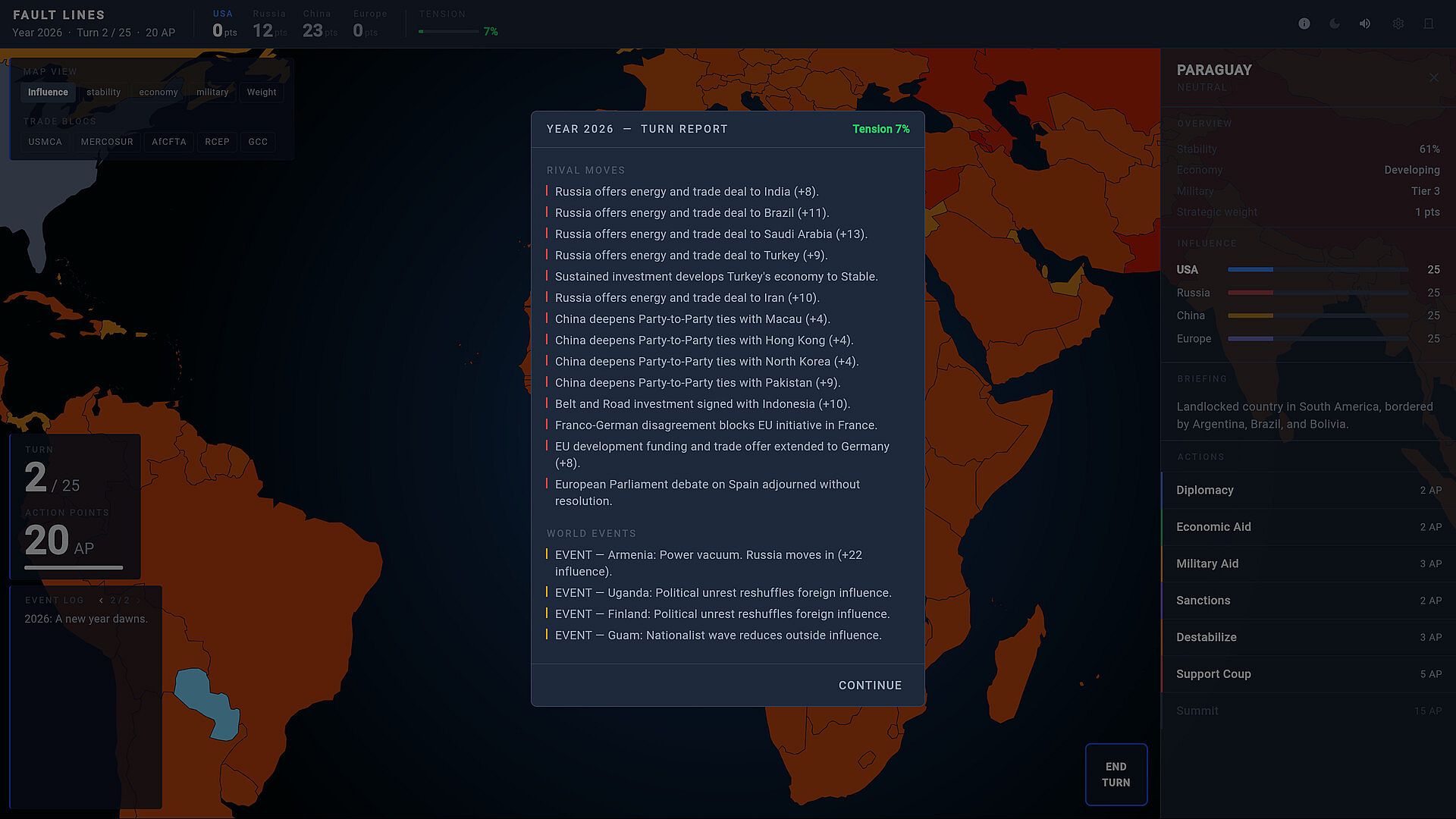
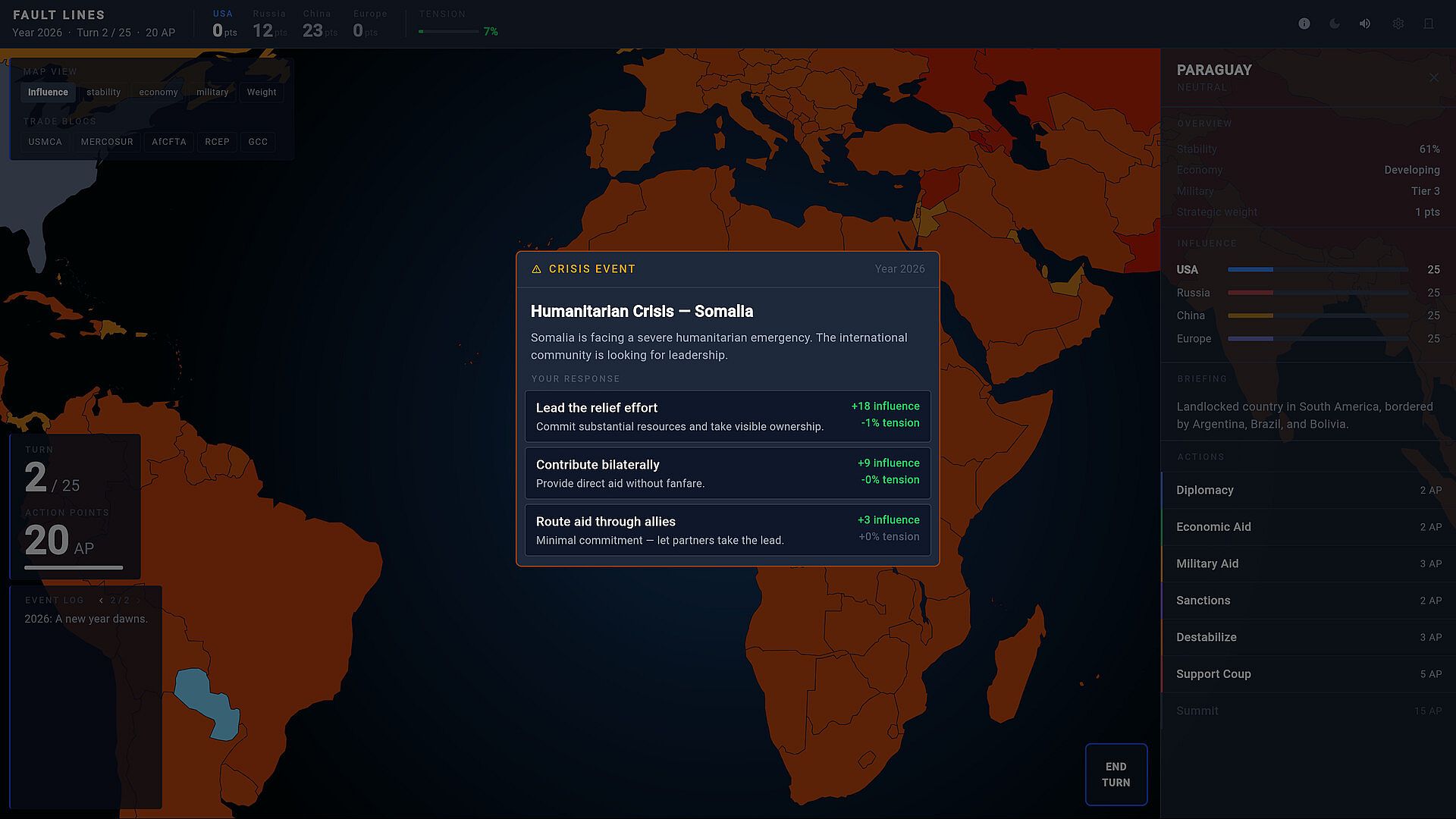
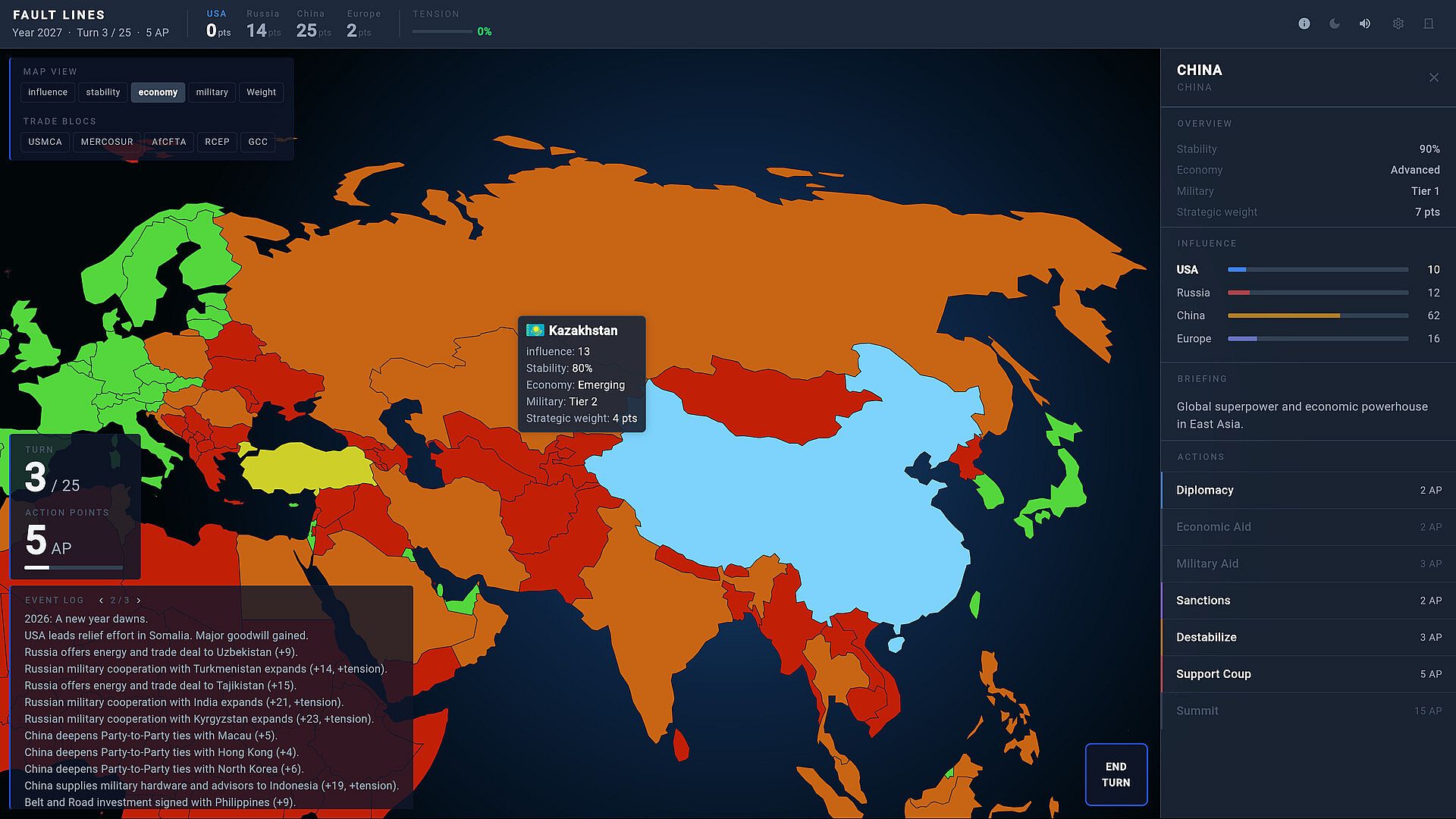
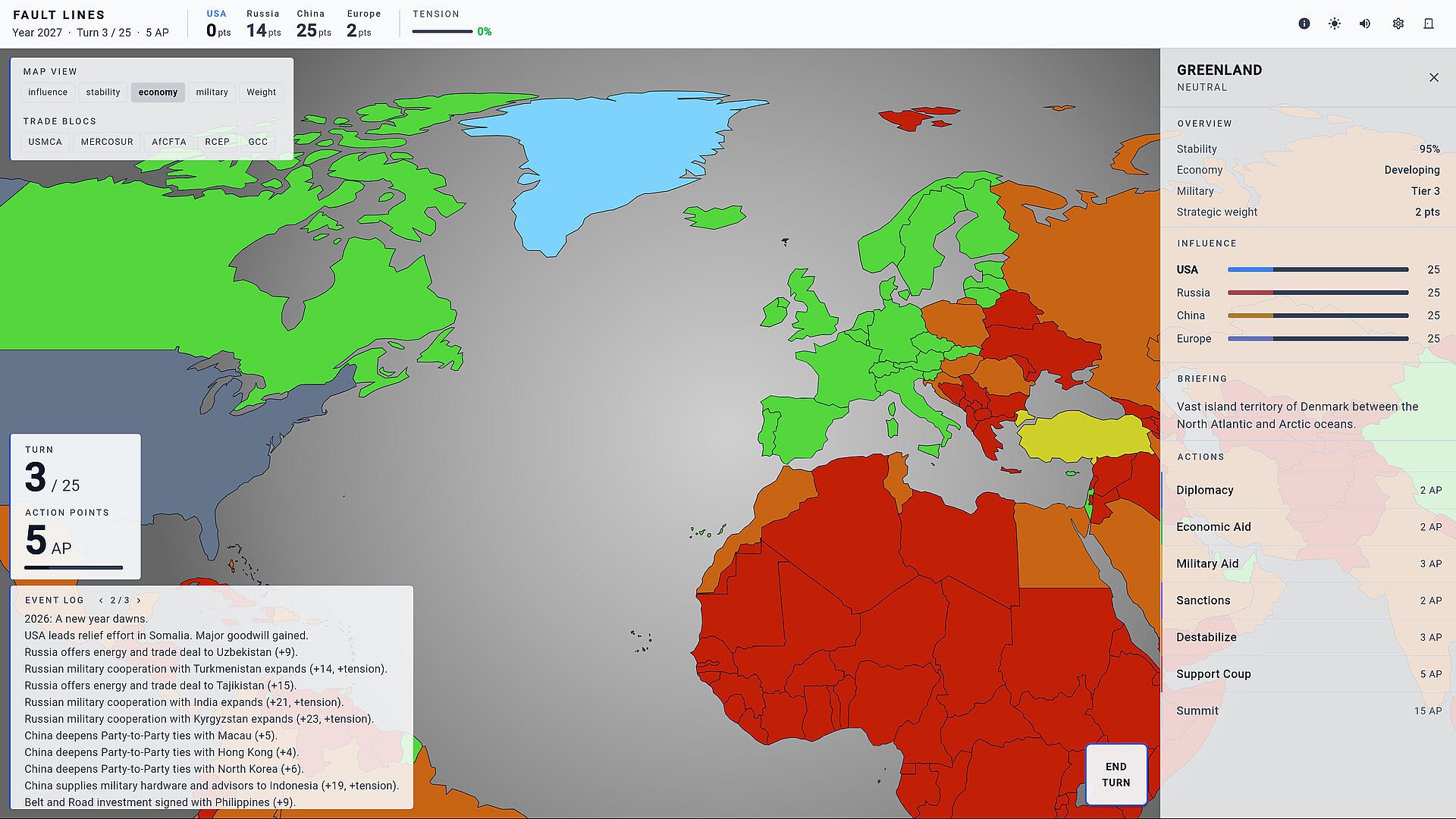

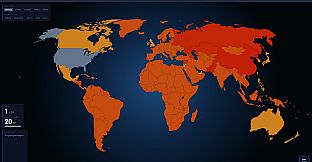
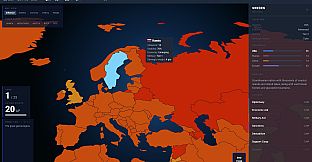
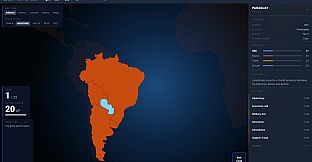
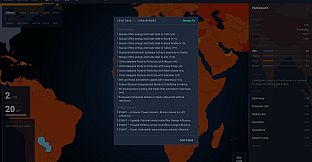
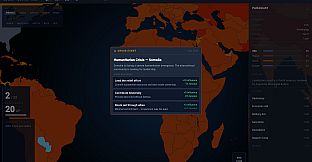
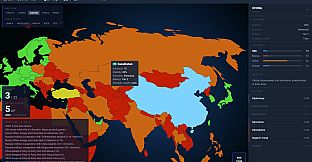
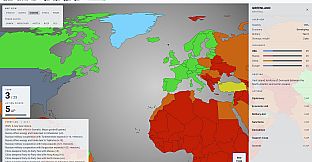
Fault Lines is a strategy game focused on geopolitical influence rather than direct military conflict. Players manage one of four major powers in a turn-based setting where diplomacy, economic aid, and covert actions shape global events. The title emphasizes short play sessions that conclude in a single evening while incorporating layers of risk management through rising global tensions.
Gameplay
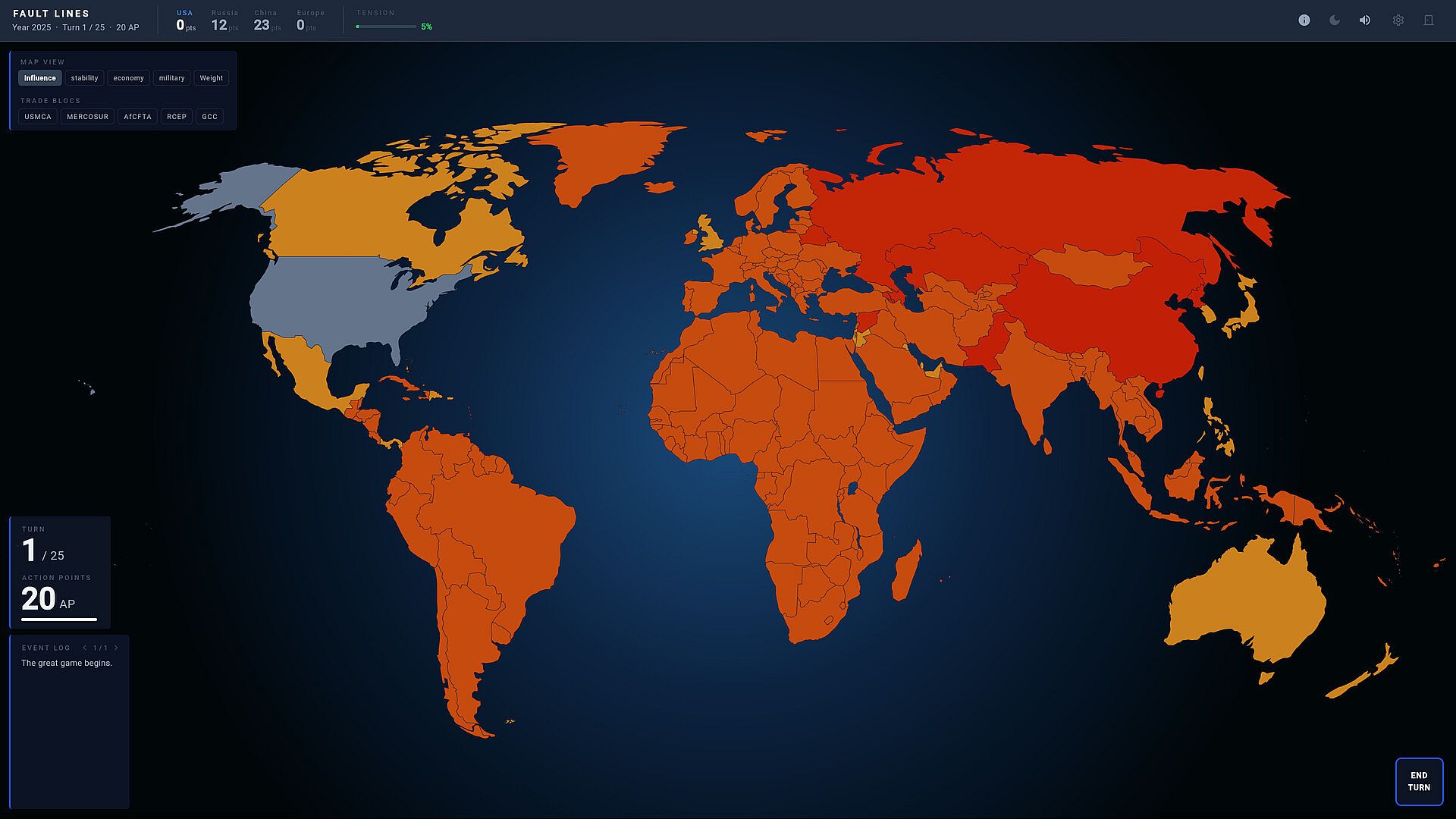
The core loop revolves around expanding a chosen superpower's sphere of influence without triggering catastrophic escalation. Actions such as offering aid packages, negotiating backroom deals, or supporting coups increase prestige but also elevate global tensions. These tensions decrease gradually between turns and can be lowered further through diplomatic summits, yet reaching the maximum threshold ends the session in nuclear disaster for all participants.
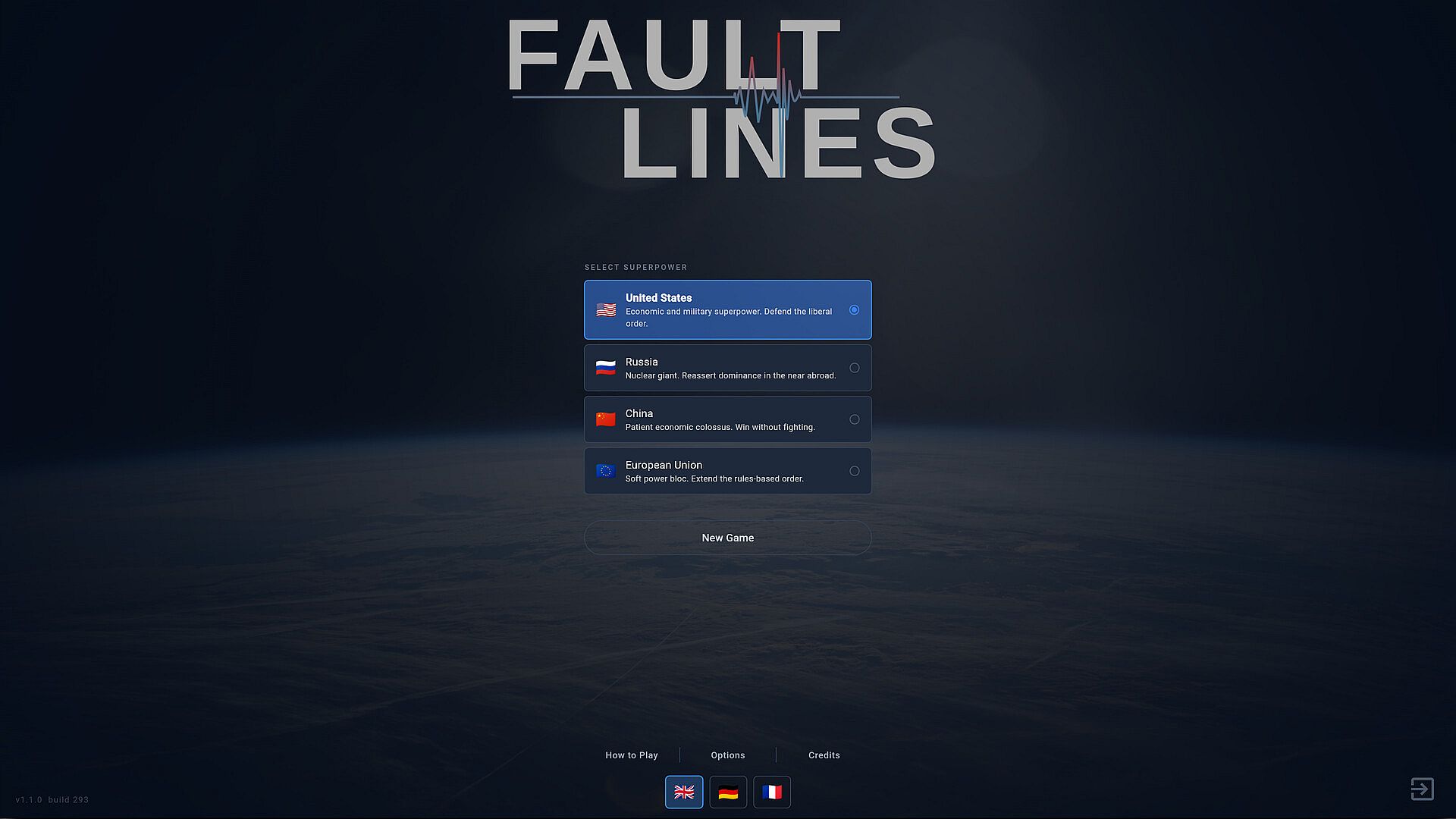
Each of the four playable factions begins with distinct starting positions and approaches. The United States operates as an assertive defender of the liberal world order. Russia applies consistent pressure on neighboring regions as a nuclear power. China pursues patient economic expansion to achieve victories without direct confrontation. The European Union relies on soft power within a rules-based international system that faces gradual erosion. Rivals pursue their own objectives simultaneously, responding to shared global crises and events that require player attention.
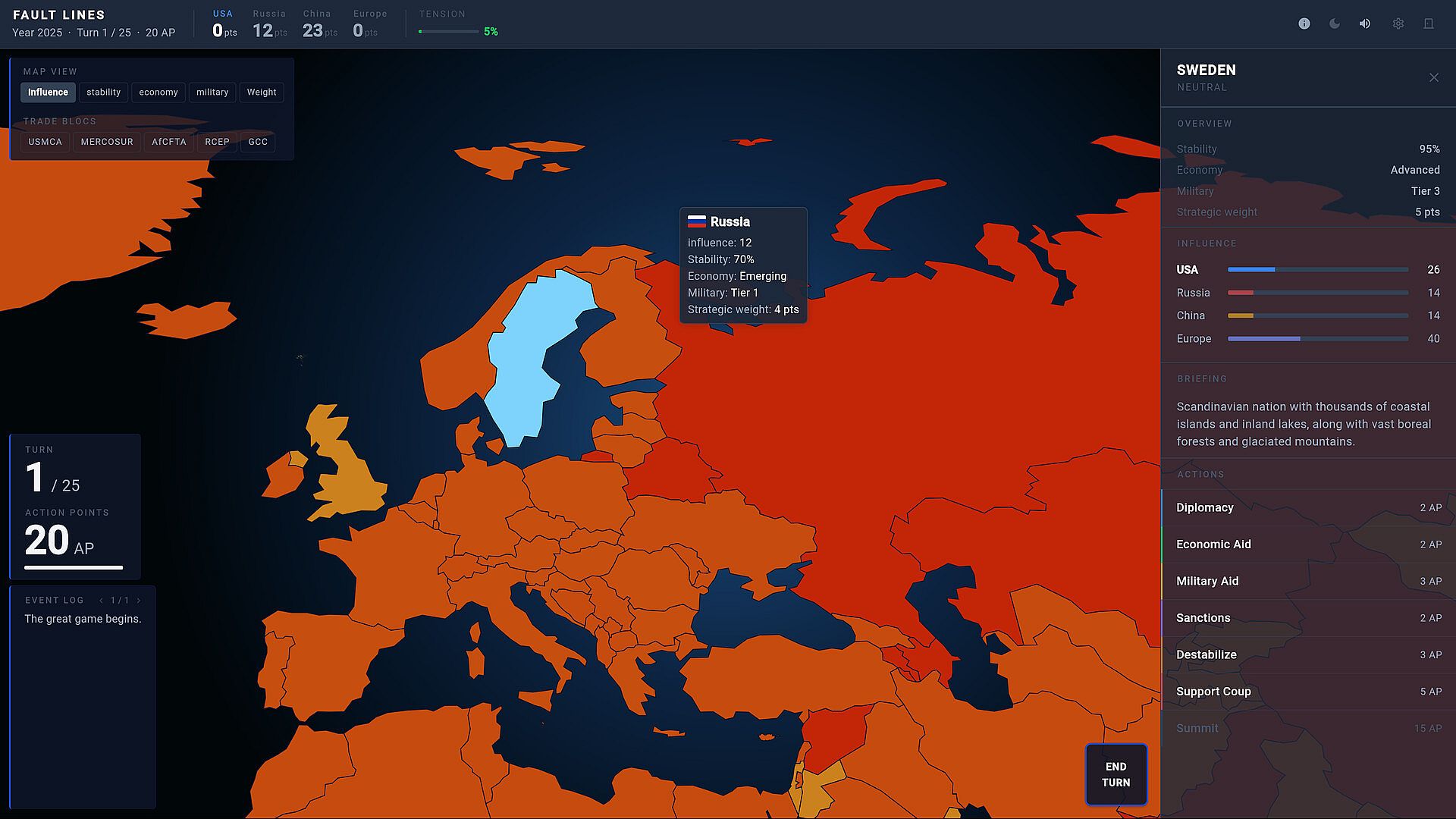
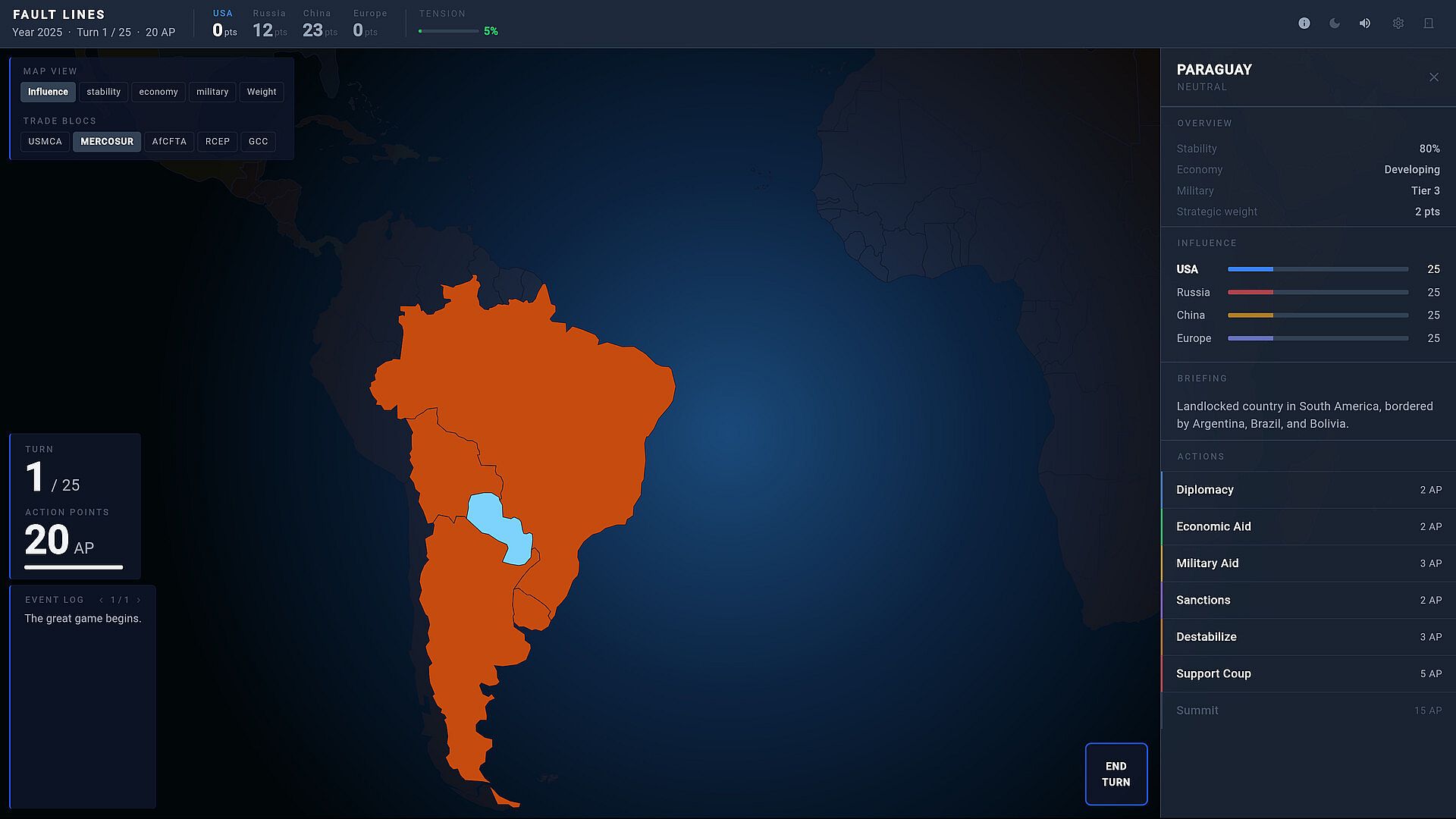
Mechanics center on careful calibration of aggressive moves. Military aid, destabilization efforts, and sanctions all contribute to tension buildup, forcing players to weigh short-term gains against long-term stability. Prestige accumulates through successful influence operations, creating a race against both competitors and the shared risk of escalation.
Game Modes
The game supports single-player sessions structured around complete matches that fit within one evening of play. No separate competitive or cooperative modes appear in available descriptions, with the experience built around managing one faction against AI-controlled rivals in a shared world state.
Progression occurs through sequential turns where players issue diplomatic and covert directives while monitoring tension levels and responding to emerging crises. The absence of army movement or city destruction keeps focus on non-kinetic tools for gaining advantage.
Key Mechanics and Factions
Tension tracking forms the central risk-reward system. Every assertive action raises the global meter, which relaxes slowly over time or through deliberate summit interventions. Exceeding the limit produces an immediate loss condition that overrides individual prestige scores.
Faction asymmetry encourages different strategic priorities. The United States benefits from broad alliances and ideological positioning. Russia leverages proximity and military signaling. China emphasizes long-term economic leverage. The European Union navigates institutional frameworks that provide stability at the cost of flexibility. These starting differences influence available options and optimal response patterns to the same global events.
Is It Worth Playing?
Fault Lines targets players who enjoy strategy games centered on indirect competition and risk management rather than tactical combat or large-scale unit control. Its short session length and accessible entry point suit those seeking a complete geopolitical experience without extended time commitments.
The title remains in a pre-release state with no user reviews or confirmed post-launch updates available. Individuals interested in the described blend of diplomacy, prestige competition, and tension mechanics may find value in following its development for future availability on PC.