






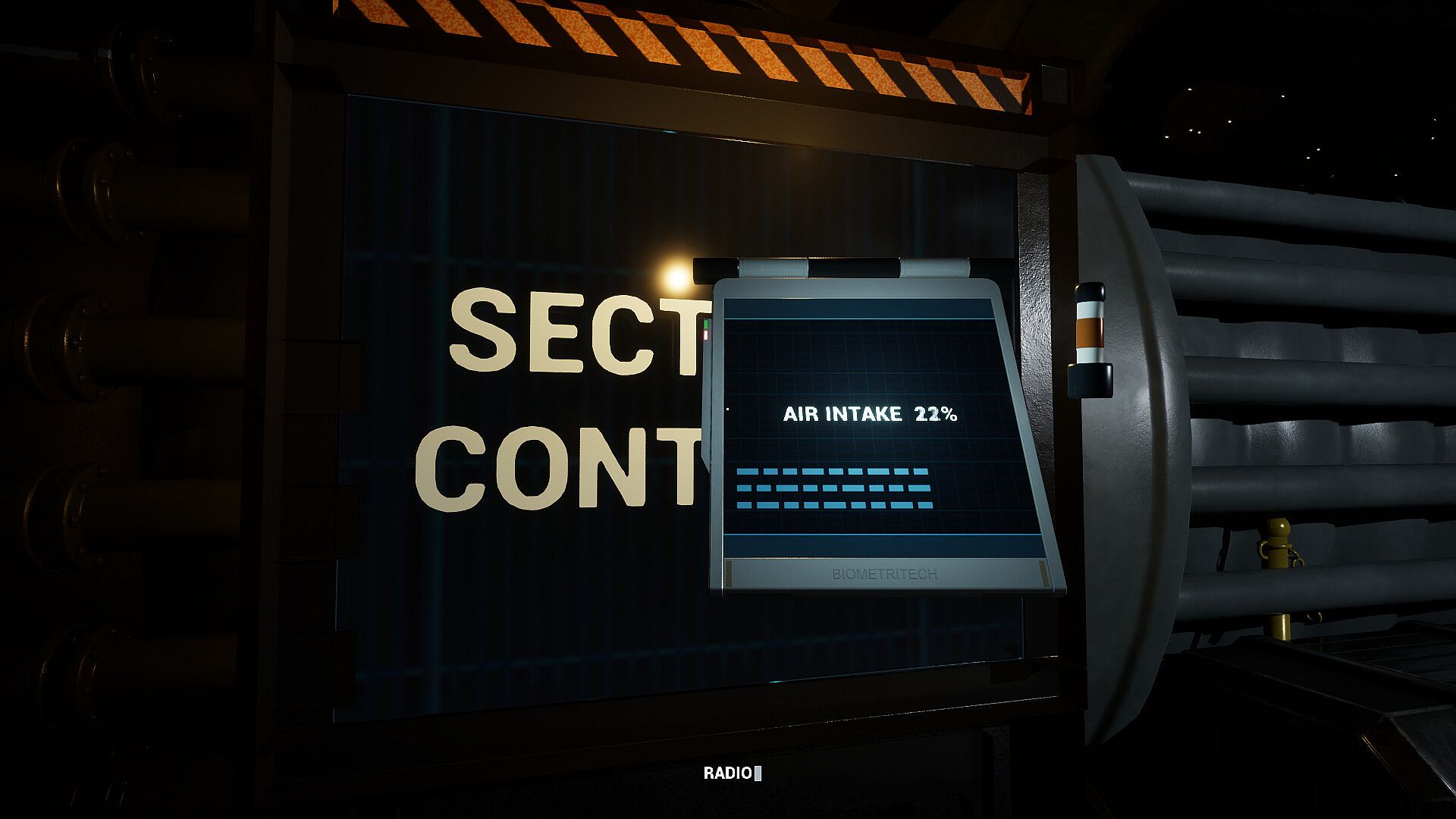


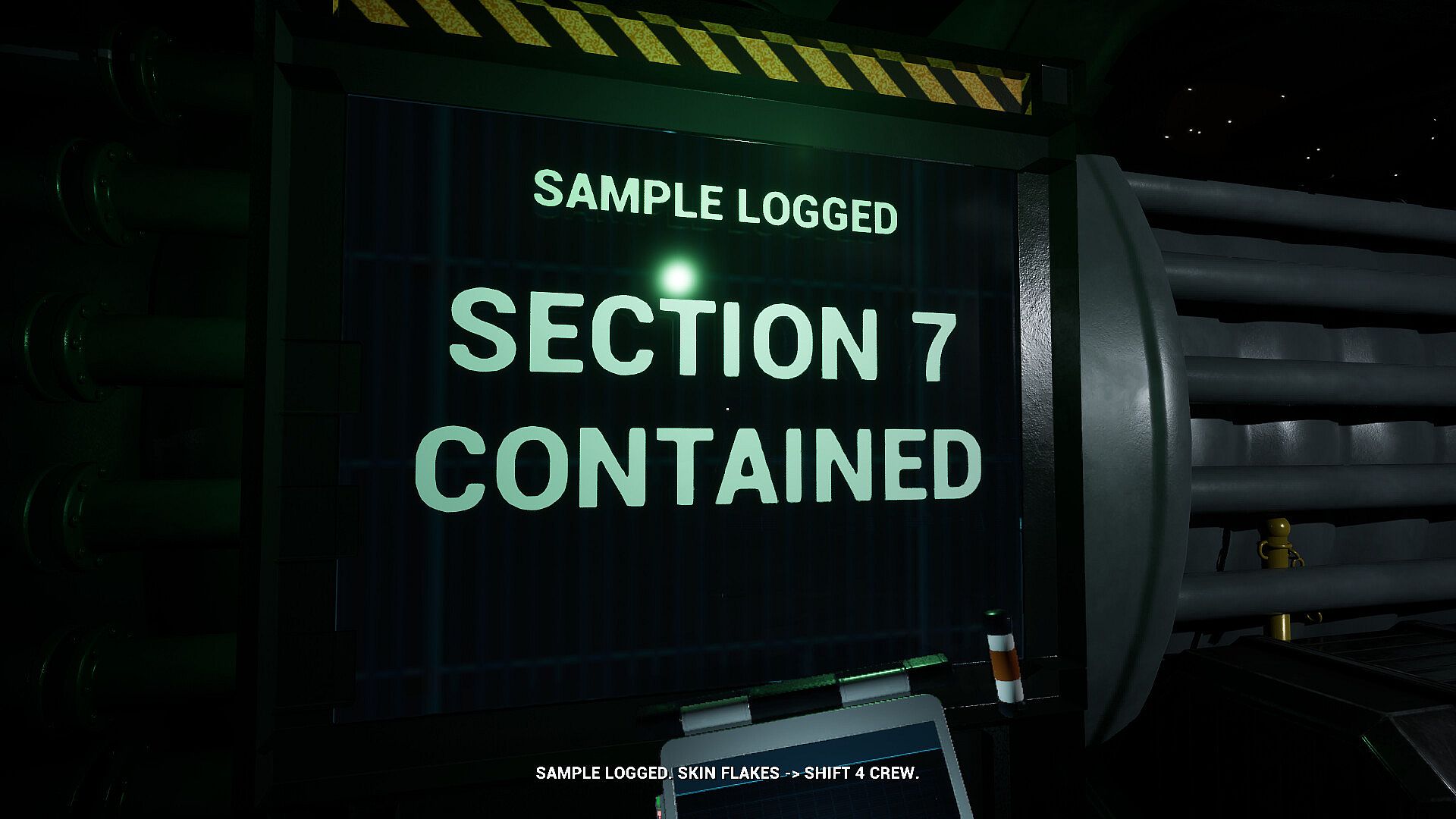
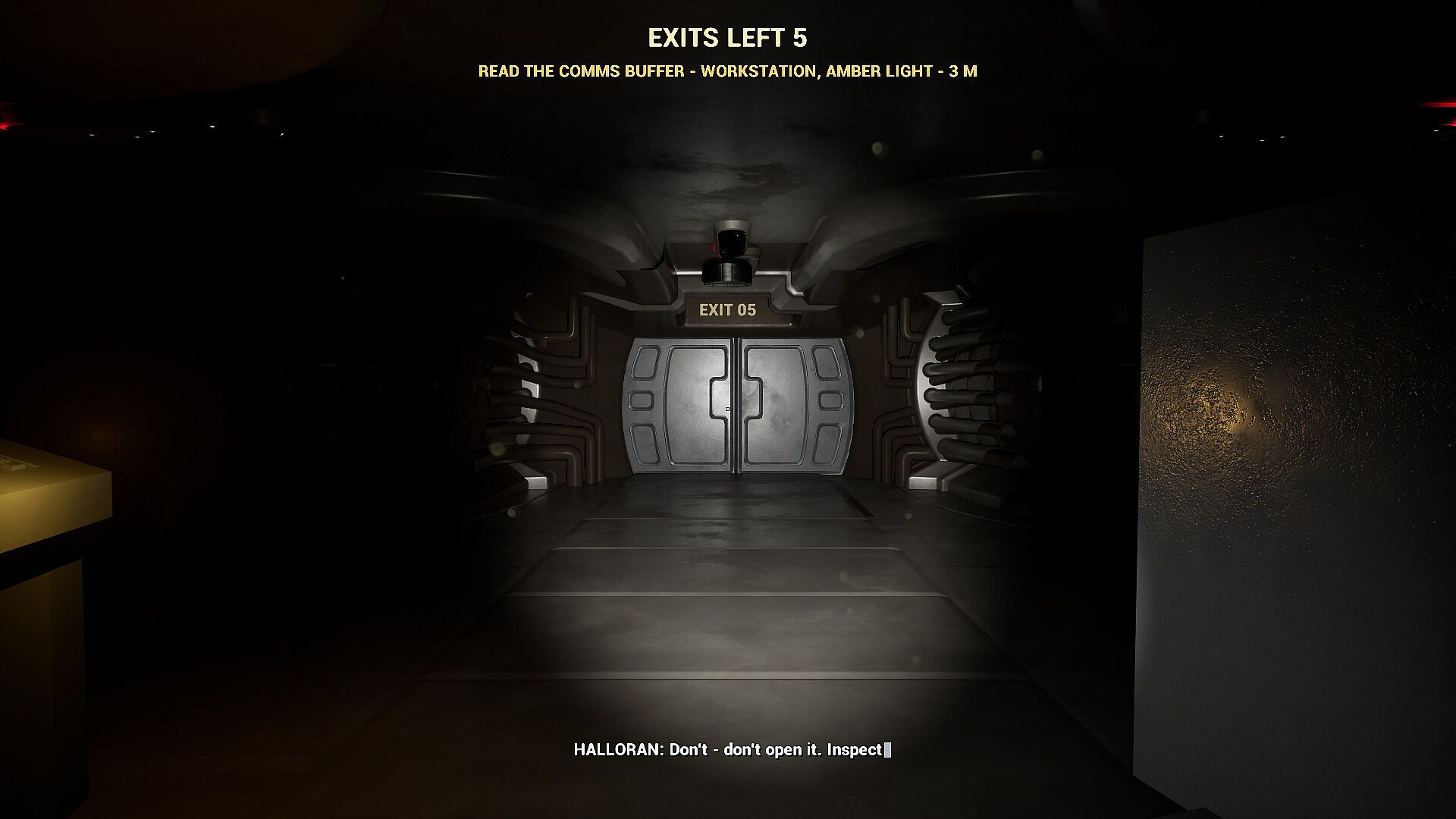


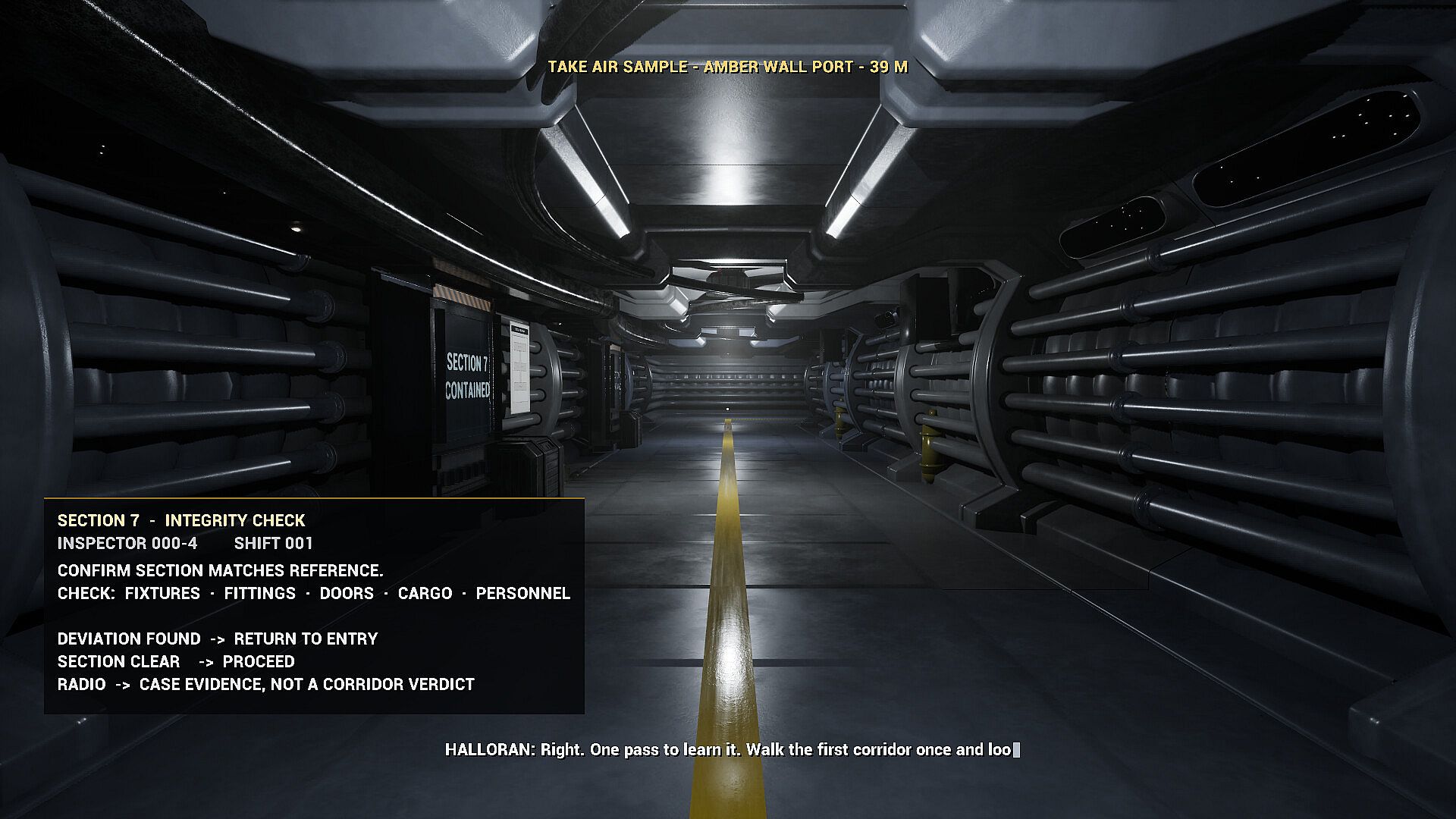


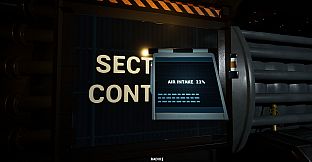


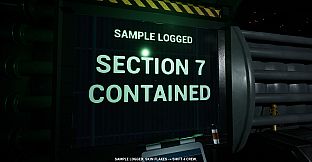





False Signal is a single-player first-person indie adventure game built around careful observation and deduction. Players step into the role of a diagnostic specialist tasked with spotting one impostor among five crew members whose records no longer match reality. The experience unfolds through methodical checks of air samples, duty cards, and radio transmissions while navigating confined corridors that must align with a clean reference state.
Gameplay
The core loop centers on comparing physical evidence against live observations. Air samples provide chemical data that can reveal inconsistencies in a crew member's claimed identity. Duty cards offer tangible records of assignments and clearances, while radio calls deliver voice evidence that may or may not belong to the person speaking. Taking a sample requires turning away from the subject, creating moments of vulnerability where an unseen presence can mimic familiar voices.
Corridors function as diagnostic spaces. Each one is measured against an established clean reference; any deviation signals the need to turn back rather than proceed. The radio serves as case evidence rather than an immediate verdict, and players must weigh every transmission carefully because not every voice matches its claimed source. Finding the carrier demands cross-referencing all three data streams before making a final identification.
Once the carrier is located, the game shifts to decision-making. Each door carries a stated cost in the narrative, and players choose what leaves Section 7 with the identified individual. Wrong calls result in the loss of a crew member's life, reinforcing the weight of every choice. The setup changes with each shift, presenting one carrier among five possible identities in fresh configurations.
Game Modes
False Signal offers a single-player experience only. There are no multiplayer or cooperative modes. The structure revolves around repeated shifts where the carrier's identity rotates among the five crew members, ensuring each run presents new combinations of evidence and outcomes. Players can discover and prepare a way out through careful observation across multiple attempts, with all choices carrying narrative consequences stated before selection.
Key Mechanics and Features
Evidence integration forms the heart of the systems. Air samples, physical duty cards, and radio records must be read together rather than in isolation. Corridor checks enforce strict adherence to the clean reference, turning navigation into an active part of the diagnosis. The single carrier mechanic keeps the focus narrow while the rotating identities maintain variety across play sessions.
Accessibility options include full controller support along with adjustments for subtitles, flash effects, screen shake, field of view, and motion blur. The game supports both English and Turkish in text and voice. These elements allow players to tailor the presentation without altering the core deduction process.
Is It Worth Playing?
False Signal suits players who enjoy deliberate, evidence-based puzzle solving in a confined setting. The emphasis on cross-referencing multiple data types and accepting the consequences of misidentification creates a focused loop that rewards attention to detail. Those who prefer fast action or open exploration may find the pace too measured, while fans of narrative-driven deduction games will appreciate the stated costs attached to each decision.
The single-player format and shifting scenarios each shift provide replay value through different identity combinations and outcomes. With options for controller use and visual adjustments, the game remains approachable for a range of play styles. Its strength lies in the tight integration of observation, comparison, and consequence rather than broad systems or frequent updates.











