




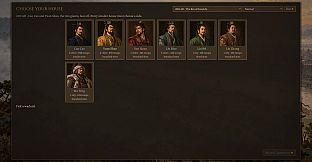
Dynasty Divided: A Three Kingdoms Saga is a single-player strategy and simulation game set during the final years of the Han dynasty. Players choose a house and work to unite the realm through careful management of officers, armies, and diplomacy on a hand-painted map of ancient China.
Gameplay
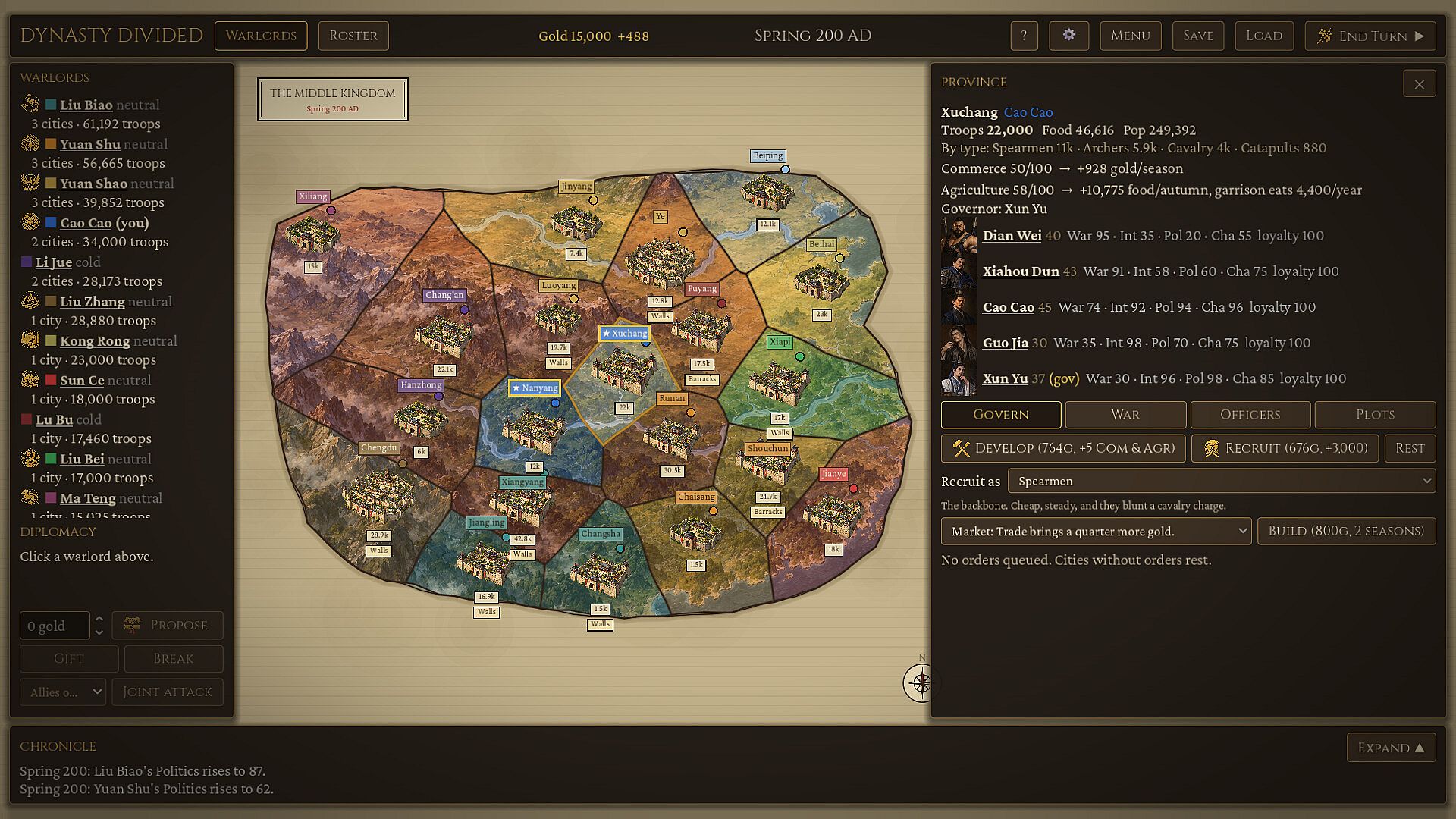
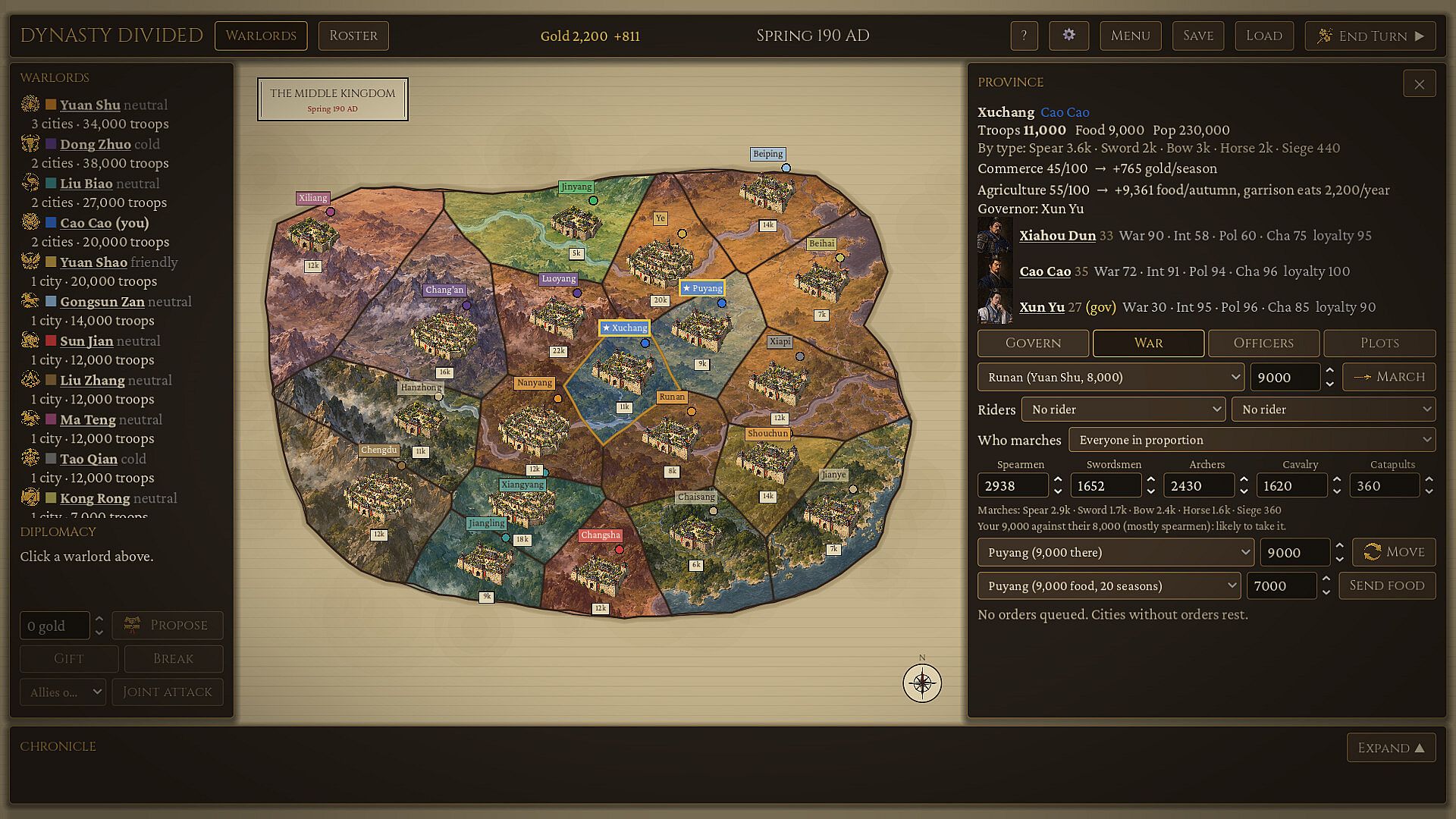
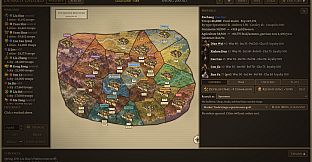
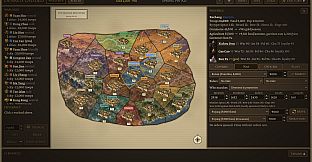
The core loop centers on seasonal turns that span decades. Armies march visibly across the map for one or more seasons before they can strike, giving defenders time to reinforce, sabotage supplies, or influence enemy commanders. Each of the twenty cities sits on a detailed map where terrain and distance affect movement and logistics. Supply lines matter, and far-flung targets require more preparation than nearby ones.
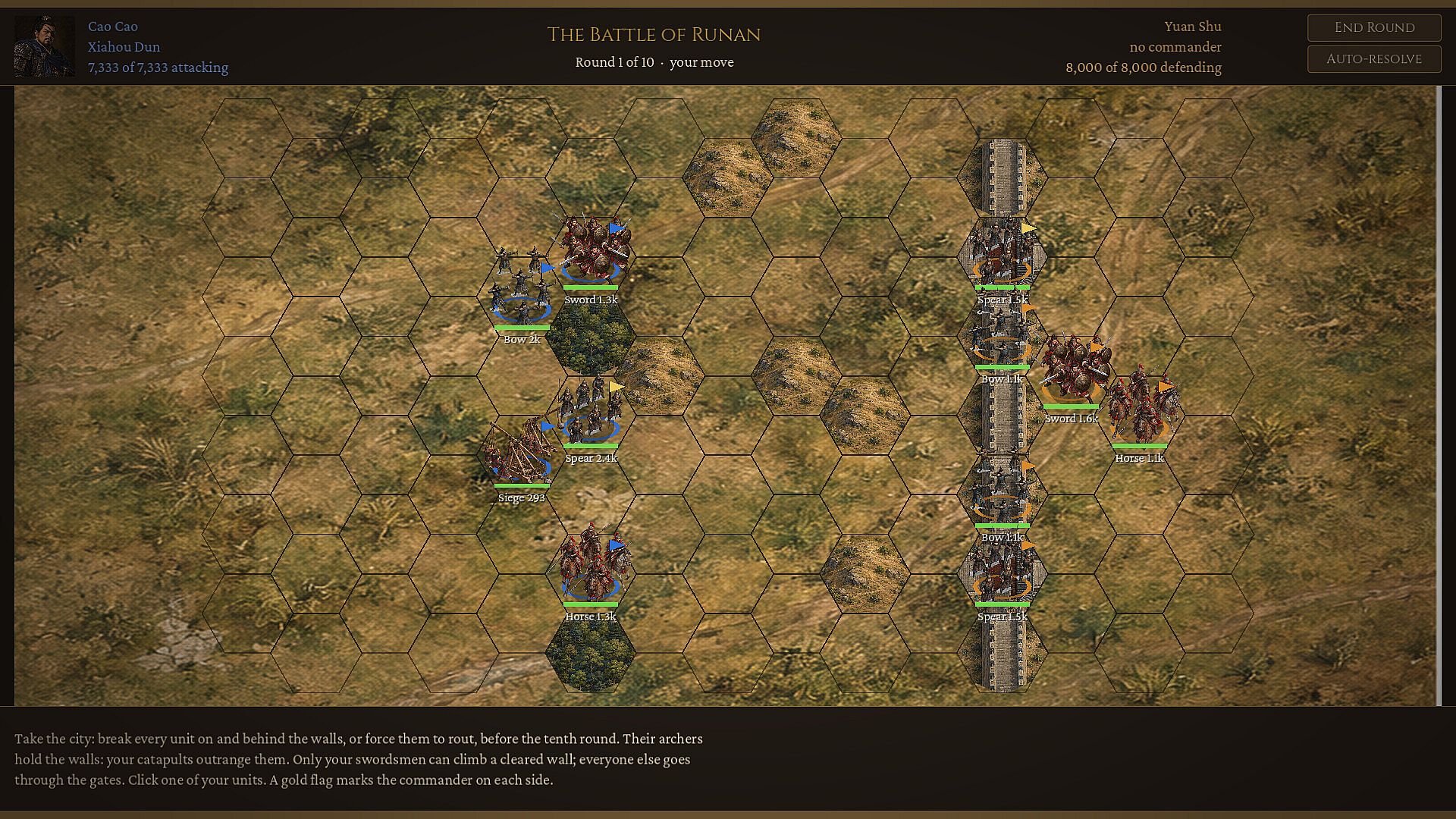
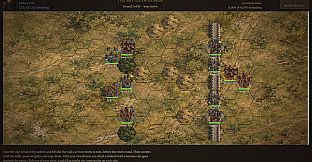
Combat occurs on a tactical hex grid that includes walls, gates, forests, and rivers. Players can lead armies personally or delegate to generals, with the option for auto-resolve that produces a written account of the outcome. Five troop types create clear counters: archers defend walls effectively, catapults damage fortifications, swordsmen climb ladders during sieges, spearmen blunt cavalry charges, and cavalry dominates open ground against swordsmen and archers. Twice the defender's numbers usually overcomes any garrison when the right composition is chosen.
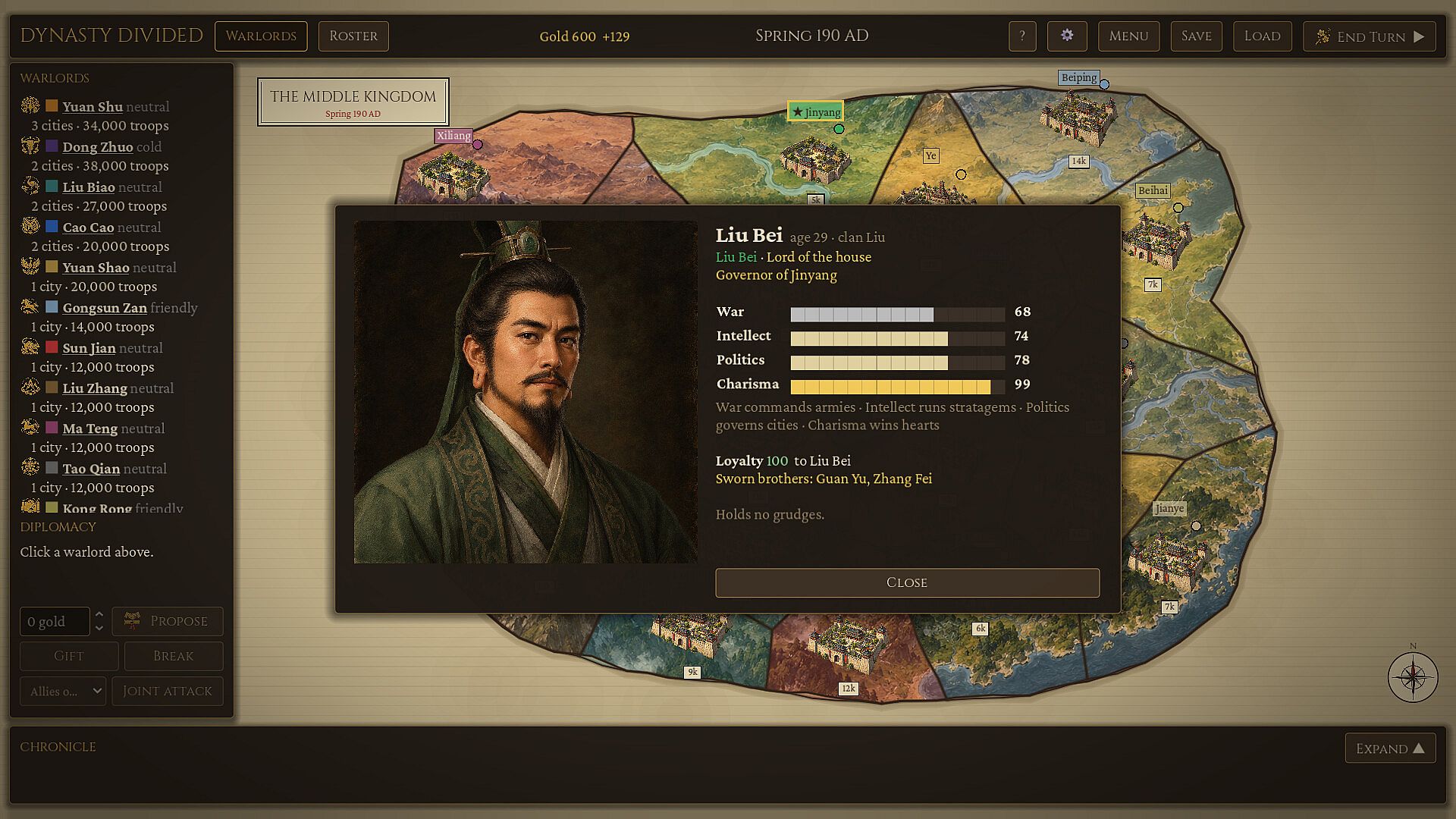
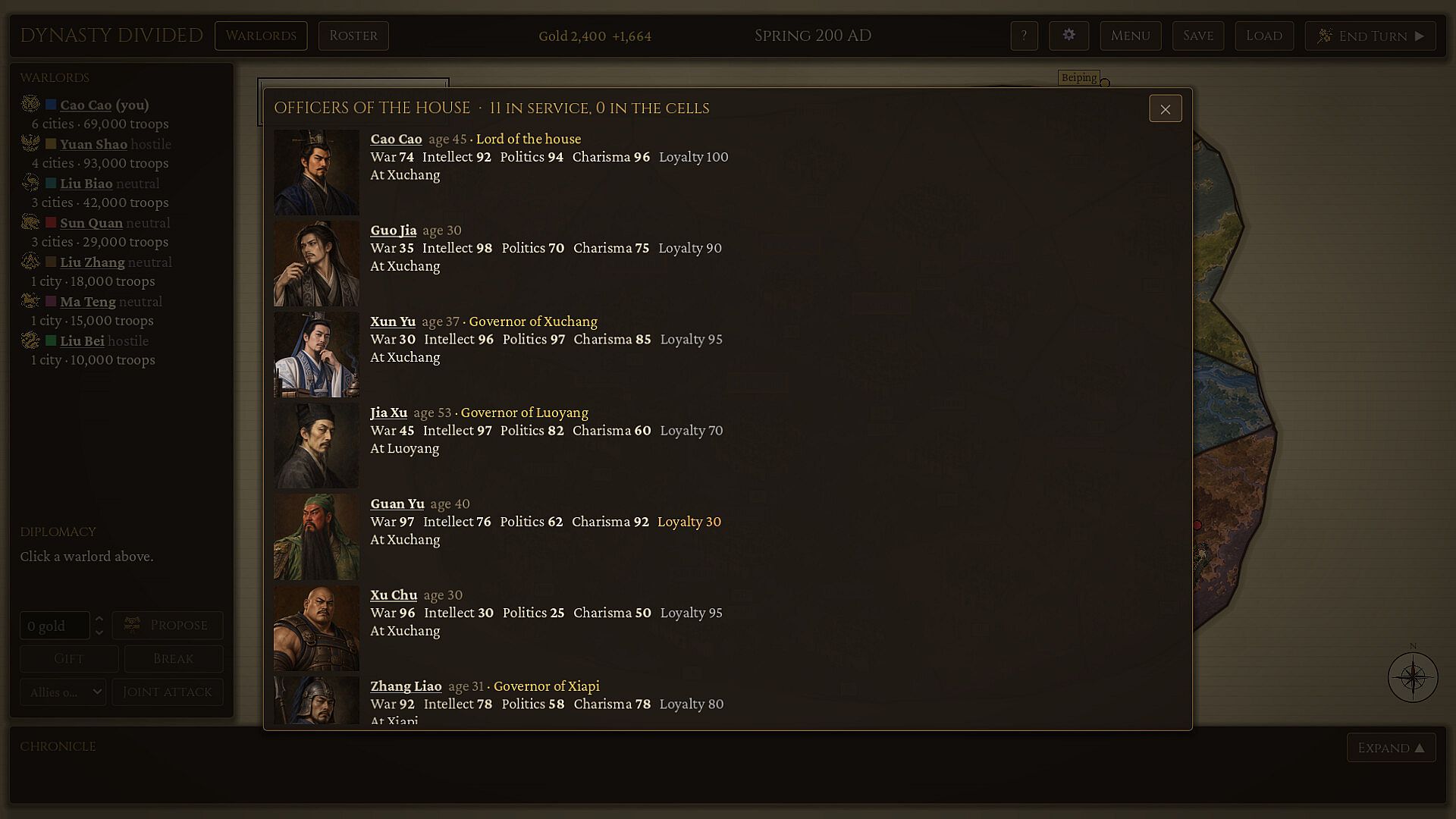
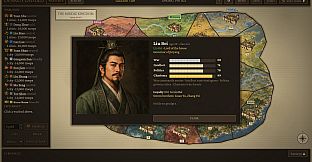
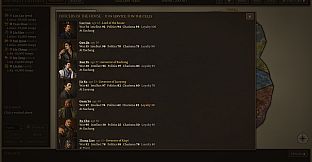
Fifty-one historical officers appear with unique painted portraits and four core stats: War, Intellect, Politics, and Charisma. These characters improve through use and decline with age. They react to unpaid wages, lost territory, or perceived slights, which can lead to resentment, defection, or even betrayal if jailed. Succession occurs when lords die of old age, passing leadership to heirs, while new talents emerge over time.
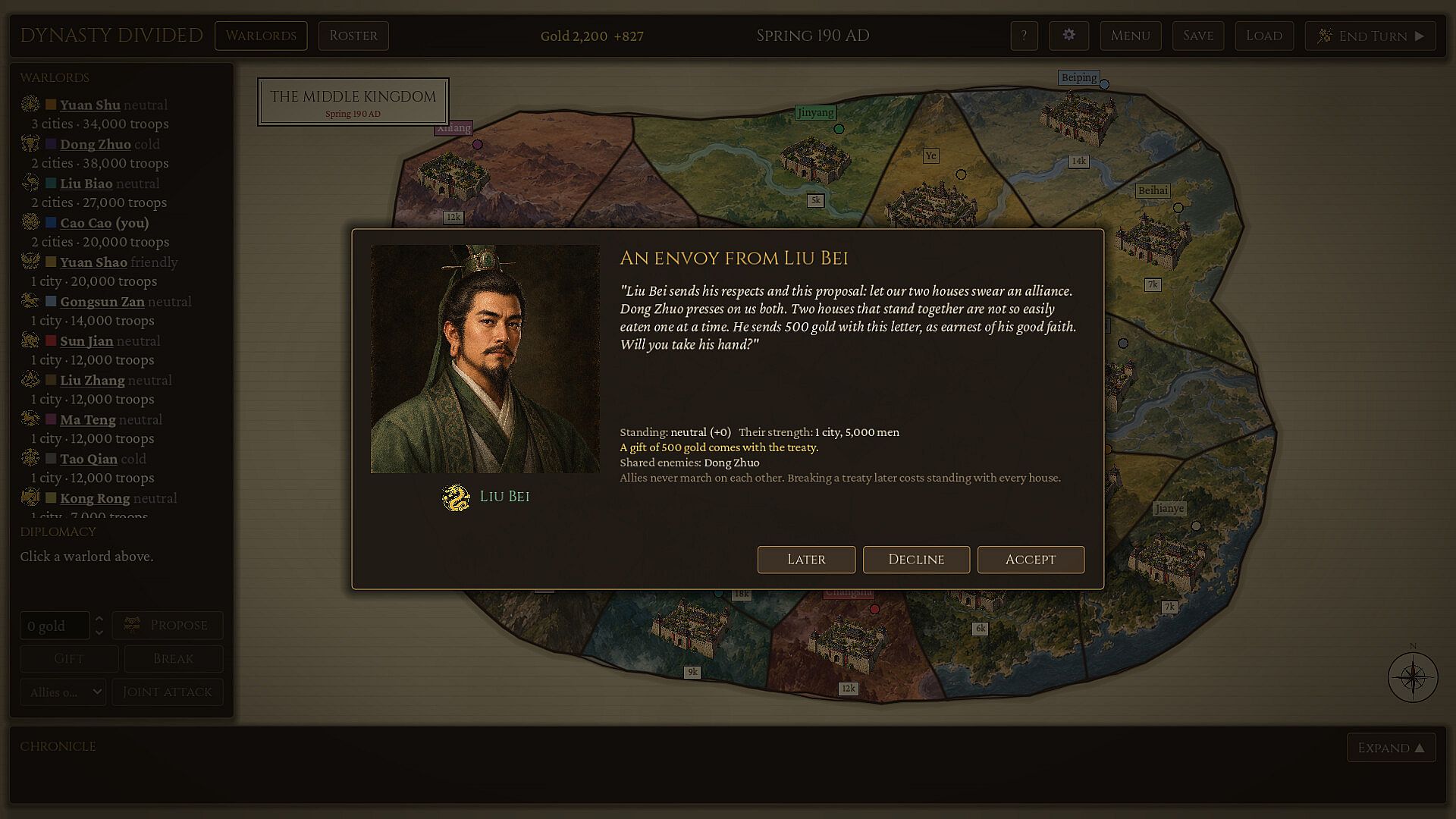
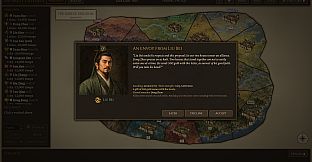
Stratagems allow incitement, sabotage, and searches for hidden talent. Alliances form through gifts, loaned troops, shared food, and joint operations, but every house tracks standing with others. Attacking a former ally breaks the treaty immediately and draws widespread hostility. Sworn brotherhoods add personal stakes: a sworn officer fights harder alongside his brother and never deserts, while champion duels can resolve conflicts before city walls.
Game Modes
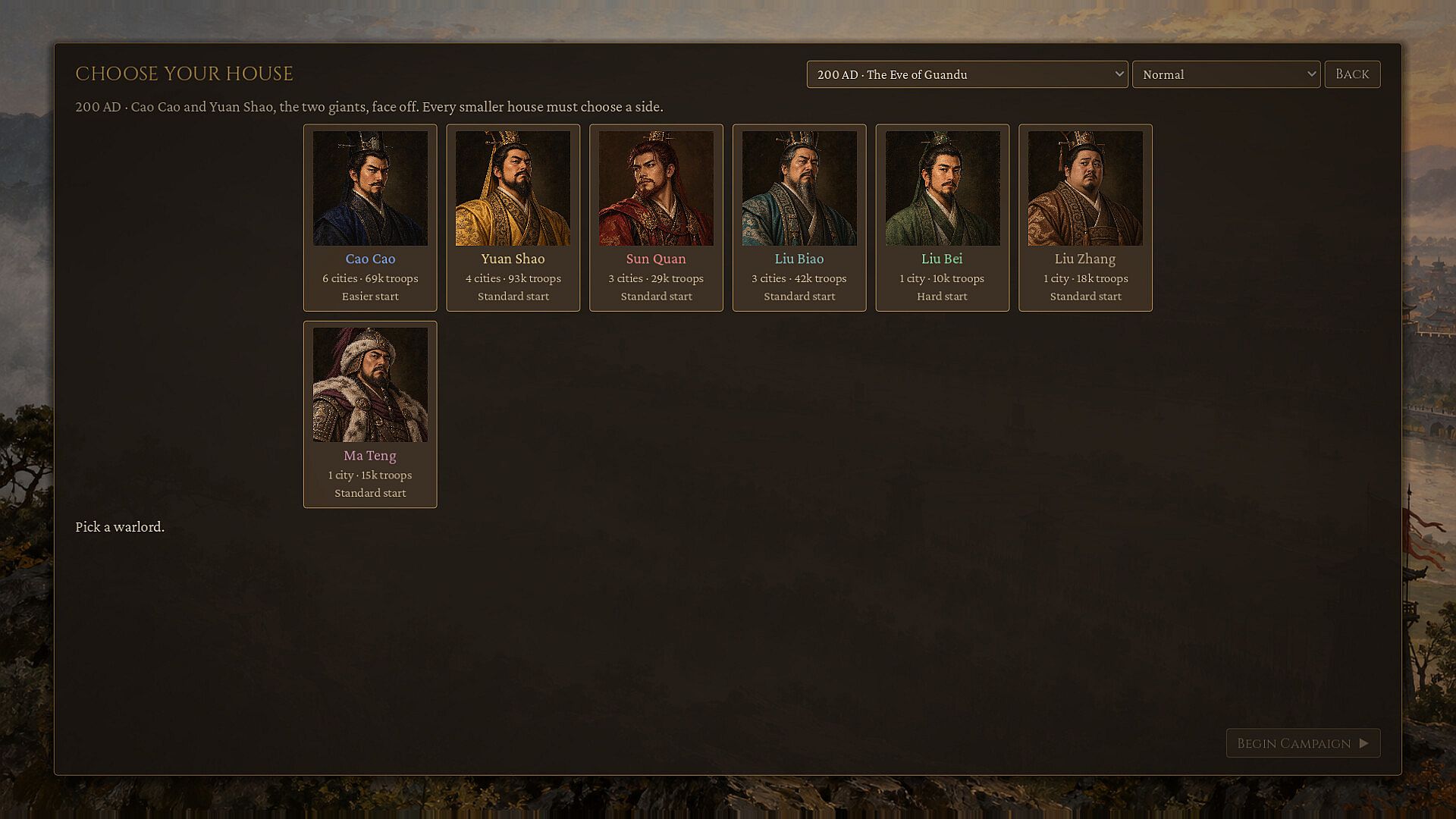
Four historical starting points shape distinct campaigns. The 190 AD start places twelve houses against the tyrant Dong Zhuo. The 194 AD start shows the realm fragmenting under Lu Bu, Li Jue, and Sun Ce. The 200 AD start pits Cao Cao against Yuan Shao at Guandu, forcing smaller houses to choose sides. The 208 AD start recreates the lead-up to Red Cliffs, with Cao Cao controlling the north and southern houses deciding whether to unite. A fifth what-if start, Heroes of the Age, places every famous officer in his prime at once.
A guided first campaign introduces the seasonal loop and key systems for new players. The chronicle records every major event, and a hall of records tracks the fastest unifications achieved with each house. Thirty-one achievements reward mastery of different strategies and house choices. The game runs entirely in single player with full English and Simplified Chinese support and requires no online connection or microtransactions.
Key Mechanics and Systems
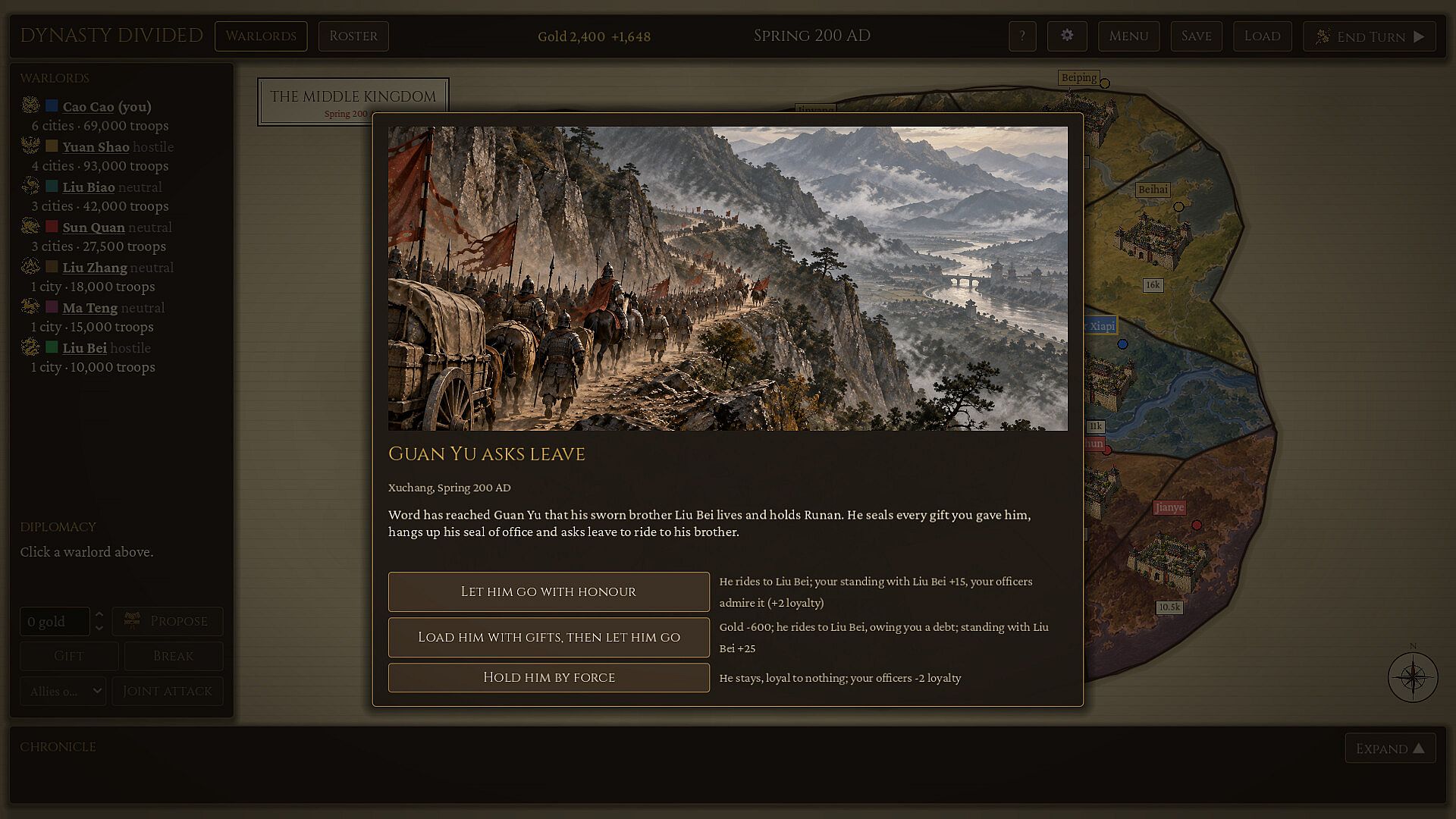
Officer loyalty and growth create long-term consequences. Passing over a capable commander or failing to pay troops can sour relations for years, while successful use of an officer raises his stats and influence. Historical events such as the Peach Garden Oath, the three visits to Zhuge Liang, the chain stratagem against Dong Zhuo, and the fire at Wuchao occur only when the relevant officers remain alive and positioned correctly, and only when the player allows them to unfold.
Diplomacy carries real costs. Lending troops or sharing resources builds standing, yet marching on an ally voids the treaty the moment the army departs. Courts across the land respond to oathbreakers, turning former partners into enemies. A house without an heir eventually ends, forcing players to plan for succession through marriage, adoption, or careful grooming of young talents.
Every garrison holds answers to specific threats. Archers excel on walls, while cavalry exploits open terrain. Choosing exactly which troops march and which stay behind determines success in both field battles and sieges. Supply considerations extend to granaries that can be sabotaged to weaken approaching columns before they arrive.
Is It Worth Playing?
This title suits players who enjoy deep, turn-based strategy with visible consequences across long campaigns. The combination of officer personalities, telegraphed military movements, and tactical hex battles rewards careful planning and adaptation to changing circumstances. Historical flavor emerges through officer interactions and conditional events rather than scripted sequences, allowing alternate outcomes when key figures survive or fall.
Early access status means the experience continues to evolve, yet the provided systems already deliver a complete single-player loop focused on unification through multiple starting conditions. Those who appreciate simulation elements such as aging officers, succession, and shifting alliances will find substantial depth. The absence of online requirements and microtransactions keeps the focus on the core campaign experience across its four historical starts and the what-if scenario.












