







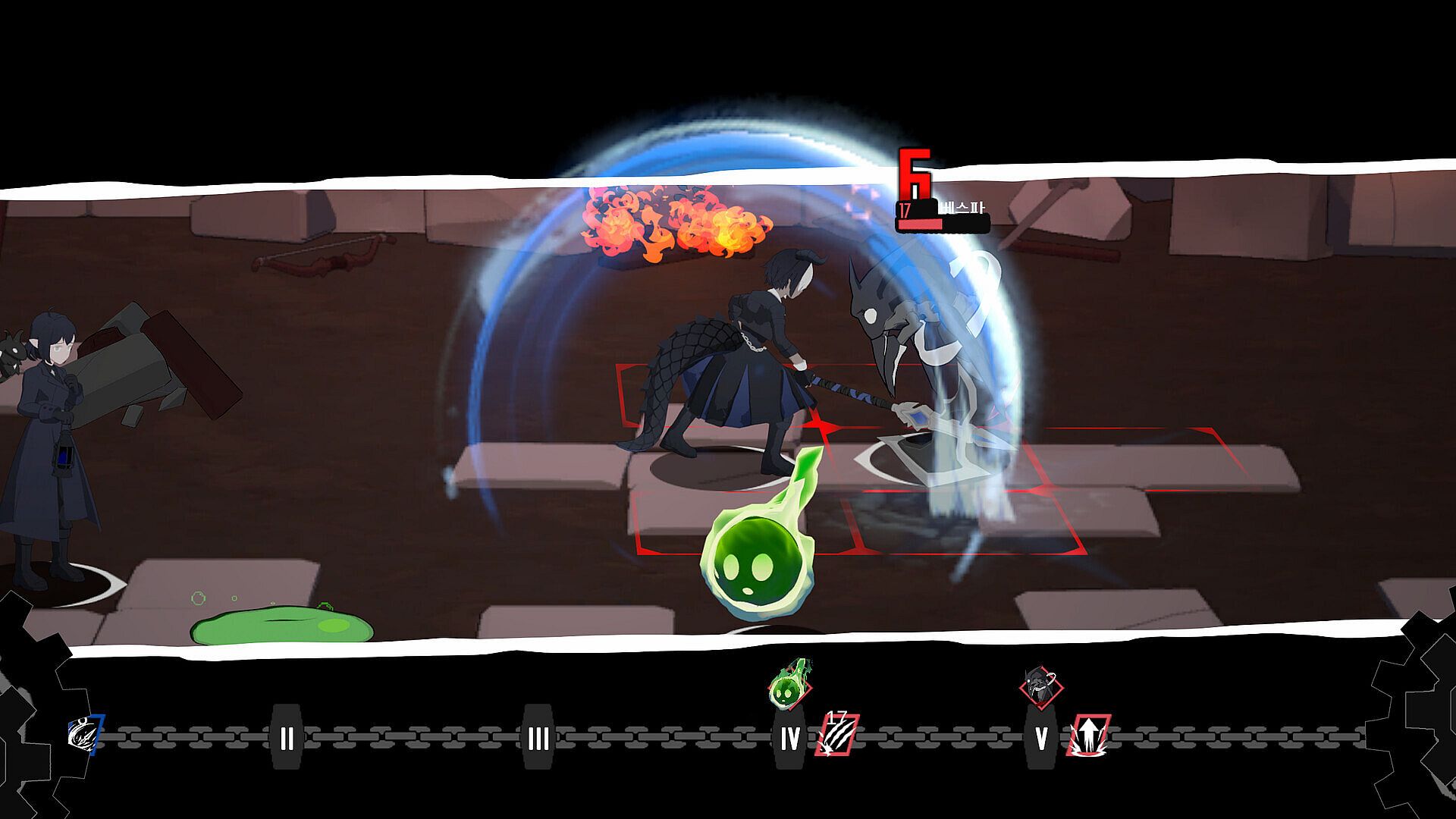
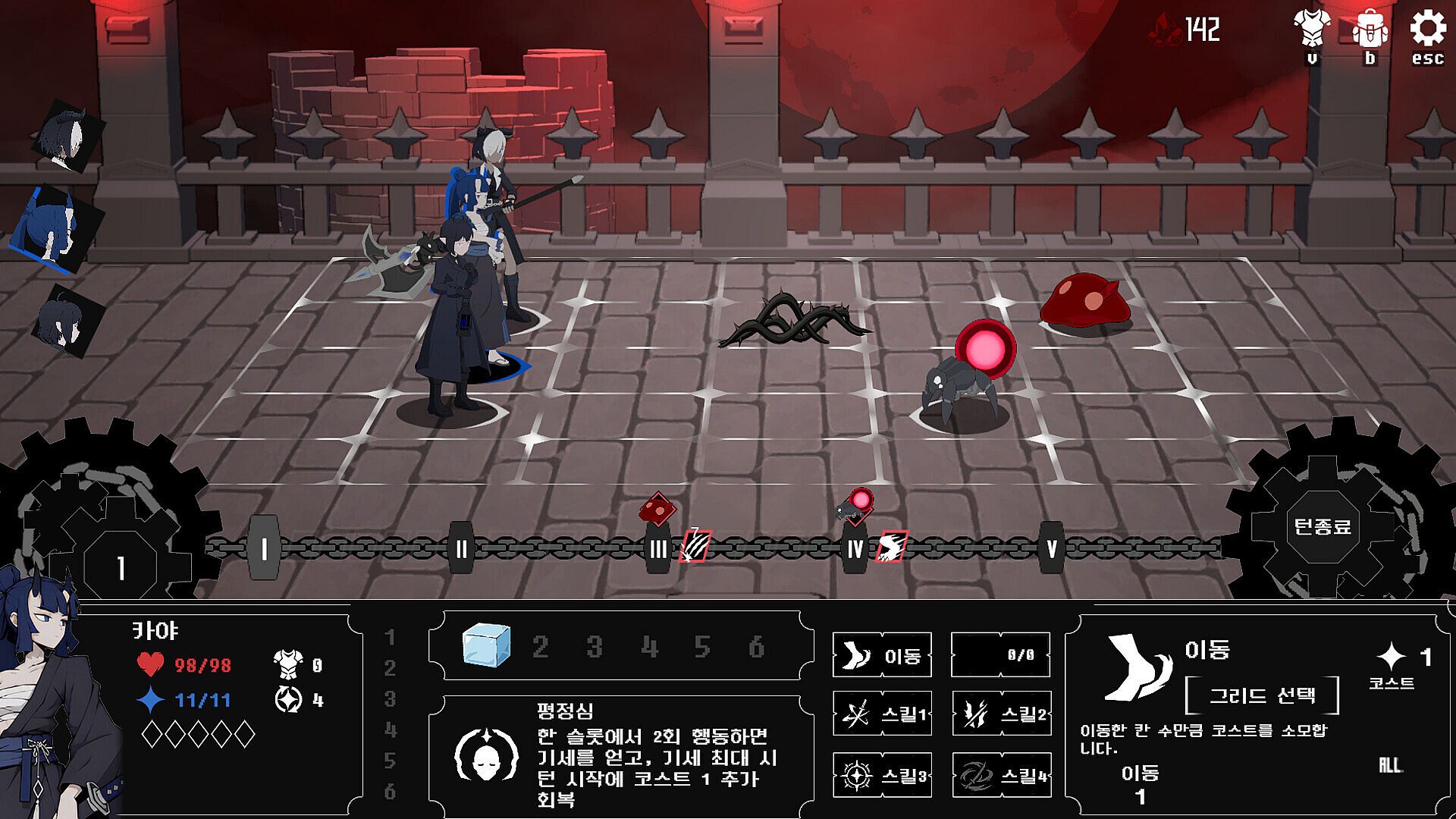
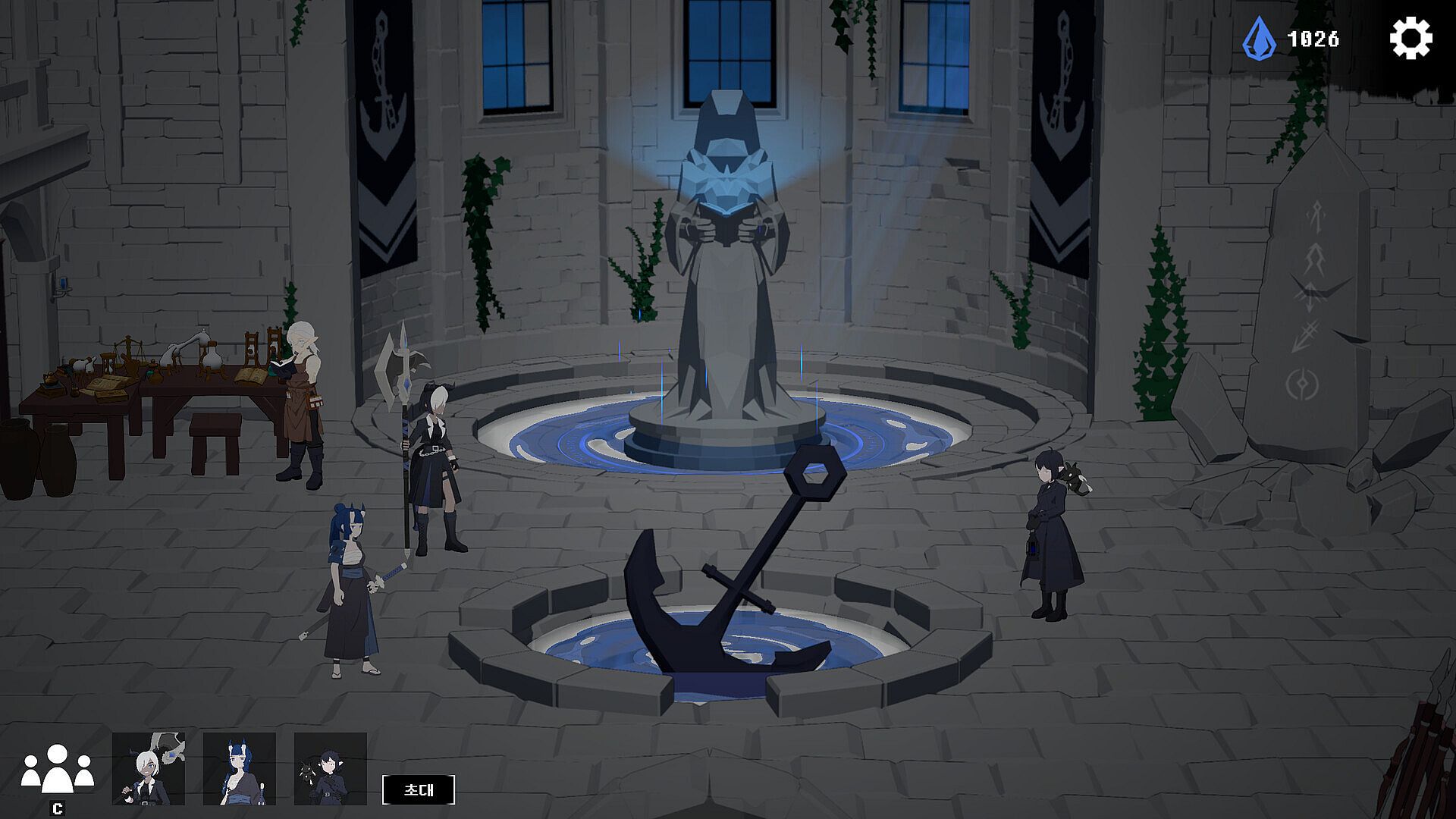
Dustium is a turn-based strategy roguelite that combines action-queueing combat with grid-based prediction on PC. Players control a party of three characters and must interpret limited enemy information to plan sequences of movement, attacks, and support abilities across a 7x5 battlefield. The core loop centers on reading intended enemy actions, anticipating targets and paths, and committing to a five-slot action queue that resolves in order once set.
Gameplay
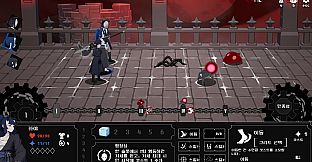
The combat system requires assigning actions to each of the three party members in advance. Movement, direct attacks, buffs, and debuffs occupy the available slots, and the entire plan executes without further input. Success depends on correctly inferring where enemies will move and whom they will target based on visible cues rather than explicit indicators.
The 7x5 grid serves as the tactical arena. Players study enemy positioning and declared intentions to position their characters for advantageous outcomes, including chain reactions from collisions or area effects. Different character compositions produce distinct approaches, such as stacking damage over time, executing multi-hit sequences, or controlling enemy placement through knockback and terrain interaction.
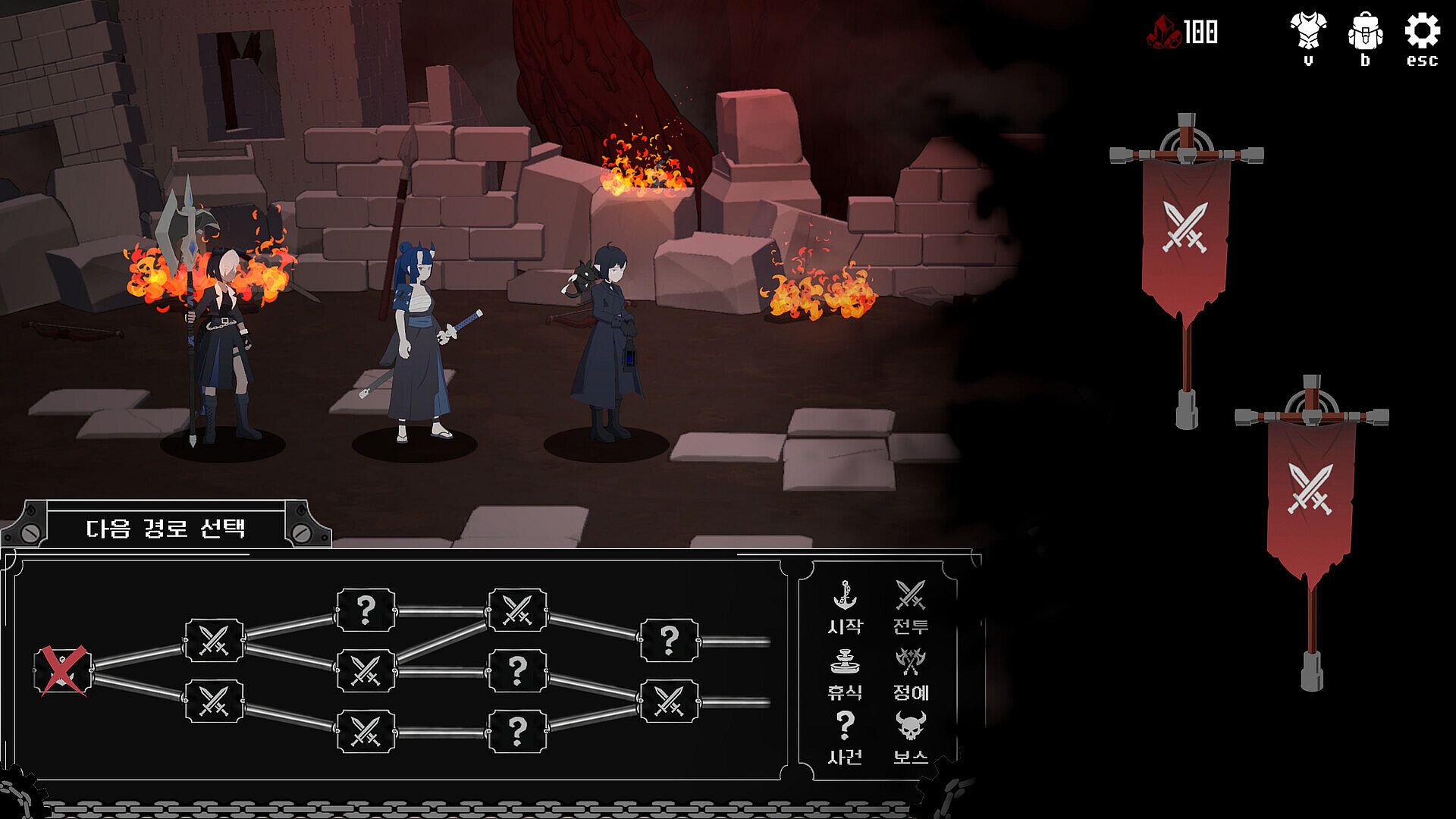
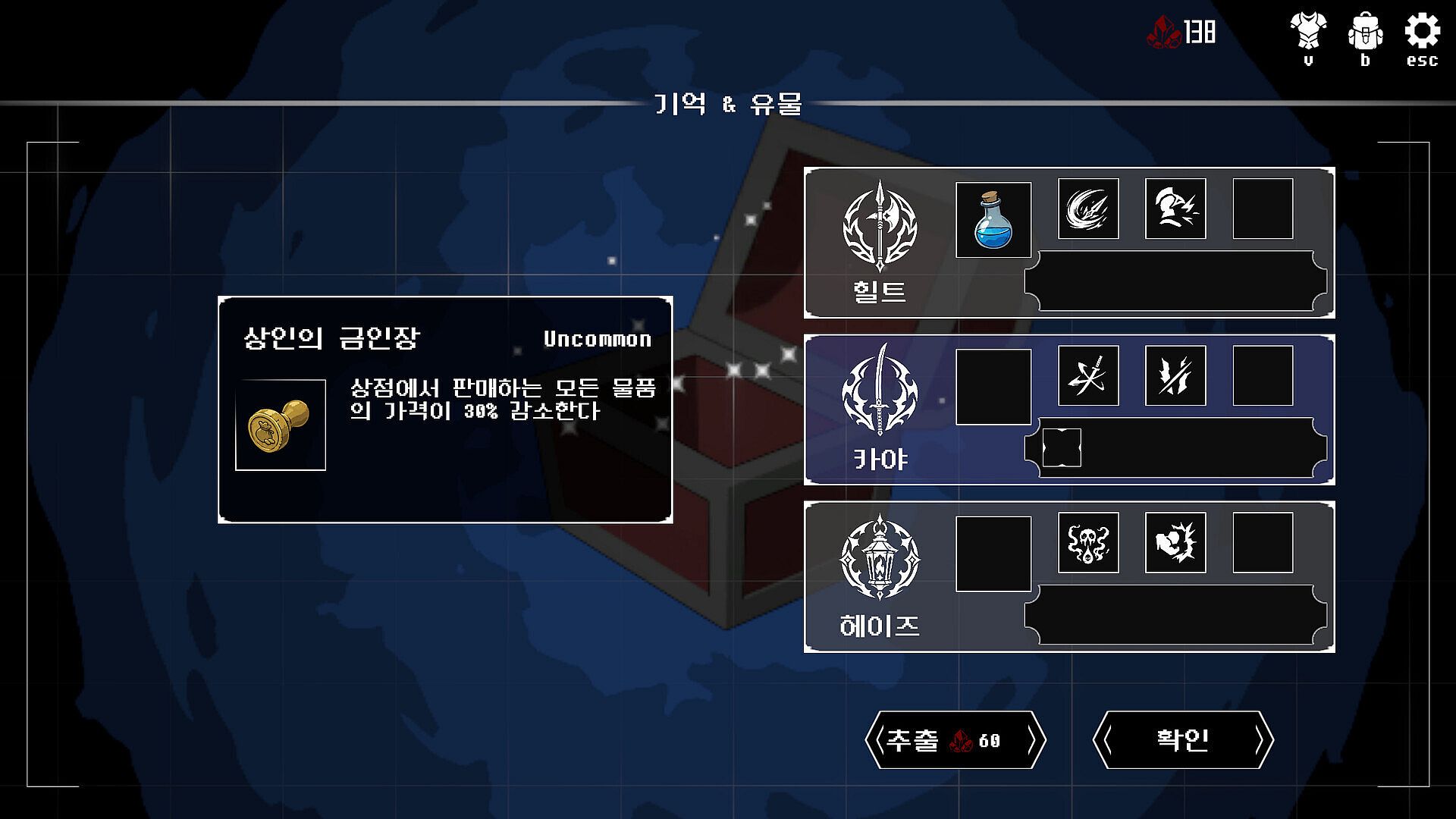
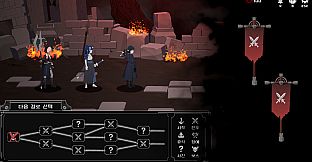
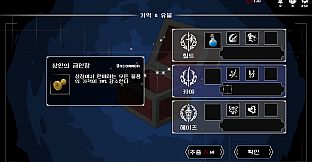
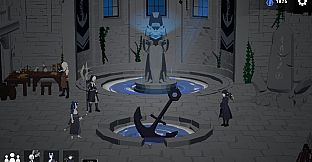
Between encounters, runs incorporate events, rest stops, and shops. These stops allow collection of Memories and Relics that alter available abilities or provide new synergies. Progression extends beyond individual runs through permanent unlocks of additional Memories and Shards, expanding the pool of strategic options available in future attempts without simply scaling raw power.
Game Modes
Dustium operates as a single-player roguelite experience focused on repeated runs through procedurally influenced sequences of battles and encounters. Each attempt emphasizes forward planning and adaptation to new character combinations and item synergies. The structure encourages experimentation with party builds drawn from a diverse roster, where outcomes hinge on accurate prediction of battlefield flow rather than reactive commands.
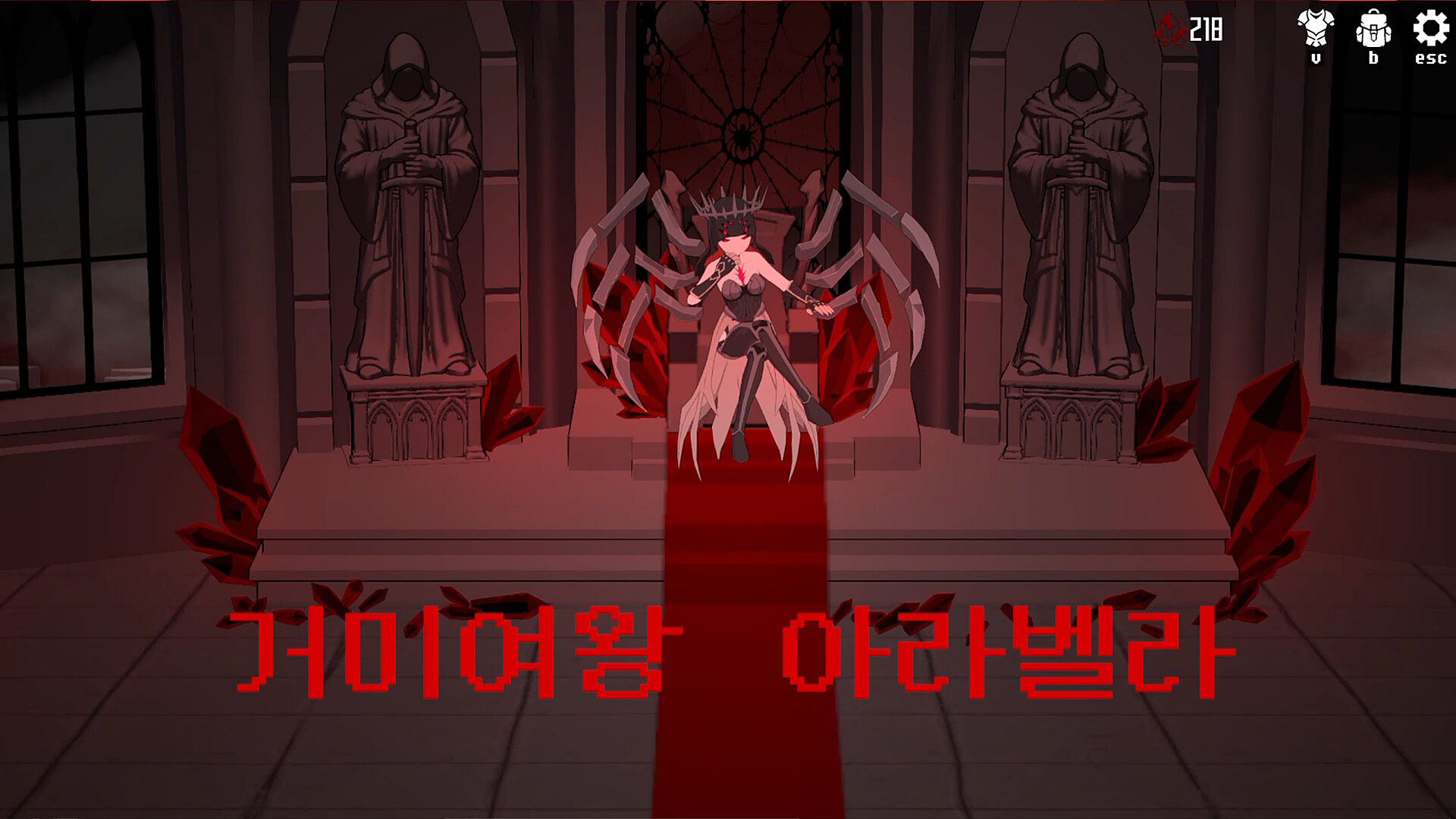
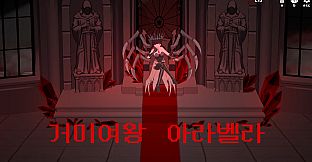
Exploration of regions affected by Red Dustium introduces mutated enemies that test the same prediction mechanics in varied contexts. Runs conclude upon party defeat or successful navigation of the corrupted areas, with progress carrying forward through unlocked content that broadens future strategic choices.
Core Mechanics and Progression
Party building revolves around selecting three characters whose abilities complement one another. Some focus on repeated strikes or status stacking, while others emphasize control through positioning or sustained damage. The absence of direct targeting information forces players to analyze the grid layout and enemy declarations to determine optimal queues.
Relics and Memories function as build modifiers collected during runs. These items can reinforce existing strategies or enable entirely new ones, such as shifting from aggressive chains to defensive control setups. Permanent unlocks after runs increase the variety of starting options, supporting longer-term experimentation across multiple attempts.
Is It Worth Playing?
Dustium suits players who enjoy deliberate, information-limited strategy where success comes from anticipating outcomes rather than executing real-time commands. The roguelite structure rewards repeated play through expanding options and the challenge of mastering prediction on the fixed grid size. Those seeking fast-paced action or direct control may find the queued resolution system less immediate, while fans of turn-based tactics that emphasize reading opponent intent will find the core loop aligned with that preference. The game remains in development with no released version or player reviews available at this time.











