


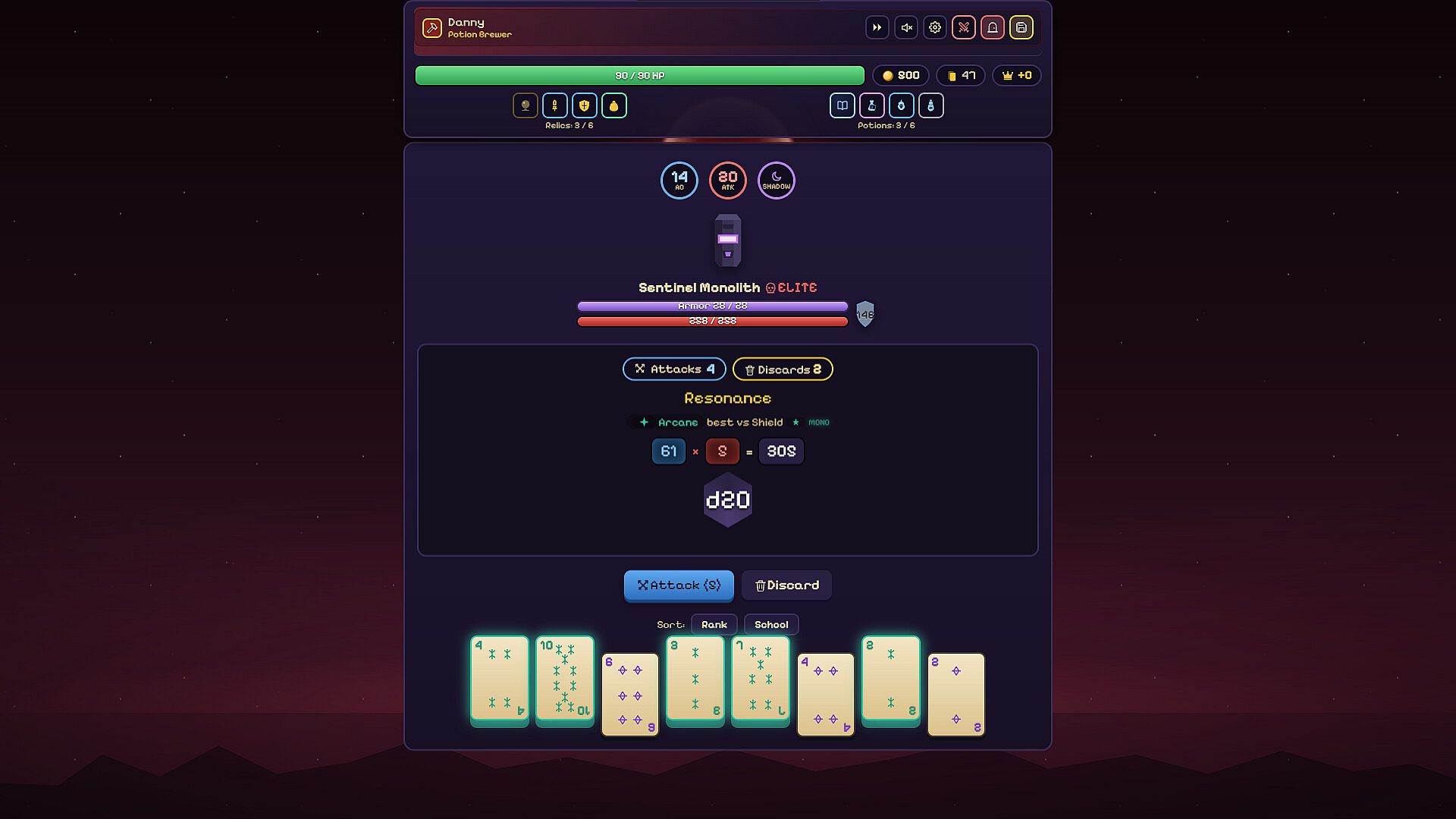







Dunjin is an indie dungeon crawler for PC that combines poker-hand deckbuilding with dice-driven combat in a descent through procedurally generated floors. Players build and play hands from a deck of sigil-marked cards to produce Mana and Mult, then rely on a d20 roll to determine whether attacks land, fumble, or land as critical hits. The core loop centers on managing resources from card hands while navigating a world shaped by an ancient entity that watches and adapts to each descent.
Gameplay
Every card carries one of four sigils: Divine for healing, Arcane for breaking shields, Martial for direct damage to health, and Shadow for armor shredding. Hand strength directly scales the damage output, so players adjust decks around preferred sigils, discovered relics, or specific hand types such as flushes. The d20 introduces variability that can turn a strong hand into a decisive strike or a costly miss, forcing adaptive decisions each turn.
Twenty-four distinct classes each start with unique perks and passives that alter how cards and dice interact. A Knight might emphasize defensive synergies while a Rat King leans into swarm tactics or resource manipulation. These differences create separate gameplay loops, with some classes favoring deck manipulation and others focusing on dice rerolls or probability shifts.
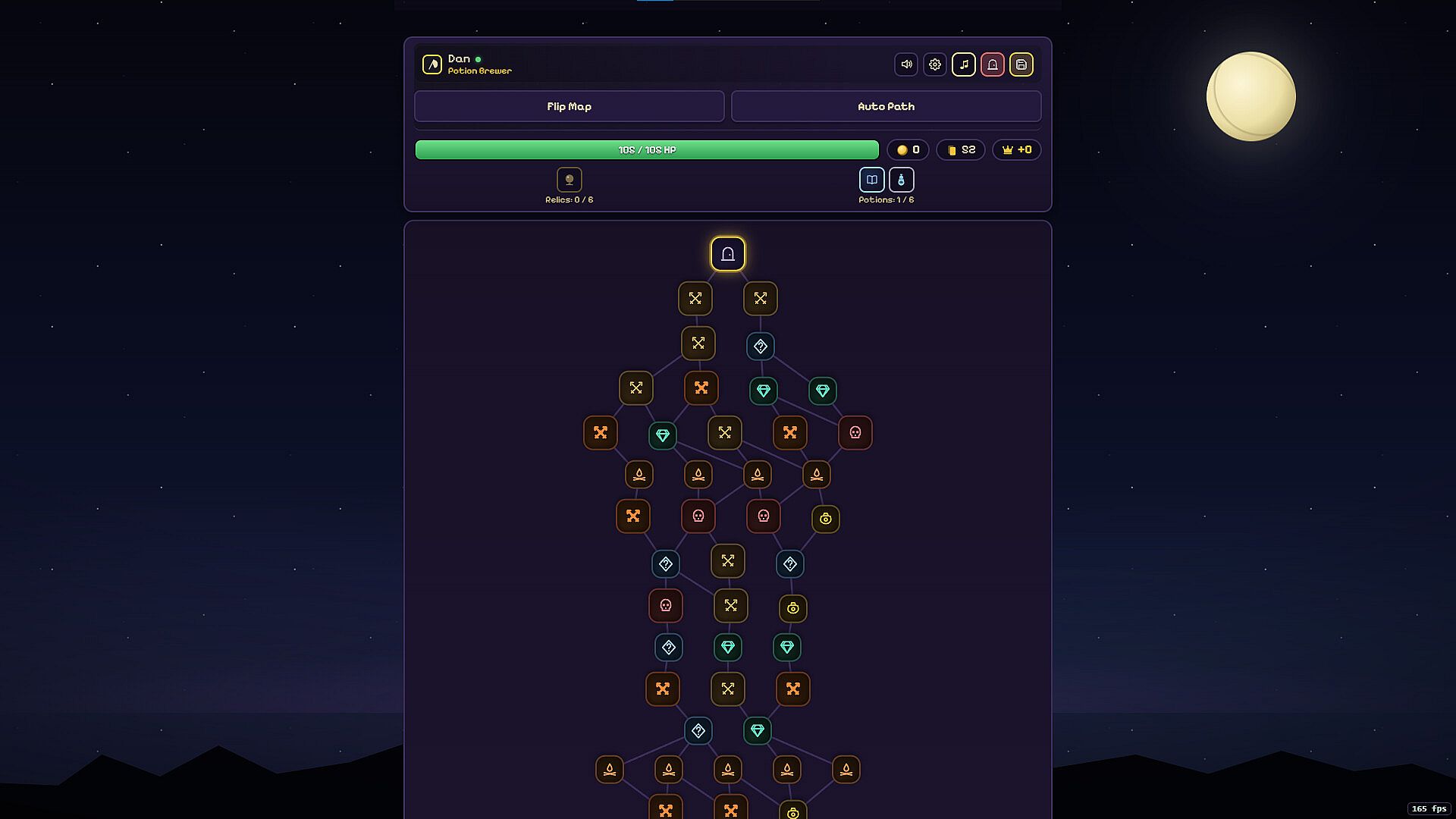
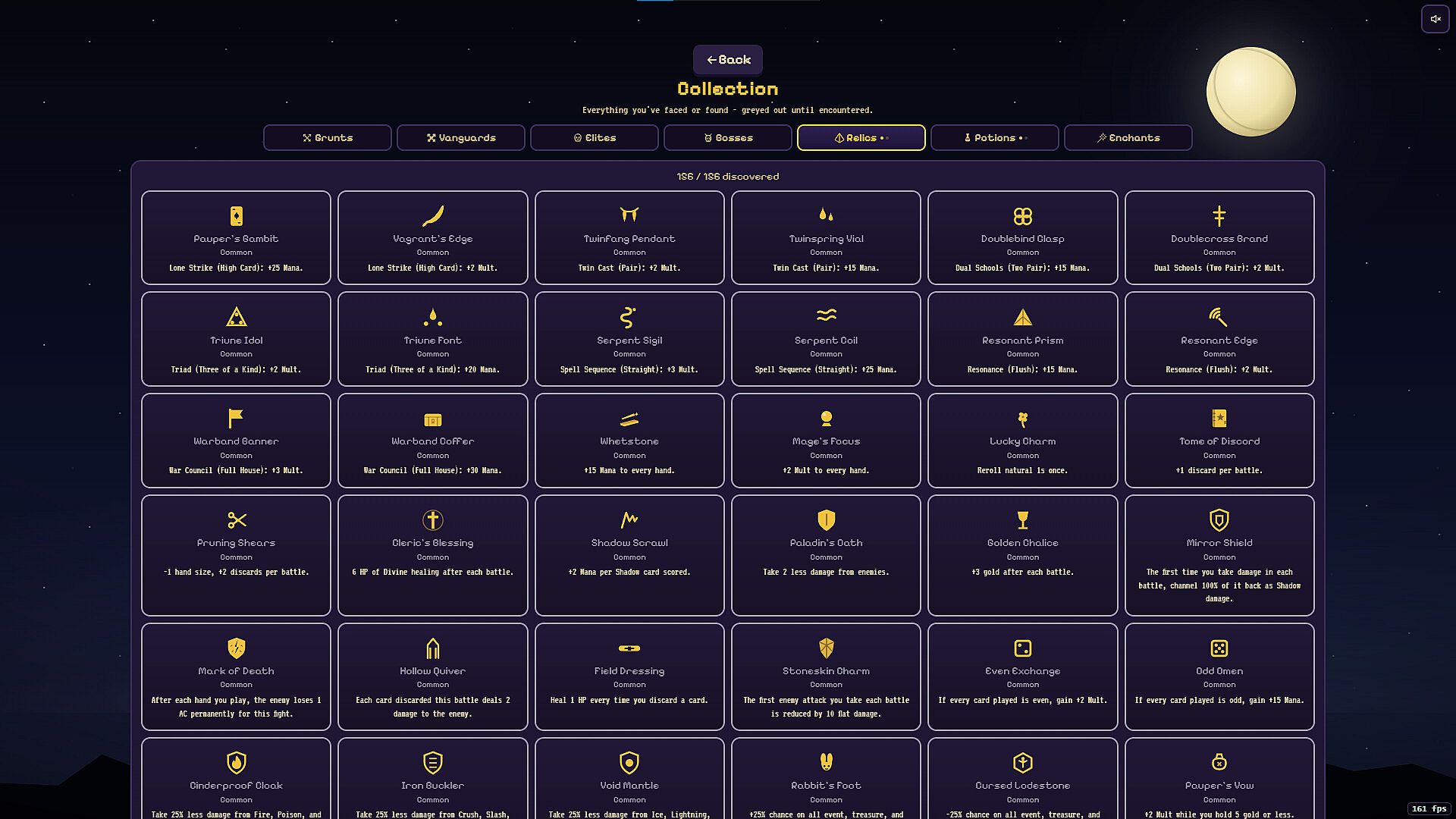
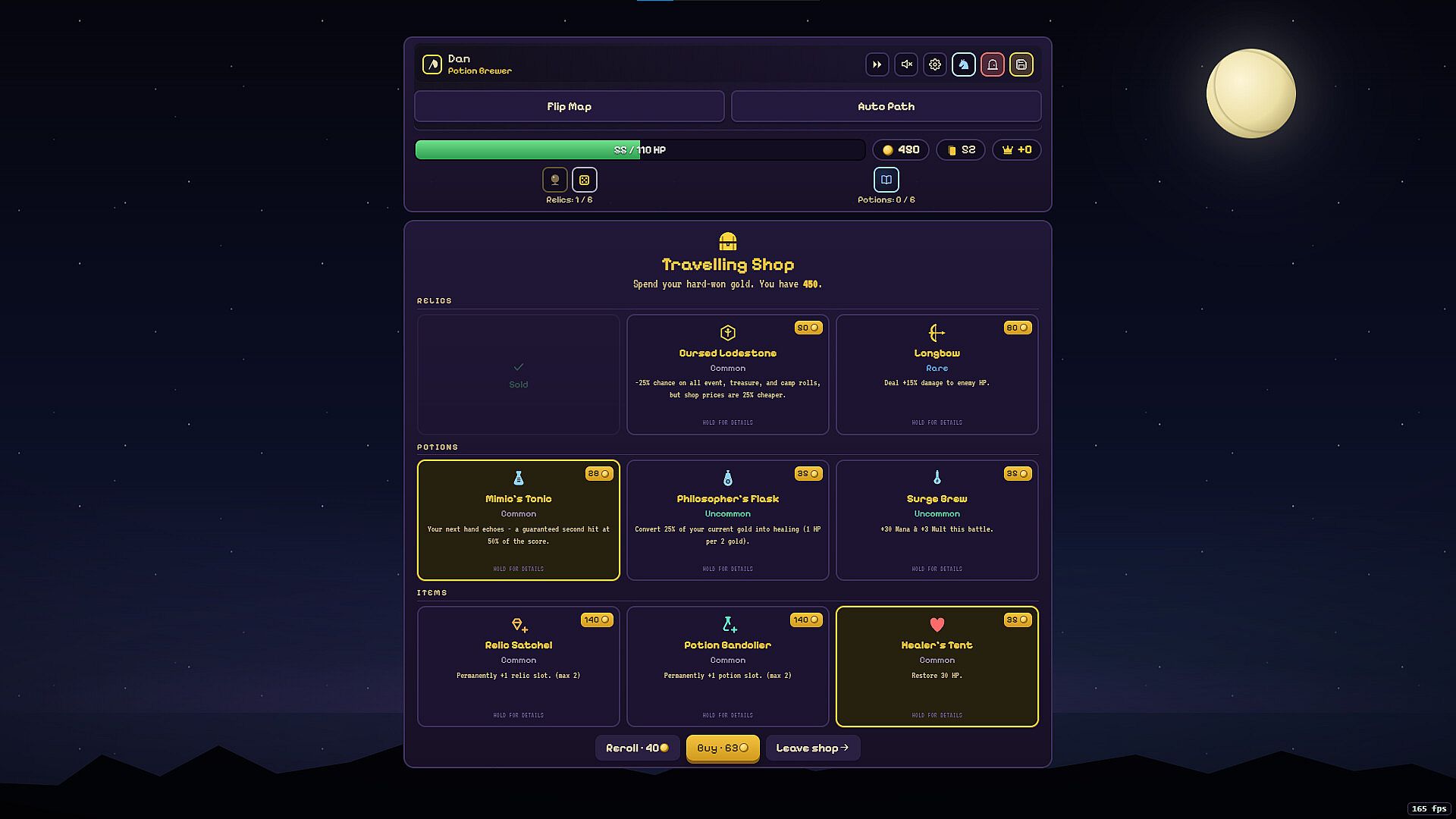
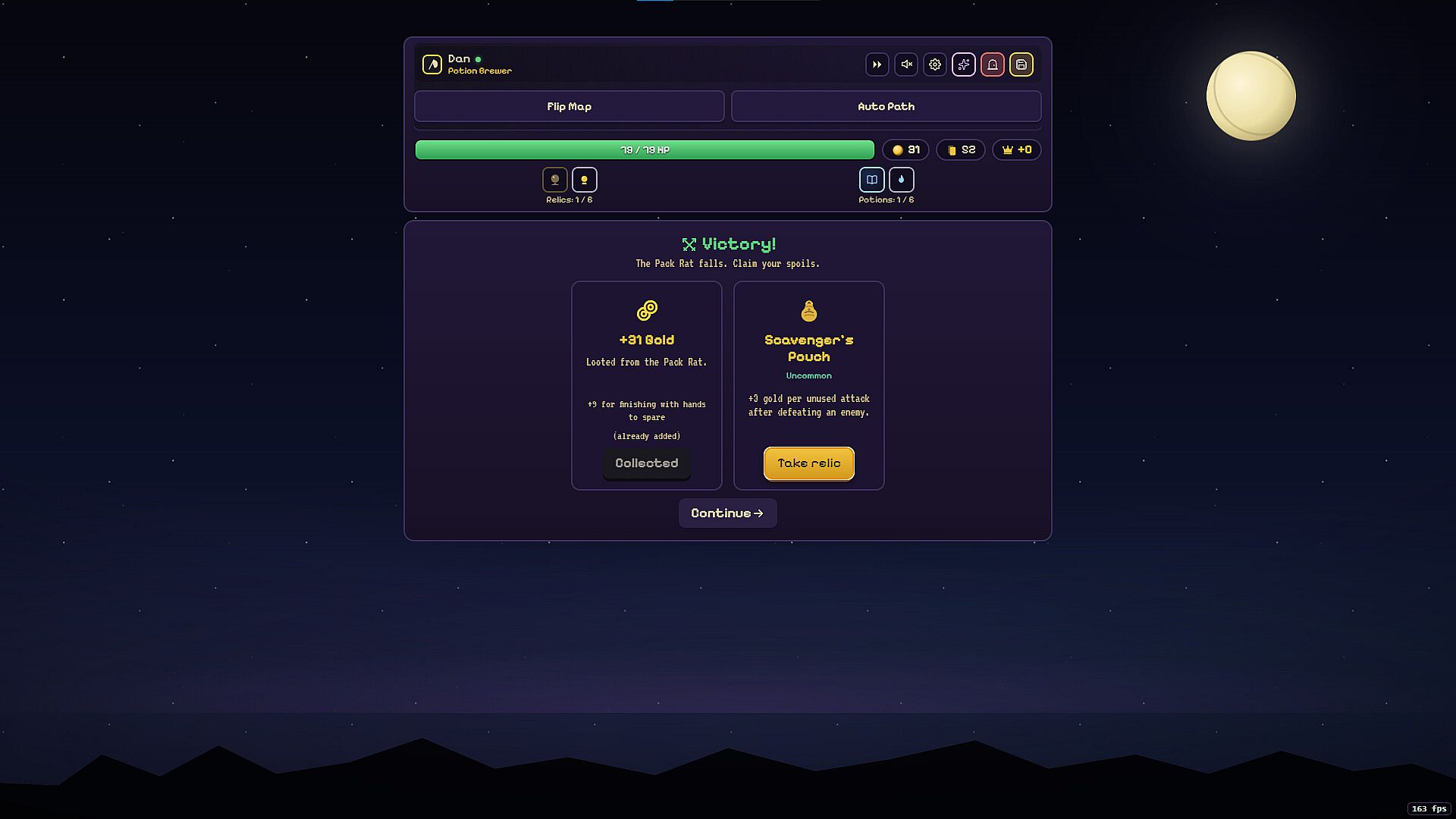
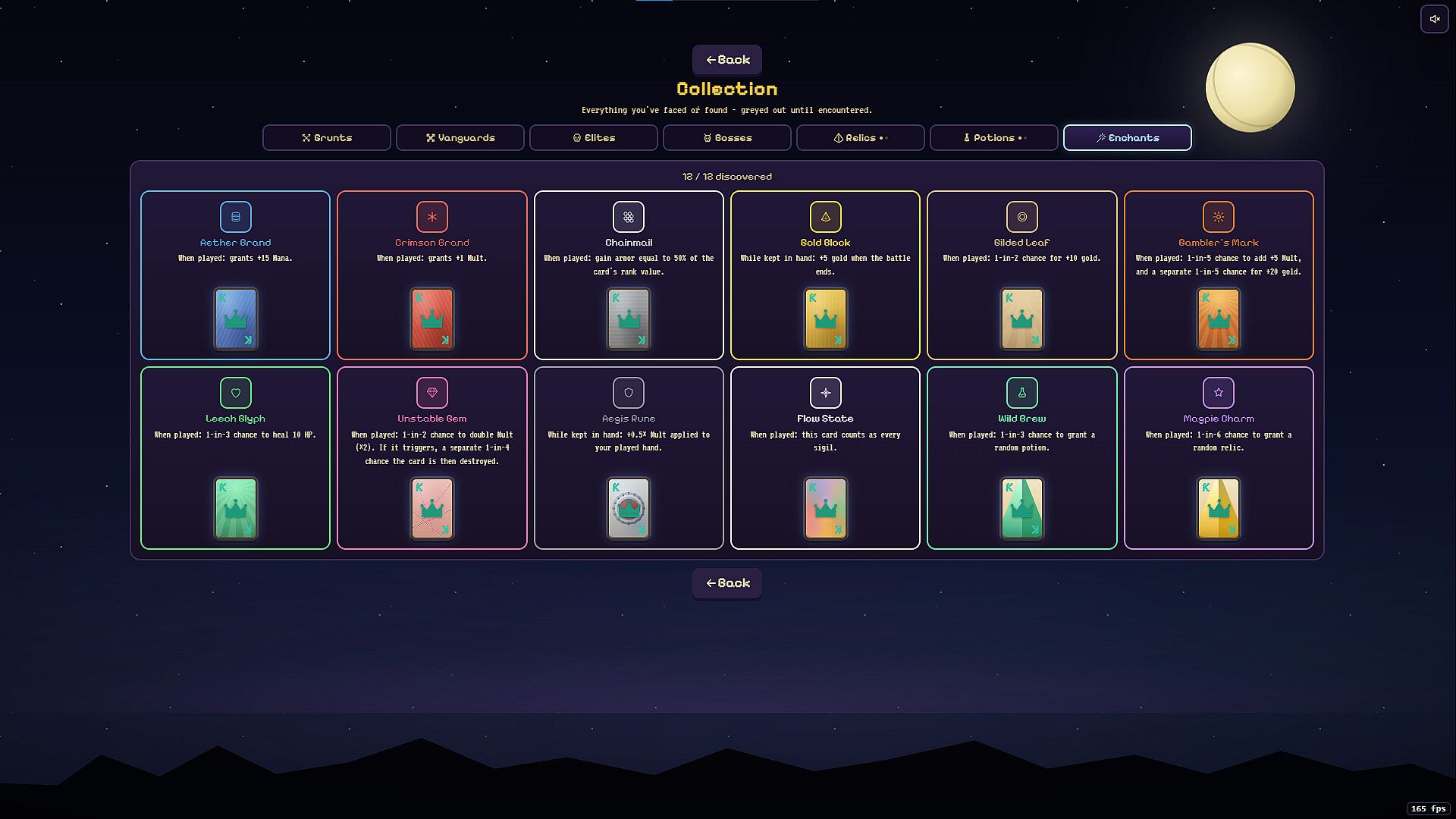
Exploration follows a branching map that includes battles, shops, treasures, random encounters, and campfires. Choices made on upper floors influence later events through more than fifty storyline threads that carry forward across runs. Relics, potions, and card enhancements expand options, with over two hundred such items available to reshape builds.
Game Modes
The standard mode sends players down a single descent across multiple floors, with the map layout and encounters generated anew each time. Success requires reaching and defeating the boss at the bottom while managing health, resources, and the growing awareness of the entity below.
Endless mode unlocks after a successful descent and presents repeated loops of increasingly difficult enemies. Players test how far accumulated relics and class synergies can carry them before the run ends. This mode emphasizes long-term optimization and adaptation to escalating threats without the pressure of a fixed endpoint.
Classes and Deck Building
Class selection determines the starting deck composition and passive abilities that persist throughout a run. Some classes load probability in favor of certain outcomes on the d20, while others provide tools to redraw cards or strengthen specific sigil combinations. Deckbuilding occurs between floors through shop purchases and treasure rewards, allowing gradual refinement toward a preferred strategy.
Synergies emerge when relics align with class passives or when multiple cards of the same sigil combine for amplified effects. Players experiment with different heroes to discover which mechanics suit their preferred pace, whether that involves aggressive damage output or sustained survival through healing and mitigation.
Replayability and Features
Each run draws from 2.8 trillion unique seeds, enabling players to share specific dungeon layouts with others or revisit favorites. A built-in seed finder helps locate particular configurations. The Scrapbook tracks discoveries across all classes and runs, recording progress on cards, relics, and story threads for completionists.
Up to five save slots support separate playthroughs, useful for comparing different class strategies or playing alongside others. An unlockable sandbox provides additional freedom once core content is cleared. The procedural soundtrack shifts with the environment and player actions, maintaining variety across repeated descents.
Is It Worth Playing?
Dunjin suits players who enjoy roguelike dungeon crawlers that reward careful deck construction and accept the uncertainty of dice rolls. The fusion of poker mechanics with tactical combat creates a distinct rhythm where planning hands matters as much as reacting to rolls. Those who prefer deterministic systems or purely narrative-driven experiences may find the randomness less appealing.
The variety across twenty-four classes and extensive relic pool supports many play sessions without immediate repetition. Branching story threads and seed sharing add social and exploratory layers for those who like comparing runs. The game remains in active development with ongoing additions to its feature set.