











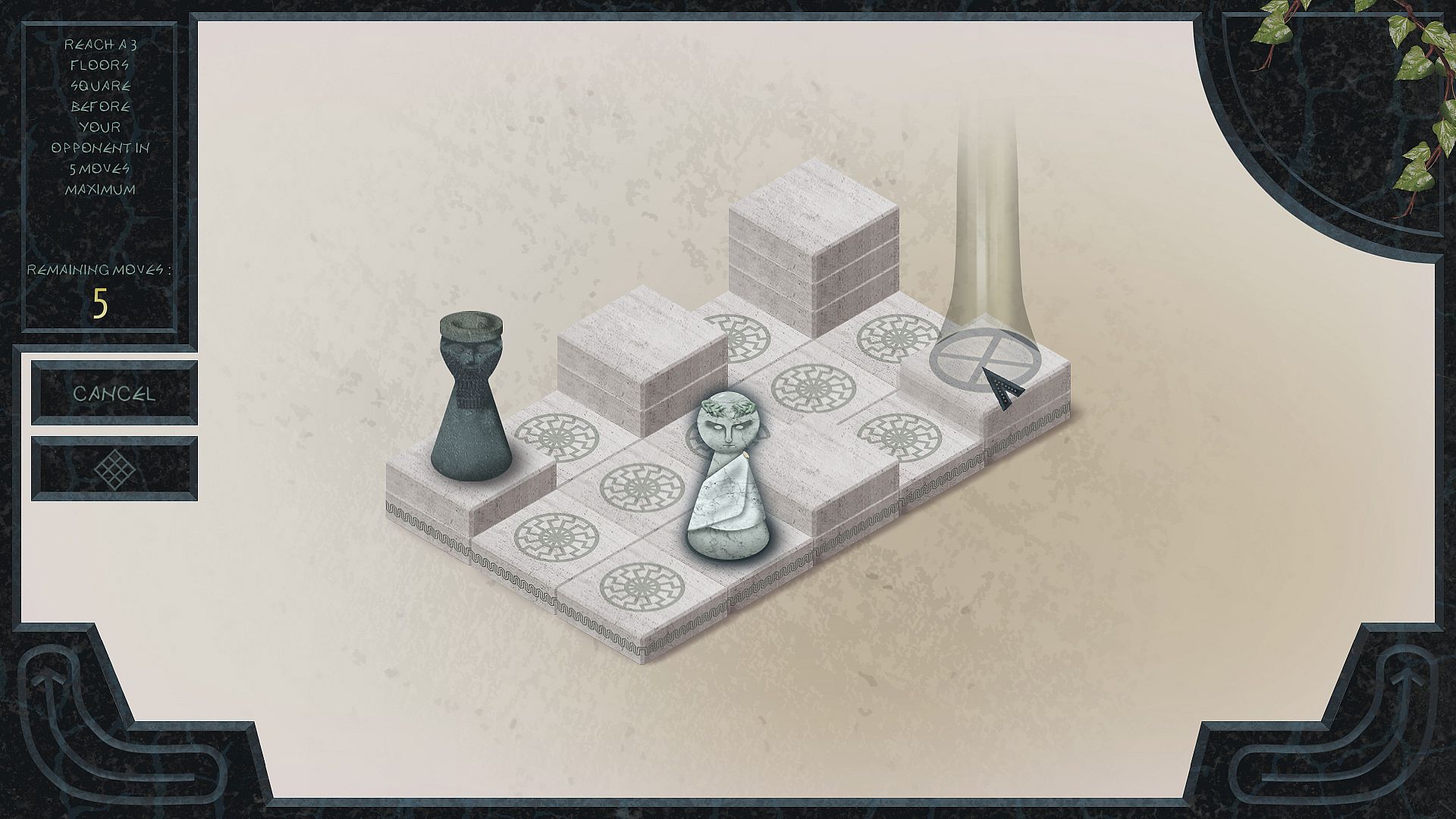
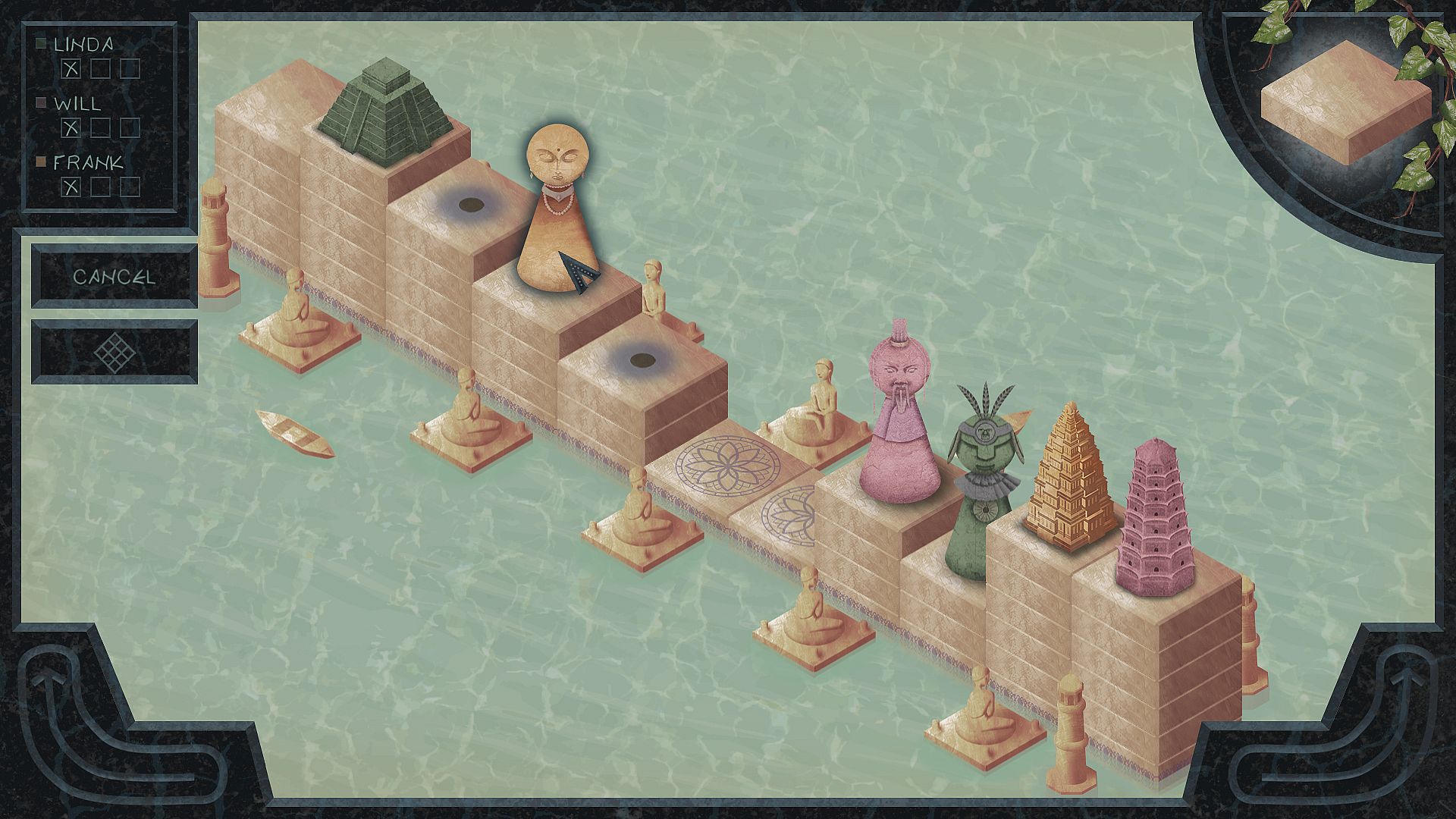
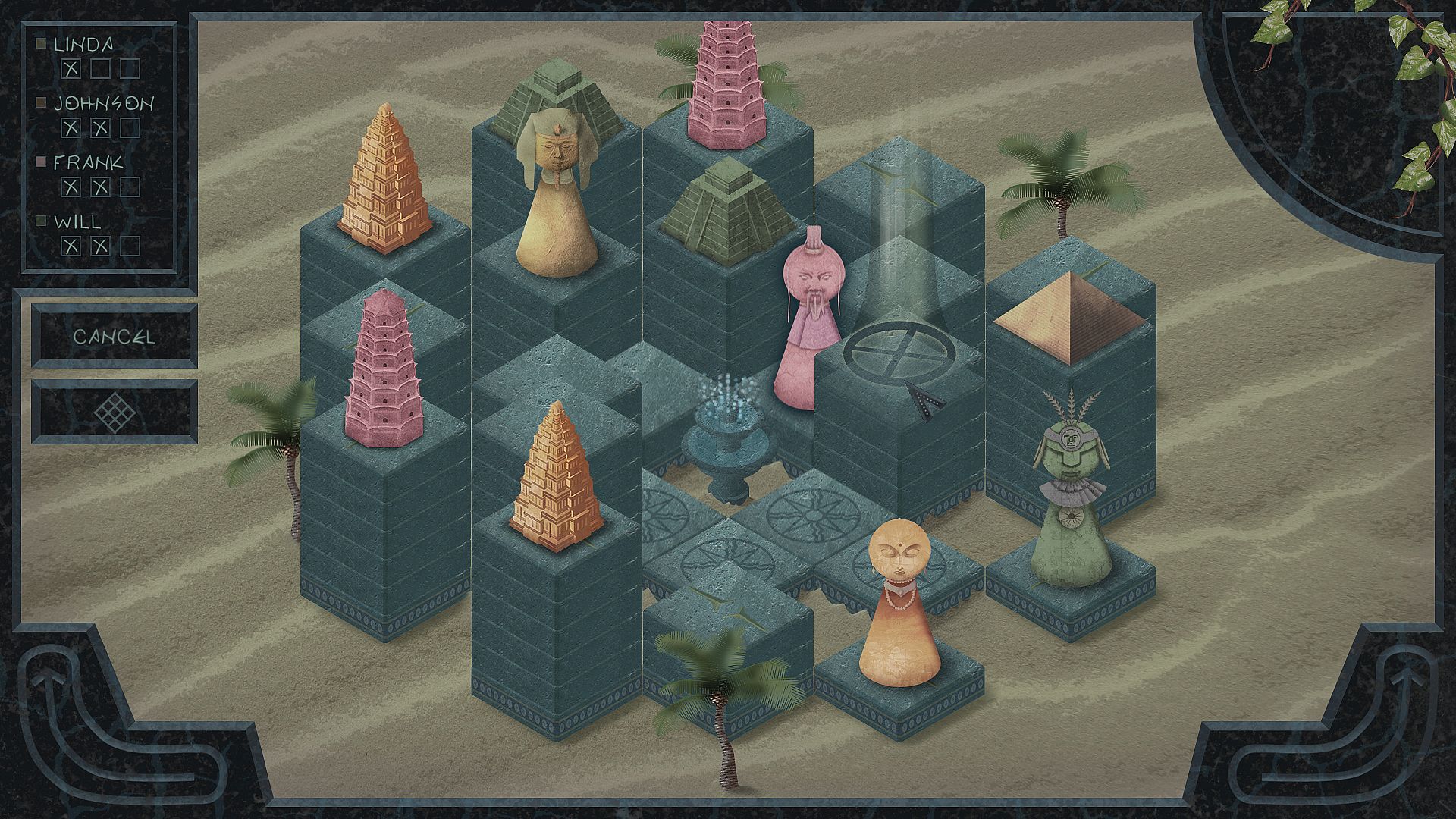
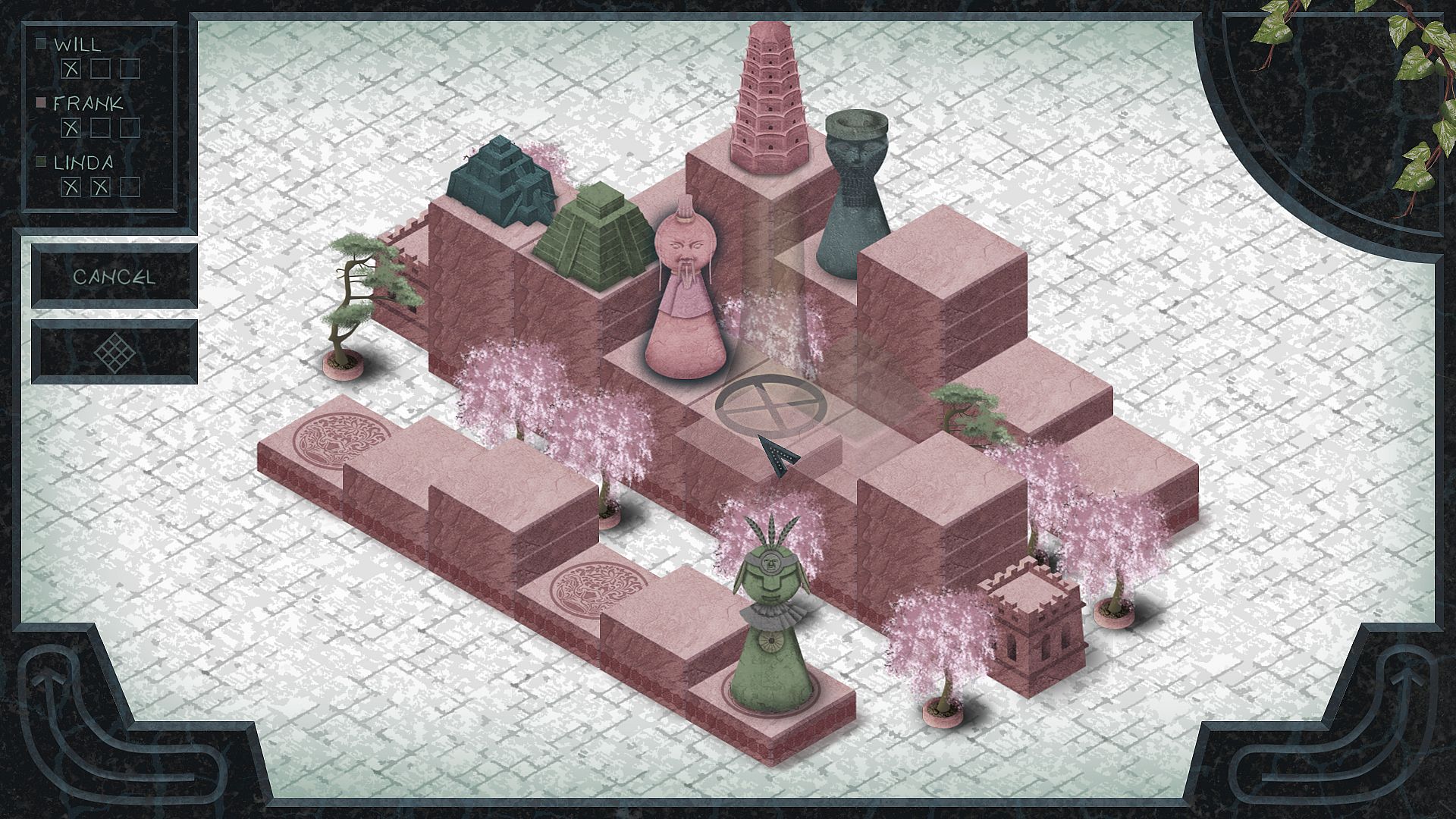
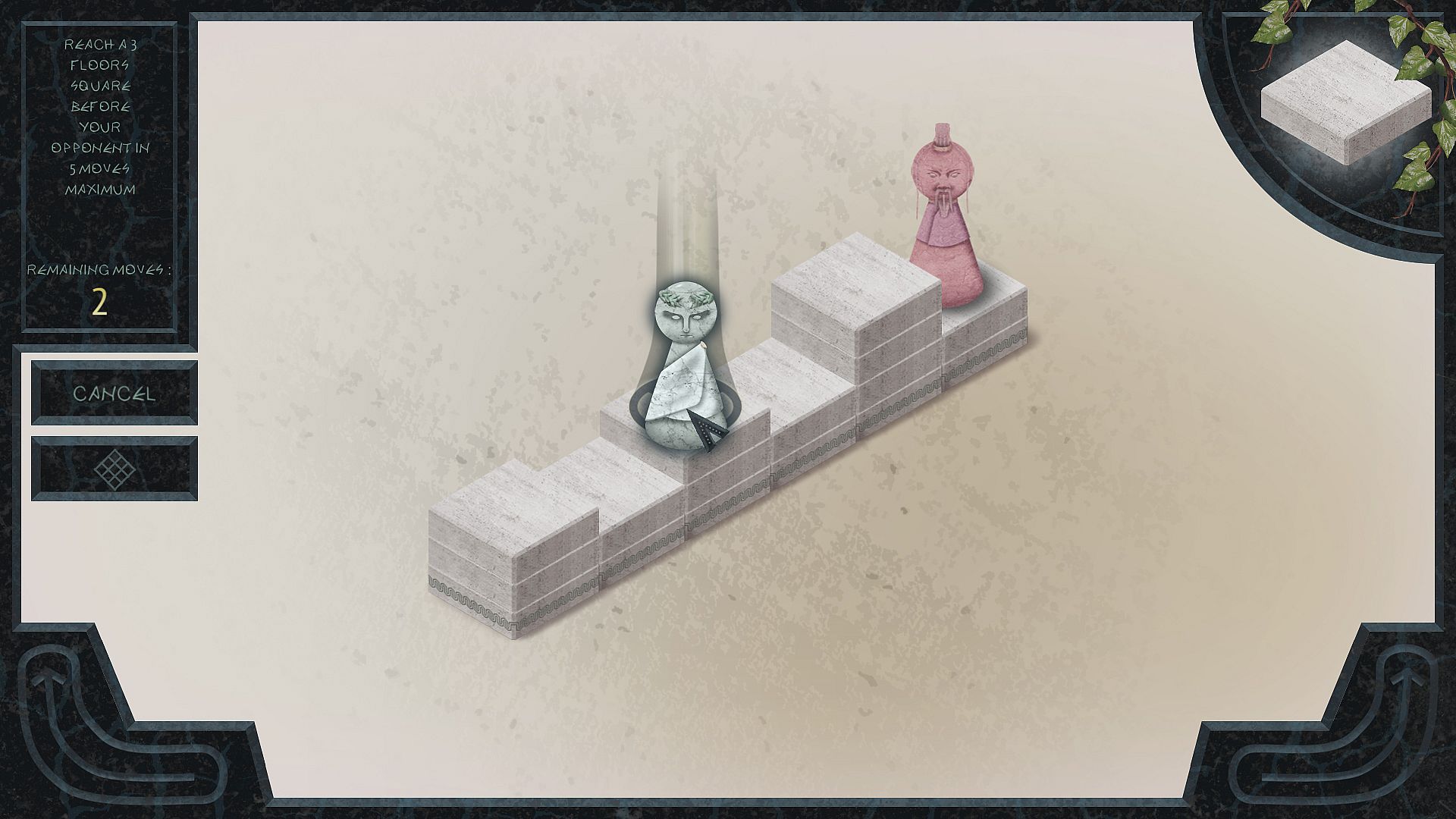
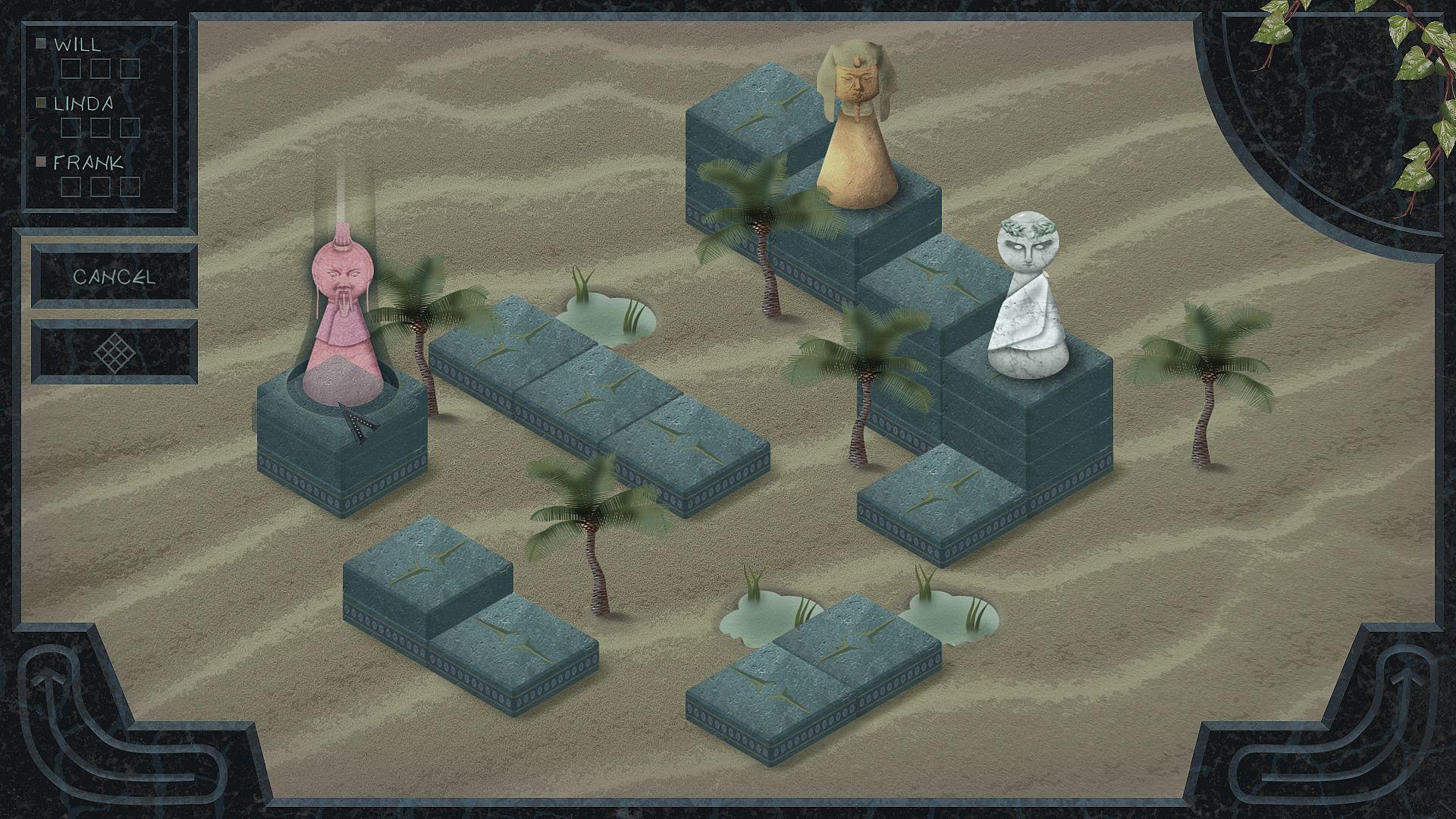
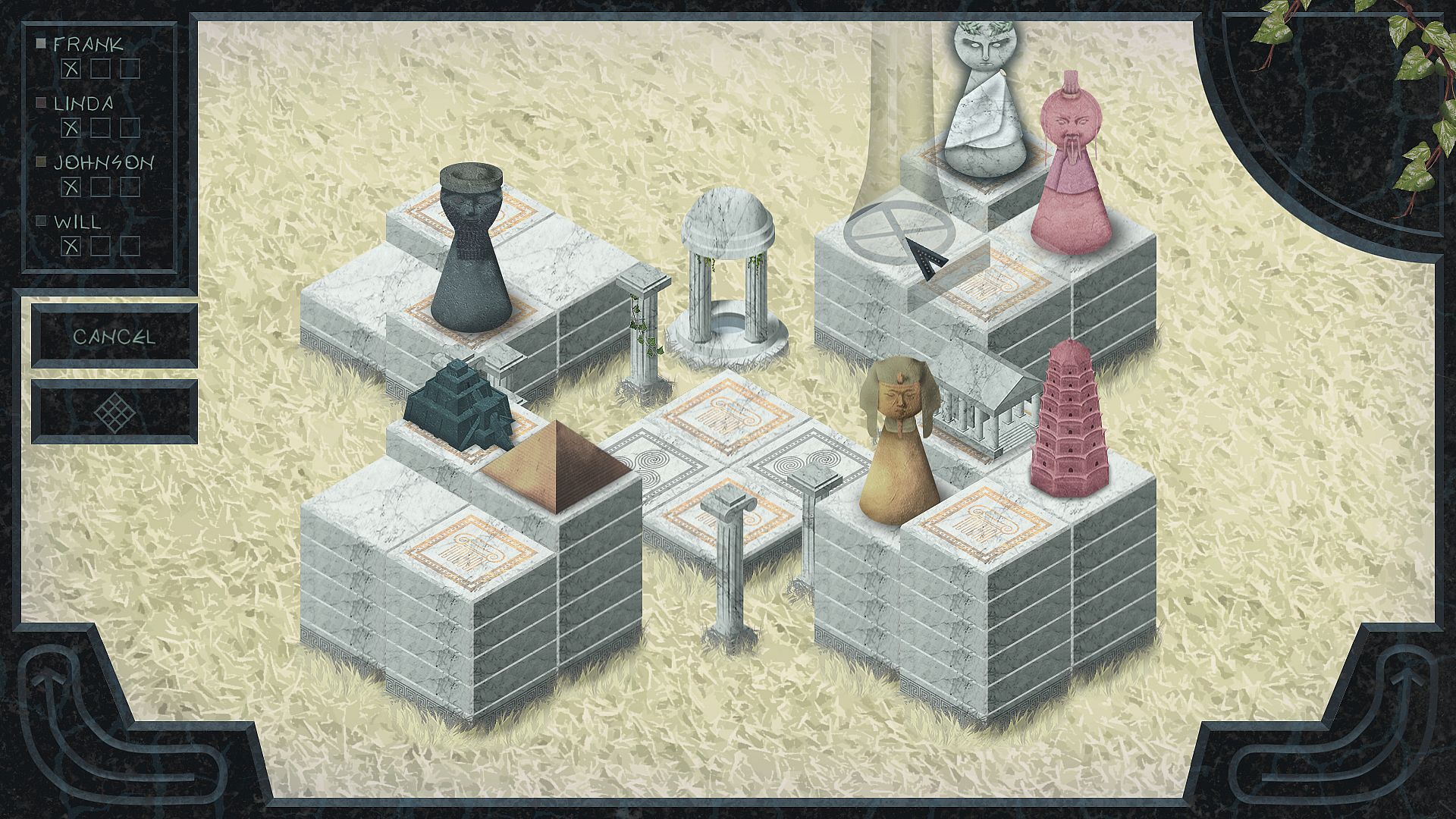
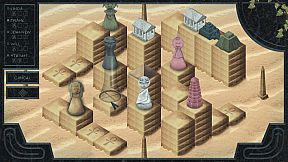
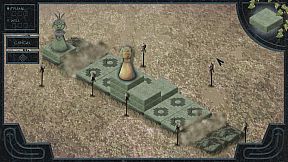
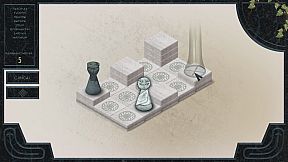
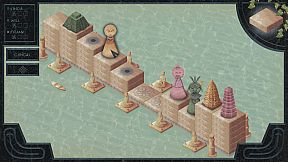
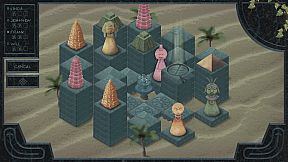
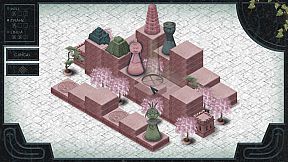
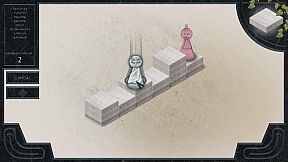
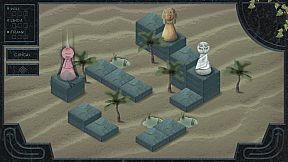
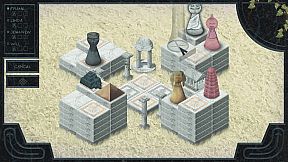
Divine Ascent is a strategy puzzle game for PC that blends turn-based board game mechanics with tower-building objectives. Players guide one of six ancient civilizations in a race to construct towers and place temples at their peaks, competing locally against others or solving solo challenges. The game emphasizes careful placement and movement on an isometric grid where height and positioning determine success.
Gameplay
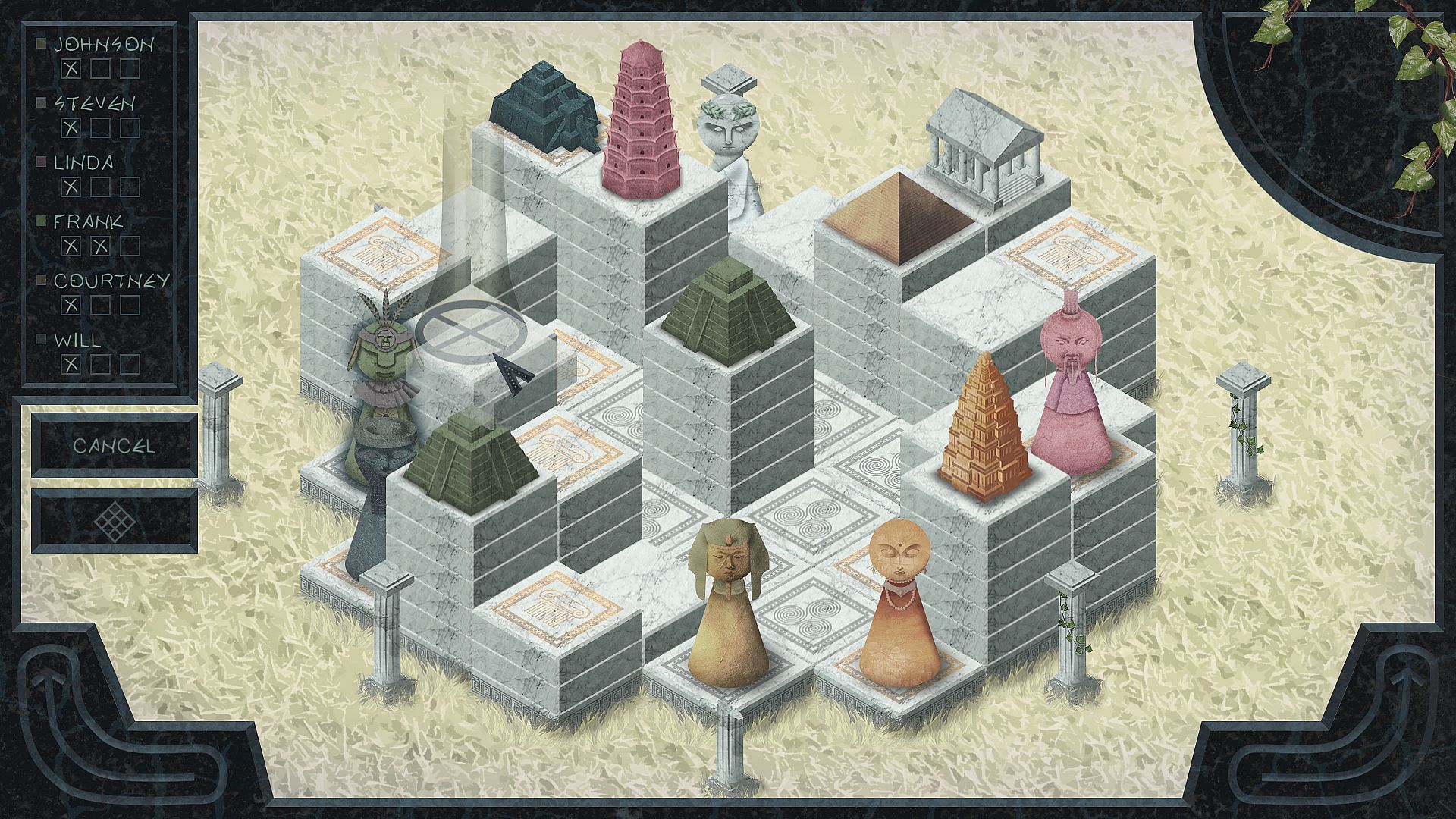
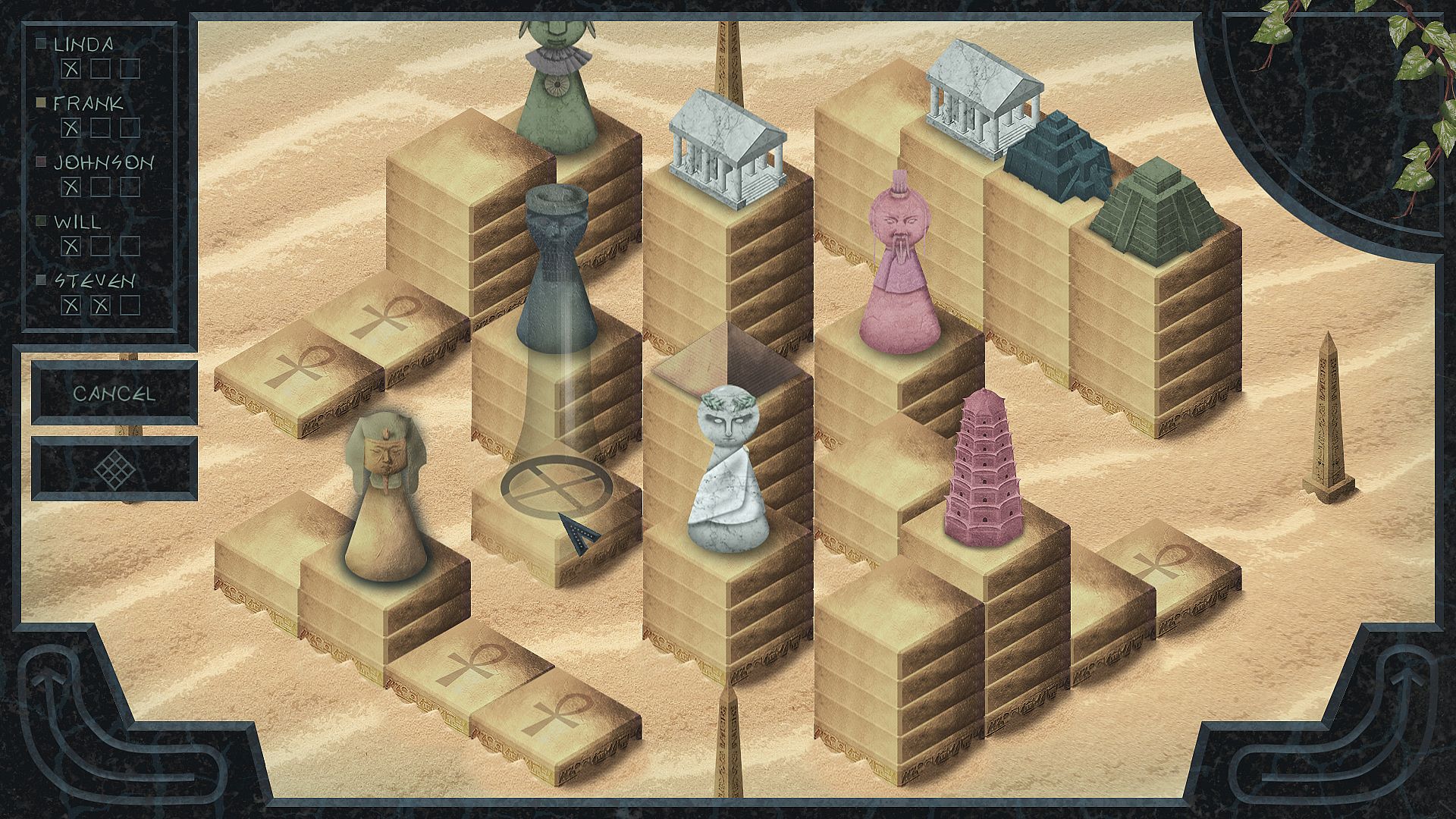
The core loop revolves around placing pawns and stacking pieces to form towers in a turn-based format. Each player starts by positioning a pawn on the base level and can either move it orthogonally to adjacent free squares across floors or add a new piece to an open spot. Towers reach five pieces high in arena play or three in puzzles to allow temple placement, and the first to secure three temples wins.
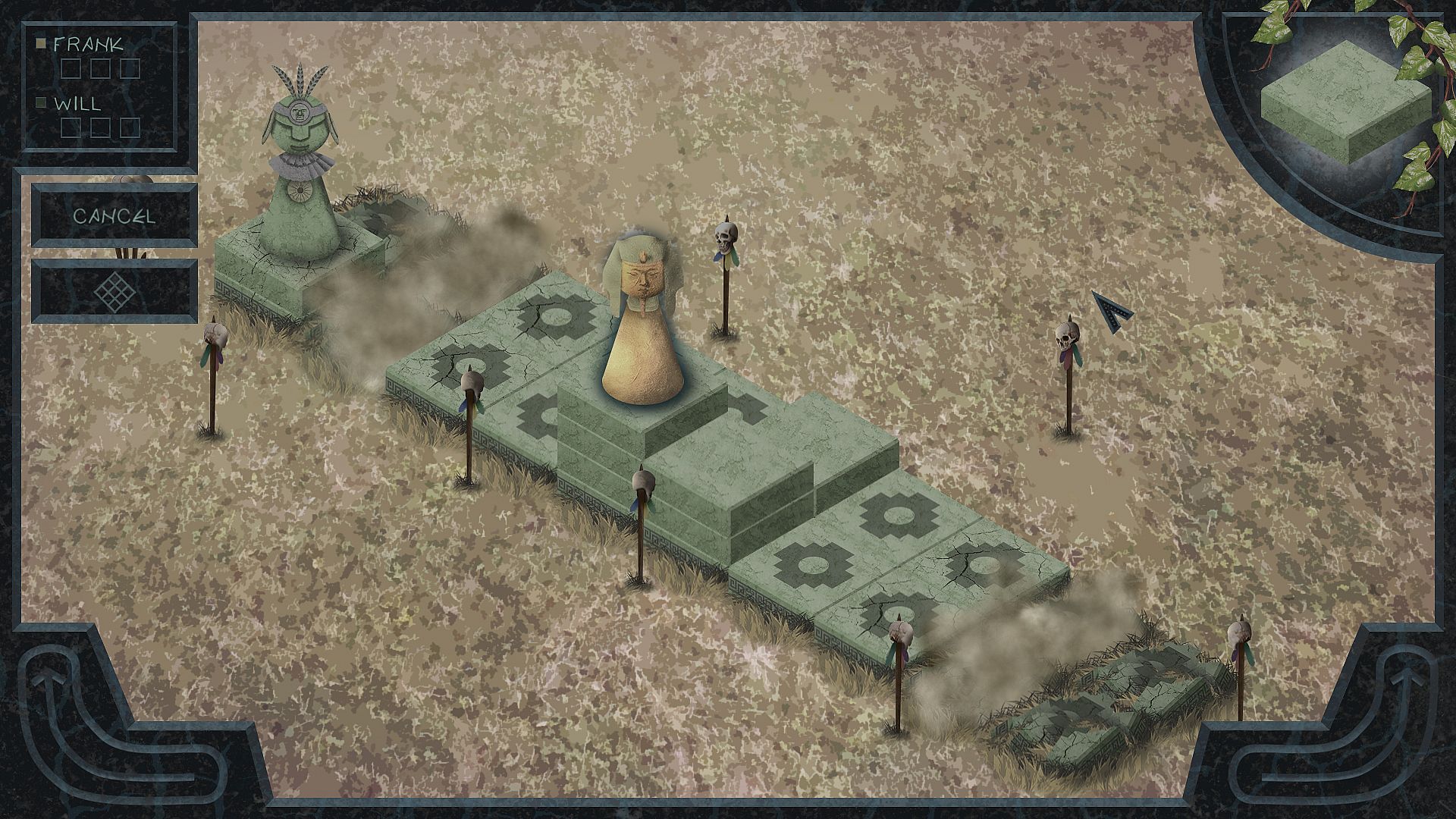
Special movement options add depth without overwhelming the simple rules. Pawns can climb connected stair-like formations of adjacent free squares or jump to a higher square one floor up if lower intervening levels permit. When fully surrounded by obstacles such as other pawns, temples, tall pieces, or board edges, players gain the option to place a new piece directly beneath their pawn. Certain squares carry unique effects tied to each civilization's location, rewarding exploration of these properties during matches.
Game Modes
Arena mode supports two to six participants, including human players or AI opponents, across 24 distinct levels. These maps draw from the settings of different civilizations and incorporate their themed special squares, creating varied strategic environments for local multiplayer sessions.
Puzzles mode delivers a single-player campaign of 30 increasingly difficult challenges. Most require constructing one temple within a move limit, while later stages introduce opponents and shift toward arena-style competition against multiple AI foes in a final confrontation.
Civilizations and Presentation
Six major ancient civilizations vie for divine favor through their builders. Each features distinct visual themes and atmospheric background audio that reflect their cultural settings. The tile-based isometric 3D graphics keep the focus on clear board states and height differences rather than complex visuals.
Local play supports shared or split-screen options, making the game suitable for small groups gathered around one PC. Achievements track progress through both modes, and the overall design favors short sessions that reward repeated attempts at optimal paths.
Is It Worth Playing?
Divine Ascent suits players who enjoy abstract strategy puzzles and local multiplayer experiences with friends or family. Its straightforward rules combined with special movement options and civilization-specific squares provide enough variety to sustain interest across the 24 arena levels and 30 puzzles. The game remains available as a budget title with no ongoing updates or additional content required for the core experience. Those seeking a compact, turn-based challenge on PC without online dependencies will find its focused design a good match, particularly for casual sessions or competitive local play.