

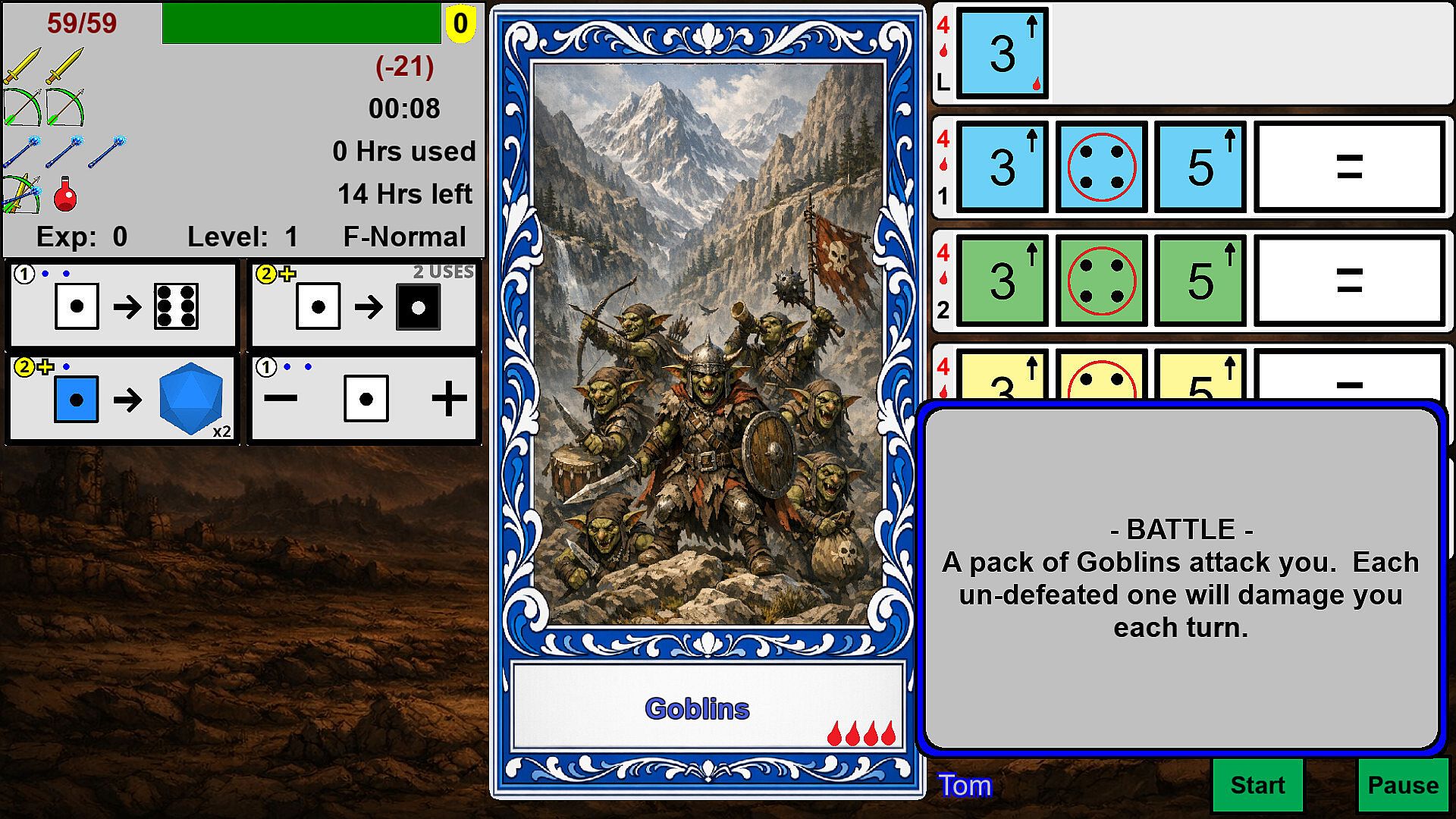
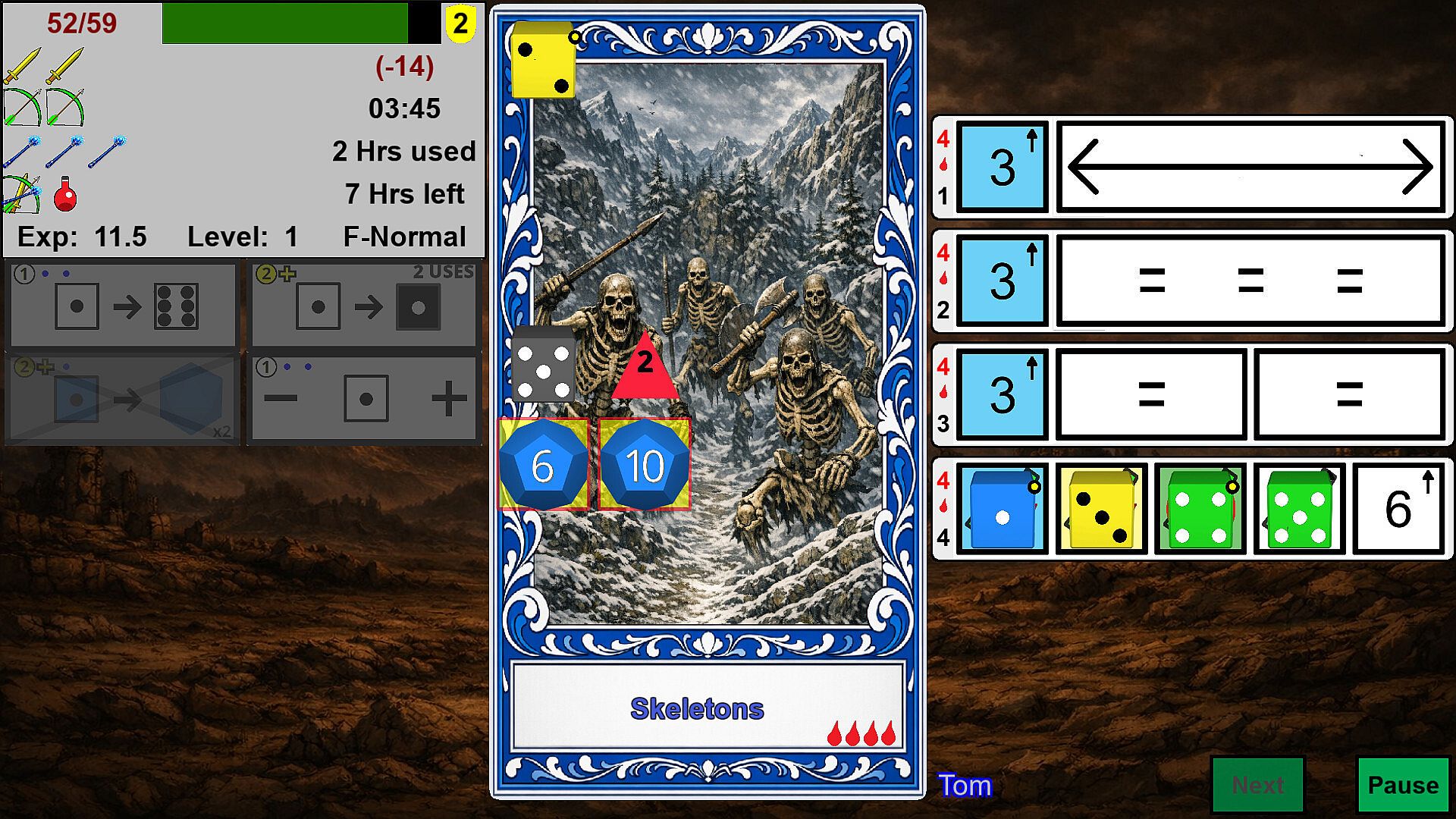
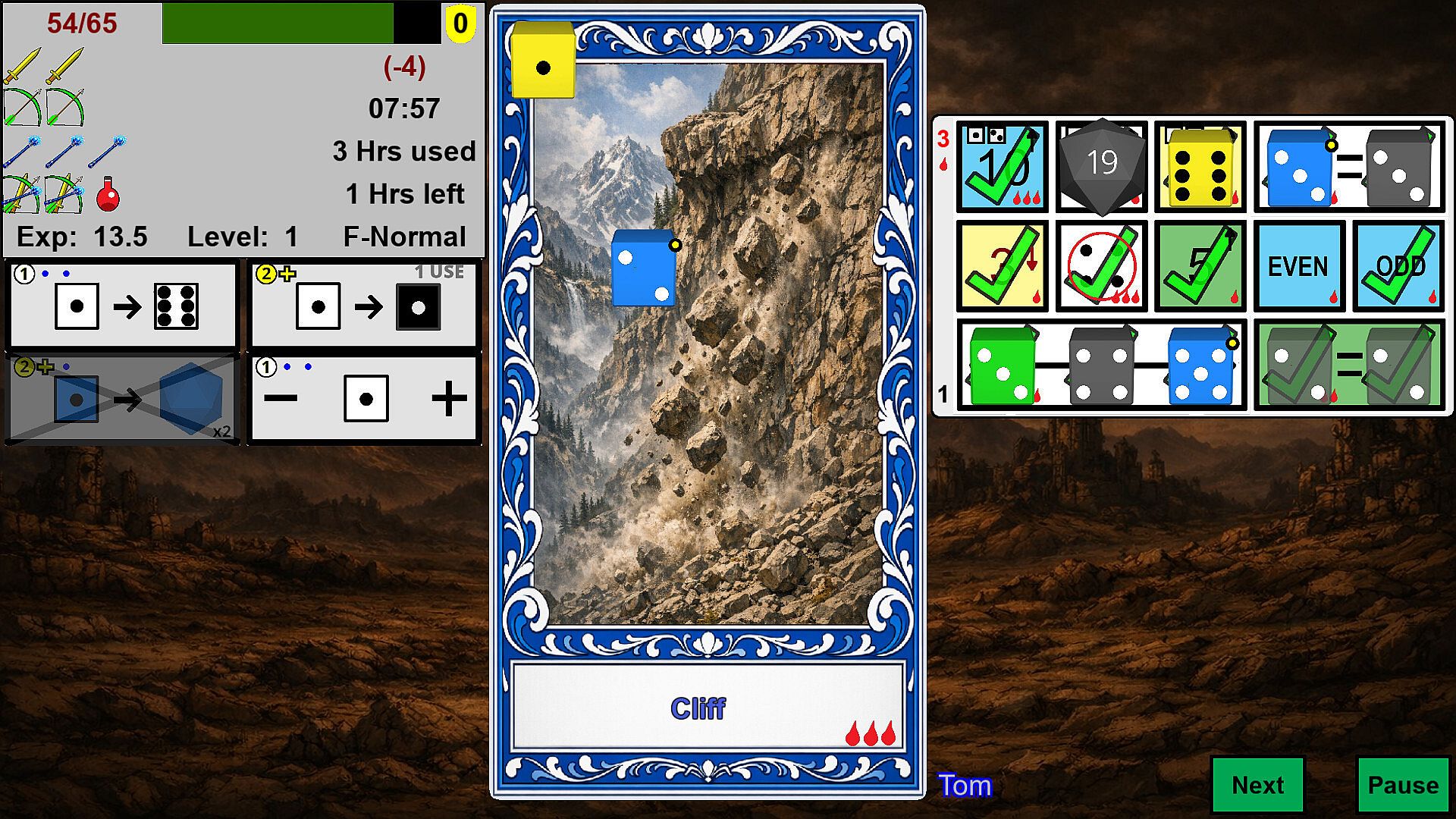
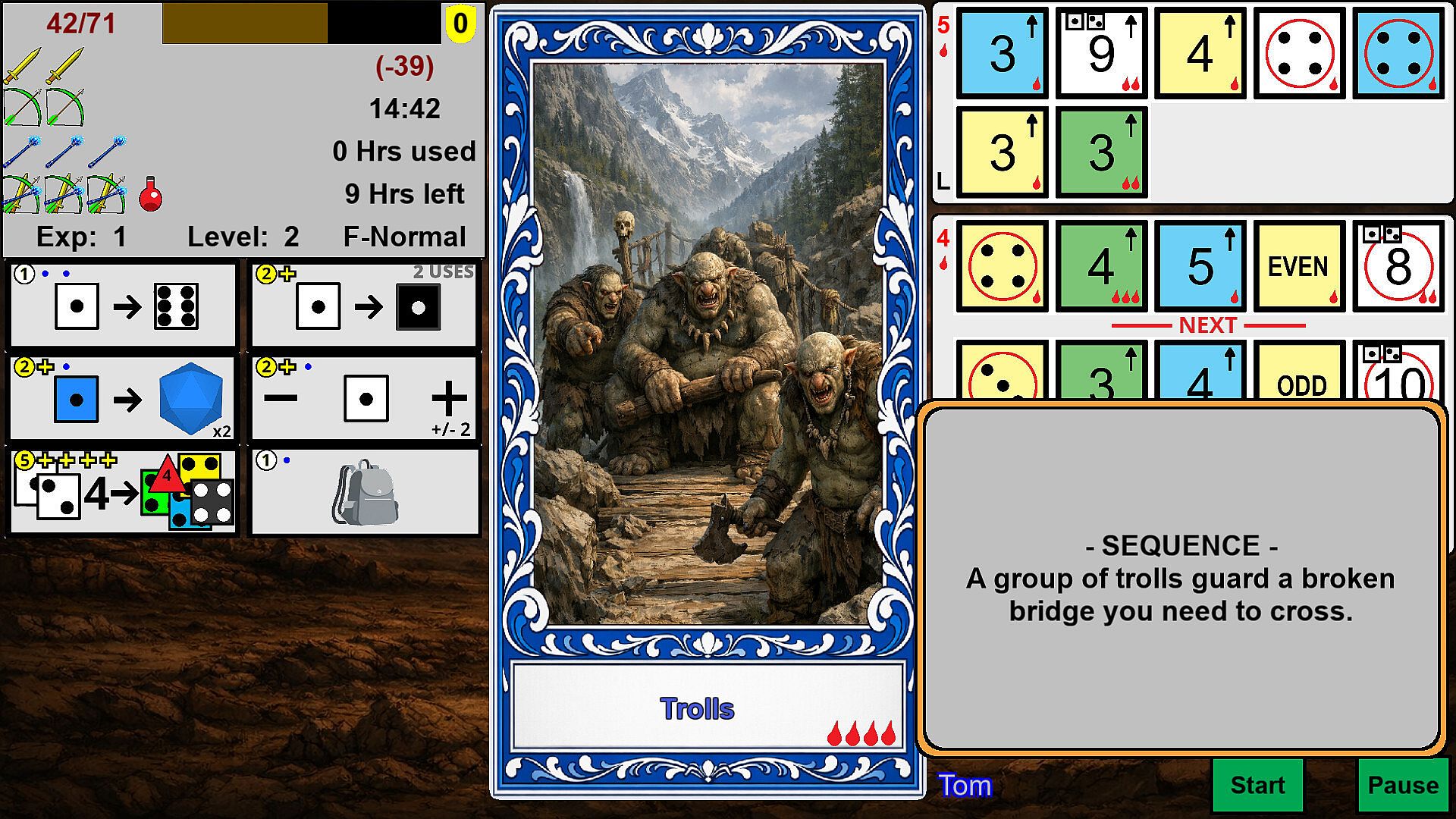
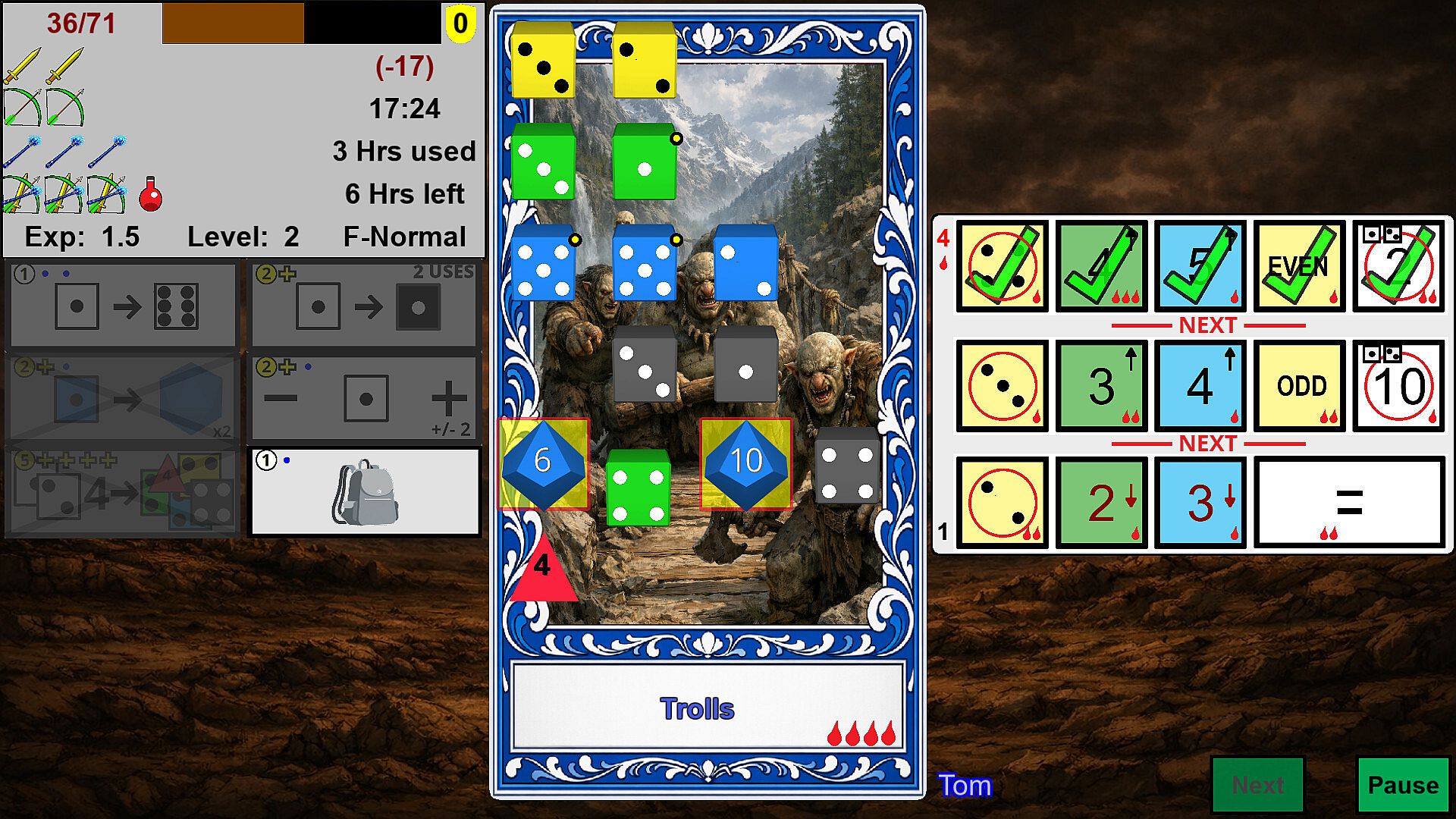
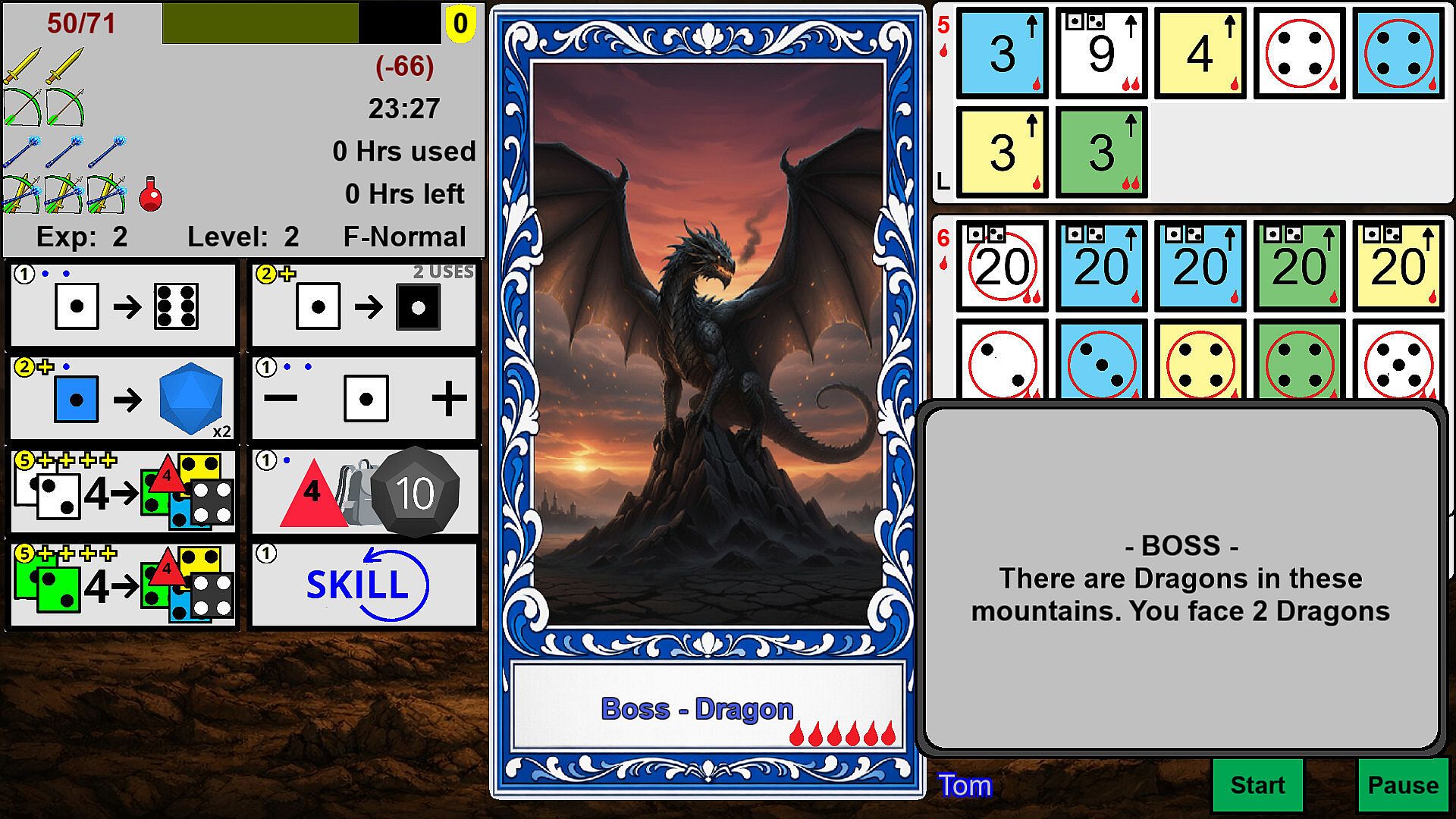
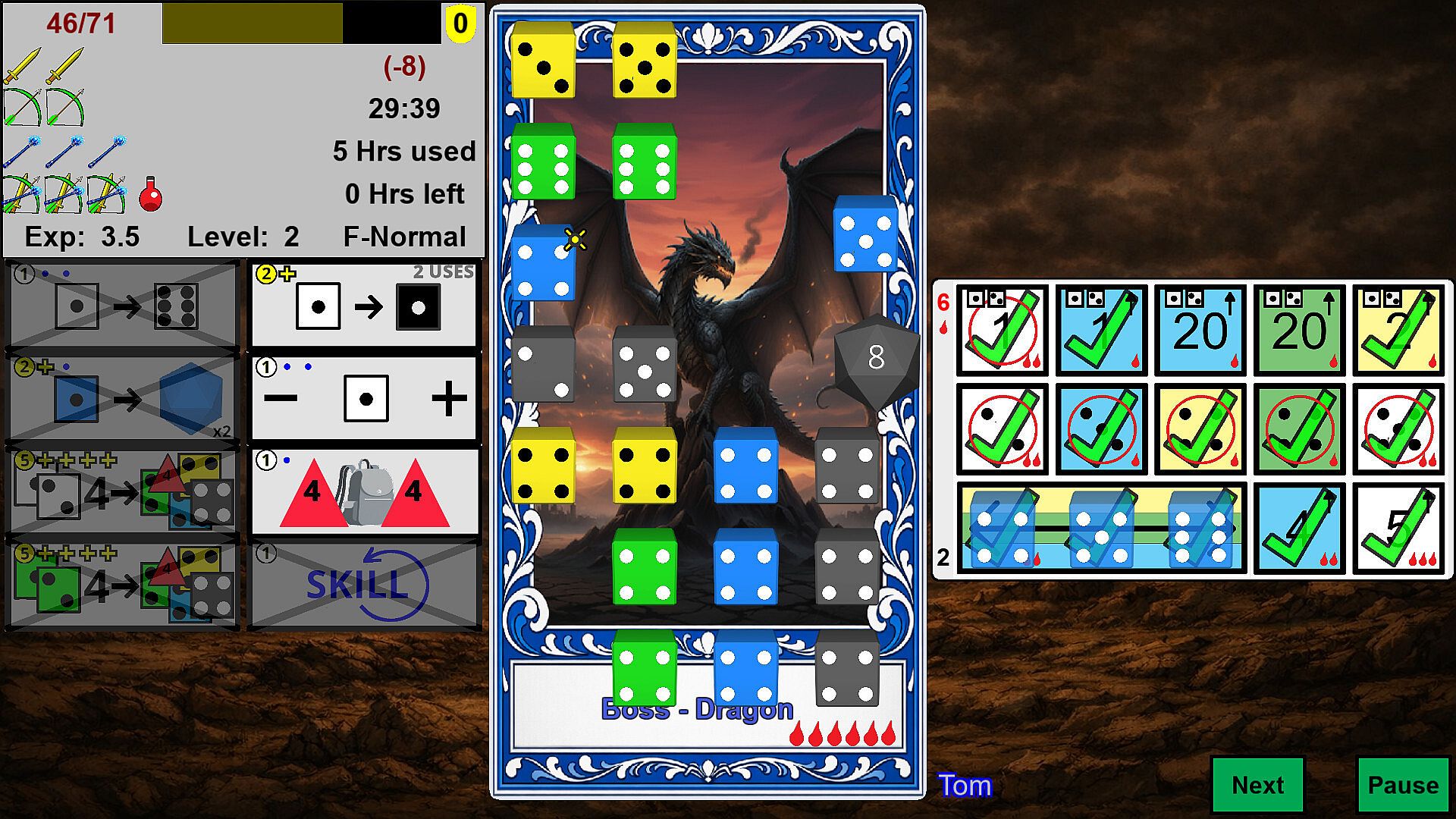
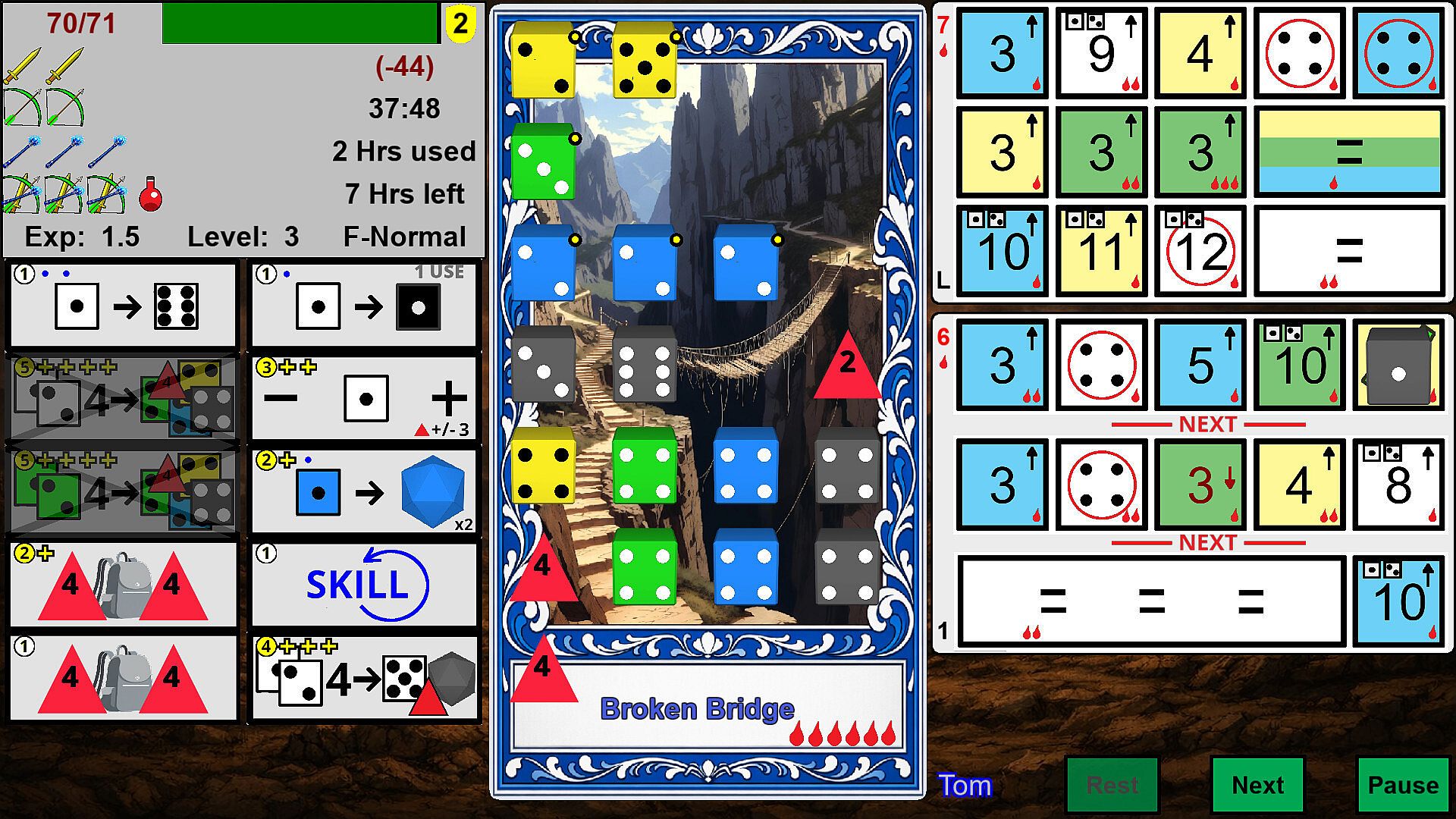
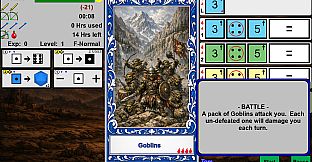
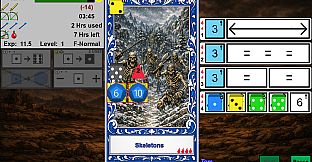
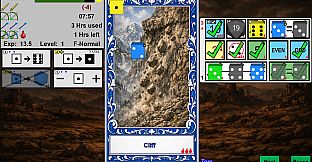
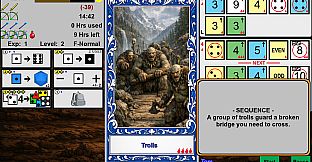
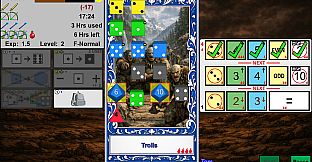
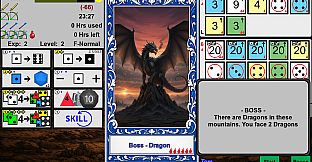
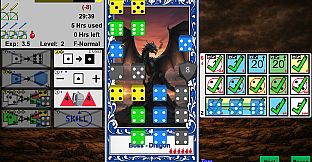
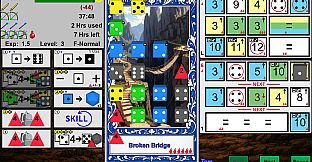
Dicebound Quests: Heroes of Dice is a single-player strategy game for PC that centers on dice management and resource decisions during a series of turn-based quests. Players assemble and guide a party of nine adventurers represented by dice, assigning them to targets that appear in random order from quest-specific event decks. Each target specifies weapon type requirements, and unfilled targets deal damage to the party at the end of every turn. The run ends in failure if party health reaches zero.
Gameplay
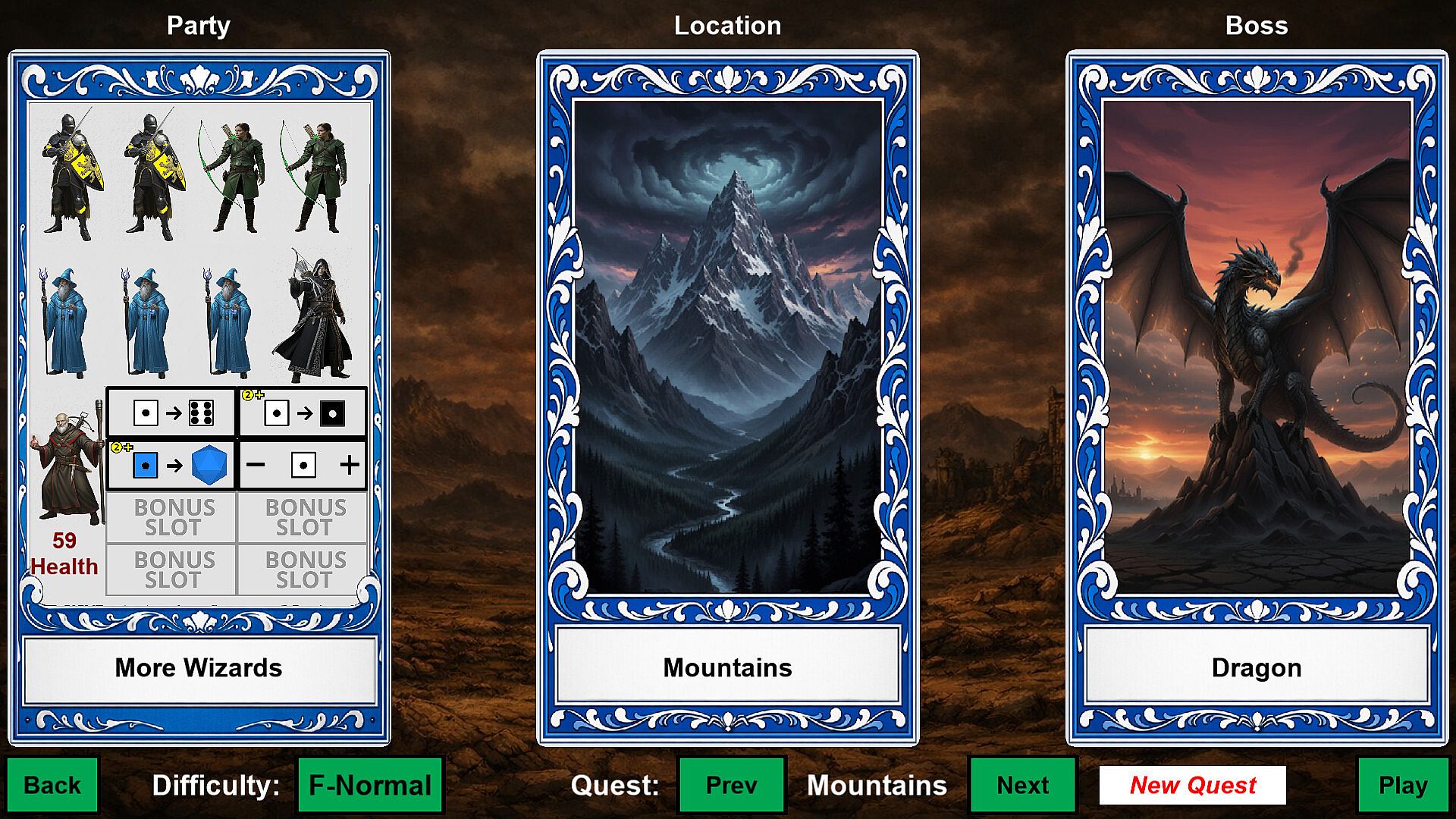
The core loop revolves around rolling and reallocating dice across events while managing limited skills that modify those rolls. Five hero types form the starting party: yellow knights skilled with swords and capable of party-wide shielding, green rangers who excel with bows and can adjust die values by one when their precision skill activates, blue wizards who reroll via local time warp, black warlocks who match any weapon type, and the single red cleric who heals the full party while also fighting with multiple weapon options. Each quest begins with a small set of skills and equipment tailored to its location and boss.
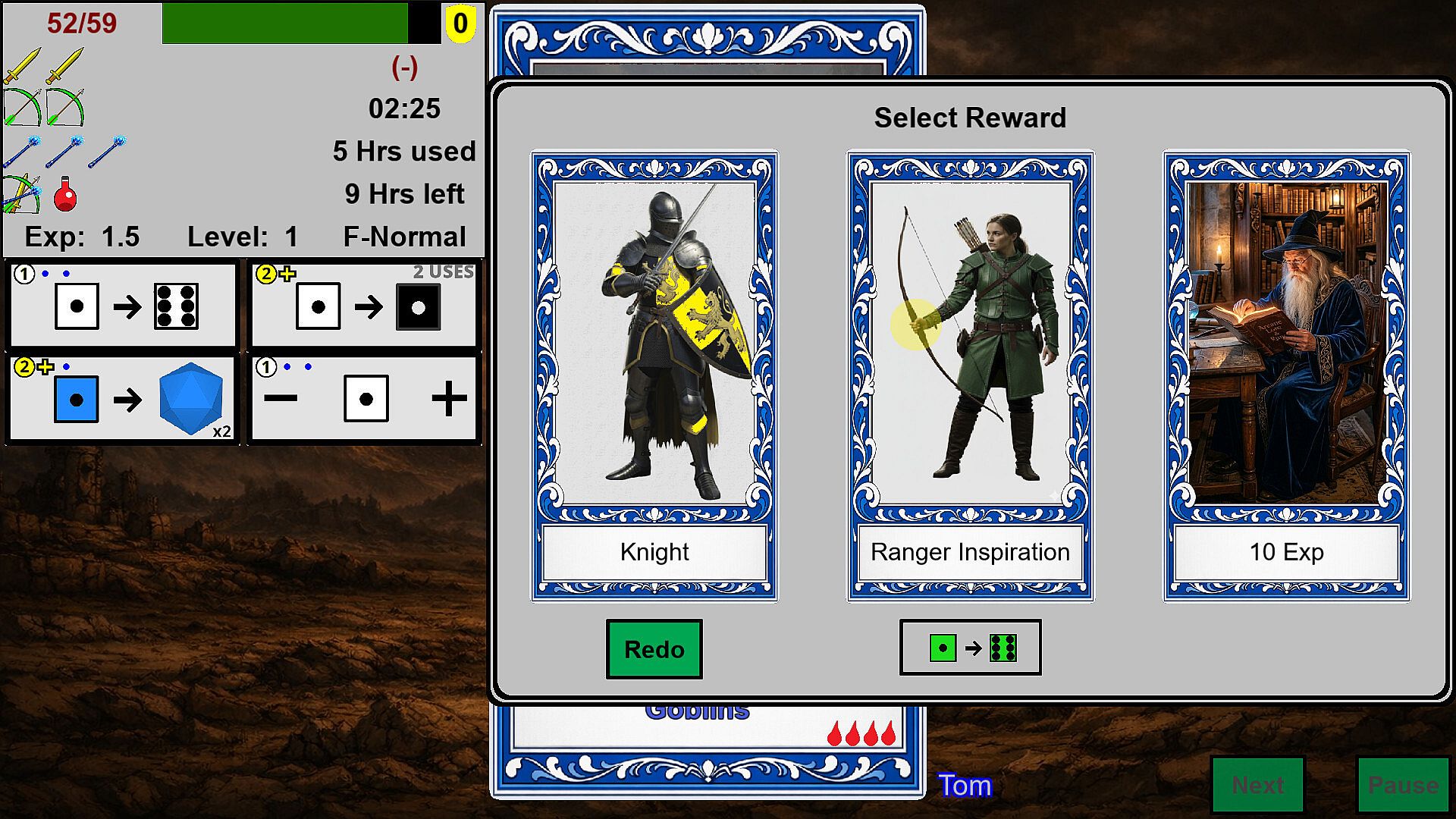
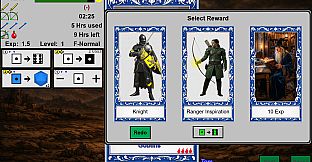
Skills such as Backpack for storing dice, Fireball Scroll for converting and rerolling a die across a wide range, Warlock Scroll for universal target compatibility, Cooperation for trading dice sums into specific colors, Second Wind for reusing abilities, and Reroll for selecting from multiple outcomes provide the main levers for adapting to rolls. Thirteen skill types exist with twenty-five total variations, most supporting one to five upgrade levels that improve efficiency or add effects. After each event, players select rewards including new party members, fresh skills, or experience points spent on upgrades. Skills can be swapped or downgraded for experience at any time outside the current event.
Quests unfold across three escalating levels, with a fixed number of events before bosses appear. Level one ends with one boss, level two with two, and level three with three. Later levels increase target counts and damage output, demanding stronger parties and upgraded abilities to survive the final encounter. Location-specific rules alter skill availability and recruitment rates, such as knights losing their shield in swamps or wizards gaining reliable time warp in mountains.
Game Modes
Two primary modes shape the pacing and resource flow. Normal mode grants more time per level to gather members, skills, and experience but restricts healing trades to breaks between events. Fast mode shortens the accumulation window yet permits trading unused skills, levels, and experience for healing even mid-battle. Four standard difficulty settings plus a fully customizable option let players adjust eight parameters to match preferred challenge levels, ranging from relaxed runs to highly punishing configurations.
Custom quest creation further expands options by mixing unlocked locations, bosses, and starting parties or skills. Bonus items earned through accumulated location-specific points provide starting advantages like extra cleric healing or pre-upgraded abilities on repeat visits.
Quests and Progression
Eight distinct quests each feature unique bosses, event decks, and environmental modifiers. Castle quests favor knights with constant shield access against ogres. Forest runs boost ranger recruitment while werewolves prowl. Swamp expeditions limit knights and feature hydras guarding treasure. Ruins favor knights against necromancers. Mountains enhance wizards versus dragons. Caverns hinder rangers against Medusa. The Dark Mage's Castle restricts wizards among golems. Wastelands halve all special skill reliability against giant scorpions. Completing the third level's bosses grants victory and contributes to tracked scores across twenty categories per player profile.
Progression emphasizes long-term planning. Experience fuels upgrades, while new recruits expand the dice pool. Runs typically last forty-five minutes to an hour, blending dice luck with choices about which skills to prioritize and when to trade resources.
Is It Worth Playing?
This title suits players who enjoy deliberate dice allocation and incremental build decisions within a single-player framework. The combination of location rules, skill upgrades, and escalating boss pressure creates meaningful strategic layers despite the random elements of rolls and events. Local high-score tracking, Steam leaderboards, and achievement lists for completing all quests or reaching roll milestones add replay structure for those tracking personal improvement. Four difficulties and custom settings ensure accessibility for varied experience levels, while the absence of multiplayer keeps focus on solo optimization. Those seeking a compact yet layered dice strategy experience will find consistent depth across multiple runs.