

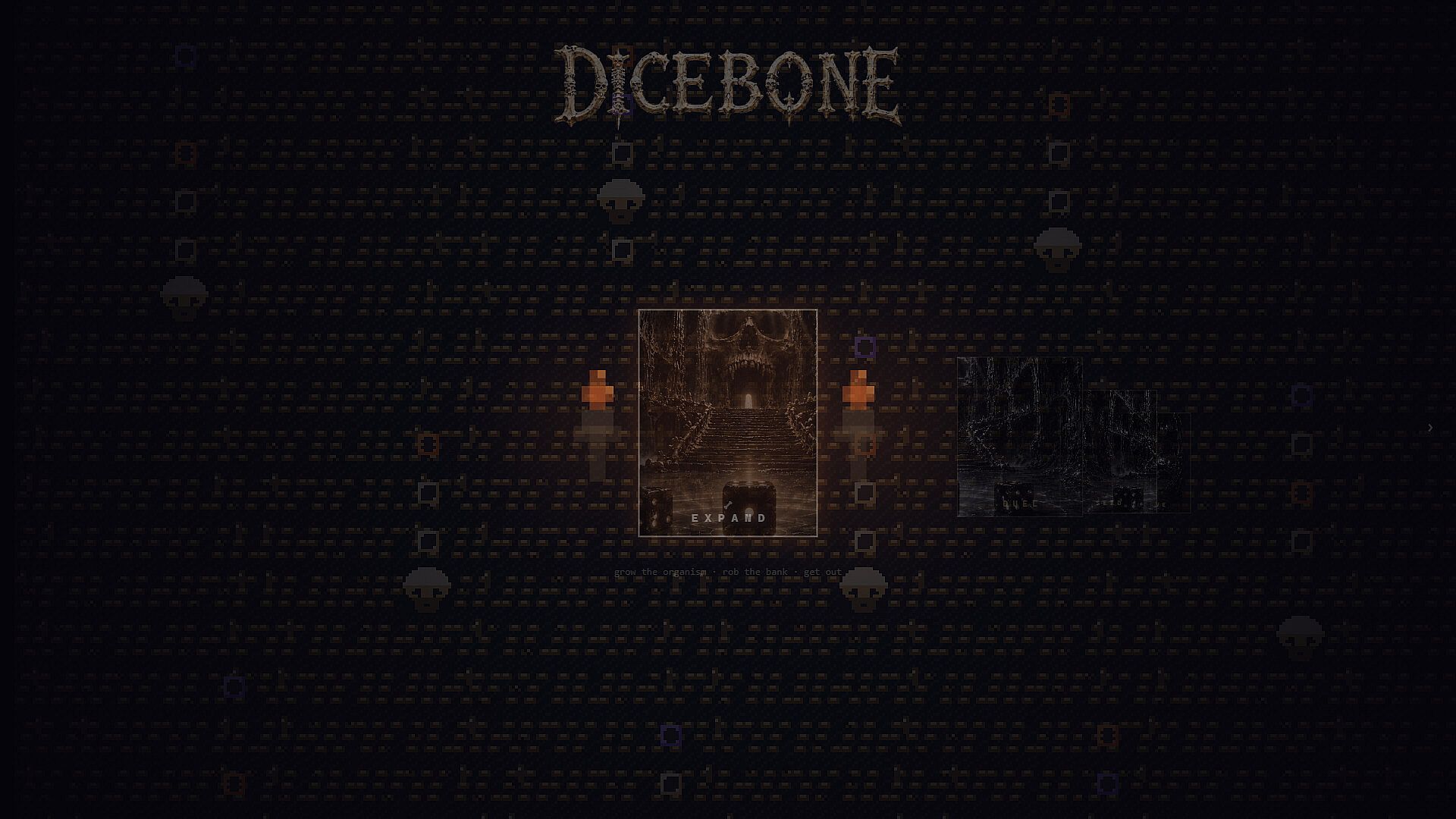



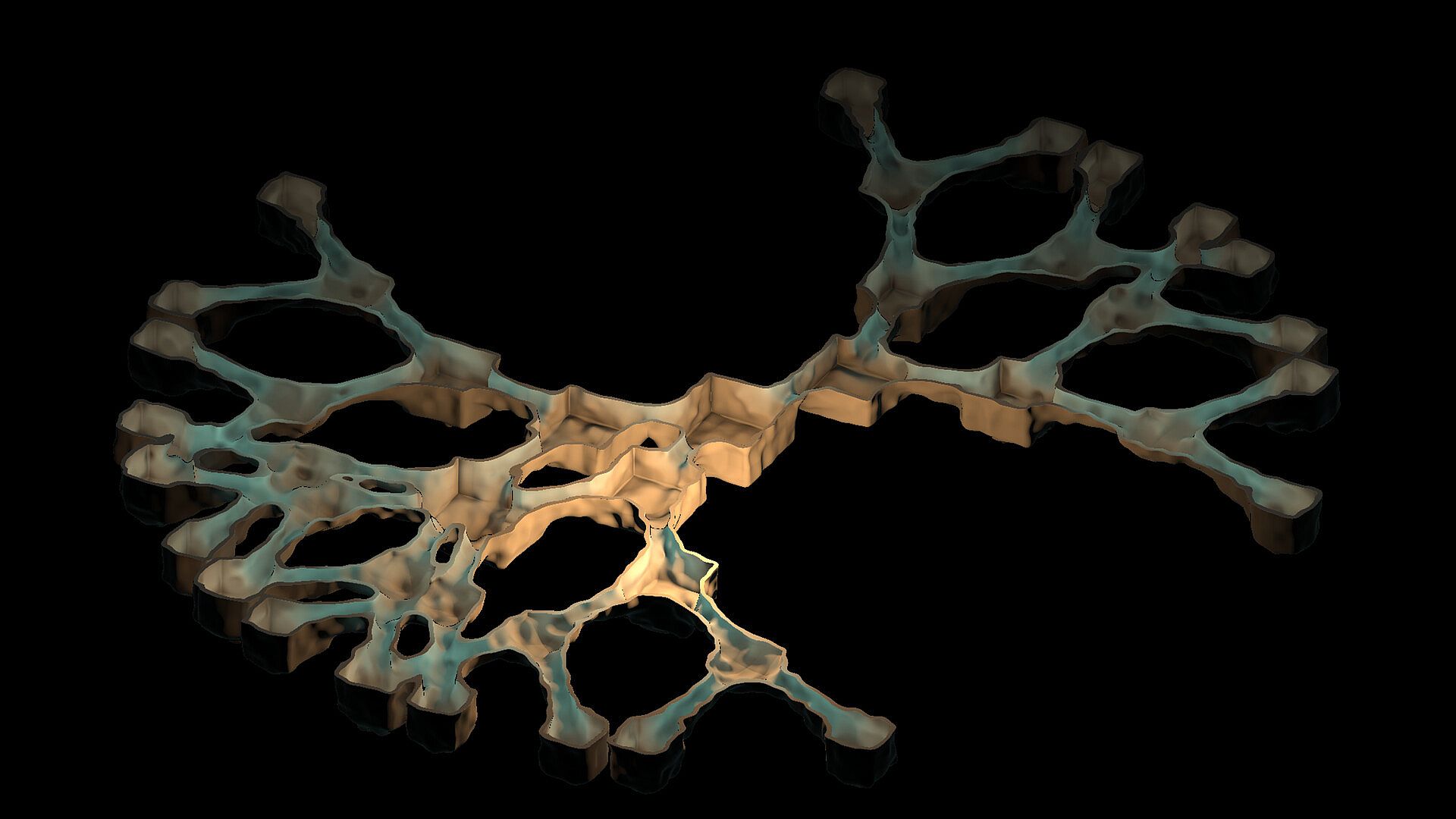





DICEBONE is a strategy indie RPG for PC that builds entire dungeons from rolling dice. Players grow fractal structures where each die becomes a room and connecting bones form corridors, all while an adversarial Dicemaster works against every expansion. The core loop centers on breeding dice, ossifying paths, and managing limited resources to reach an exit before the growing rings and tightening clock make escape impossible.
Gameplay
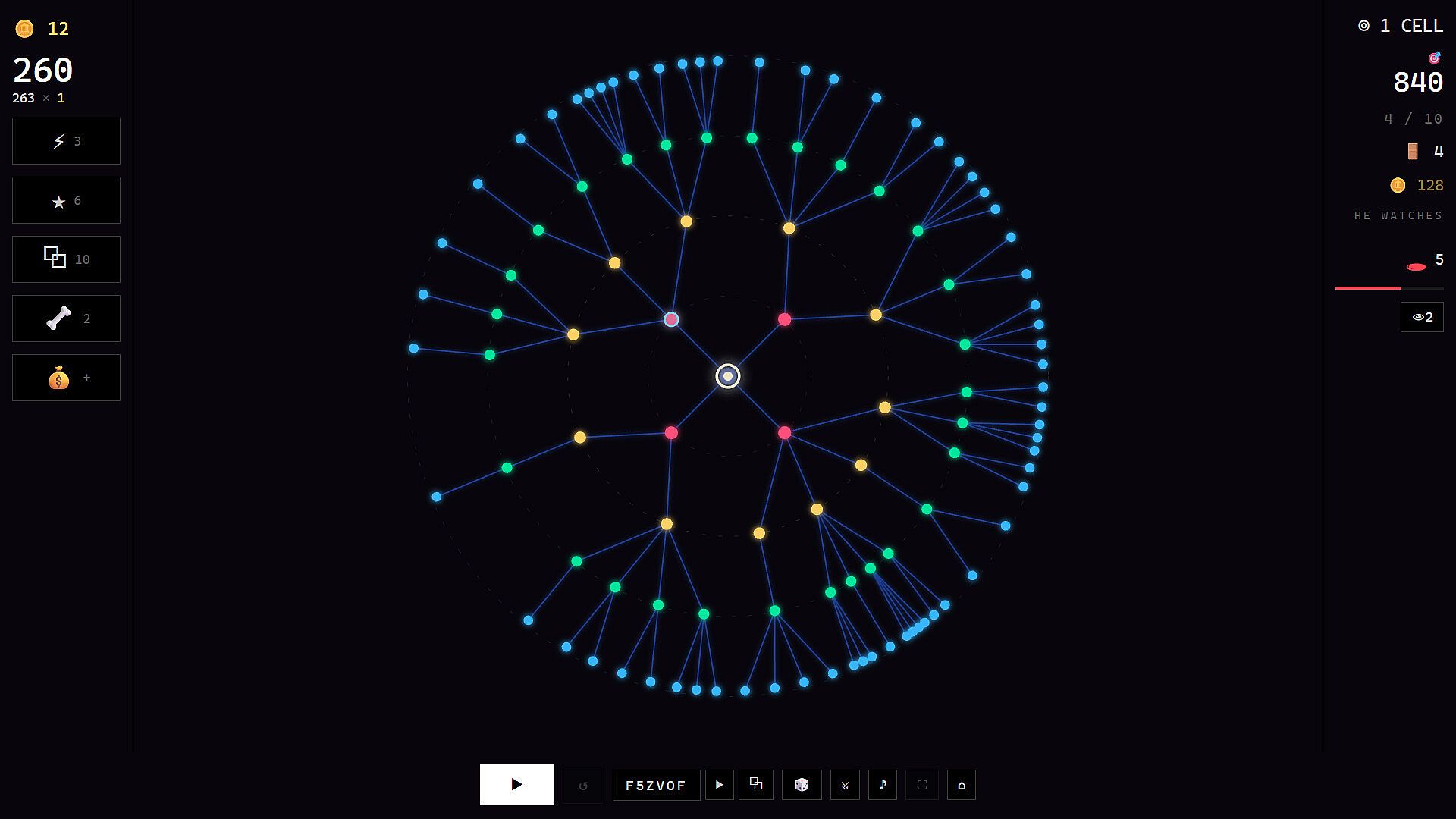
The central tension in DICEBONE arises from a constant back-and-forth between the player and the Dicemaster. Actions such as growing new dice, ossifying corridors into permanent stone, selling branches for exit currency, or doubting the rival's claims each trigger a direct response that either helps or hinders progress. Dice represent rooms that multiply outward in rings, and the bone connections between them create the navigable layout. Every decision increases the cost to leave while also feeding the Dicemaster more pieces to control or destroy.
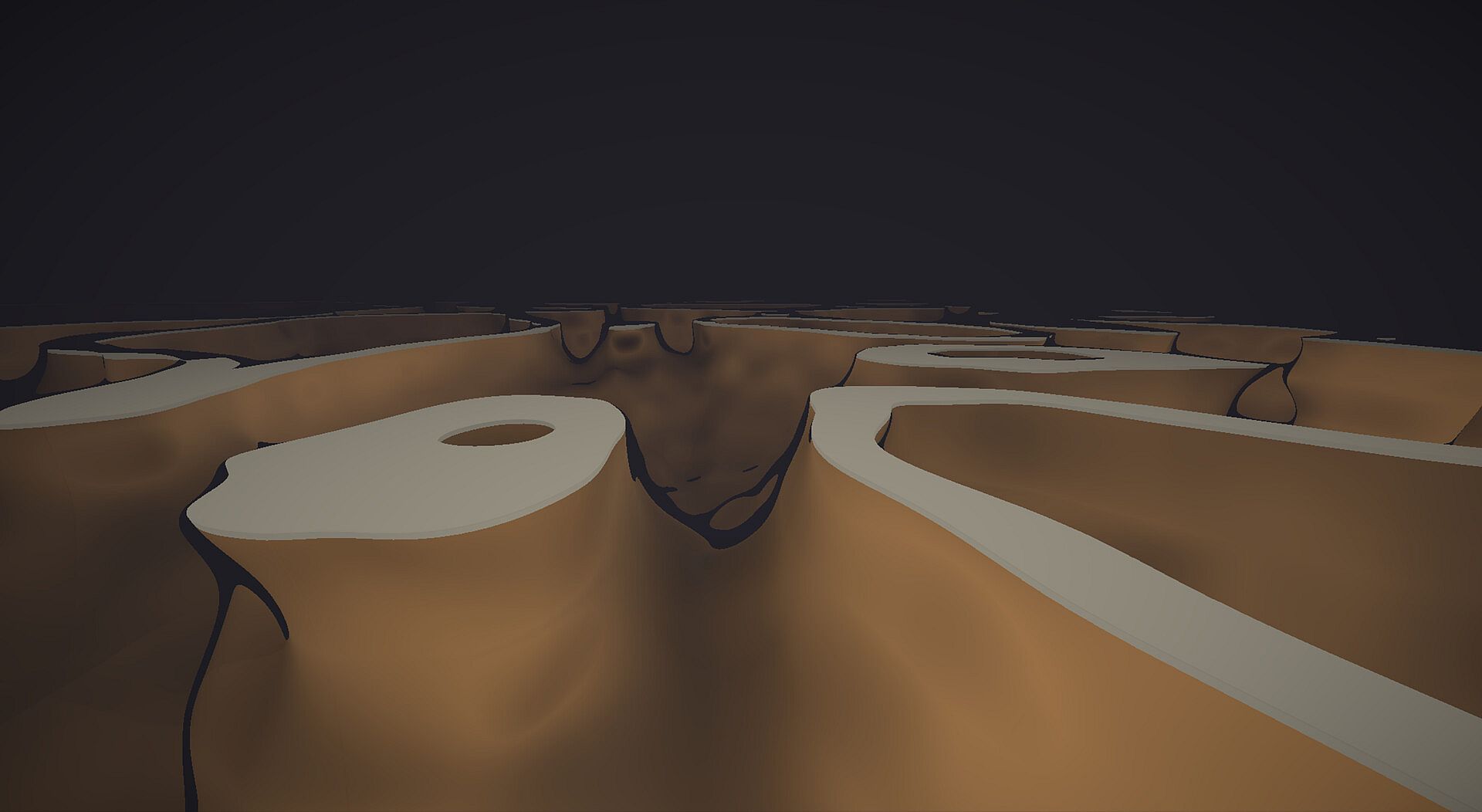
Seven core verbs drive the systems: grow, ossify, sell, walk, bank, doubt, and others that shape the fractal layout. Special dice and upgrades alter how rings form or how resources behave. The clock tightens with each new ring, forcing quicker commitments on later turns. When a run ends, players can view the finished structure as a walkable 3D ossuary built entirely from runtime-generated bones and sounds rather than pre-made assets.
Everything stays offline with no accounts or telemetry required. Runs generate shareable six-character codes that recreate an exact dungeon layout for others to attempt.
Game Modes
Arcade mode strips away all narrative elements for direct competition against the Dicemaster. Each run lasts minutes and focuses on the tree of decisions, the exit threshold, and the rival's interference. Early rings allow careful planning while later rings demand immediate choices as the clock grows stricter.
Lutonia mode slows the same fractal system into a more deliberate exploration. Characters such as Taran, Maevig, Luto, and Chato each bring distinct approaches to reading rooms, mending dice, or claiming territory. Altars, crypts, and wells interact with the grown structure in specific ways. Leaving companions behind turns them into permanent parts of the route rather than simple removals.
Players can also take the Dicemaster's seat to control the purse, announce actions, and decide which dice survive or break. This perspective works against the game itself, against another player, or in hotseat alternation on a single keyboard.
Core Systems and Progression
Ten hand-designed layers introduce the mechanics before an endless descent begins. The goal shifts from simple victory to measuring how deep a run reaches while surviving the weight of what was taken out. Greed that clears the threshold by a wide margin returns surplus through the player's own resources, yet the finest dice often prove hardest to carry safely.
Resource management includes banking at the right moment and weighing the risk of doubt against the Dicemaster's possible bluffs. Freeze and drain effects target key dice or currency at critical turns. The entire experience fits within a single argument between two sides, with every rule representing one voice in that exchange.
Is It Worth Playing?
DICEBONE suits players who enjoy tense, short-session strategy games with roguelike elements and direct adversarial mechanics. The dual perspectives and hotseat option add replay value for solo or shared play. A demo is currently available that lets interested players test the core fractal building and rival interaction before committing further. Those drawn to dice-driven systems, procedural layouts, and asymmetric competition will find the focused design matches the described experience without unnecessary layers. The absence of external accounts or always-online requirements keeps the emphasis on the immediate session.