

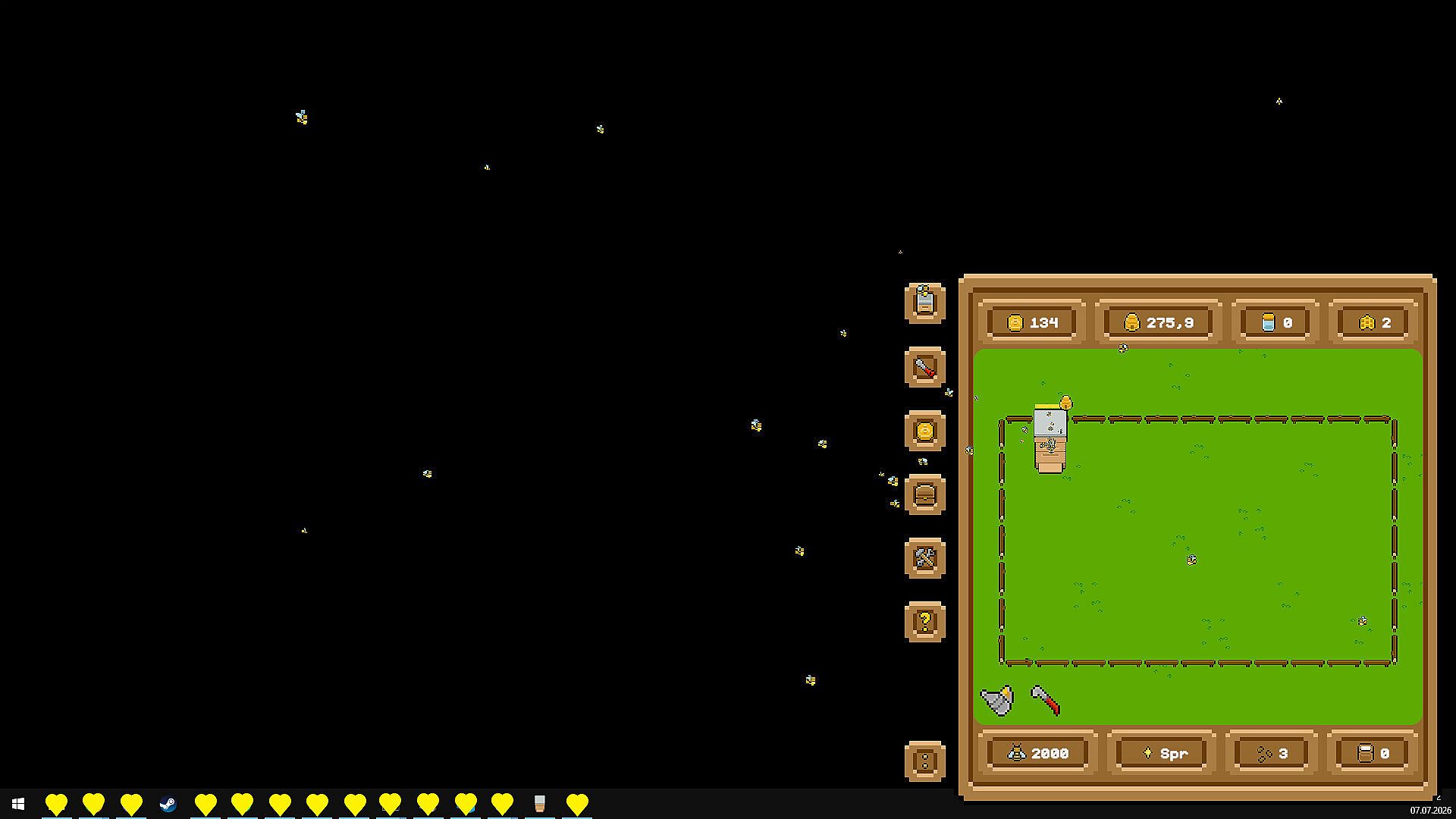
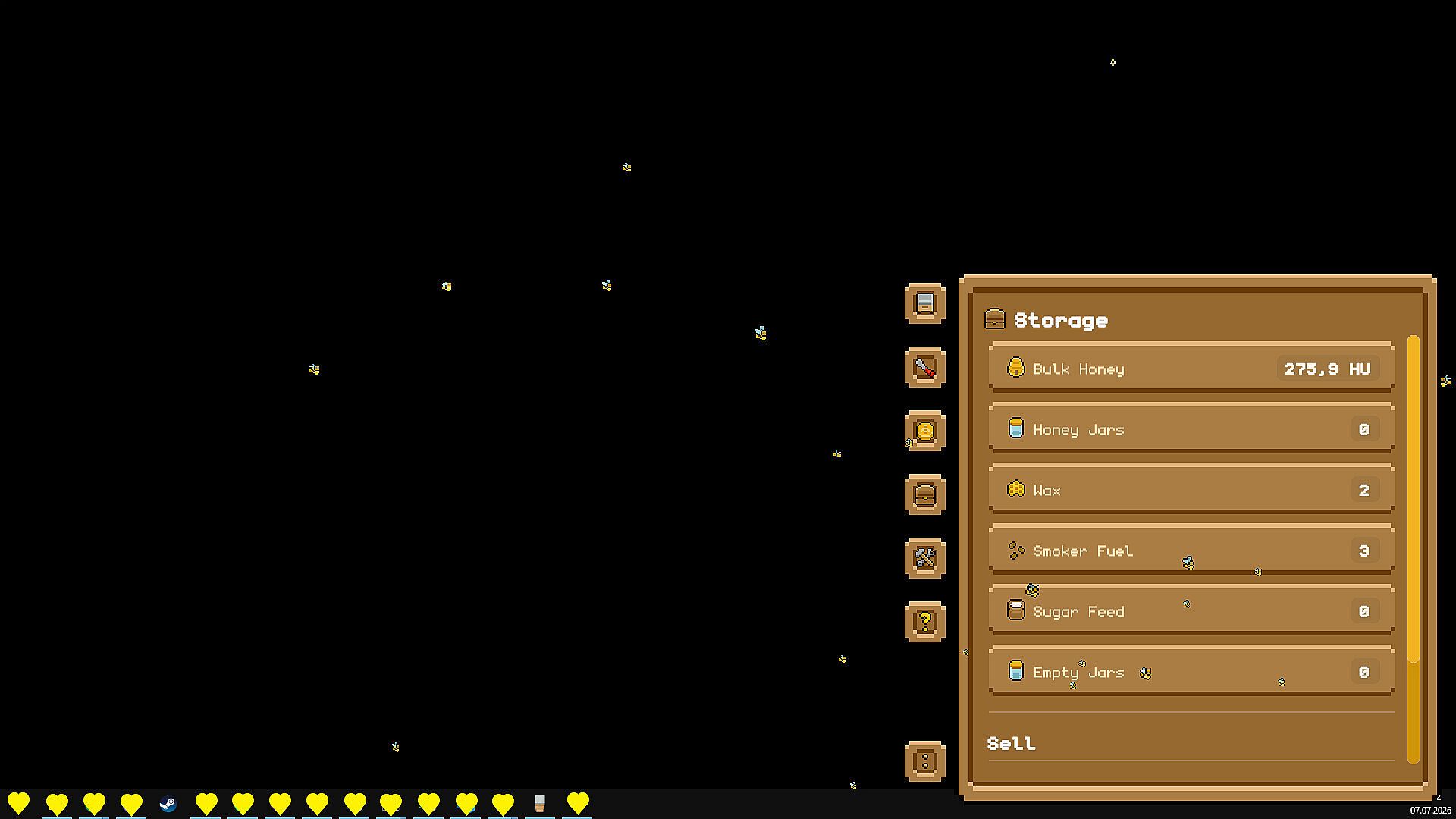
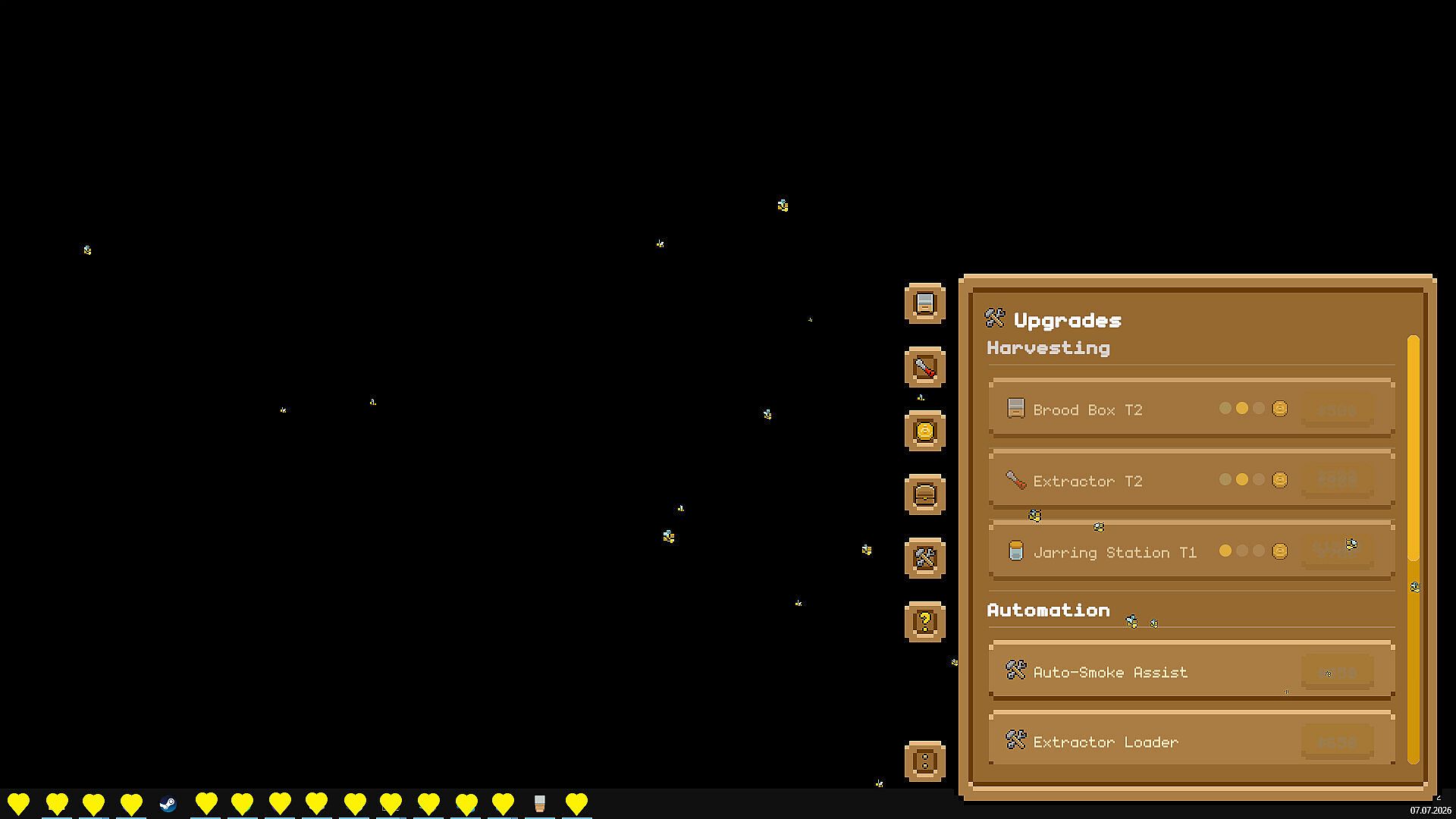





Desk Hive is an indie simulation game built around idle beekeeping on PC. Players manage a desktop apiary that continues running in real time even when the window is minimized or the game is closed. The experience centers on starting with a single hive and gradually expanding colonies, upgrading equipment, and setting up automated systems to handle honey production and sales without constant attention.
Gameplay
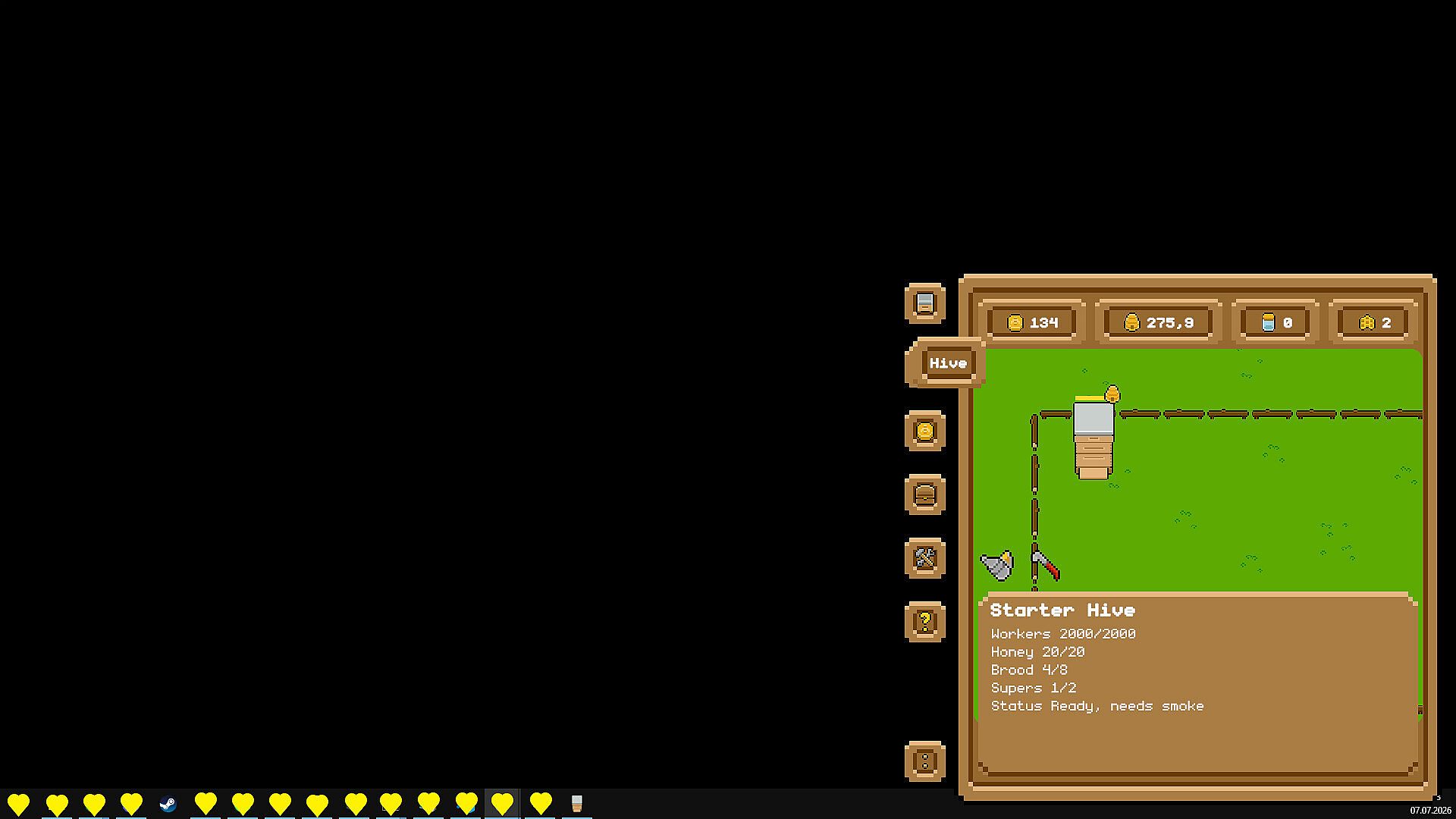
Each hive operates independently on a real-time clock. Worker bees forage for nectar, honey accumulates in supers, and new bees emerge from brood frames. Queens possess individual traits that influence growth speed and honey output, giving each colony a distinct character. Upgrades focus on practical improvements such as larger brood boxes to support more workers, additional frames for better efficiency, and consistent sugar feed to sustain hives through difficult periods.
Seasons shift automatically every six hours in real-world time. Spring favors workforce expansion, summer delivers peak nectar availability, autumn reduces activity while offering a final window to prepare supplies, and winter brings near-zero nectar flow with halted brood production. Hives consume sugar feed to survive the cold, and a complete annual cycle completes in twenty-four real hours. This structure keeps the simulation moving forward regardless of player presence.
The production process begins when a honey super fills. The smoker calms the hive for safe frame removal, after which extractor jobs convert raw honey into bulk product. Stronger extractors handle larger volumes and multiple jobs simultaneously. Once two hives are active, jarring stations become available to package bulk honey into higher-value jars. Revenue from jars and wax funds further expansion across three upgrade tiers: brood boxes for colony scale, extractors for processing capacity, and jarring stations for packaging volume. Additional honey supers and brood frames provide incremental efficiency gains.
Game Modes
Desk Hive functions as a single continuous single-player simulation. There are no separate game modes, competitive elements, or multiplayer options. The core loop remains consistent from the first hive onward, with progression driven by equipment unlocks, automation layers, and seasonal cycles rather than branching scenarios or distinct play styles.
Automation and Progression
Seven specific automation upgrades reduce manual tasks as the apiary scales. Auto smoke prepares hives for harvest, an extractor loader manages harvesting and job queuing independently, a collector tray handles finished output, sales contracts clear excess honey automatically, a supply clerk maintains jar and feed levels at chosen thresholds, a jar line assistant sustains packaging runs, and an apiary supervisor applies settings across multiple hives. These systems allow the operation to function with minimal intervention once established.
Progression follows a steady expansion path. Early focus stays on basic hive growth and manual harvesting. Mid-game introduces jarring and basic automation. Later stages emphasize cross-hive management and full automation chains. Money earned from sales supports reinvestment without artificial caps or time-limited events.
Is It Worth Playing?
Desk Hive suits players who enjoy relaxed idle simulations and desktop companions that require only occasional check-ins. The absence of a fail state means colonies slow rather than perish if supplies run low, removing any sense of pressure or loss. Offline progress tracks up to thirty-six real hours of activity, with full speed for the first twelve hours followed by a gradual slowdown, and returns a clear summary of honey produced, jars filled, wax collected, money earned, and jobs completed.
The game appeals to those seeking a low-stress beekeeping management experience on PC. It rewards thoughtful setup of automation and seasonal planning while allowing long periods of passive operation. Because the simulation runs independently, it fits alongside other activities without demanding full focus. Players who prefer gentle progression systems and persistent worlds will find the mechanics align closely with that preference. Those looking for action, competition, or frequent direct control may find the pace too measured. The title remains in development with a coming-soon release, so current details reflect the planned systems described by the developer.