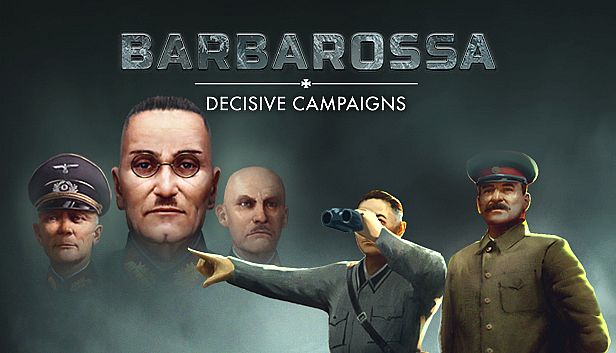










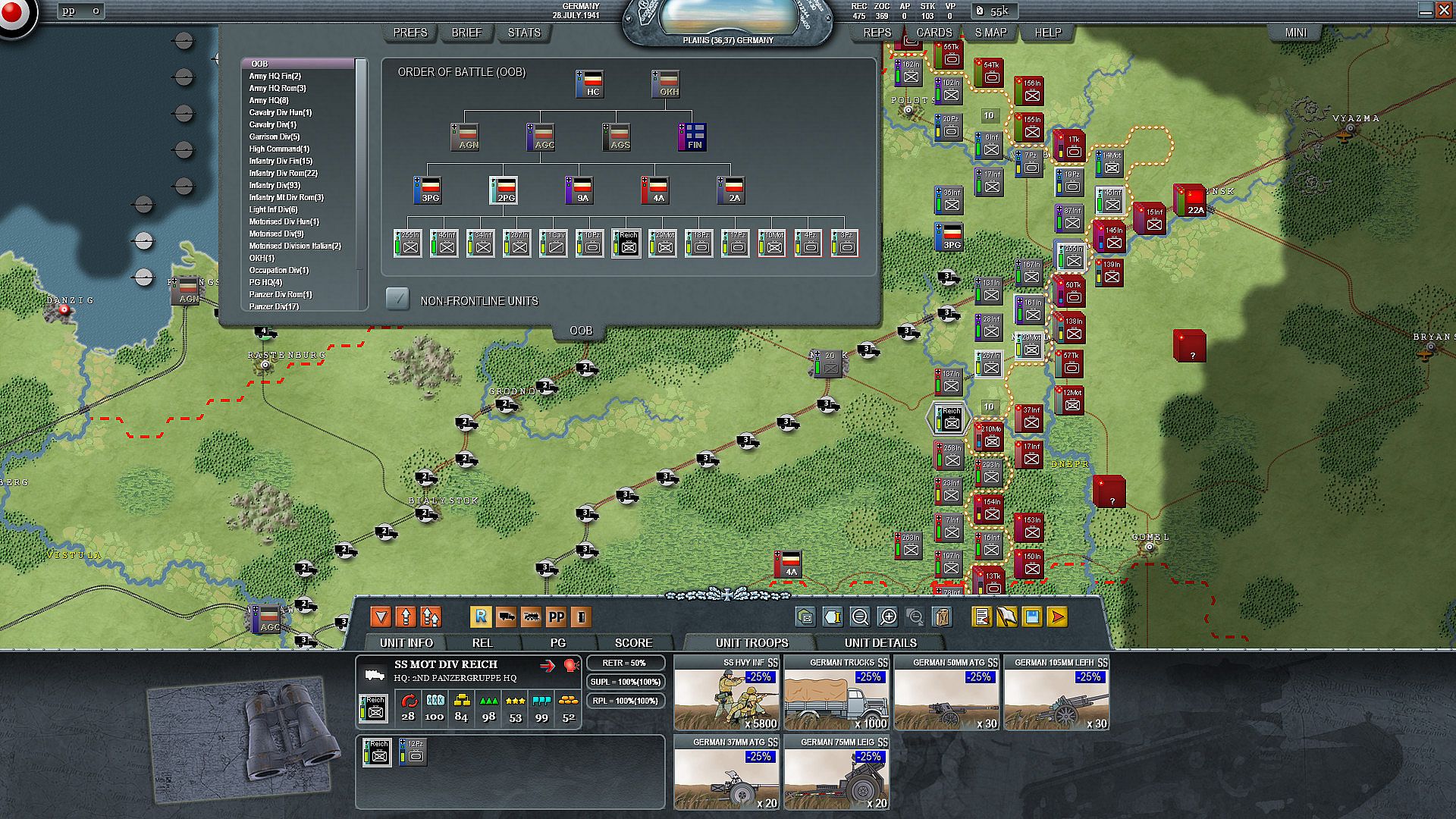
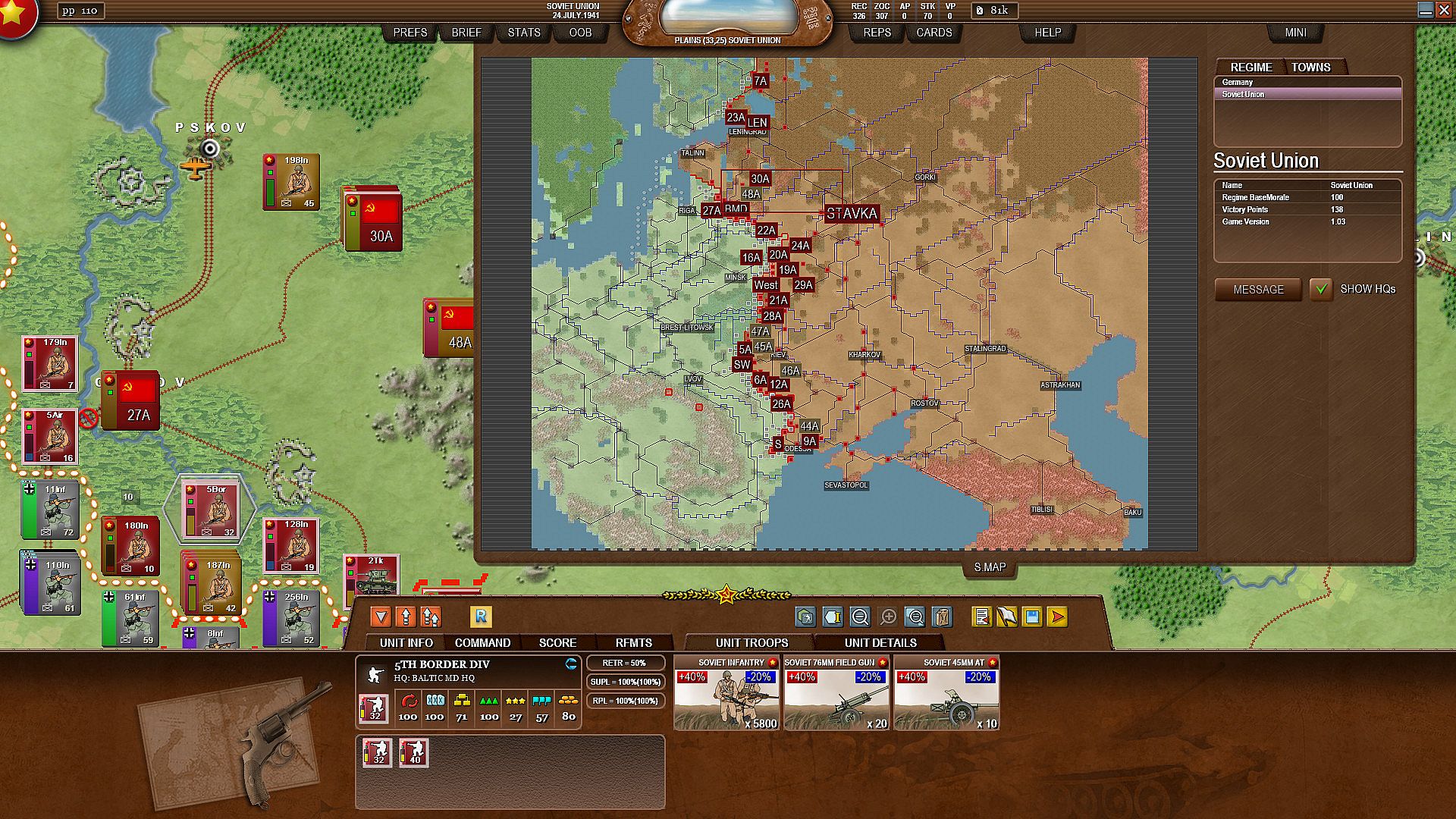
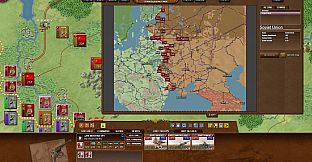
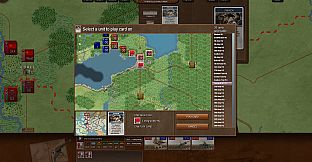
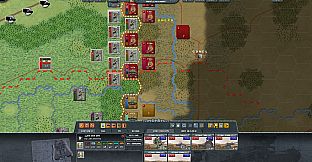
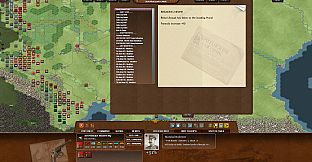
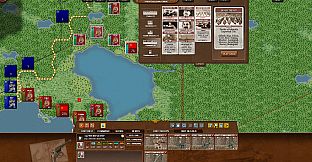
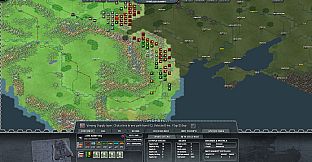

Decisive Campaigns: Barbarossa is a strategy wargame set on the Eastern Front of World War II. It places the player in operational command during the German invasion of the Soviet Union from June 1941 through February 1942. The game uses a hex and counter system at divisional scale with 30 kilometer hexes and four day turns. It emphasizes command hierarchy, logistics, weather effects, and political decisions alongside traditional combat resolution.
Gameplay
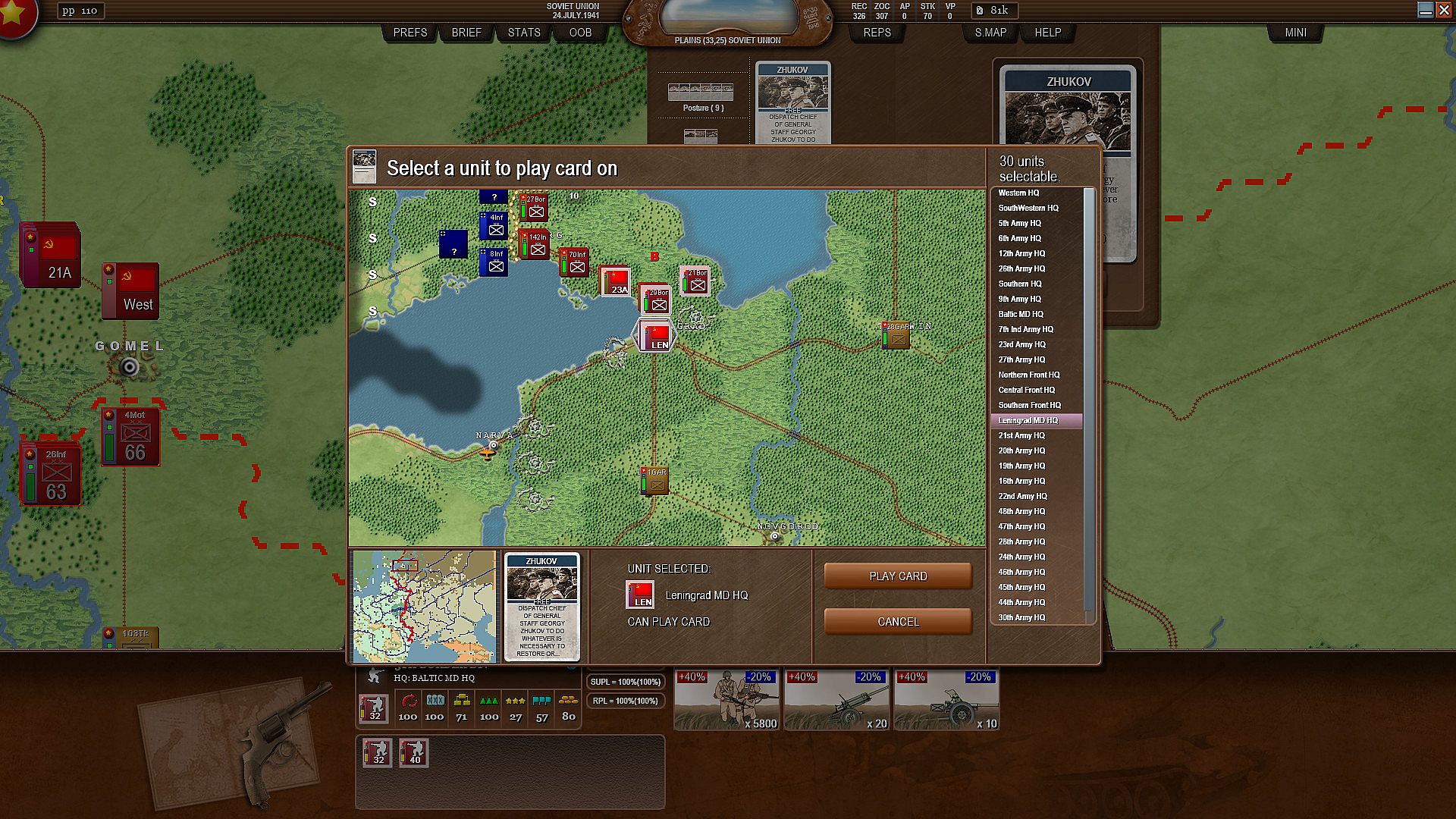
The core loop centers on managing three separate theaters while working within a chain of command that includes superiors and subordinates. Players set army postures, assign theater artillery, allocate tactical air support, and request specialized battalions from theater commanders. These requests can be refused, forcing trade offs between immediate needs and long term relationships.
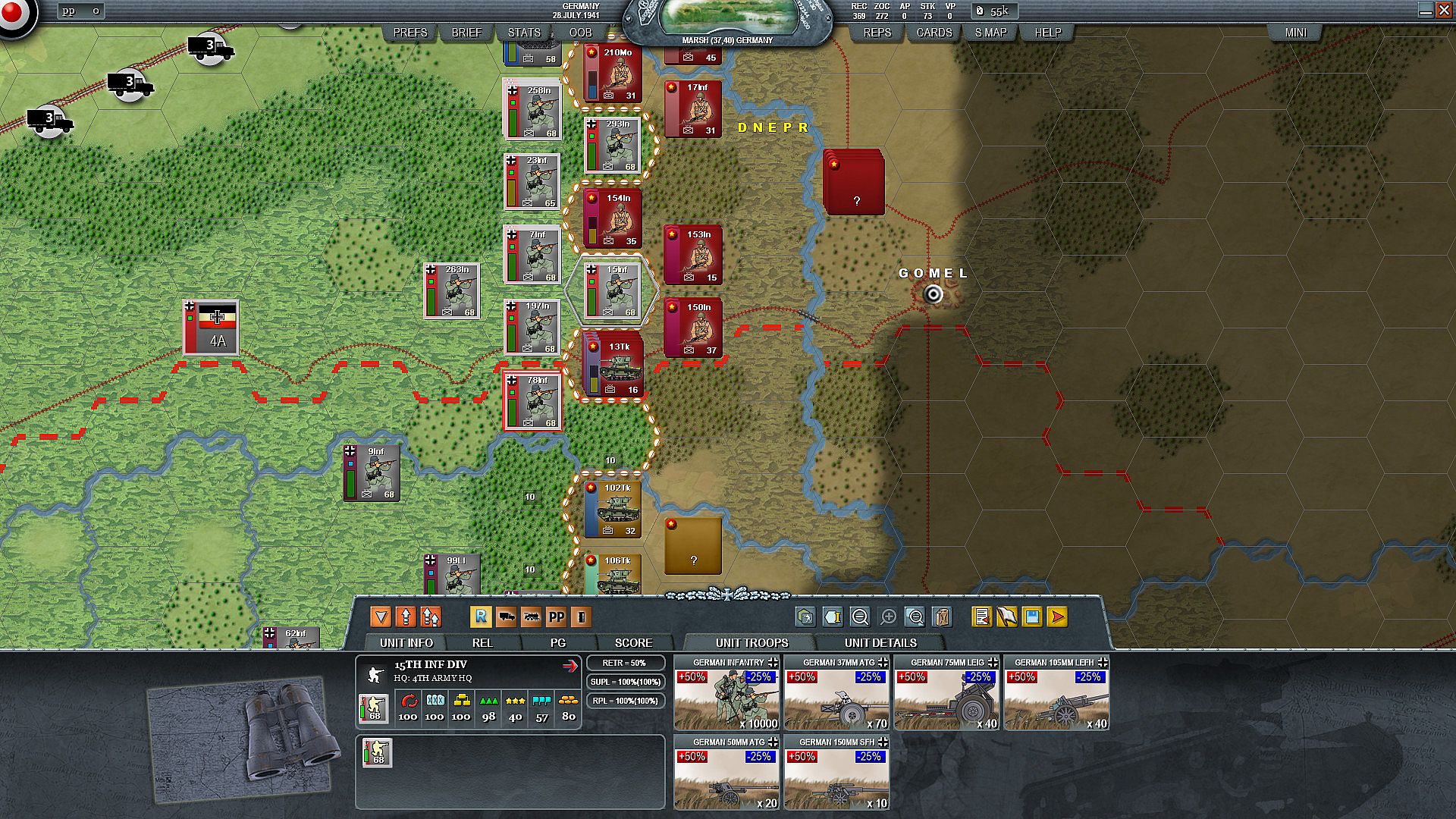
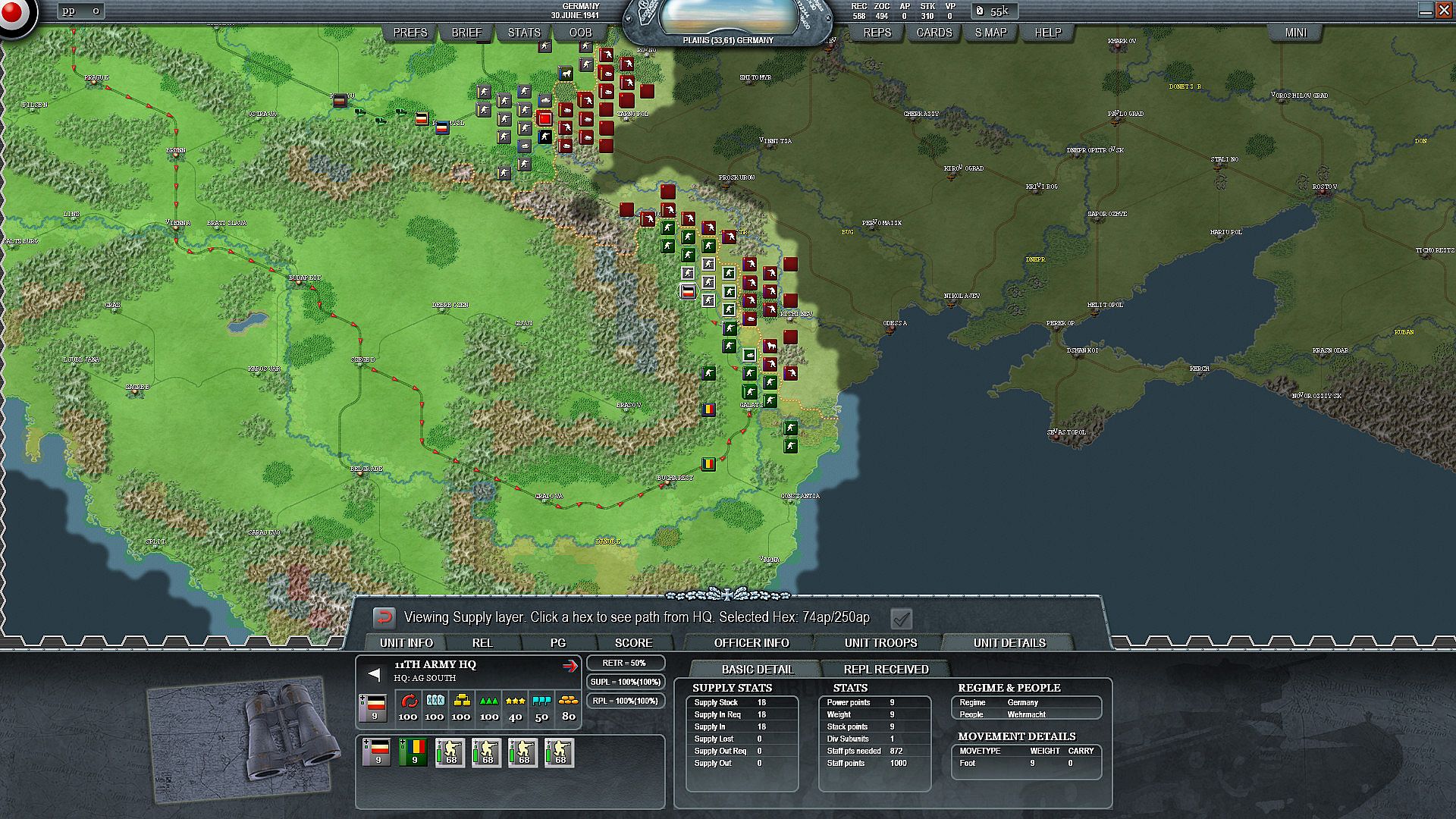
Logistics receive detailed attention through mechanical breakdown, mileage, and fatigue tracking. A realistic climatic model makes every degree below zero relevant, with frostbite and blizzards affecting both men and equipment. Players must decide when to pull units out for refit or rest and whether to maintain an aggressive blitzkrieg pace or shift to a sustained offensive to conserve fuel.
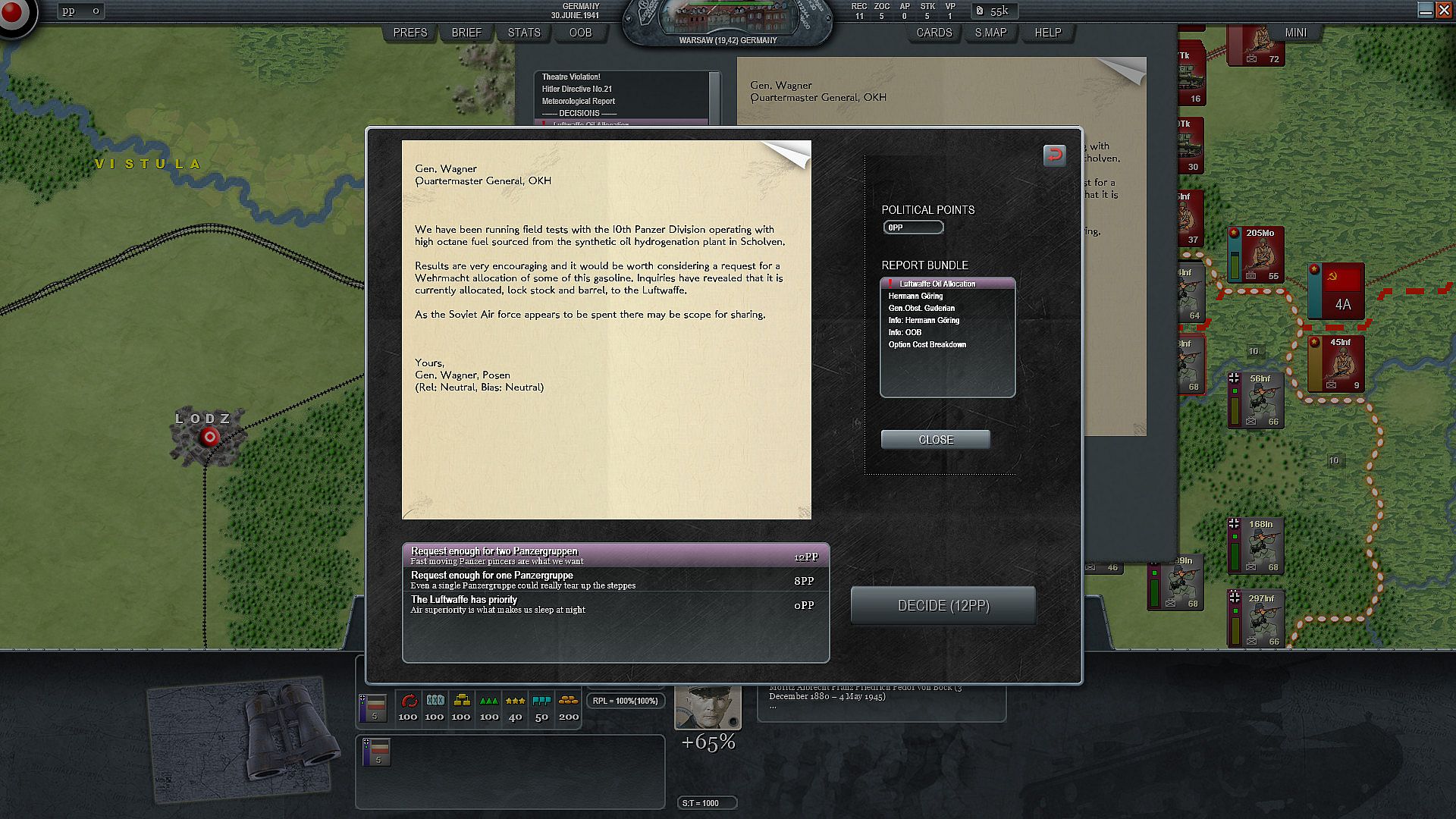
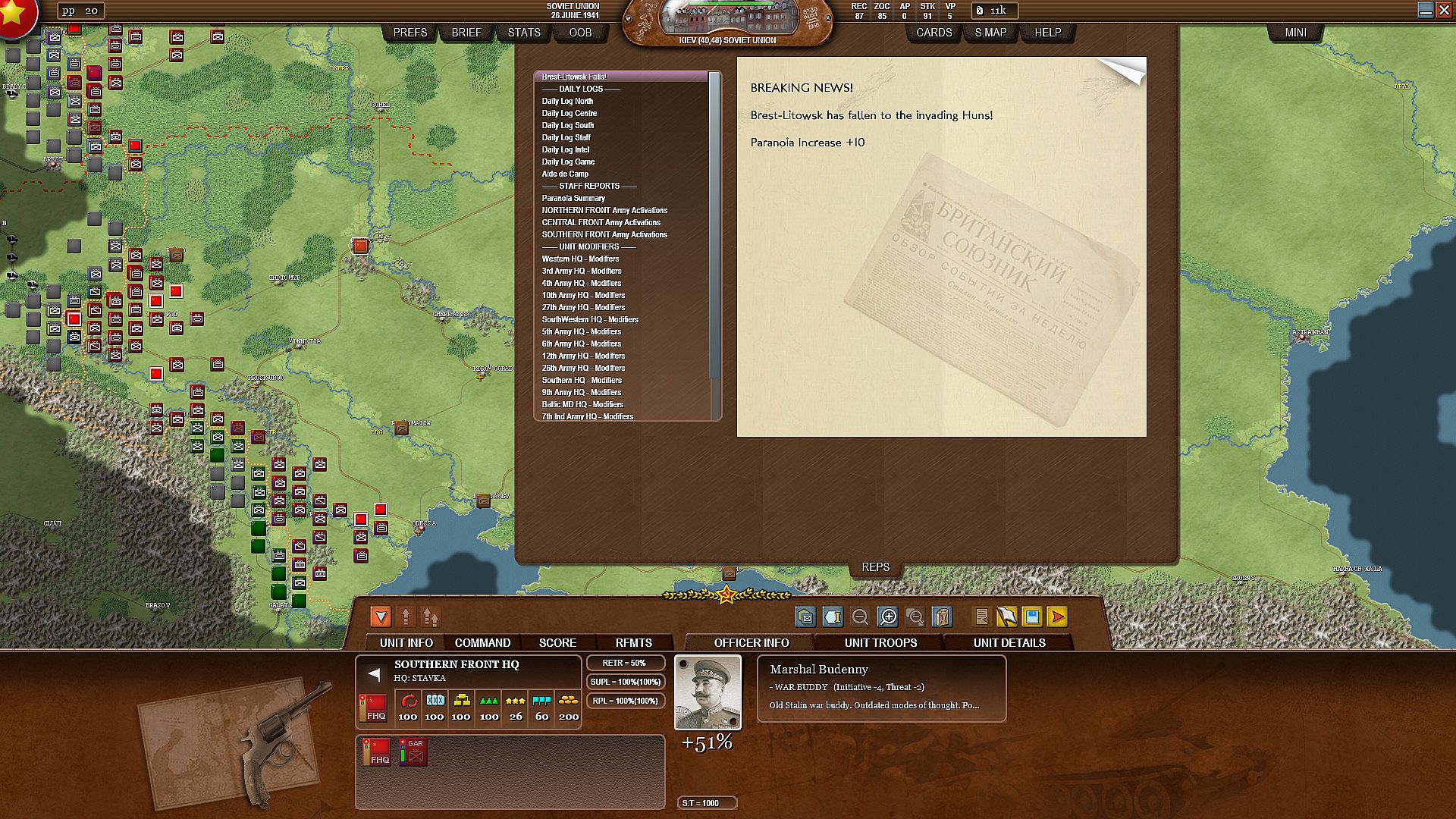
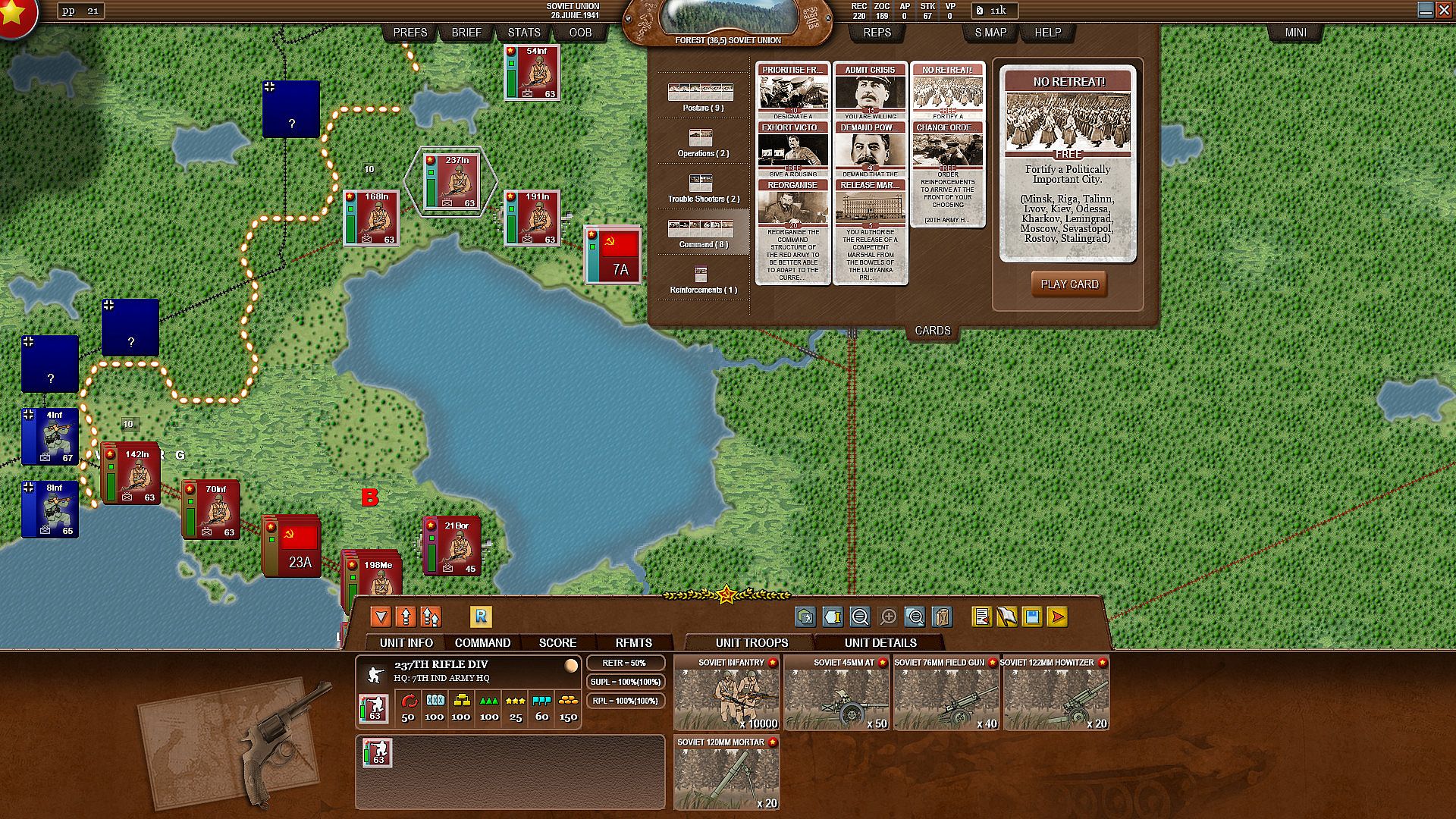
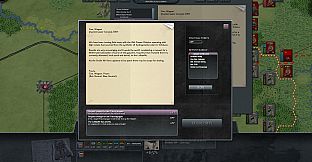
Political and ethical dimensions add another layer. Players can choose to observe the Geneva Convention or ignore it, with consequences that include potential war crimes tribunals if the campaign ends in defeat. German players interact with the Führer, weighing demands for military independence against the risk of dismissal. Soviet players operate under Stalin, managing loyalty perceptions among marshals and troubleshooters.
Combat resolution accounts for hundreds of variables tuned specifically for eastern front conditions. Each division tracks roughly fifty stats, and logistical pipelines stretch visibly across the map. Players can order emergency Luftwaffe resupply or adjust forward supply bases when pipelines falter due to washouts, partisans, or frozen infrastructure.
Game Modes
The game offers a single hand crafted campaign rather than multiple scenarios. This campaign supports two primary sides: the German forces under Franz Halder or the Soviet forces under Stalin. Each side presents distinct challenges and mechanics that create two noticeably different experiences within the same timeframe and map.
Before starting, players select rule variants that alter the experience. Options include a strictly historical mode or a more fluid version with greater decision freedom. Separate toggles control whether the Geneva Convention applies. These choices affect available actions, relationship systems, and overall replay paths without adding new campaigns.
Play proceeds in single player against a capable AI or against another human via hotseat or play by email. The campaign length and unit count remain manageable for completion in days rather than weeks while preserving depth through semi random events and relationship outcomes.
Command and Logistics Systems
Operational command requires constant prioritization across theaters. Resources such as tactical air support and specialized assets must be allocated carefully, and theater commanders may decline requests based on their own assessments. A high command evaluation appears each turn, tracking command potential and overall performance.
Logistics pipelines become visible elements on the map as panzer columns advance. Players manage truck columns, locomotives, and forward supply bases while contending with typical Ostfront disruptions. Winter clothing and fuel allocations involve negotiations that can consume political points, creating meaningful resource competition.
Unit management stays at a high level. Individual divisions report status, but micromanagement is reduced in favor of posture settings and refit decisions. The system rewards focus on critical fronts while allowing less important areas to receive lower priority.
Is It Worth Playing?
Decisive Campaigns: Barbarossa appeals to players who enjoy detailed operational wargames with strong narrative and decision layers. The blend of hex based combat, weather modeling, logistics, and political relationships creates a focused simulation of 1941 1942 eastern front challenges. Reviews on Steam show 87 percent positive ratings from a modest but dedicated player base.
The game suits those interested in the period who value replayability through side selection and rule variants over a large scenario list. Its manageable scale and reduced micromanagement make it accessible for wargame enthusiasts while still delivering depth in command trade offs. No major updates or additional content have appeared in recent years, so the experience remains as released.
Players seeking a pure tactical hex game or modern graphics may find the presentation dated. Those who appreciate the tension between military necessity and political constraints will find substantial replay value in the single campaign structure. The title remains available on PC for those ready to engage with its specific operational focus.