

DaiDee 大弟 is a single-player strategy roguelike card game for PC that centers on Hong Kong Big Two combo grammar. Players build and partition hands without facing opponents or AI, turning each round into a self-contained puzzle against a score target and the limitations of their own cards.
Gameplay
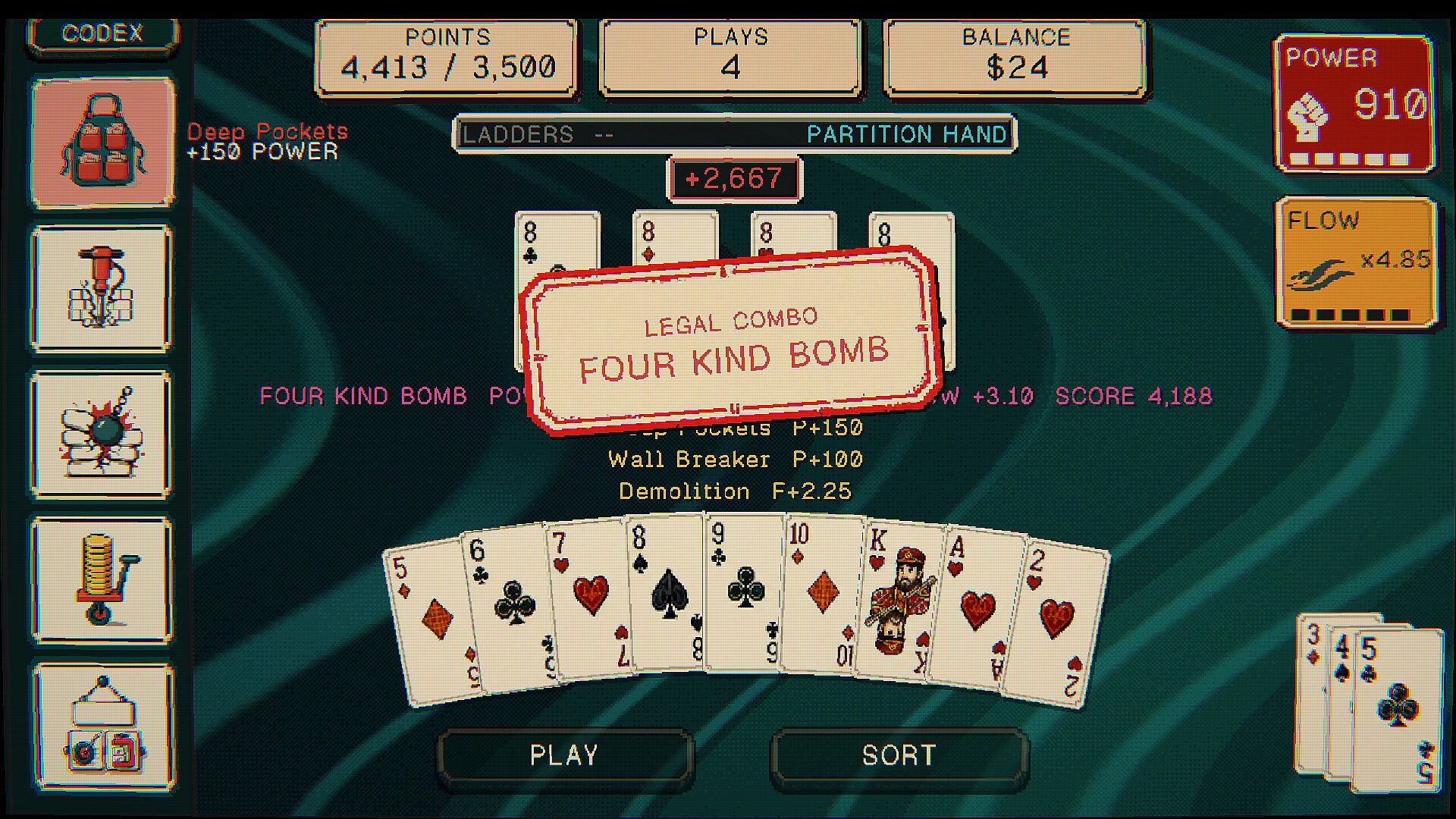
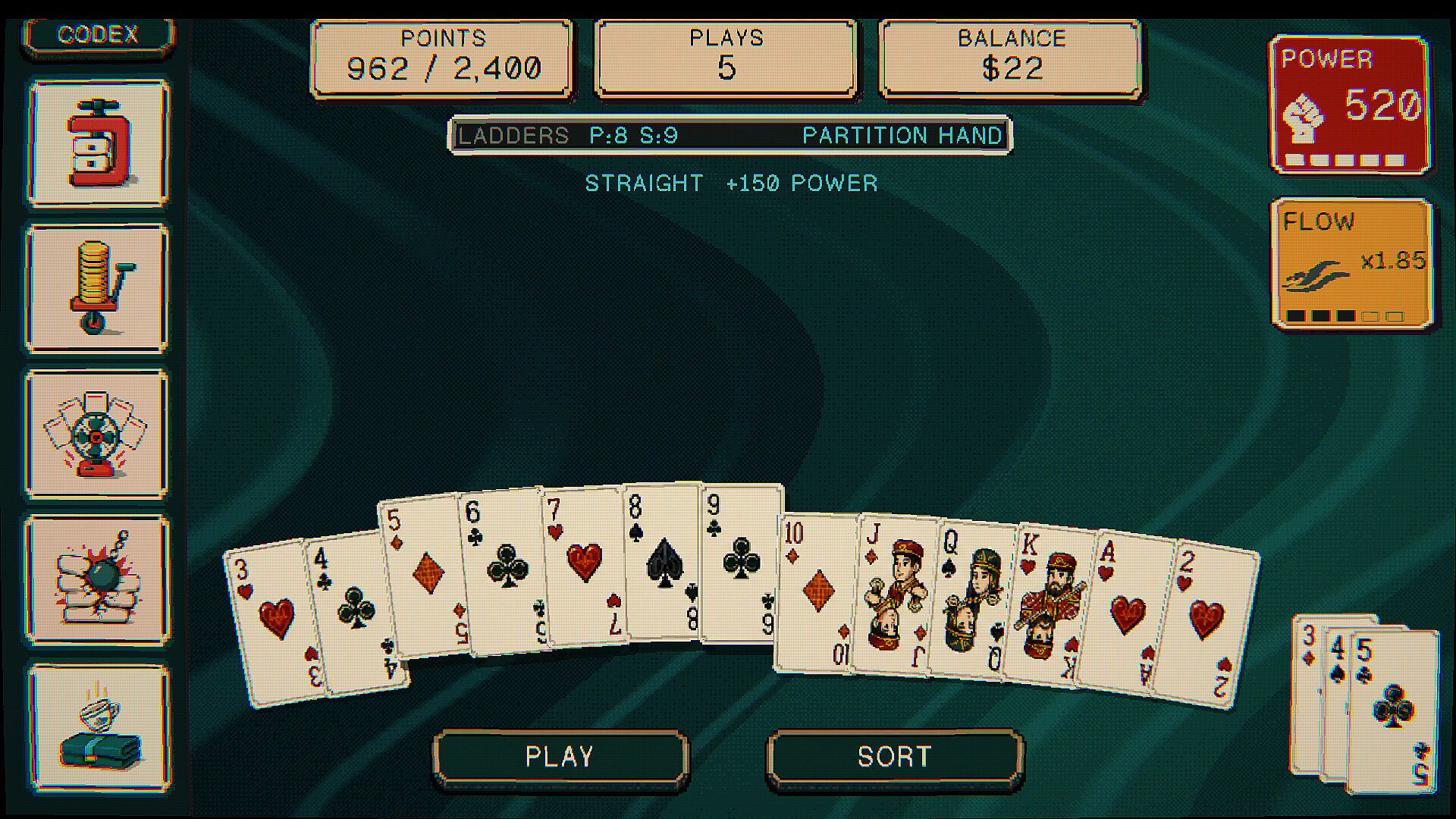
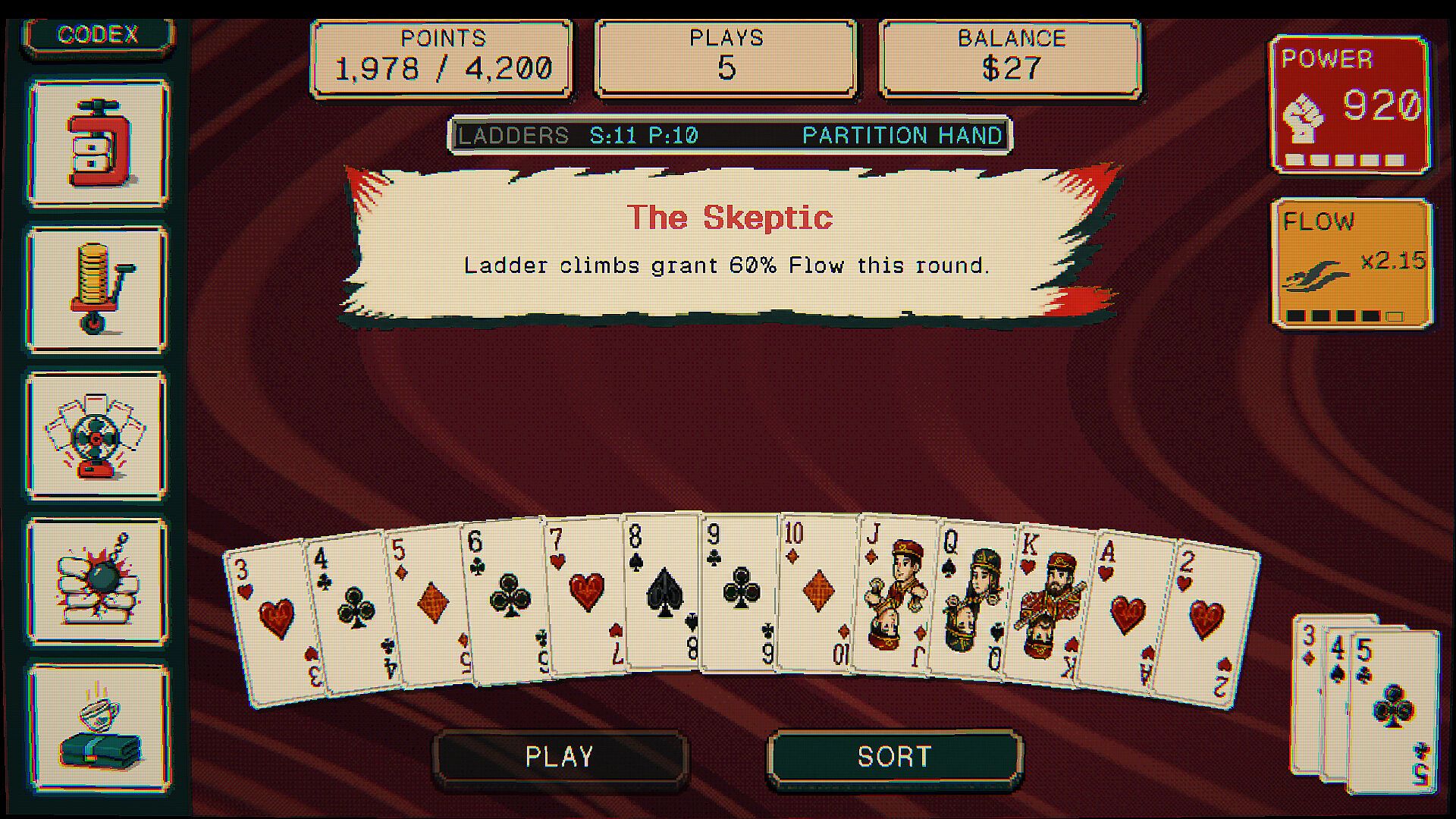
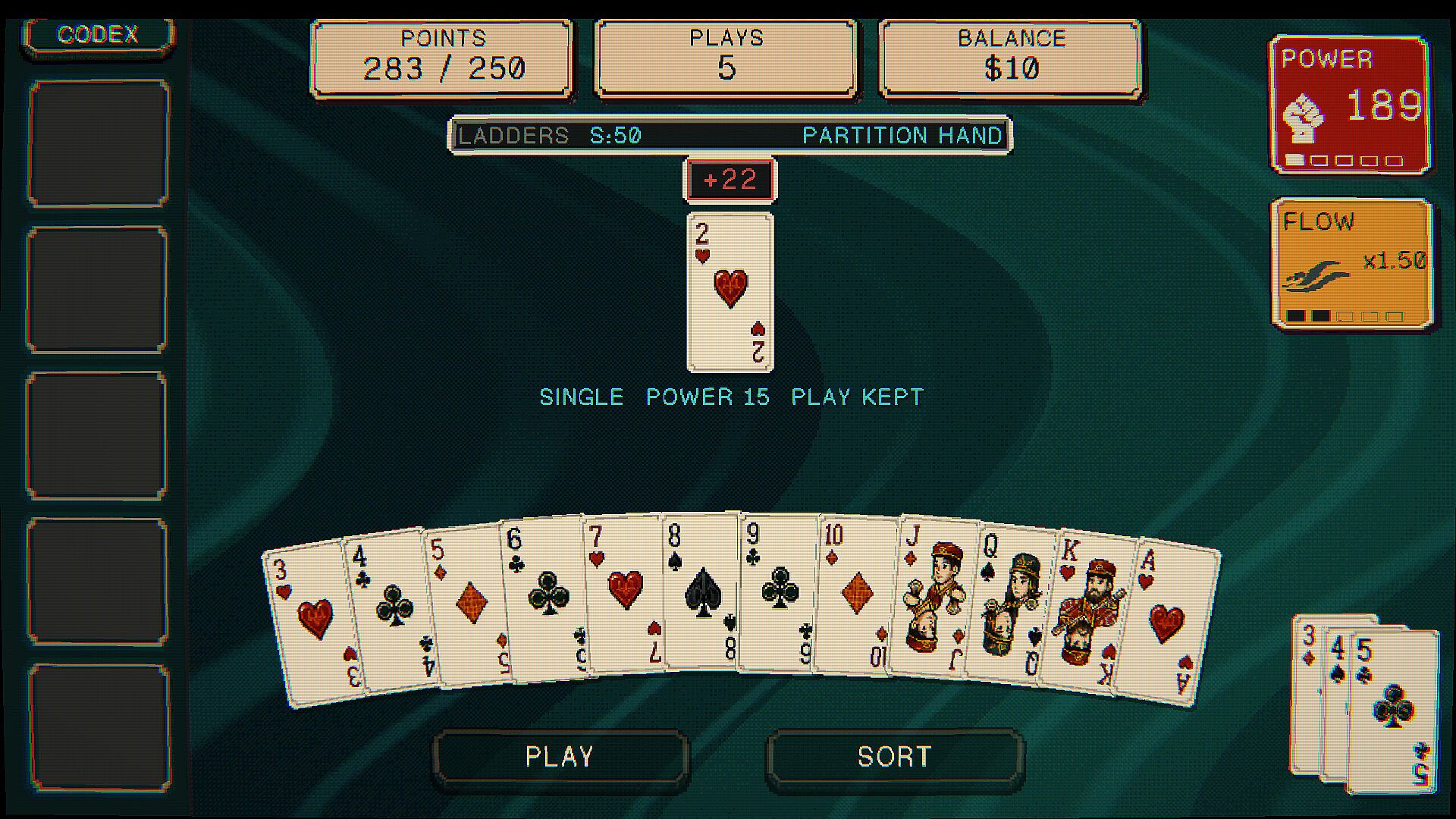
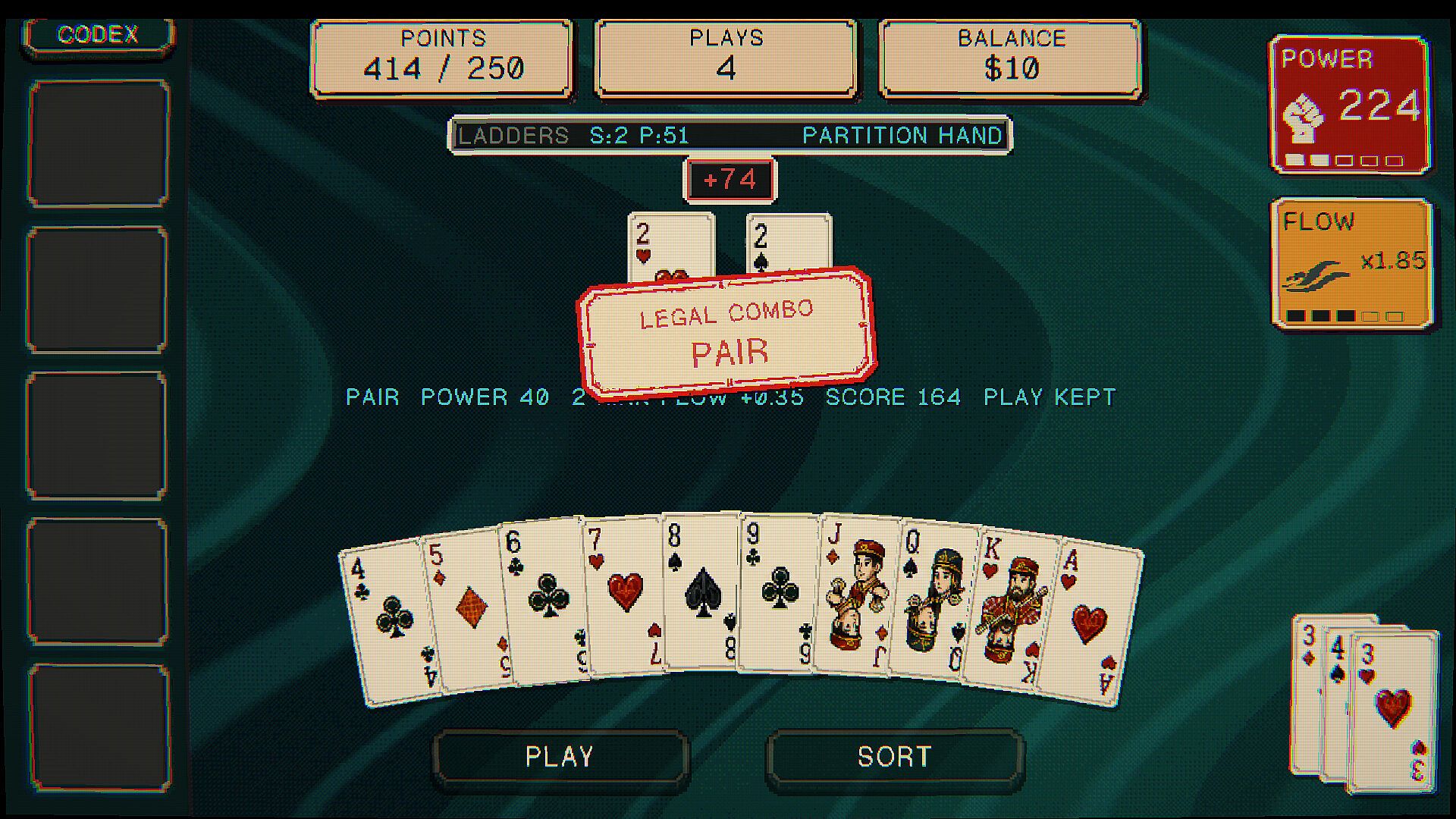
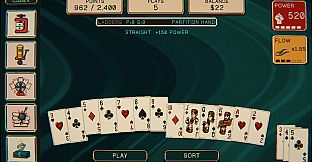
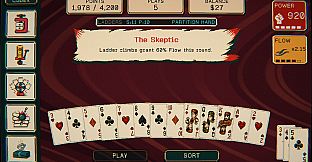
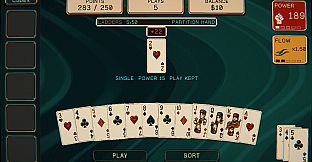
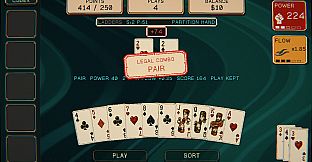
Each round begins with drawing 16 cards and keeping 13. The core challenge lies in splitting this hand into legal Big Two combinations such as singles, pairs, triples, straights, flushes, full houses, and bombs. These plays must fit within a strict budget that limits total actions per round. Order of play directly influences outcomes, as climbing ladders and deploying bombs generate Flow, a multiplier applied to the final score. Round totals calculate as Power multiplied by Flow, with deductions for any cards left unplayed at the end.
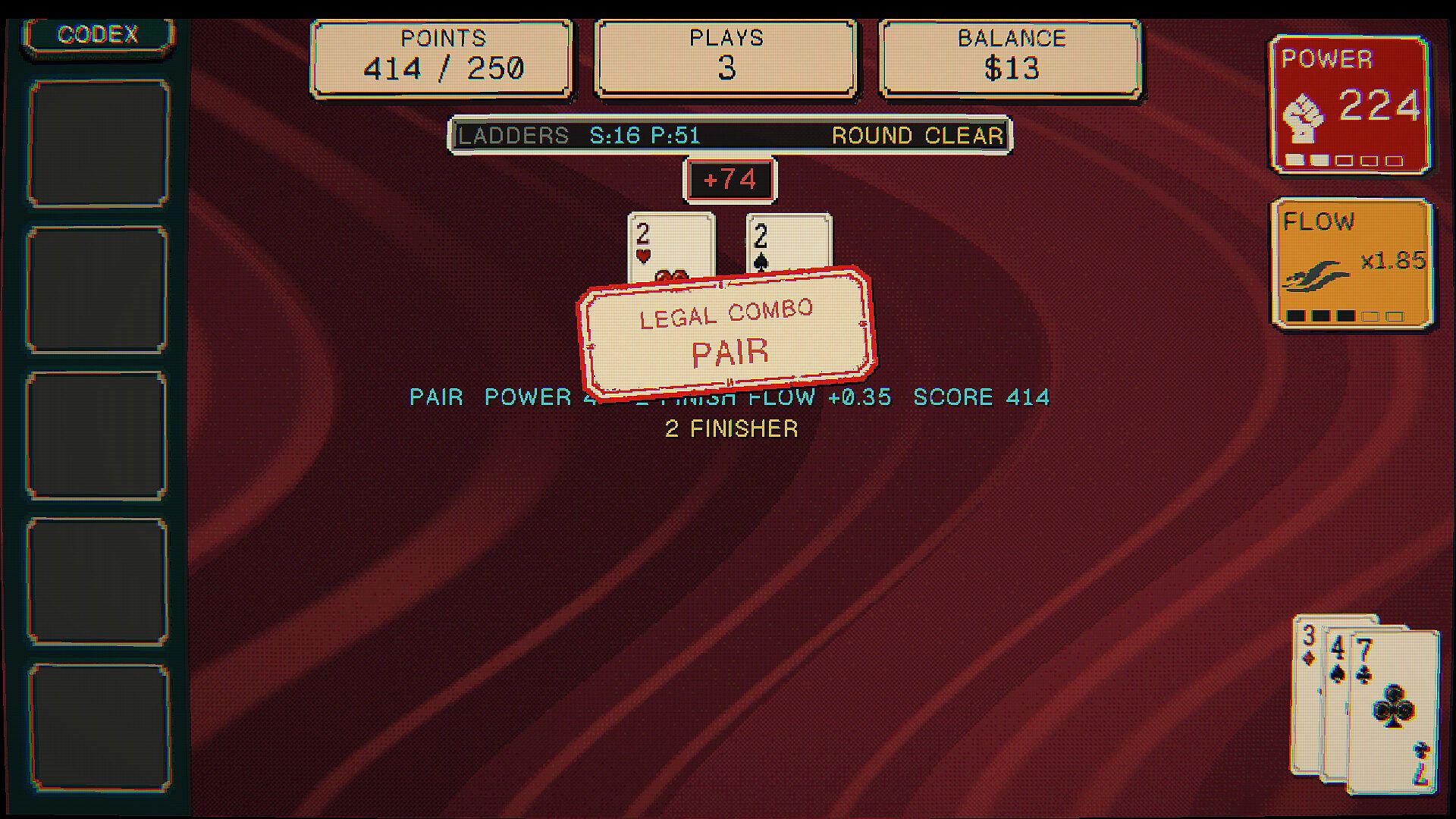
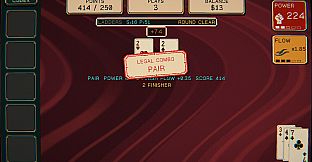
The 2s serve as key finishers. Playing groups of 2s immediately after another combo creates a Link that boosts Flow, while ending a round on a 2 Finisher delivers a bonus. The 2 of spades stands out as the deck's highest card and often factors into optimal closing sequences. This system rewards precise partitioning and sequencing over raw card strength, emphasizing how combinations connect across the hand.
Game Modes
The game operates entirely in a single-player roguelike format built around successive rounds that escalate in difficulty. Runs progress through multiple rounds where missing a score target ends the attempt, creating a loop of planning, execution, and adaptation. Boss encounters add specific constraints, including reversed ladders, a Tax Collector mechanic, and a reserved seat for the player's highest card. These elements force adjustments to standard combo strategies without altering the fundamental Big Two grammar.
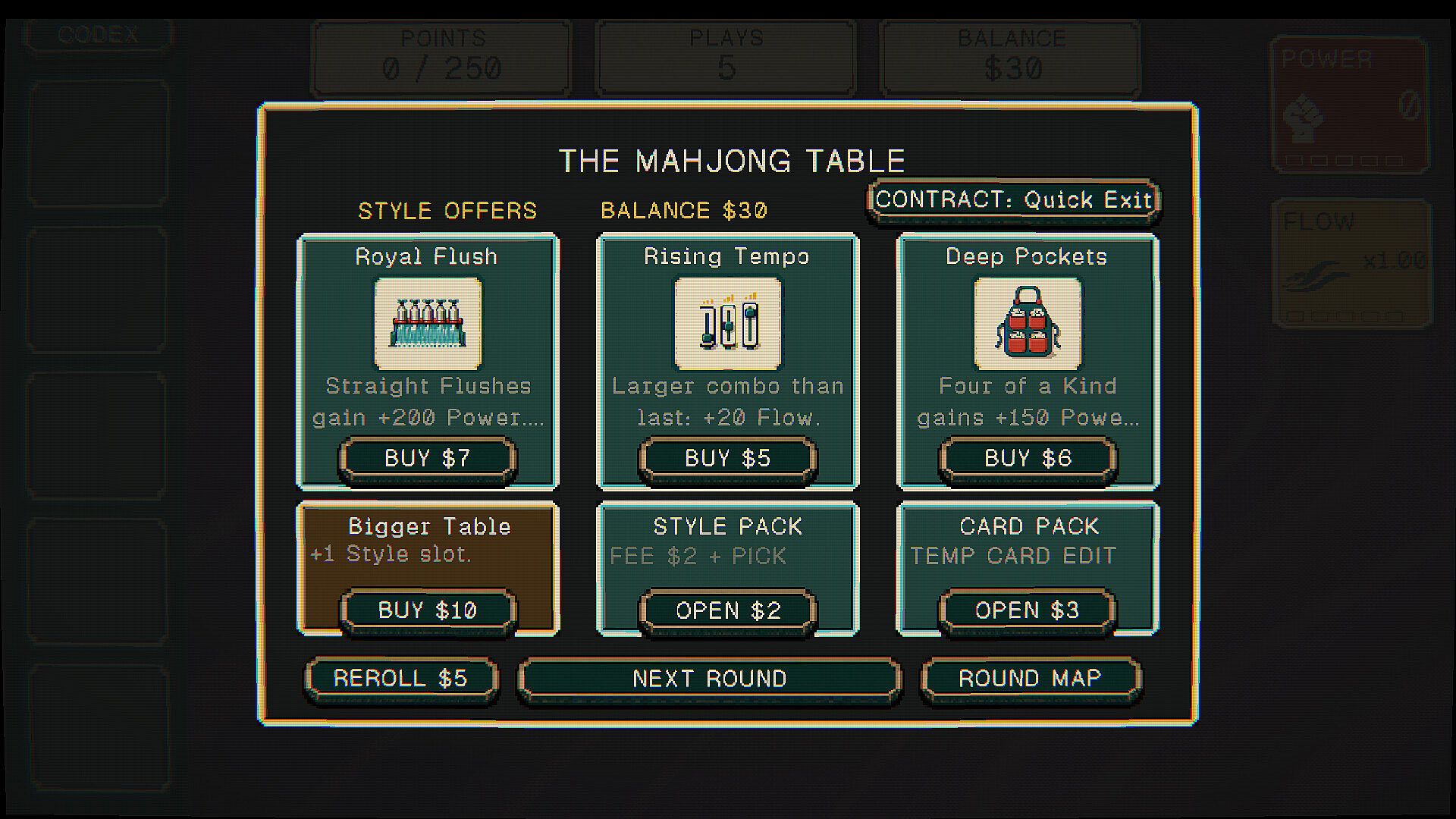
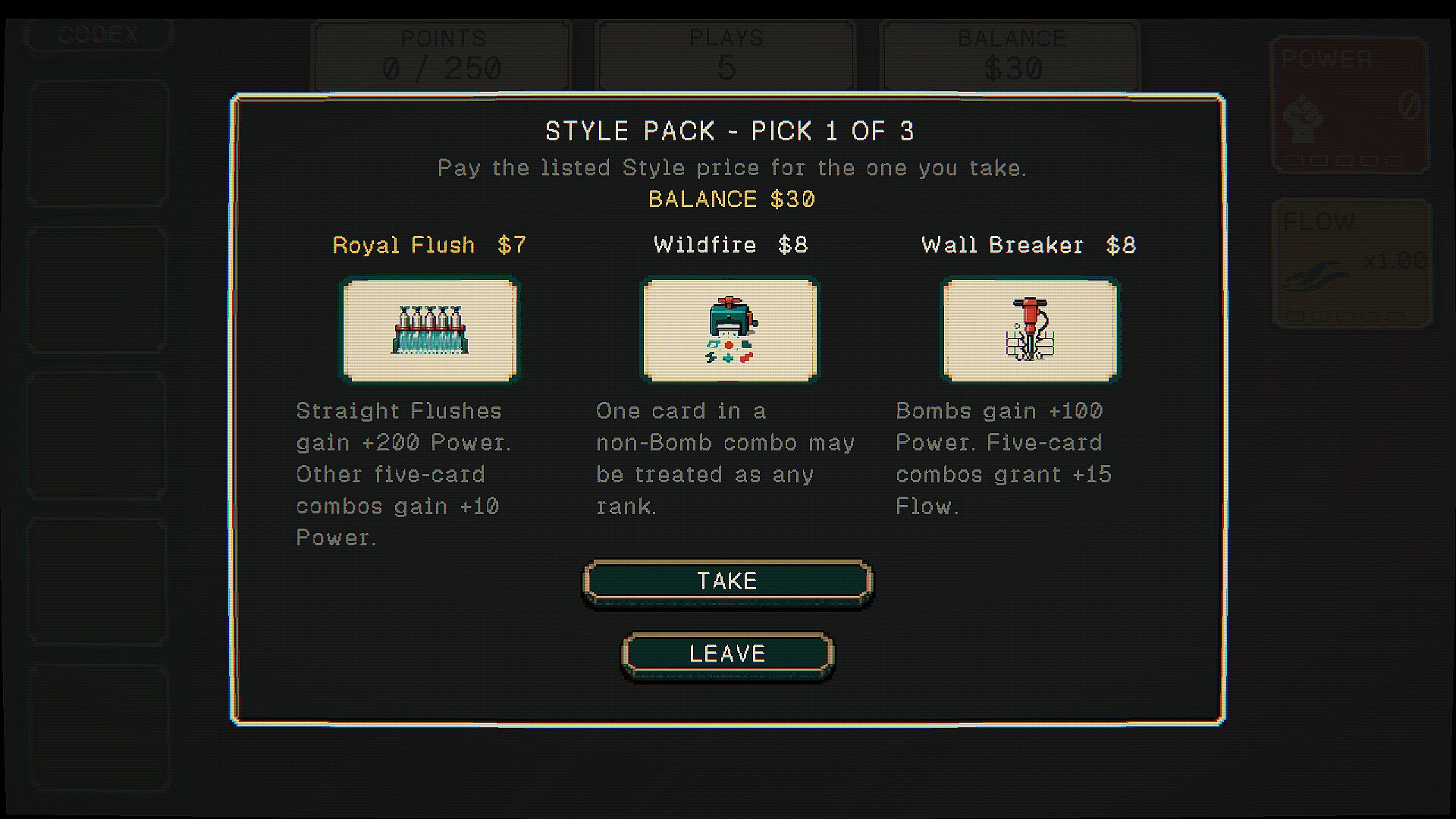
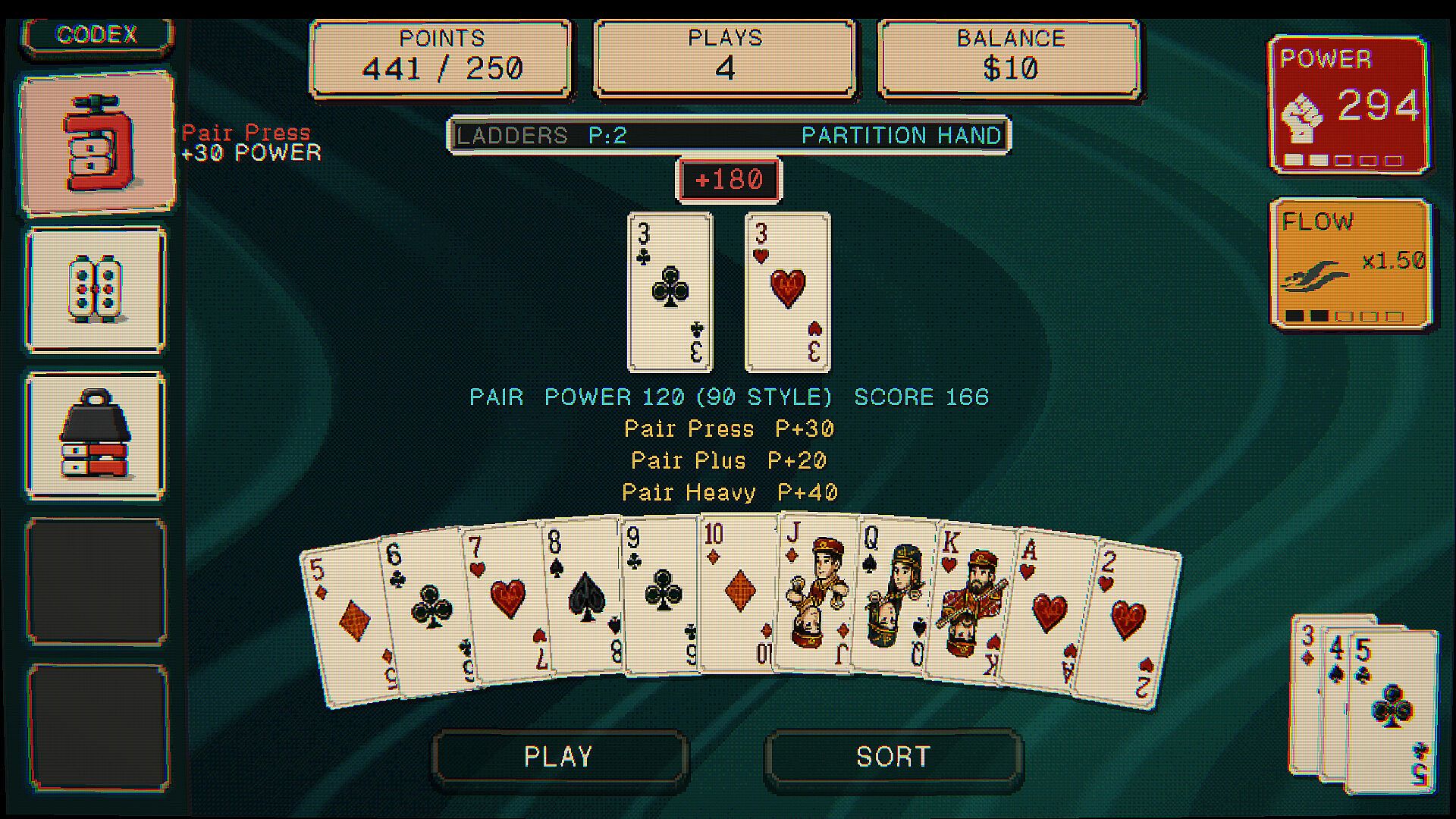
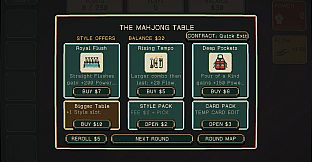
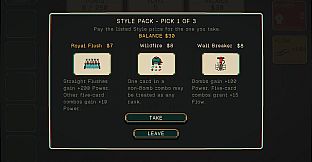
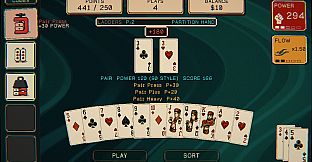
Between rounds, players allocate earnings to Style cards that modify hand splitting, scoring calculations, sequencing options, economy management, and direct card manipulation. Examples include converting a triple plus a stray card into a Cracked Bomb, substituting ranks within straights, or merging two pairs into a single four-card play. This progression layer builds depth across runs while keeping every decision tied to the core combo system.
Progression and Style Cards
Style cards form the primary avenue for long-term growth. They expand possibilities in grammar, scoring, sequencing, economy, and manipulation, allowing players to reshape how hands are evaluated and played. Over multiple runs, these purchases create varied approaches to the same base rules, such as altering straight formations or introducing new bomb variants. The system encourages experimentation with different card effects to overcome escalating targets and boss-imposed restrictions.
Difficulty scales through higher score requirements and the addition of boss constraints that disrupt normal play patterns. Missing targets consistently ends runs, reinforcing the need for efficient combo construction and Flow maximization in every round. This structure keeps focus on hand optimization rather than external competition.
Scoring and Strategy
Scoring revolves around Power from played combos multiplied by Flow from ladder climbs and bomb usage, offset by penalties for leftover cards. Strategic emphasis falls on timing 2 Links and finishers to amplify multipliers while minimizing waste. True Hong Kong Big Two rules govern all combinations, including straights, flushes, full houses, and bombs, with 2s providing unique Link and closing opportunities.
Effective play requires balancing immediate combo value against future Flow potential and the constraints of the current budget. Style cards further layer decisions by rewriting split rules or adding manipulation tools, turning each run into a test of adaptive partitioning and ordering skills.
Is It Worth Playing?
DaiDee 大弟 suits players who enjoy puzzle-oriented card games and roguelike progression without multiplayer elements. The absence of opponents shifts attention entirely to hand construction and sequencing within Big Two rules, appealing to those who prefer solitary optimization challenges. Style card upgrades and boss constraints provide meaningful variety across runs for anyone drawn to systems that reward precise planning and adaptation.
The game delivers a focused experience built on authentic Hong Kong Big Two grammar, making it a strong fit for fans of strategic card partitioning and escalating difficulty in a single-player format. Those seeking traditional competitive play or broader multiplayer options may find the solo emphasis limiting, but the core loop of building Flow through ordered combos offers consistent depth for the right audience.