

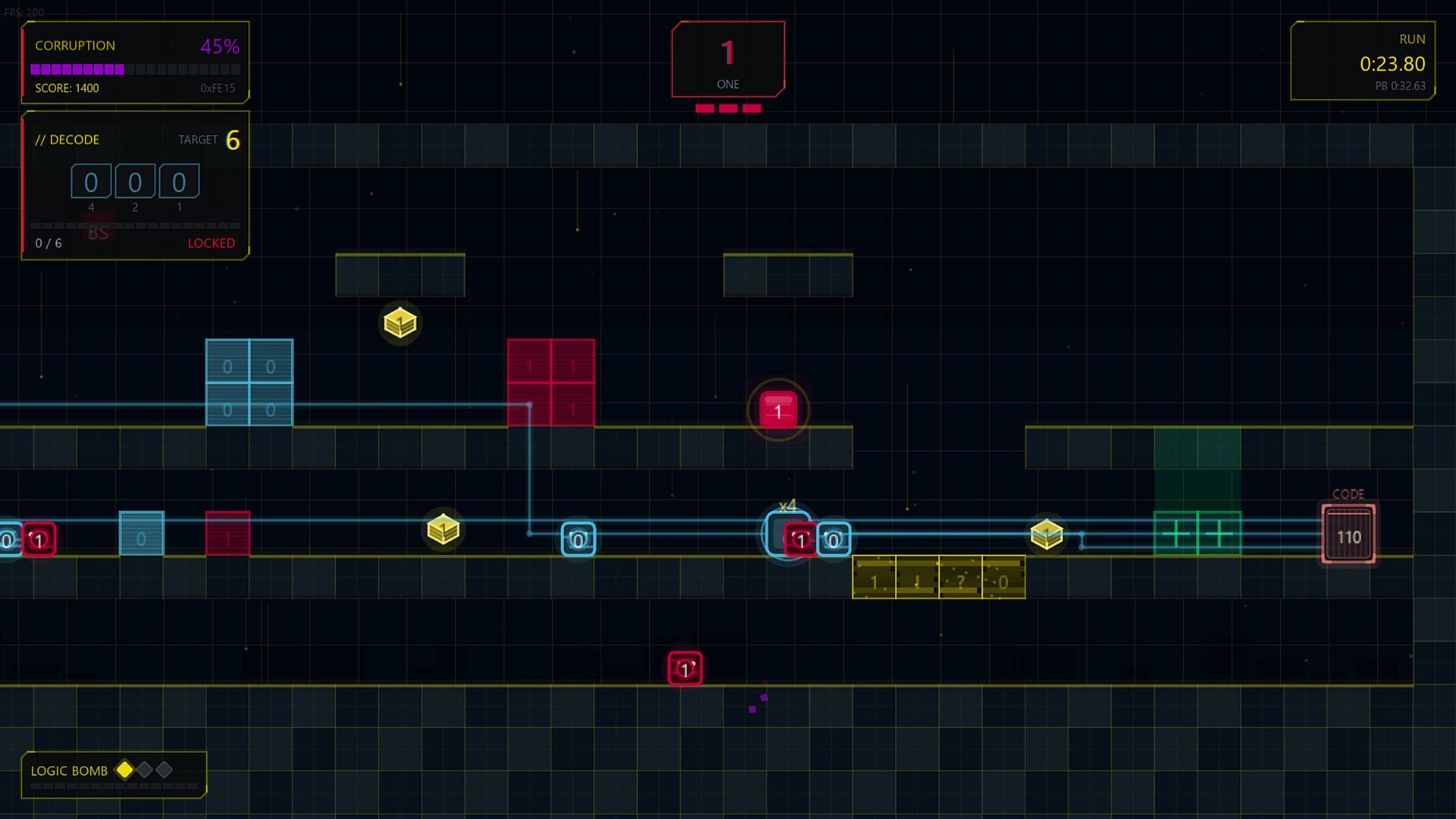
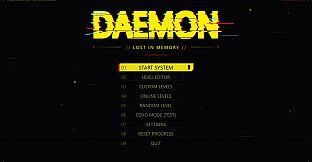

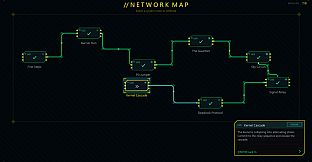
Daemon: Lost in Memory is an indie puzzle platformer for PC in which players control a single sentient data bit navigating unstable digital environments. The core premise places the player as an anomaly inside a failing mainframe where anti-virus routines pursue the bit through corrupted sectors. Survival depends on flipping between binary states of 0 and 1 to alter interactions with barriers, enemies, and logic systems while solving numerical locks and escaping erasure.
Gameplay
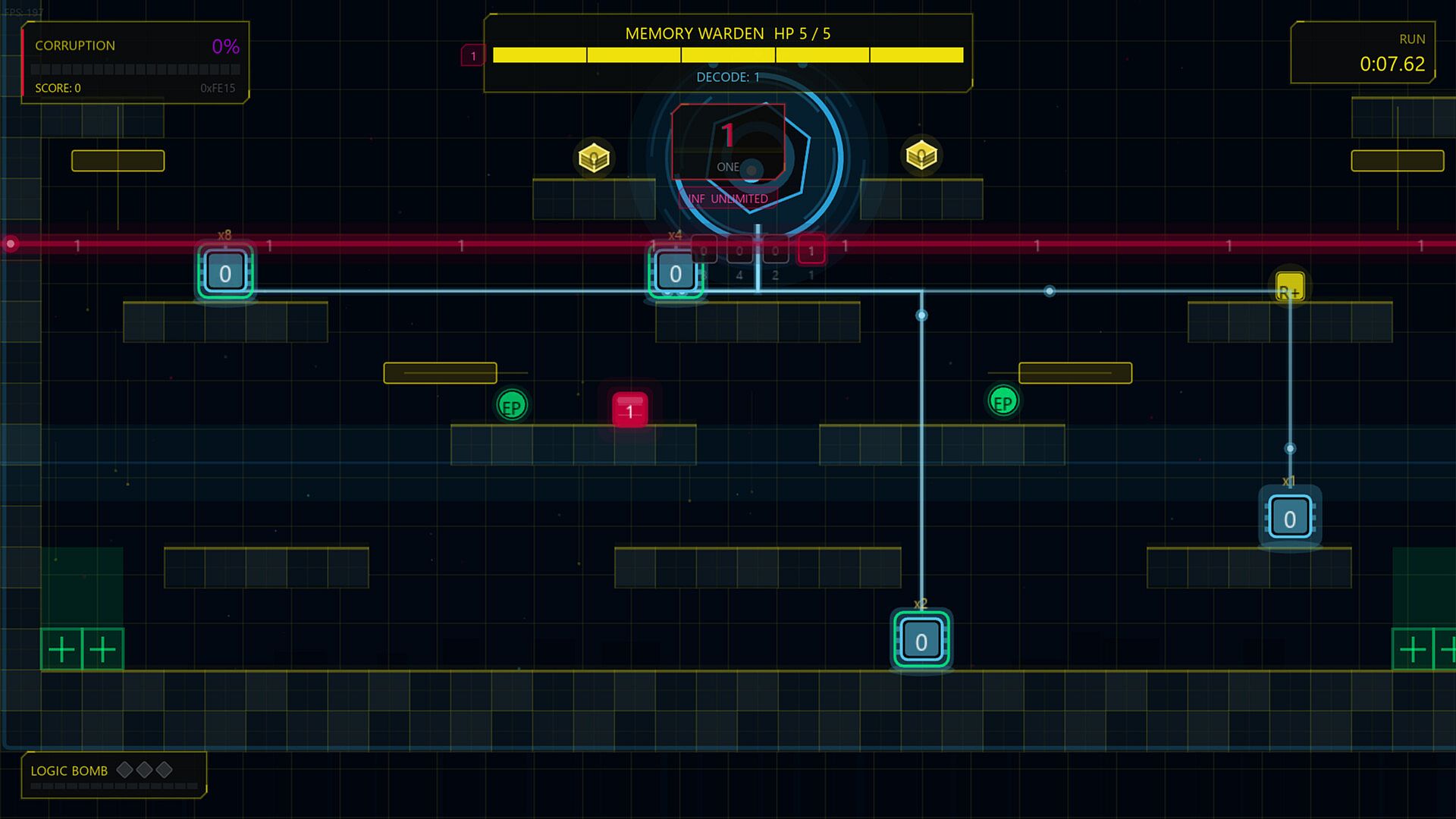
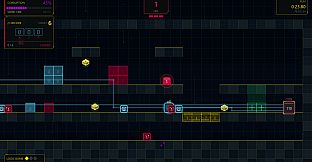
The central mechanic revolves around binary polarity. Cyan barriers block a 1-state bit but allow passage for a 0-state bit, while magenta barriers reverse this rule. Players switch states mid-movement to phase through color-coded obstacles and avoid matching the polarity of pursuing enemies. Bit nodes scattered across sectors carry values of 1, 2, 4, or 8. Stamping the current state onto these nodes accumulates a total that must match an exit code to open portals.
Logic gates including AND, OR, NOT, XOR, NAND, and NOR appear as environmental wiring that players must interpret or manipulate through terminals. Additional hazards such as timed laser grids and decaying sectors force precise timing and state management. Enemy types like Phasers, Seekers, Splitters, and Shields each require distinct applications of the same polarity system. Deeper progression introduces boss encounters structured as armored logic puzzles against the Memory Warden, Stack Overflow, the Firewall Sentinel, the Rootkit Phantom, and the Malware Core.
Game Modes
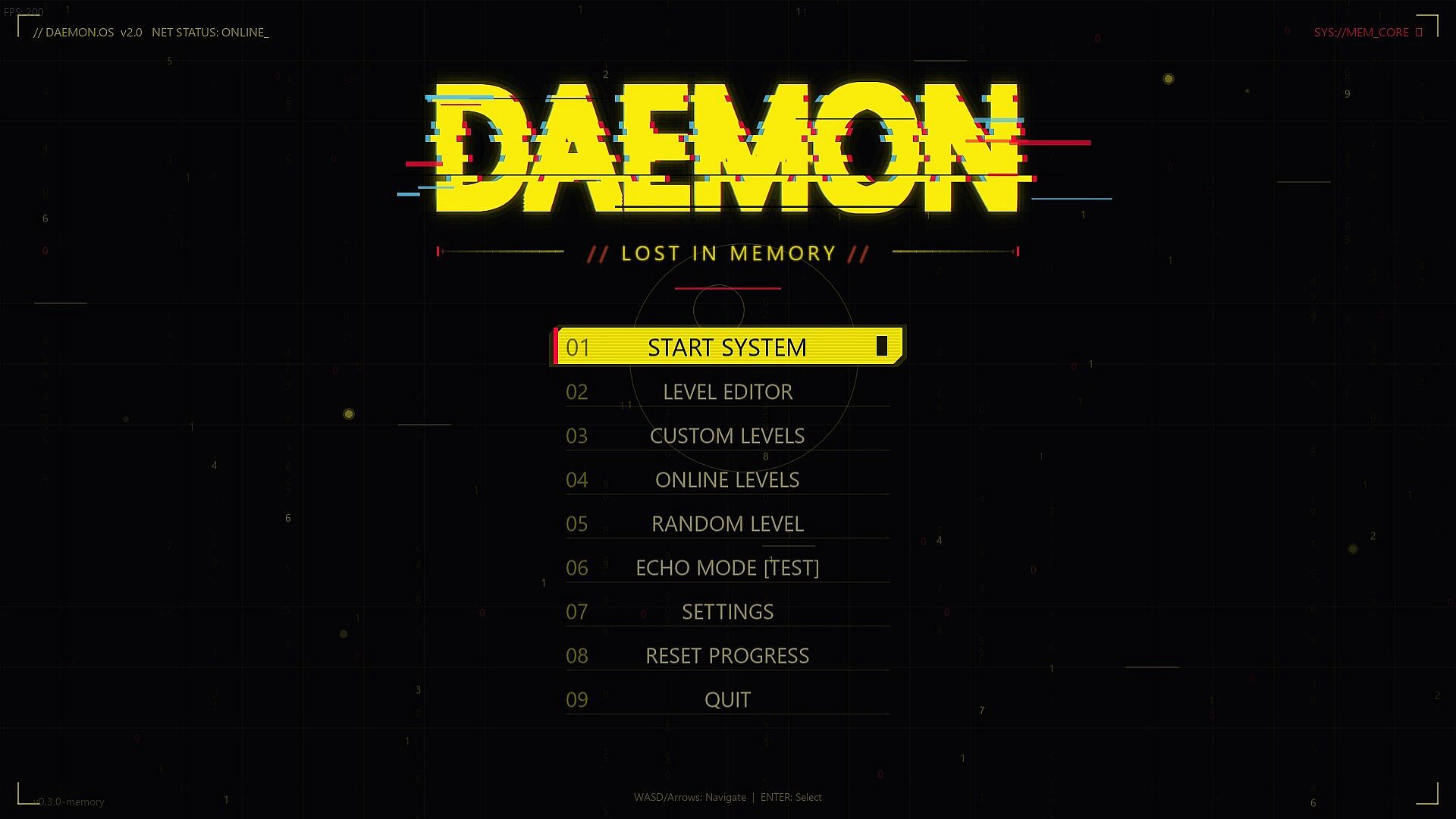
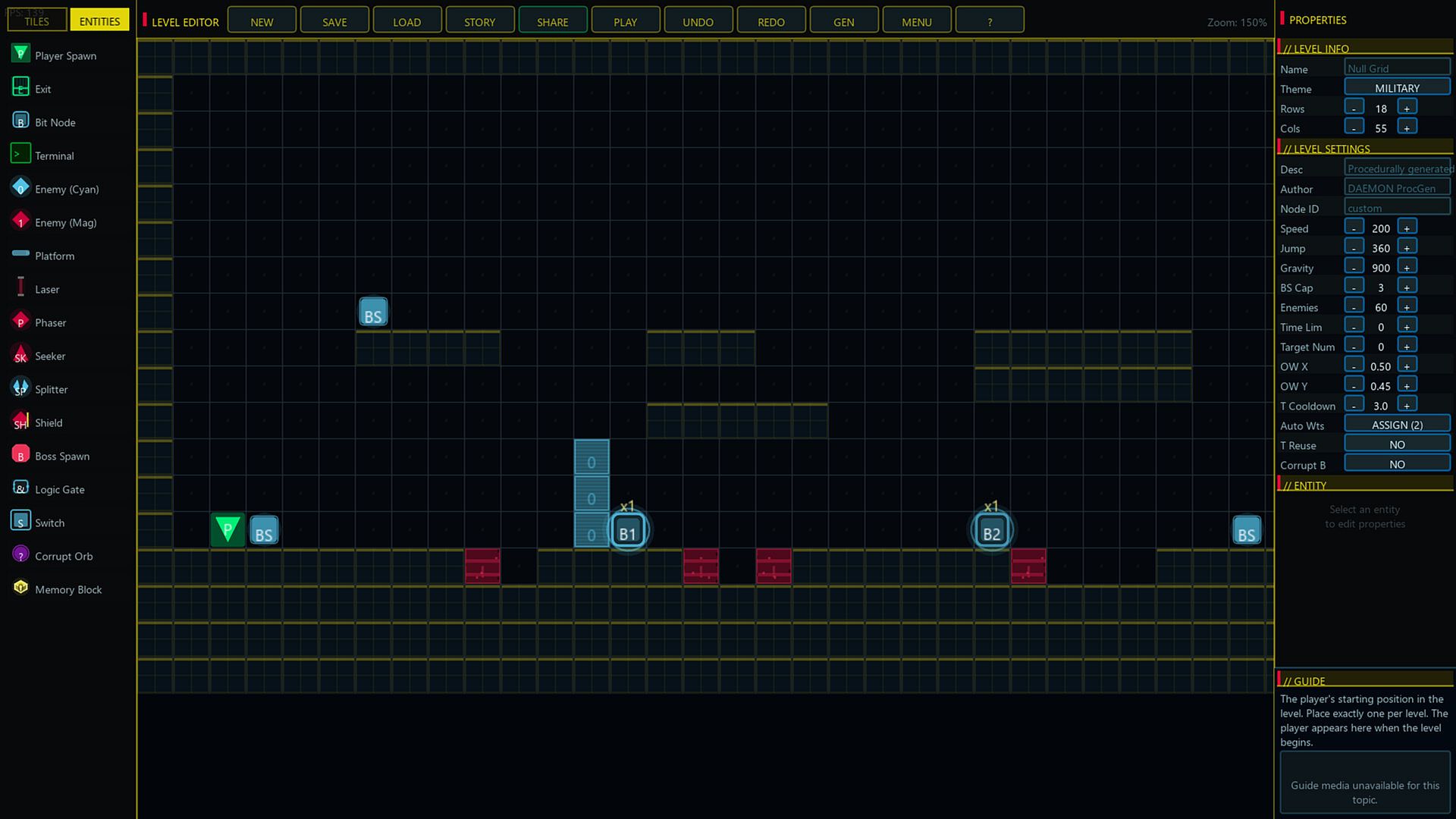
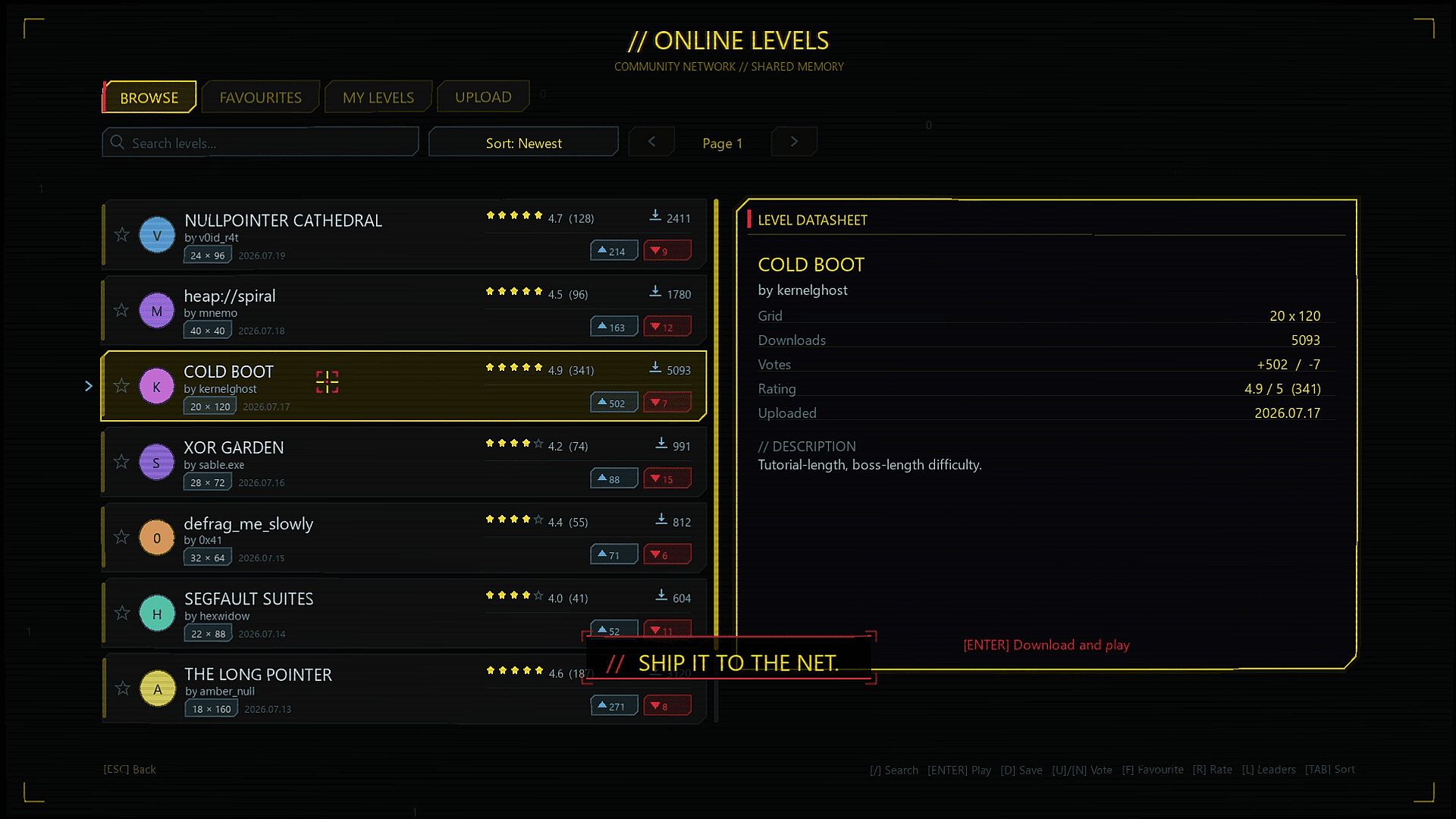
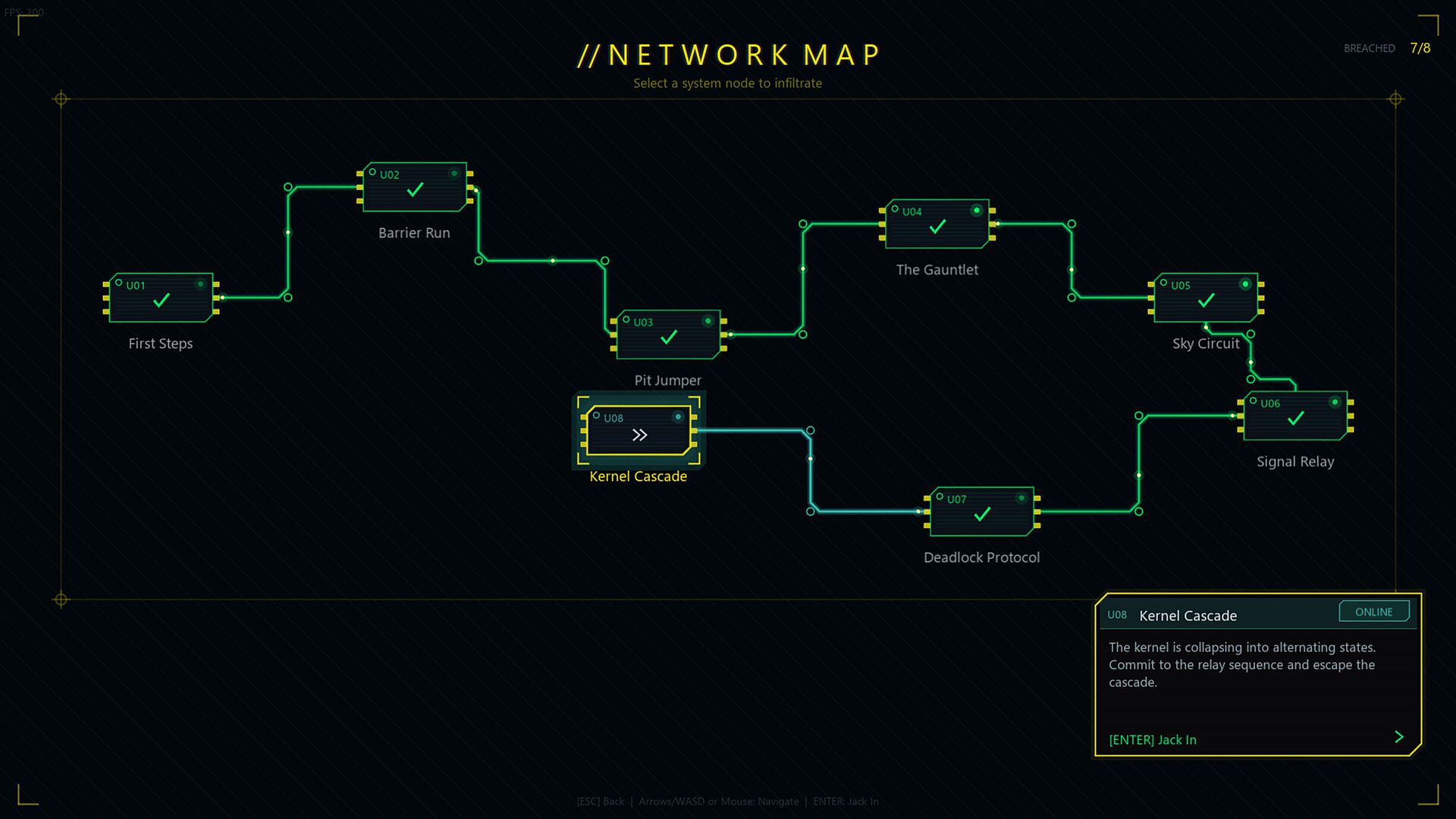
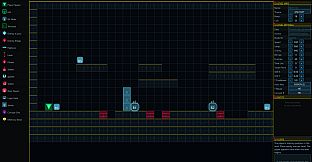
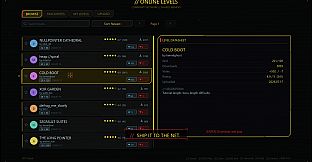
The primary experience consists of a linear campaign of hand-crafted sectors that introduce and layer these binary and logic mechanics. A built-in level editor identical to the one used for the campaign allows players to paint grids, position enemies and platforms, connect logic gates, and adjust physics parameters before immediate playtesting. Published levels from the community become available through an in-game browser where users can download, rate, and compete on leaderboards.
Procedural generation provides unlimited additional sectors selectable at easy, medium, or hard difficulty. Each generated sector undergoes automated verification for solvability before delivery to the player, with regeneration occurring if no solution exists. These modes operate entirely in single-player, with no multiplayer components present.
Level Creation and Sharing
The integrated editor supports full campaign-style construction without external tools. Users place moving platforms, lasers, terminals, and gates, then link them in a dedicated mode before testing directly. Completed levels upload from the menu for others to access, rate, and favorite. Leaderboards track performance across both official and community content, encouraging repeated attempts and optimization.
Additional options include a runtime-synthesized soundtrack that generates tracks on the fly across three theme packs, full controller support throughout gameplay and editing, colorblind modes with adjustable themes, and toggles for screen shake and CRT effects. The game supports five languages for interface, audio, and subtitles.
Is It Worth Playing?
Daemon: Lost in Memory targets players who enjoy precise puzzle platformers built around binary state switching and logical problem solving. The combination of polarity flipping, numerical bit summation, and gate interpretation creates a consistent core loop that escalates through environmental hazards and boss encounters. The included editor and community sharing extend replayability beyond the campaign, while procedural generation ensures fresh content remains available.
With no user reviews available prior to release and the game listed as coming soon, suitability depends on interest in single-player logic challenges and creative tools rather than established community feedback. The feature set of achievements, per-level statistics, and accessibility options supports extended engagement for those drawn to the mechanics described.