







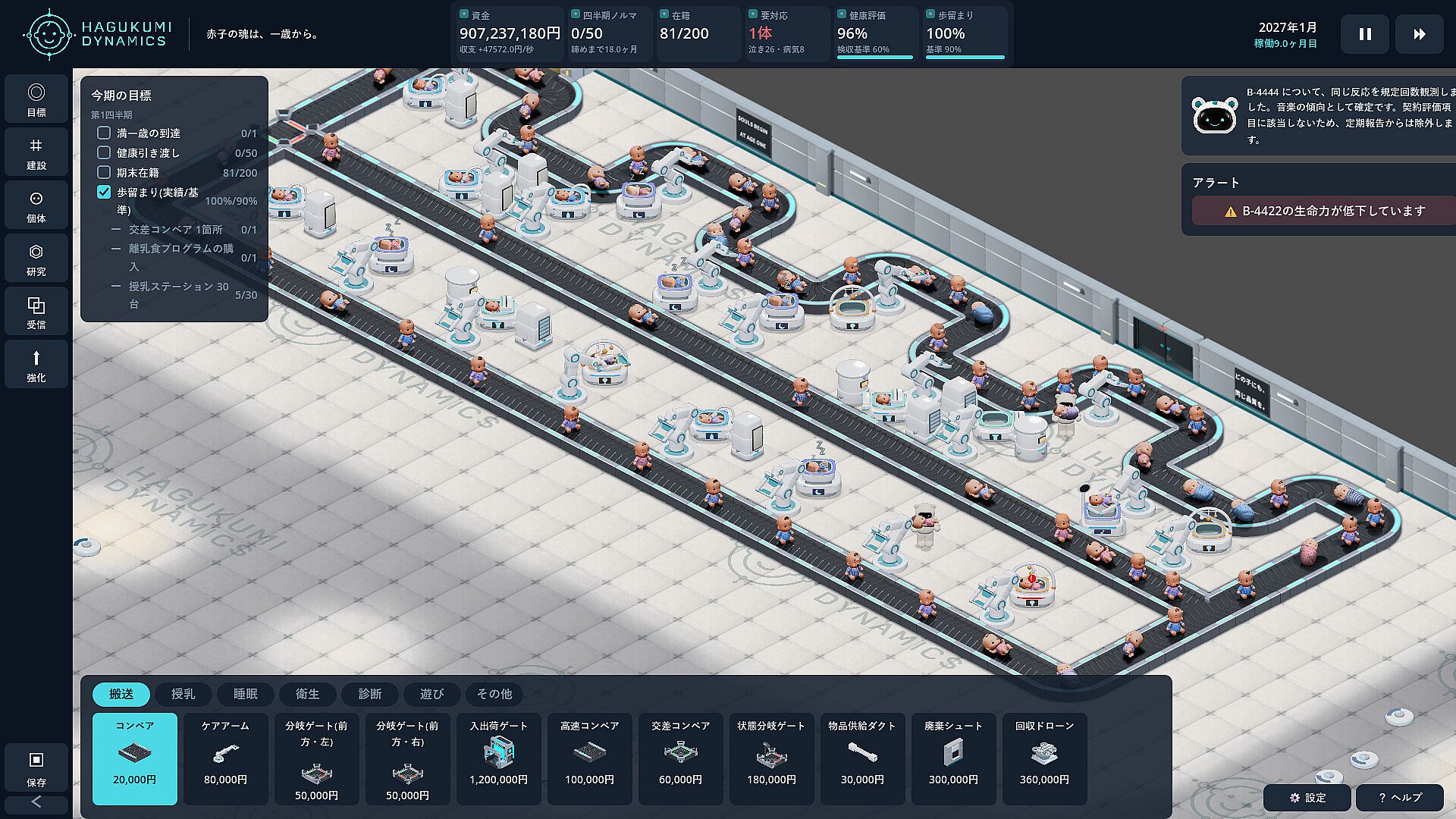
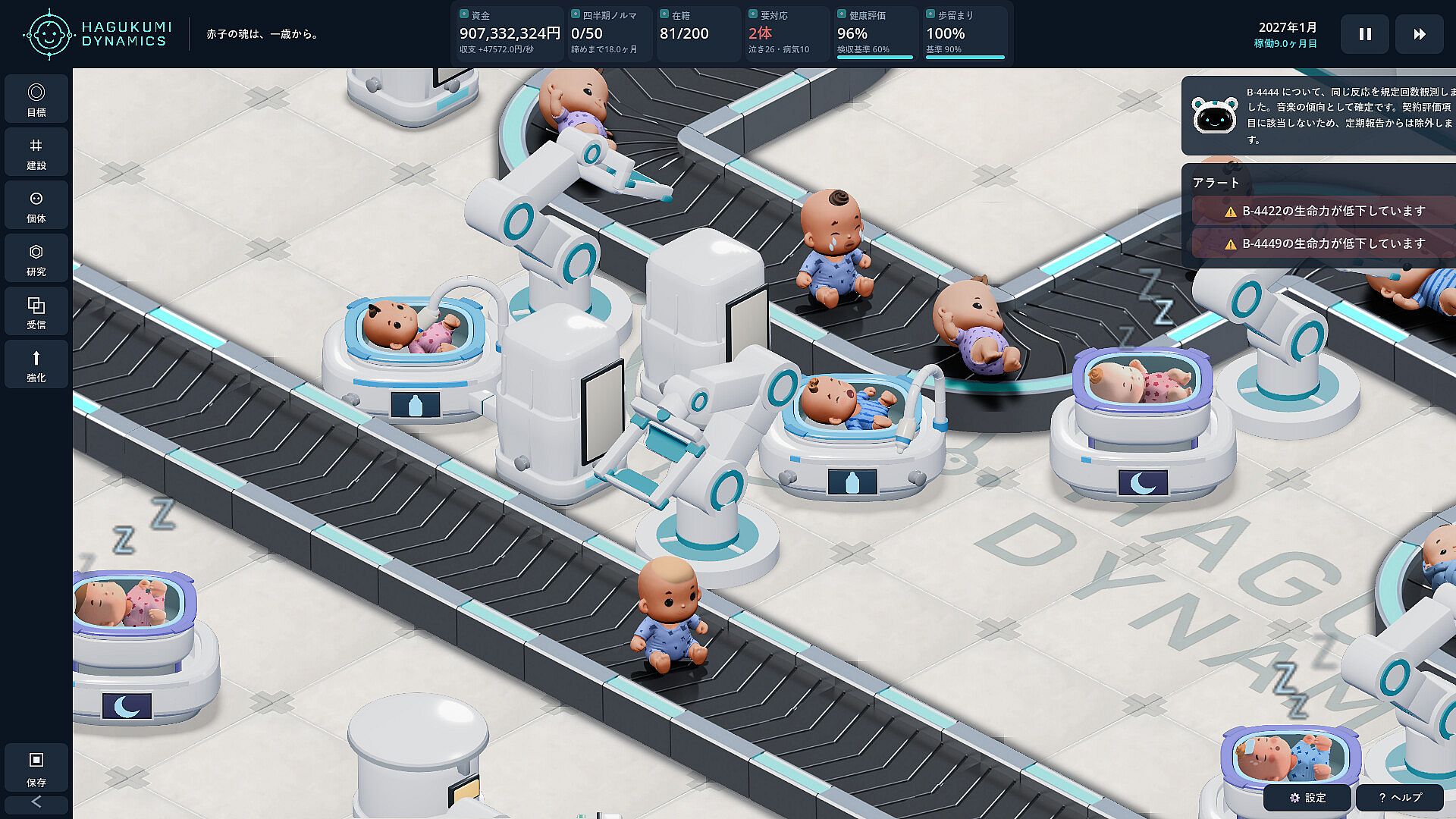
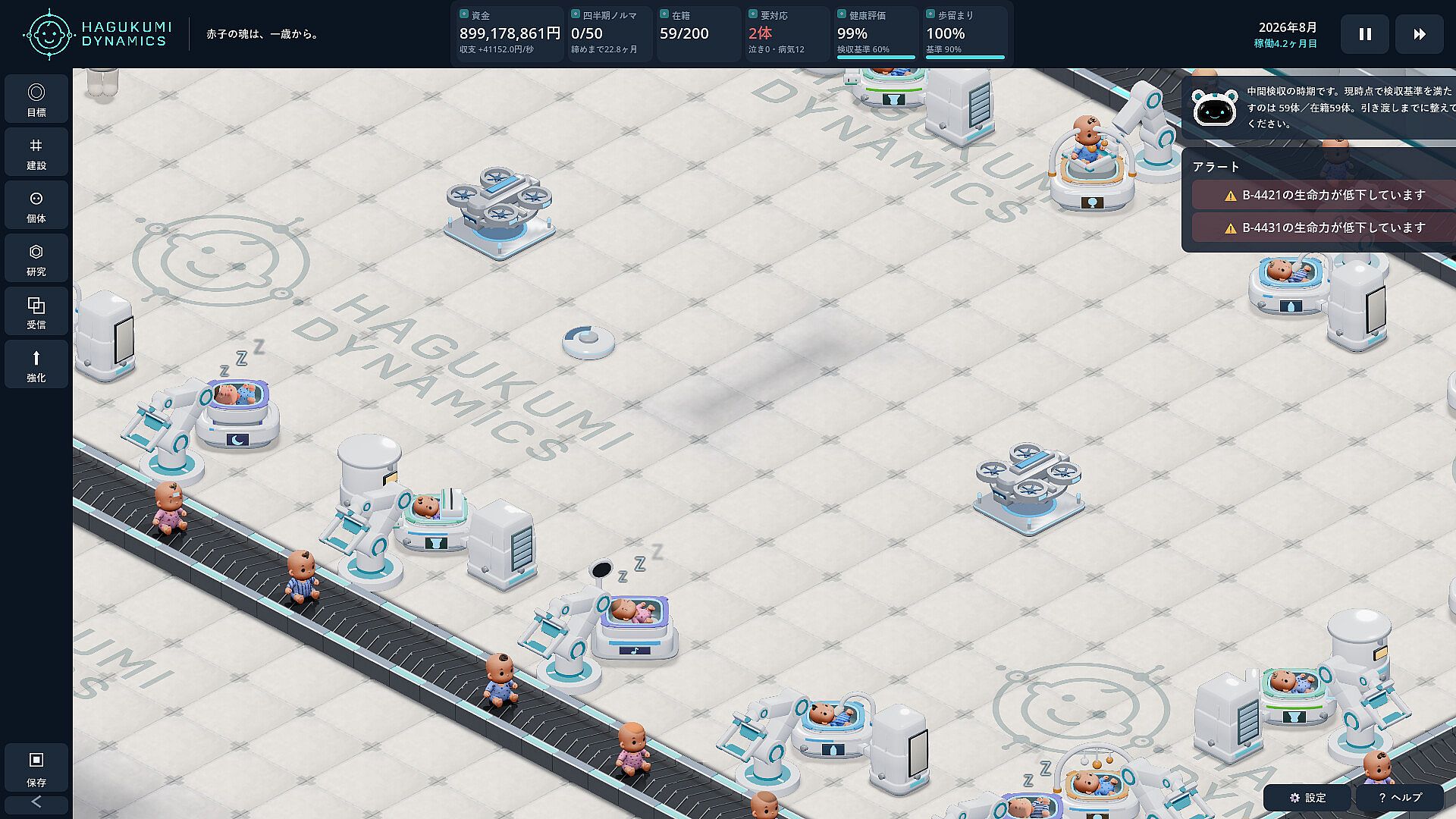
CRADLE PLANT: First Year Operations is an indie simulation game centered on factory automation for infant care. Players manage a specialized facility that handles feeding, sleep, hygiene, and health needs for babies from birth through their first year, allowing parents to maintain work schedules in a near-future setting where dual-income households predominate.
Gameplay
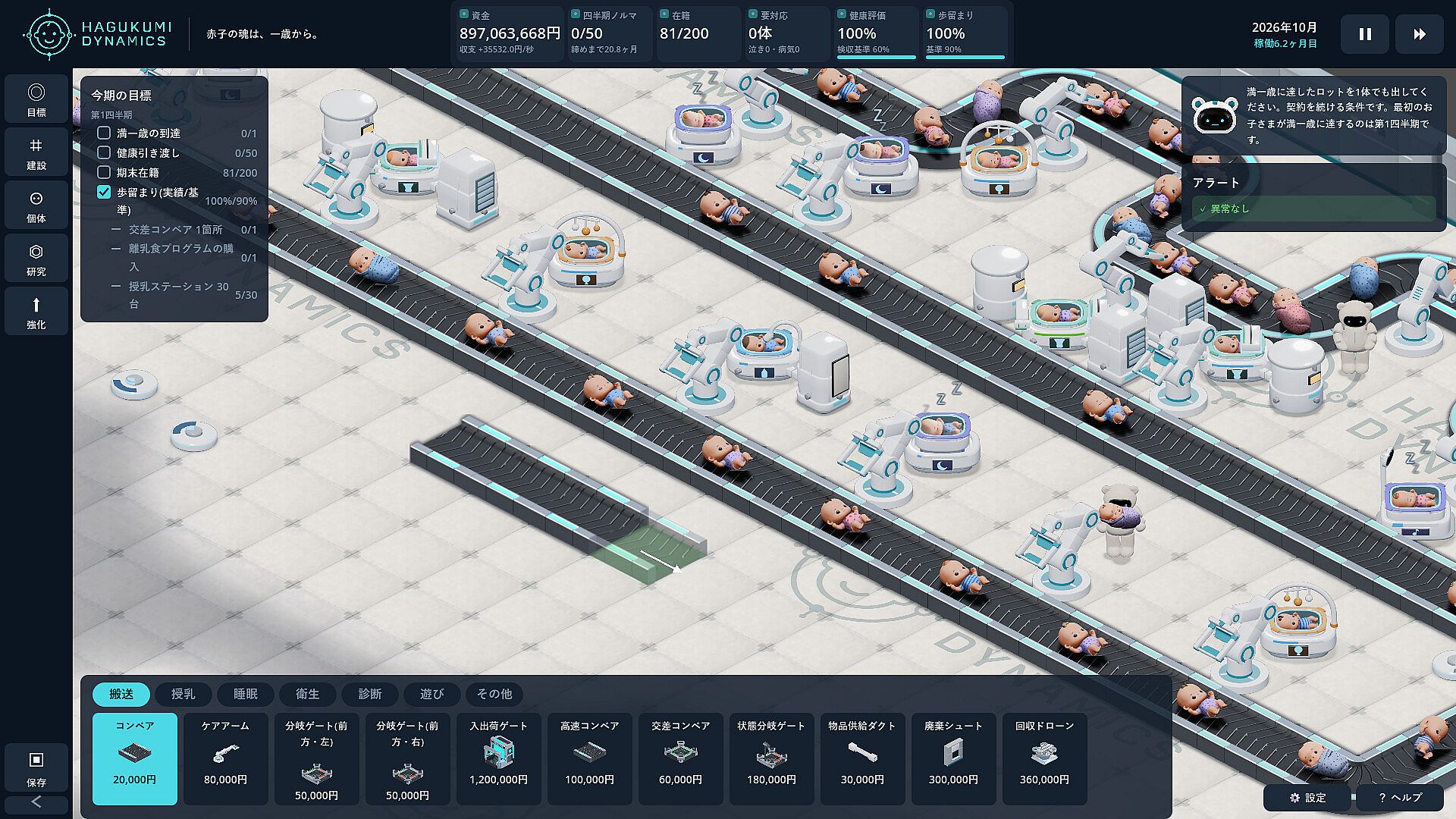
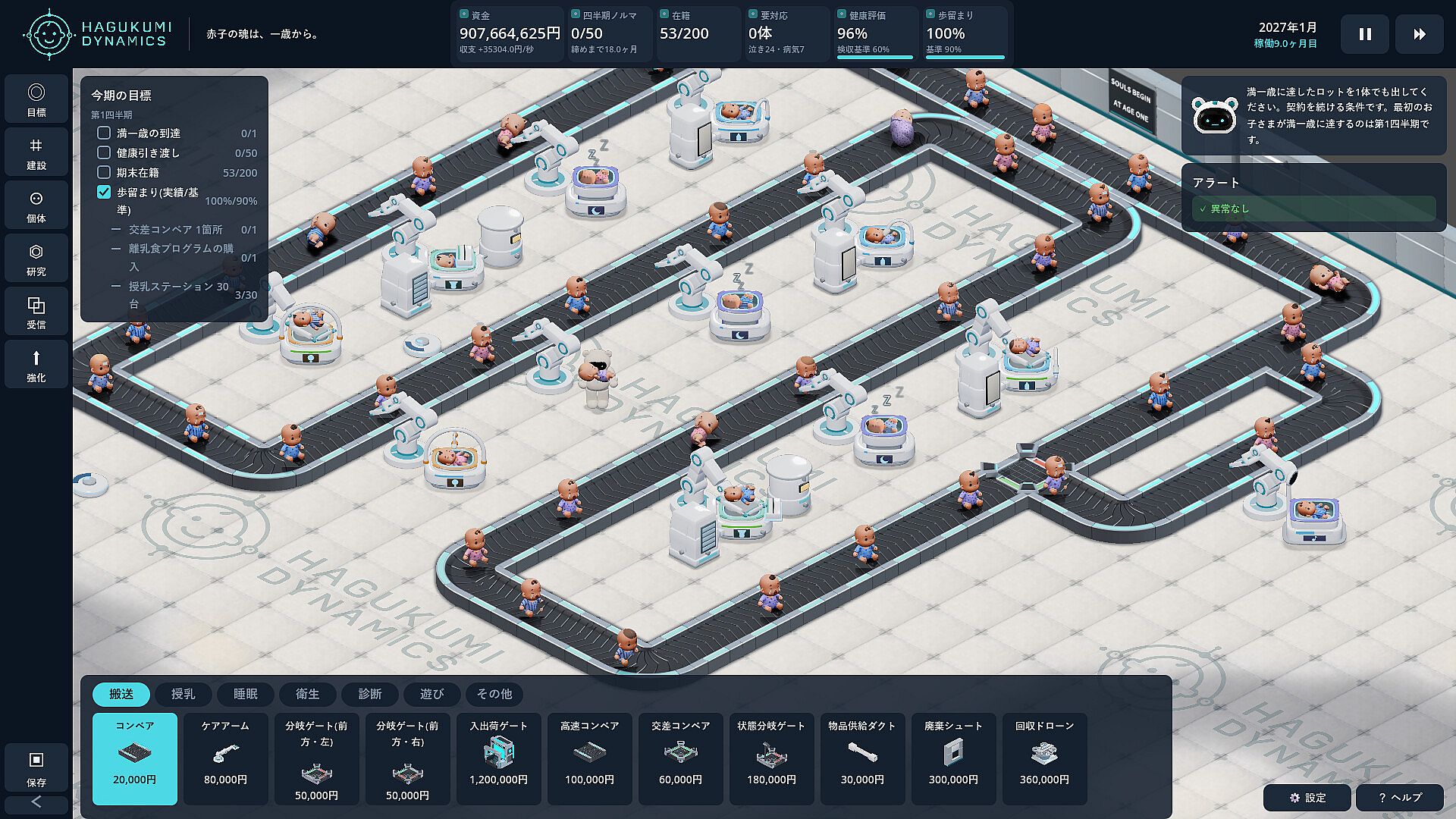
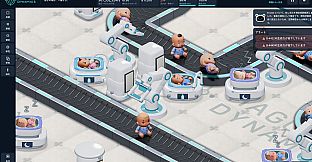
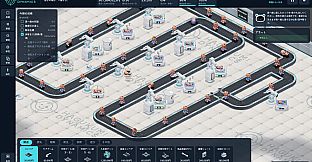
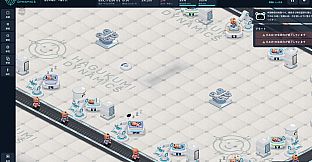
The core loop revolves around observing babies, identifying needs such as hunger, fatigue, or discomfort, and directing them through appropriate care stations. Early stages require direct intervention for each instance of distress, with manual routing to feeding areas, beds, or treatment zones. As volume increases, the emphasis shifts toward building automated systems using sensors, routing gates, and mechanical arms that replicate those initial decisions without ongoing player input.
Babies progress through developmental stages inside the facility, altering their requirements over time. Newborns demand frequent feeding sessions and extended rest periods, while older infants within the first year require additional elements like playtime, sensory stimulation, weaning processes, and illness prevention. Growth occurs on a fixed timeline that cannot be accelerated, so success depends on maintaining reliable throughput across multiple infants simultaneously rather than rushing individual cases.
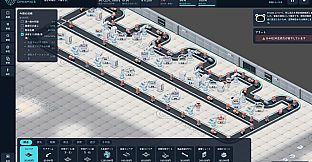
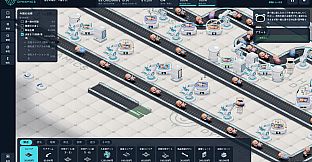
Expansion involves layering new pathways onto existing infrastructure without disrupting stable operations. Facilities must accommodate shifting demands as the population of babies matures, requiring ongoing adjustments to routes and equipment. Personalization adds another layer, as individual infants respond differently to environmental factors like quiet spaces, group settings, rocking motions, music, or tactile contact. Tailored setups improve outcomes for specific cases but demand more space and resources, forcing trade-offs against overall capacity and efficiency.
Game Modes
The experience centers on a single continuous campaign of facility design and refinement. There are no separate competitive or cooperative modes described, keeping the focus on iterative optimization within one shared environment. Players experiment with different layouts and automation priorities across repeated sessions on the same facility footprint, testing how well systems scale as baby needs evolve.
Progression emerges naturally from the growing demands of the population rather than from discrete levels or objectives. The absence of time pressure on individual babies encourages experimentation with routing logic and equipment placement to achieve stable, hands-off operation.
Is It Worth Playing?
This title suits players who appreciate methodical automation challenges where observation and system-building take precedence over direct action. The emphasis on adapting infrastructure to changing requirements and balancing standardization against individual needs creates a distinctive loop that rewards careful planning and incremental improvements.
Those drawn to simulation experiences that model real-world constraints, such as resource limits and developmental timelines, will find substance in the way care processes must evolve without shortcuts. The game avoids high-pressure production quotas in favor of sustainable reliability across an expanding group of infants, which appeals to builders who enjoy refining complex networks over long periods.
Overall, it offers a thoughtful take on the genre for anyone interested in the intersection of logistics and caregiving themes, provided the core idea of automating infant routines aligns with personal tastes in simulation design.











