





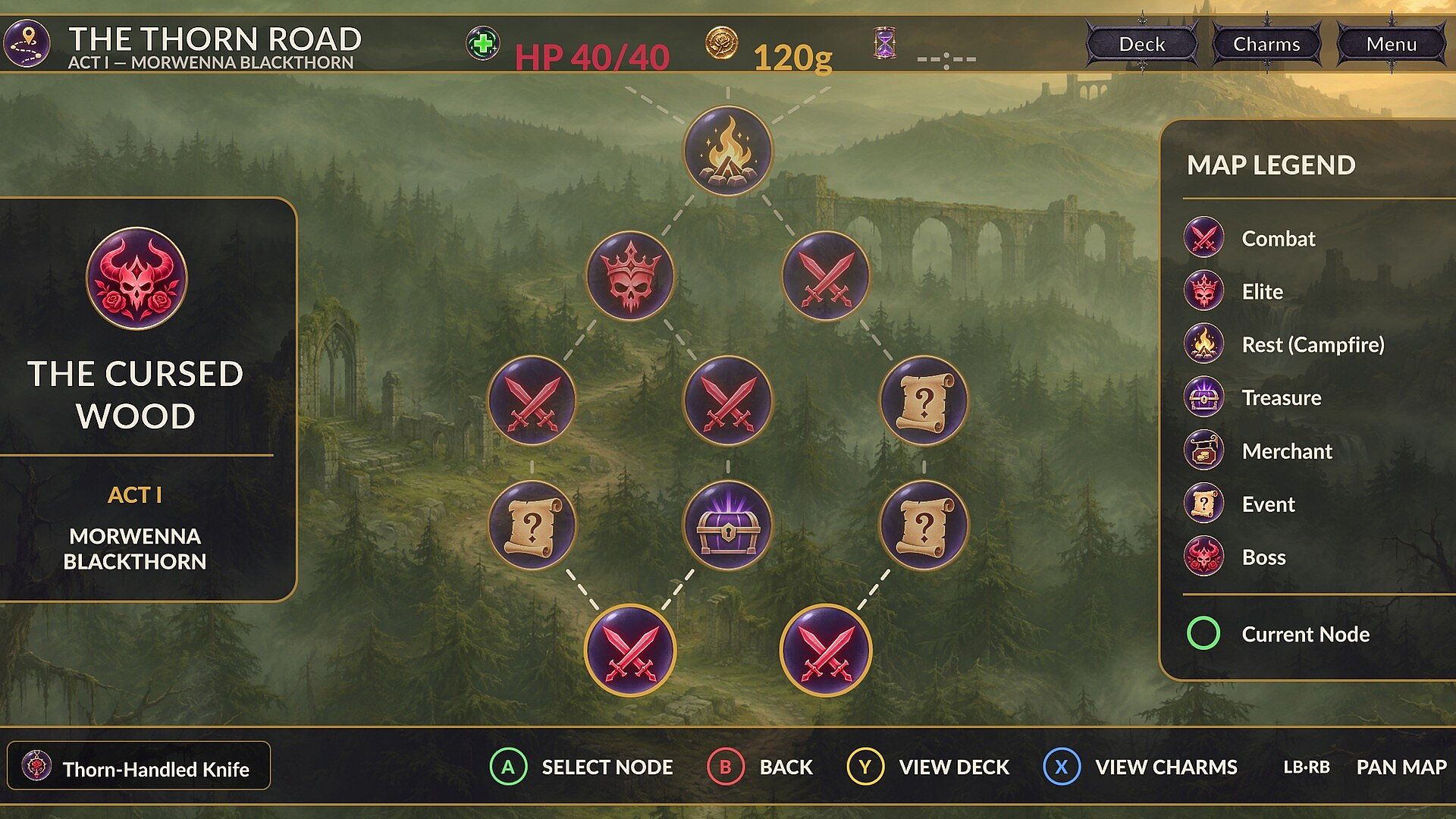
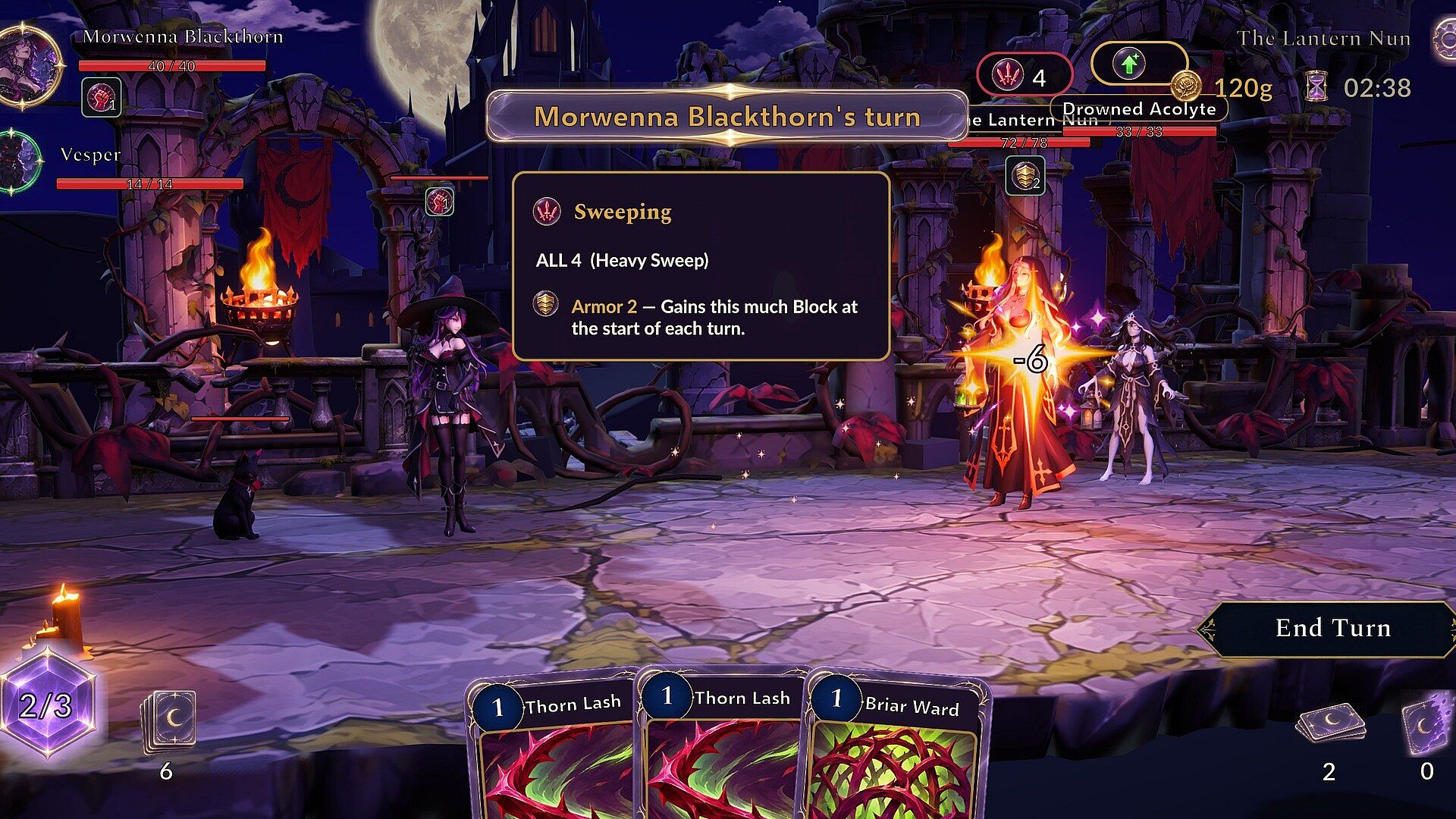
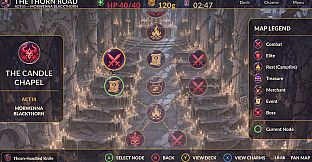
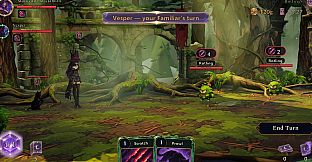
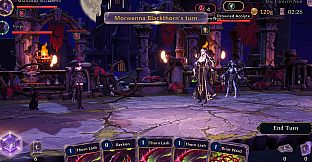

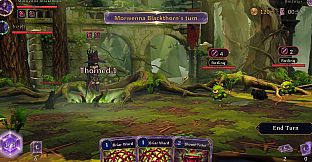

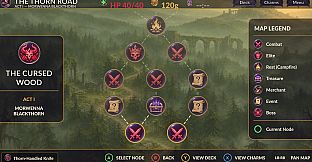
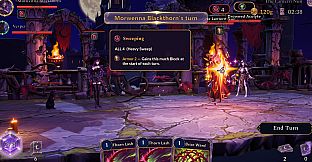
Coven of Thorns is a dark fantasy roguelike deckbuilder that blends strategy and role playing elements on PC. Players control one of five witches who return to a corrupted coven hill after an ancient entity known as the Root claims their home and loved ones. Each run involves climbing through nine floors of a branching map filled with combat, events, merchants, and campfires while managing a deck and a companion familiar that operates independently.
Gameplay
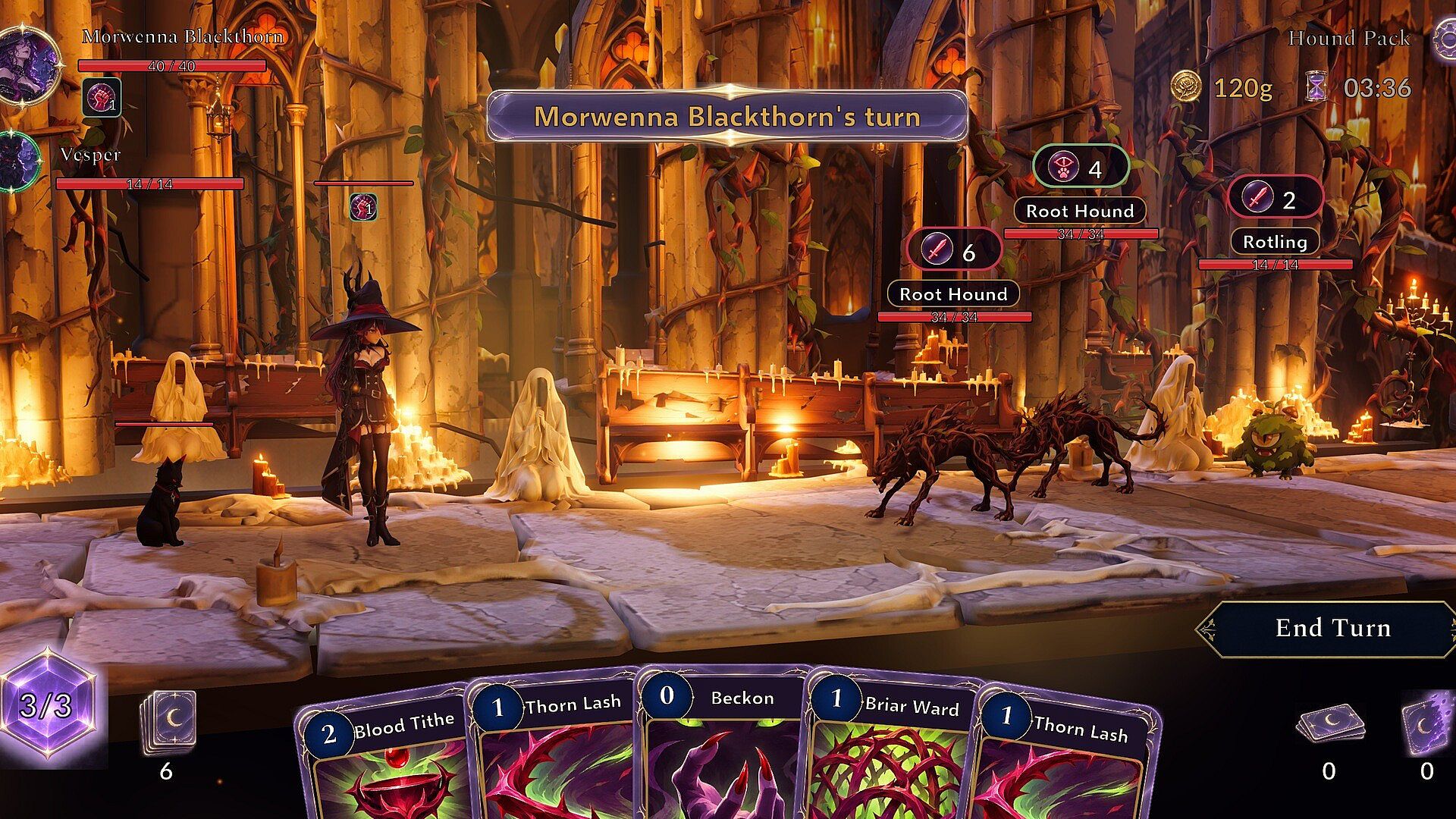
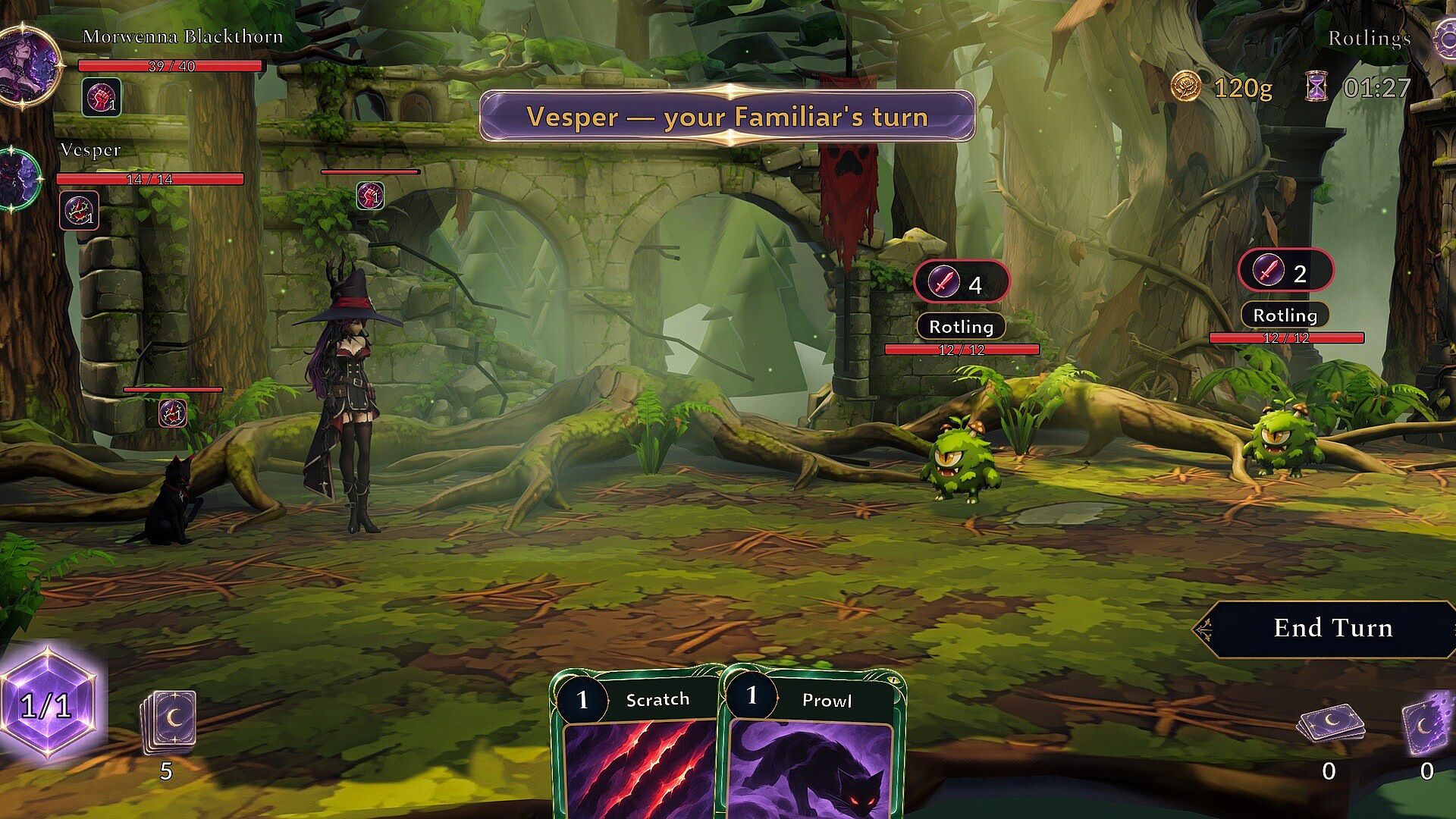
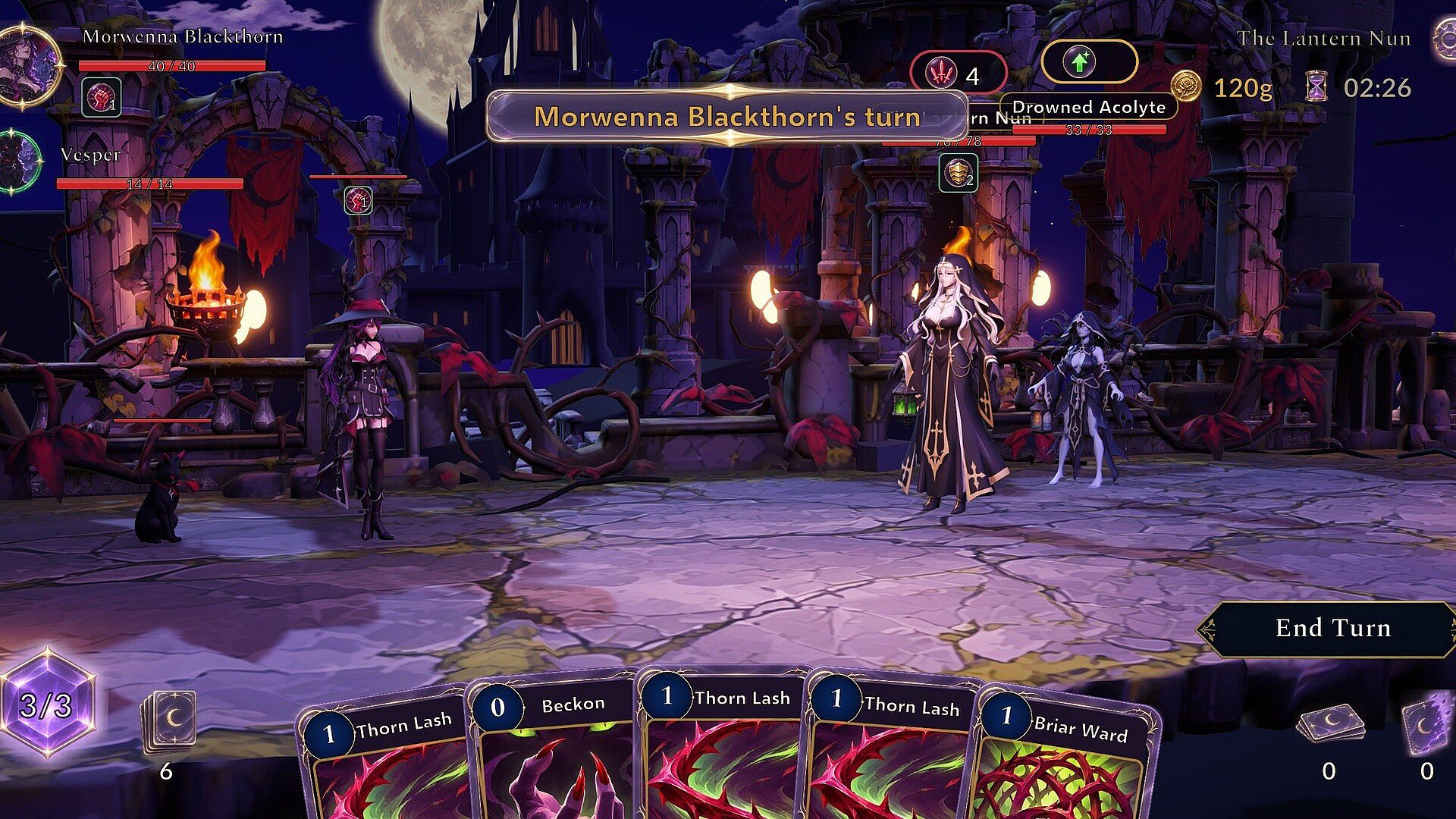
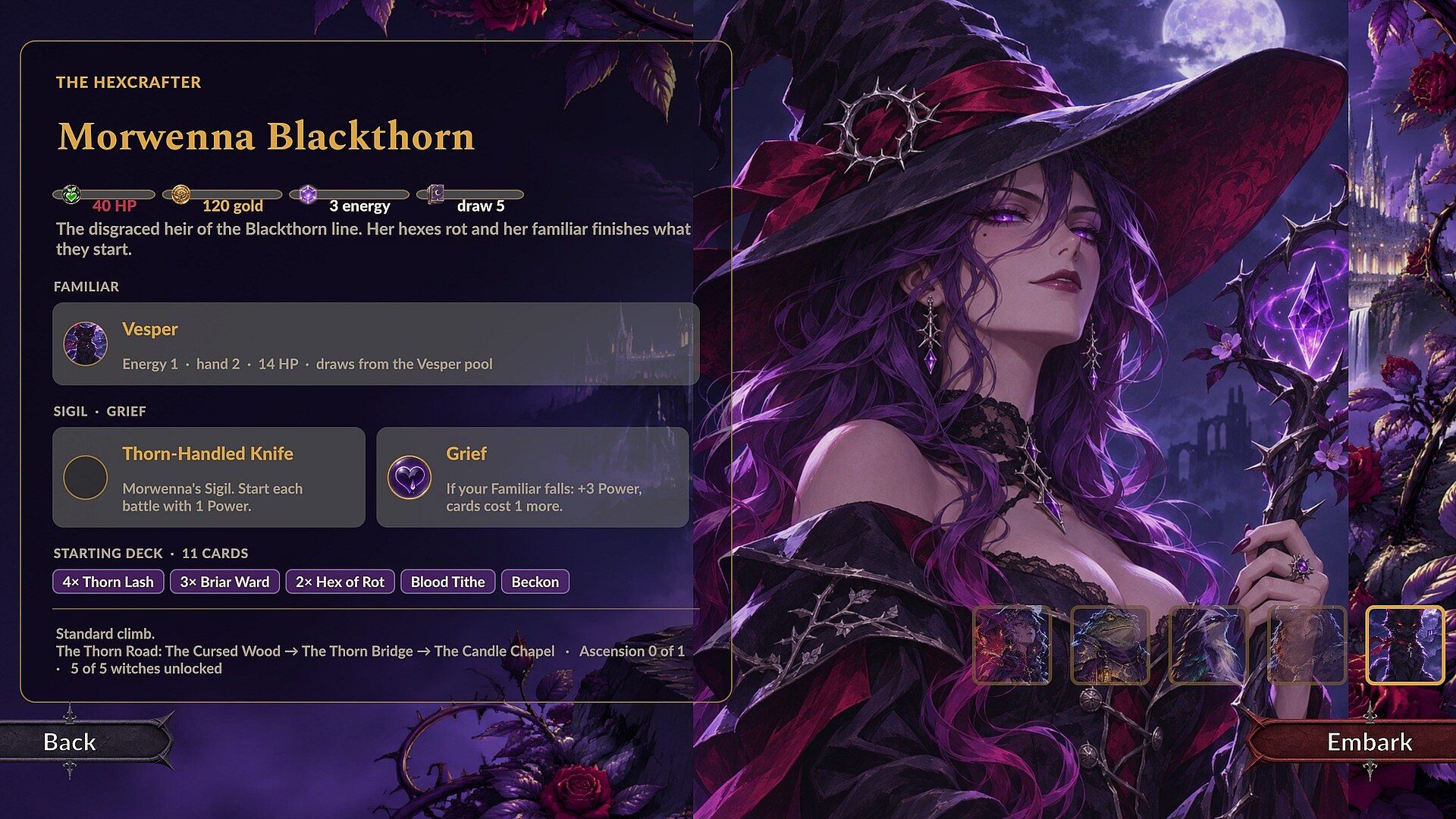
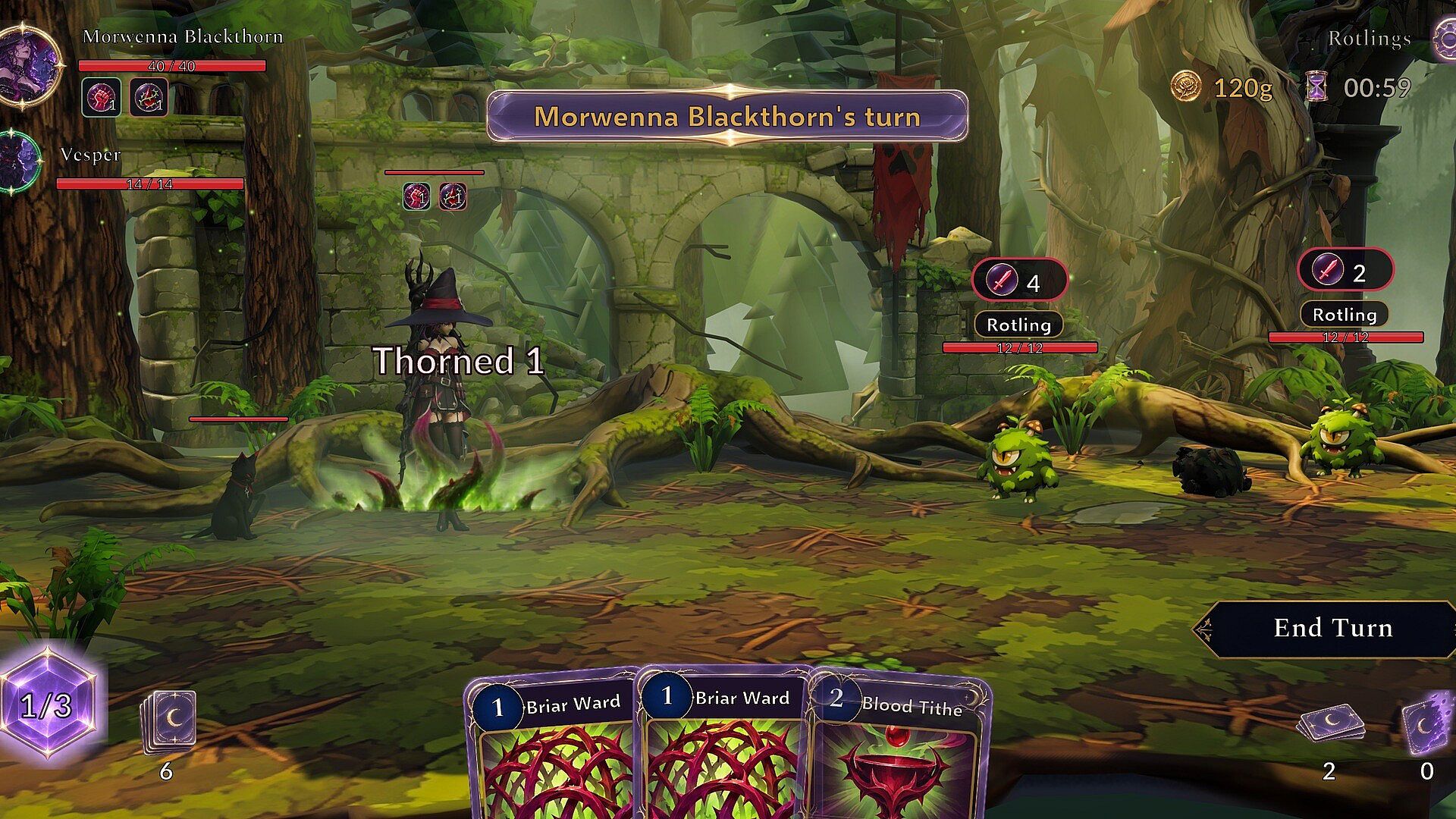
The core loop centers on turn based combat where the witch plays cards from her deck and then the familiar takes its own turn with separate cards and energy. This dual fighter system creates layered tactics as charms allow the pair to support one another through energy sharing or follow up attacks. The Root's creatures often target the familiar first, forcing players to balance offense with protection. If the familiar falls, the witch enters a Grief state that grants extra power at the cost of higher card expenses, turning survival into a deliberate choice between risk and reward.
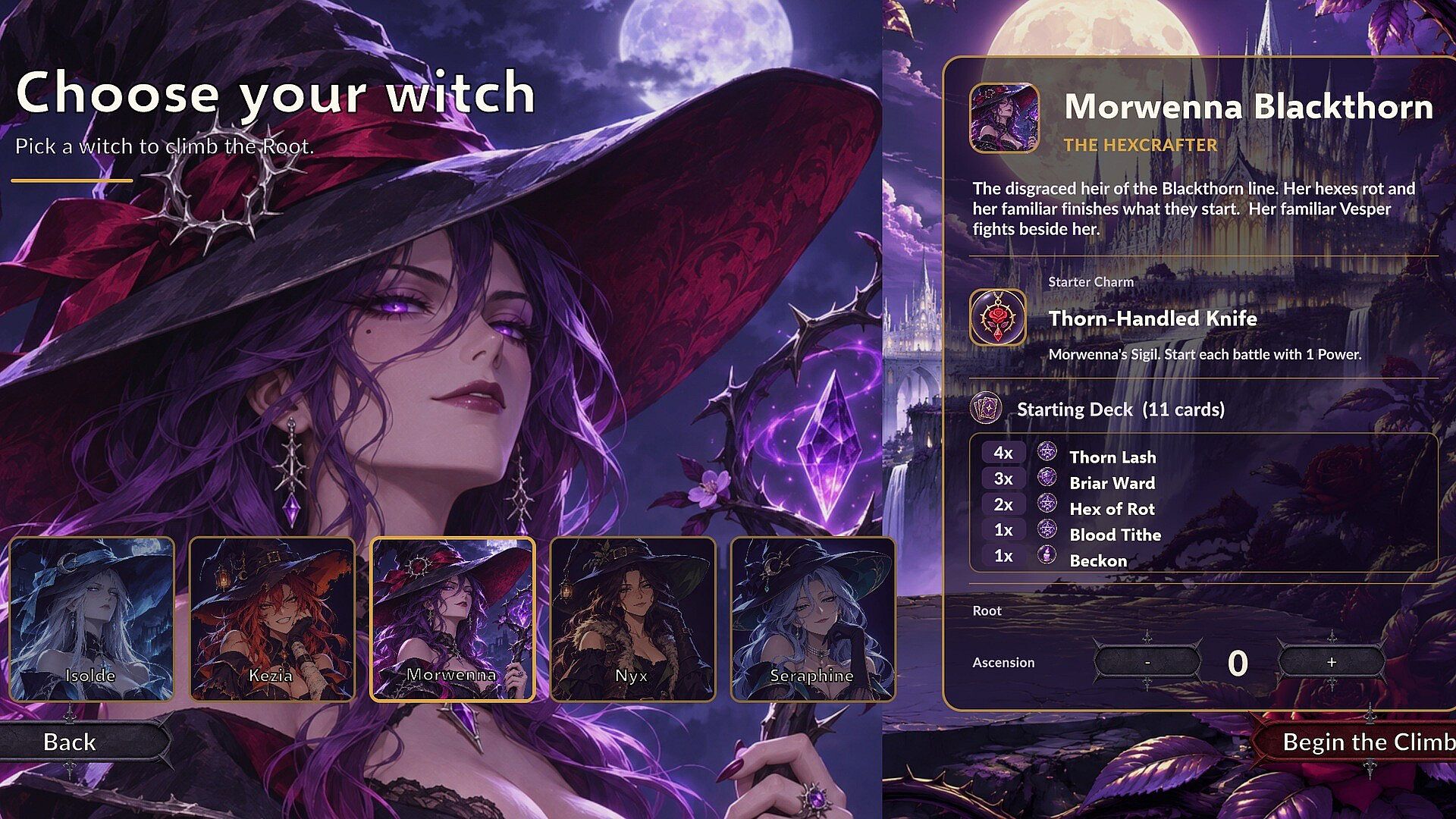
Each of the five witches brings a distinct starting deck, sigil, and card pool tied to her theme. Morwenna Blackthorn uses hexes that weaken foes for her ash cat Vesper to finish. Isolde Vey builds defensive thorns that convert damage into resources for her armored toad Grimald. Seraphine Lull turns enemies against each other with her bone bird Nightingale. Kezia Ashgrove fights from memory with fire after burning her grimoire alongside her ember fox Cinder. Nyx Hollowell relies on raw strength with her scarred bear Ursk rather than heavy spellcasting. Unlocking additional cards happens by defeating bosses, while charms such as Lover's Knot or Wax Doll alter rules around energy or recovery to shape long term builds.
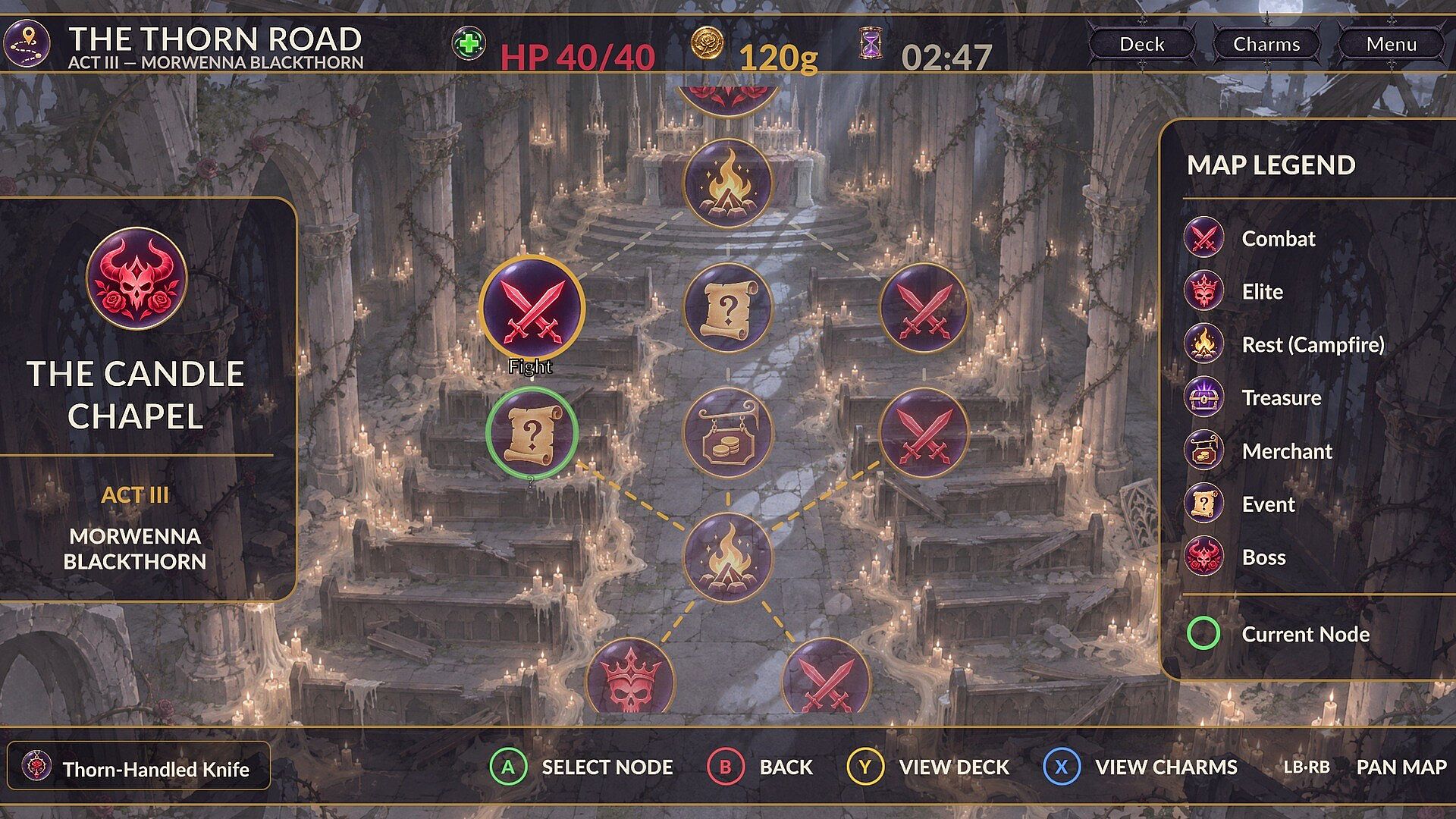
Exploration unfolds across three acts with distinct enemy types and environments. Act I takes players through the Cursed Wood against rotlings, root hounds, and bramble swarms. Act II crosses the Thorn Bridge past drowned acolytes and the Lantern Nun. Act III reaches the Candle Chapel where wax ghouls and the Wax Matron guard the final altar. Enemy intents appear visibly before each turn, letting players read threats and plan accordingly. Events and curses introduce bargains that can add Doubt to the deck or provide temporary advantages.
Game Modes
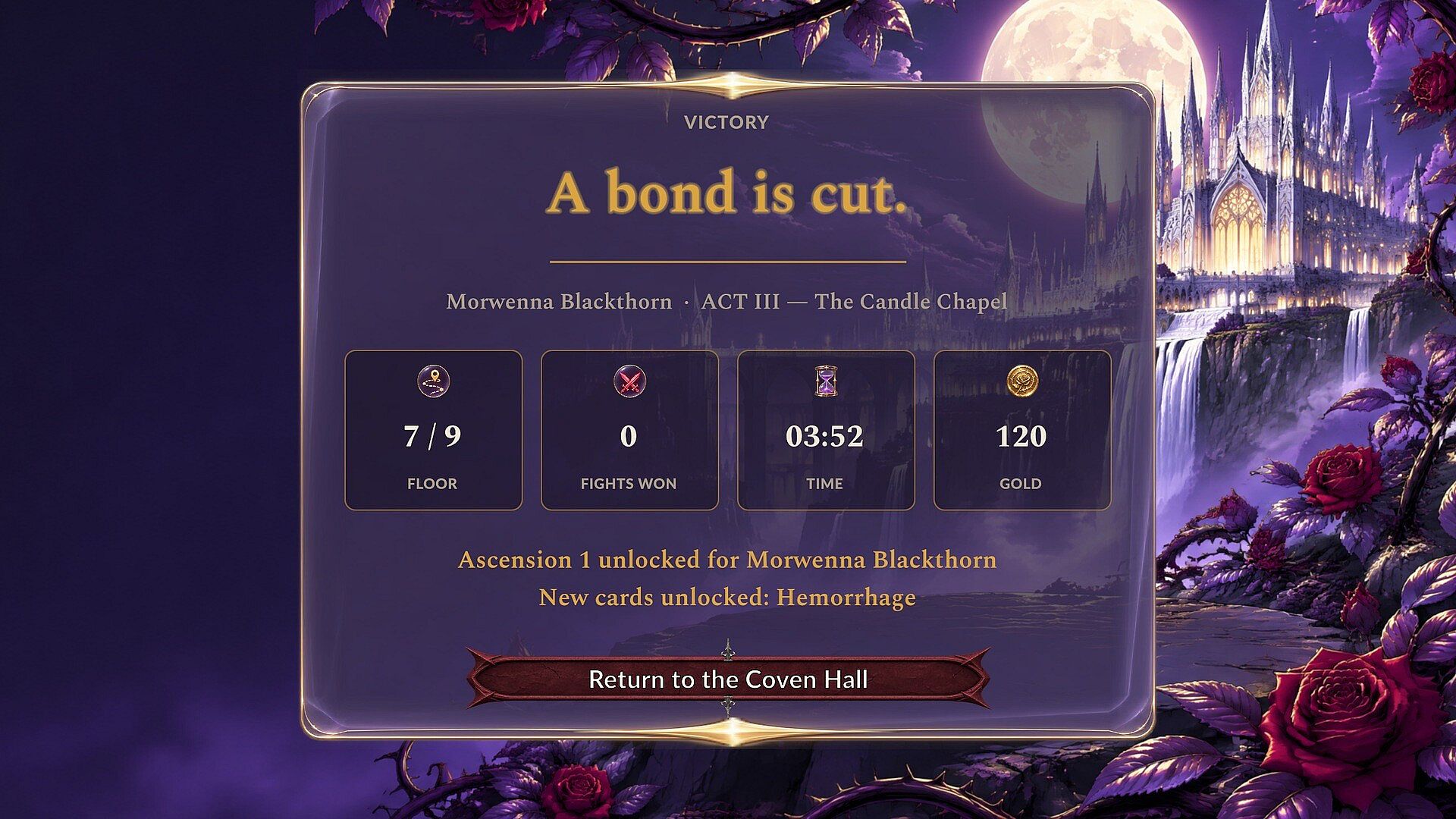
Standard climbs generate a fresh map each run with random layouts of fights, elites, events, merchants, treasure, and campfires. Daily climbs use a seeded map shared across all players for competitive runs against the same layout. Custom climbs allow entry of a specific seed for repeated attempts or shared experiences with others. Ascension mode increases difficulty after each victory by adding new enemies and cards to the available pool. A compendium tracks every encountered card, charm, and creature while records log personal runs, wins, and completion times.
Full controller support and adjustable text sizes ensure comfortable play on devices such as the Steam Deck. The single player focus keeps attention on deck construction and path choices without external matchmaking or shared progression systems.
Progression and Customization
Deck building draws exclusively from each witch's card pool, with boss defeats expanding options for future runs. Charms provide persistent rule changes that reward experimentation across multiple attempts. The branching map structure lets players weigh risk versus reward when selecting routes, often trading safer paths for higher value encounters. Campfires offer rest and upgrades while merchants sell targeted cards or charms to refine a build mid run.
Grief mechanics and familiar survival add emotional weight to decisions, as losing the companion shifts the witch's playstyle toward higher stakes. This system encourages builds that keep both fighters active or prepare contingency plans for when the familiar falls. The nine floor structure and three act progression create a contained yet replayable climb that resets cleanly between runs.
Is It Worth Playing?
Coven of Thorns suits players who enjoy roguelike deckbuilders with companion mechanics and deliberate tactical choices. The dual fighter system and Grief state provide a clear twist on standard card play, while the five witches offer varied entry points and long term variety. A free demo released on February 2 allows testing of two witches with progress carrying forward into the full release. Controller support and Steam Deck optimization broaden accessibility for portable sessions. Those drawn to dark fantasy themes, branching exploration, and systems that reward planning over pure luck will find the structure engaging. The absence of multiplayer or seasonal content keeps the experience focused on solo runs and personal records. If the familiar companion concept and witch specific decks align with preferred mechanics, the game delivers consistent depth across its modes and acts.











