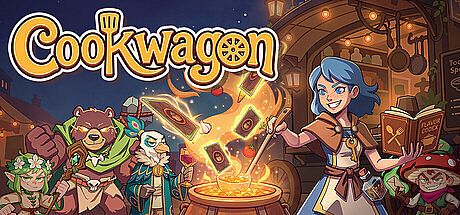


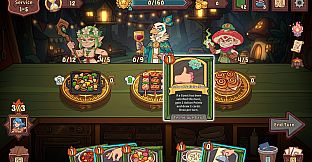
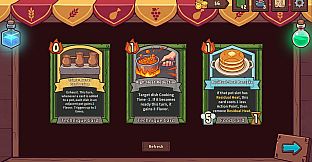
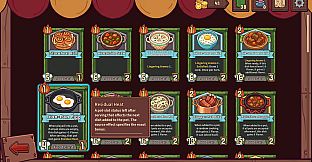
Cookwagon is a single-player strategy indie game that blends roguelike deckbuilding with a fantasy cooking theme. Players manage a magical food truck, juggling dishes across three pots while using cards to time cooking actions and satisfy guests before turns run out. The core loop centers on building and refining a deck of Food Cards and Technique Cards across multiple runs, with no combat involved and every decision focused on meal preparation and service ratings.
Gameplay
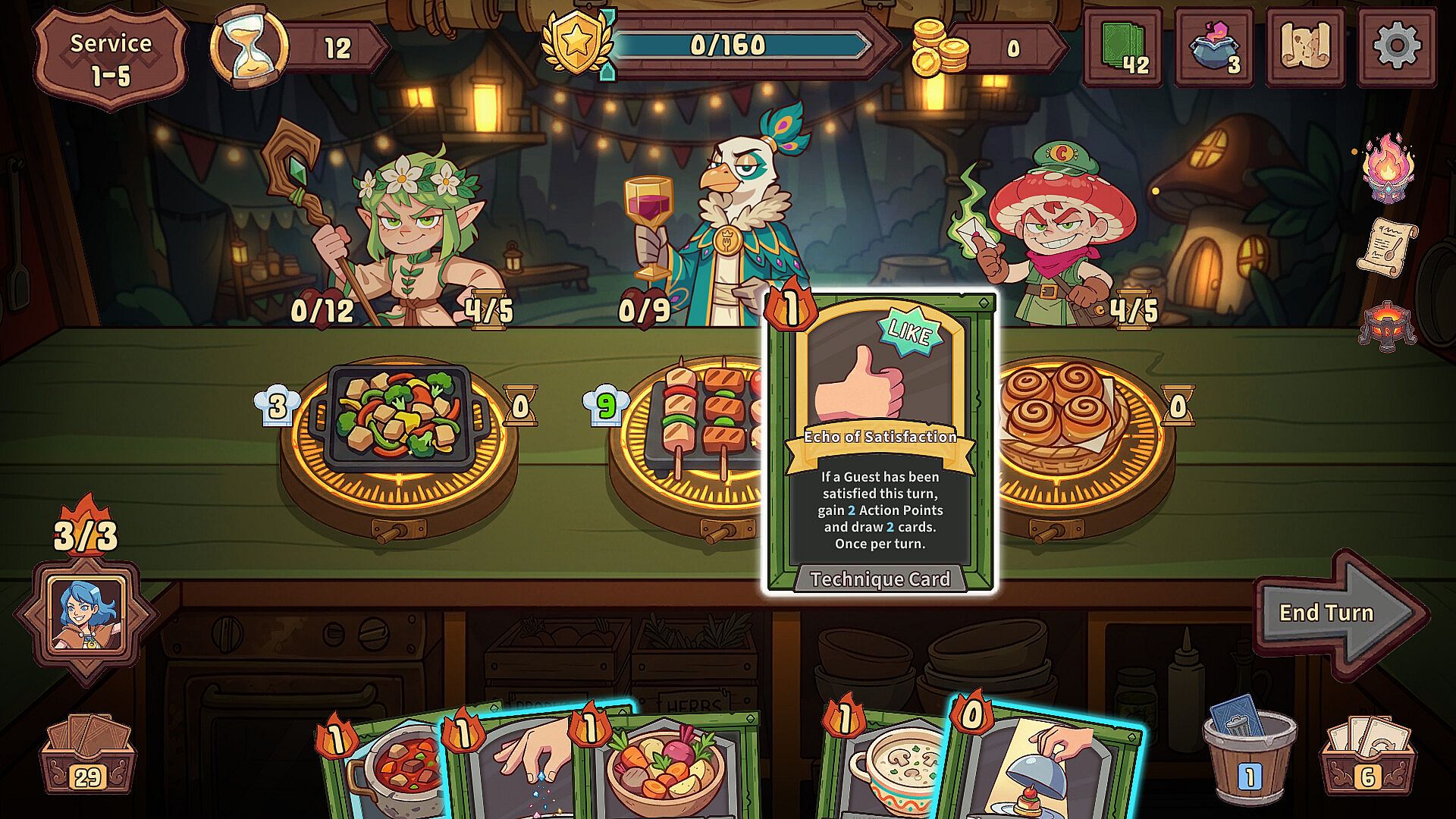
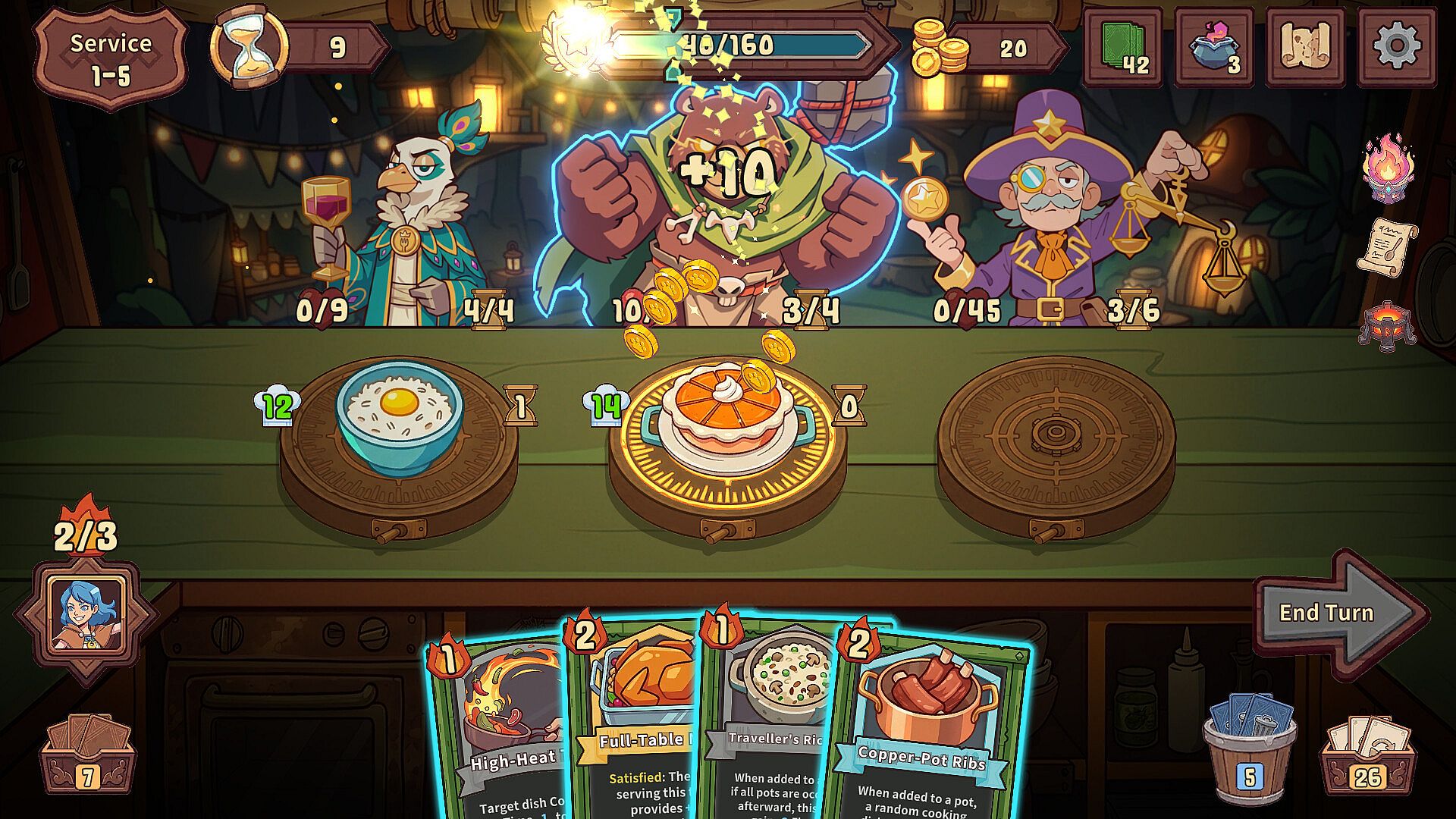
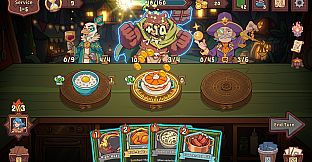
The gameplay revolves around three limited pot spaces where dishes cook at different rates. Players assign Food Cards to pots and play Technique Cards to adjust heat levels, boost flavors, or accelerate cooking times. Timing matters because dishes must reach the right state before serving at the window to waiting guests. An unassuming set of cards can combine into a high-rated meal when pots are linked effectively and actions are sequenced properly.
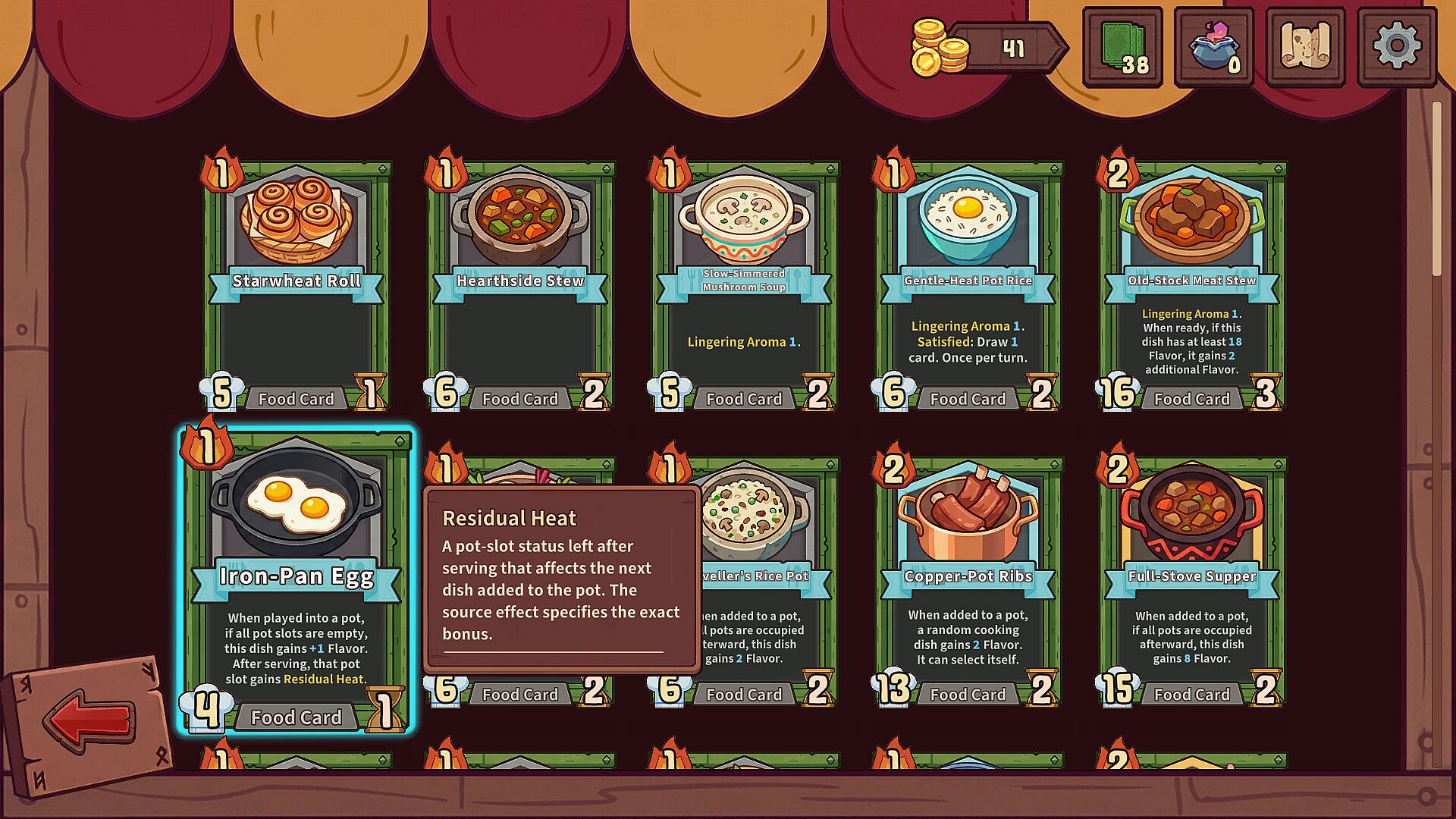
Each service session ends when enough guests receive satisfying meals or when turns expire. Success keeps the Cookwagon moving forward. Relics and new cards collected along the way introduce Flavor Synergies that reward specific playstyles, such as emphasizing slow simmering for richer results or using discards to repurpose leftovers. Every Food Card represents a complete dish, removing any need to learn separate recipes and placing emphasis on hand management and pot coordination instead.
Game Modes
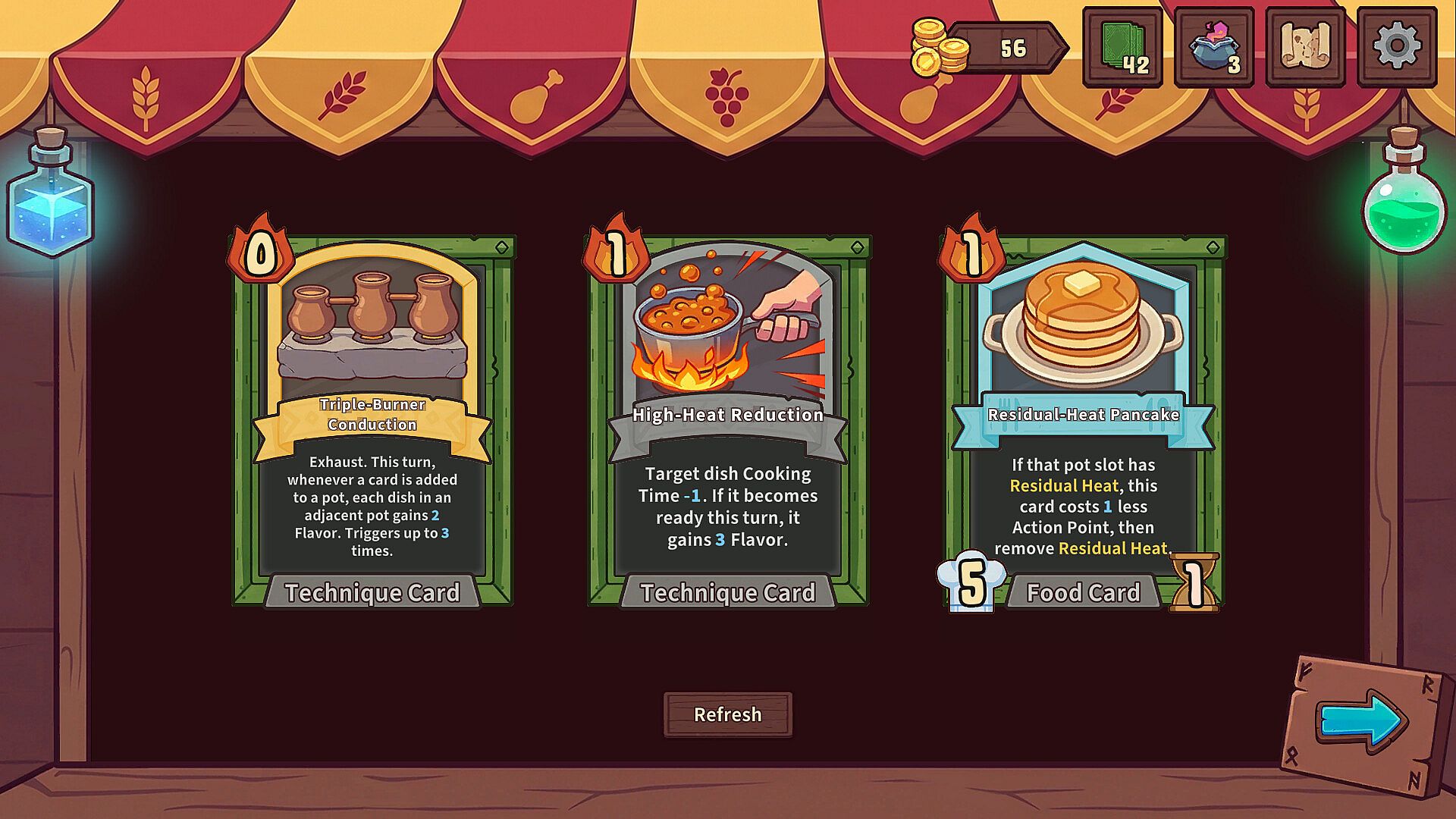
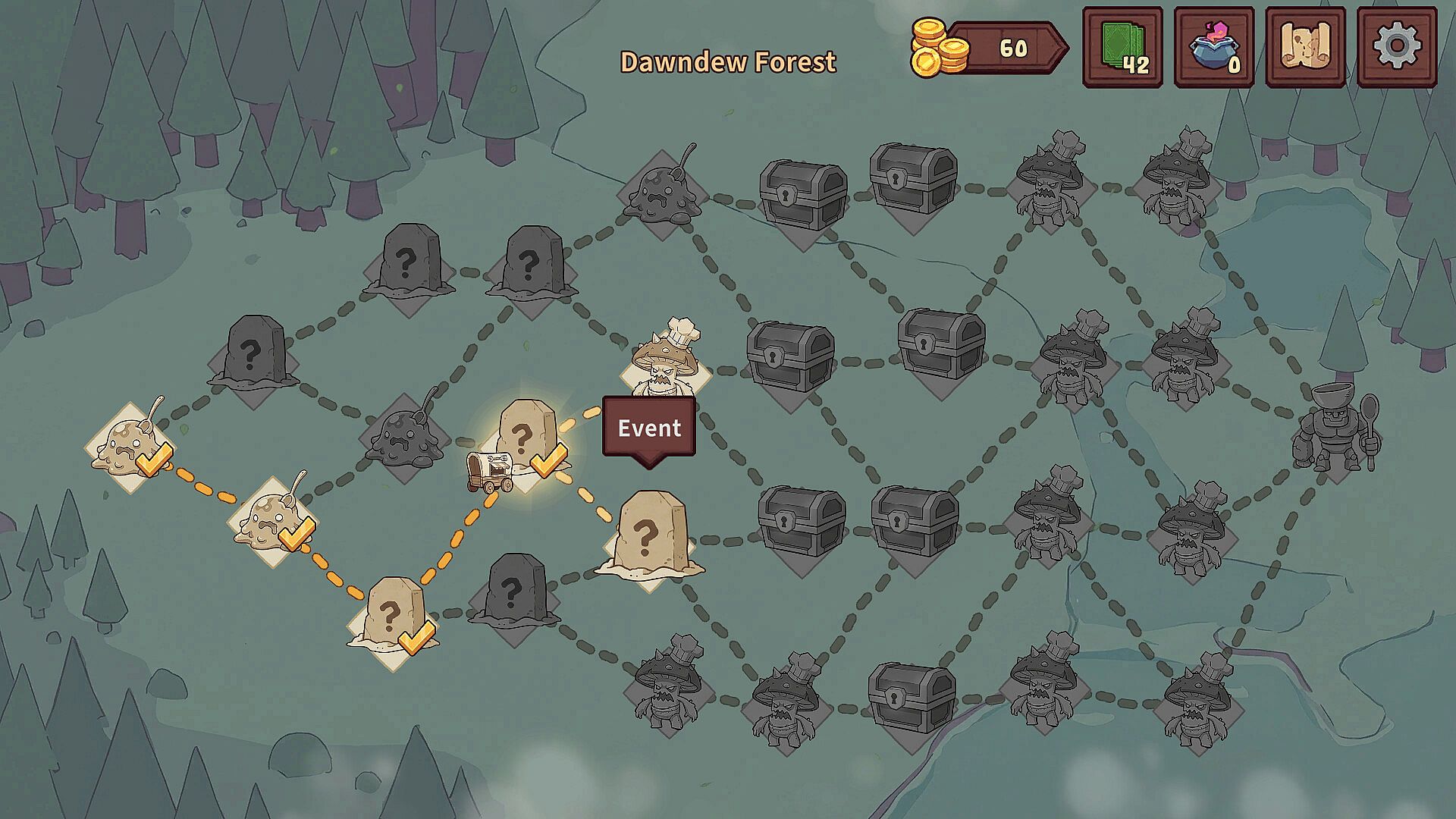
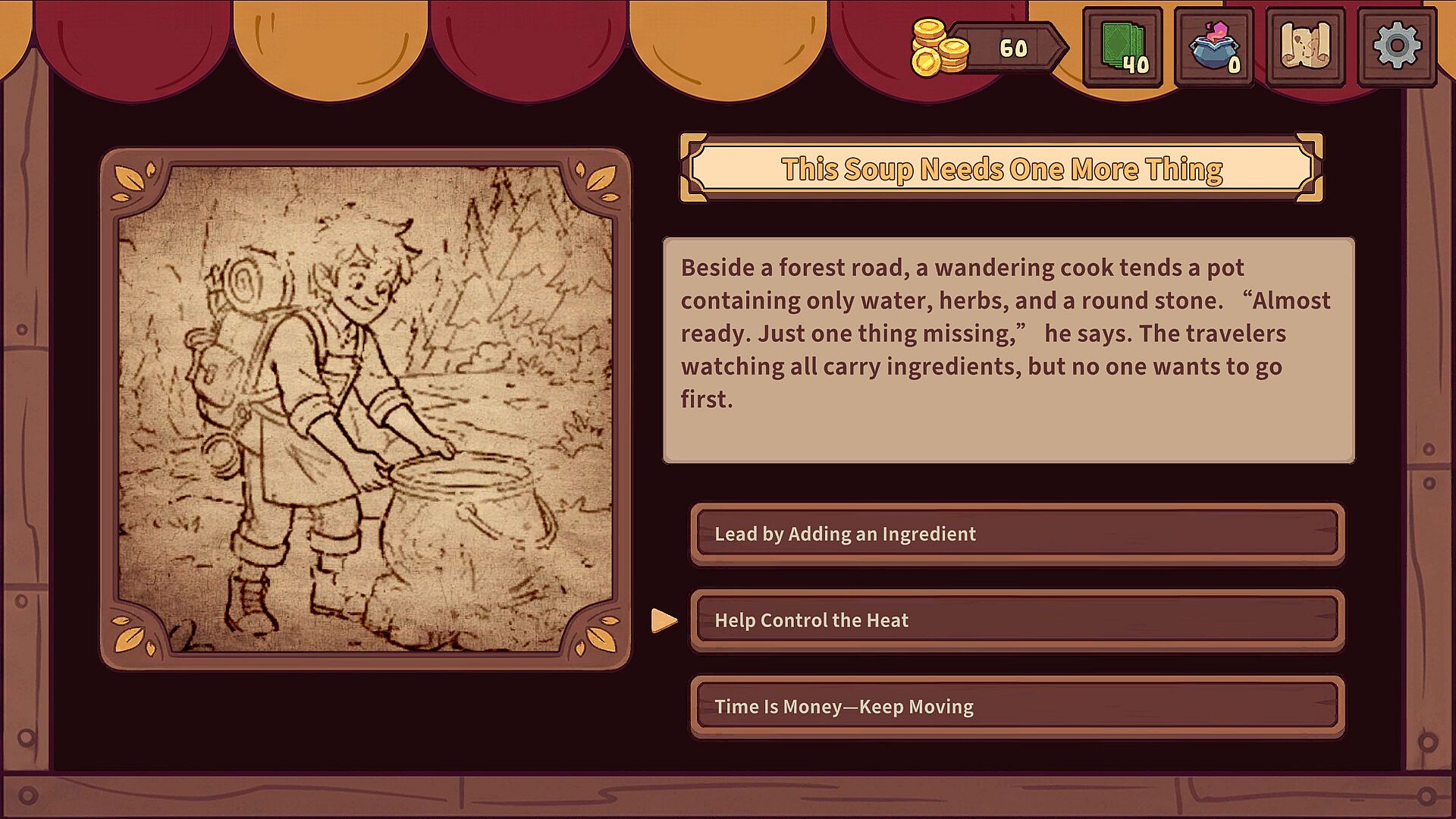
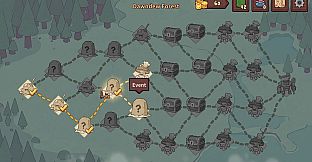
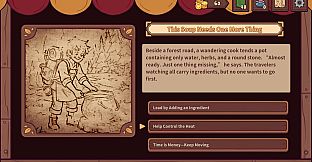
Cookwagon operates as a single-player roguelike experience built around repeated journeys. Each run presents an ever-changing route with stops that include additional service sessions, encounters, shops, and treasure chests. Players select the next location to refine their deck or face tougher guest expectations as the journey progresses. Signature dishes can grow stronger over time, and different card combinations support varied approaches like rapid cooking or three-pot combo setups.
The structure encourages experimentation across multiple runs because no two routes deliver identical choices or guest demands. Deck-building happens organically through collected cards and relics, allowing players to pursue slow-cooked flavor builds, discard-focused strategies, or balanced three-pot tactics without any separate multiplayer or competitive modes.
Deck Building and Progression
Progression centers on shaping a personal deck during each journey. New cards and relics appear at shops or from treasure chests, while Flavor Synergies activate when certain combinations align across the three pots. Players decide whether to pursue rapid service for volume or careful simmering for higher ratings, with signature dishes providing scaling power as runs continue. The absence of enemies shifts all attention to guest satisfaction and efficient use of limited actions per turn.
Because Food Cards function as ready-to-cook dishes, deck construction focuses entirely on synergy and timing rather than recipe discovery. This keeps sessions centered on strategic card play and pot management, rewarding players who plan sequences that maximize ratings before the turn limit arrives.
Is It Worth Playing?
Cookwagon suits players who enjoy roguelike deckbuilders and strategy games that replace combat with resource timing and optimization. The single-player focus on three-pot coordination and guest service creates a distinct loop that emphasizes planning over reflexes. With the game listed as coming soon and no user reviews available yet, its appeal rests on the verified mechanics of card-driven cooking and route-based progression described in official materials.
Those drawn to indie strategy titles with unique themes and replayable runs through deck customization will find the core systems align with that preference. The non-combat design and emphasis on meal ratings provide a fresh angle within the roguelike deckbuilder genre, making it a consideration for anyone seeking methodical gameplay without traditional fighting elements.