




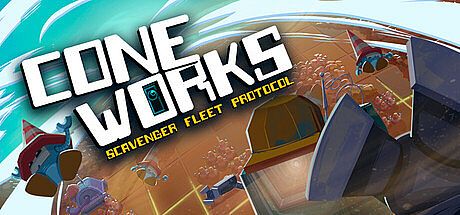


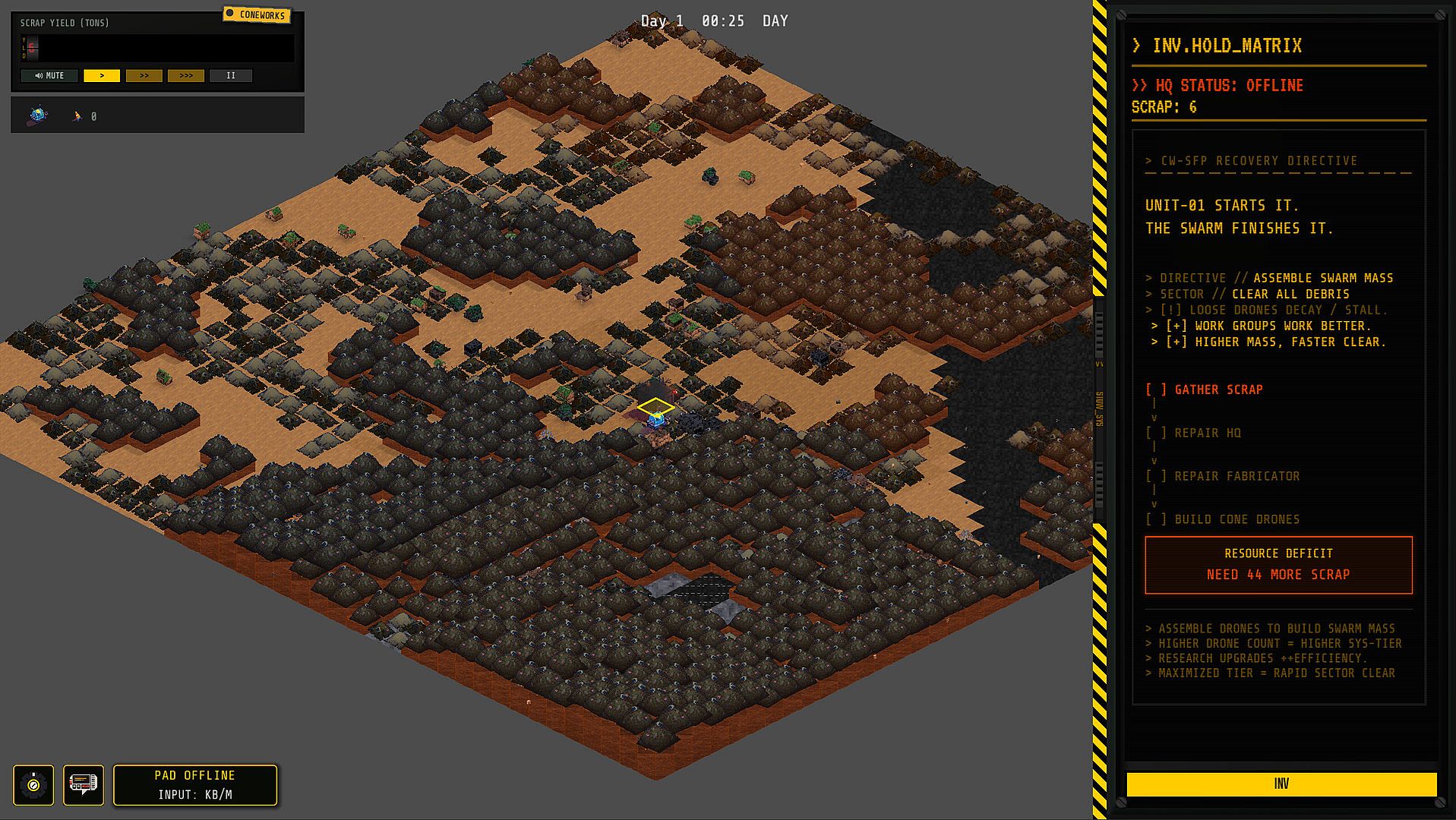
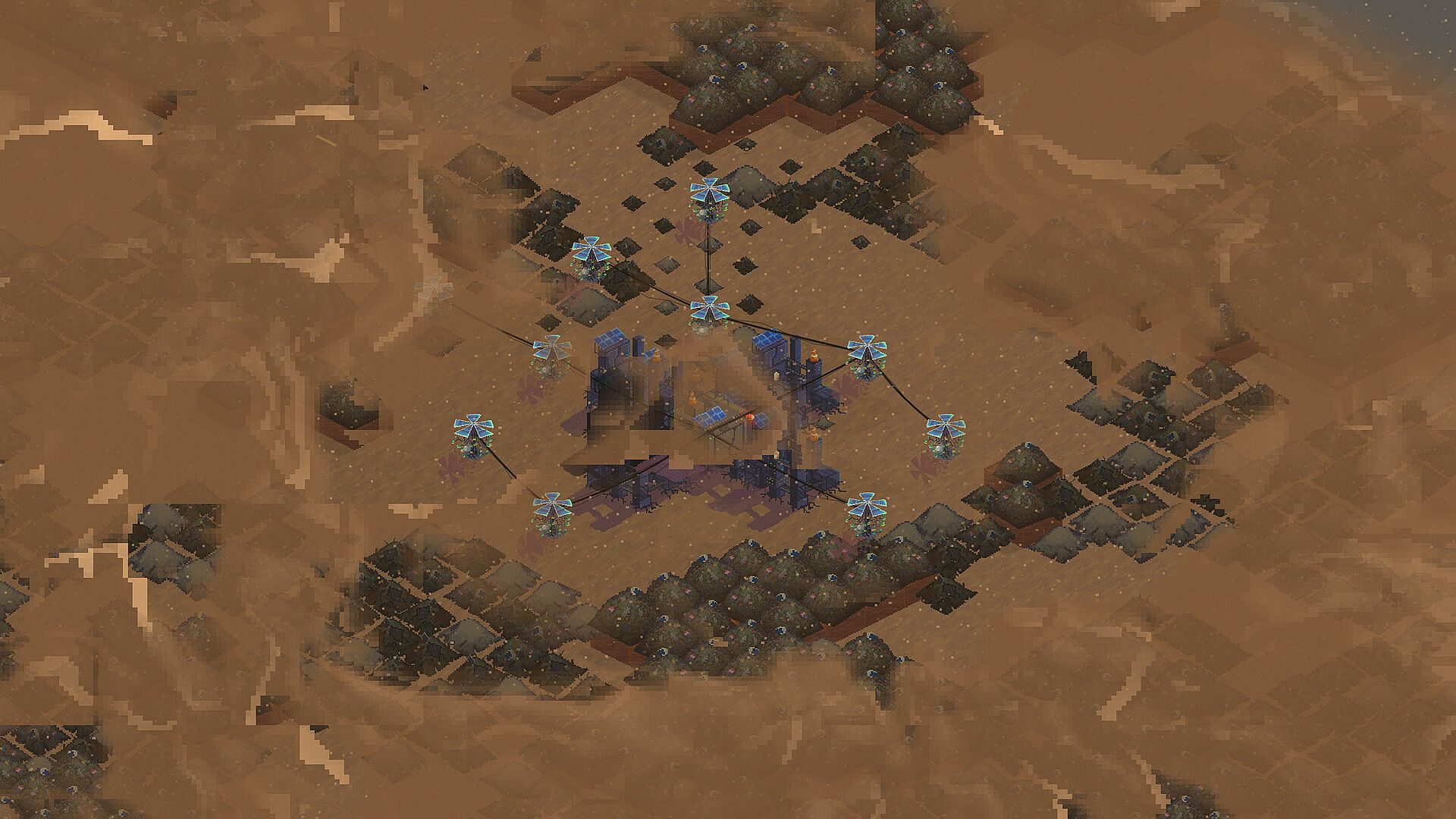
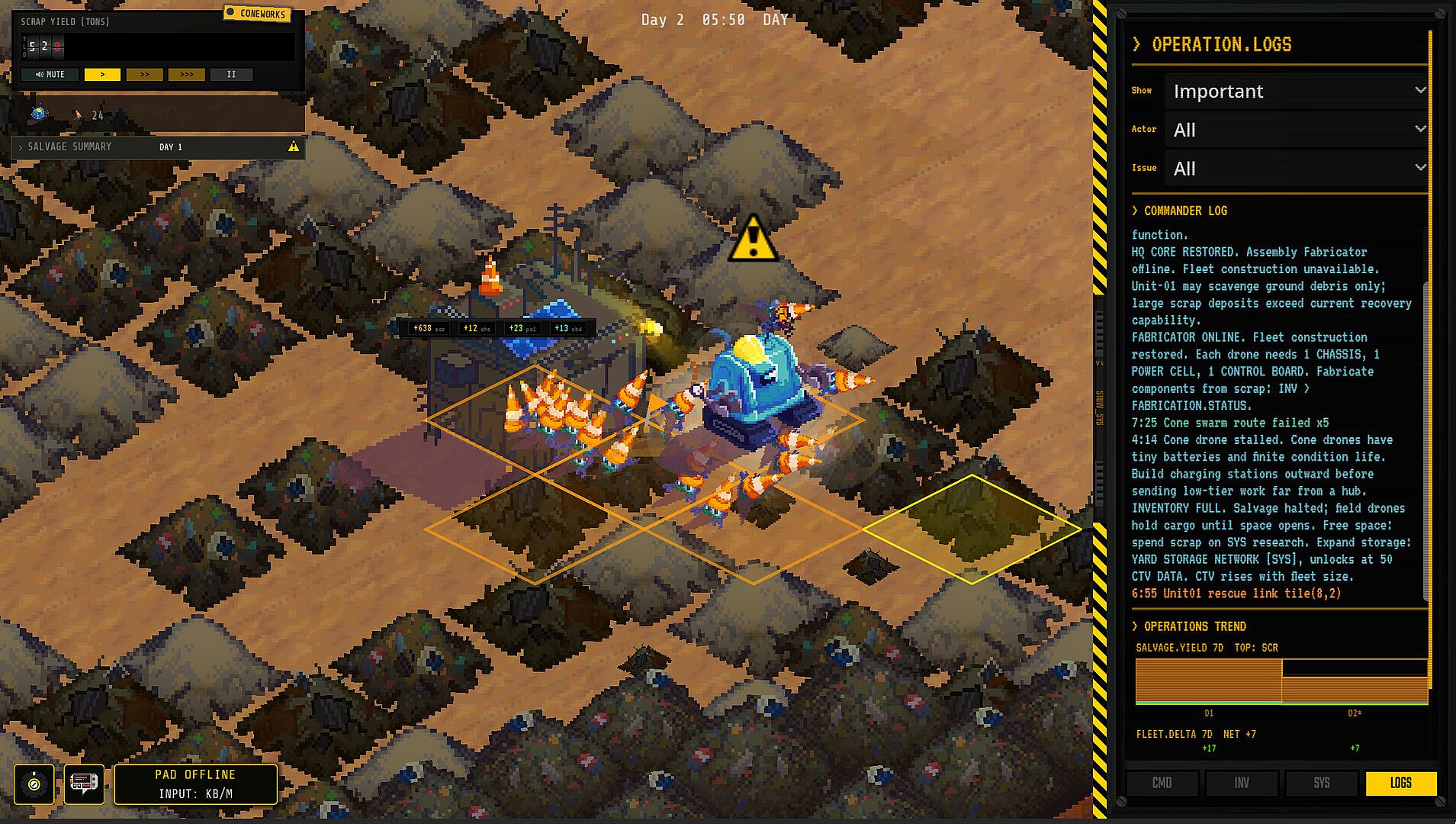
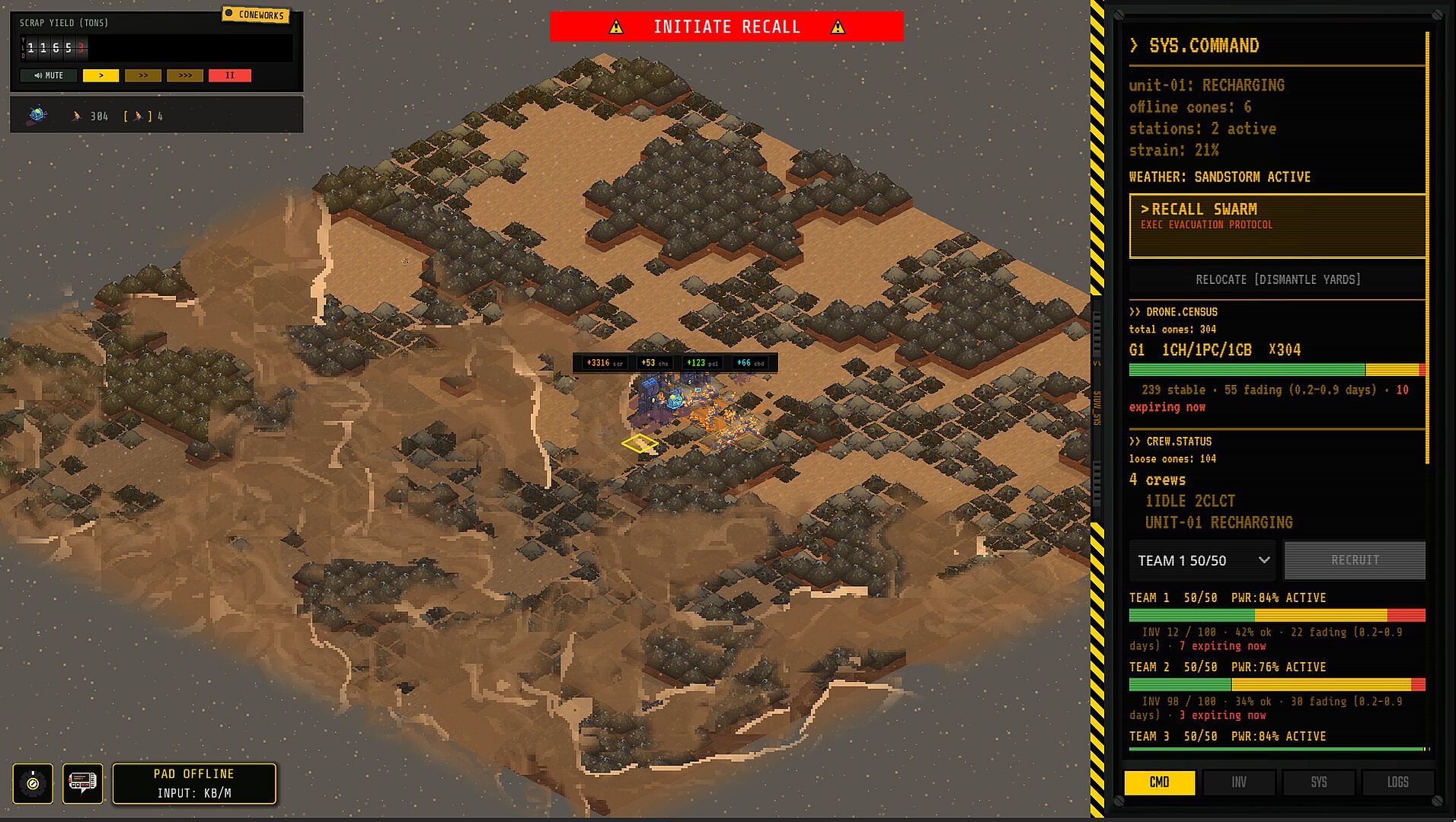
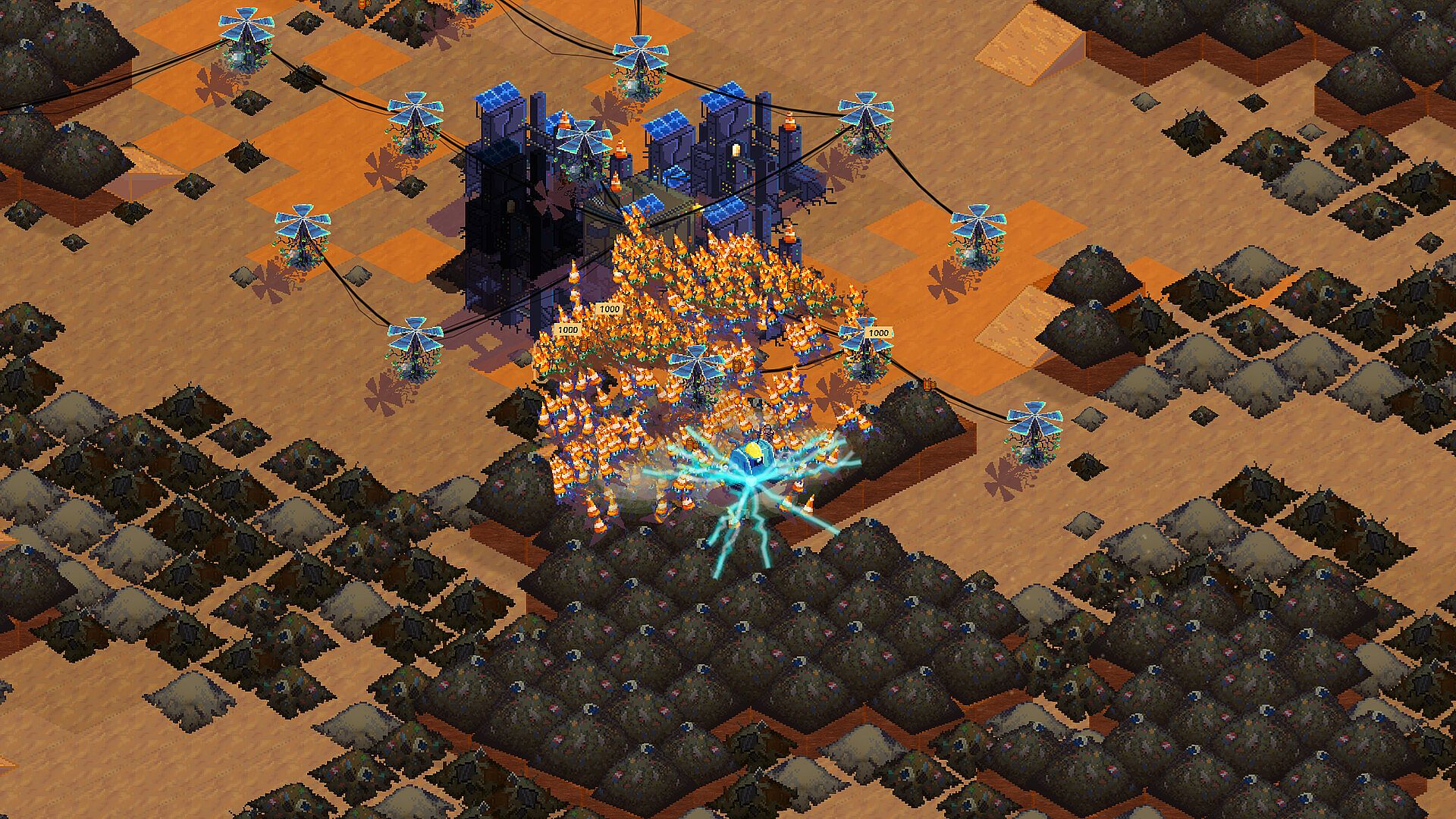
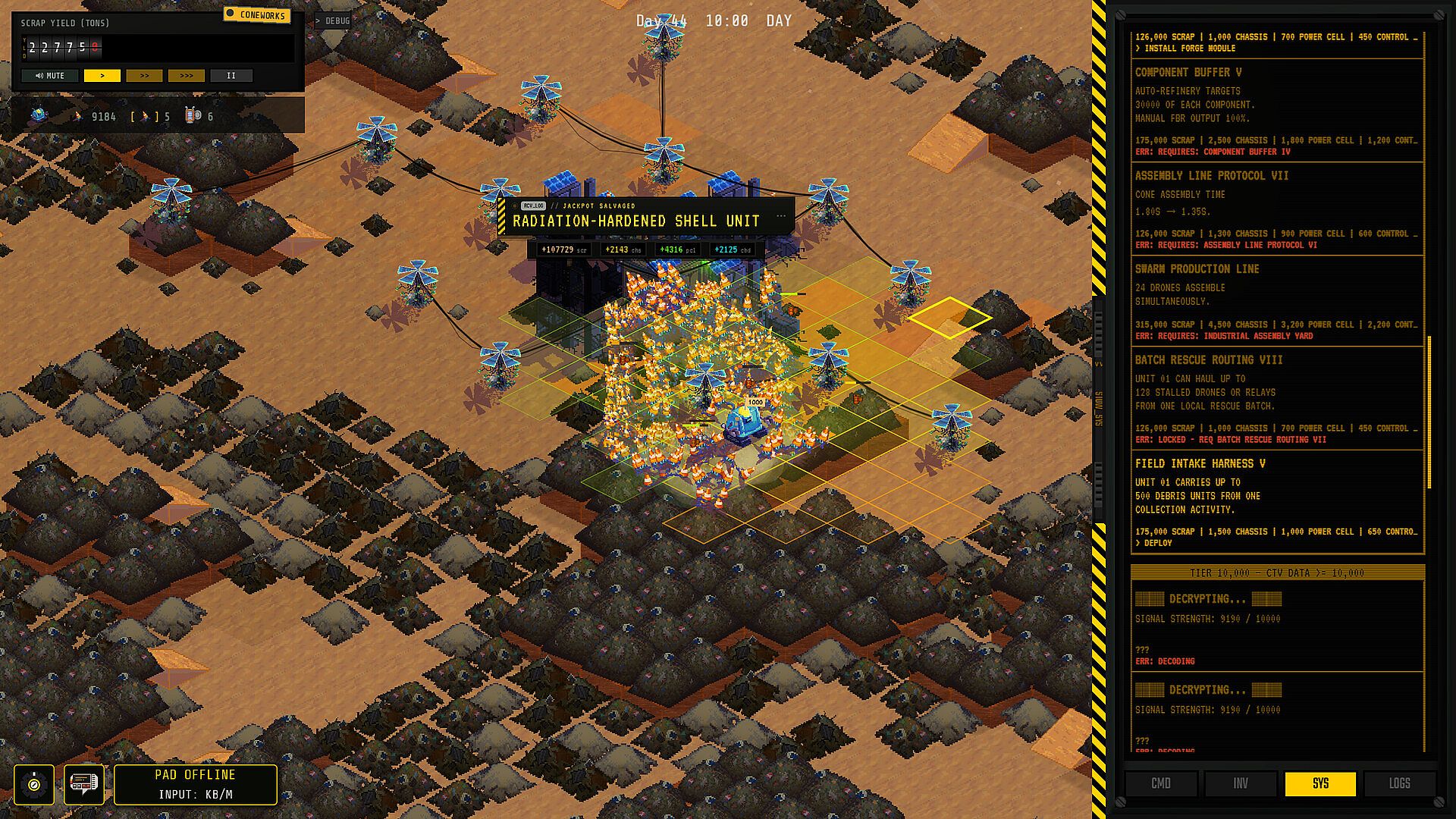
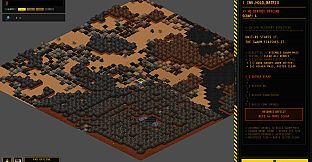
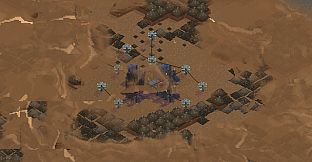
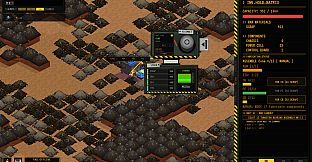
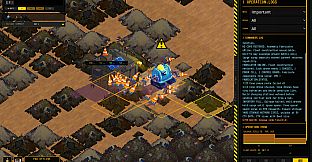
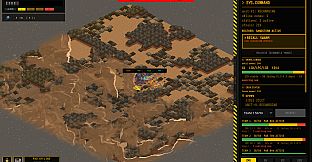
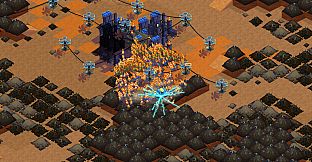
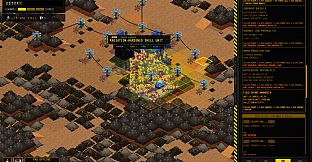
Coneworks Scavenger Fleet Protocol is a single-player semi-idler incremental strategy simulation game developed for PC. Players take control of a lone recovery robot known as Unit01 or Lunchie in a procedurally generated post-industrial wasteland, directing automated collection of debris and junk to restore systems and eventually rebuild livable conditions across sectors, regions, and the entire planet.
Gameplay
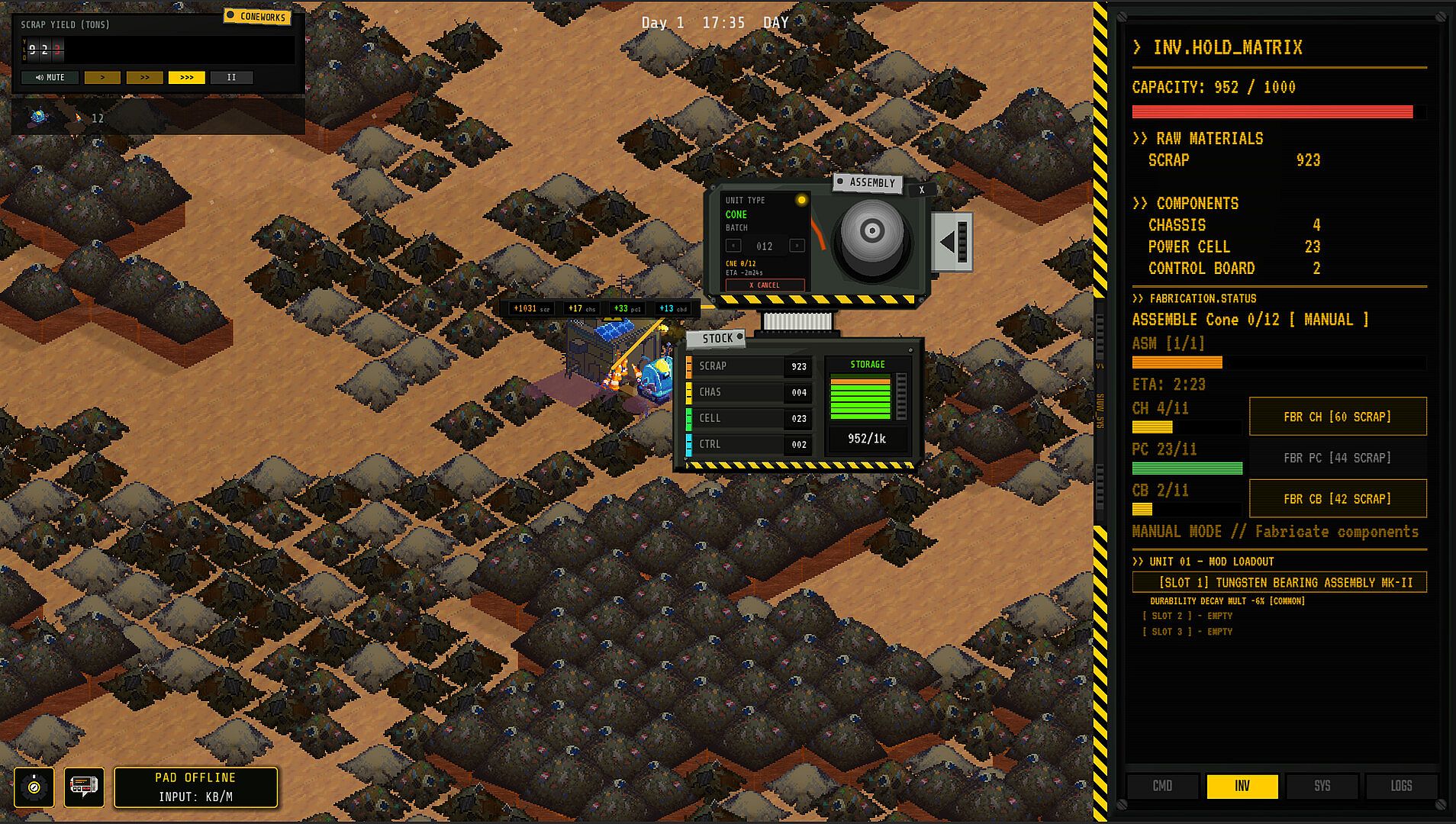
The core loop centers on a lone robot that begins by automatically scavenging scrap and hauling materials back to a central headquarters. This process generates resources that allow assembly of cone drone assistants. These small units function as both helpers and scavengers, moving through wreckage with specialized grab mechanisms to collect debris and return salvage. Drones operate with built-in limitations, including finite battery life and operational duration, which requires ongoing infrastructure support to maintain fleet effectiveness.
Research into system upgrades expands capabilities, while collection of Swarm Collective Data unlocks further advancements. The game supports adjustable pacing, allowing players to scale activity speed according to preference. Procedural generation ensures varied wasteland layouts each session, and the emphasis remains on steady expansion from a single unit to swarms numbering in the hundreds, thousands, or even a million drones. All activity stays within a single-player framework focused on incremental growth and planetary cleanup.
Game Modes
The experience operates entirely in single-player mode with no multiplayer components. Progression unfolds through defined eras that mark evolutionary stages for the drone swarm, shifting focus from initial recovery operations to larger-scale reclamation efforts. Players manage the transition across these stages by balancing drone production, resource allocation, and infrastructure maintenance. The semi-idler design means core collection continues autonomously while players intervene to optimize upgrades, shelter drones, and expand reach into new areas of the wasteland.
Clearing objectives scale from individual sectors to broader regions and ultimately the full planet surface. No separate competitive or cooperative modes exist, keeping the structure centered on solitary management of the recovery fleet and its supporting systems.
Progression and Systems
Early stages revolve around reactivating the primary unit and establishing basic scavenging routines. As resources accumulate, players construct additional cone drones and develop supporting infrastructure to offset their consumption rates. Unique technology paths emerge from gathered Swarm Collective Data, enabling targeted improvements to collection efficiency and swarm coordination.
Eras introduce new layers of complexity, advancing the swarm toward greater autonomy and scale. Battery management and lifetime constraints on individual drones encourage strategic decisions about replacement cycles and shelter construction. The overall system rewards consistent oversight without demanding constant input, aligning with the incremental nature of the title.
Is It Worth Playing?
This title suits players who enjoy incremental strategy and simulation experiences with a focus on swarm management and gradual world restoration. Its semi-idler mechanics allow sessions of varying length, from brief check-ins to extended optimization runs. The single-player structure and emphasis on autonomous drone fleets provide a relaxed yet purposeful loop centered on cleanup and expansion.
Since the game remains in a pre-release state with no user reviews available, expectations should center on the described systems of drone assembly, resource scavenging, and era-based progression. Those drawn to casual strategy titles involving incremental growth and procedural environments will find the core loop matches the stated design. Availability on PC supports broad accessibility once released, and the absence of additional modes keeps the focus narrow and consistent with the incremental simulation genre.











