

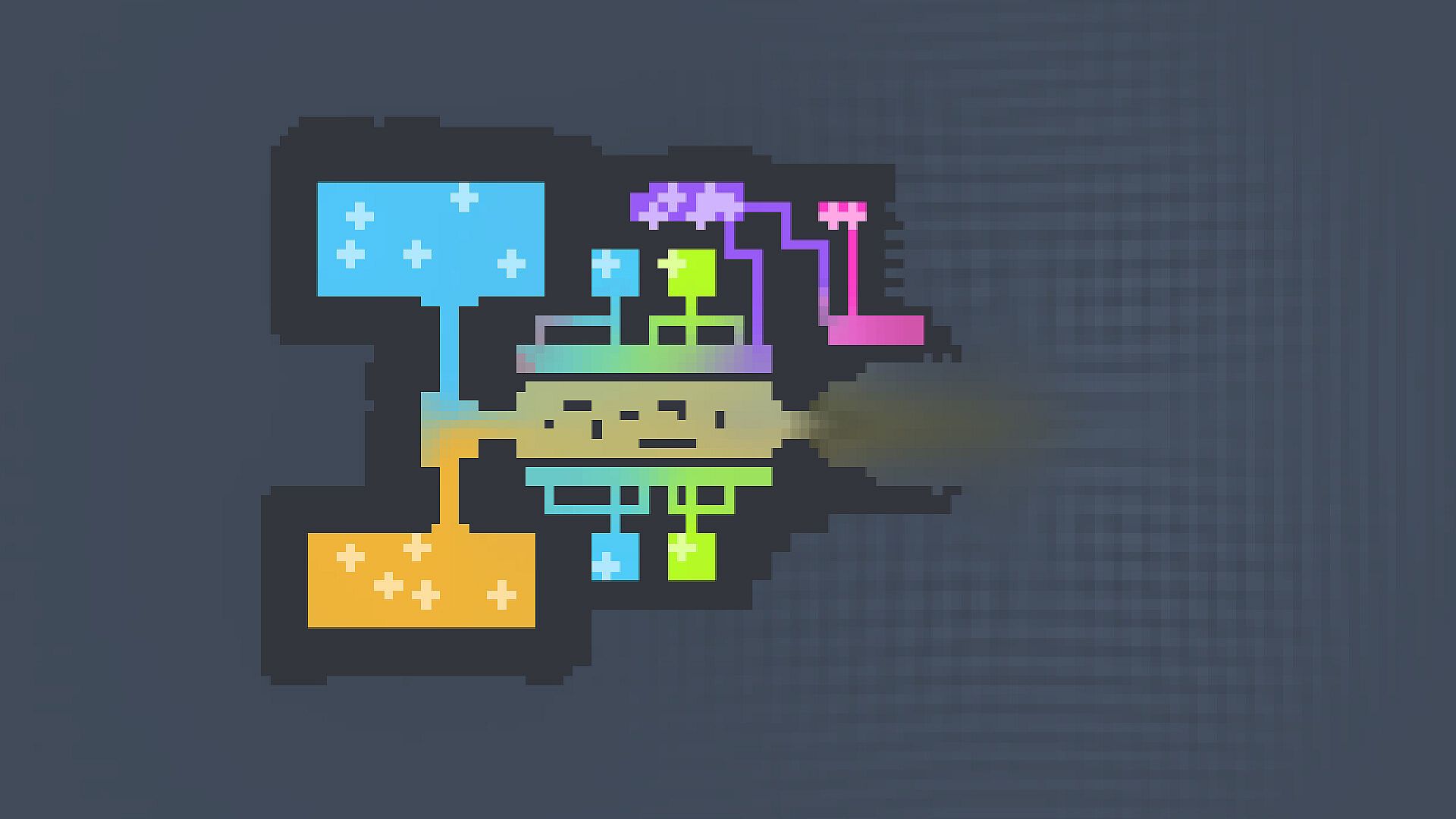
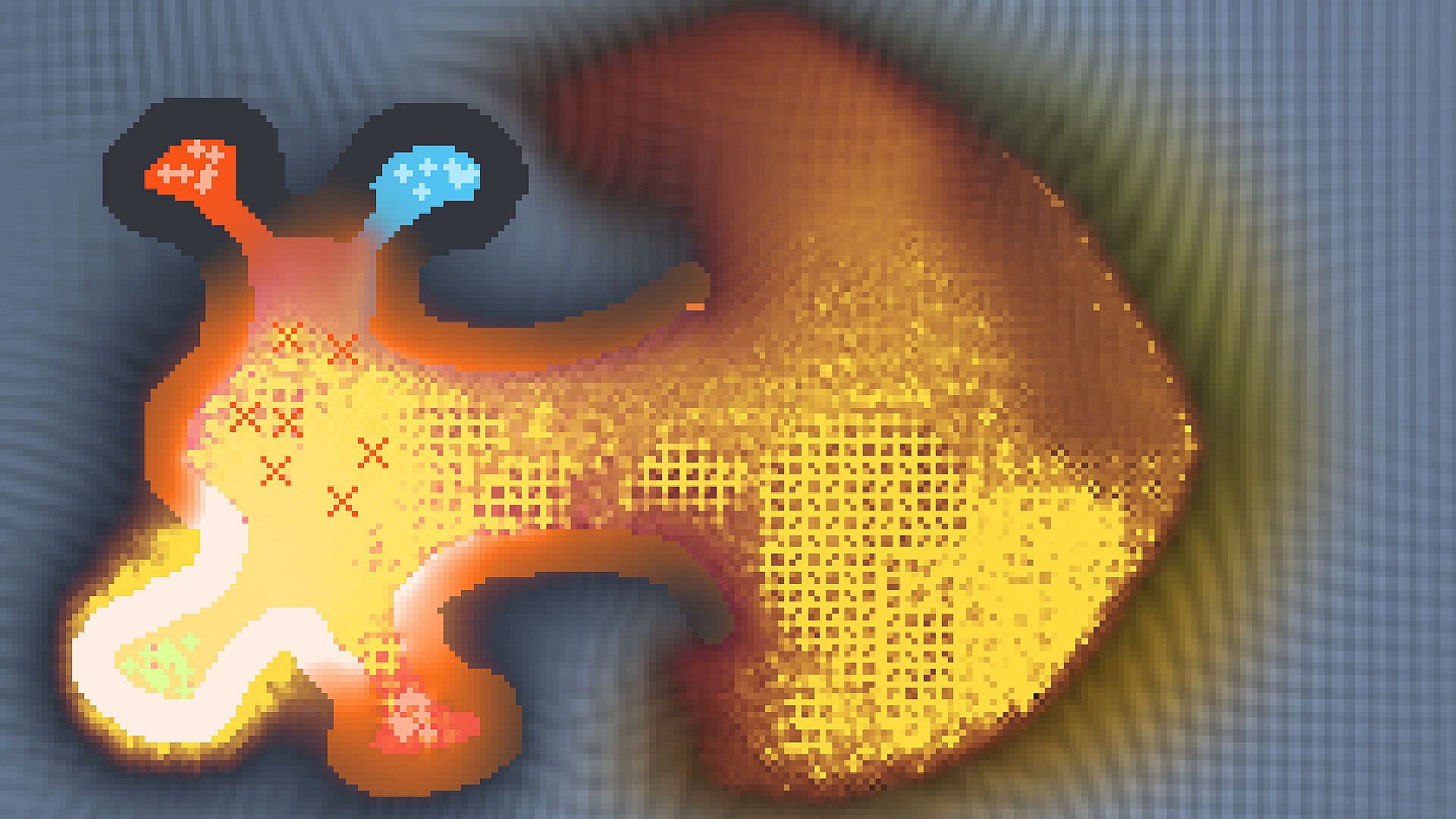


Combustor is a simulation game built around a detailed 2D gas simulation on PC. Players interact with a grid where each cell tracks moles of various gases, internal energy, and velocity. Pressure and temperature values derive directly from those stored properties every tick, creating a responsive system where adding moles, applying heat, or containing the mixture influences neighboring cells through pressure differences.
Gameplay
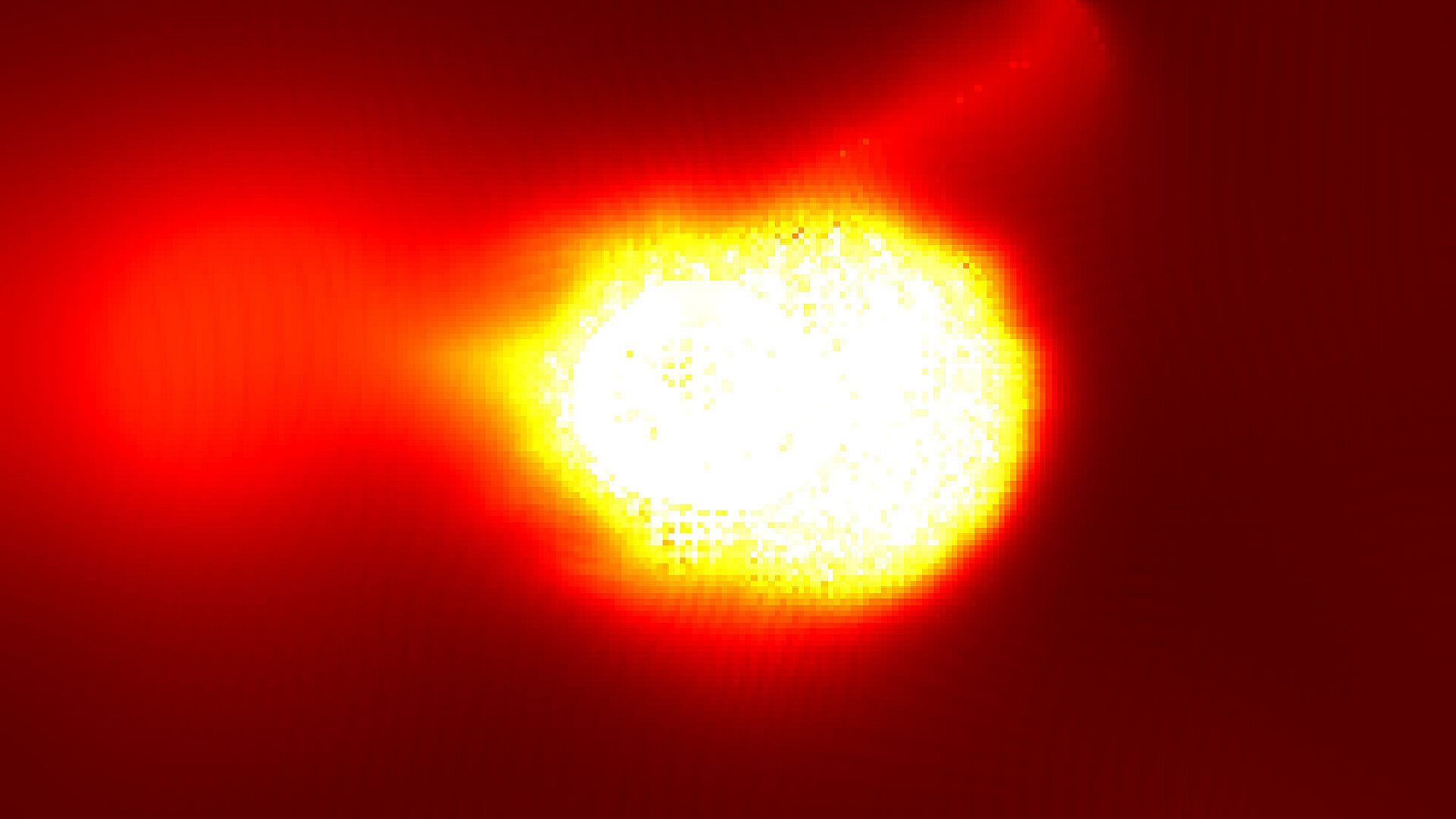
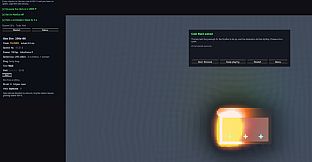
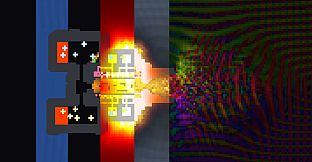
The core loop centers on building and observing gas behaviors within a grid environment. Users paint walls to contain mixtures, place generators to introduce specific gases, and apply sparks to initiate reactions. Combustion requires reaching 700 K in the presence of ambient air at 300 K, so an ignition source and a sufficiently rich mixture become essential. Open-air setups often produce thin plumes that flicker and extinguish, while enclosing the area with walls or increasing feed rates allows sustained burning.
Reactions operate under strict conditions including temperature windows, pressure windows, and induction times. Reactants must remain in contact long enough for the timer to complete, or the process resets without producing results. Multiple reaction types exist, each governed by its own parameters that players discover through the in-game Chem Codex. Gases differ in molar mass, heat capacity, and diffusivity, so lighter gases spread quickly while heavier ones remain more stationary.
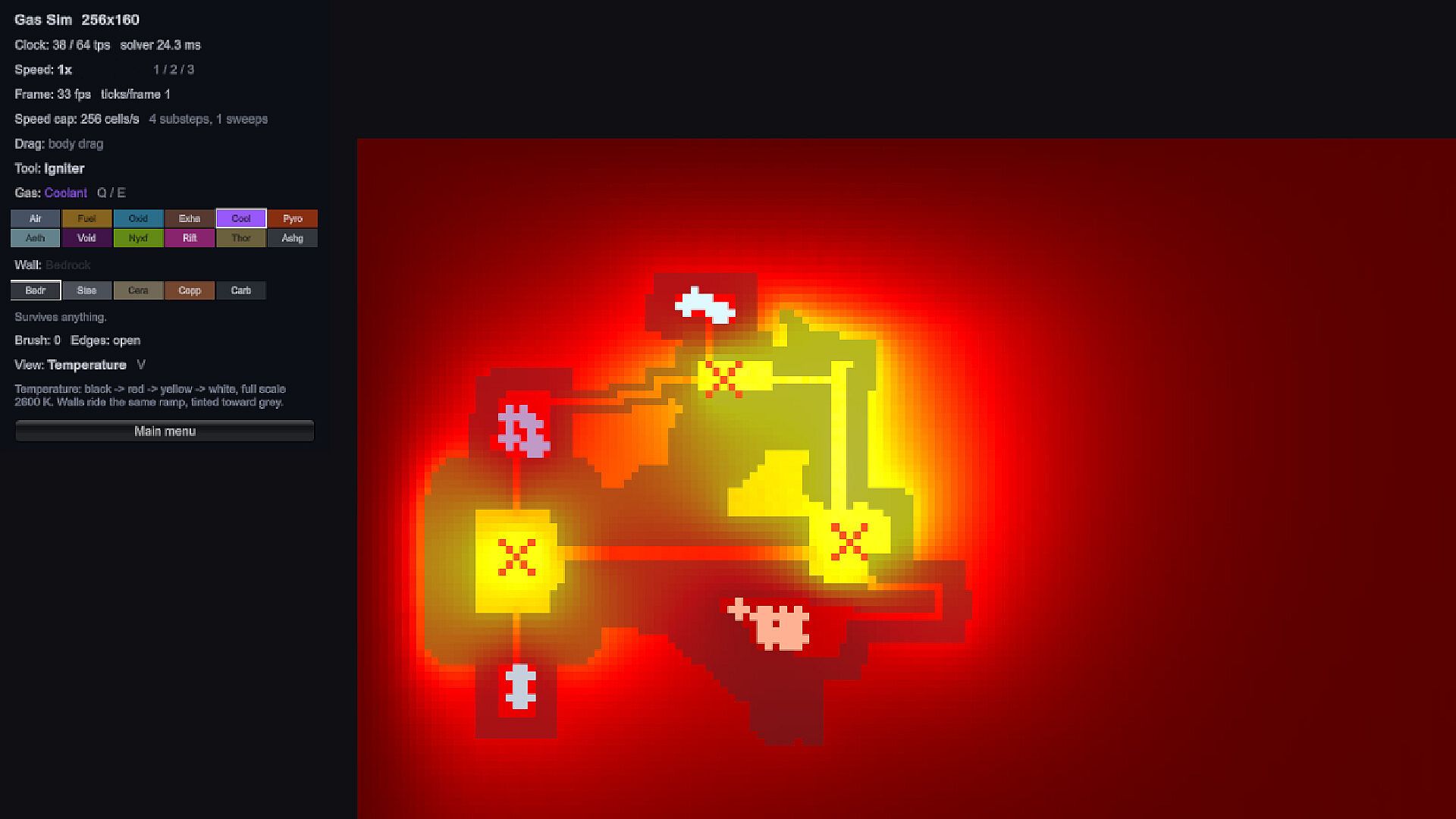
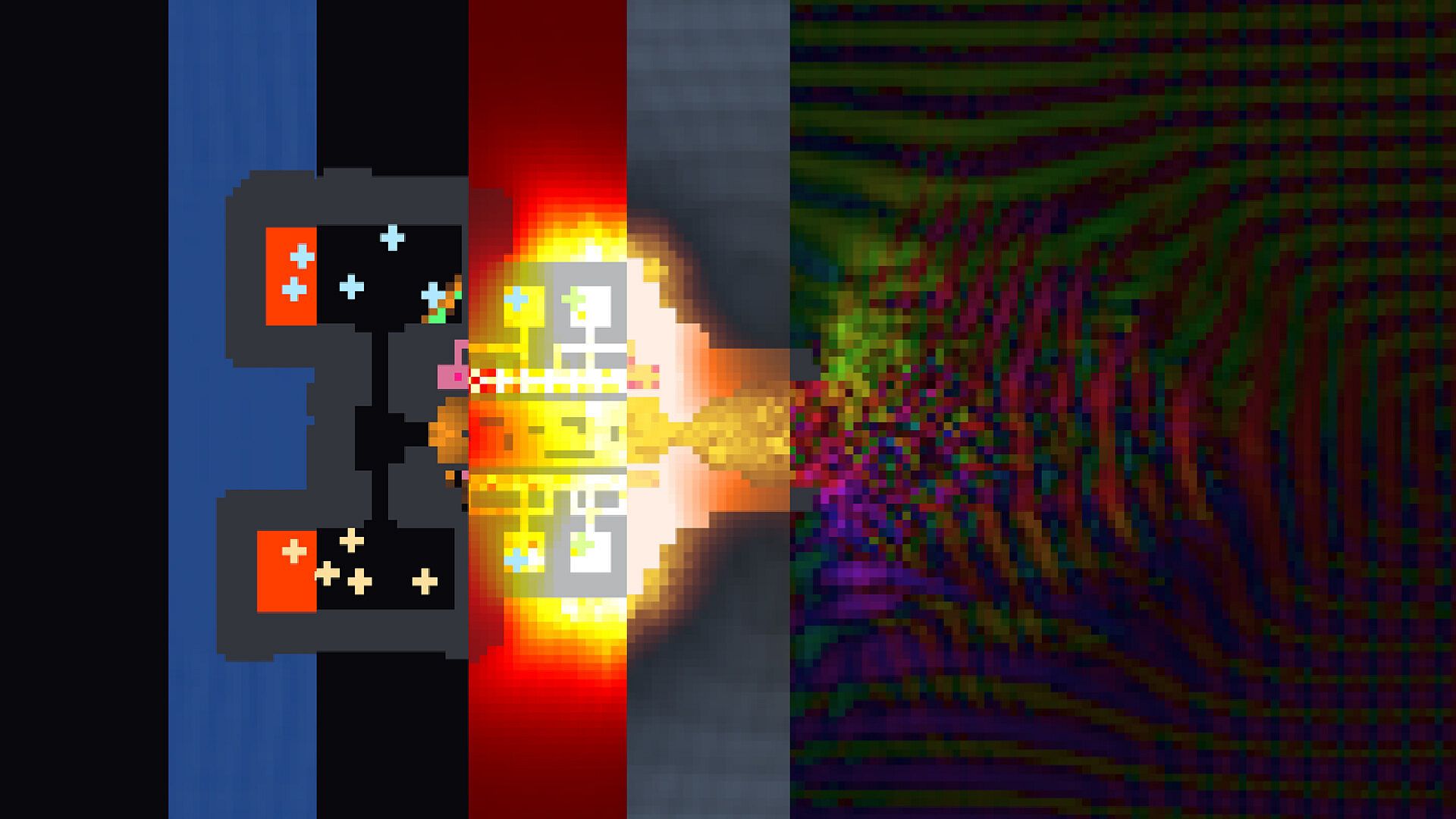
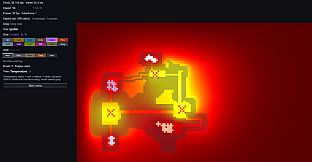
View modes switch between Species, Pressure, Temperature, Velocity, and Reactions. The Reactions view highlights active processes with color coding, where amber indicates cells completing induction and green shows firing reactions. A cursor readout displays precise progress for every reaction in the selected cell.
Game Modes
The primary experience revolves around a free-form sandbox where all tools remain available for experimentation. Players construct setups, observe outcomes, and iterate on designs without external constraints.
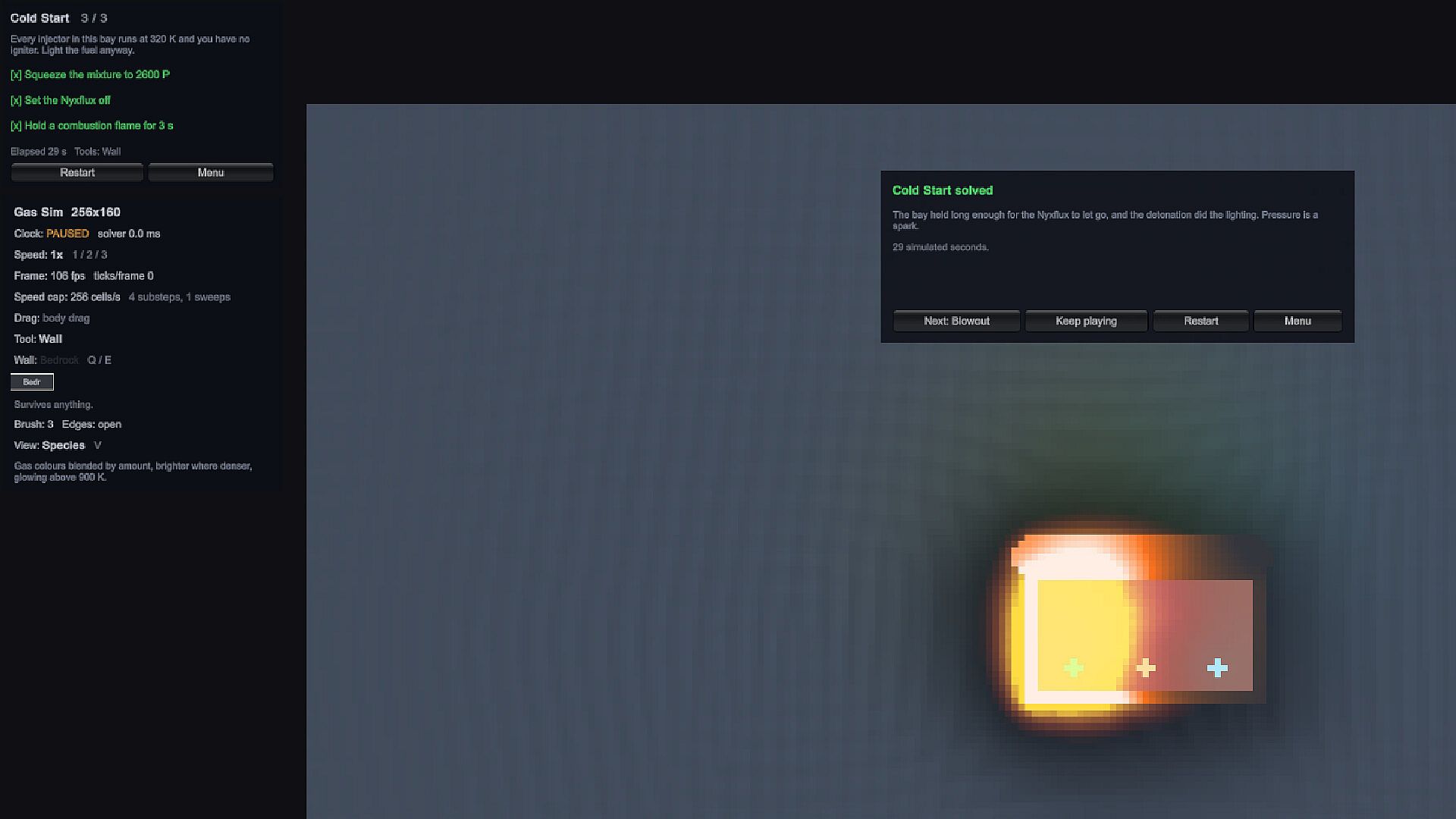
A separate campaign mode restricts tool access and turns the same underlying simulation into puzzle challenges. Objectives display live measurements against targets, such as pressure thresholds that must hold for a set duration measured in simulated seconds. Time scaling preserves the required hold periods across different speeds.
Simulation Mechanics
Every cell maintains independent values for gas composition, energy, and motion. Derived calculations for pressure and temperature update continuously, allowing containment or heat addition to generate stronger interactions with adjacent cells. No particle effects substitute for the underlying grid calculations.
Multiple gases interact according to their physical properties. Light gases diffuse readily across the grid, while heavier ones settle and resist movement. This distinction affects how mixtures form and how reactions propagate or fail under different conditions.
Is It Worth Playing?
Combustor suits players interested in precise simulation mechanics and iterative problem solving. The campaign presents structured objectives that test understanding of temperature, pressure, and timing requirements within the gas system. Those who enjoy building contained reactions or exploring reaction conditions through the Chem Codex will find consistent depth in the available tools and views.
The simulation runs on PC with direct grid interaction and multiple display modes that reveal different layers of the underlying processes. Campaign levels emphasize measurable goals that update in real time, providing clear feedback on progress without hidden failure states.