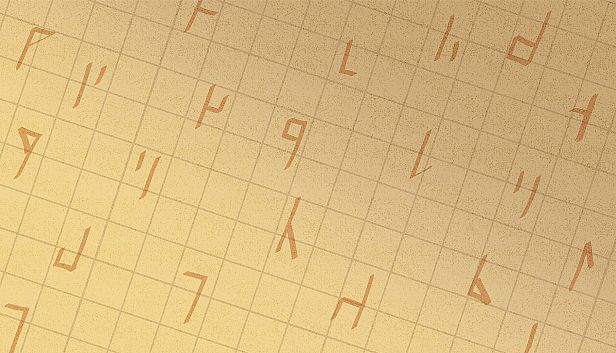


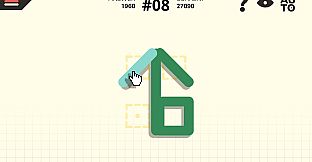
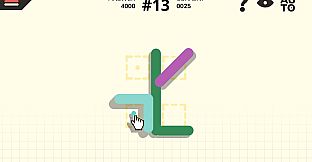
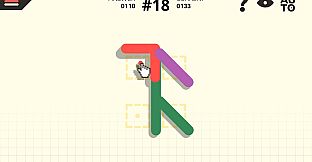
Cipher Monk: Cassette Equation is a casual strategy puzzle game built around a 13th-century number system developed by Cistercian monks. Players solve logic challenges by arranging and manipulating visual pieces that represent digits in this historical notation, all within a calm, minimalist presentation on PC.
Gameplay
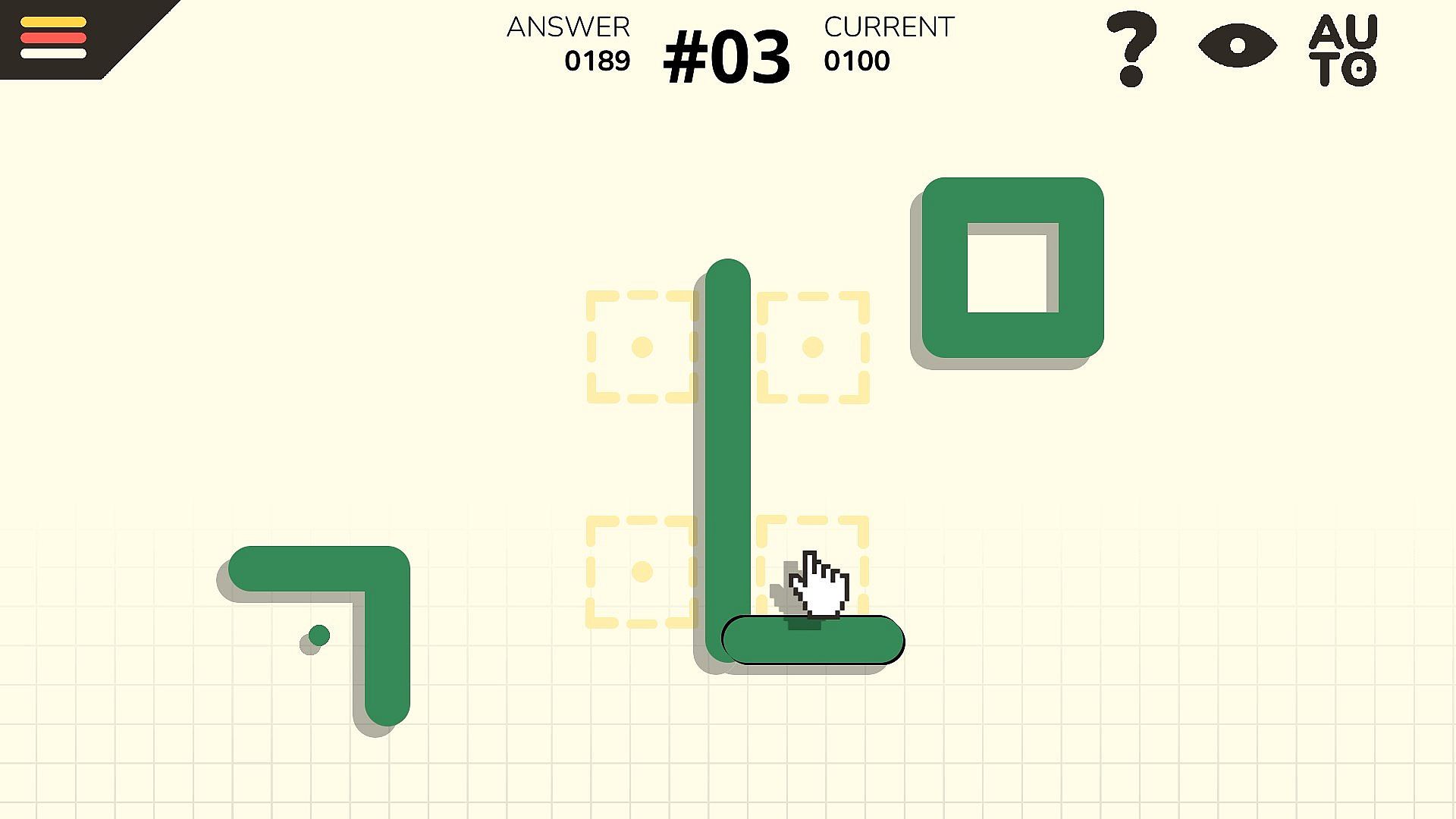
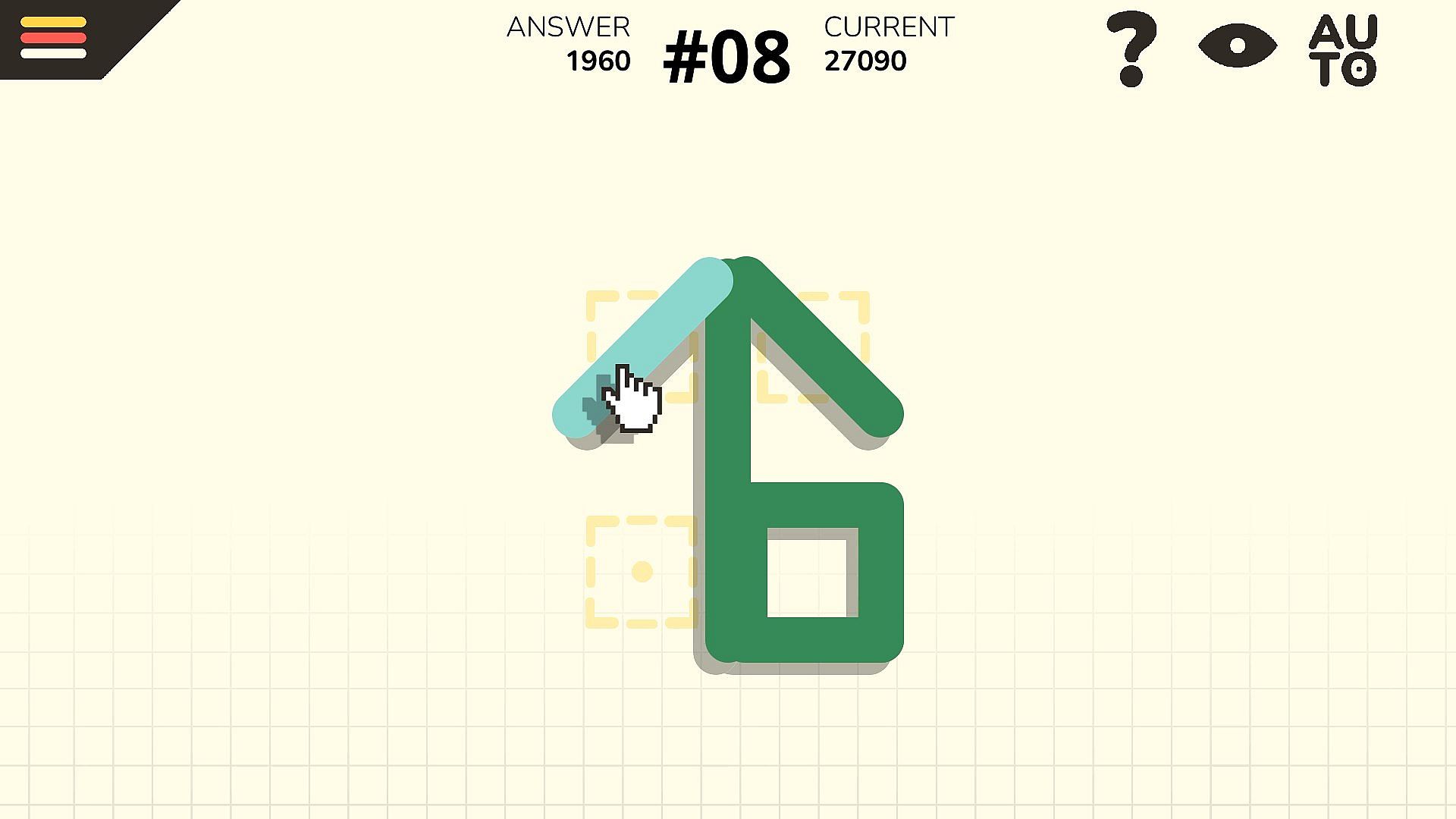
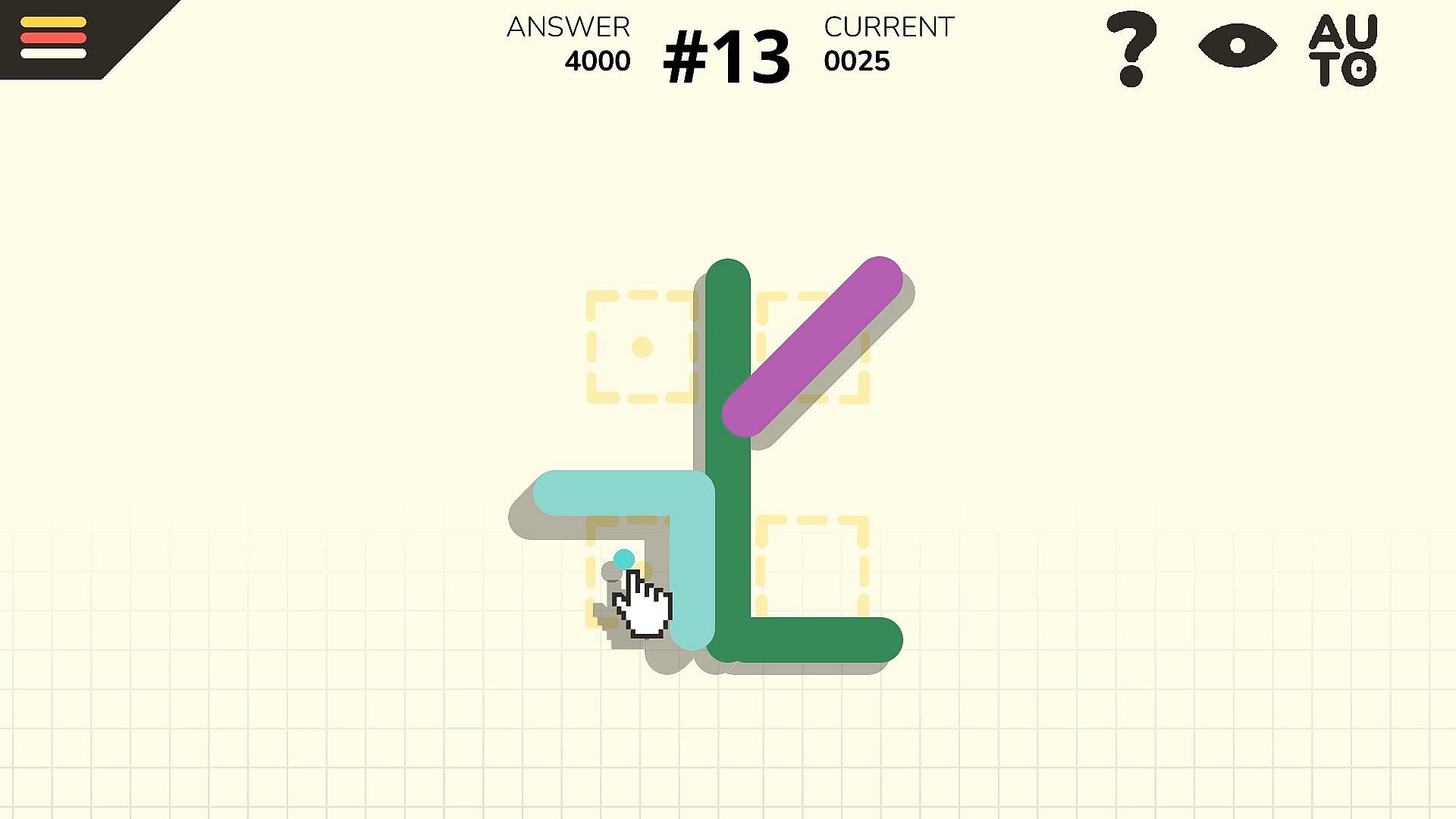
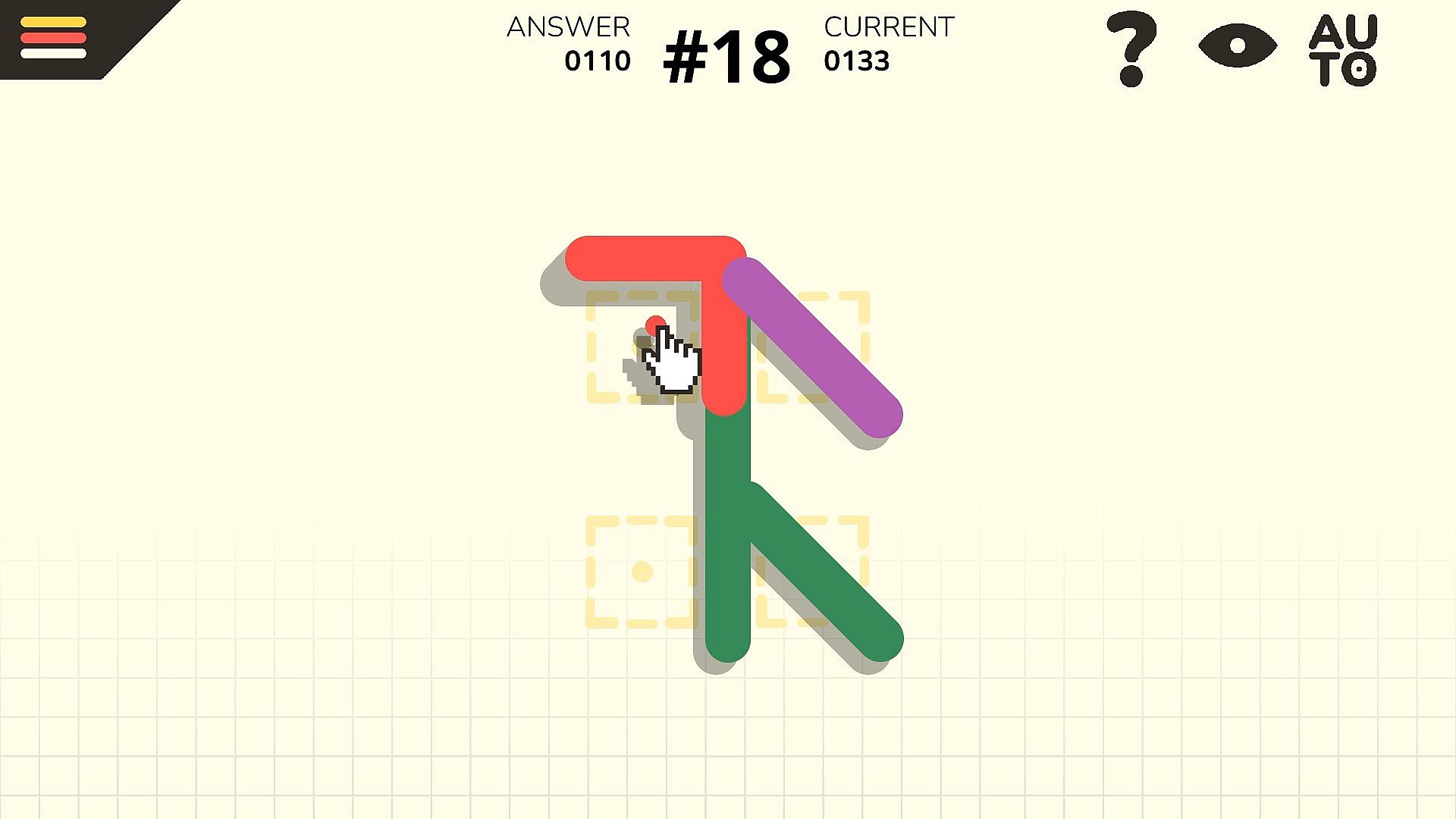
The core loop centers on interpreting and replicating specific numbers through physical manipulation of puzzle elements. Each challenge requires dragging pieces into position, rotating them to match the correct orientation, and combining them until the target value appears. The system uses distinct symbols for units, tens, hundreds, and thousands, with additional rules for negative values that subtract from the total.
Progression introduces the notation gradually across 35 handcrafted levels. Early stages focus on basic single-digit and small-number formations, while later ones demand more complex arrangements and combinations. A built-in guide provides reference when needed, and an optional auto mode assists with placement for those who prefer guided support. Turning auto mode off adds precision requirements and unlocks related challenges tied to manual control.
Visuals remain simple and uncluttered, emphasizing clear piece shapes against a neutral background. The absence of timers or penalties encourages experimentation, allowing players to test rotations and positions freely until the solution clicks. This setup rewards attention to detail and pattern recognition as familiarity with the monk system grows.
Game Modes
The game operates entirely in a single-player format centered on sequential level completion. There are no separate competitive or cooperative modes, keeping the focus on personal pacing and discovery.
Level progression forms the main structure, with achievements tracking milestones such as finishing the first ten or twenty stages. Optional mechanics like repeated guide access or completing levels without assistance create self-directed variations within the same core puzzles. These elements extend replay value for players who want to refine their approach or explore the system more deeply without altering the fundamental single-player experience.
Learning the Ancient System
The Cistercian notation serves as both the puzzle mechanic and the educational element. Each piece corresponds to specific numerical values depending on its shape and rotation, and players quickly learn to read and construct numbers up to several thousand. Negative pieces introduce subtraction, adding a layer of calculation to the spatial tasks.
Over the course of the levels, the notation becomes intuitive. What begins as consulting the guide frequently shifts toward direct recognition, turning each new challenge into an exercise in applied logic rather than rote memorization. The design supports this natural learning curve without external tutorials beyond the in-game reference.
Is It Worth Playing?
Cipher Monk: Cassette Equation suits players who appreciate short, focused logic puzzles that blend spatial reasoning with a touch of historical curiosity. The 35 levels provide a complete experience that typically lasts under an hour for most, making it ideal for brief sessions or as a low-pressure mental exercise.
Reception for the closely related original release highlights the satisfying moment when the system clicks and the relaxing atmosphere created by straightforward controls and composed audio. Completion data on console platforms shows many players finishing the full set of challenges quickly, confirming the accessible yet engaging nature of the content.
Those who enjoy minimalist puzzle games that teach a unique skill through repetition and discovery will find value here. The calm presentation and emphasis on personal experimentation deliver consistent satisfaction without unnecessary complexity or extended commitments.