













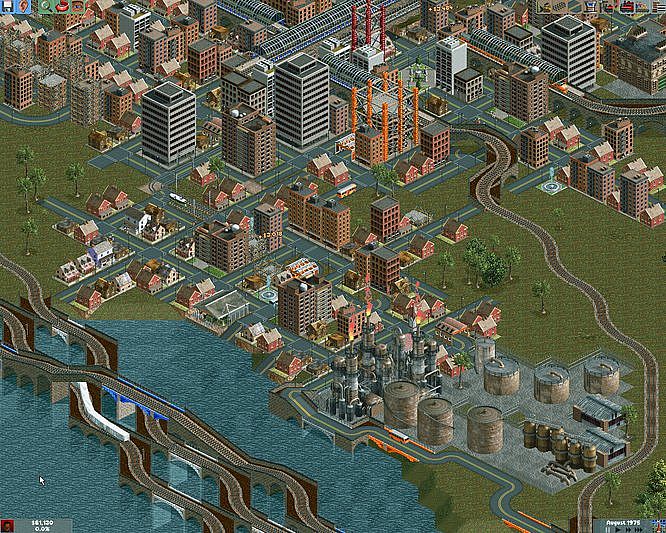
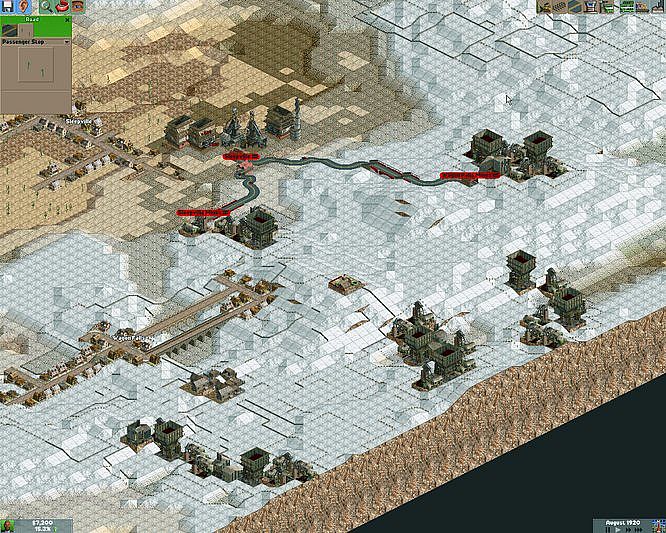
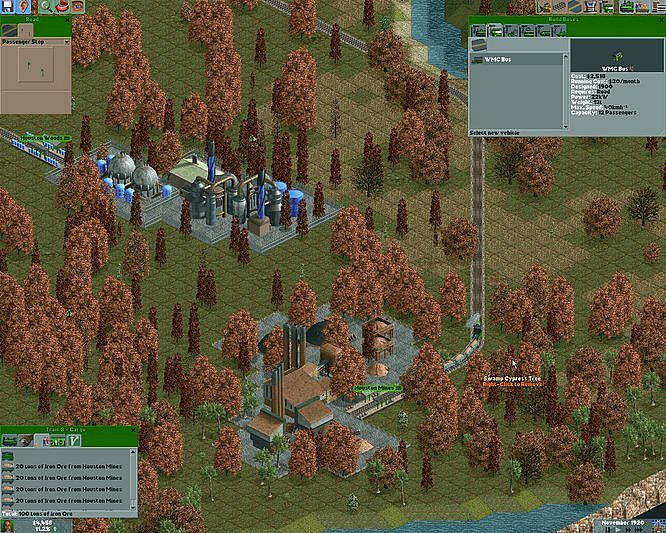
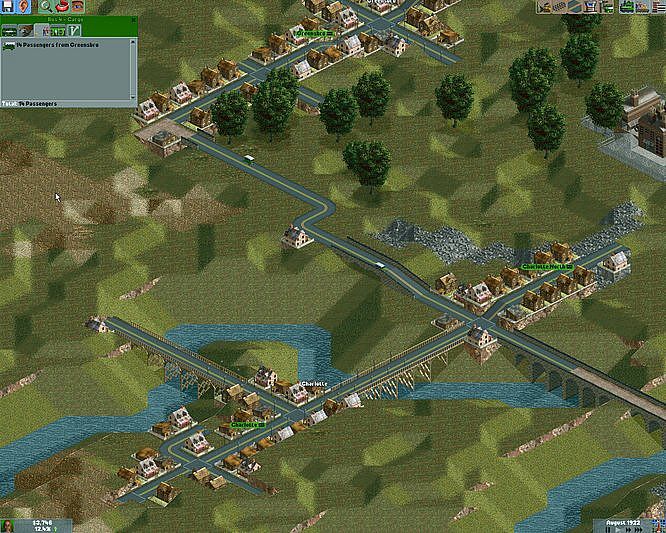
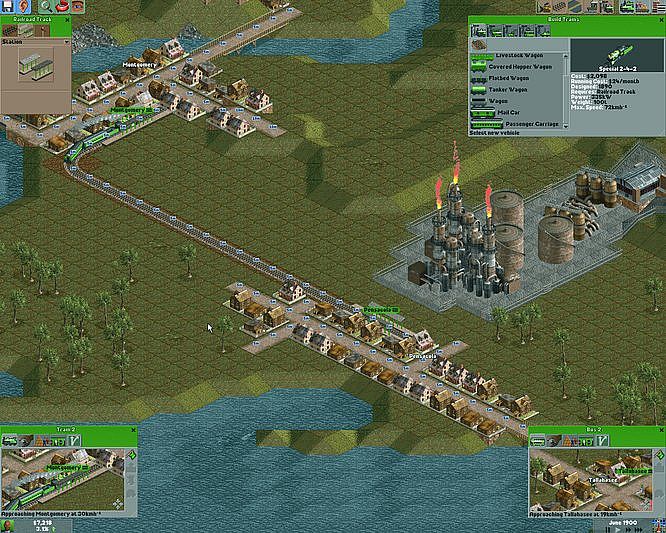
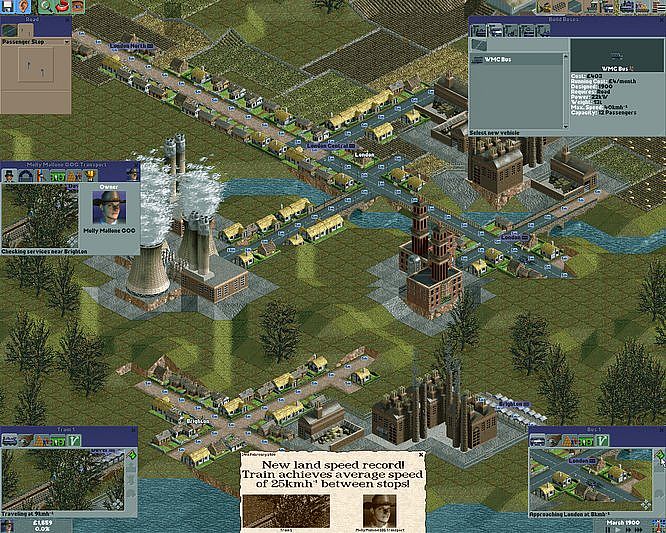
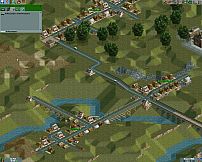
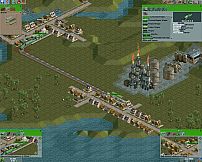
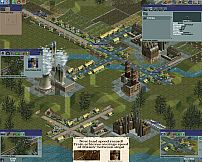
Chris Sawyer's Locomotion is a strategy simulation game focused on building and expanding a transportation company. Players construct networks of rails, roads, and other infrastructure to move passengers and cargo across detailed maps that span from the early 1900s into the future.
Gameplay
The core loop centers on planning efficient routes that generate profit through distance traveled and timely deliveries. Raw materials move from production sites to factories, finished goods reach towns and shops, and passengers travel between cities or to key destinations. Payment scales with cargo volume, travel distance, and speed of delivery, encouraging careful route optimization and vehicle selection.
Construction involves laying tracks with proper signaling, building roads for trucks and buses, and establishing airports or ports for air and sea transport. The game features curved tracks and realistic train physics that affect high-speed operations. Time advances year by year, introducing new vehicle technologies and shifting economic demands as cities grow.
Competition comes from AI-controlled companies that vie for the same routes and contracts. Success requires balancing expansion costs against revenue while adapting to map-specific challenges like terrain and resource placement. A built-in tutorial guides new players through basic operations before tackling full scenarios.
Vehicles span multiple categories. Rail options handle bulk long-haul freight and passengers. Road vehicles manage shorter or flexible routes. Aircraft and ships serve distant or specialized connections. Each type has strengths in speed, capacity, and operating costs that influence network design.
Game Modes
Chris Sawyer's Locomotion relies primarily on scenario play. Each scenario presents a unique map with defined objectives, such as achieving a target company value or completing a set volume of deliveries by a specific year. Objectives vary in complexity and reward efficient planning over open-ended building.
Scenarios are grouped by difficulty, ranging from beginner levels with straightforward goals to expert challenges that demand precise management and long-term strategy. World variations include different geographic settings and starting eras, altering available resources and initial conditions.
Two-player multiplayer supports direct connections for head-to-head competition on shared maps. This mode emphasizes outmaneuvering opponents for market share without the single-player AI constraints.
Players can also access a scenario editor to create custom challenges, extending replayability beyond the included selection of dozens of official maps.
World and Competition
Maps represent varied regions with growing metropolises that generate ongoing demand for transport services. Economic changes over decades affect cargo types and passenger volumes, requiring networks to evolve with new technologies and infrastructure upgrades.
AI rivals actively expand their own operations and attempt to capture profitable routes. Managing market share involves strategic station placement, pricing considerations through service quality, and timely responses to competitor moves.
Progression rewards sustained profitability. Accumulated funds support larger fleets, more extensive track networks, and advanced vehicles that unlock as years pass. The simulation runs continuously, allowing players to continue beyond initial scenario goals if desired.
Is It Worth Playing?
Chris Sawyer's Locomotion appeals to fans of detailed transport management simulations who enjoy methodical route planning and long-term empire building. Its scenario structure provides clear goals while allowing creative freedom in network design.
Player reception on modern platforms shows strong approval from those who engage with its systems, highlighting the depth of its mechanics despite the age of the original release. A single official patch addressed several issues, and the game remains playable in its base form.
The title suits players comfortable with older interfaces and willing to learn its signaling and routing nuances. Those seeking quick sessions or modern visuals may find it less accessible, but enthusiasts of the genre often appreciate its focused approach to competition and progression.
With numerous scenarios across difficulty levels and support for custom content, the game offers substantial content for dedicated players interested in transportation strategy.