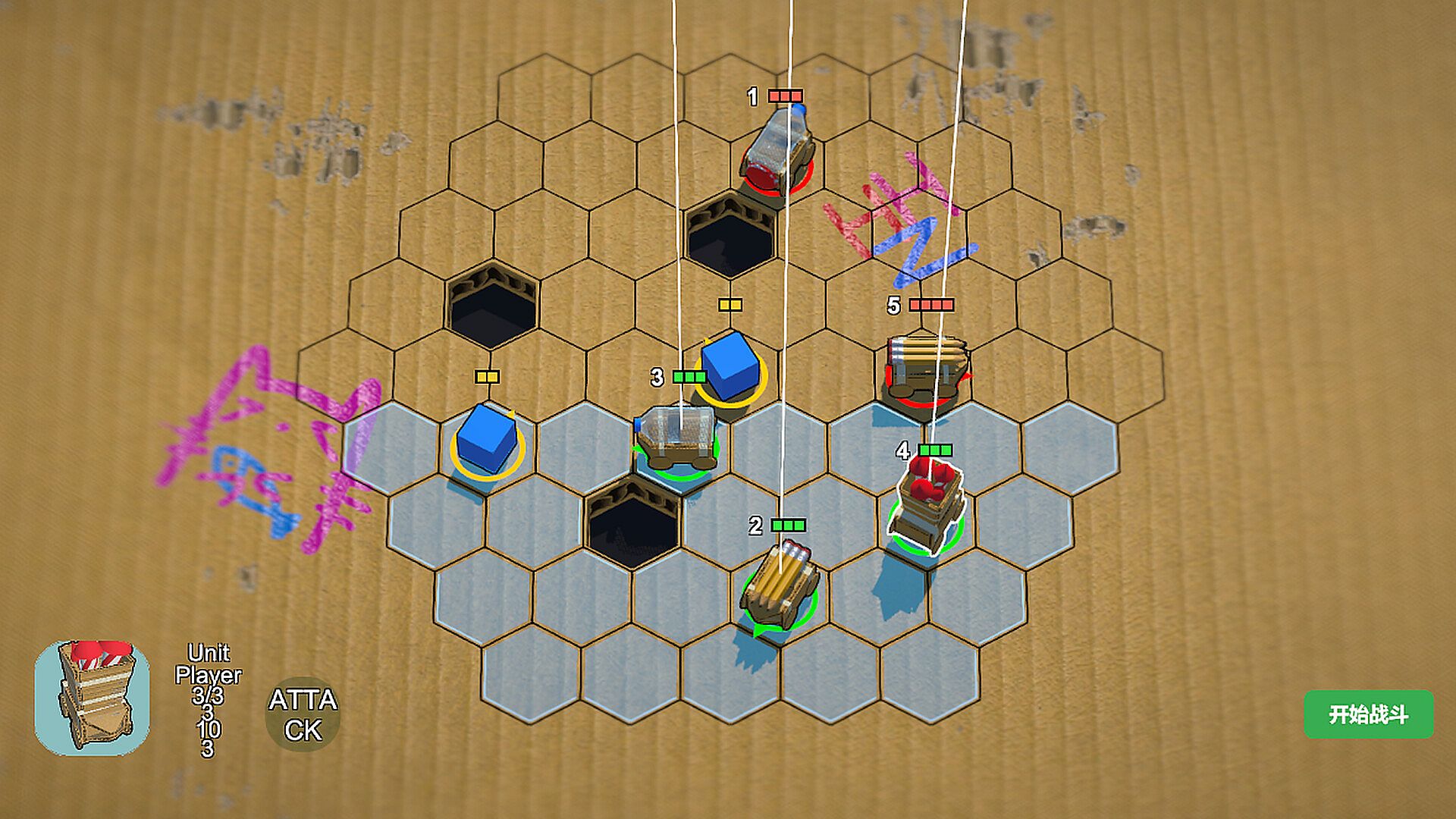
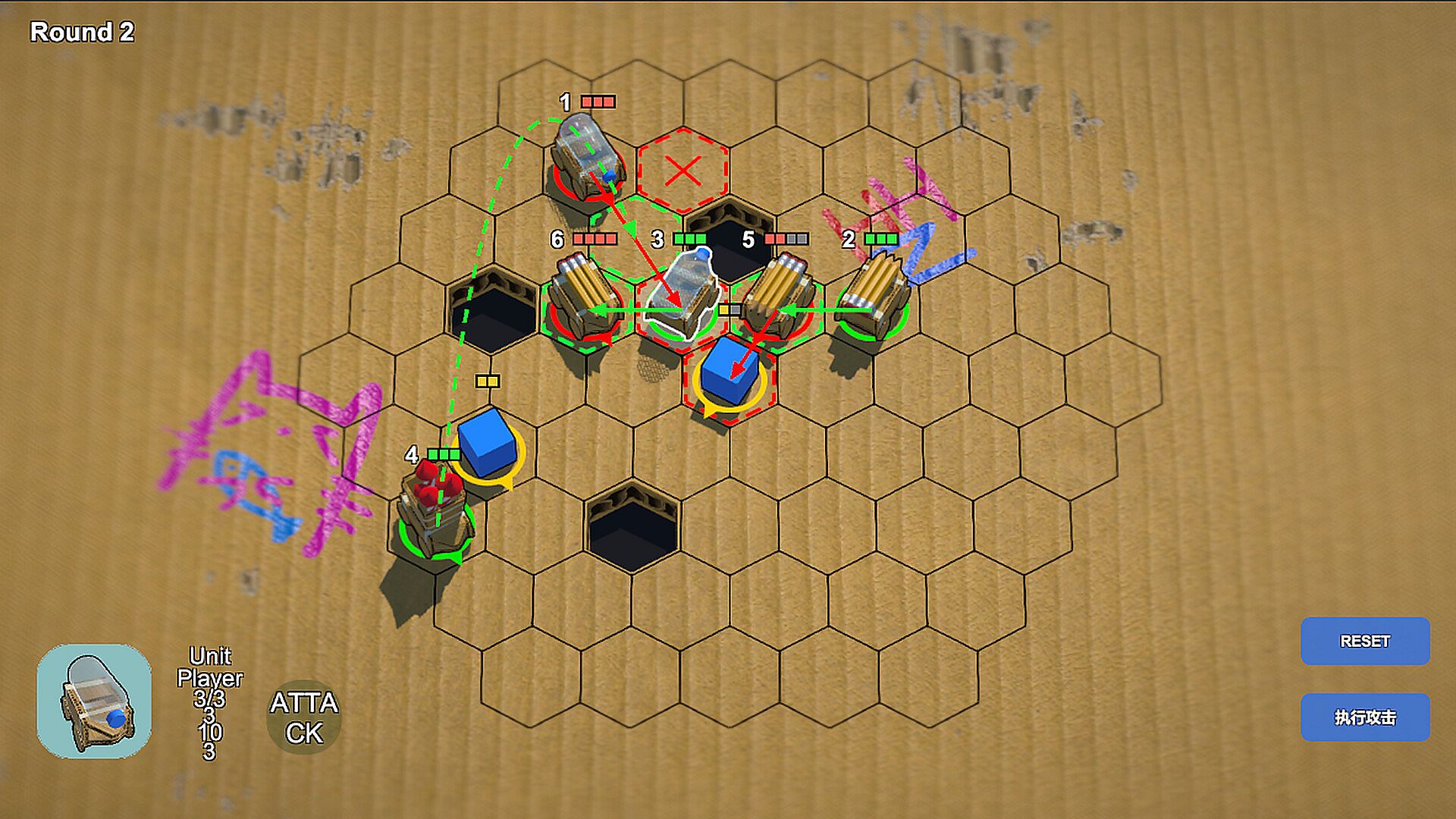
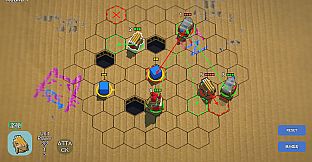
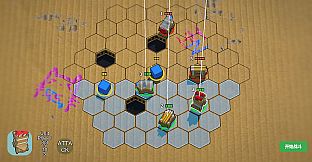
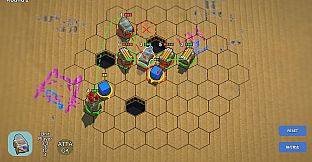
Cardboard Convoy is a turn-based tactics strategy game for PC that places players in command of three handmade cardboard toy cars during intense, small-scale battles on a tabletop hex grid. The experience emphasizes careful planning, positioning, and prediction in a toy-filled setting where everyday objects become weapons and hazards. Battles unfold with enemies acting first to reveal their intentions, followed by a free planning phase for the player's squad before actions resolve in speed order.
Gameplay
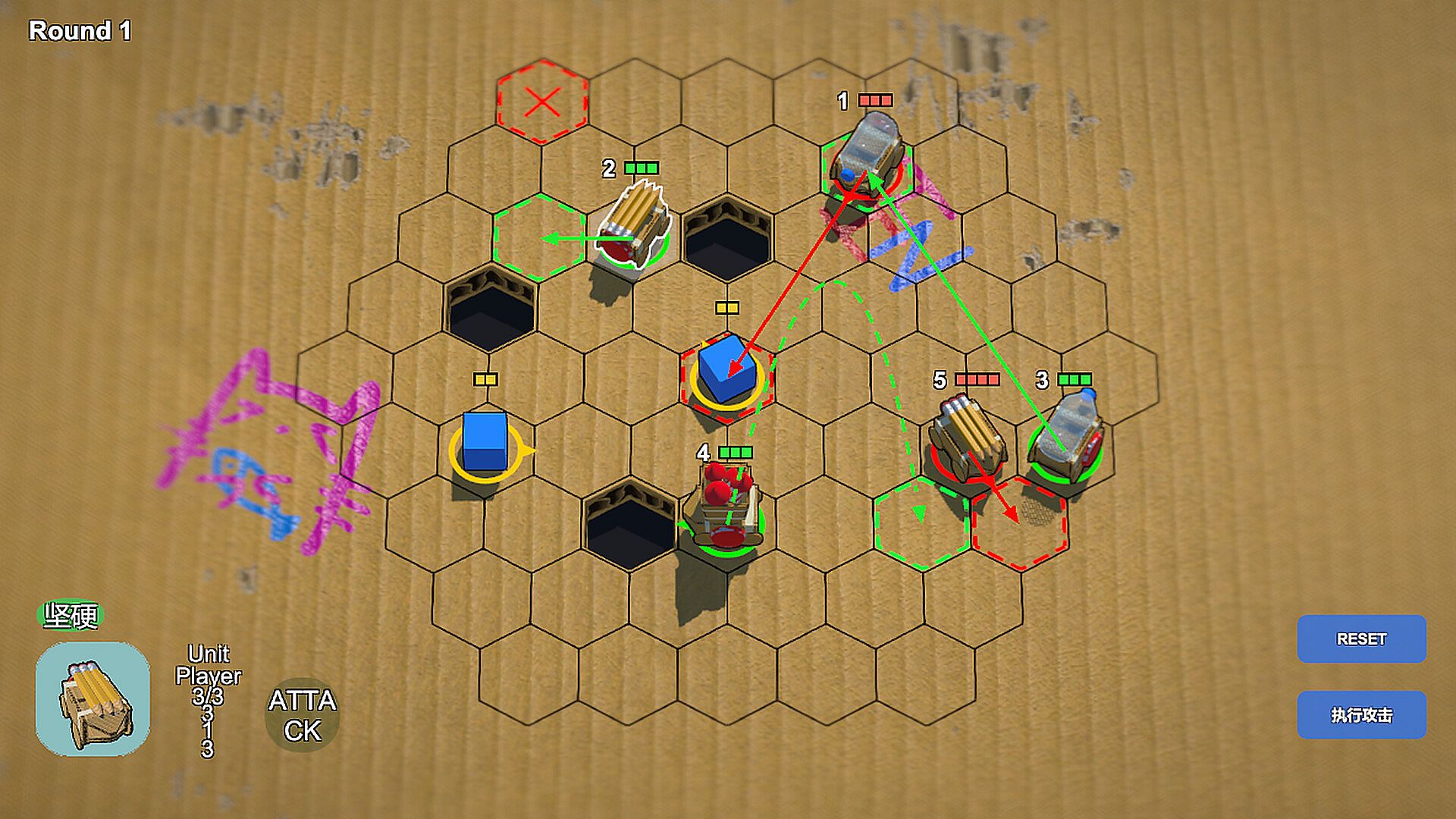
The core loop revolves around commanding a squad of three cardboard cars across a hex grid battlefield. Each round begins with enemy movement and attack telegraphs that players must anticipate. During the planning phase, the three cars receive orders for movement and attacks without restrictions from action points or similar limits. Execution then occurs in a speed-based sequence where every decision about positioning influences outcomes.
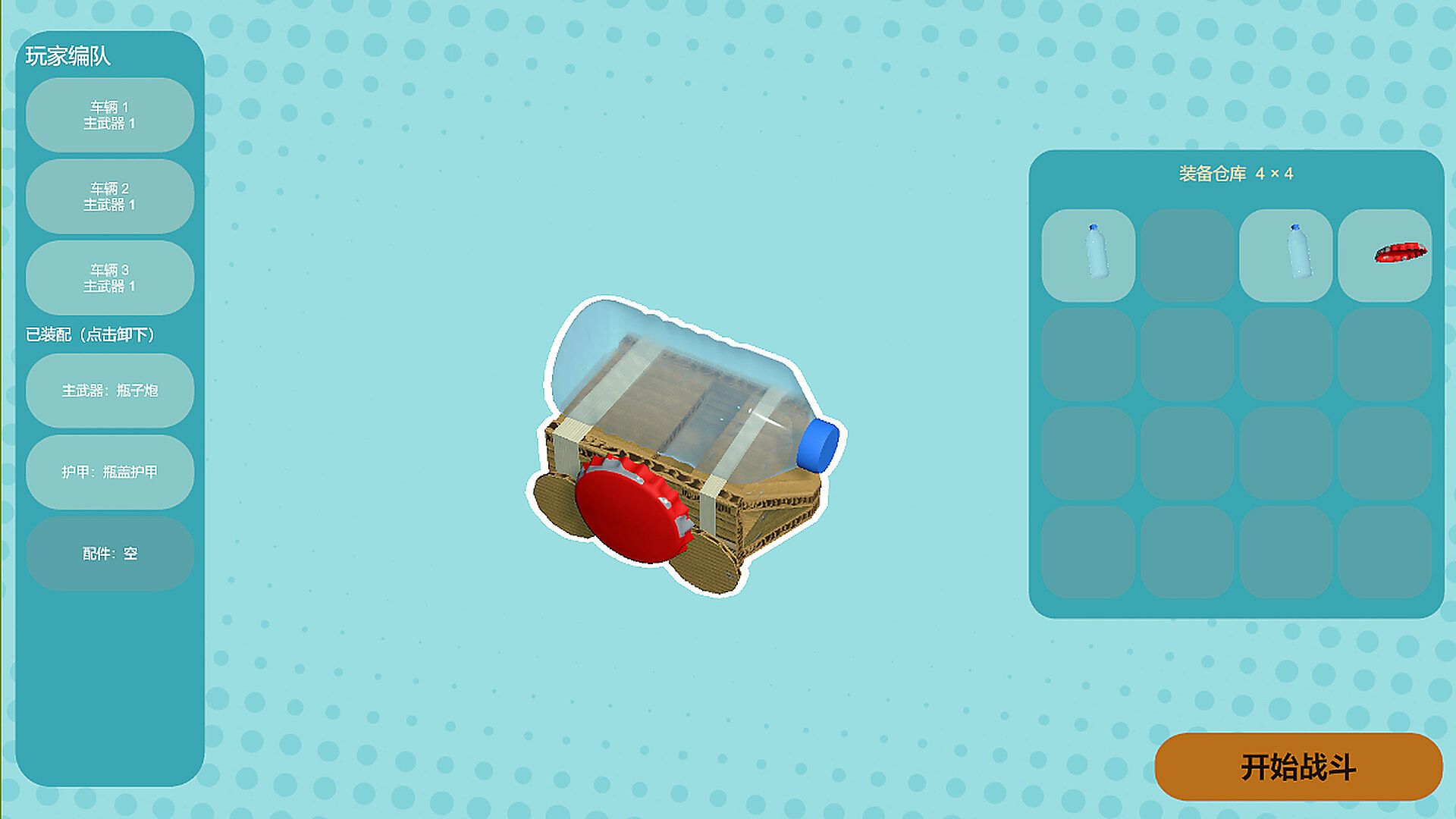
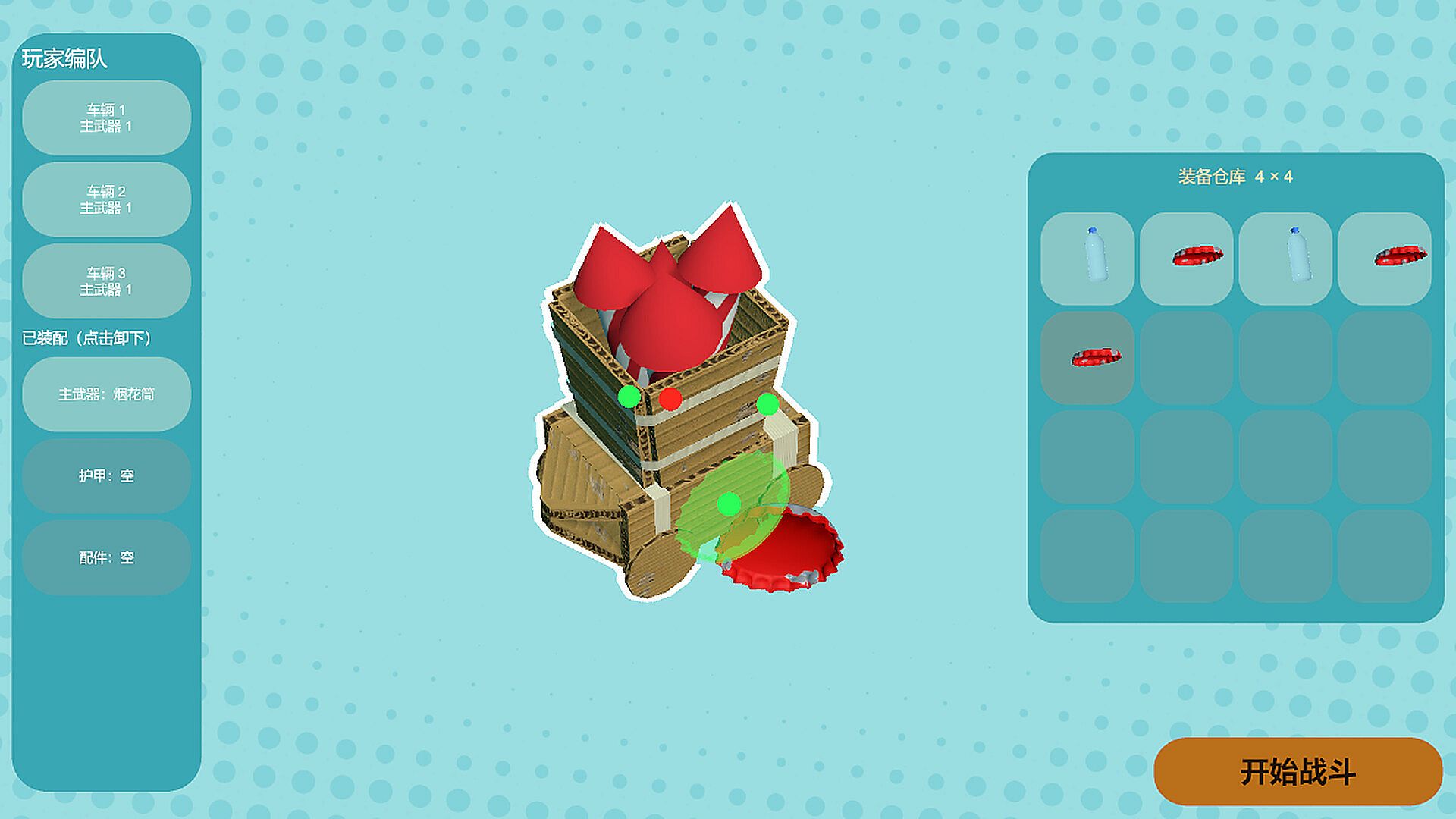
Attacks incorporate directional shots and target-cell mechanics alongside tools such as pencil strikes, bottle cannons, and fireworks. Knockback, collisions, and blocked shots create chain reactions that can turn the tide. Battlefield elements include traps and hazards that interact with the toy-like presentation featuring ropes, drops, and warning marks. Players must protect energy objects while surviving encounters that reward precise timing and disruption of enemy plans.
Visual and mechanical details reinforce the tabletop theme, with all actions feeling grounded in physical toy interactions rather than abstract units. The 3D presentation highlights collisions and environmental effects on the hex grid, making every hit and repositioning matter in compact, focused fights.
Game Modes
Cardboard Convoy delivers its experience through standalone tactical battles that follow the same structured round format. Enemies always move and telegraph attacks first, giving players a dedicated planning window to assign movement and attacks to their three cars. Resolution happens simultaneously in speed order, emphasizing prediction and adaptation over real-time reflexes.
The single-player focus keeps attention on mastering the interplay between squad positioning, attack lines, and hazard management within each encounter. No additional modes such as multiplayer or endless variants appear in available details, keeping the emphasis on the core turn-based tactics loop across varied tabletop setups.
Key Mechanics and Features
Directional shots and target-cell attacks allow flexible offense, while traps and hazards add layers of environmental strategy. Collision damage and knockback introduce physics-like interactions that reward lining up enemies or using the environment creatively. The planning phase stands out for its freedom, letting players experiment with formations before committing to the speed-ordered resolution.
Energy object protection forms a consistent objective across battles, tying survival to defensive positioning alongside offensive planning. Toy-themed elements like warning marks and tabletop effects enhance readability without complicating the underlying hex-grid tactics. These systems combine to create a deliberate pace where foresight determines success more than raw power.
Is It Worth Playing?
Cardboard Convoy suits players who enjoy deliberate, planning-heavy turn-based tactics in a compact package. The emphasis on three-unit squads, enemy telegraphs, and physics-influenced combat offers a distinct alternative to larger-scale strategy titles. Its single-player battles reward repeated attempts at the same encounters through improved prediction and positioning.
With a release date listed as coming soon and no user reviews available yet, the game remains untested by a broader audience. Those drawn to hex-grid tactics, toy-themed presentations, and mechanics centered on knockback, collisions, and directional attacks may find the focused scope appealing once it launches. The absence of confirmed updates or additional content at this stage means the core experience stands on the described battle systems alone.