





Capewright is a single-player narrative card game that blends strategy, simulation, and indie elements on PC. Players step into the role of Director at an academy tasked with training the next generation of superpowered heroes in a city still recovering from past failures. The experience centers on managing limited resources, making difficult choices about which crises to address, and guiding students through personal and professional pressures that can shape them into heroes or push them toward villainy.
Gameplay
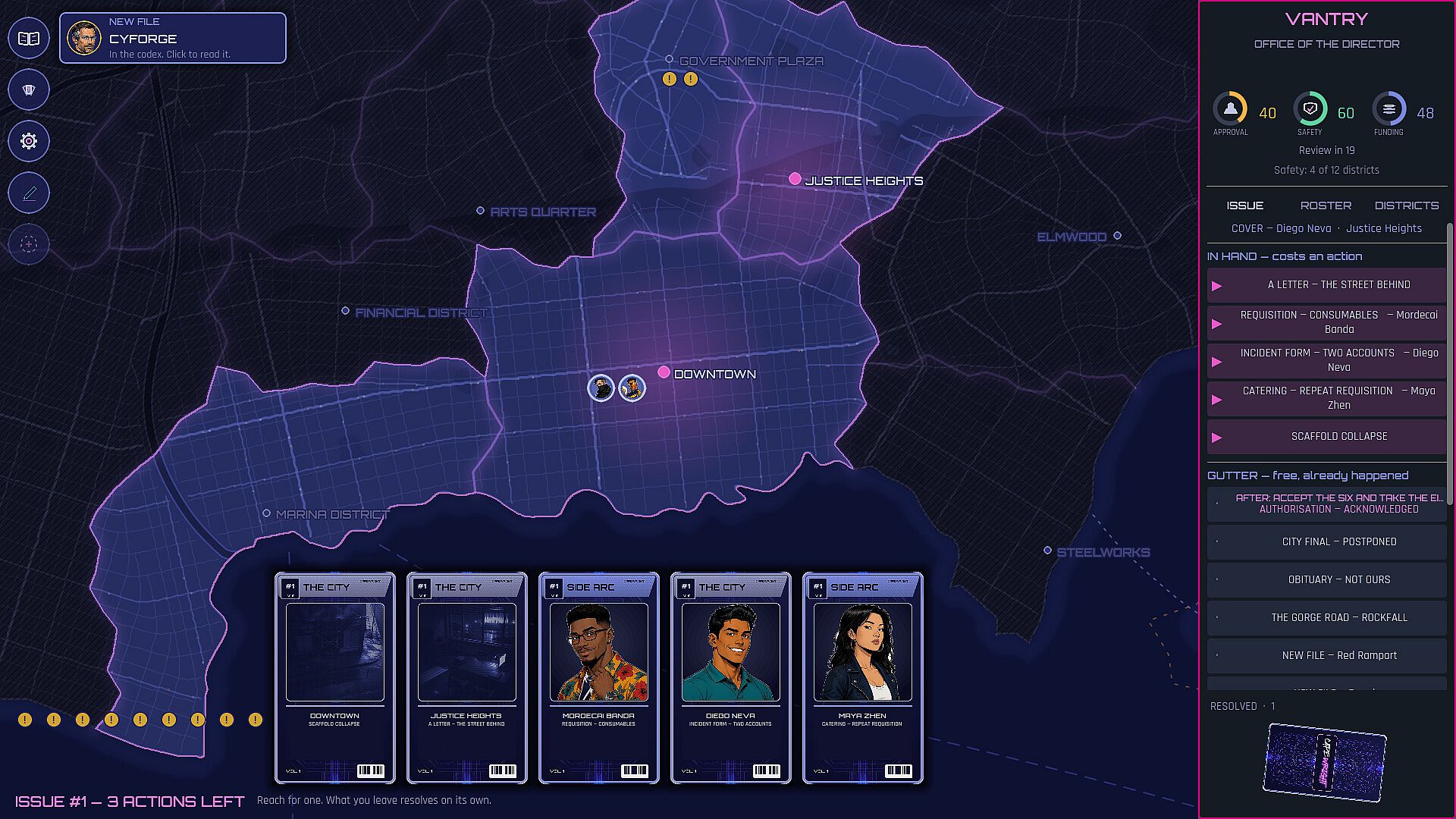
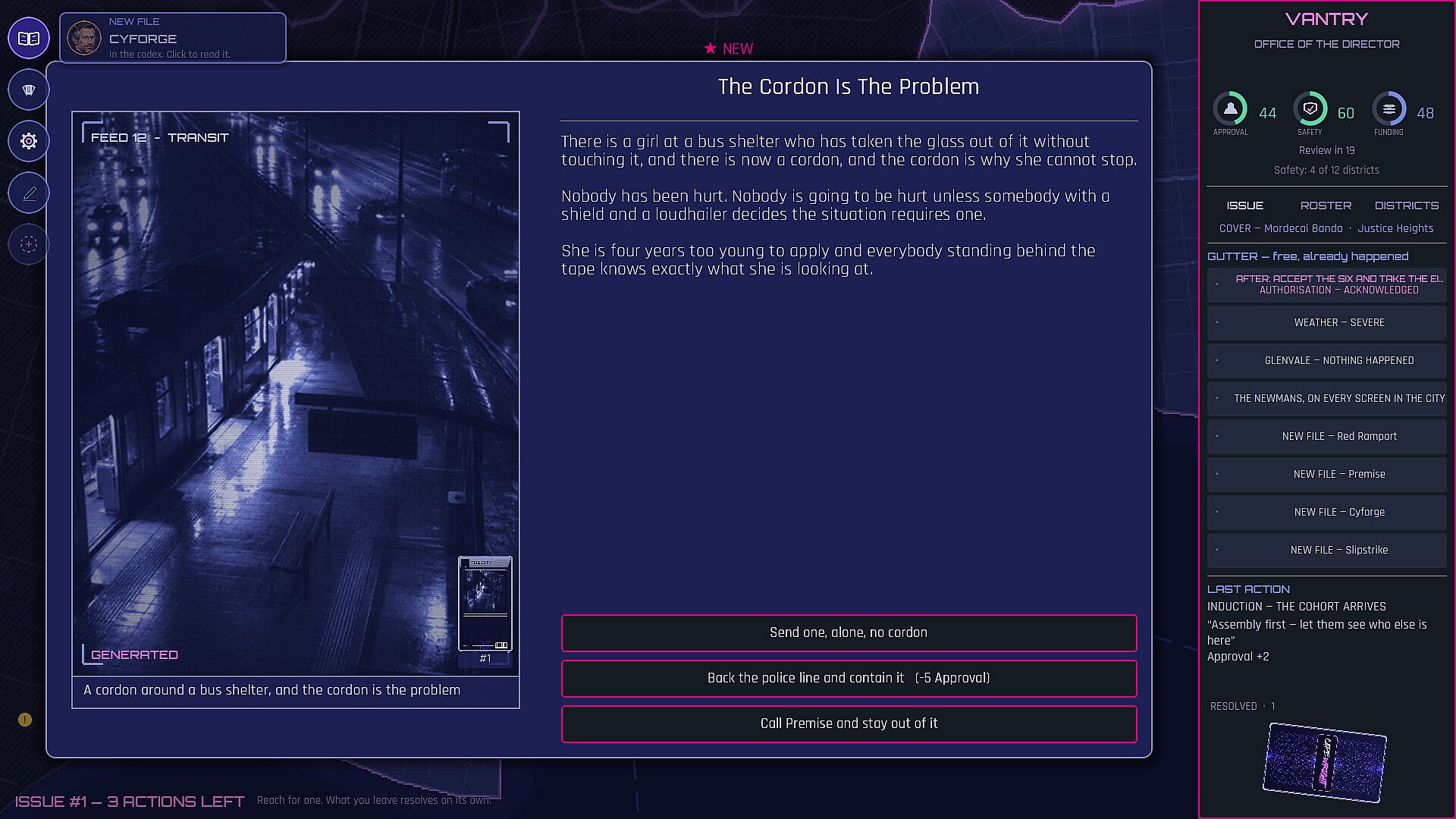
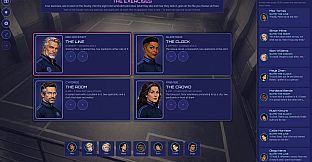
Time advances through Issues that function like comic book chapters. Each Issue presents a hand of crises drawn from city events, student needs, and external demands. Players select cards one at a time to resolve, while any unaddressed issues play out with lasting effects on the academy and its students. This creates a core loop of prioritization where every decision carries forward consequences.
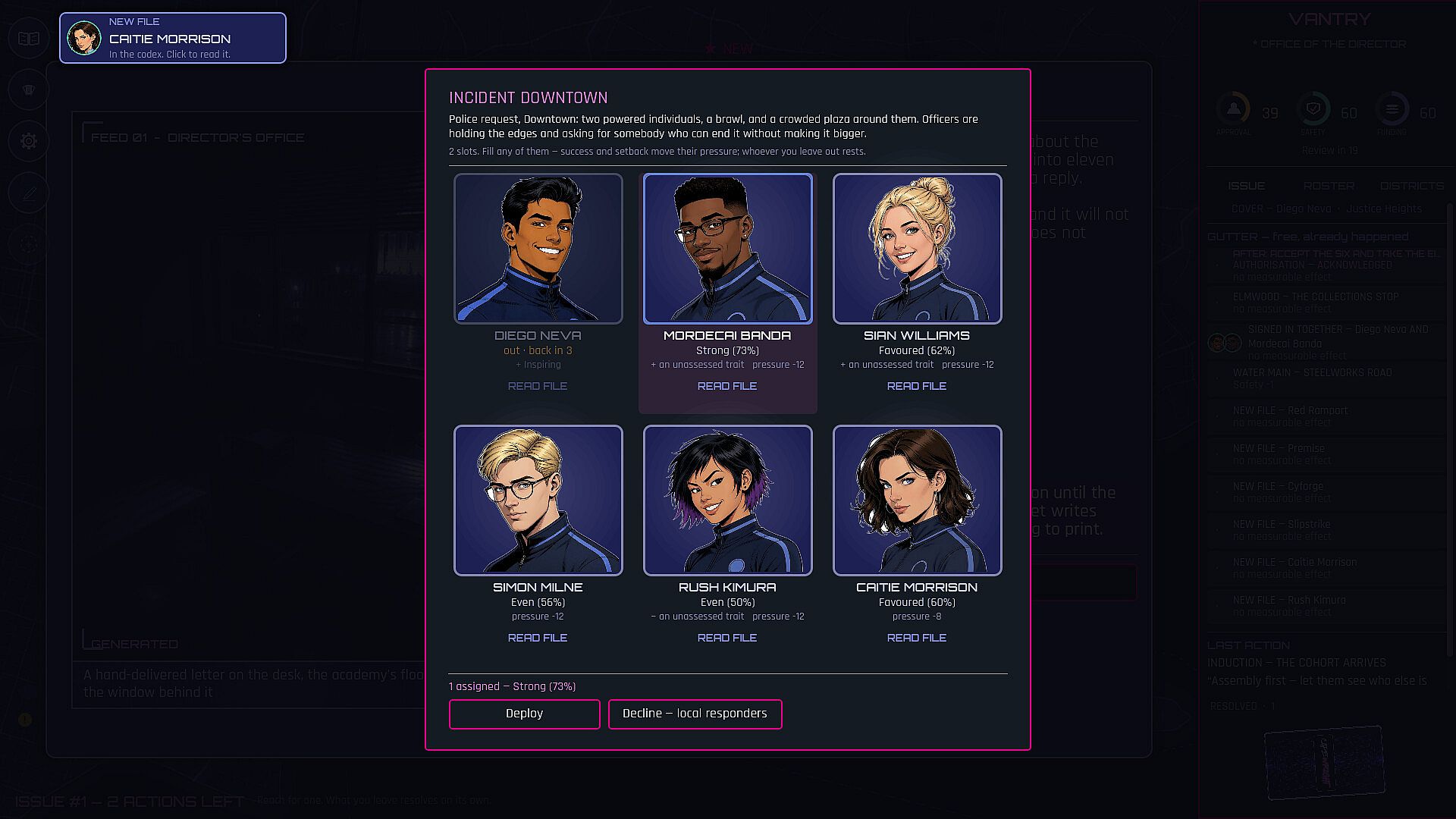
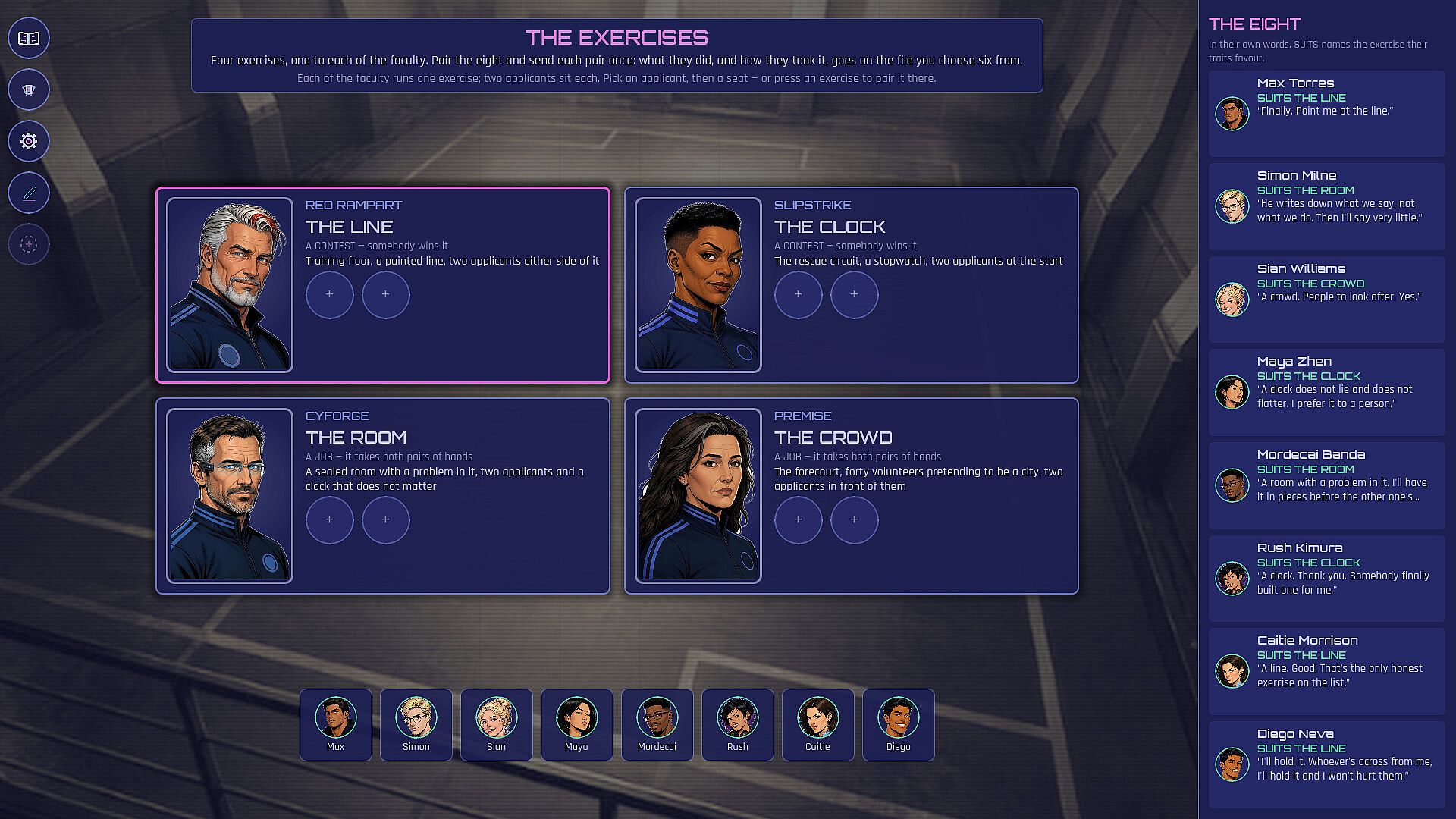
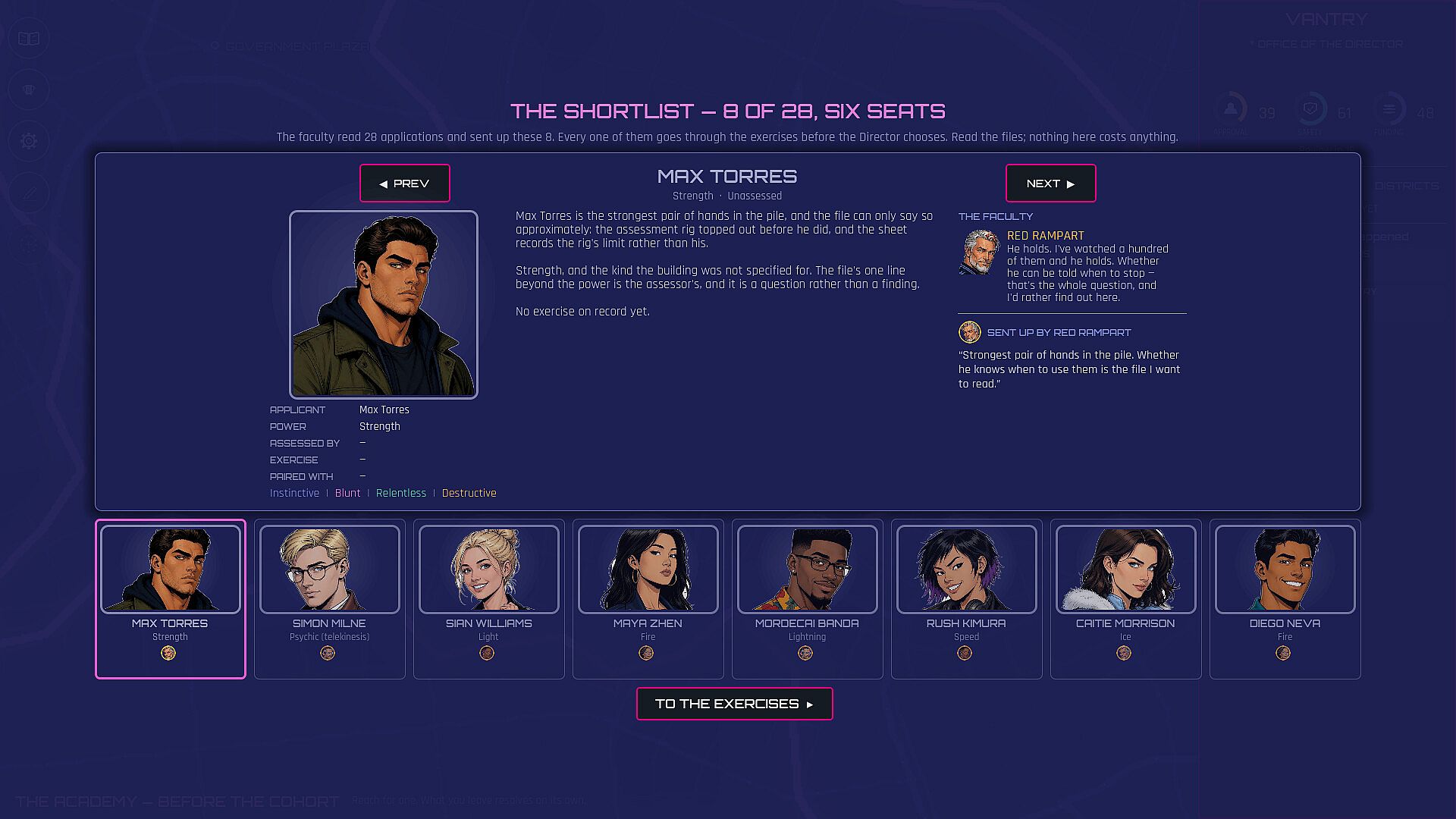
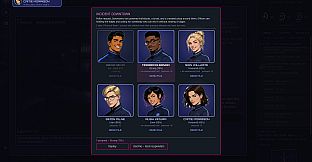
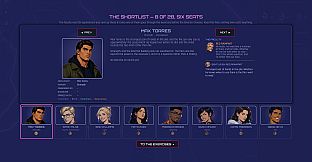
Intake selection begins with eight candidates competing for six available seats. Once chosen, each student pairs with one of four veteran faculty members before deployment into the city. Pressure becomes central to development. Students perform best within an individual sweet spot. Too little pressure leaves them stagnant, while excess risks breakdown. The system tracks these thresholds closely across multiple students simultaneously.
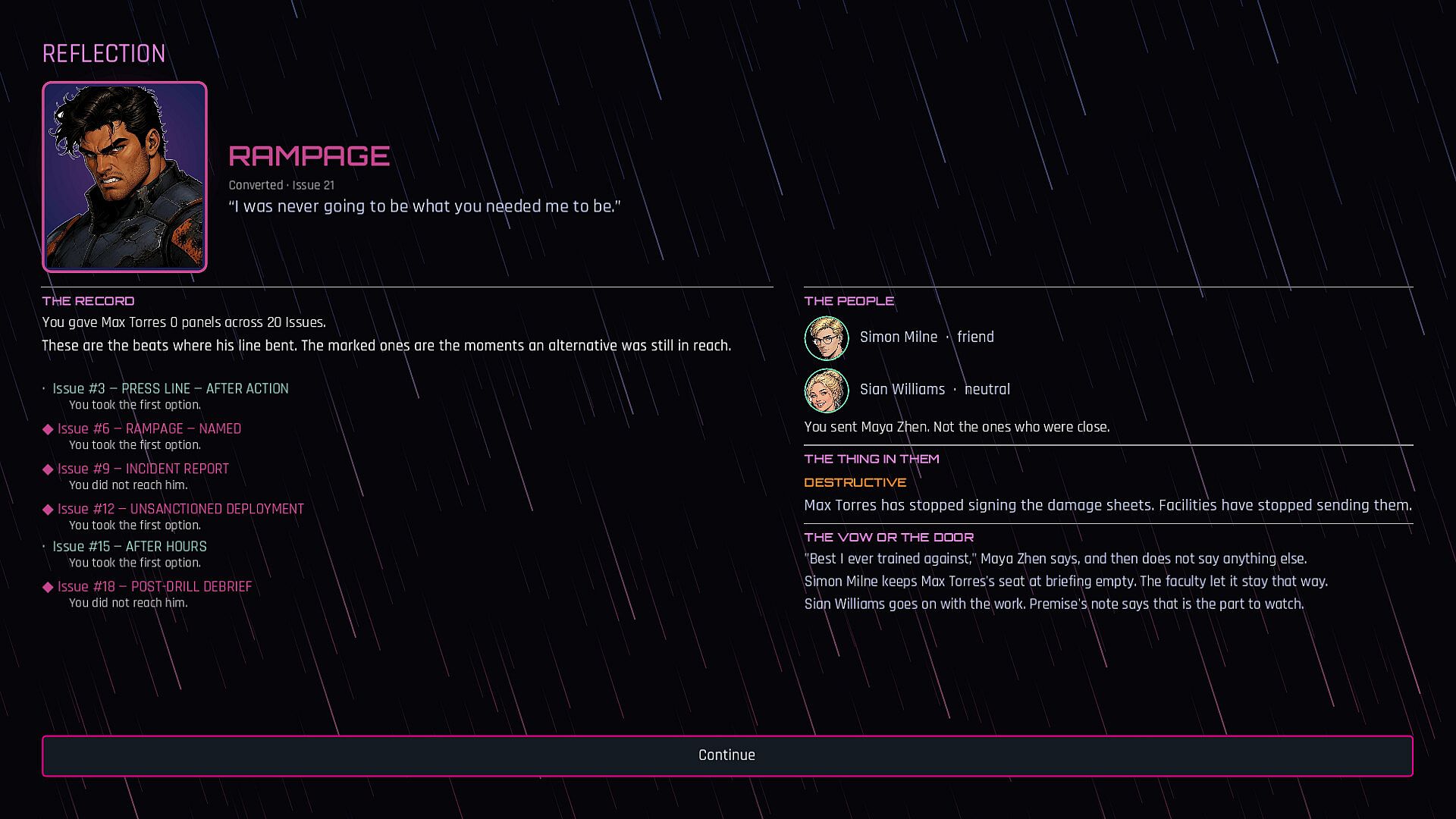
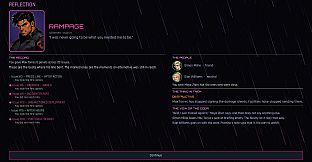
Every student maintains two personas. Guidance influences which side emerges over time. Losing a student allows review of their full file to identify the exact decision points where different choices might have altered the outcome. Public funding adds another layer. Directors allocate resources to sustain Approval and Safety metrics. Government reviews evaluate these values, and either dropping to zero ends the program.
Game Modes
The game operates as a continuous single-player campaign structured around sequential Volumes. The first two Volumes form the initial Early Access experience, with Volume 2 incorporating carryover effects from choices made in Volume 1. Returning students or former students who turned villain can appear based on prior decisions.
Within each Volume, play revolves around the Issue-based card resolution system, student intake and pairing, deployment management, and ongoing tracking of pressure, personas, and institutional metrics. No separate competitive or multiplayer modes exist. Progression builds a personal canon through accumulated choices across expanding Volumes, with new student applications and threats introduced in later content.
Story and Setting
The narrative background establishes three generations of powered individuals. The first generation saw limited resistance against villainy. The second produced many who now control the city. The third generation offers a chance to reverse the trend through targeted academy training. Players never control heroes directly. Responsibility instead falls on shaping their development while balancing external pressures from sponsors, the public, and city emergencies.
Consequences extend beyond individual students. Lost opportunities in one Issue can affect Approval ratings or trigger safety incidents that influence later Volumes. The structure encourages repeated playthroughs to explore different intake selections and intervention priorities.
Current State and Development
Capewright remains in active development ahead of its planned Early Access release. The initial build includes complete drafts of the first two Volumes along with all core systems for deployments, pressure management, persona shifts, and institutional oversight. Placeholder artwork generated through AI will receive commissioned replacements before full release. Additional writing drafts and audio elements continue refinement based on player input during the Early Access period, which the developer estimates at around two years.
At least five Volumes form the base story, with further expansions planned afterward. The project emphasizes player feedback on balance and narrative branches to shape ongoing updates.
Is It Worth Playing?
Capewright targets players who enjoy deliberate, consequence-heavy management simulations delivered through card-driven choices. The emphasis on student pressure thresholds, persona tracking, and long-term institutional stability creates a focused experience distinct from direct combat or open-world exploration. Those drawn to narrative strategy titles that reward careful prioritization and retrospective analysis of decisions will find the systems align closely with that preference.
Because the game has not yet entered Early Access, no player reviews or aggregated ratings exist to reference. The described mechanics stand as the primary basis for evaluation. Individuals interested in an indie simulation of superhero academy oversight should monitor its progress through the planned Volumes and art updates. The single-player structure and expanding canon make it suitable for those prepared to engage with an evolving title over an extended development window.











