




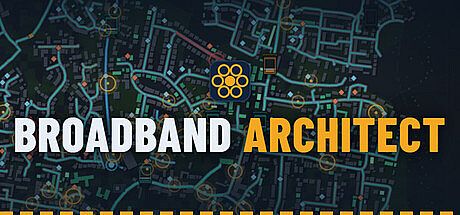


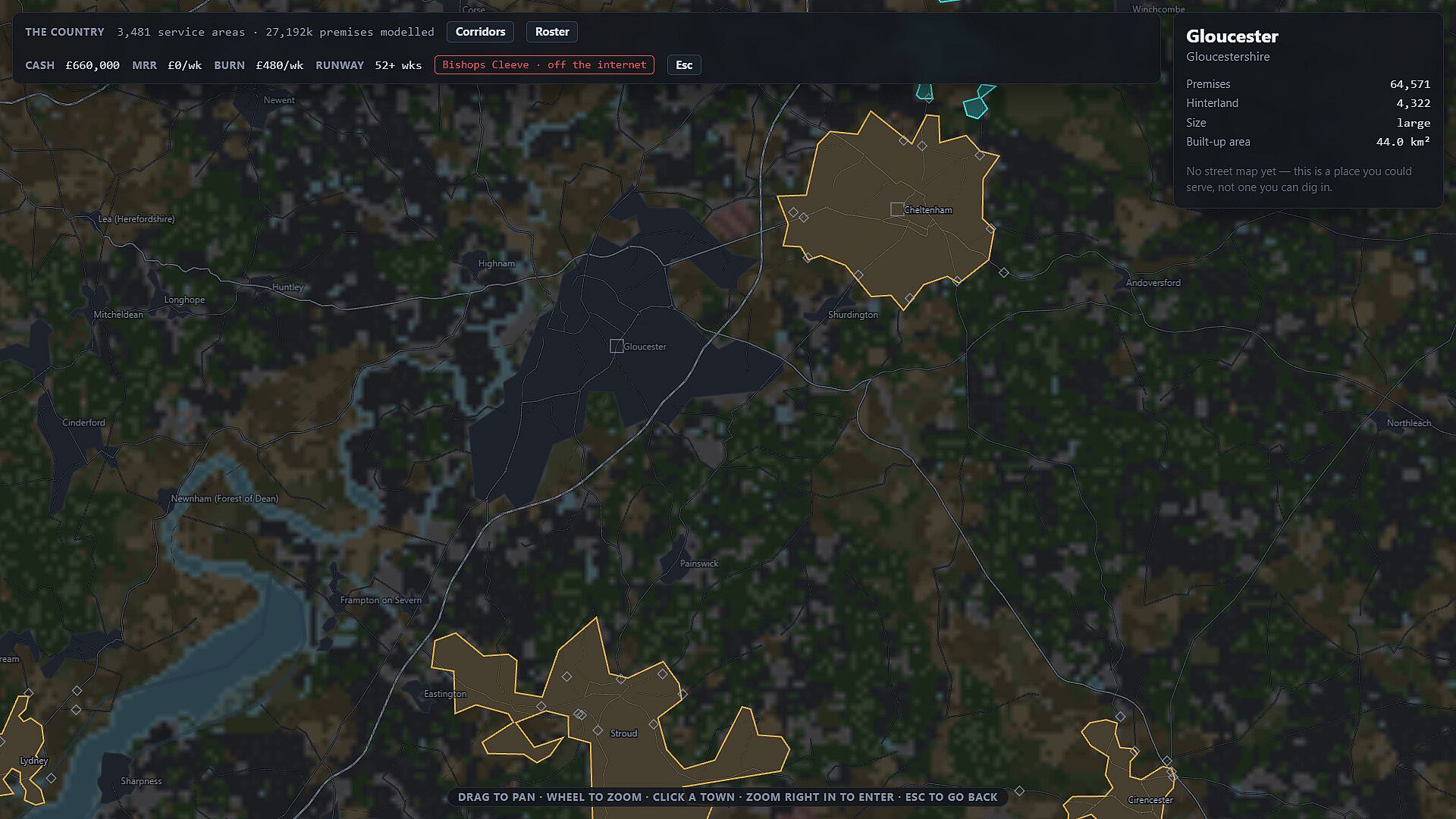
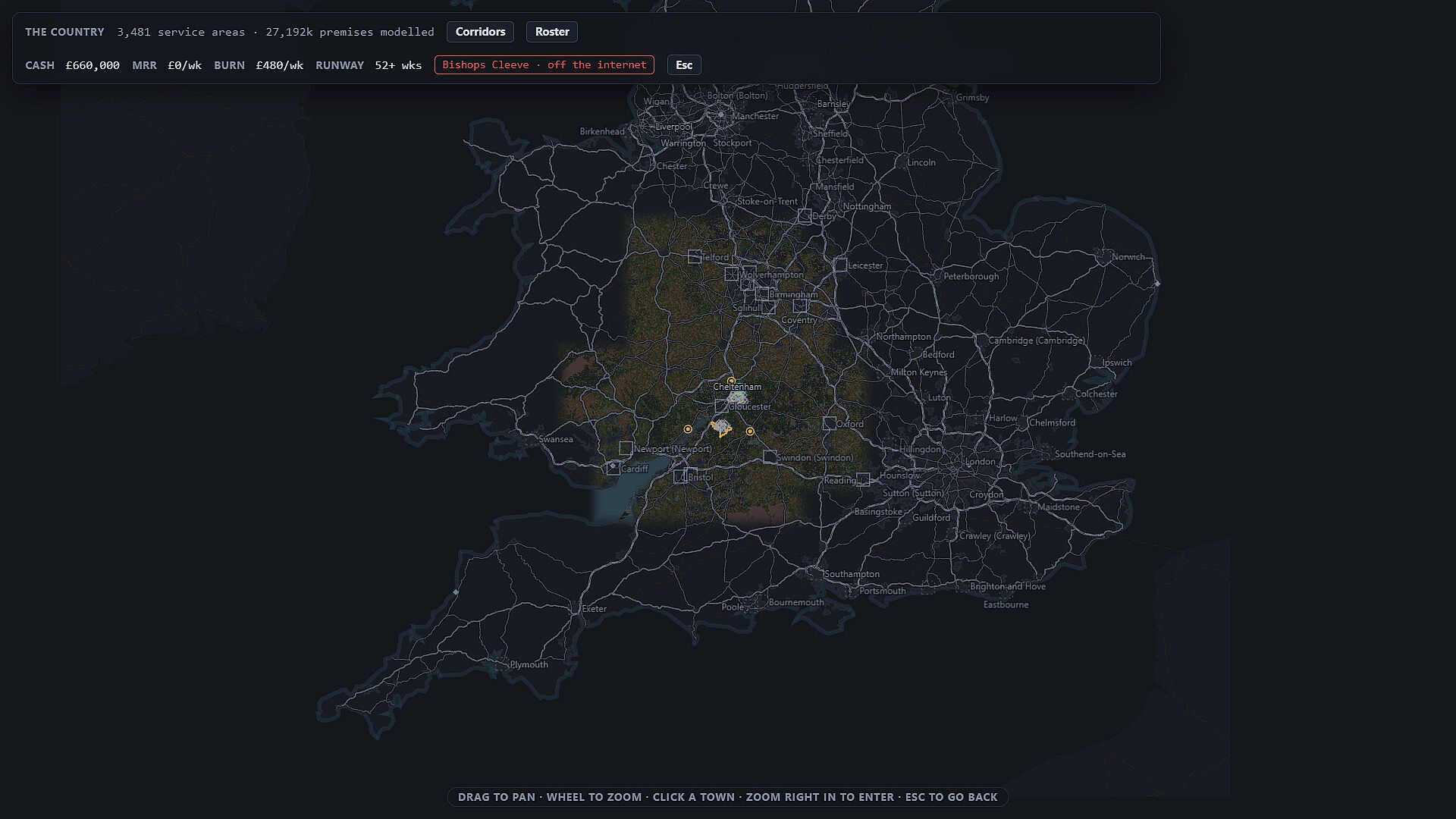
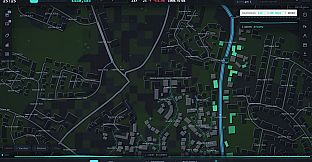
Broadband Architect is a simulation game focused on the practical challenges of deploying fibre broadband networks across real British towns. Players take on the role of an alternative network provider competing against the established telephone company that has lagged in infrastructure development. The core experience revolves around planning and executing physical network builds while managing the financial and operational demands of a small ISP.
Gameplay
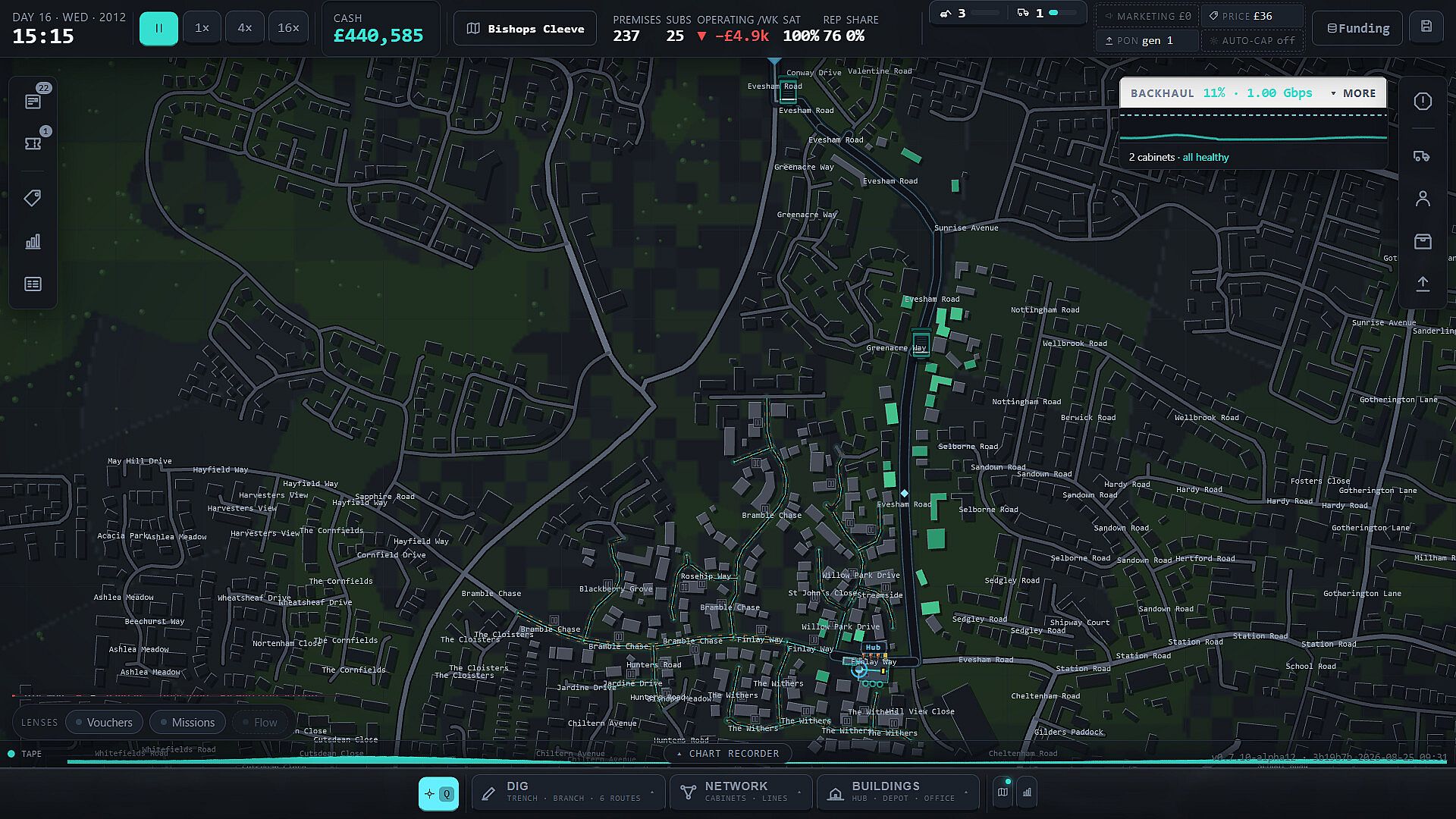
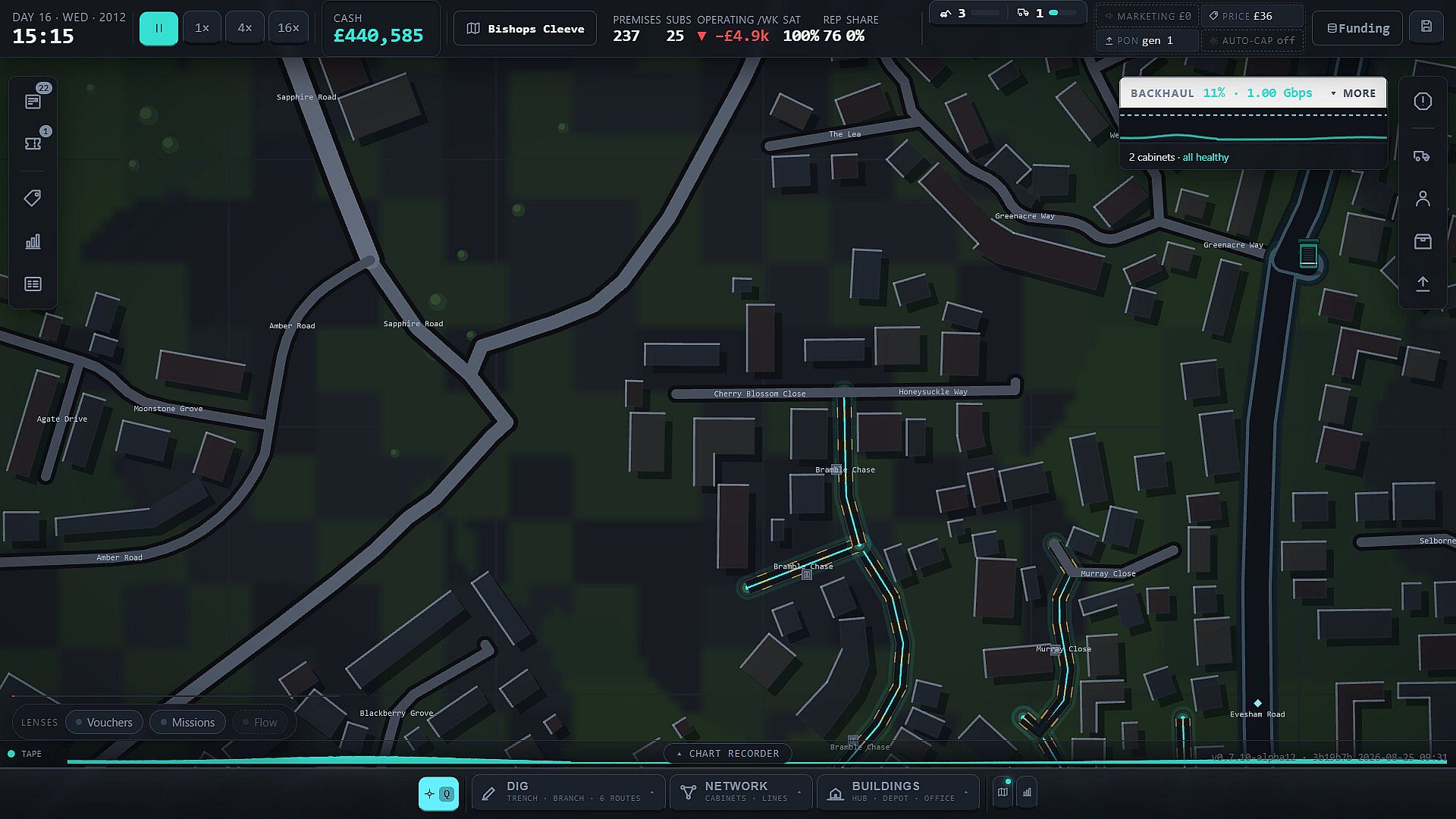
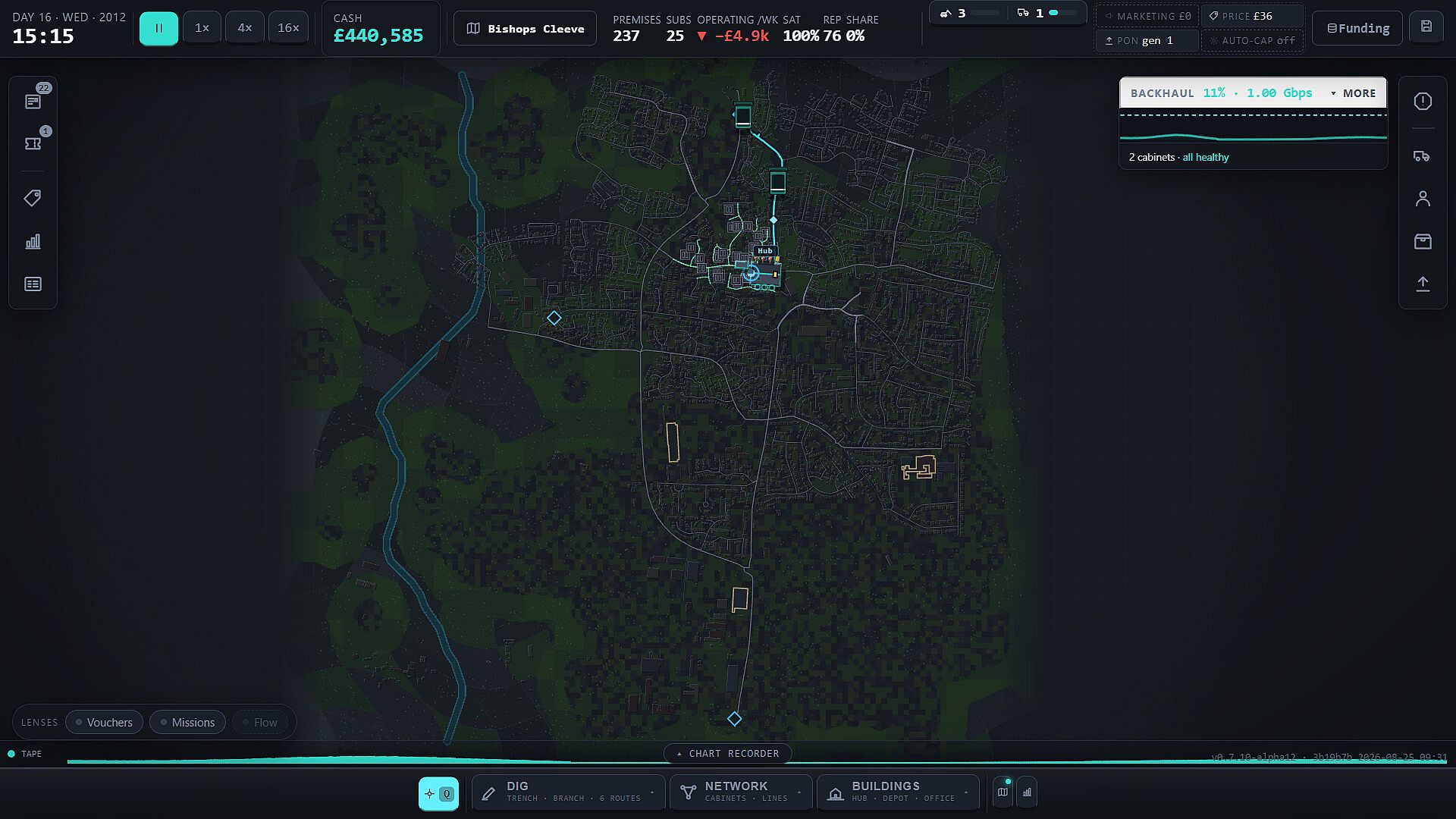
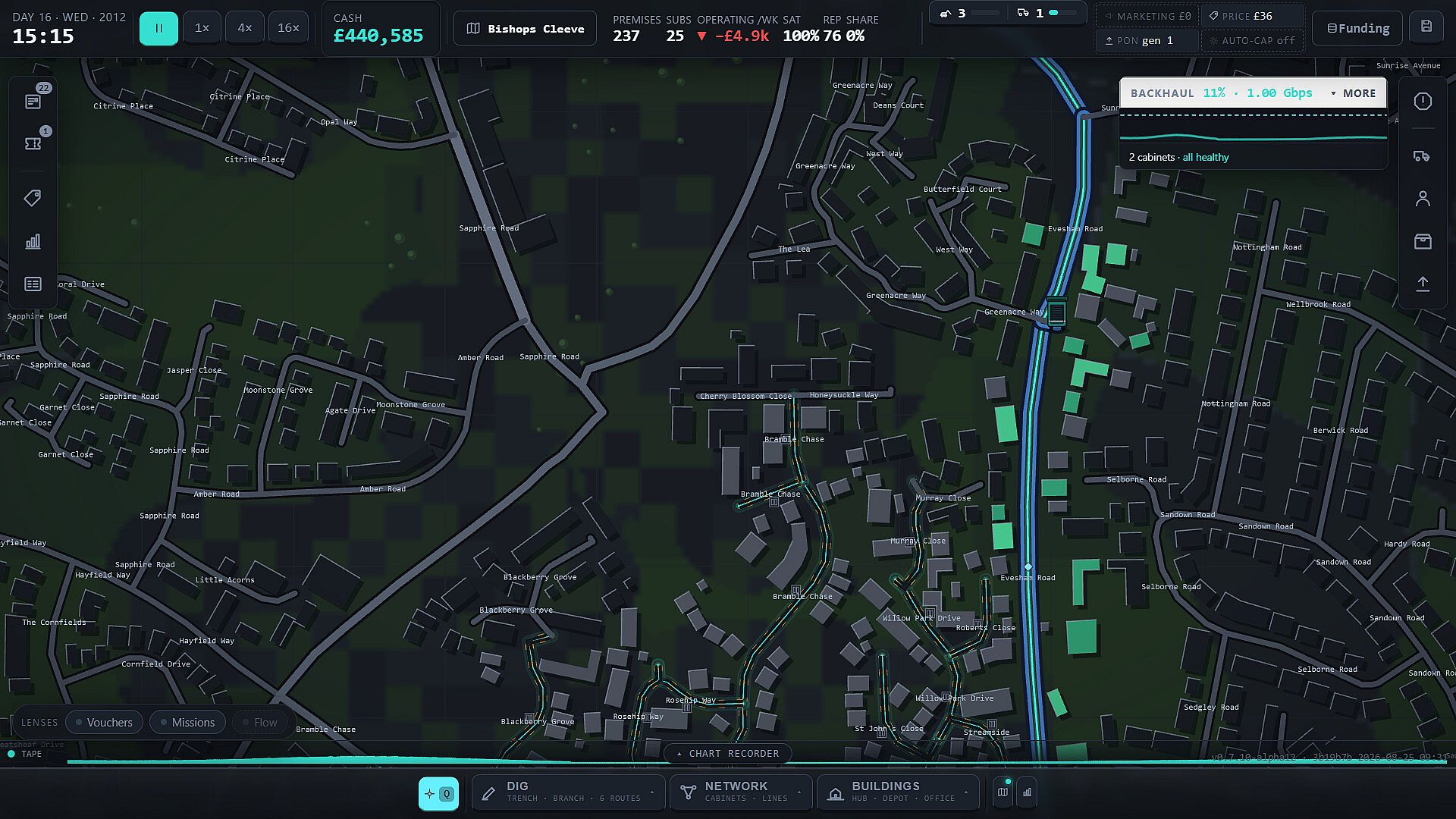
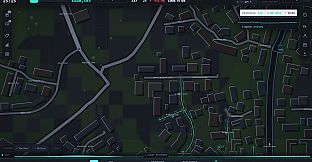
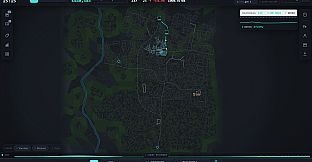
The gameplay centers on detailed infrastructure planning using actual map data for streets, buildings, and premises counts in authentic British locations. Routes must be plotted street by street, accounting for varying costs such as higher expenses for tarmac surfaces compared to verges or the added expense of crossing major A-roads. Players install cabinets, feeders, hubs, and backhaul connections to physically reach homes and bring them online.
Network performance hinges on handling peak demand, particularly the evening rush when households connect simultaneously. Links that appear adequate during the day can become congested, leading to unhappy customers who churn and damage the business reputation. Capacity decisions require careful timing to avoid bankruptcy from overinvestment or underinvestment.
Financial management forms a constant thread, involving raising funds, servicing debt, meeting payroll, and handling contracts or missions. Crews and installers need coordination through a dispatcher system to keep operations moving efficiently. Rivals may overbuild targeted areas, forcing strategic adjustments. The game incorporates an era progression where demand patterns, available technology, and tariff structures evolve over time, rendering earlier equipment obsolete as standards advance from the early 2010s onward.
British utility works elements add flavor through references to high-visibility clothing, tea breaks, rain, and roadworks signage, reflecting the mundane yet essential nature of the work.
Game Modes
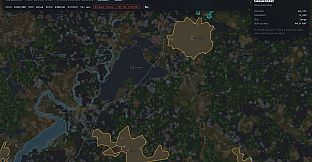
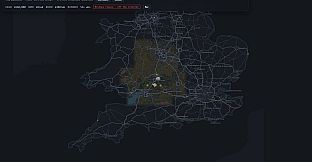
Broadband Architect operates as a single-player management simulation with a progressive structure that begins in one town and expands toward a national footprint. The experience emphasizes long-term planning and adaptation rather than discrete named modes. Players handle ongoing operations that include route design, network sizing against peak loads, crew management, and competitive responses to rival activity.
Progression ties into real-world inspired mechanics such as securing licences, negotiating with landowners, and executing specialized tasks like river boring. The simulation tracks customer satisfaction through congestion effects and churn rates, requiring balanced decisions on infrastructure investment and service delivery. Era-based changes influence what constitutes viable technology and pricing at different points in the timeline.
Core Mechanics and Progression
Route planning demands attention to cost differentials across surface types and obstacles, directly affecting the feasibility of connecting individual premises. Network architecture involves layering components from street-level cabinets up to backhaul capacity to support growing subscriber bases. Demand modeling simulates daily patterns with a critical focus on evening peaks that test the entire system's limits.
Business operations integrate funding rounds, debt servicing, and payroll alongside tactical choices on when to expand capacity. Crew deployment relies on efficient dispatching to minimize delays in installations and maintenance. Contracts and voucher schemes provide additional revenue streams or objectives, while rival overbuilding introduces competitive pressure on planned expansion areas.
The era ramp introduces technological and market shifts that alter optimal strategies across the campaign. Early equipment and tariffs become inadequate as faster connections emerge, pushing players to upgrade infrastructure to remain competitive and retain customers.
Is It Worth Playing?
Broadband Architect suits players who enjoy detailed management simulations centered on infrastructure and operational logistics. The emphasis on real map data, cost-based route decisions, and peak-demand challenges creates a grounded experience distinct from more abstract city builders. Those interested in the unglamorous realities of utility deployment, combined with financial oversight and gradual business growth, will find substantial depth in the systems described.
The inclusion of era progression and competitive elements adds layers of strategy that reward forward planning and adaptability. British satirical touches provide light relief amid the technical focus. As an Early Access title, the game continues to develop, making it a consideration for enthusiasts willing to engage with an evolving simulation of fibre network rollout and ISP management.











