

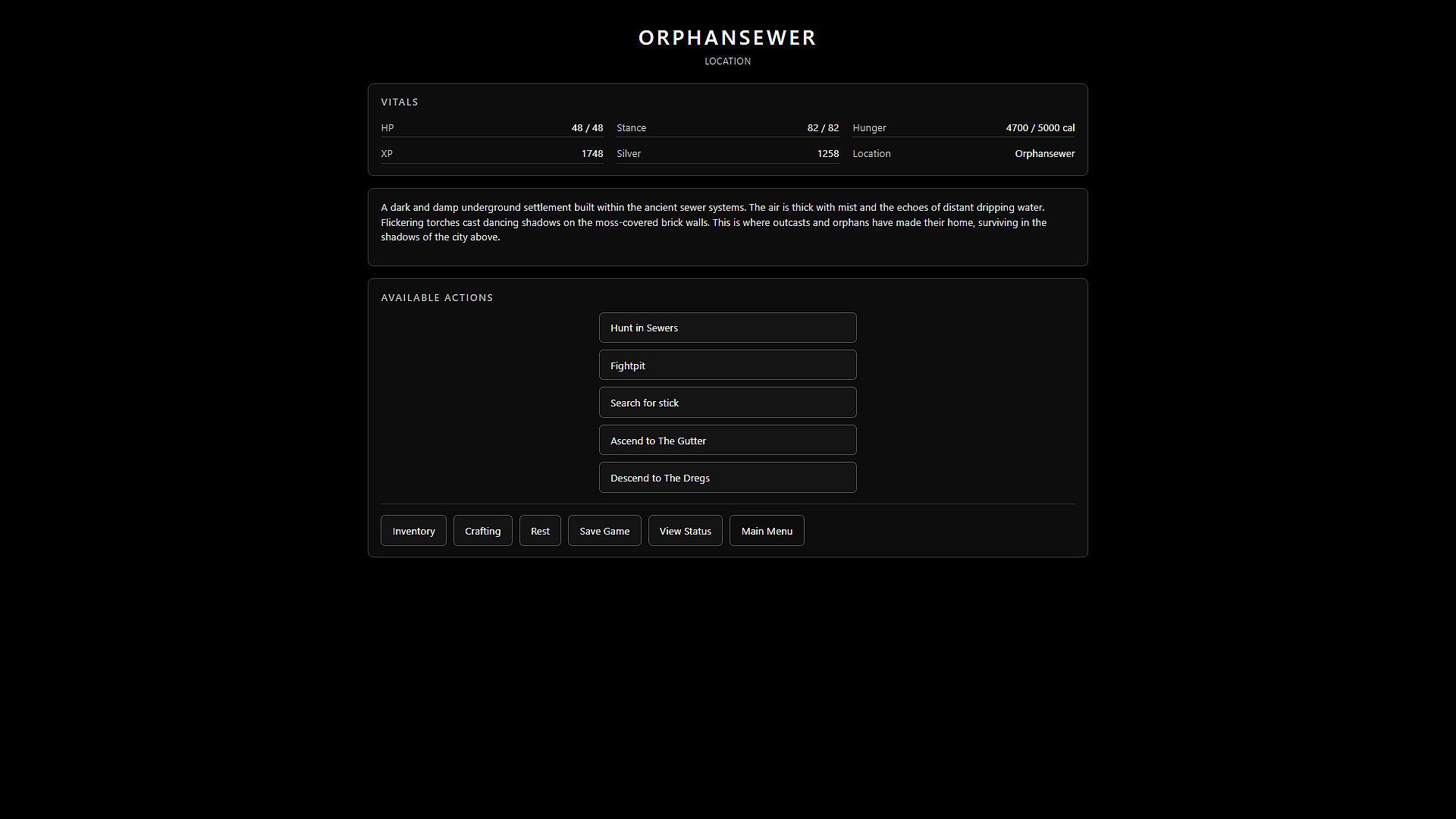
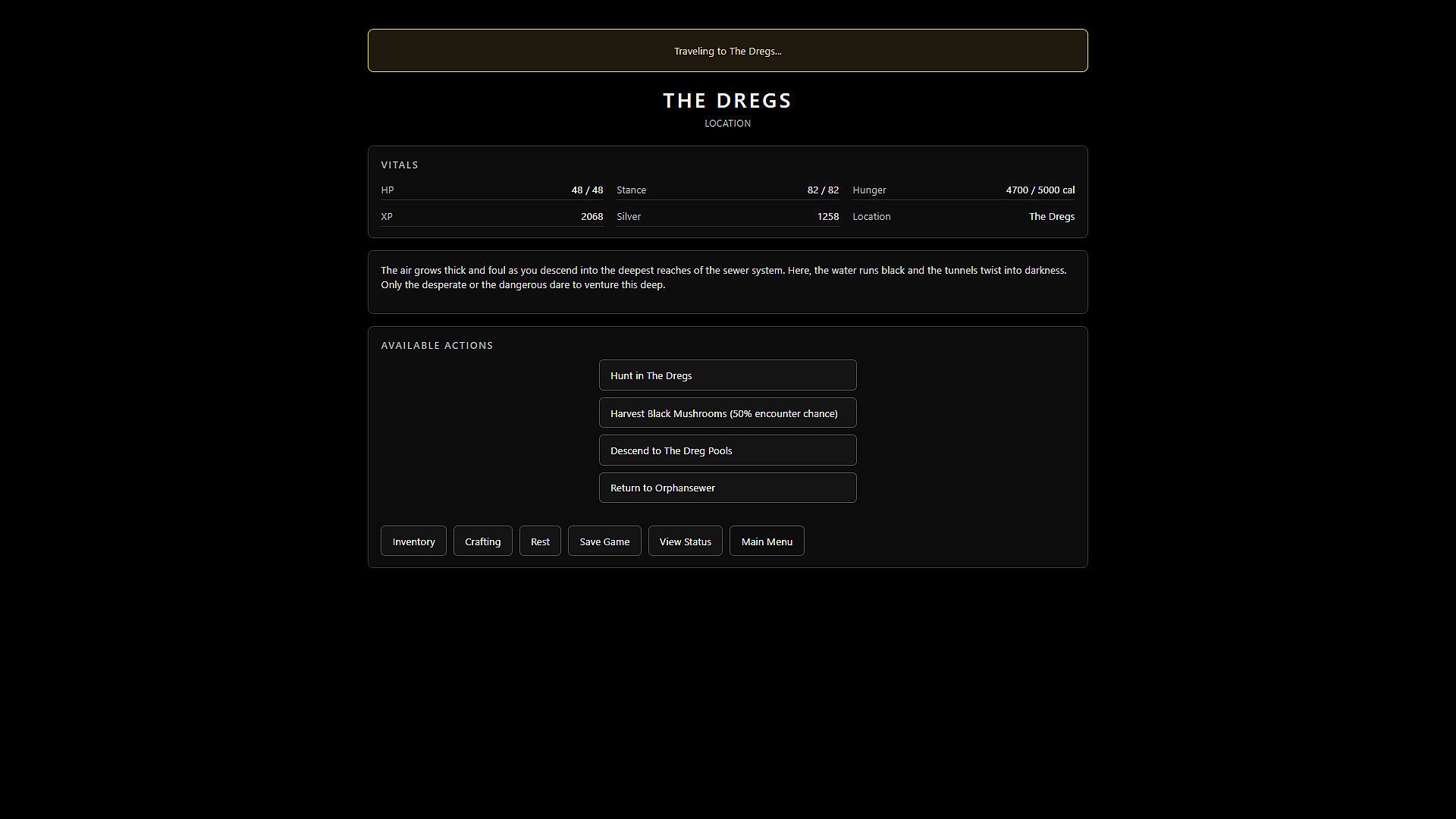




Blades and Hunger is a singleplayer RPG built around turn-based melee combat and an interconnected narrative that unfolds through text descriptions and clean interface elements.
Gameplay
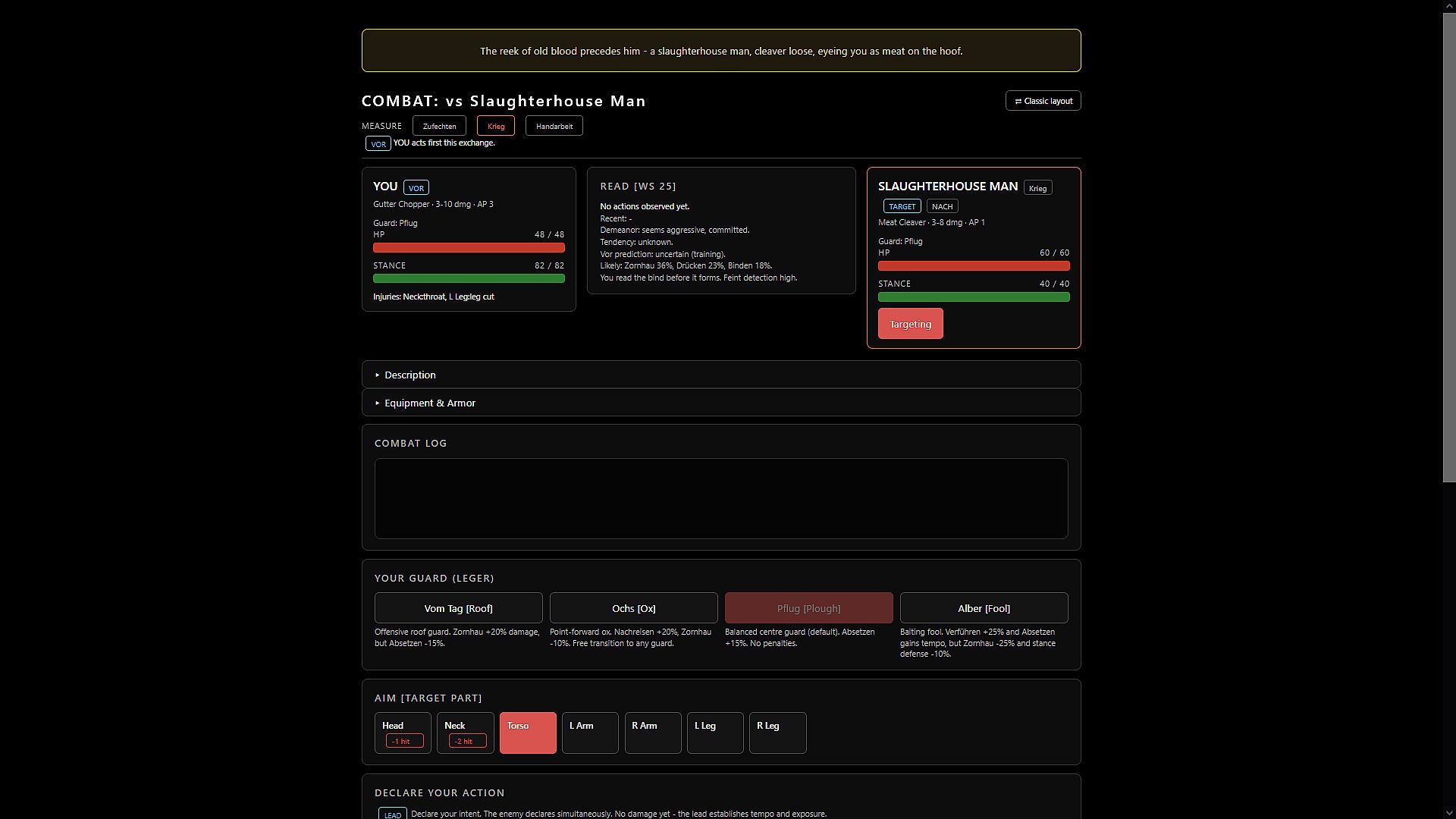
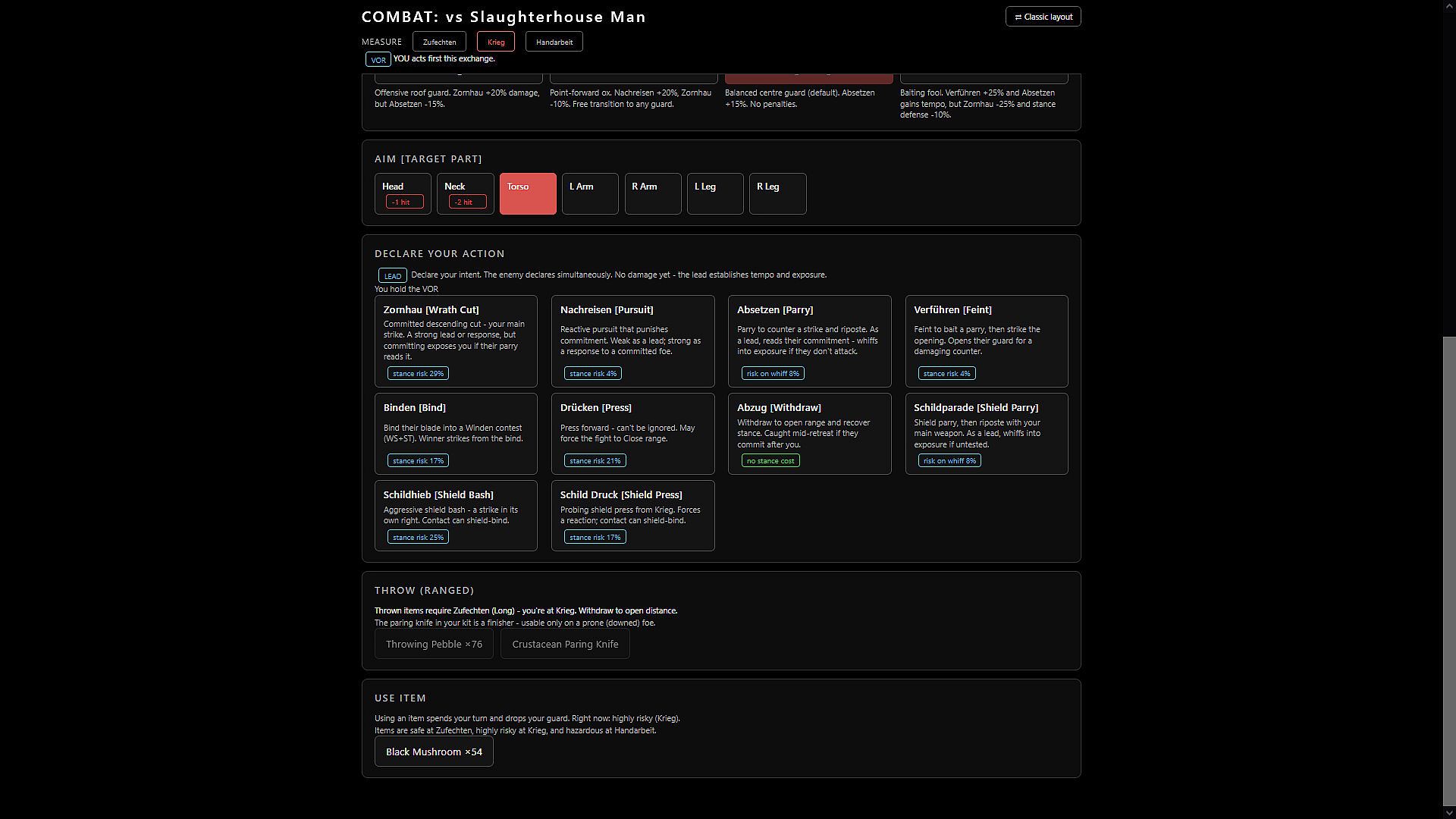
The core loop centers on a detailed combat system drawn from historical European martial arts, particularly an interpretation of German Longsword theory. Players engage in turn-based encounters where success depends on managing tempo, commitment, and counter-play rather than relying on repeated power attacks or defensive stances. Equipment and character stats contribute to a narrative layer that highlights class distinctions and privilege within the world.
Randomness plays a significant role through dice rolls, with stats providing modifiers but not guaranteeing outcomes. Weaker opponents can punish stronger ones when the dice favor them, encouraging careful decision-making and adaptation. The player begins as the weakest character in the setting, a cast-off in a pit, and must navigate a tutorial gauntlet that requires applying multiple mechanics to progress.
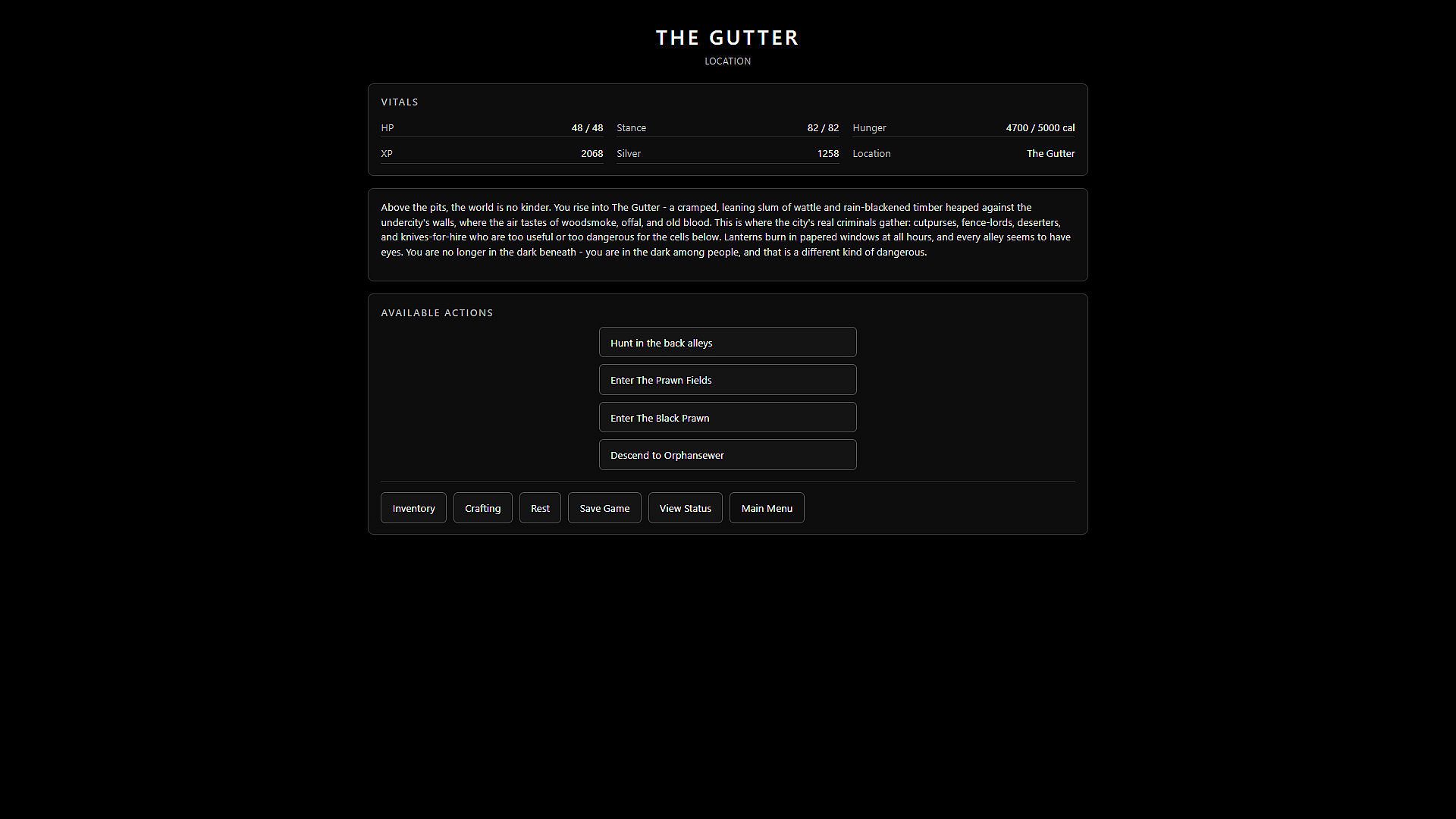
Story elements expand through questlines that build on this foundation. The character advances from the initial pit into the Gutter, a slum area that serves as the next stage of struggle. Narrative delivery relies on equipment choices and statistical outcomes to convey themes of social hierarchy without traditional RPG feats or spells.
Game Modes
Blades and Hunger operates as a singleplayer experience focused on exploration, combat, and story progression. The available demo contains two major questlines that players can pursue after completing the tutorial gauntlet.
Progression emphasizes learning the combat model and making use of its counter-play systems. No separate multiplayer or competitive modes appear in the current build, keeping the focus on individual character development and narrative advancement through the text-based framework.
Story and Setting
The world begins in a confined starting area where the player character holds the lowest status among NPCs. Survival requires fighting through the tutorial to reach the Gutter, establishing a foundation of hardship and incremental advancement. The narrative draws from multiple interconnected story arcs that explore themes of class and privilege through the lens of equipment and combat outcomes.
Intended scope reaches beyond the demo into a larger text-driven structure comparable in ambition to expansive open-world titles, though delivered entirely through written descriptions and interface elements rather than visual environments.
Is It Worth Playing?
The demo offers roughly an hour of content for players who engage directly with the mechanics, though time spent learning the combat system or seeking advantages may extend that duration. Those drawn to turn-based systems inspired by historical fencing, detailed narrative delivery through stats and gear, or titles such as the Heads Will Roll series, Legionnaires Life, Adventure Quest, Usurper Reborn, or Warsim: Realm of Aslona will find the approach familiar.
Interest in Lovecraftian mythology or sandbox-style storytelling with combat layered on top also aligns with the design. The full version targets more than ten hours of play, built around the same core systems without external budget constraints limiting content volume. Players seeking traditional RPG power progression or visual spectacle may find the text-focused format and high randomness in combat less appealing.