


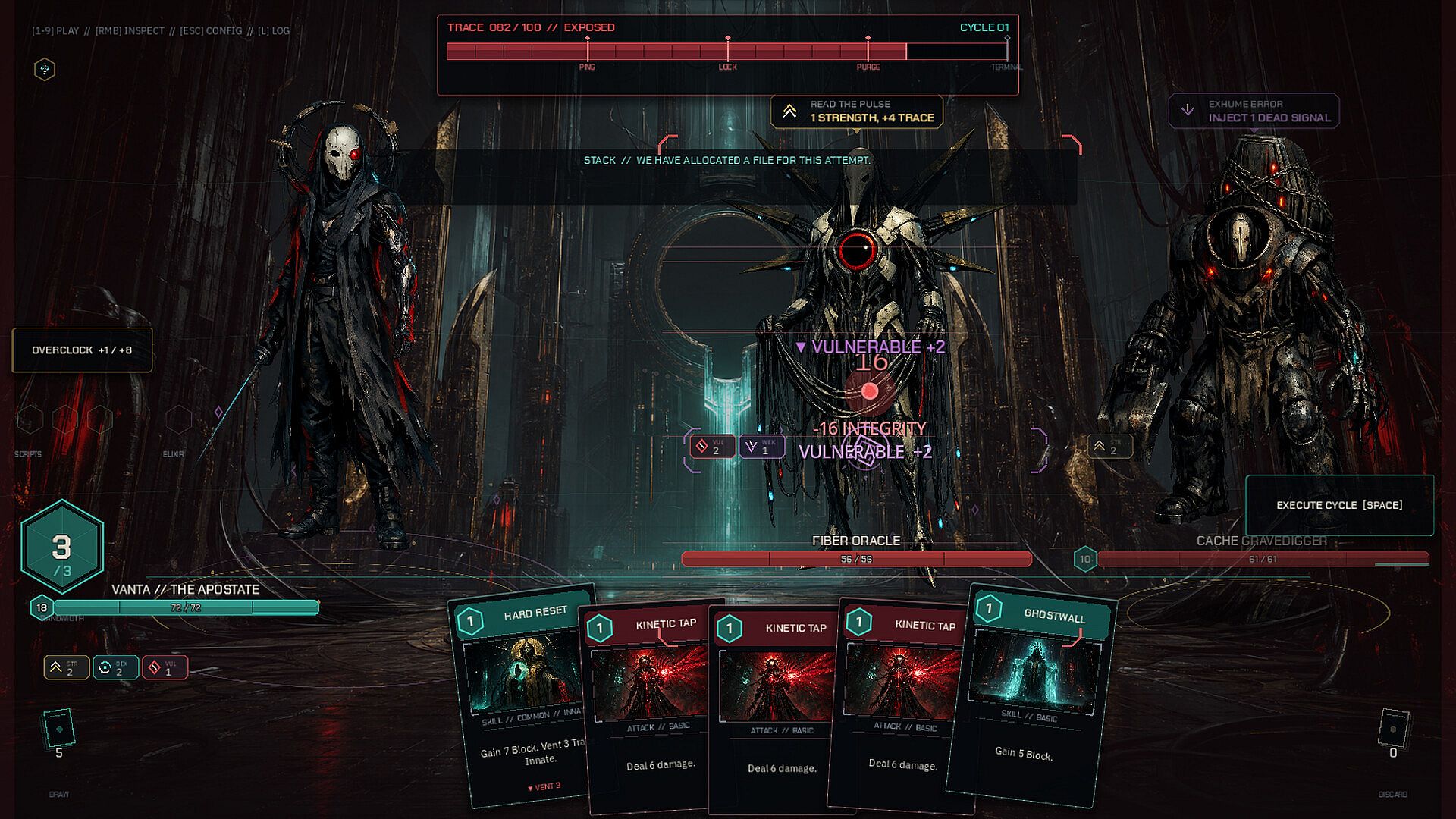








Black Stack is a strategy game built around deck construction and persistent risk management on PC. Players navigate a corporate megastructure known as the Black Stack, where a surveillance meter called Trace tracks every action and escalates enemy responses across encounters. The core loop involves compiling protocols into decks, managing resources like Bandwidth, and deciding when to vent Trace or convert it into power before thresholds trigger nonlethal Integrity loss.
Gameplay
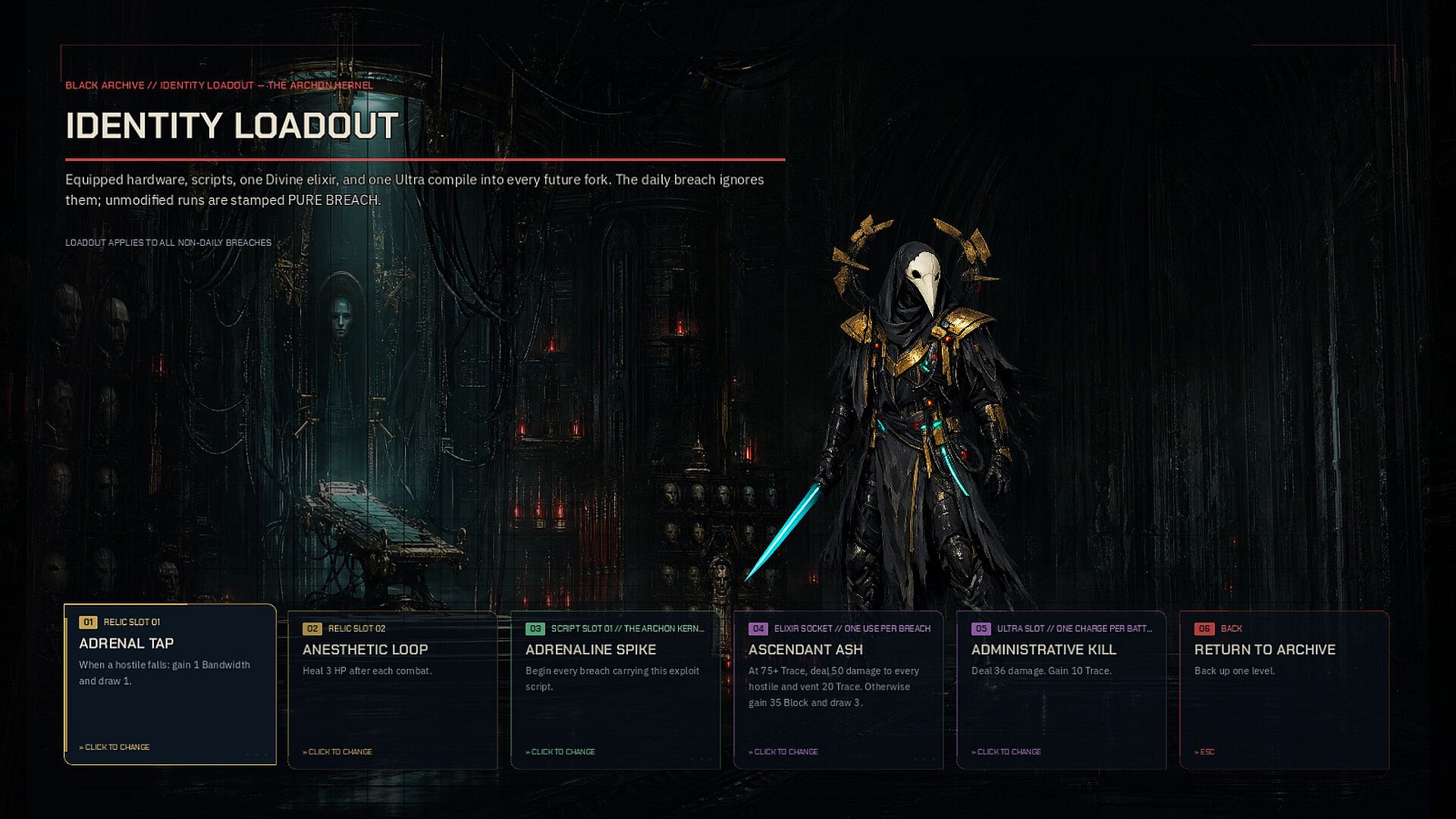
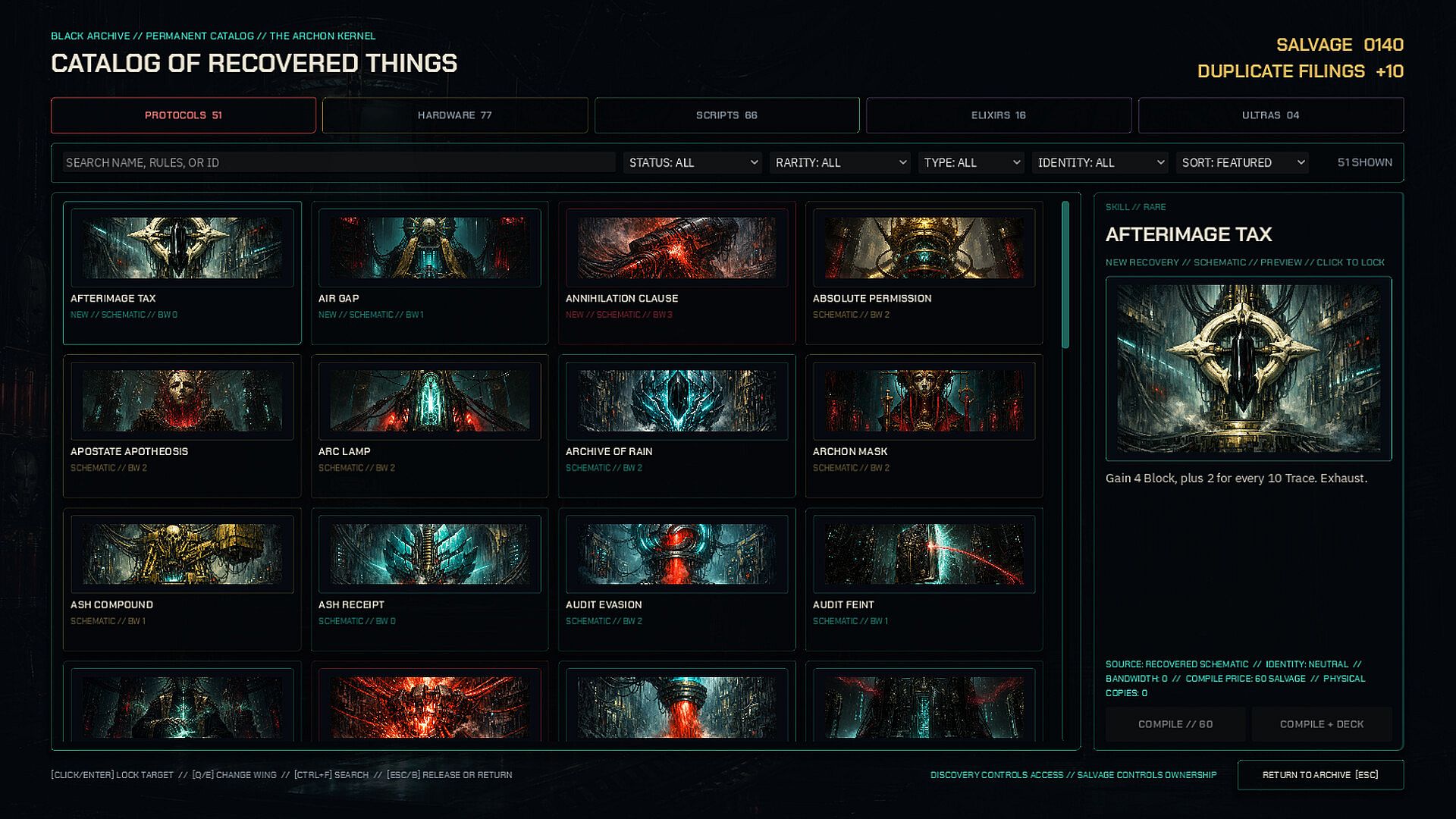
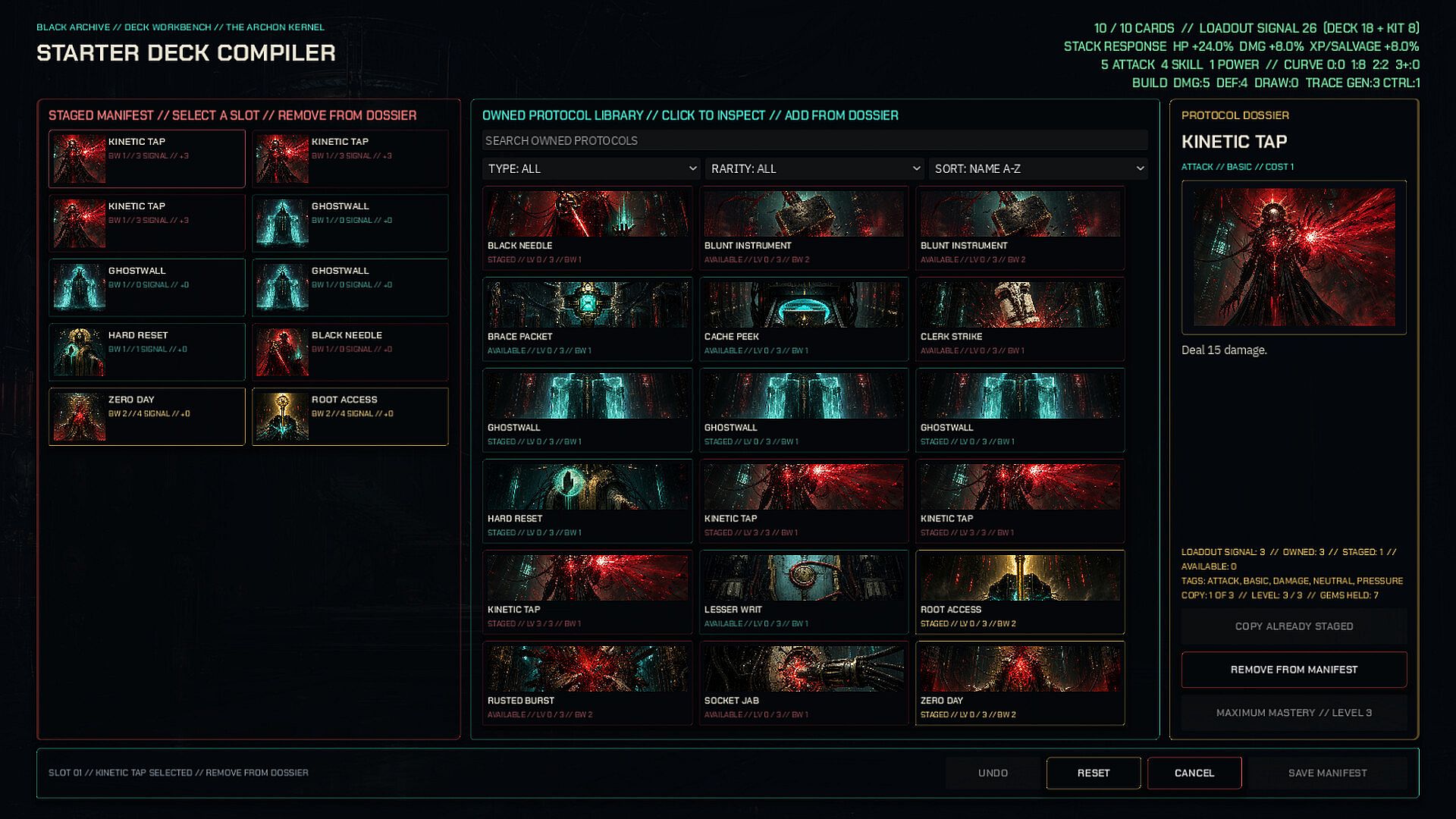
Combat revolves around 496 playable protocols divided into Attacks, Skills, Powers, and 60 Wager protocols that incorporate coin calls, dice rolls, Blackjack, and roulette with seeded animations. Players select from three identities at the start of a run. Vanta the Apostate emphasizes disciplined Bandwidth and Trace control via Overclock. The Archon Kernel converts dangerous Trace levels into direct power. The Courier relies on an exploit inventory to shape the deck. Each identity carries a unique body, starting kit, and card pool drawn from a catalog of 503 card definitions plus seven hostile Status injections.
Power progression occurs through physical copies compiled with Salvage. Basic through Rare protocols reach level 3 while Divine protocols reach level 4. Rare capstones and Divine ranks fork permanently, allowing copies of the same card to evolve into distinct weapons. Maxed cards display animated mastery chrome and rarity-aware effects. The Loadout Signal system lets Intelligent difficulty scale encounters based on rarity, mastery, equipment, and graft investment, while a Capped option provides a fixed ceiling. Three Audit contracts add greater resistance and rewards for those seeking extra challenge.
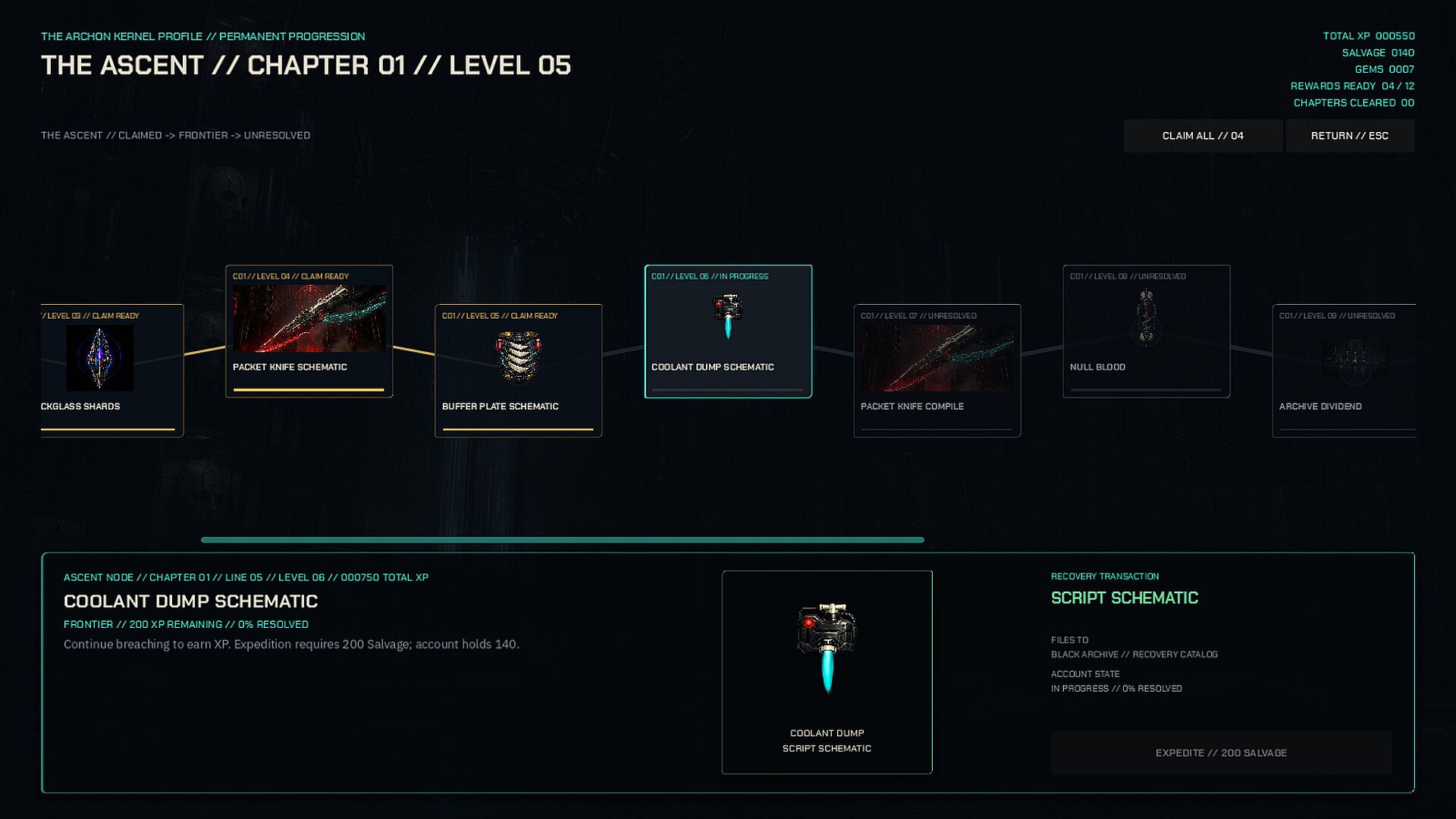
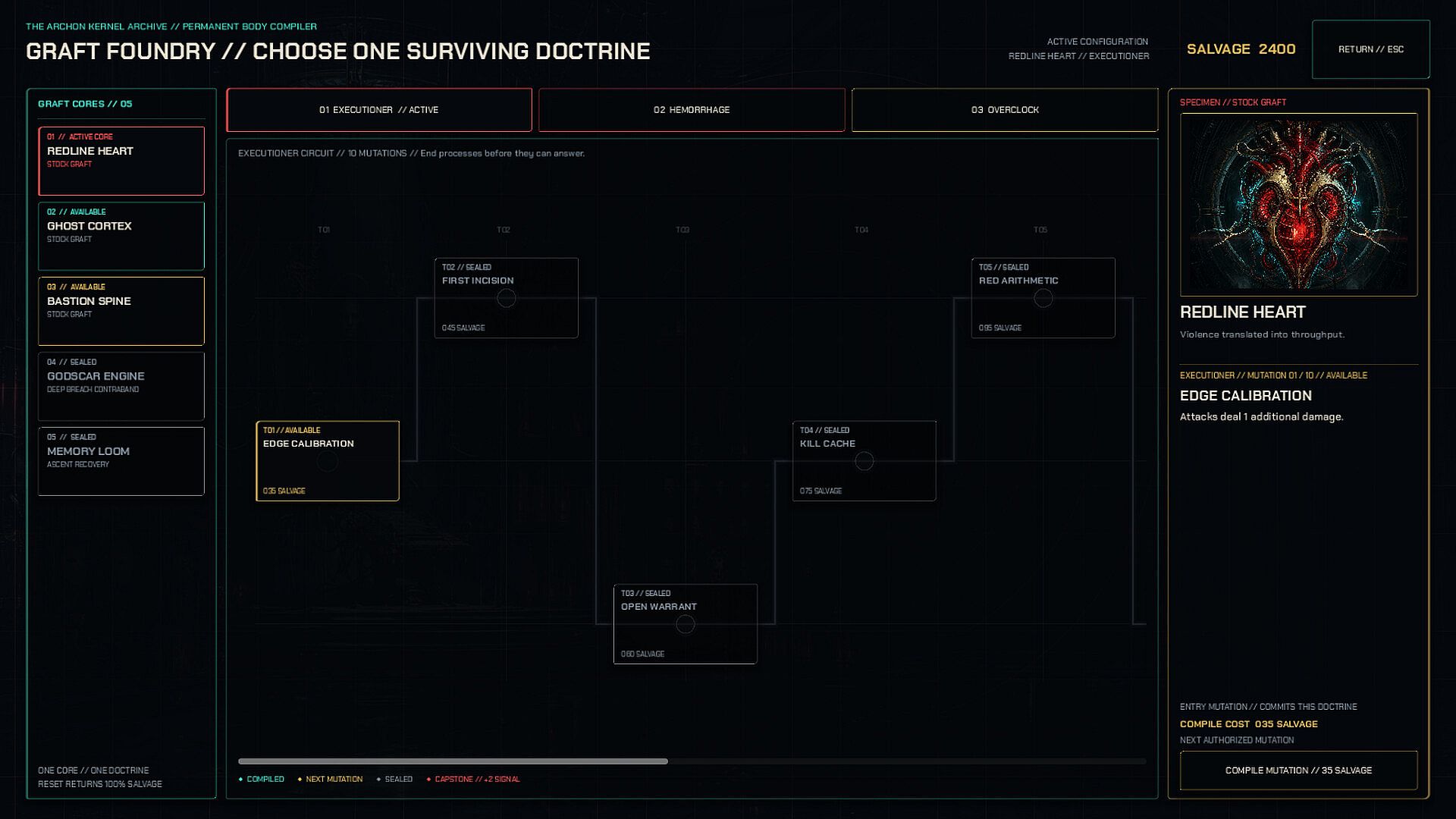
Additional systems include 78 relics, 66 exploit scripts, 16 Divine elixirs, 12 Ultras, five Graft Cores, and 12 Machine God blessings. The Graft Foundry lets players install one of five cores and commit to one of 15 doctrines across 150 authored nodes, with full Salvage refunds available on reset. The Ascent offers infinite non-seasonal progression through twelve-node chapters that yield Gems and deterministic rewards.
Game Modes
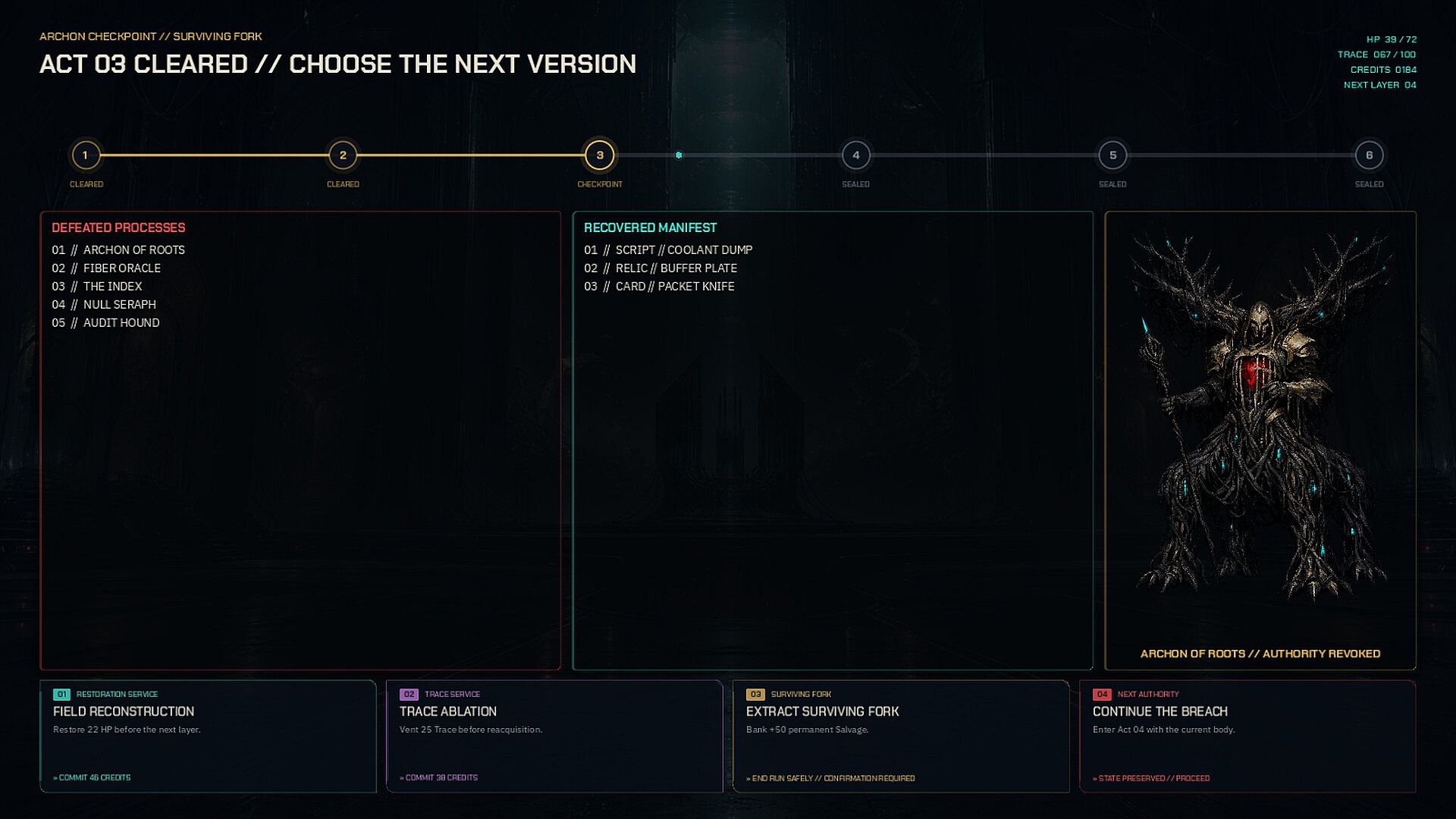
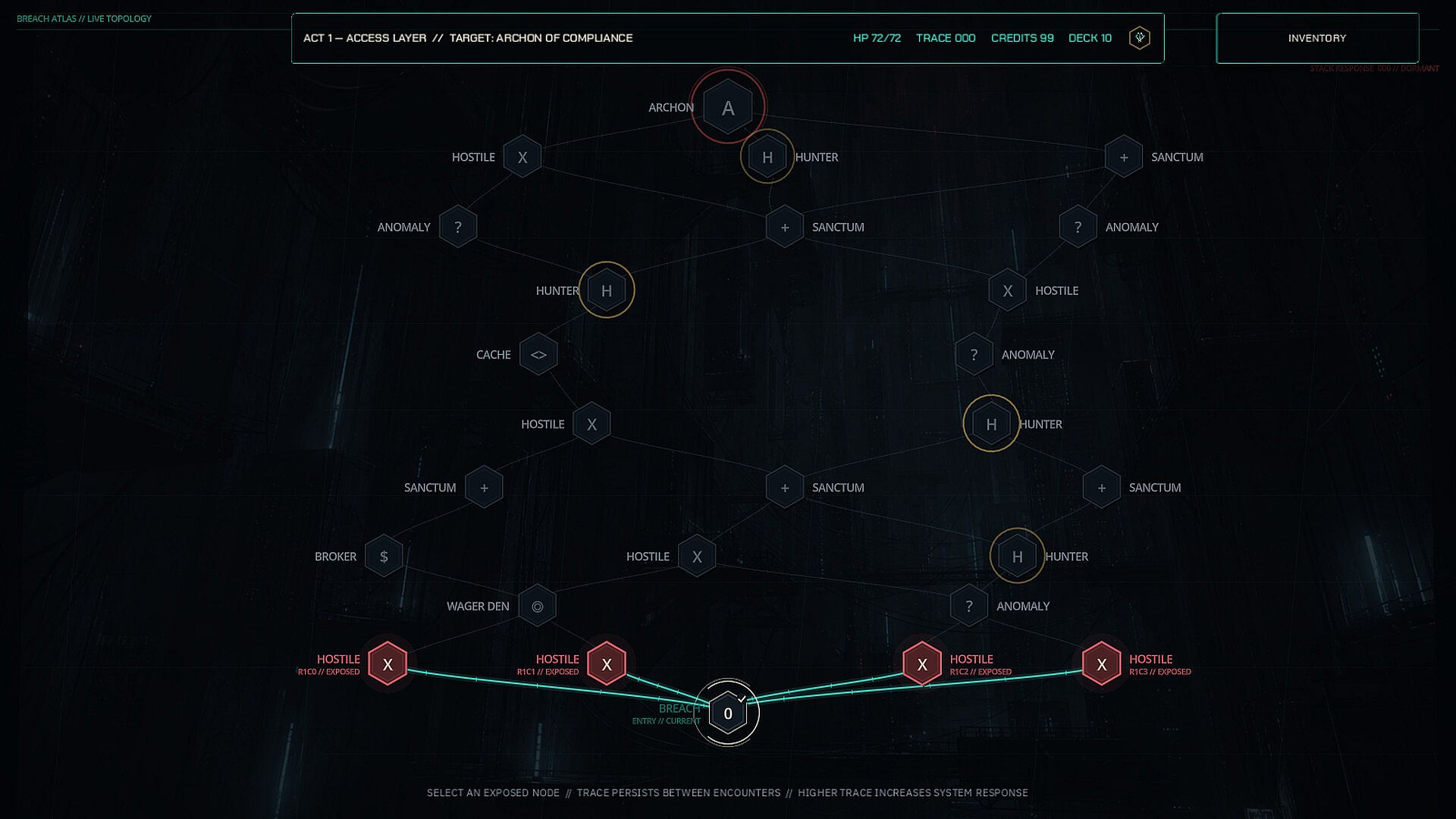
The primary experience unfolds across six acts that form a branching, seeded ascent through five atlases before reaching Root Terminus, an eight-layer straight procession toward Archon Prime and its Ascendant second body. Players face 81 hostile processes and 58 authored event definitions, including eight adaptive Forensic Processes. Encounters support multiple enemies with individual intents and direct targeting, plus elite variants and bespoke authorities, one of which allows negotiation. At Archon checkpoints, options include repair, venting Trace, extracting a prize, or continuing deeper. Revocation can be used once per run to reject a filed death and resume at 1 HP and 0 Trace while preserving enemy state.
A second six-act campaign called The Mandate becomes available after accepting a forbidden offer that transforms the player's identity. This route inverts the original path and pits the player against ten new authorities. The Archive tracks which version of the character chose this path. Deep Breach serves as a rare once-per-run exception that suspends the current atlas for an eight-stop illegal descent featuring three authorities, two corrupted casinos, a Divine cache, and an apex boss. Successful extraction reconnects to the original atlas with contraband intact, while completion awards the secret Godscar Engine Graft Core.
Nullcade provides two permanent cabinets: Breacheroids and the seven-stage Nullspire, both with persistent scores and bounded rewards. Scheduled Audits deliver seeded challenges with fixed identity, kit, route, and modifier. Every run remains fully deterministic, allowing players to share a Breach Code for exact replays. The Black Archive includes a Recovery Catalog and Workbench for component compilation, plus a Breach Archive and Memory Index for reviewing run maps, telemetry, and encountered processes.
Progression and Systems
Combat Doctrine records openers, sequences, Bandwidth use, defense choices, targets, Trace appetite, wagers, and equipment. The Stack applies these habits to Forensic Processes and archived versions of the player. Failed and strongest runs can rebuild their exact deck, mastery branches, equipment, resources, and learned doctrine. The most dangerous encounter may involve a version that mastered the player's own engine first.
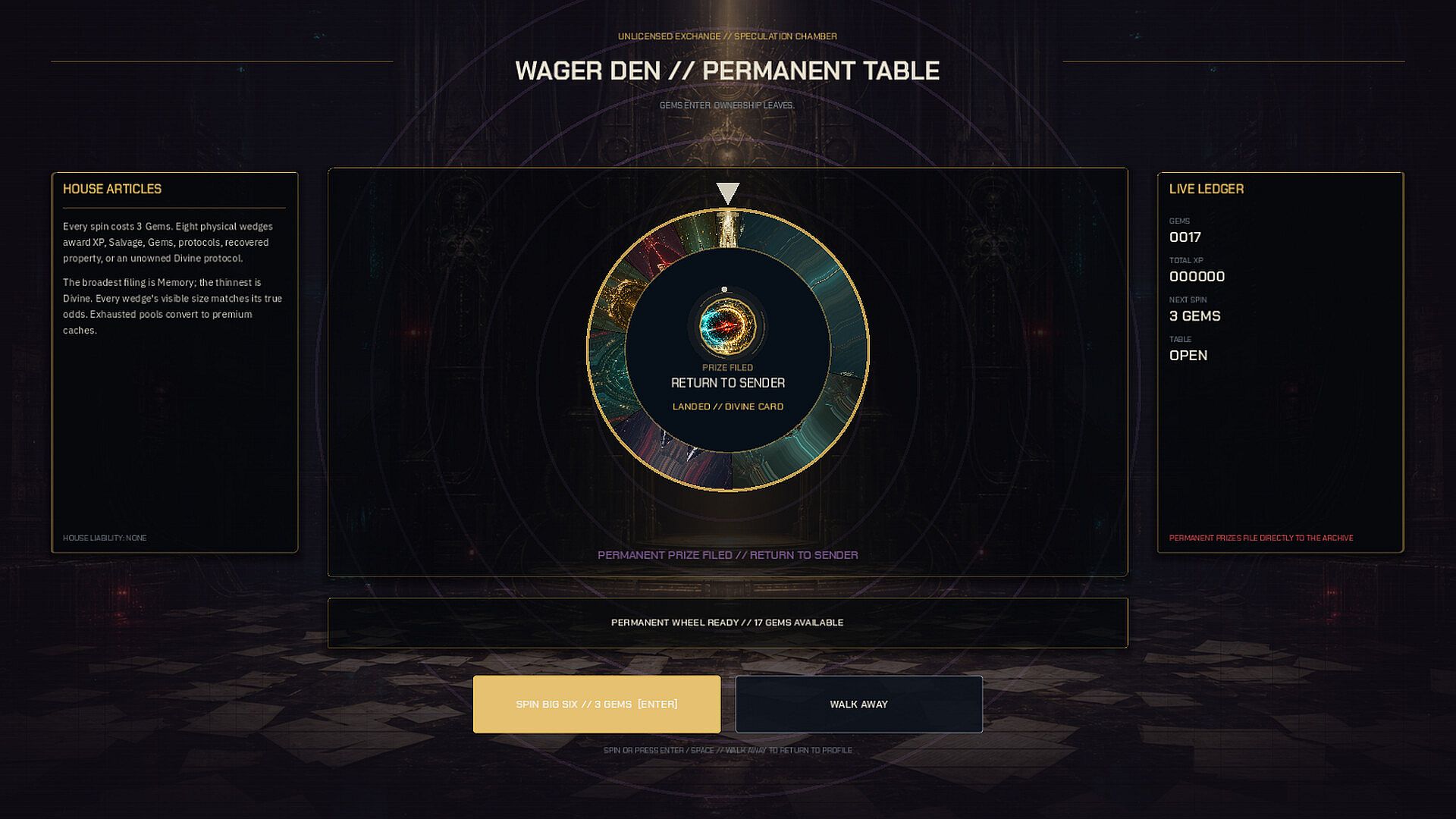
Between runs, Gems earned through play can be spent at Big Six for XP, Salvage, property, or an unowned Divine protocol. Wager Dens offer deterministic Blackjack or an animated 3x3 reel machine. All content ships in a single purchase with no microtransactions, paid currency, card packs, battle passes, loot boxes, or real-money wagering. A guided tutorial covers combat, Trace, Block, the Archive, deck construction, mastery, grafts, and loadouts. Save and resume functions support route and combat state with reconciliation across sessions. The game includes 60 achievements and supports keyboard, mouse, and gamepad navigation along with extensive audio, display, and accessibility settings.
Is It Worth Playing?
Black Stack suits players who enjoy deliberate deck-building strategy with layered risk systems and long-term mastery. The deterministic structure and Breach Code sharing support repeated attempts at specific routes without randomness beyond player choices. One-time purchase access to the full catalog, multiple campaign paths, Graft Foundry customization, and Nullcade side modes provides substantial depth for those comfortable with persistent Trace pressure and multi-run progression. The game rewards careful loadout planning and engine discovery while allowing players to set their own difficulty ceiling through Capped mode or Audit contracts. Those seeking a focused single-player strategy experience with clear mechanical transparency will find the systems consistent and replayable through the Archive tools and identity variants.