







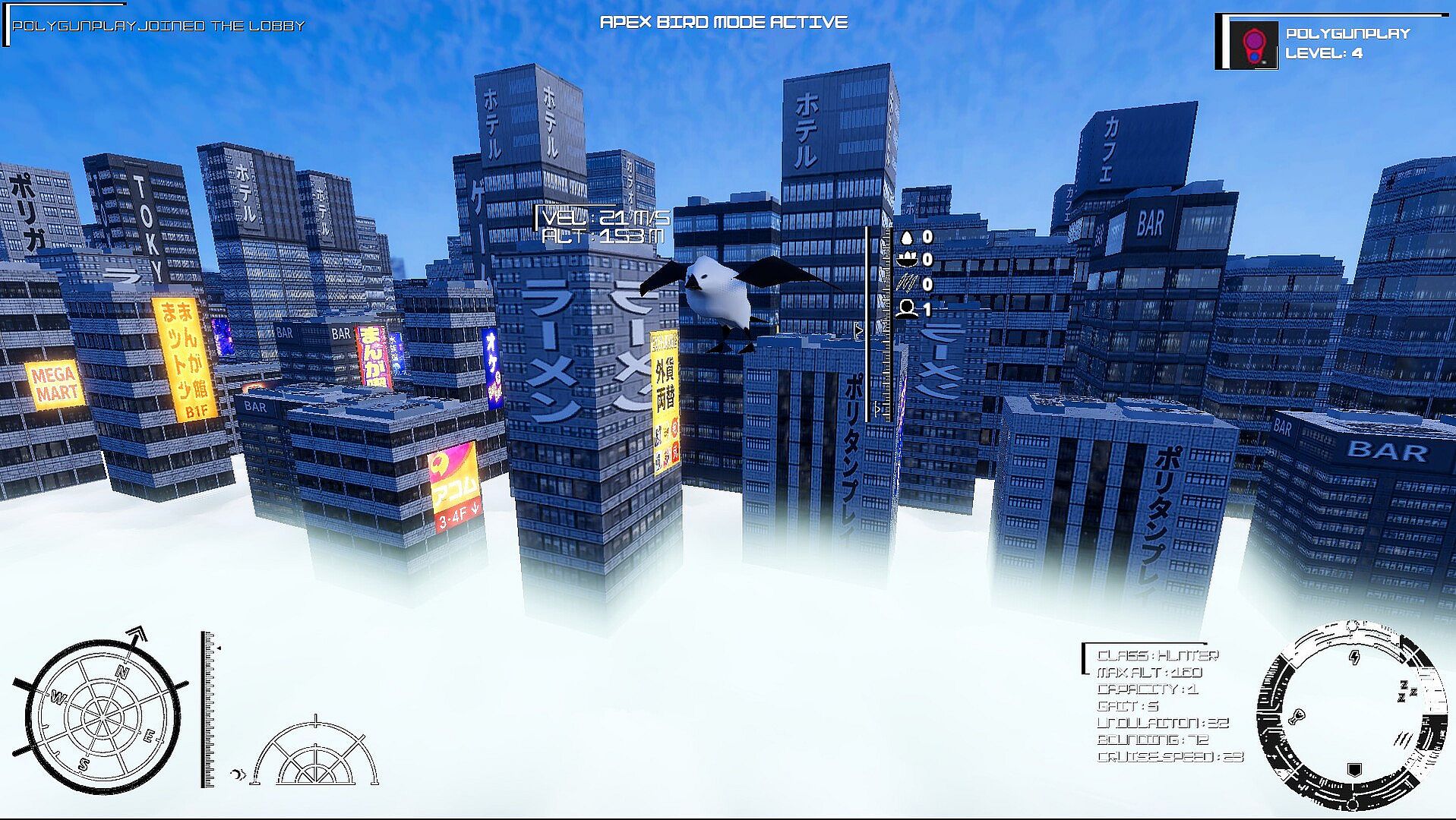
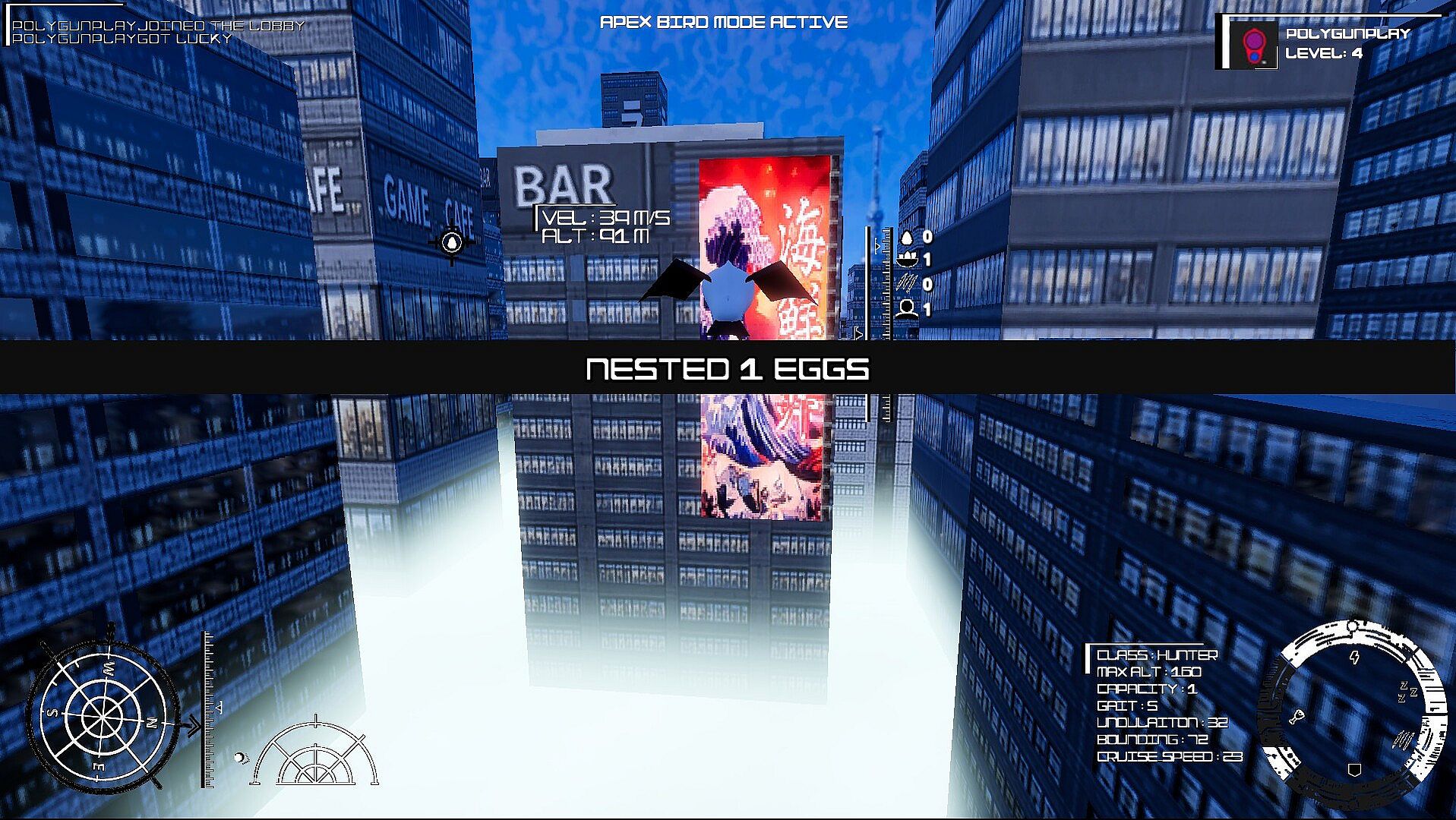
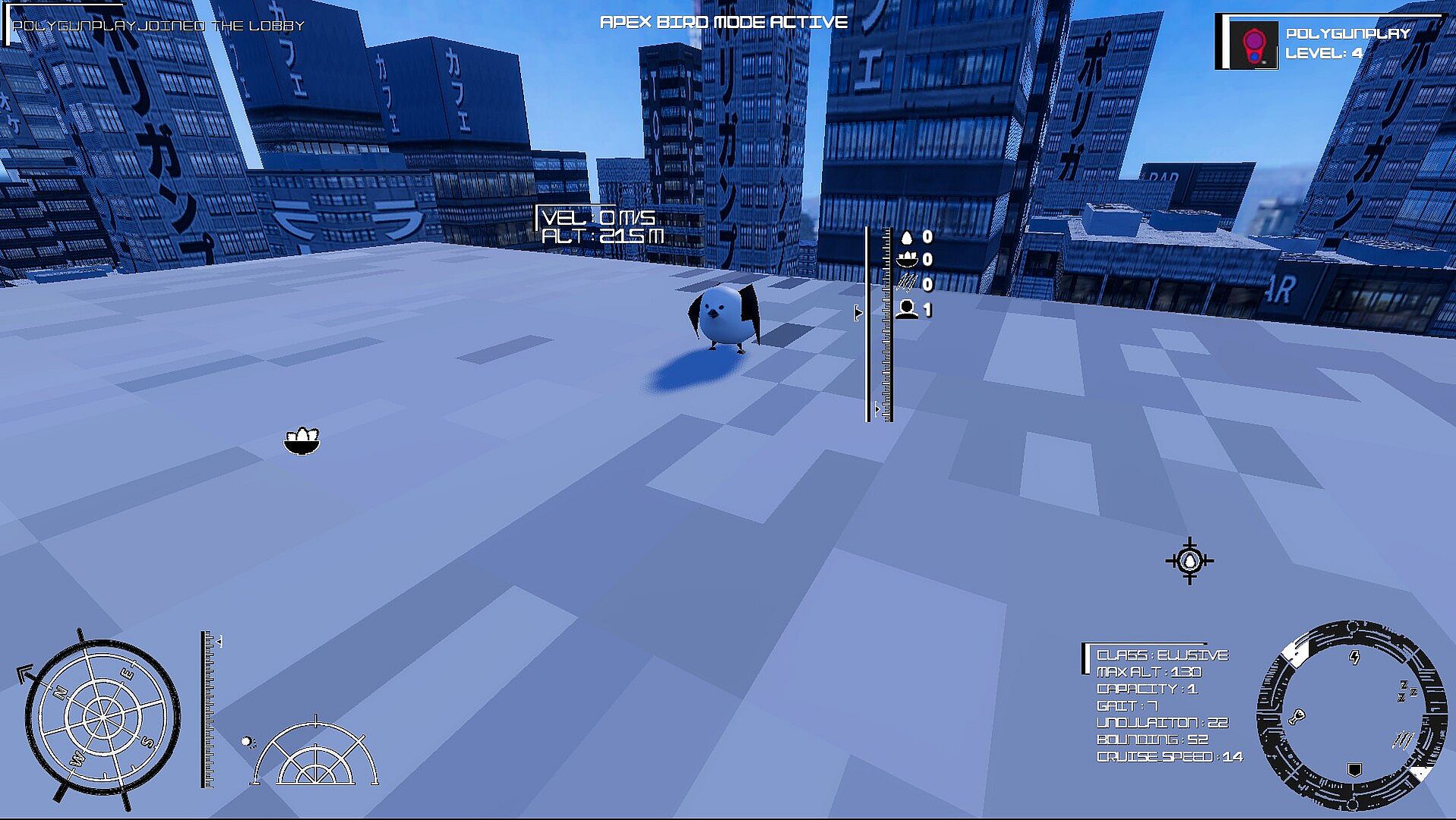
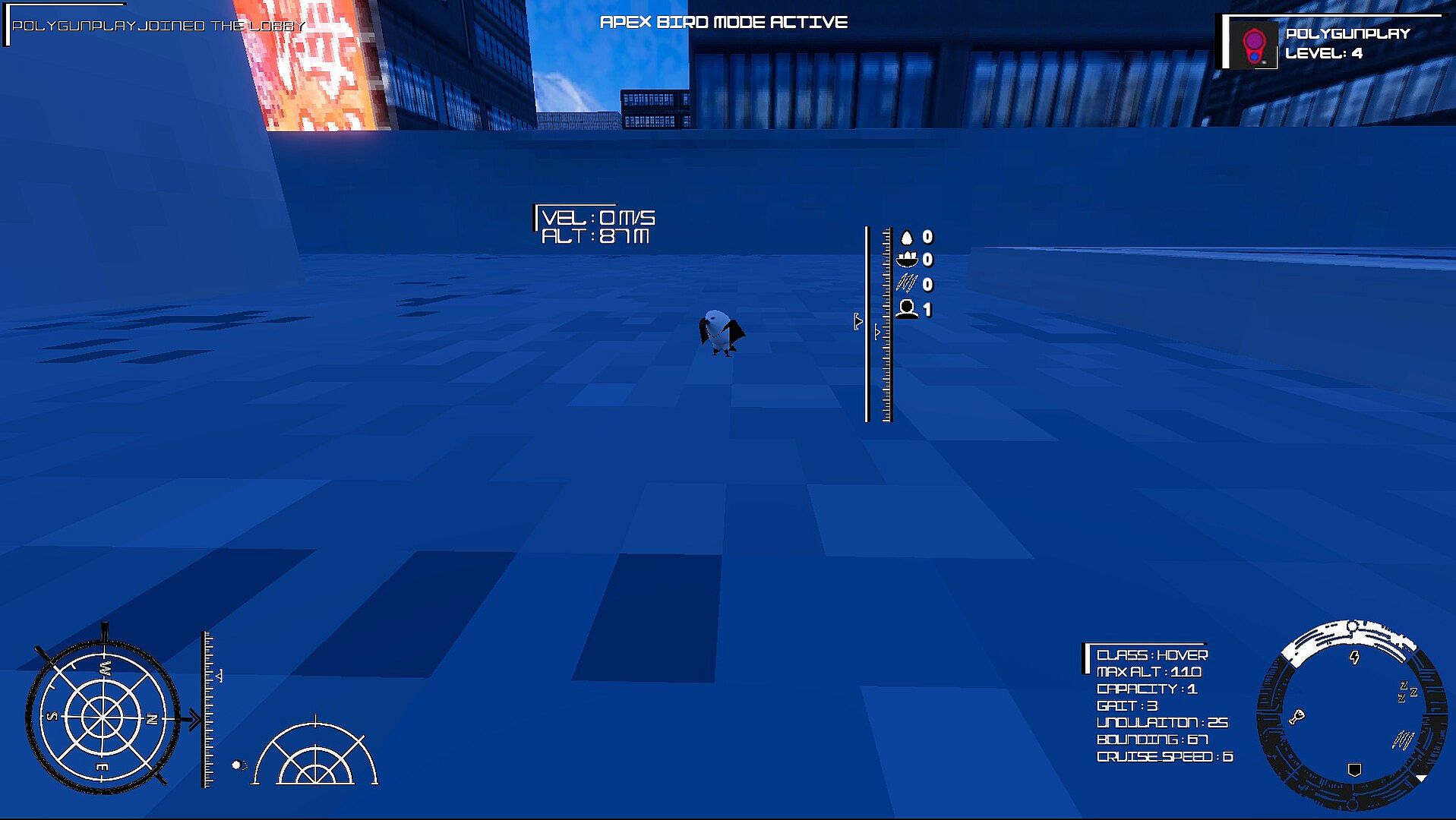
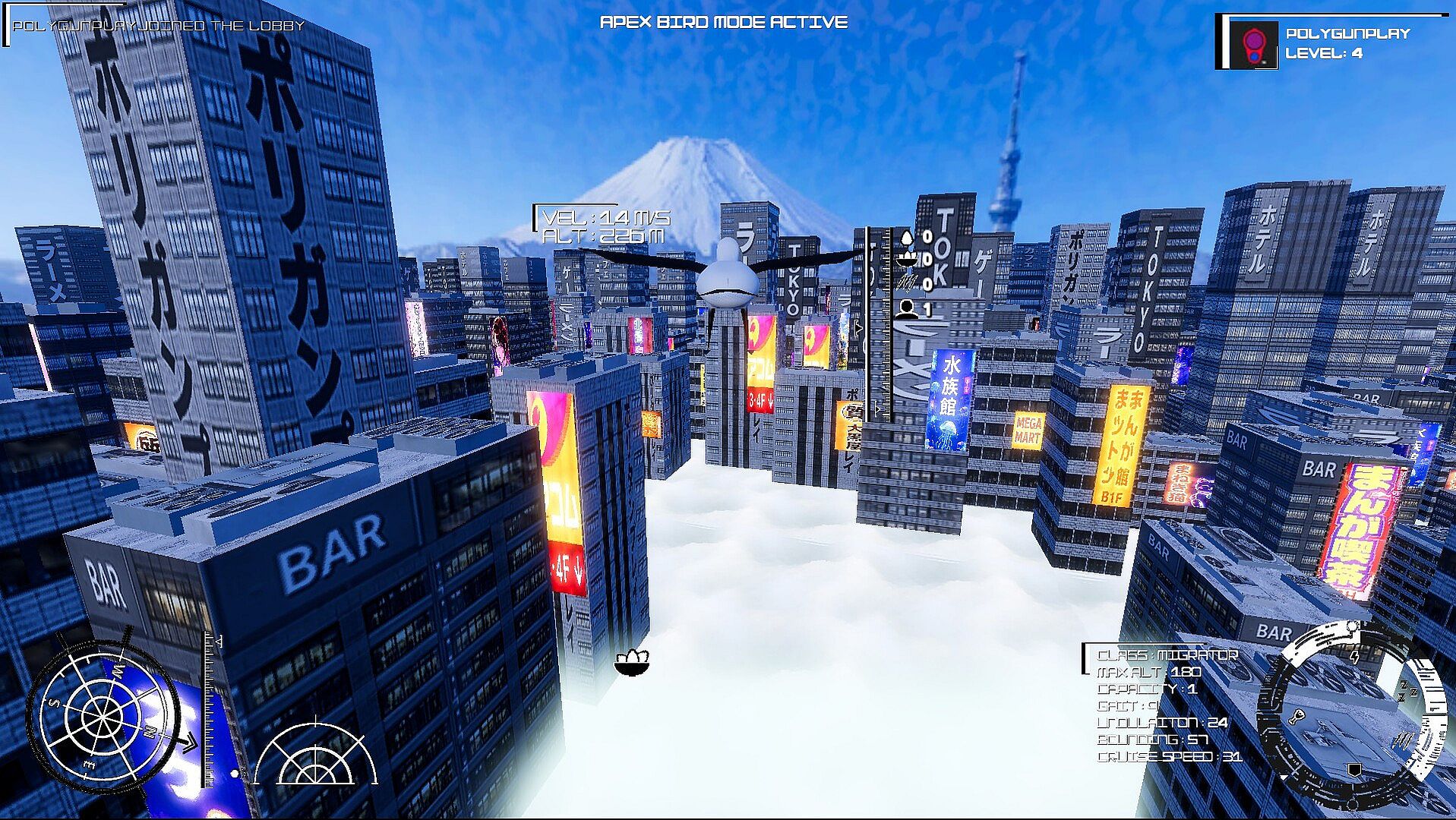
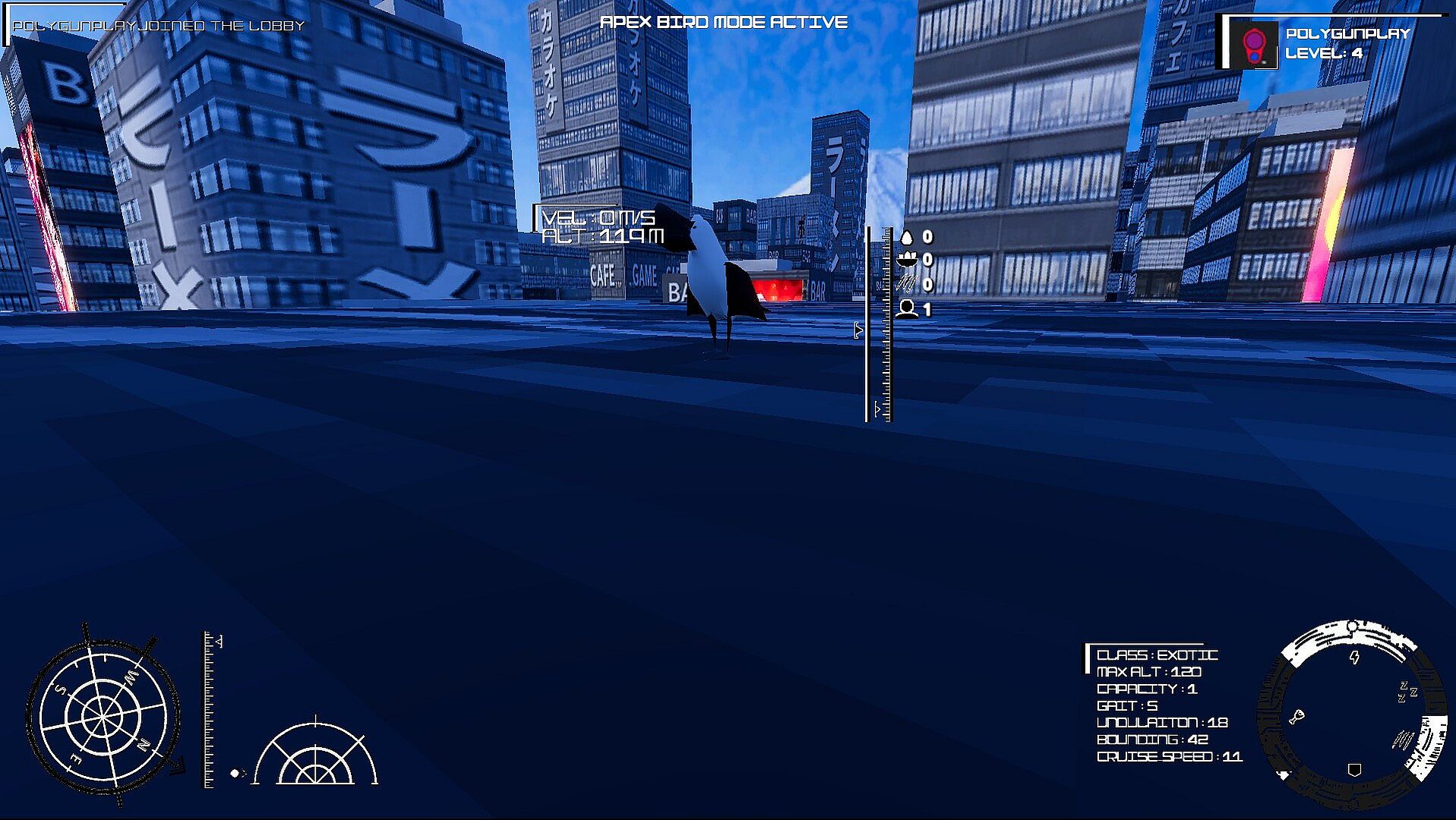
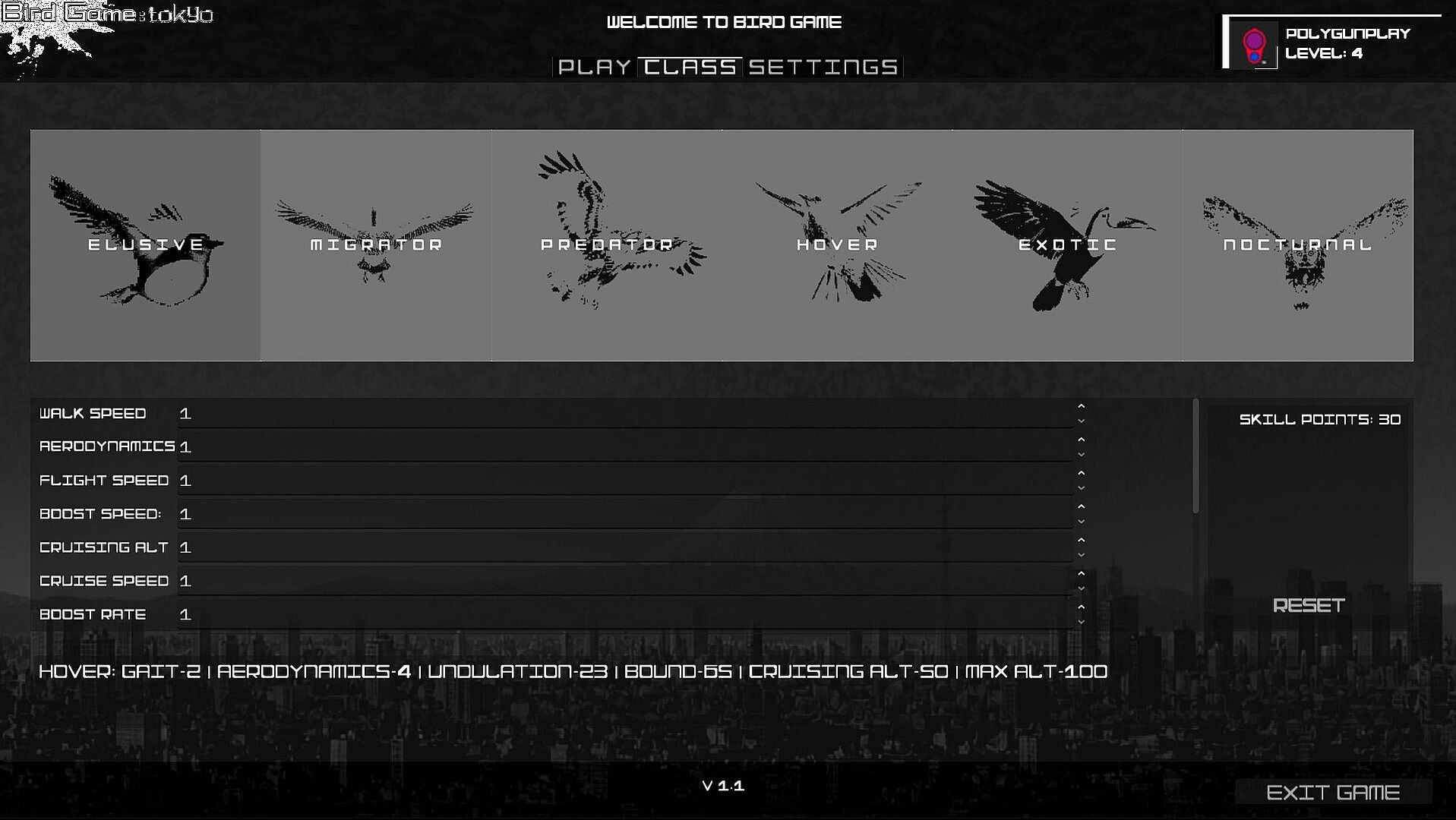


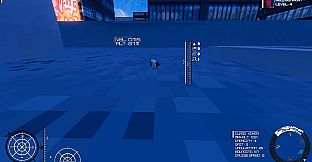


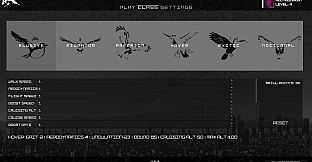
Bird Game: Tokyo is a simulation game set in an urban environment where players control birds navigating the dense cityscape of Tokyo. Developed by Polygunplay and built with the Godot engine for Windows, the title enters Early Access with a focus on multiplayer interactions through Steam's peer-to-peer API. Players pilot their bird across concrete structures and open spaces, selecting from six distinct classes that highlight differences between species. Builds can be adjusted through customization options to suit individual approaches to movement and interaction within the environment.
Gameplay
The core loop centers on flight mechanics through Tokyo's skyline, where vertical and horizontal navigation around buildings forms the primary activity. Each of the six classes offers unique traits tied to species characteristics, allowing players to leverage those differences during sessions. Build customization lets participants modify attributes to align with preferred movement styles or survival tactics, aiming to establish dominance in shared spaces. Compatibility settings adjust visual density to match hardware performance or emphasize the city atmosphere. Player progress, including class selections and preferences, saves through integrated systems, supporting repeated sessions without loss of setup.
Multiplayer elements rely on lobby creation and joining via the Steam API, enabling direct connections with friends or community members. Private lobbies support code sharing for controlled groups, while broader matchmaking opens opportunities for mixed interactions. The simulation emphasizes real-time positioning and adaptation to the urban layout rather than scripted events.
Game Modes
Sessions operate through lobby-based multiplayer that supports both competitive and cooperative play. Online PvP allows direct confrontations where positioning and class advantages determine outcomes in the shared Tokyo environment. Online co-op facilitates joint navigation and mutual support among participants pursuing common objectives. Lobby tools include creation, joining, and private code distribution, with saved stats tracking individual performance across entries. No additional named modes appear in the current description, keeping focus on these core multiplayer frameworks during the Early Access phase.
Development and Features
The game runs on the Godot engine with planned updates over a one-year Early Access period. Developers intend to expand class options, introduce new maps, and refine customization depth. Code improvements target anti-cheat measures and performance optimization based on player input. Current playable elements include full lobby functionality, class selection, and basic build adjustments. System requirements specify Windows 11, a 64-bit processor with at least six cores and eight threads, 12 GB RAM, dedicated graphics with 6 GB VRAM, and a broadband connection. Textures incorporate generative AI assistance, and large language models supported code development.
Is It Worth Playing?
Bird Game: Tokyo suits players interested in early-stage multiplayer simulations that emphasize flight control and class-based variety in an urban setting. The lobby system and Steam integration provide accessible entry for testing with others, while customization offers paths to experiment with different species traits. With no user reviews available prior to release, reception remains undetermined. Those drawn to ongoing development feedback loops and P2P multiplayer mechanics may find value in participating from the start. The title remains in a work-in-progress state, with further content additions planned through community input.











