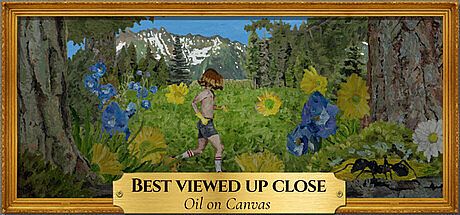


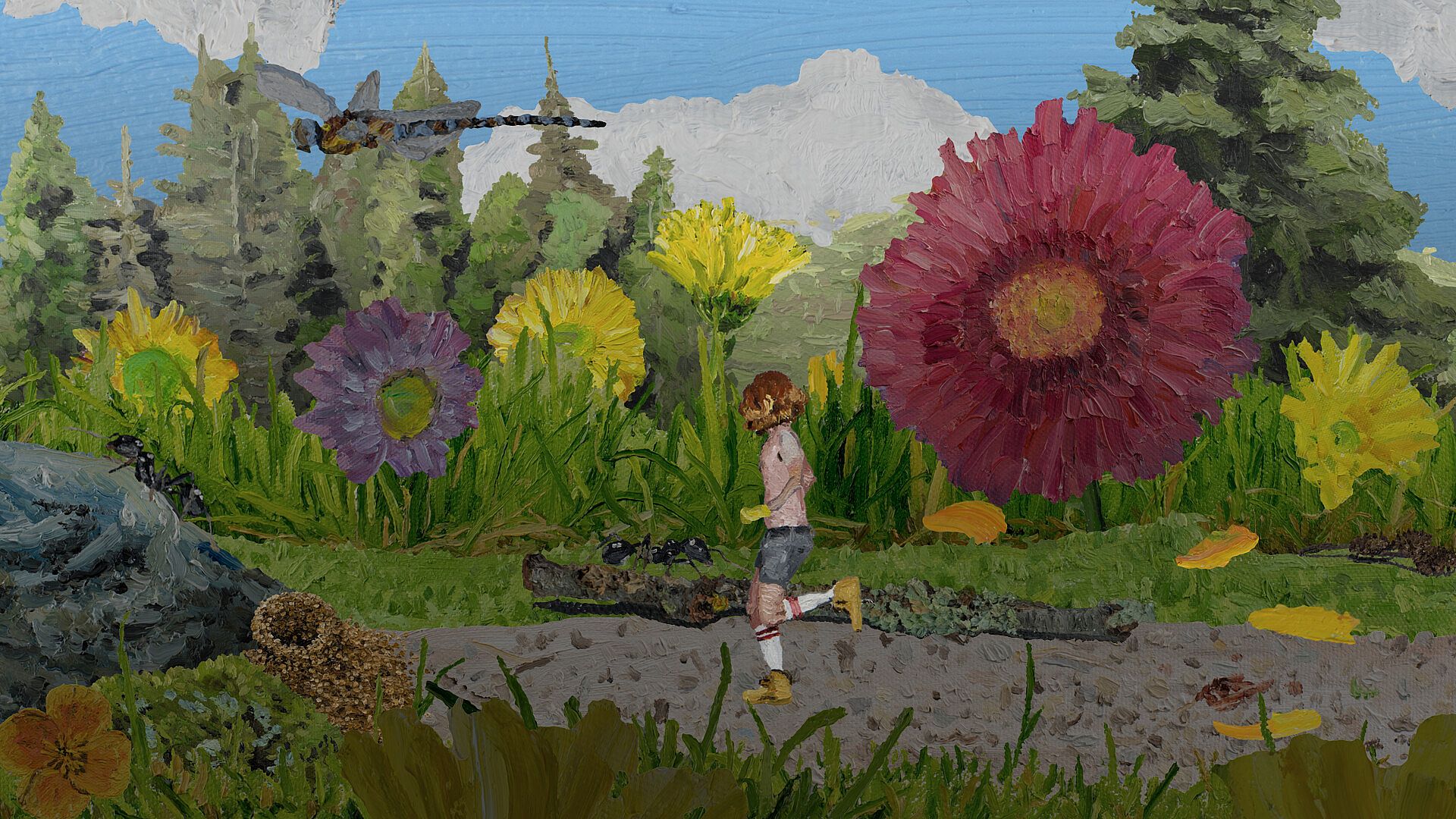
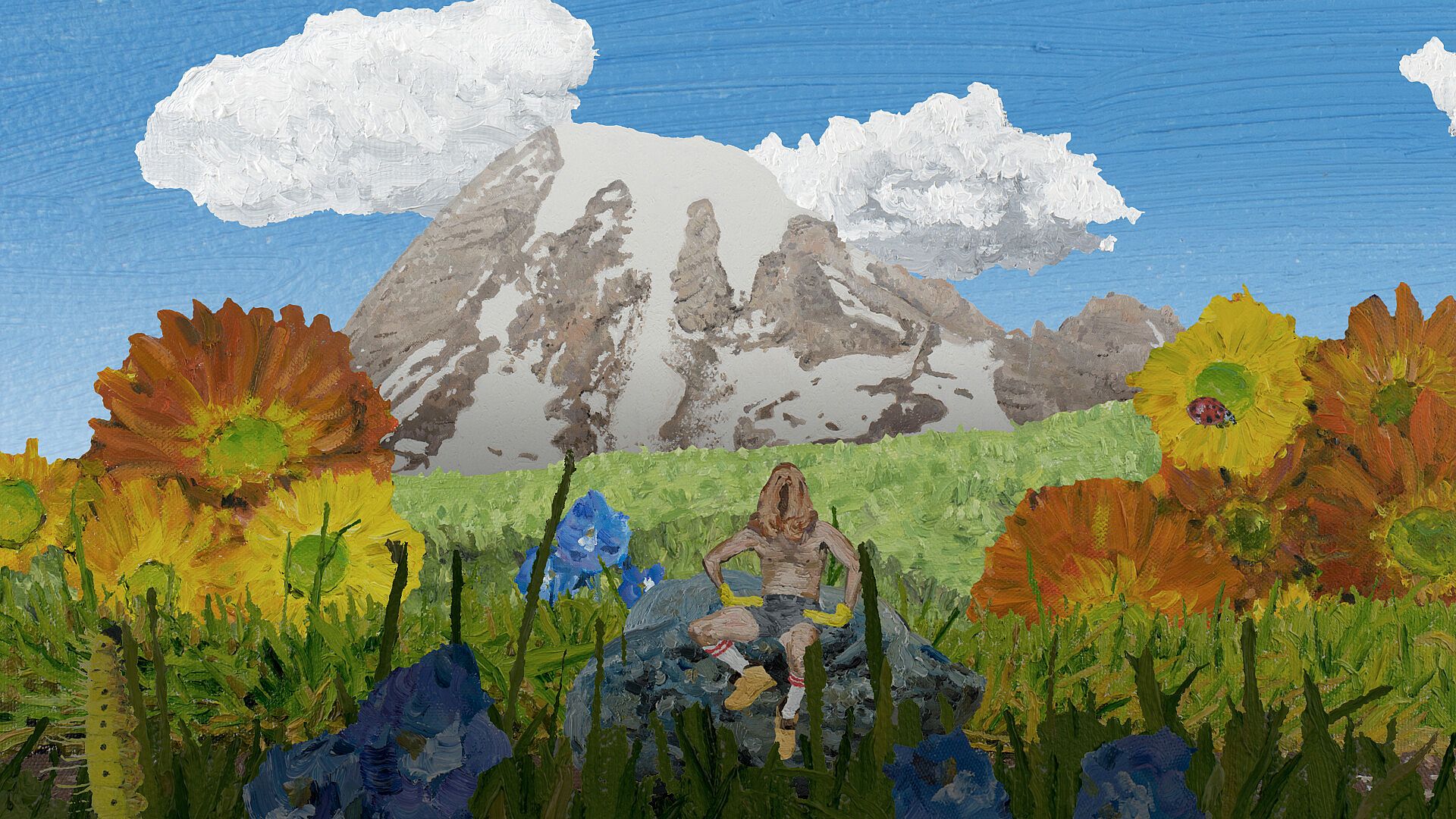
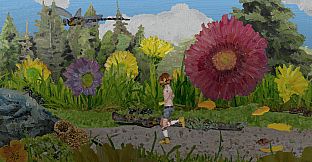
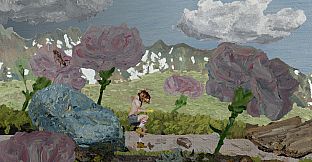
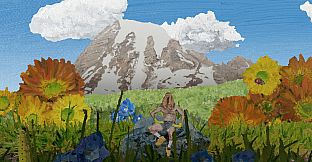
Best Viewed Up Close: Oil on Canvas is an indie casual adventure game for PC that places players inside a hand-painted meadow rendered from more than one thousand real oil canvases. The experience centers on miniature-scale exploration of a Pacific Northwest setting that would otherwise become a parking lot. Players control a shrunken figure wearing dish gloves, moving through thick brushstrokes that form grass, flowers, and water features. Every element originates from physical paintings photographed and assembled into a living scene rather than generated through digital filters or shaders.
Gameplay
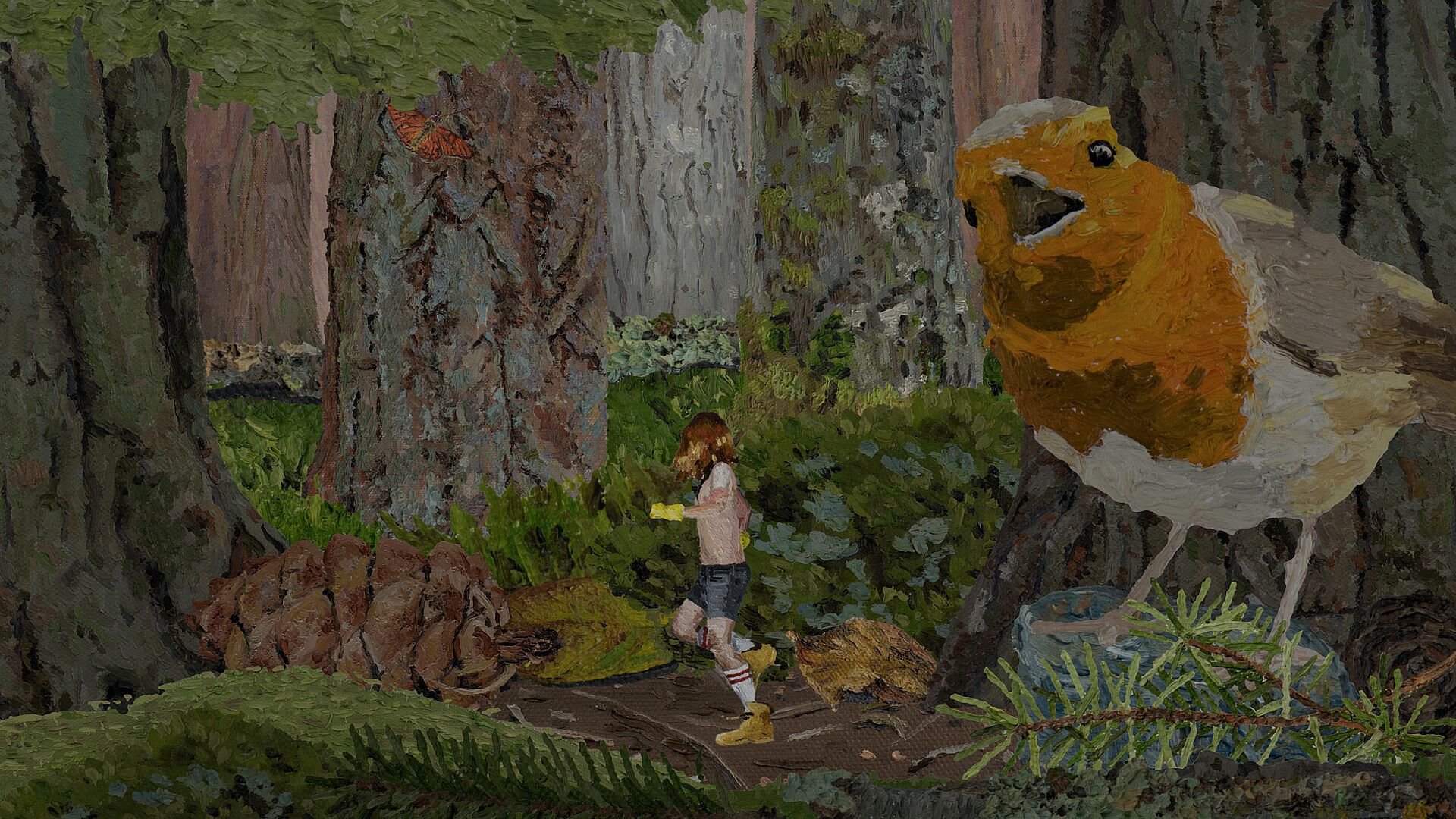
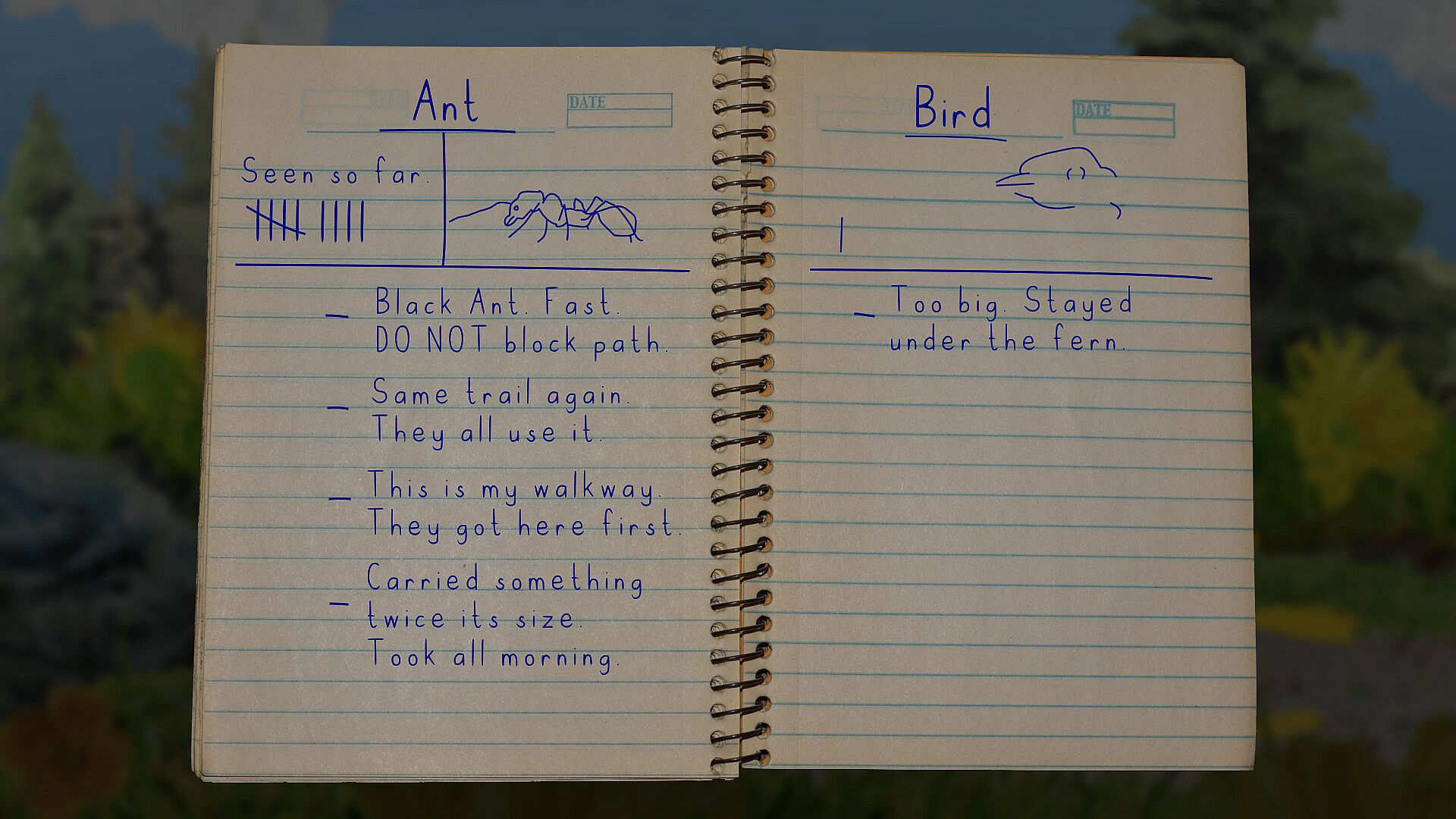
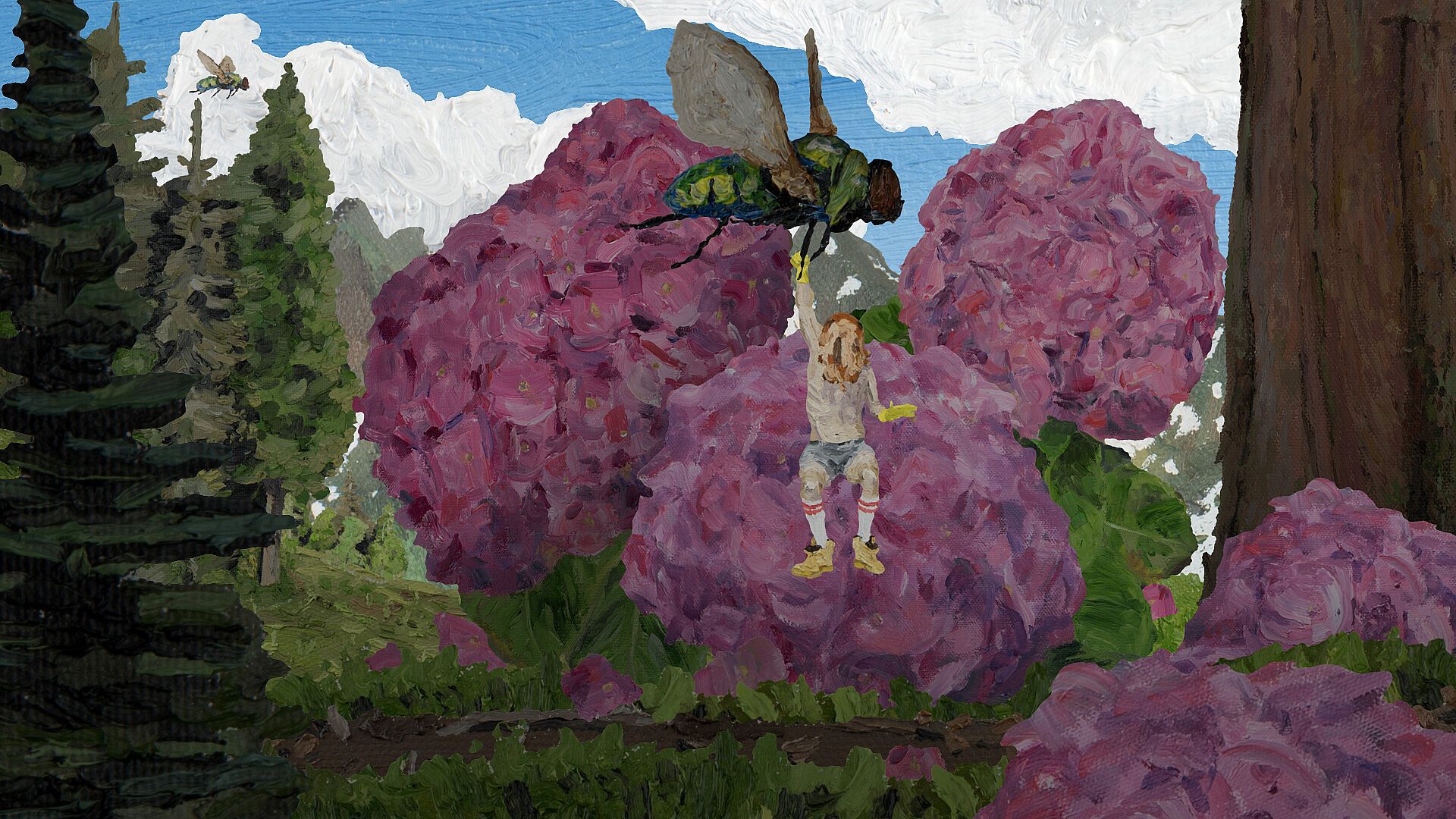
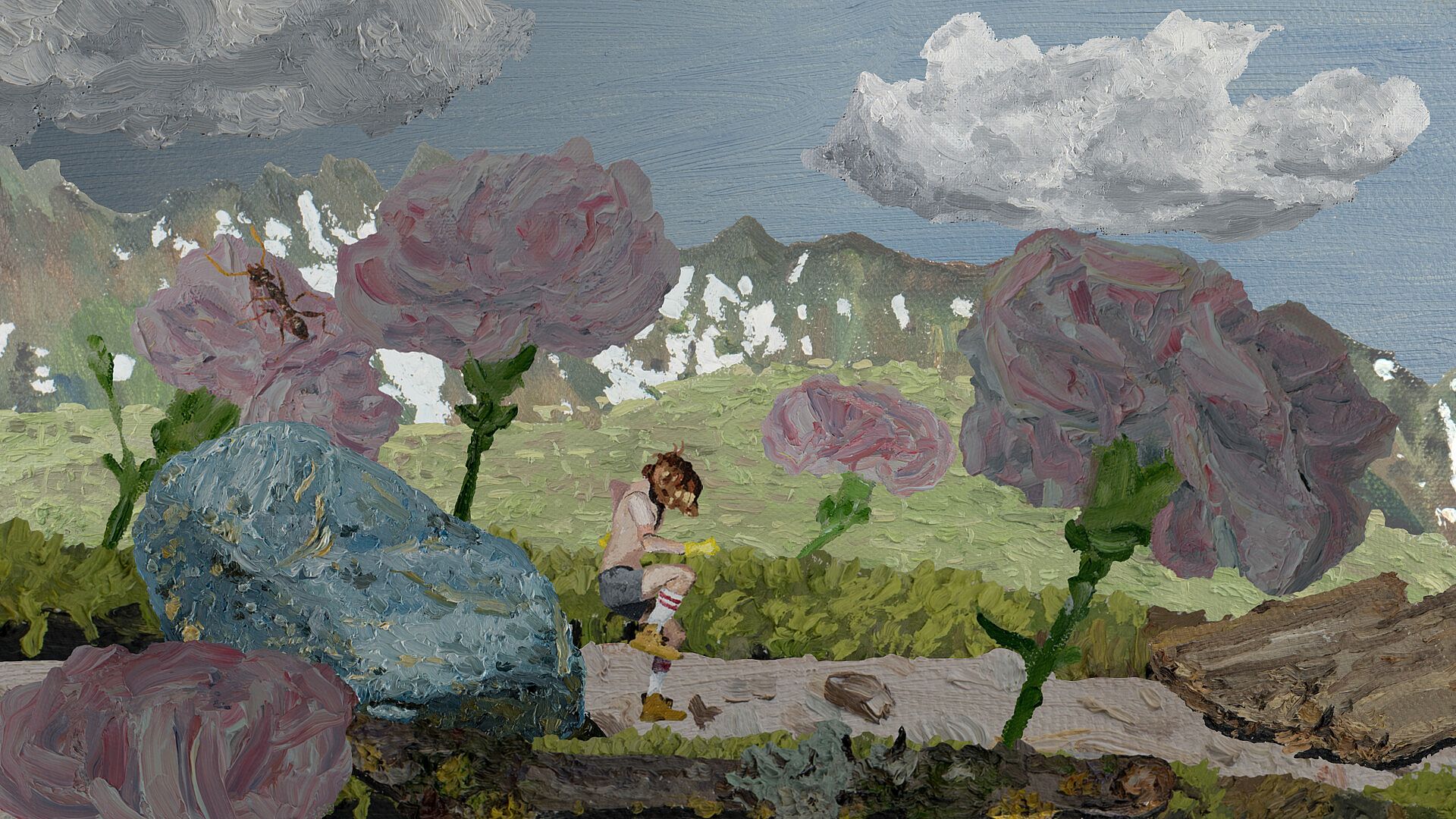
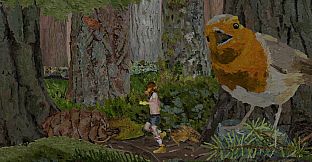
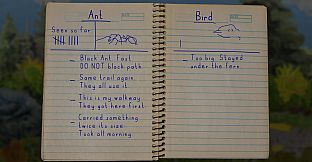
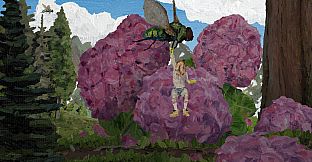
The core loop involves wandering the meadow at reduced size. Players climb stalks of foxglove, drift on petals across ponds, and hitch rides on bees to reach sunflower heads. Each region uses its own color palette and surface texture drawn from actual brushwork. Movement feels deliberate because the world consists of real painted layers that shift perspective when viewed up close. A field journal tracks discoveries by cropping sections directly from the source canvases. Entries record small creatures such as beetles pushing objects along gravel paths, lines of aphids beneath leaves, and spiders repairing webs after rain. The robin appears as a large shadow that quiets the smaller inhabitants, reminding players of their own scale without introducing danger. No combat systems exist, and the environment contains no fail states or timers that reset progress. The single continuous meadow stretches across distinct painted zones, allowing free movement between areas as the player chooses.
Game Modes
The game offers one uninterrupted exploration experience without separate modes or competitive structures. Progress comes through filling the field journal by approaching and observing the meadow's residents. The absence of traditional win or lose conditions keeps the focus on observation and movement through the painted landscape. Players advance by getting close enough to catalog each new subject, with the final journal page unlocked through proximity to the robin. This structure supports repeated visits to different regions to notice additional details in the brushstrokes and small lives that occupy the space.
Visual and Technical Approach
More than one thousand individual oil paintings form the basis of every sprite and scene. Artists continue to produce additional canvases that expand the available world. The result avoids digital approximations of texture because each surface carries the physical qualities of real paint applied to canvas. Regions maintain consistent artistic styles while varying in color and detail density, creating natural transitions as the player travels. The meadow remains a single connected space rather than segmented levels, preserving the sense of one location viewed at different scales.
Who the Game Appeals To
Those drawn to gentle, pressure-free exploration on PC will find the mechanics align with casual adventure preferences. The game suits players interested in close observation of natural details rendered through traditional art methods. It provides a quiet alternative to action-heavy titles by emphasizing presence in the environment over objectives or challenges. The hand-painted foundation and miniature perspective create a distinct visual identity within the indie genre.
Is It Worth Playing?
The game delivers a focused exploration experience built entirely around hand-painted assets and scale-based discovery. Players who value observation and movement through a living artwork without combat or failure conditions will find the mechanics consistent with the described premise. Availability on PC makes it accessible for those seeking short or repeated sessions centered on filling the field journal. The current state as a newly listed title means the core meadow and journal system stand as the primary draw, with potential for further painted regions based on ongoing canvas production. This style of play rewards patience and attention to the small elements that occupy the space before any larger changes occur.