







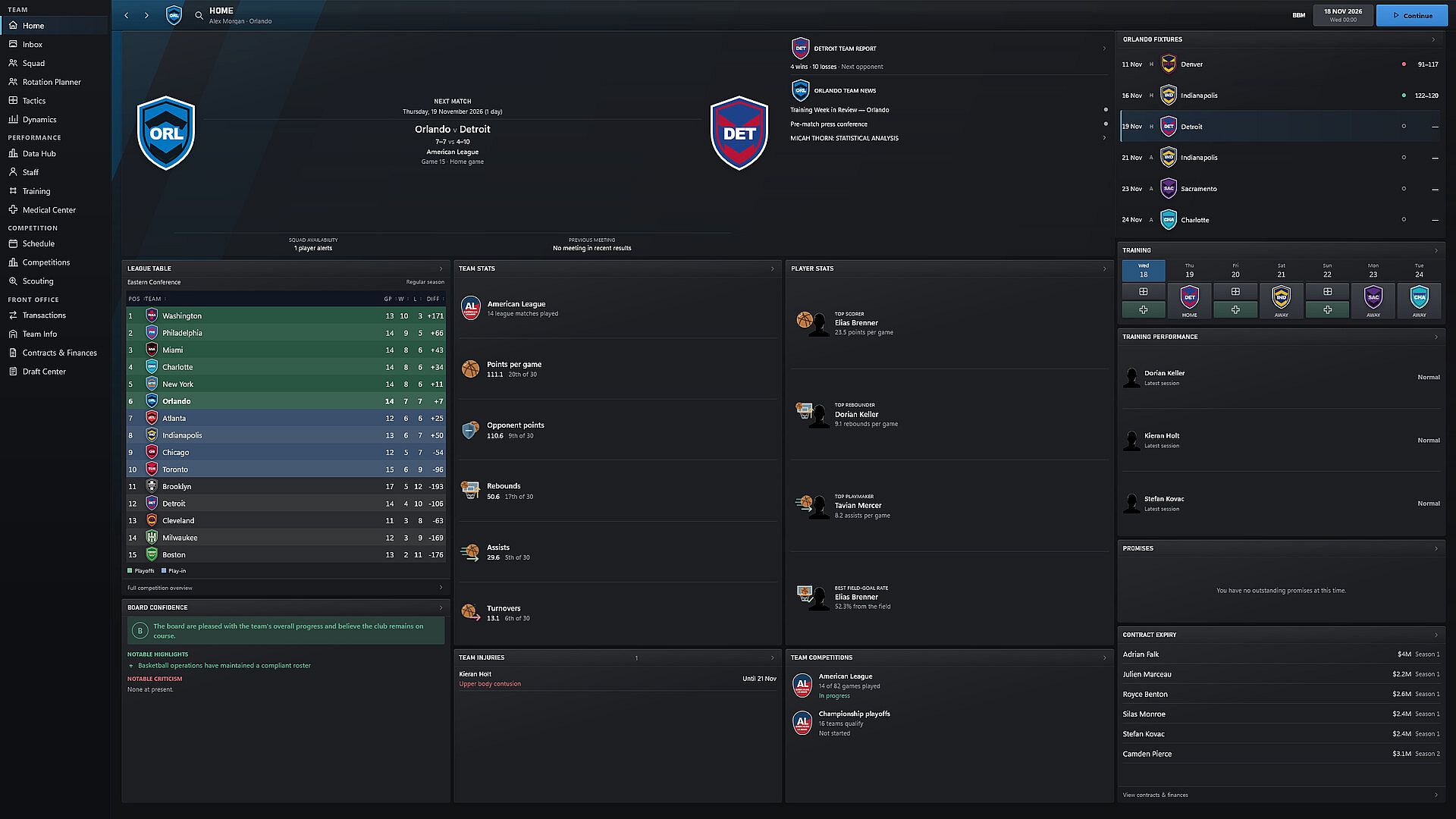
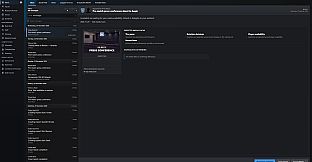
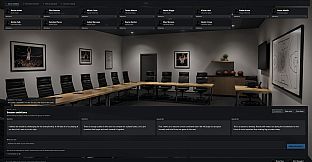
Baseline Basketball Manager 27 is a basketball management simulation that places players in charge of a professional organization. The game emphasizes long-term strategy through roster construction, scouting, contract negotiations, and tactical planning on a single-player PC experience focused on simulation and strategy elements.
Gameplay
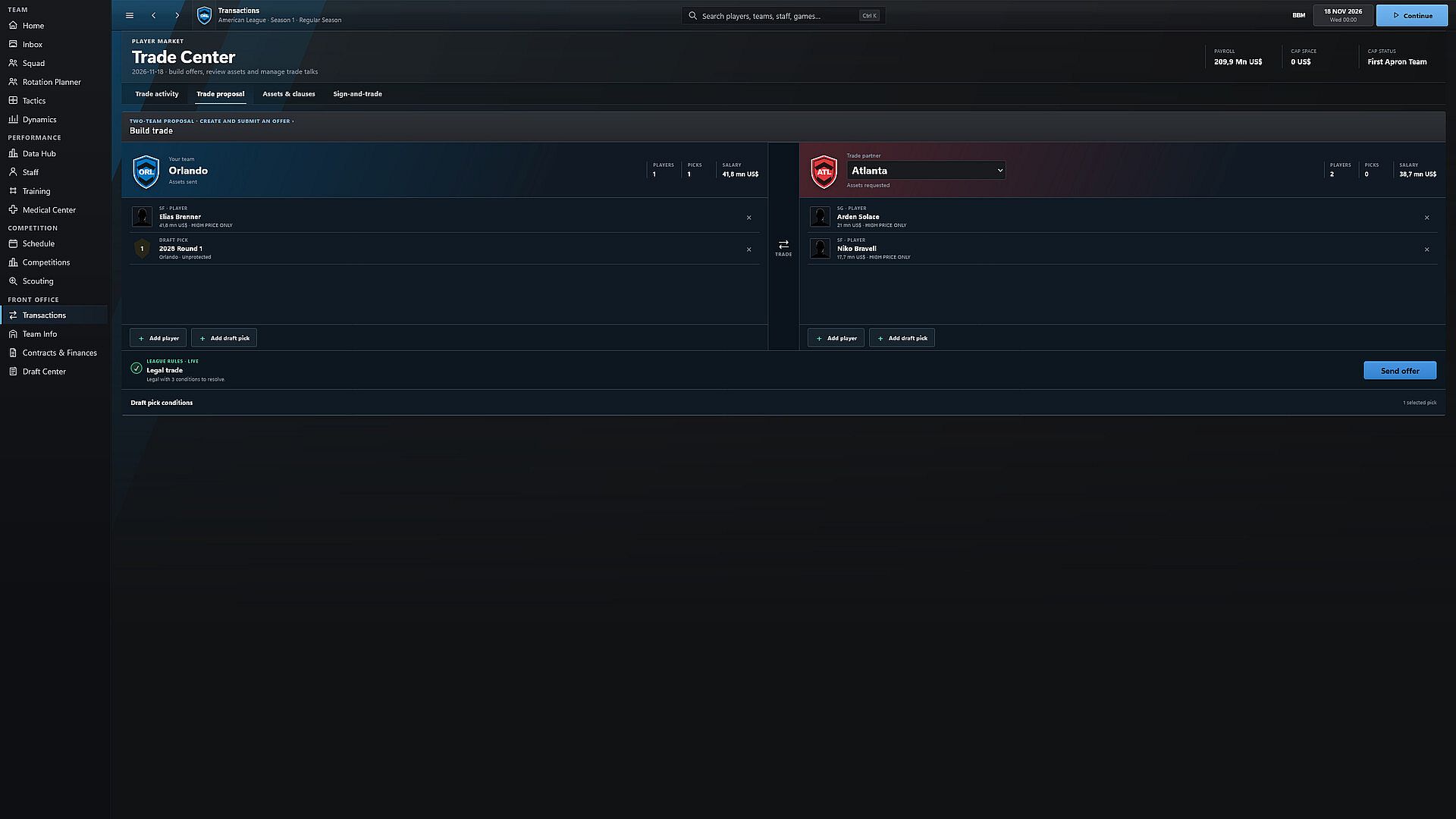
Core play revolves around controlling every aspect of a franchise from the front office. Players handle trades involving multiple assets, salary-clearing deals, sign-and-trades, and free agency periods that include both restricted and unrestricted players. Contract and roster management requires balancing on-court value against financial constraints, with AI teams responding based on their own goals and budgets.
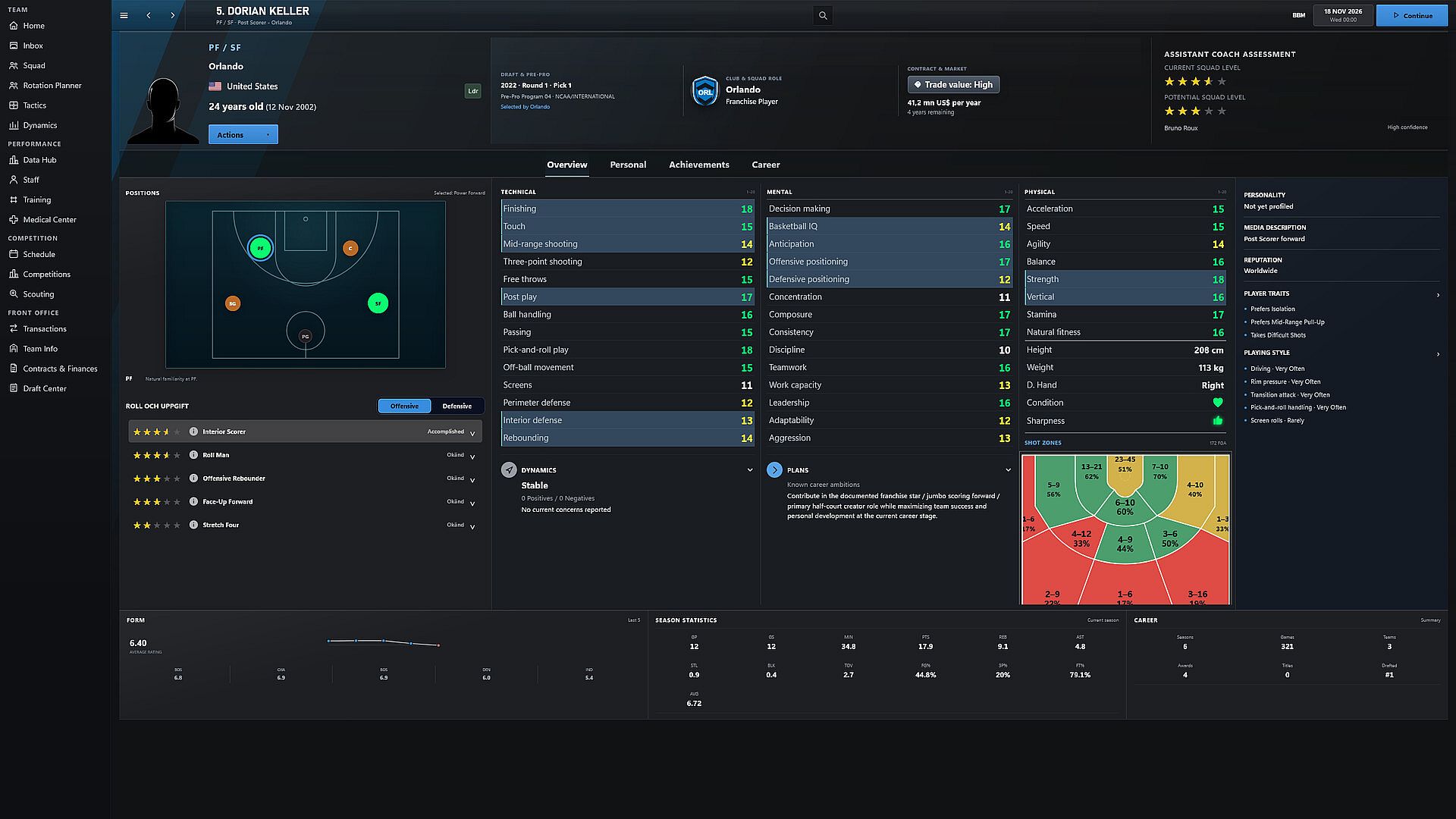
Scouting forms a central system where information on prospects and active players builds gradually. Details on strengths, weaknesses, roles, potential, and tendencies emerge over time rather than appearing as complete data. Draft preparation involves tracking prospects across a season, constructing a board, and deciding how much to trust incomplete reports when trading up, down, or accumulating future picks.
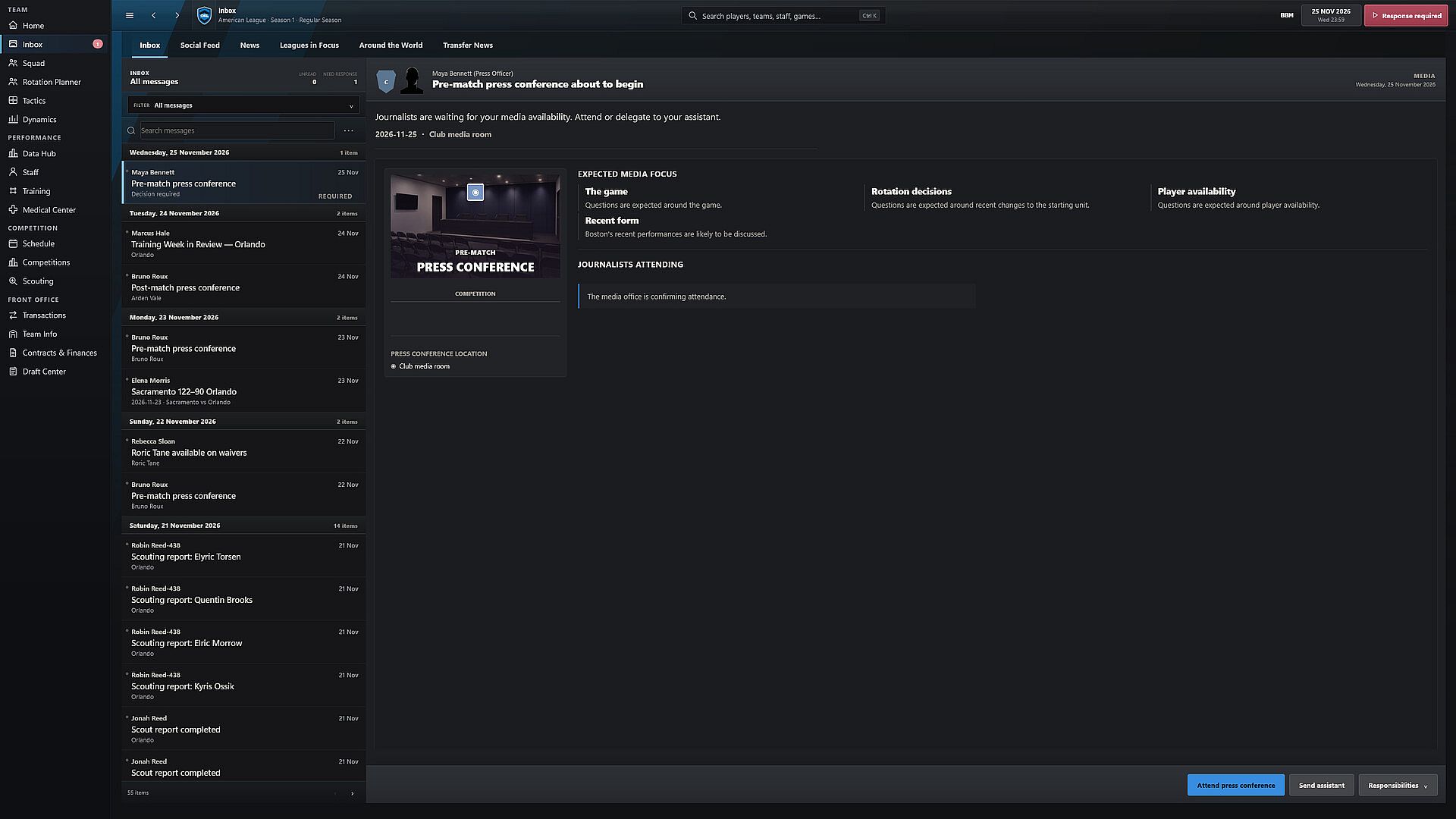
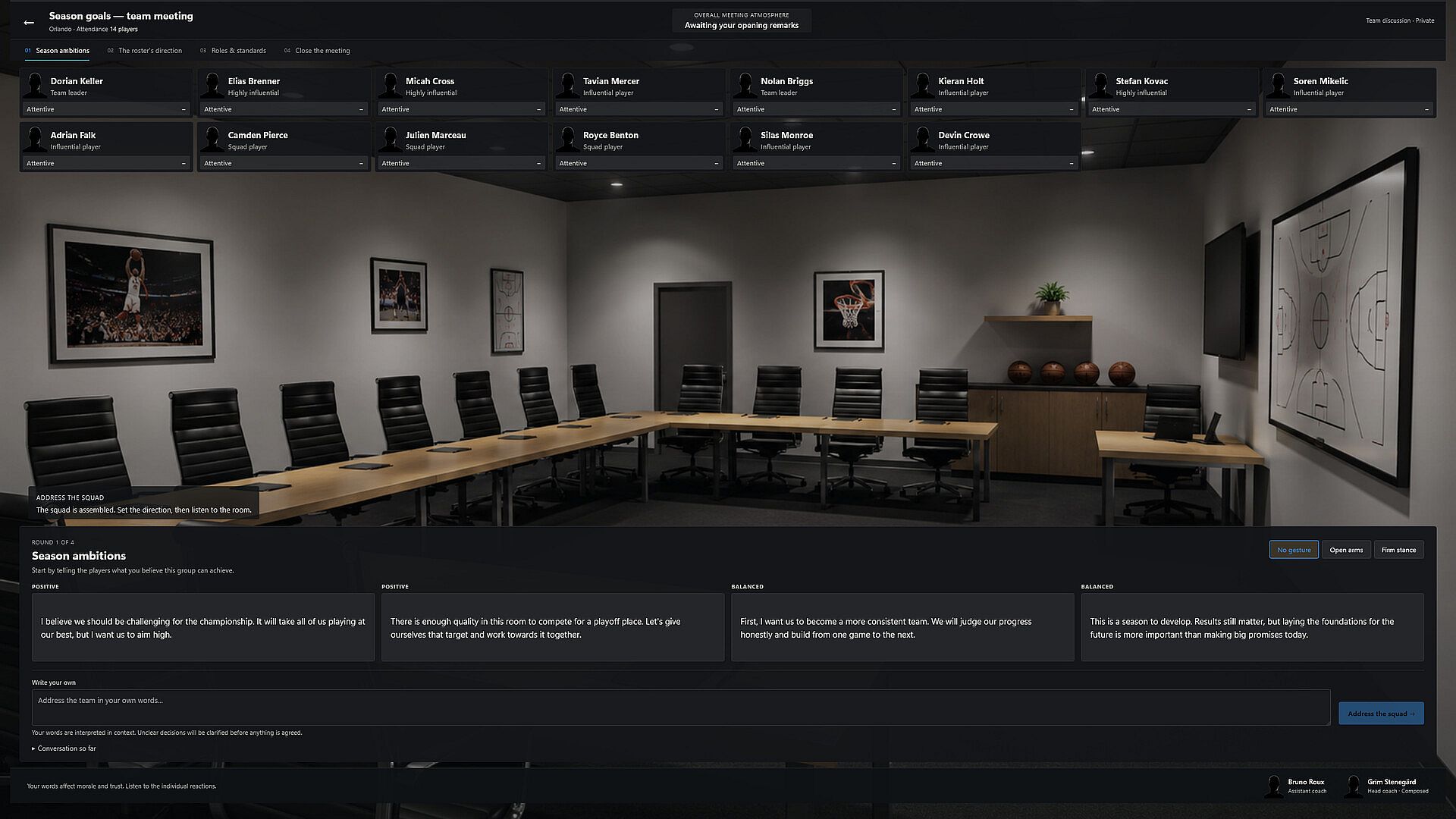
On the court side, rotation building, minute allocation, and role assignments shape team identity. Tactical instructions allow adaptation as the roster evolves. Player development spans multiple seasons, influenced by training, playing time, personality, and team context, leading to varied outcomes for the same prospect across different saves. Management extends to handling player reactions, agent discussions, media obligations, and locker room dynamics that can create ripple effects beyond numerical decisions.
Game Modes
The game operates as a continuous career simulation without separate named modes. Seasons flow into offseasons that include draft lottery proceedings, draft night selections, option decisions, free agency, contract talks, trades, summer roster adjustments, and preseason work. Each cycle alters the league landscape as AI-controlled organizations pursue their independent strategies, from contender upgrades to rebuilding through youth or salary relief.
Long-term play encourages repeated saves with different approaches, such as aggressive trading, draft-and-develop focus, superstar-centric builds, or deep roster construction. The world advances independently, with players shifting roles, developing or declining, and moving between teams based on their own evaluations.
Key Mechanics and Systems
Multi-asset trade packages and team or player options add layers to roster turnover. Scouting knowledge develops progressively, forcing decisions under uncertainty instead of relying on perfect ratings. Development paths differ based on opportunity and situation, while financial realities constrain options alongside basketball priorities. The offseason sequence covers the full cycle from lottery through preseason preparation, ensuring no part of the calendar feels static.
AI behavior evolves with each organization's direction, creating a reactive market where deals reflect real needs and future planning rather than fixed values. This setup supports varied franchise paths without a single optimal route to success.
Is It Worth Playing?
Baseline Basketball Manager 27 suits players who enjoy detailed, text-heavy simulations centered on decision-making and long-term planning. The depth in scouting, development, and interpersonal management rewards careful attention to incomplete information and evolving league dynamics. Those seeking quick matches or visual spectacle will find less appeal, as the focus stays on strategic oversight rather than on-court control.
With recent release and ongoing patches addressing minor issues like inbox settings and contract flows, the experience remains in active refinement. Fans of basketball management titles that emphasize roster building and organizational direction will find substantial replay value through different starting points and philosophies. The absence of forced endings allows careers to extend across decades as desired.











