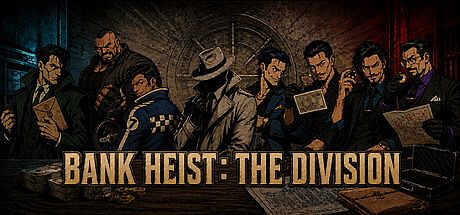


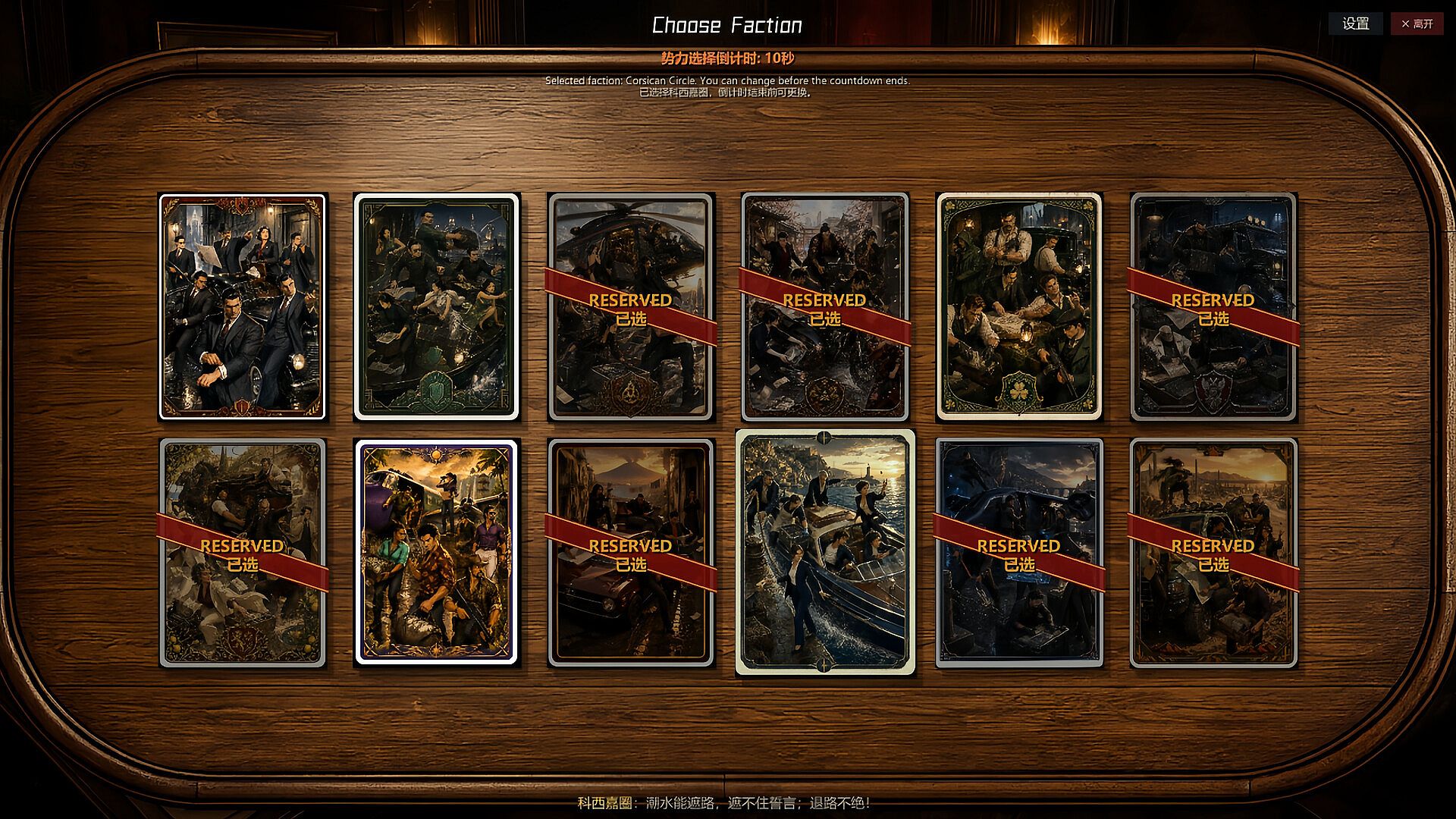
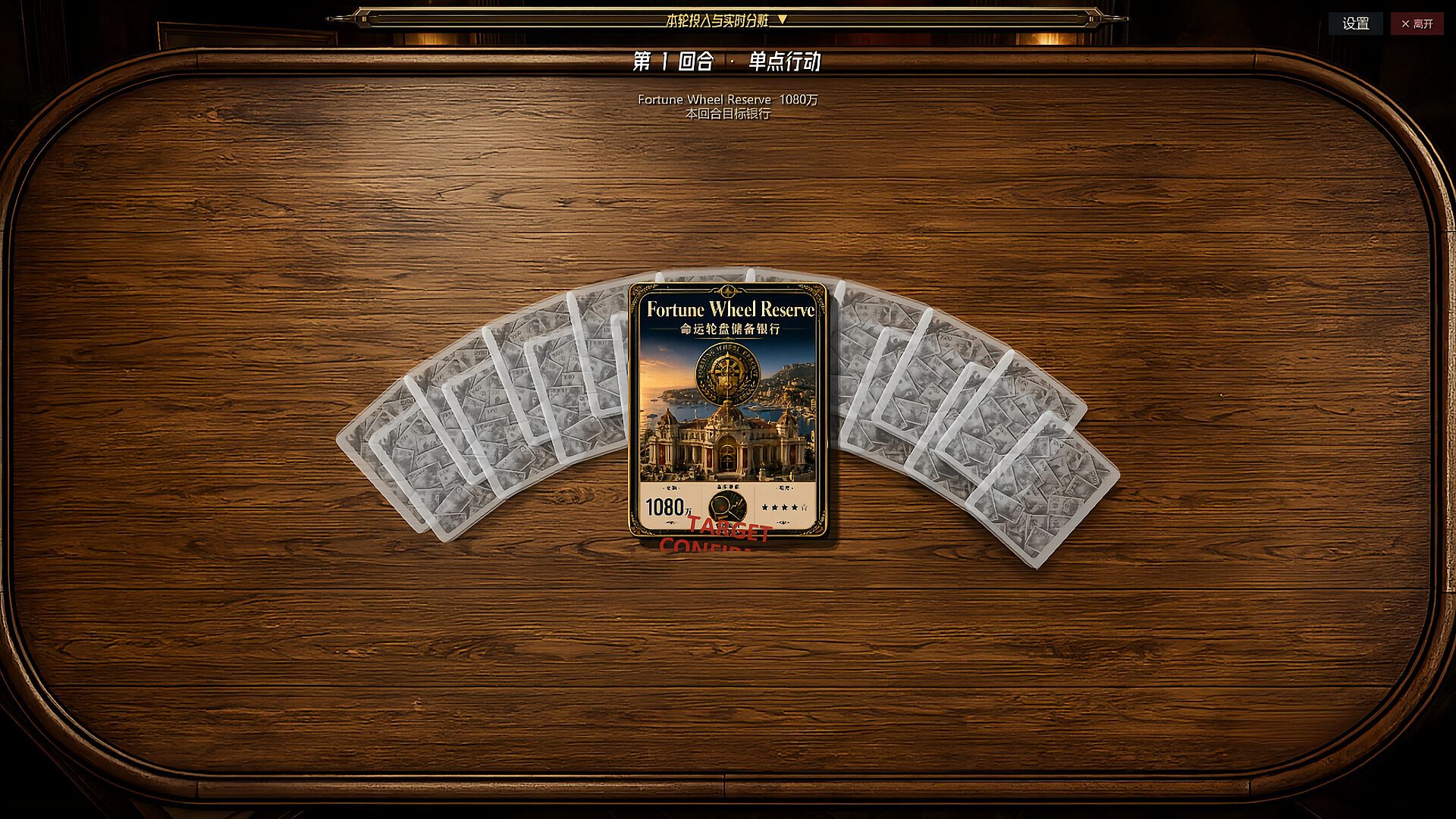
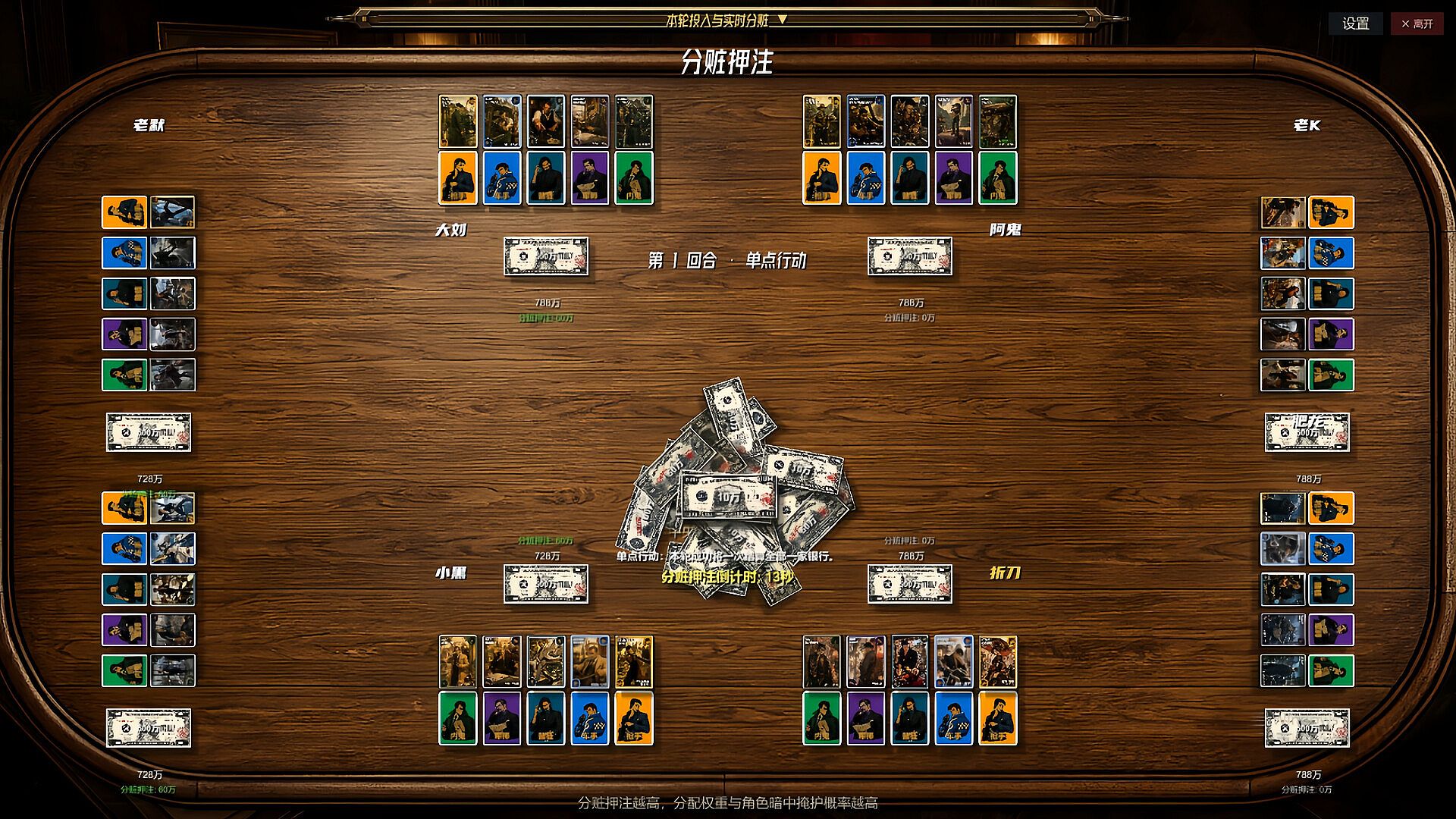
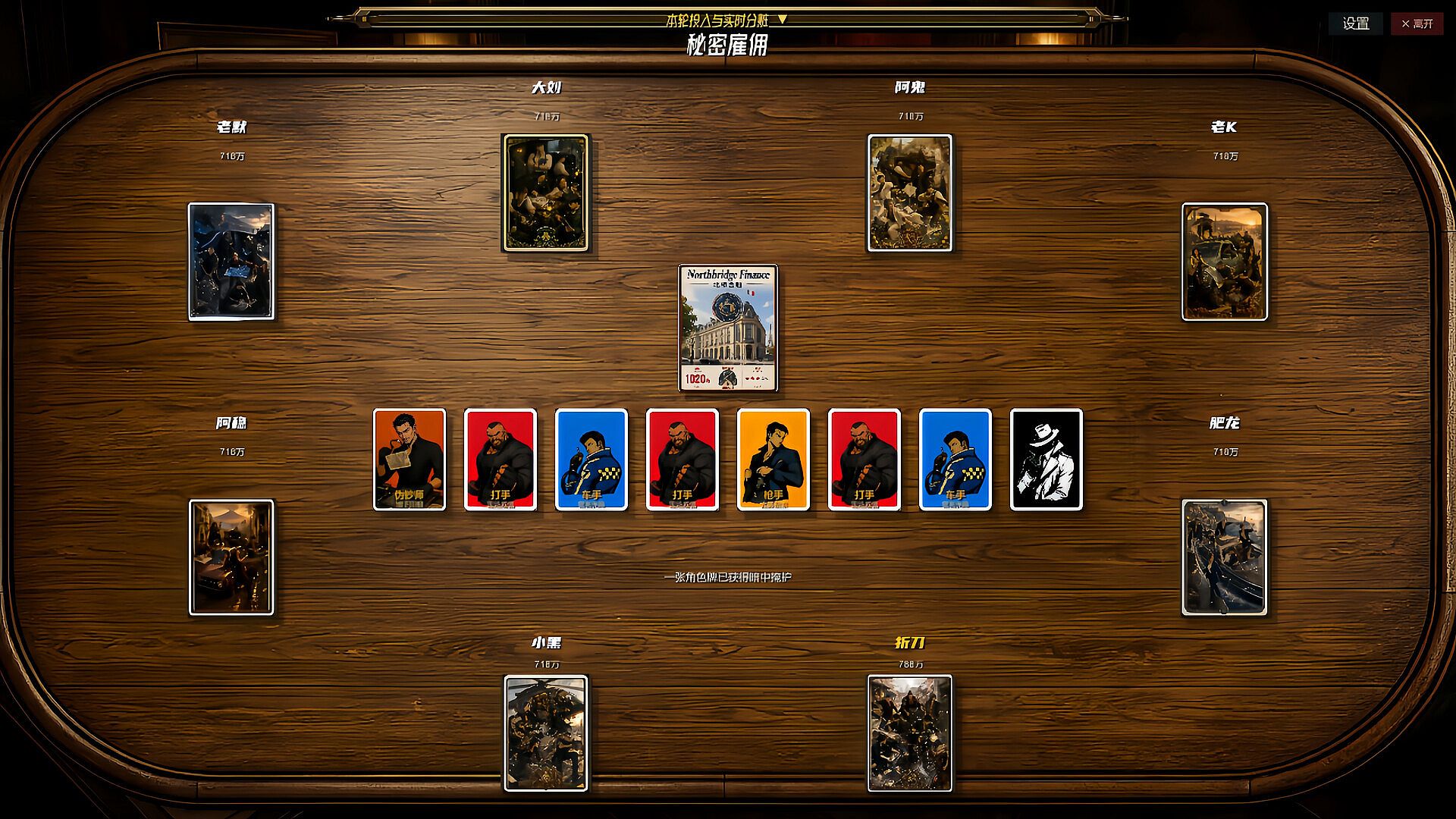

Bank Heist: The Division is a strategy card game that blends public commitments with hidden roles in tense multiplayer sessions. Players manage cash stakes and secret identities across rounds of negotiation and elimination to claim shares of a bank loot pot. The indie title supports PC play in both online groups and solo matches against AI opponents.
Gameplay
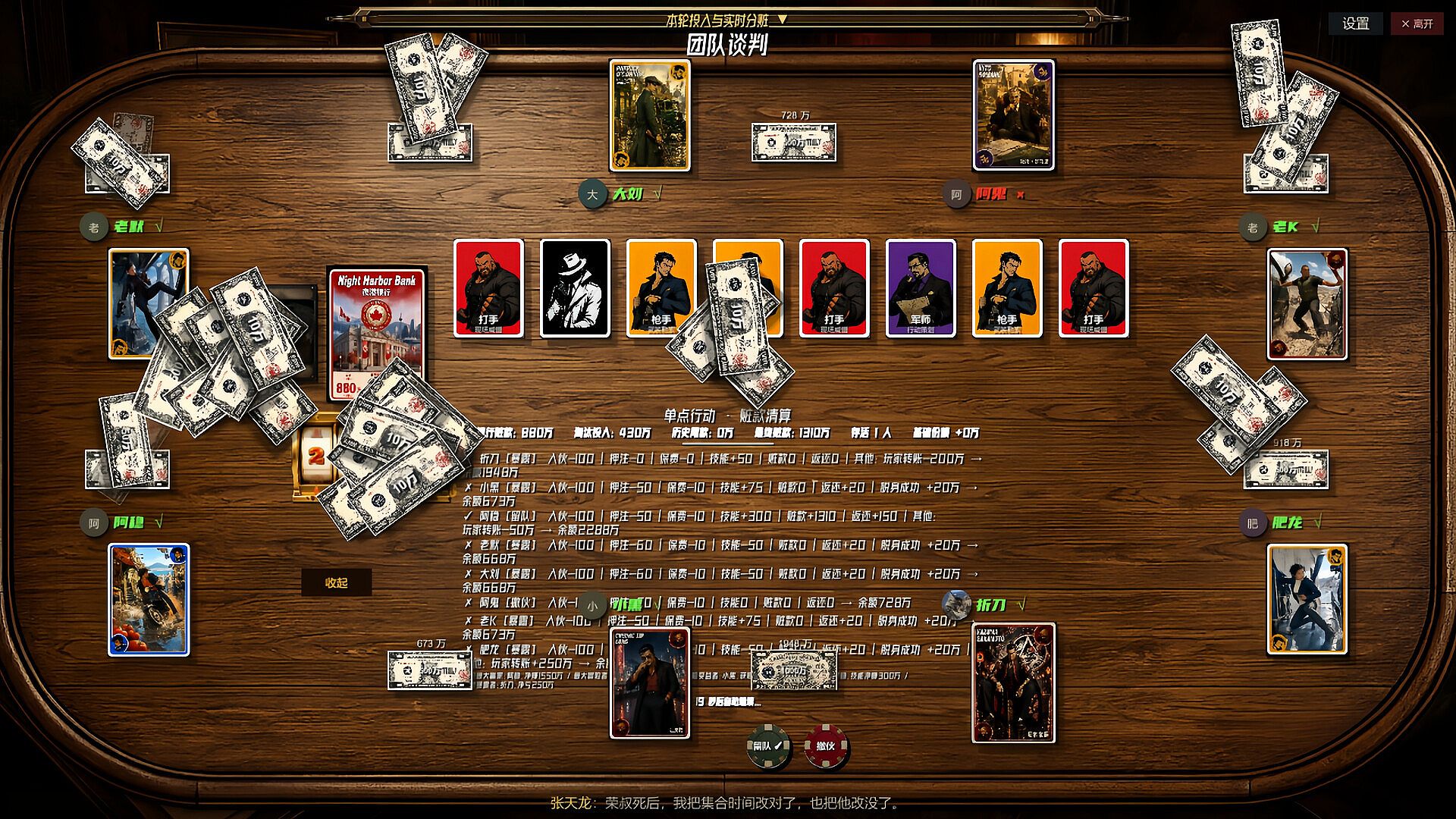
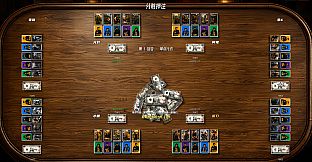
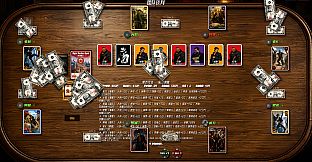
Each round starts with three public cash commitments from every participant. Players pay an entry fee, raise their loot stake for a larger potential share, and buy optional escape insurance to limit losses on elimination. Higher investments raise rewards but draw suspicion from others at the table.
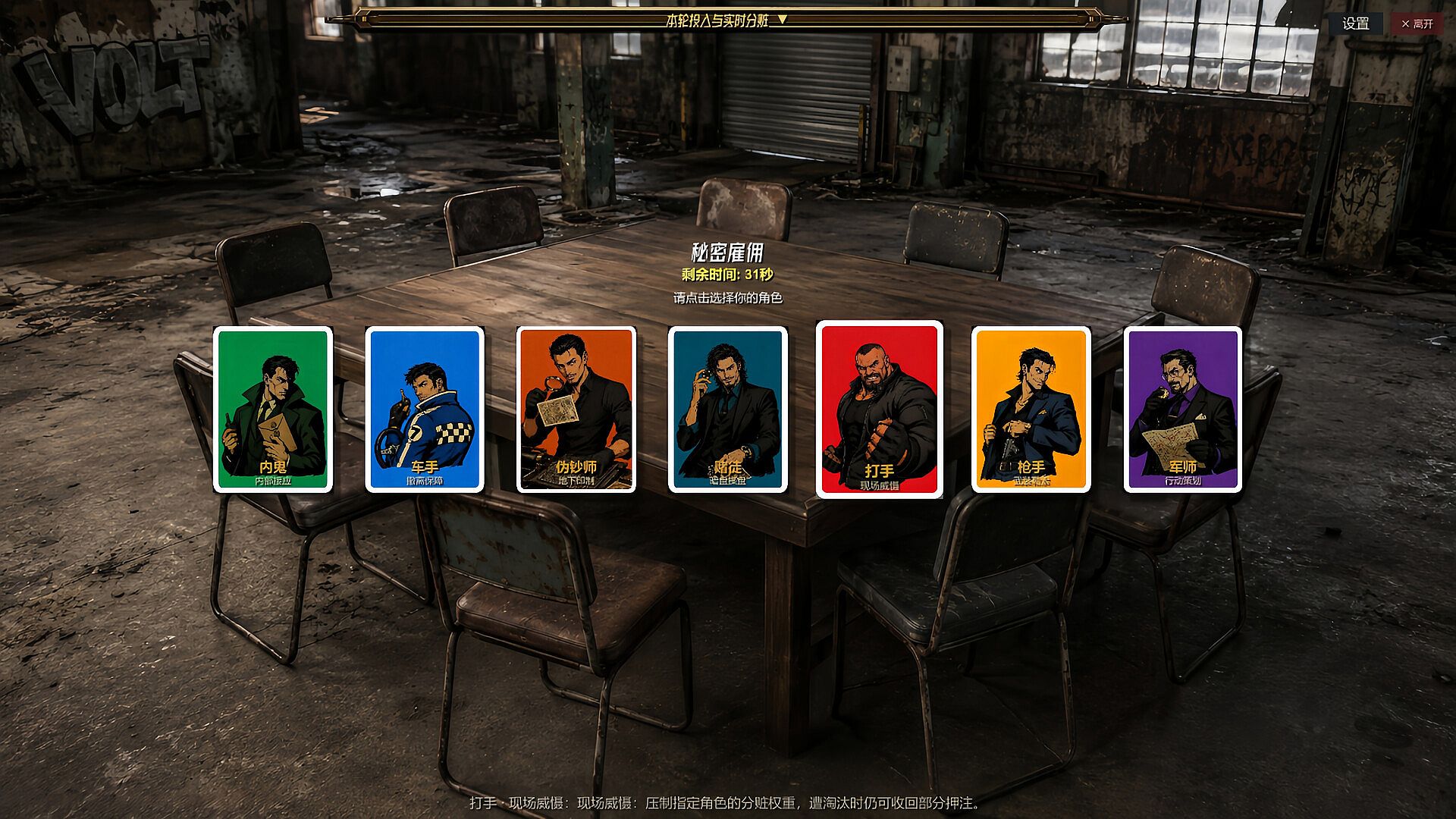
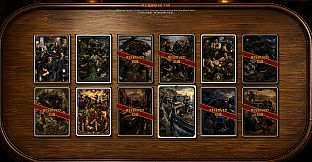
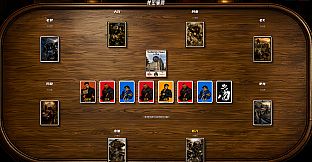
After commitments, participants secretly select one of seven roles. The Enforcer, Driver, Gunman, Insider, Strategist, Gambler, and Counterfeiter bring unique abilities that affect survival and loot division. Role matches can create conflicts, while secret targets, refunds, fees, extortion, intelligence purchases, wagers, and counterfeit money alter the final split.
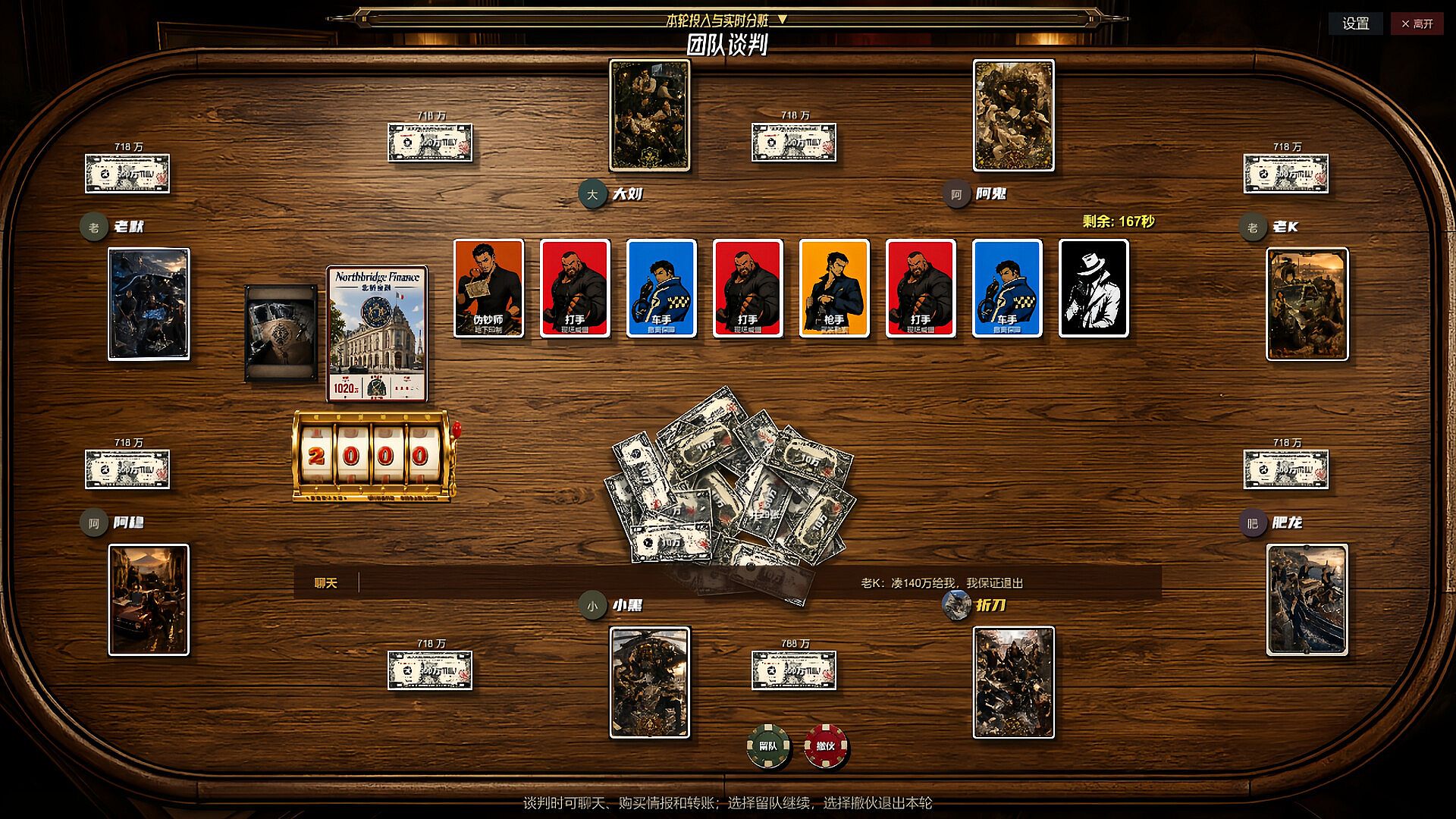
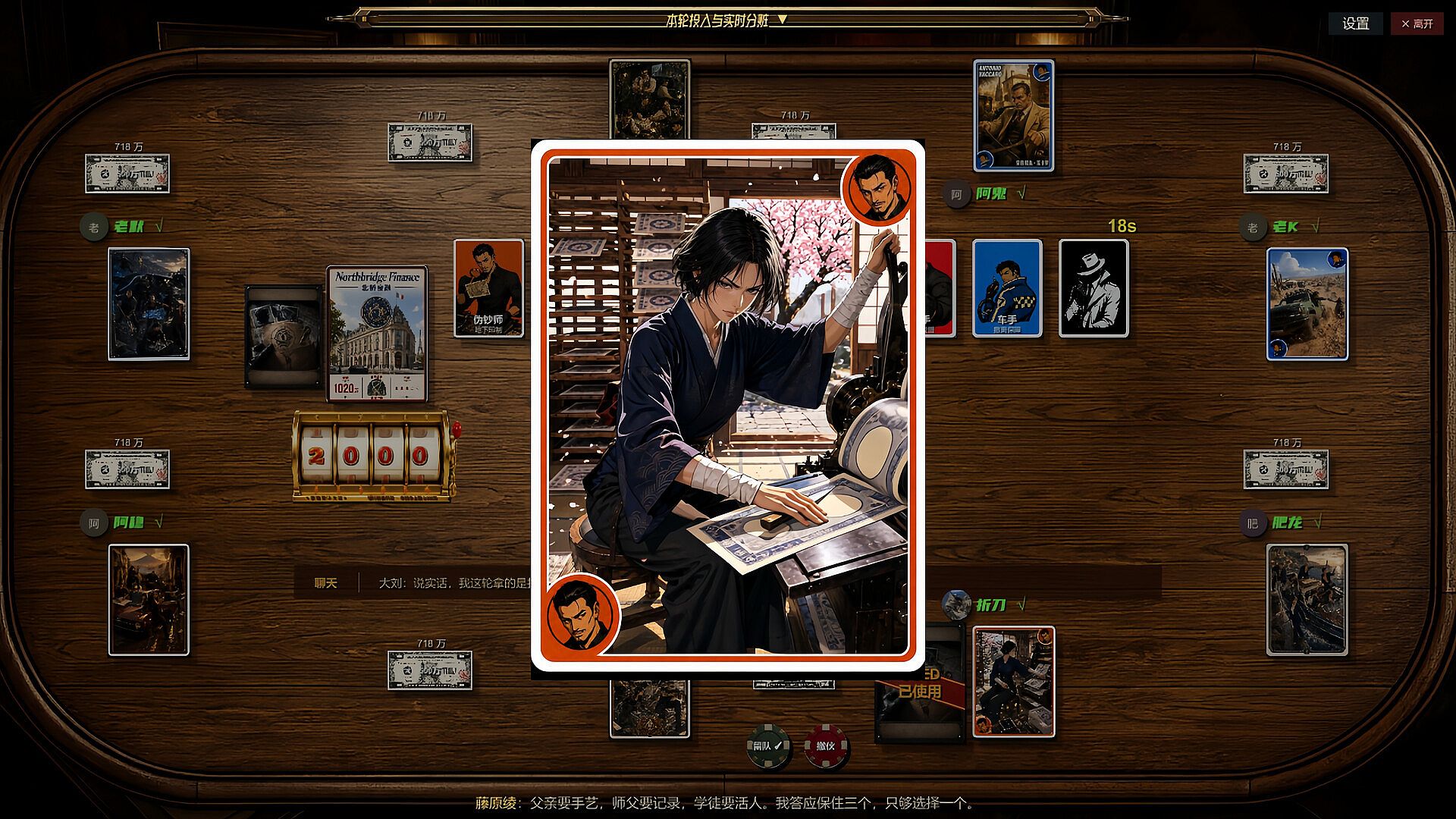
Negotiations allow investigation of identities, intelligence buys, money transfers, stake or insurance adjustments, and withdrawal decisions. Verbal promises carry no enforcement, so transfers may represent real cooperation or deliberate bait. Withdrawing returns the entry fee and stake but removes the player from role resolution and loot distribution that round.
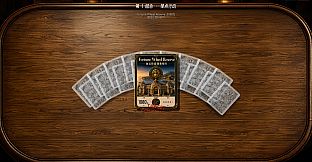
Eliminated players lose unprotected cash to the round's loot pot, which combines with bank proceeds and distributes according to surviving players' final weights. Failed heists carry forward the bank card and any unclaimed player loot, letting up to three banks accumulate and increasing both risk and reward for later successful rounds.
Game Modes
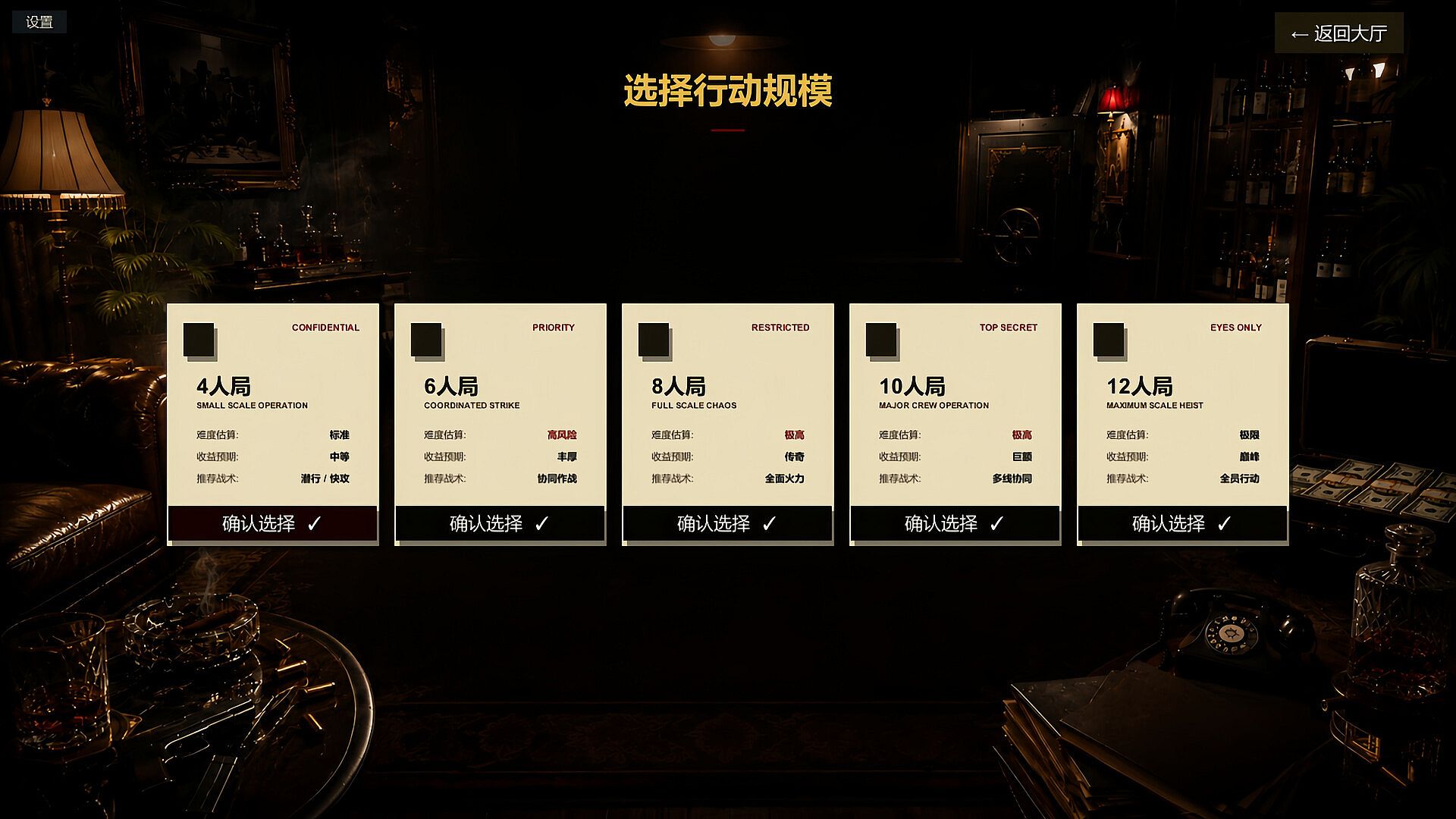
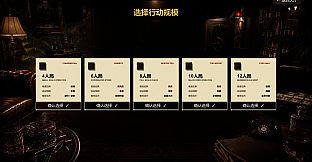
Online matches accommodate 4, 6, 8, 10, or 12 players. The available role pool, role cooldowns, and cash target scale with group size to maintain balance. A complete round of financial settlement ends when the leading player reaches the cash target and walks away, or when all banks are robbed or Round 10 concludes, at which point the player with the most cash wins.
Single-player mode pits one person against AI opponents using the same commitment, role selection, and negotiation systems. Matches adjust parameters for the chosen player count to preserve the core tension of reading opponents and managing investments.
Core Mechanics and Strategy
Public stakes and available intelligence form the visible layer, while hidden role choices drive the mind games. Heavy investors become targets for manipulation, and survivors benefit when others fall. Insurance premiums are spent regardless of outcome, adding another layer to cash management decisions.
Role abilities reshape outcomes through refunds, fees, or direct elimination effects. Players study behavior and stakes to anticipate collisions or alliances. Temporary cooperation can form during negotiations, yet every transfer remains open to interpretation as genuine support or a trap to inflate another player's commitment.
Is It Worth Playing?
Bank Heist: The Division suits players who enjoy strategy card games centered on hidden information, negotiation, and cash management. The mix of public commitments and secret roles creates repeated opportunities for bluffing and deduction across variable group sizes. Single-player AI matches provide practice or solo sessions without requiring other people.
The accumulation of banks after failed heists raises stakes progressively, rewarding patience and careful investment. Those drawn to mind games over direct confrontation will find the turn-based structure rewarding, especially when reading table dynamics and deciding when to withdraw or push for elimination of rivals. The game delivers focused sessions built around trust, suspicion, and final loot division rather than long campaigns or extensive progression systems.