








Artificial Ambition is a strategy and simulation game set in 2017 that places players in charge of founding and scaling an artificial intelligence company before the generative AI era takes hold. The experience centers on real-time management decisions that turn limited resources into a competitive enterprise through careful hiring, infrastructure investment, and product development.
Gameplay
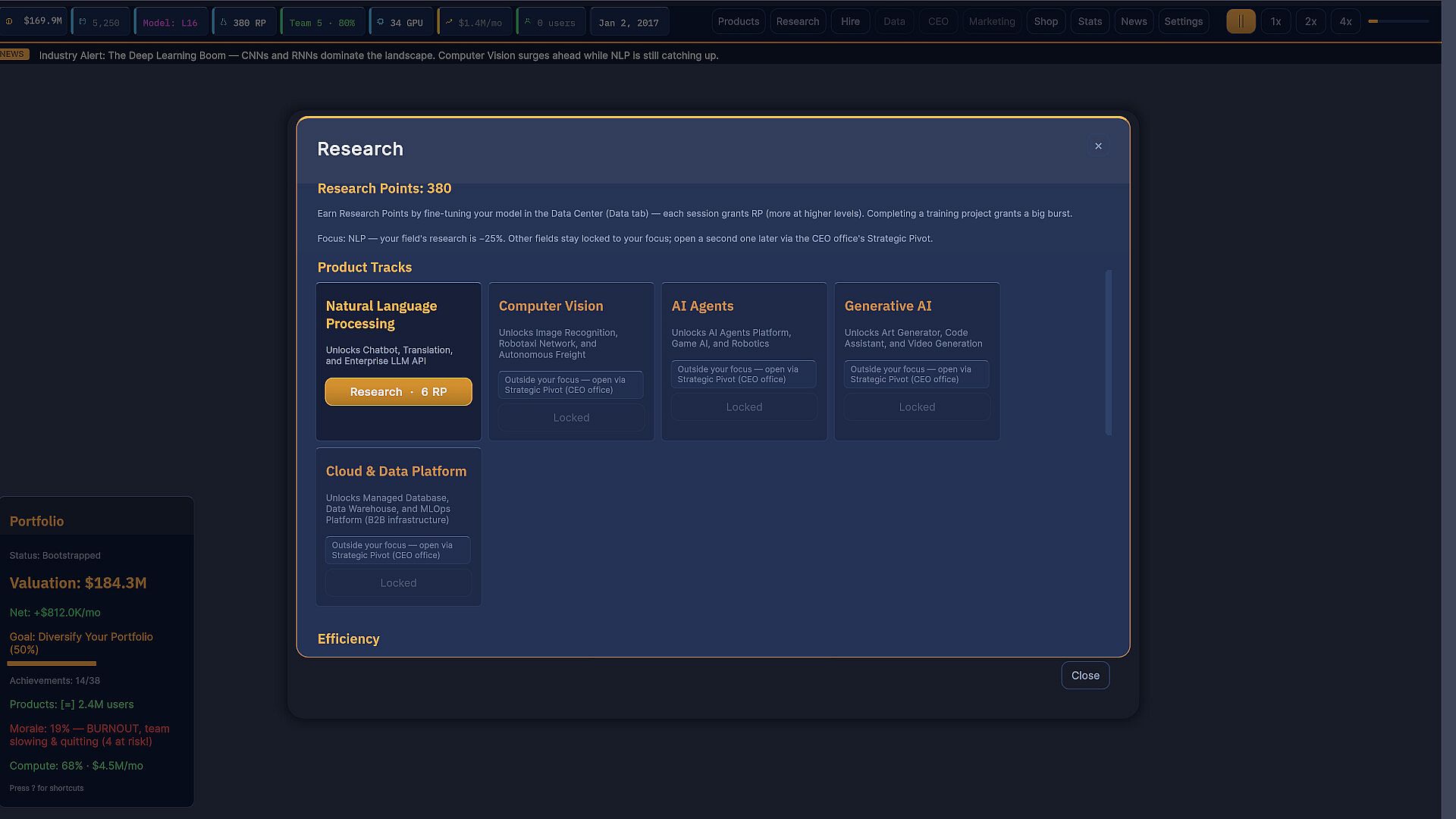
Players begin with a bare office and modest capital. The core loop involves committing the company to specific technological areas such as language systems, computer vision, AI agents, generative media, or cloud and data technology. Each choice leads to training frontier models and creating products that range from chatbots and enterprise APIs to creative tools, autonomous systems, and AI infrastructure.
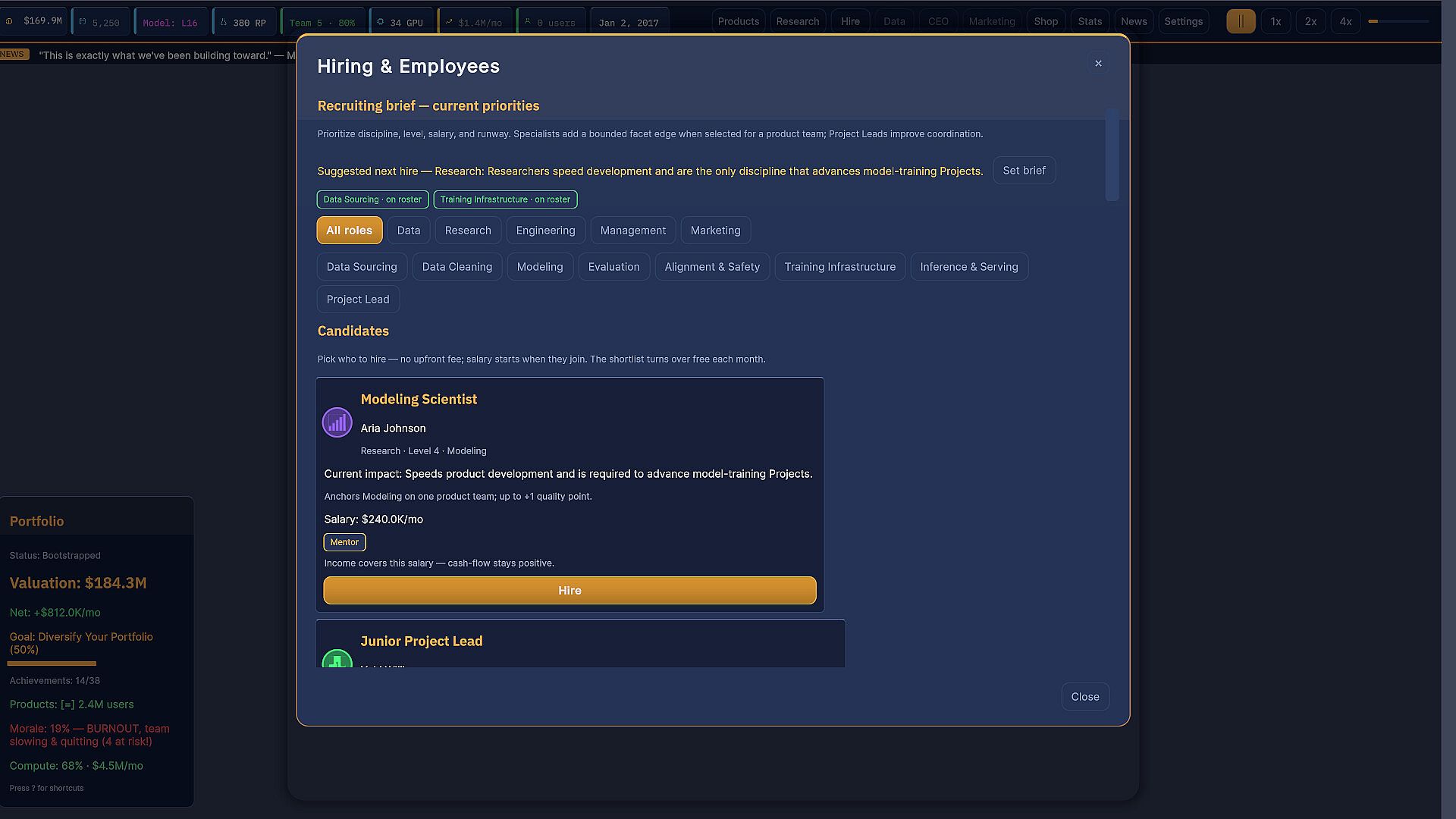
Recruitment forms a central pillar. Data specialists, researchers, engineers, marketers, and managers join the team over time. Scarce specialties appear as the industry evolves, and players assign teams while selecting Project Leads who enhance coordination and advance their own careers. Data acquisition focuses on text and media sources, while compute management requires investing in successive GPU generations, renting serving capacity as needed, and constructing owned infrastructure once scale justifies the expense.
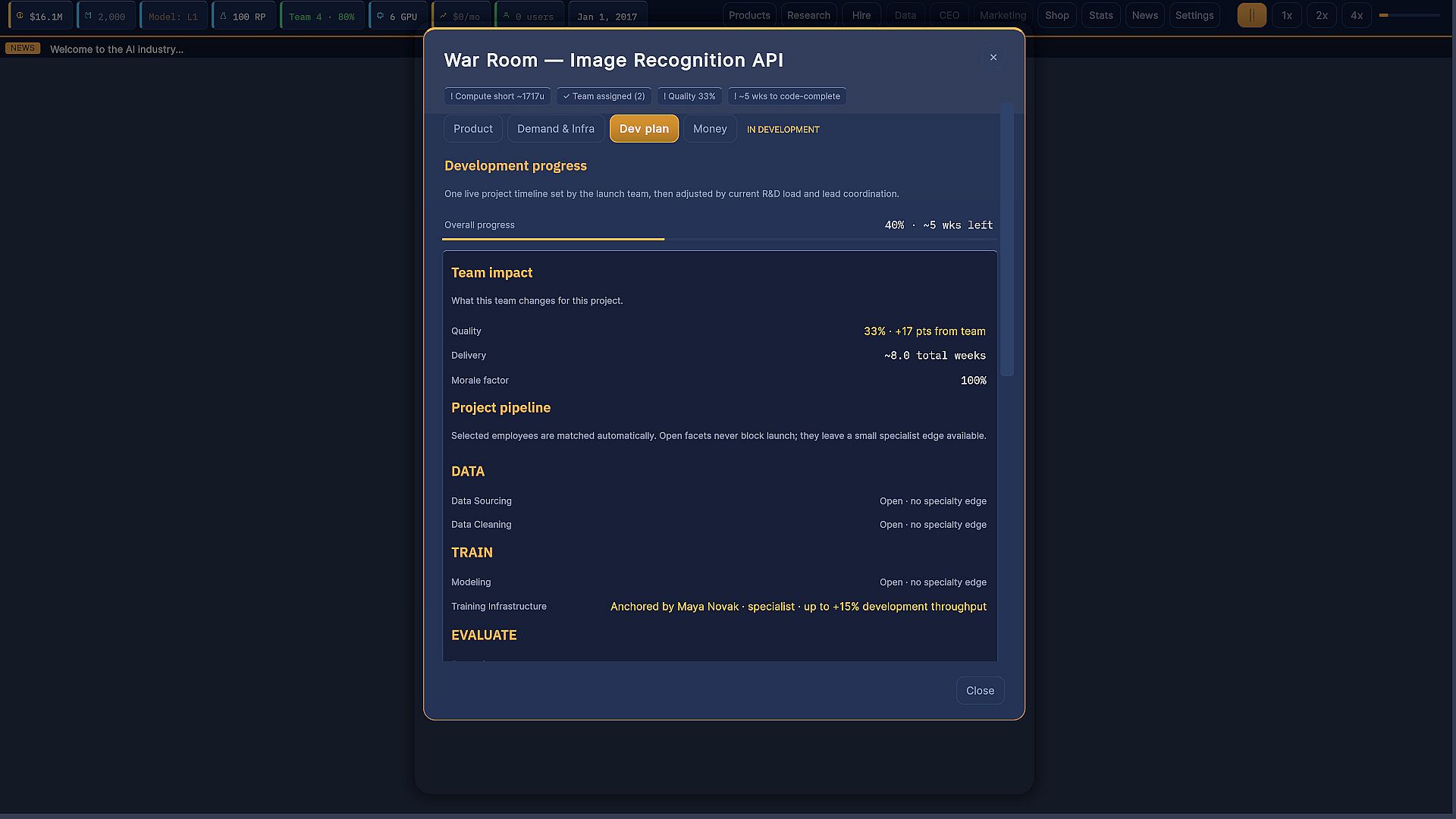
Product development starts with audience selection, design tradeoffs, team assignment, and a marketing plan. The War Room interface tracks expected quality, adoption rates, compute demands, costs, revenue projections, and break-even points. When issues arise from dataset problems, hardware failures, or team conflicts, players decide how much the company will invest and which weaknesses it will accept in the final release.
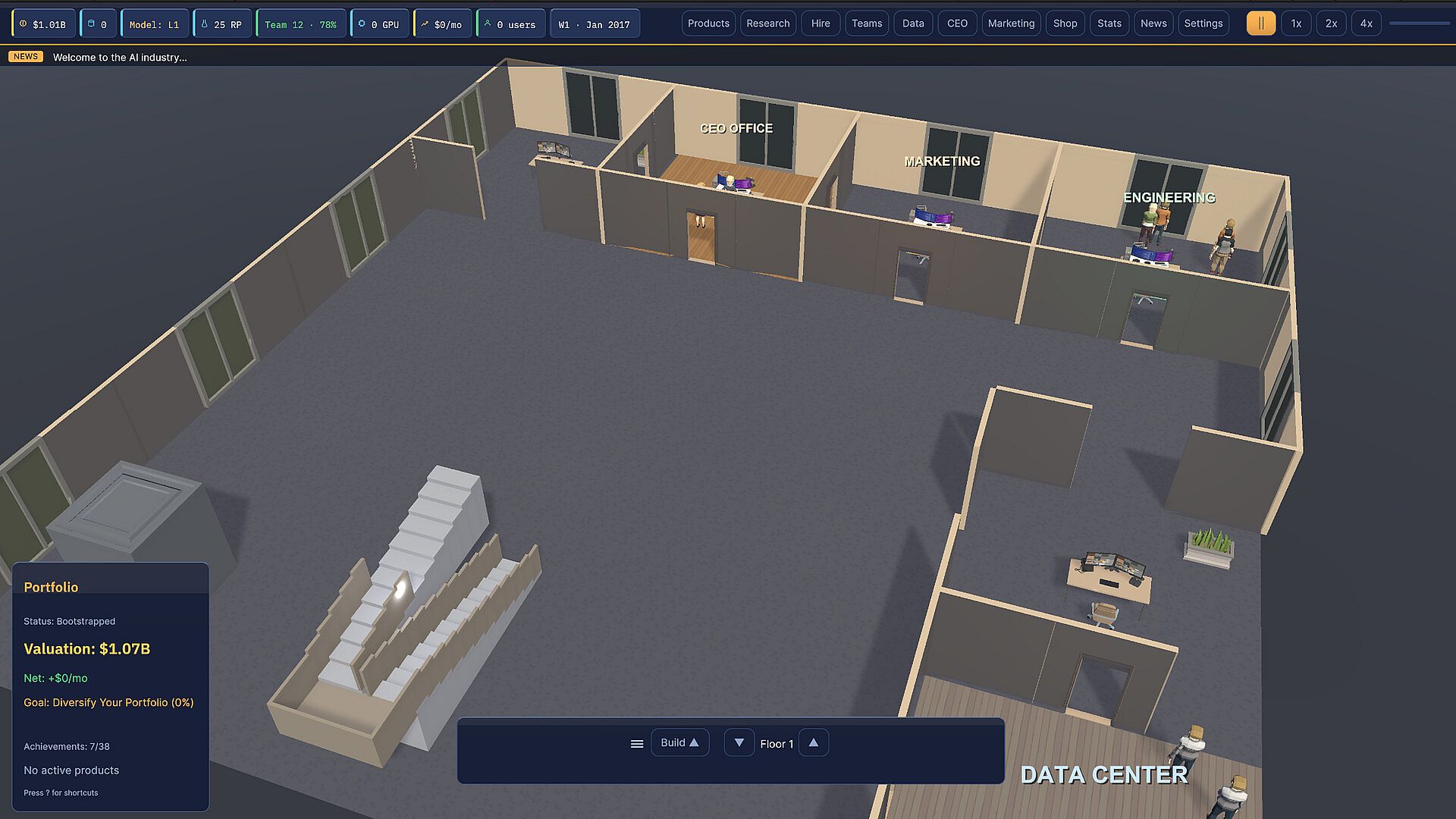
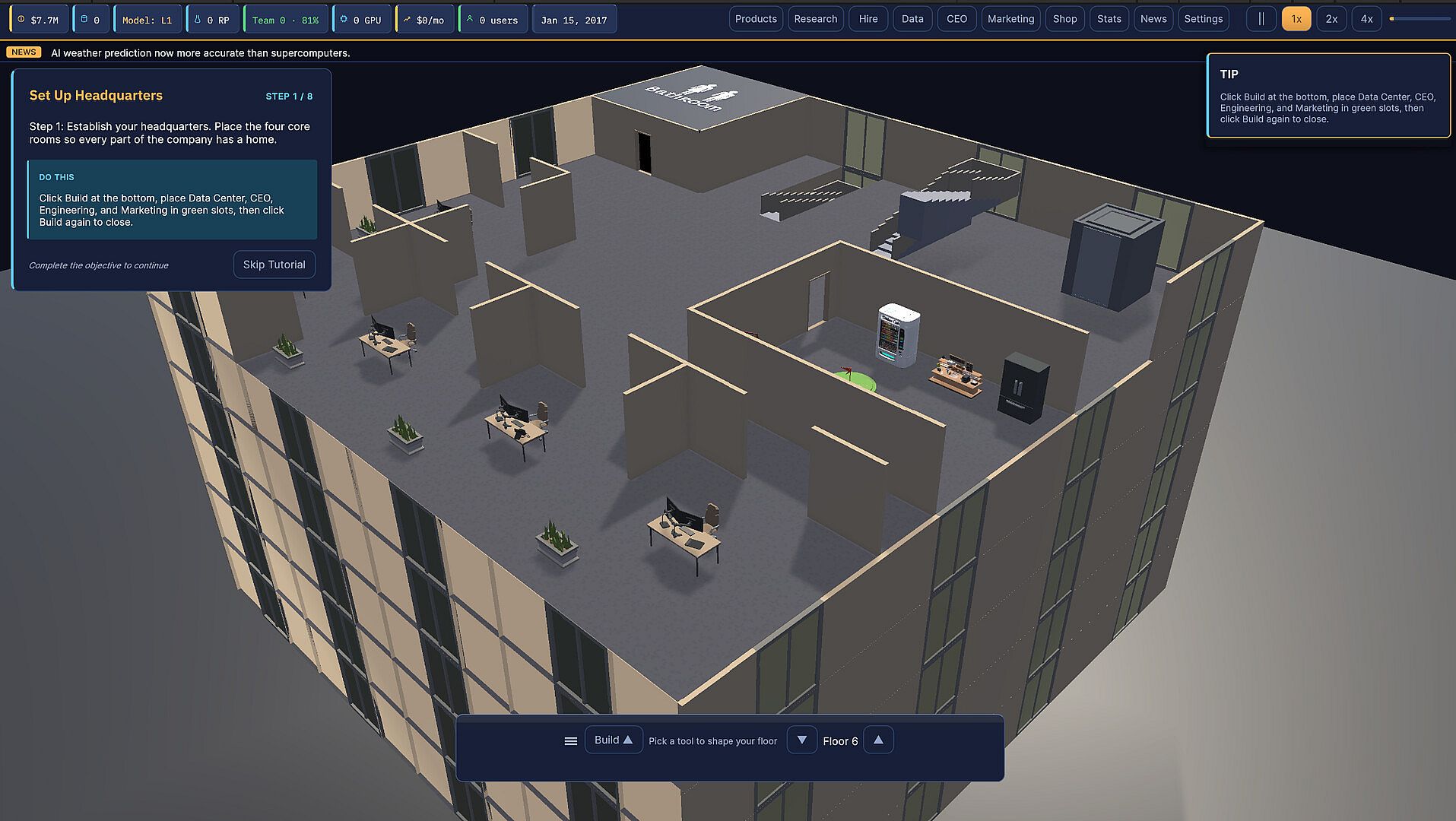
Headquarters expansion adds visual and functional depth. Multi-floor buildings gain departments, offices, data-center space, and shared areas. Employees move between floors and interact with the designed environment as the company grows. External factors such as research paradigms, GPU generations, market waves, industry news, and regulation continuously alter the landscape and force strategic adjustments.
Game Modes
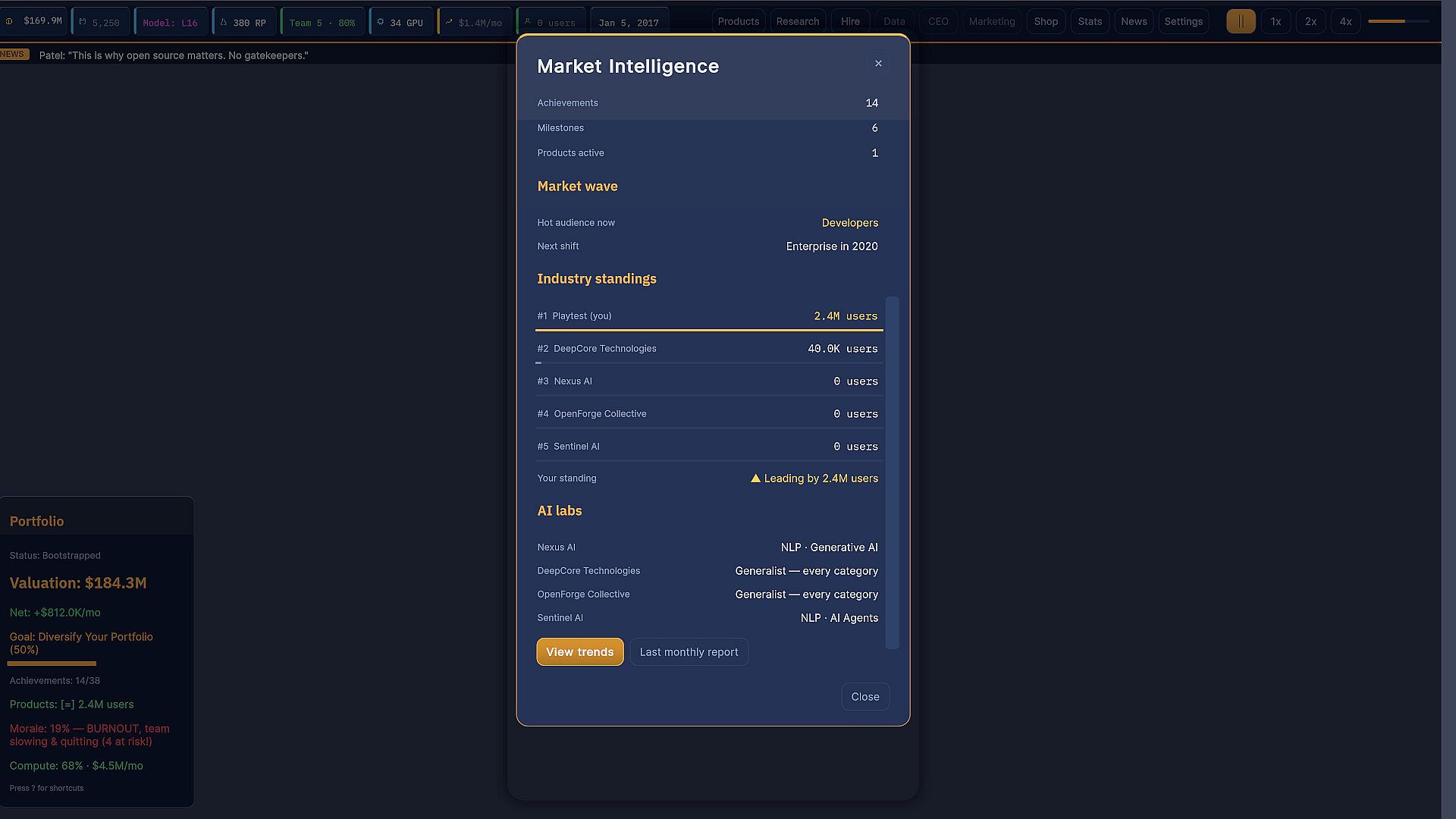
The game operates as a single-player real-time management simulation without separate competitive or cooperative modes. Progression unfolds through a continuous campaign that spans multiple technological eras, with each phase presenting new bottlenecks and opportunities. Players manage one company throughout, making choices that affect long-term viability rather than switching between distinct scenarios.
Core activities blend planning and execution. Resource allocation, team oversight, and market positioning occur simultaneously, requiring constant attention to shifting conditions. The absence of predefined missions encourages open-ended strategy where success depends on adapting to emerging constraints like infrastructure strain or regulatory pressure.
Building a Sustainable Business
After launch, pricing, serving quality, permanent capabilities, and major version releases shape ongoing performance. Early success can create new challenges such as overwhelmed infrastructure, reduced margins, or user attrition. Rivals in specialized fields compete directly for share, while regulatory scrutiny, legal risks, and public controversy increase with company influence.
Capital raises provide breathing room but introduce dilution, investor targets, and board oversight that may erode founder control. The game highlights these tradeoffs without offering simple solutions, forcing players to weigh short-term survival against long-term independence.
Is It Worth Playing?
Artificial Ambition suits players who enjoy detailed management simulations focused on business strategy and technological progression. The emphasis on balancing technical advancement with financial sustainability and organizational growth creates a layered experience that rewards planning and adaptation. Those interested in the early days of the AI industry will find the 2017 setting and historical-inspired race engaging, though the game remains in active development with many elements subject to change. The depth of systems around hiring, infrastructure, and market response provides substantial replay value for strategy enthusiasts, while the visual headquarters growth adds a tangible sense of company evolution. If the premise of constructing an AI firm through deliberate choices appeals, the current build offers a solid foundation for extended sessions.