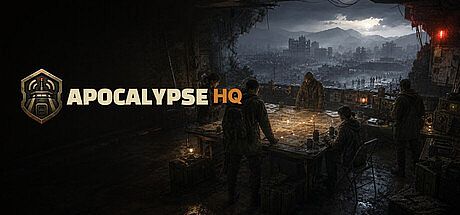


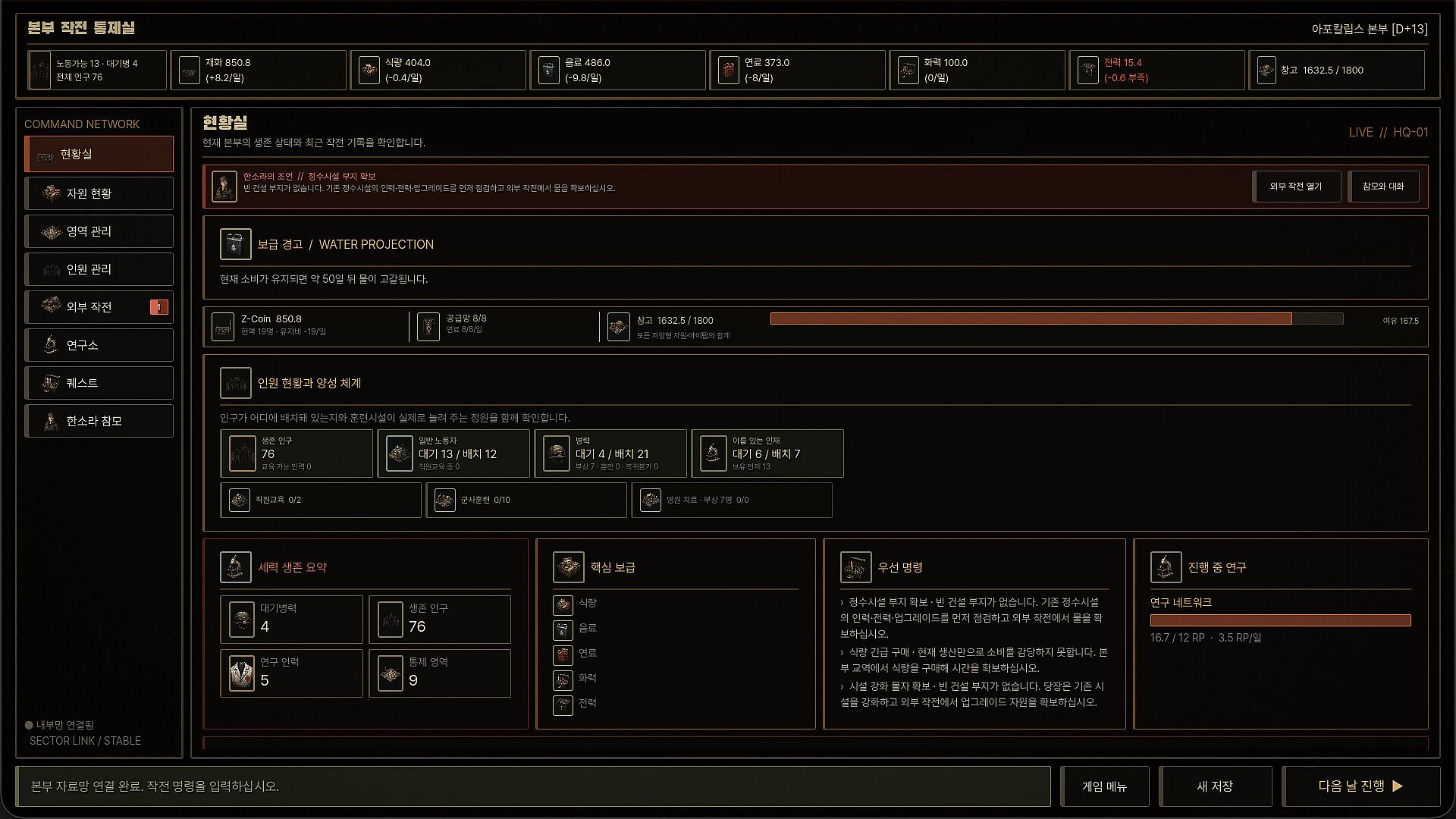
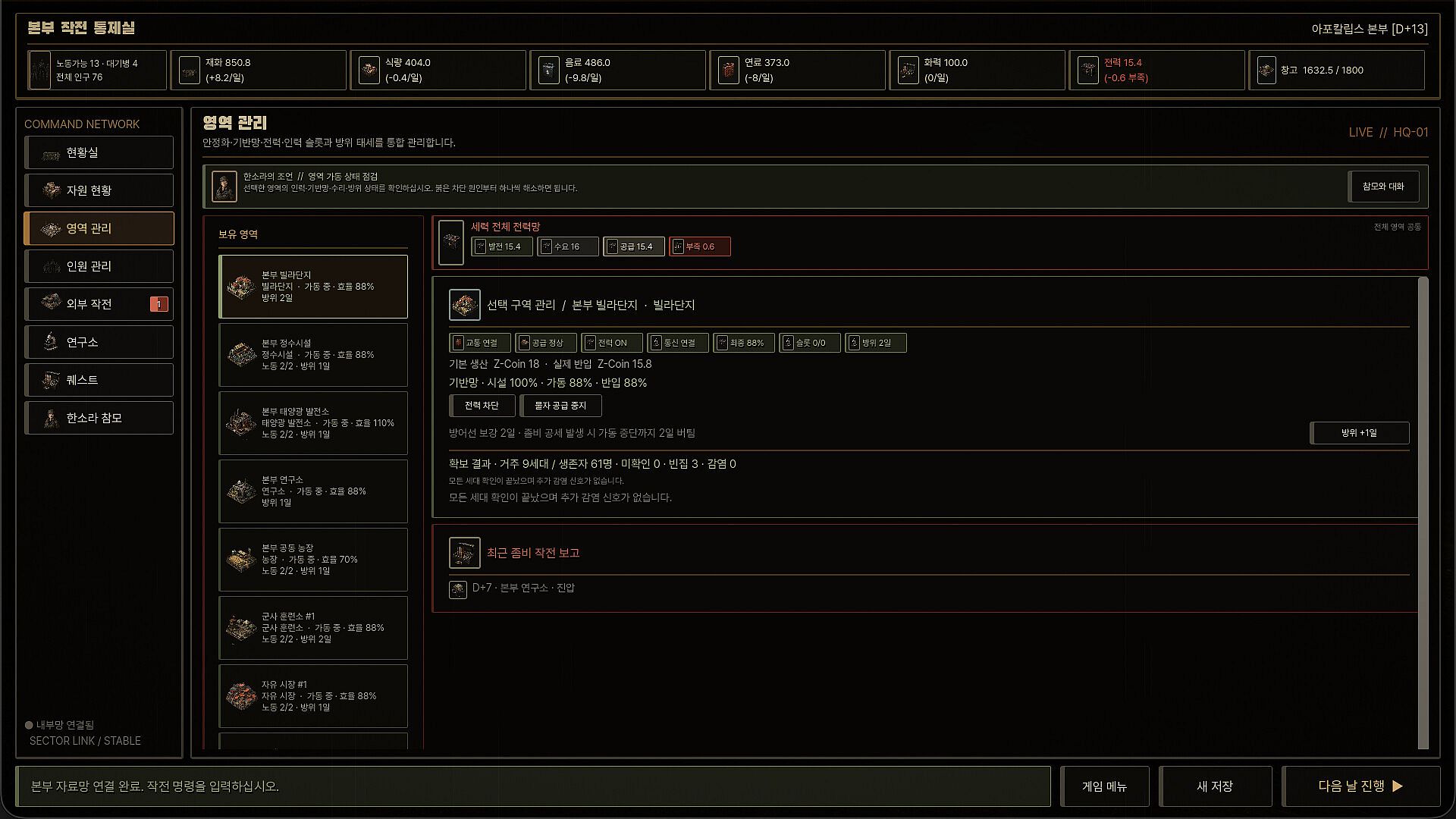
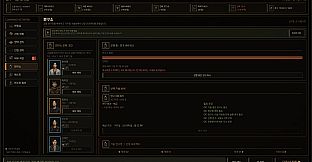
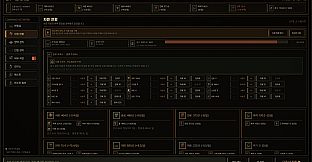
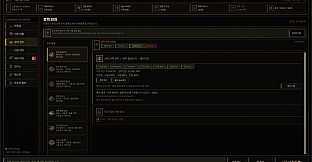
ApocalypseHQ is a single-player turn-based management strategy game set in a world where civilization has collapsed following a zombie outbreak. Players oversee a headquarters that must balance immediate survival needs with long-term development across each day represented by a turn. The focus remains on resource allocation, facility construction, personnel management, and calculated risks outside the base perimeter to sustain operations.
Gameplay
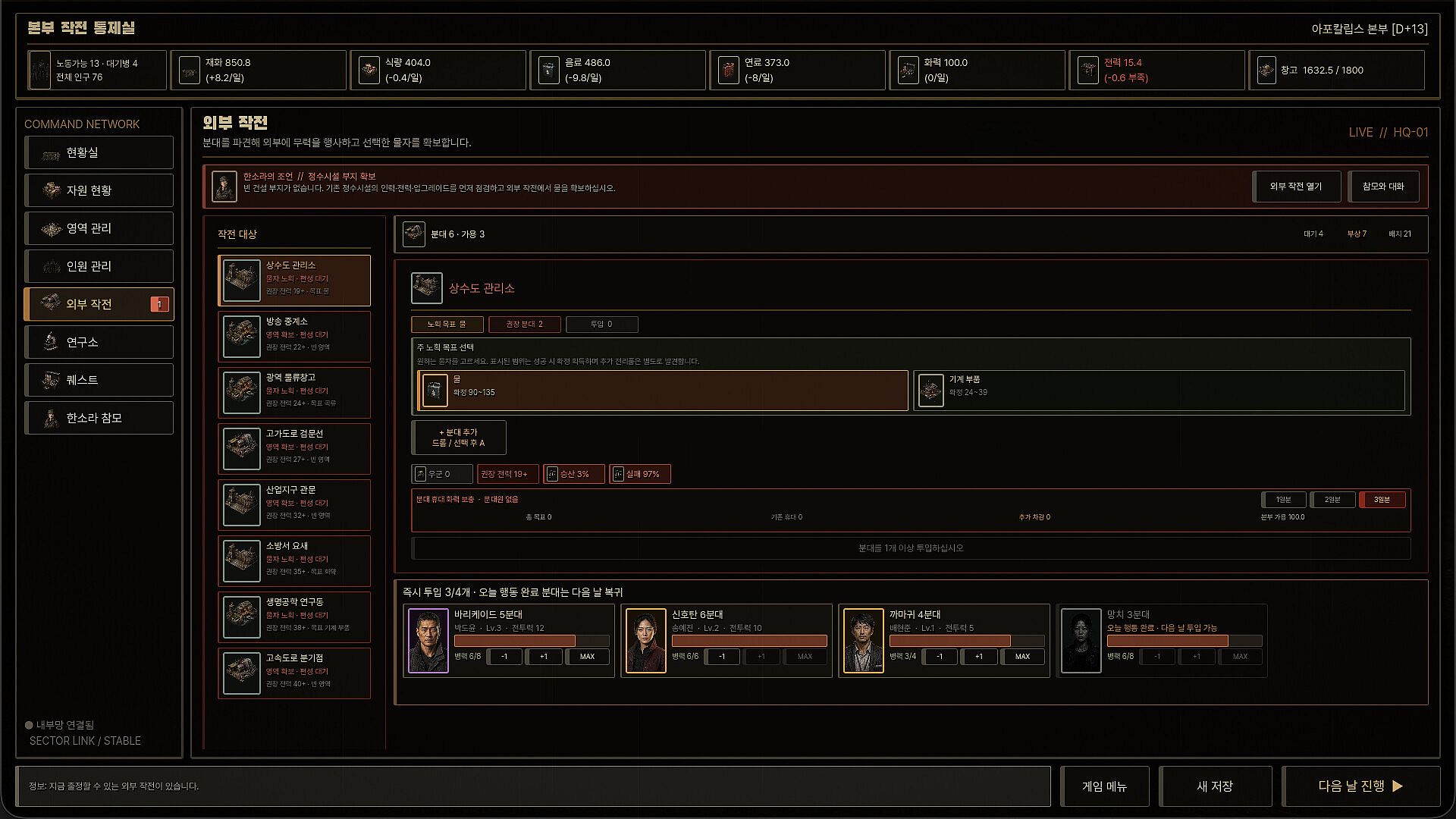
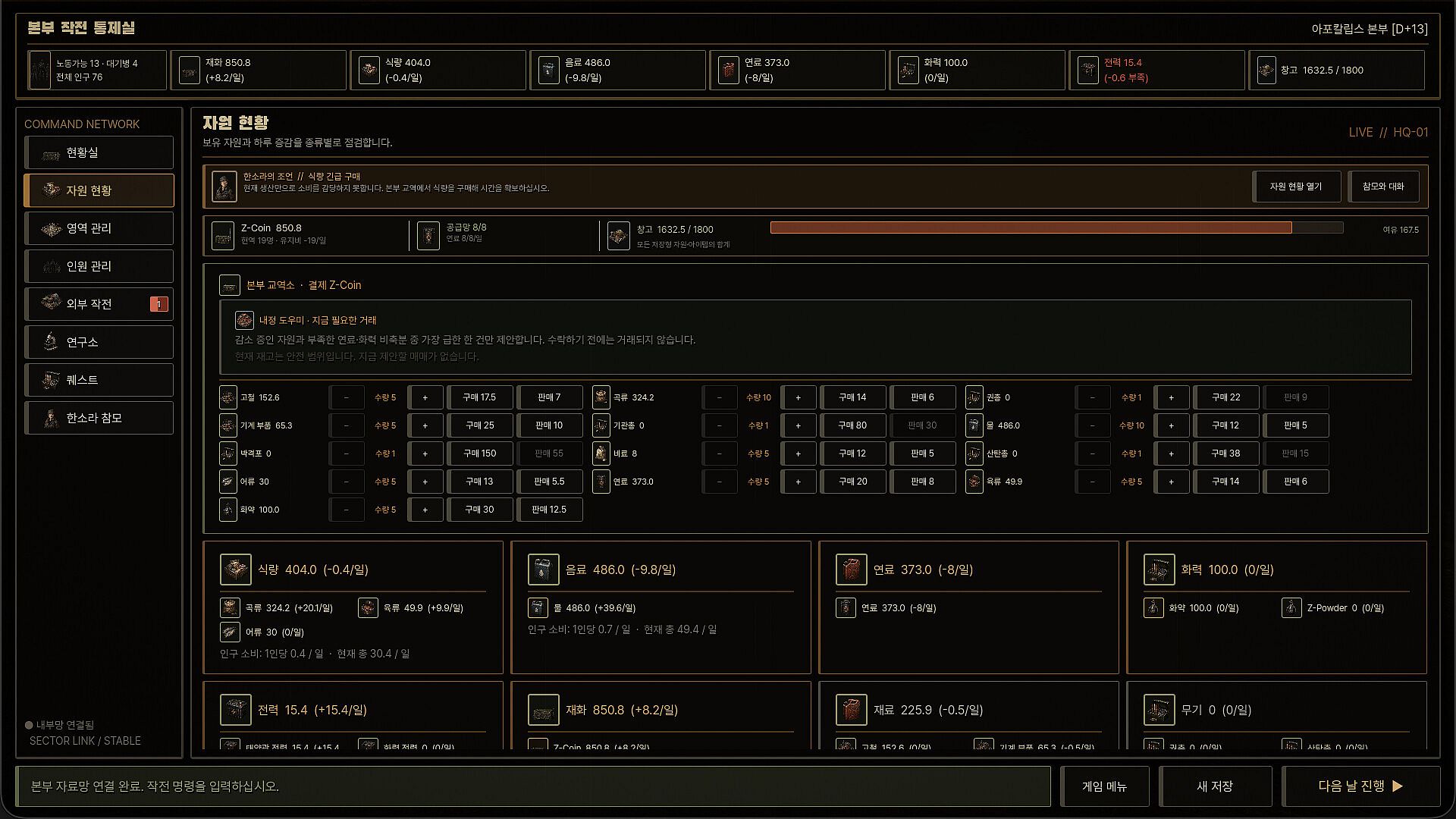
Each turn advances one day and processes facility production, survivor consumption, wages, upkeep costs, fuel supplies, research progress, and active external missions. Decisions center on addressing shortages through trade, expanding storage and infrastructure, or dispatching squads into dangerous areas. Stockpiles cover essentials like food, water, fuel, electricity, and Z-Coin alongside specialized items such as scrap metal, mechanical parts, fertilizer, weapons, and production materials, all stored within limited warehouse space.
Securing new territories involves building structures including farms, water purification plants, power facilities, hospitals, markets, labs, and training centers. After construction, areas require clearing of infected threats and assignment of appropriate workers or specialists to activate them. Networks for transport, power distribution, and communications connect these sites, with engineers handling repairs and limited generation capacity allocated across the system.
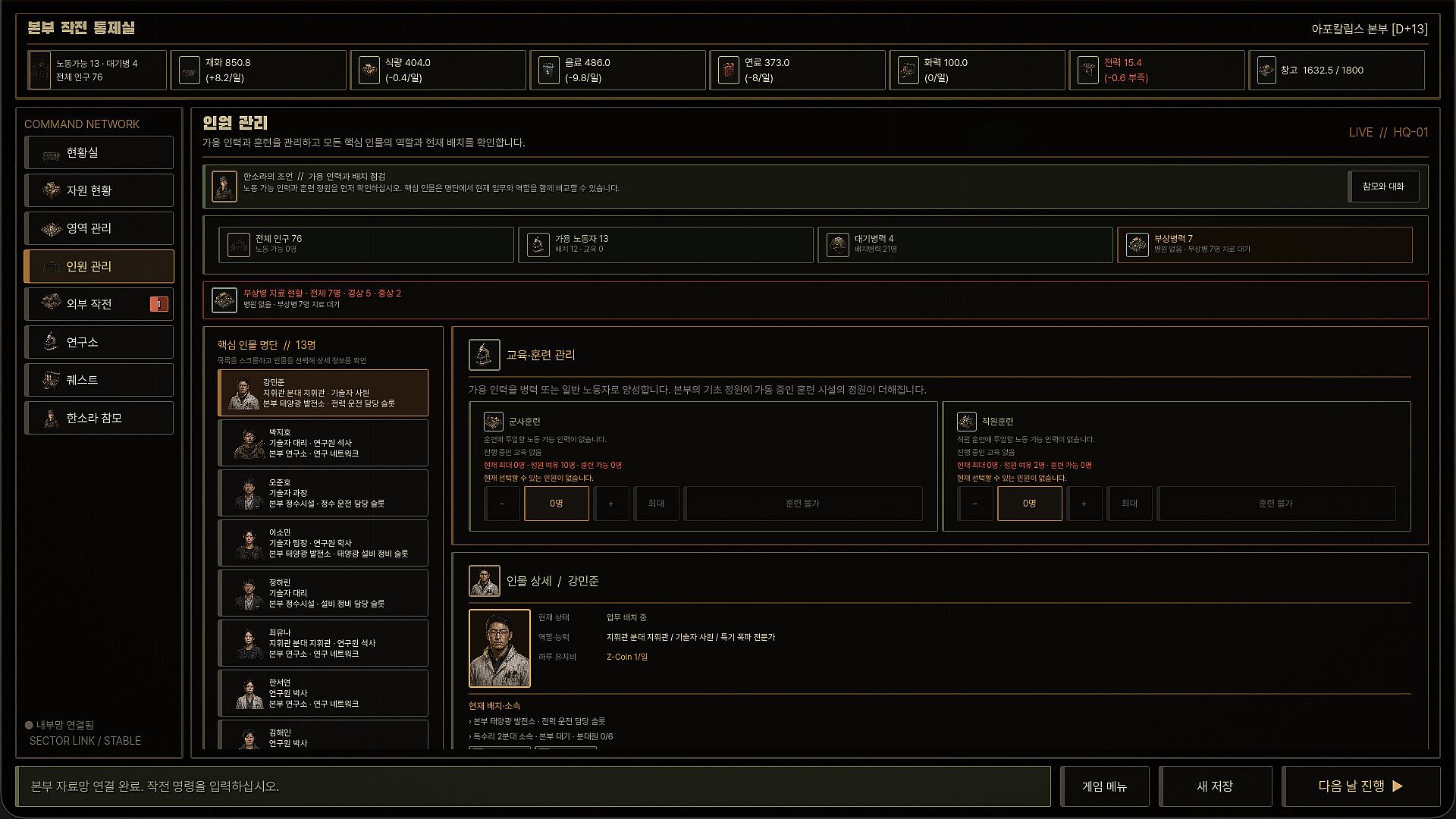
Survivors train as workers or soldiers, with commanders directing squads, researchers advancing projects based on their expertise, and engineers maintaining operations. Injuries demand hospital resources for recovery, while losses to personnel can disrupt ongoing activities if headquarters cannot sustain active-duty expenses.
Game Modes
ApocalypseHQ operates exclusively as a single-player experience. No multiplayer options or additional modes appear in the game's design. The core loop revolves around daily planning and progression within this solitary management framework, where players handle all decisions without external competition or cooperative elements.
Resource and Personnel Management
Inventory decisions extend to every category of supplies, forcing choices about what to retain versus trade or consume. Limited storage requires prioritization, and production chains depend on consistent material flows from secured territories. Personnel development follows clear paths: training converts survivors into specialized roles, while commanders and squads undertake missions that carry risks of casualties or gains in supplies and territory.
Events introduce variability through arrivals of new survivors, equipment breakdowns, horde movements, rescue opportunities, and fluctuating trade deals. These shift available resources and conditions, requiring ongoing adjustments rather than fixed strategies.
Research, Expansion, and Operations
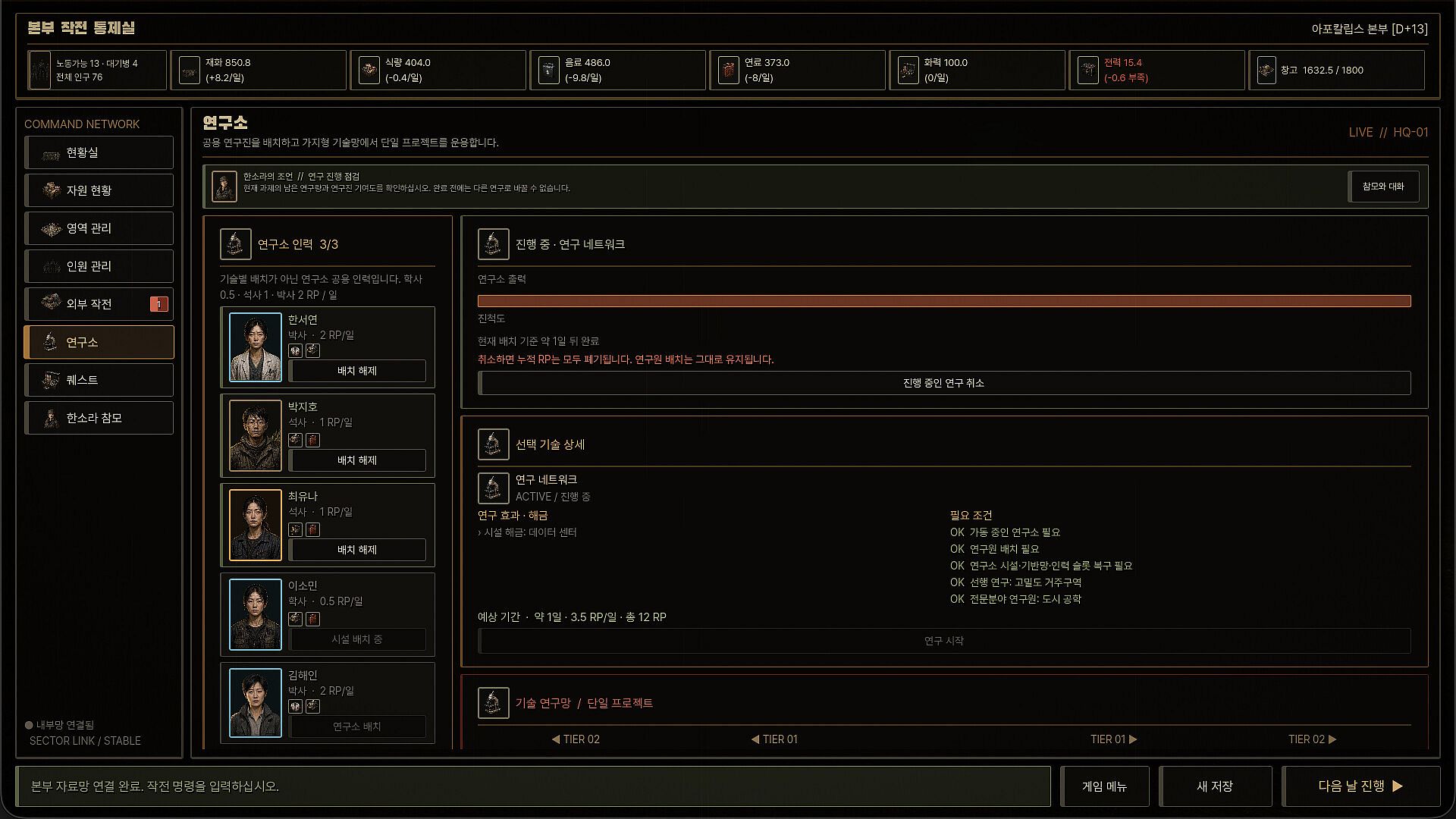
Research proceeds one project at a time in the dedicated lab, influenced by available specialists and facility status. Progress unlocks new buildings, recipes, improvements, and capacity increases, though switching priorities forfeits all accumulated work. External squads form around commanders for raids or territory claims, with firepower loads limited to one to three days and options to retreat based on supply levels or losses.
Quests provide overarching goals while daily briefings highlight urgent issues. Networks and repairs tie facilities together, and combat strength comparisons guide squad commitments to objectives beyond the headquarters walls.
Is It Worth Playing?
ApocalypseHQ targets players who enjoy deliberate, resource-focused strategy where every turn demands trade-offs between short-term stability and future growth. The single-player format emphasizes careful planning around consumption, production, and risk assessment in a post-outbreak setting. With a planned release in 2027 and no user reviews available yet, the game remains in development, but its described systems center on interconnected management challenges that reward attention to detail in personnel assignment, infrastructure networks, and mission outcomes. Those drawn to turn-based base-building without multiplayer distractions may find the approach aligns with their preferences once it launches.