


AOG: Aircraft On Ground is a strategy and simulation game that places players in charge of an ACMI operator, a company that supplies aircraft, crew, maintenance, and insurance to airlines facing shortfalls. This indie title on PC emphasizes operational planning over passenger services or ticket sales, focusing instead on hourly revenue from block hours flown under contract.
Gameplay
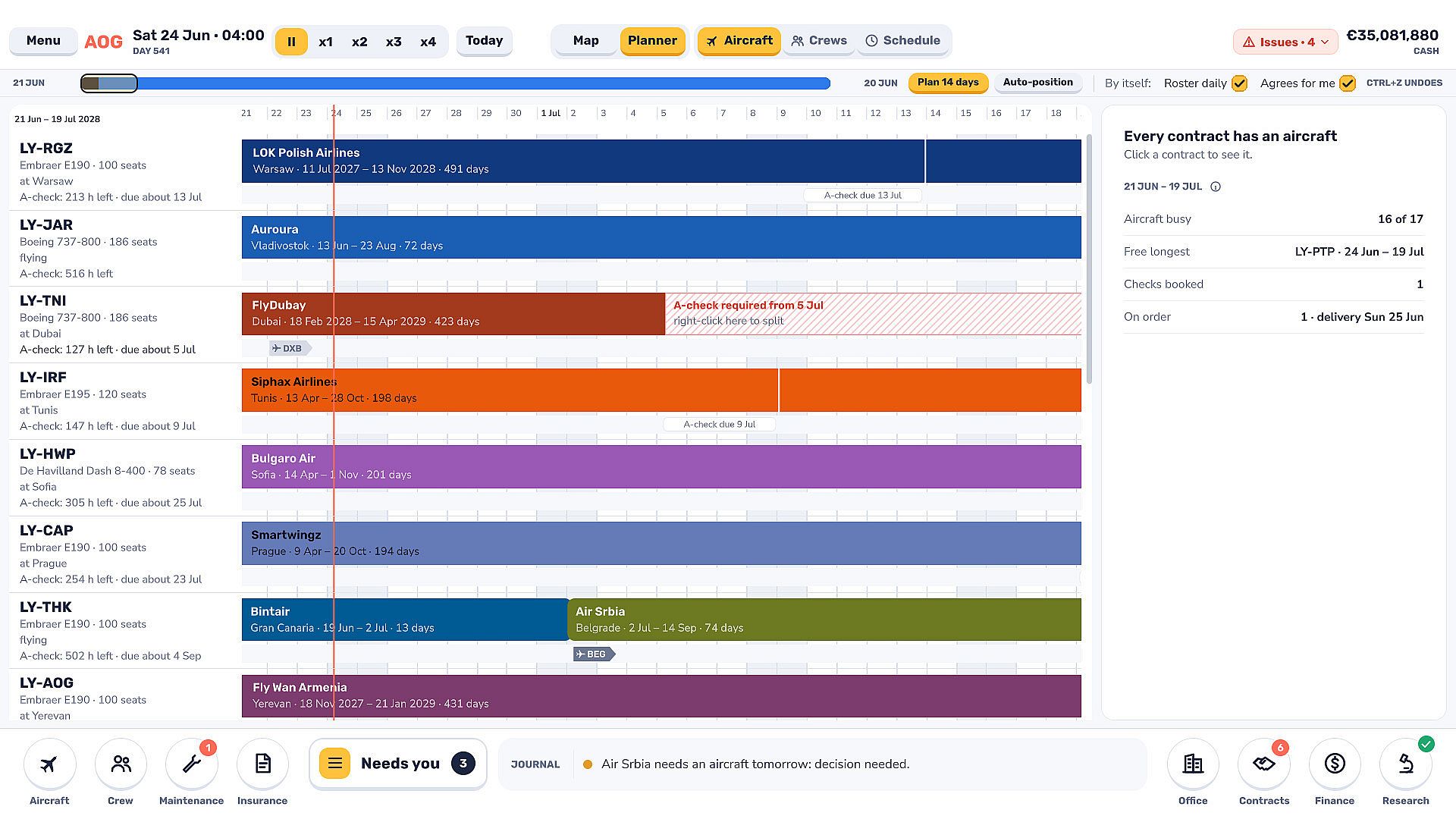
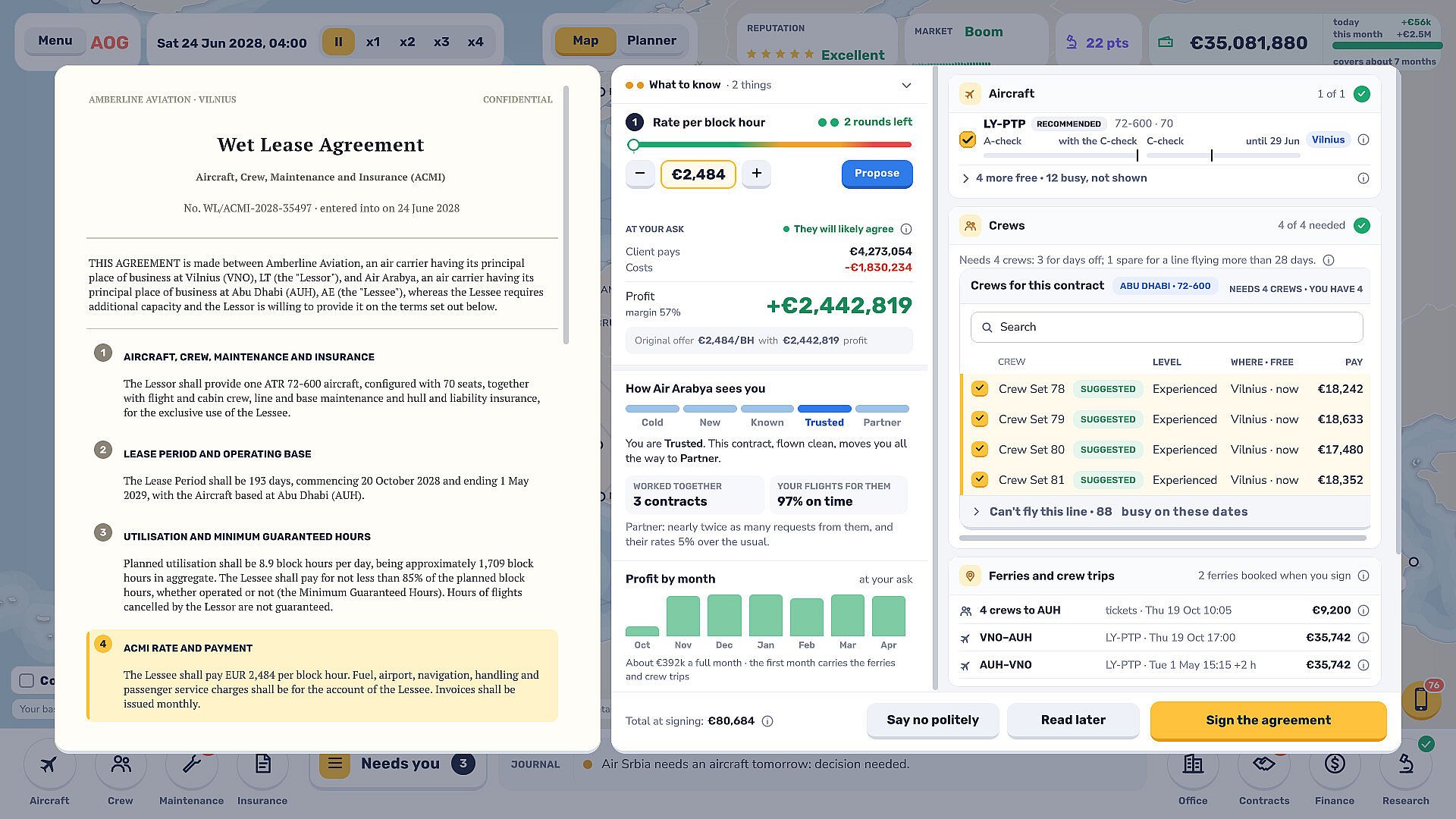
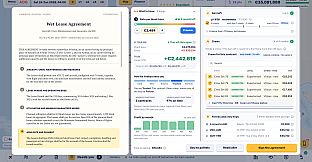
The core loop revolves around securing contracts from client airlines, assigning aircraft and crews to meet timetables, and maintaining compliance with regulations to avoid grounded planes. Players begin with a single regional jet, limited crews, and a small office, then expand by negotiating rates, scheduling flights across a real-world map of 274 airports, and managing maintenance schedules such as A-checks every 600 flight hours and C-checks every two years.
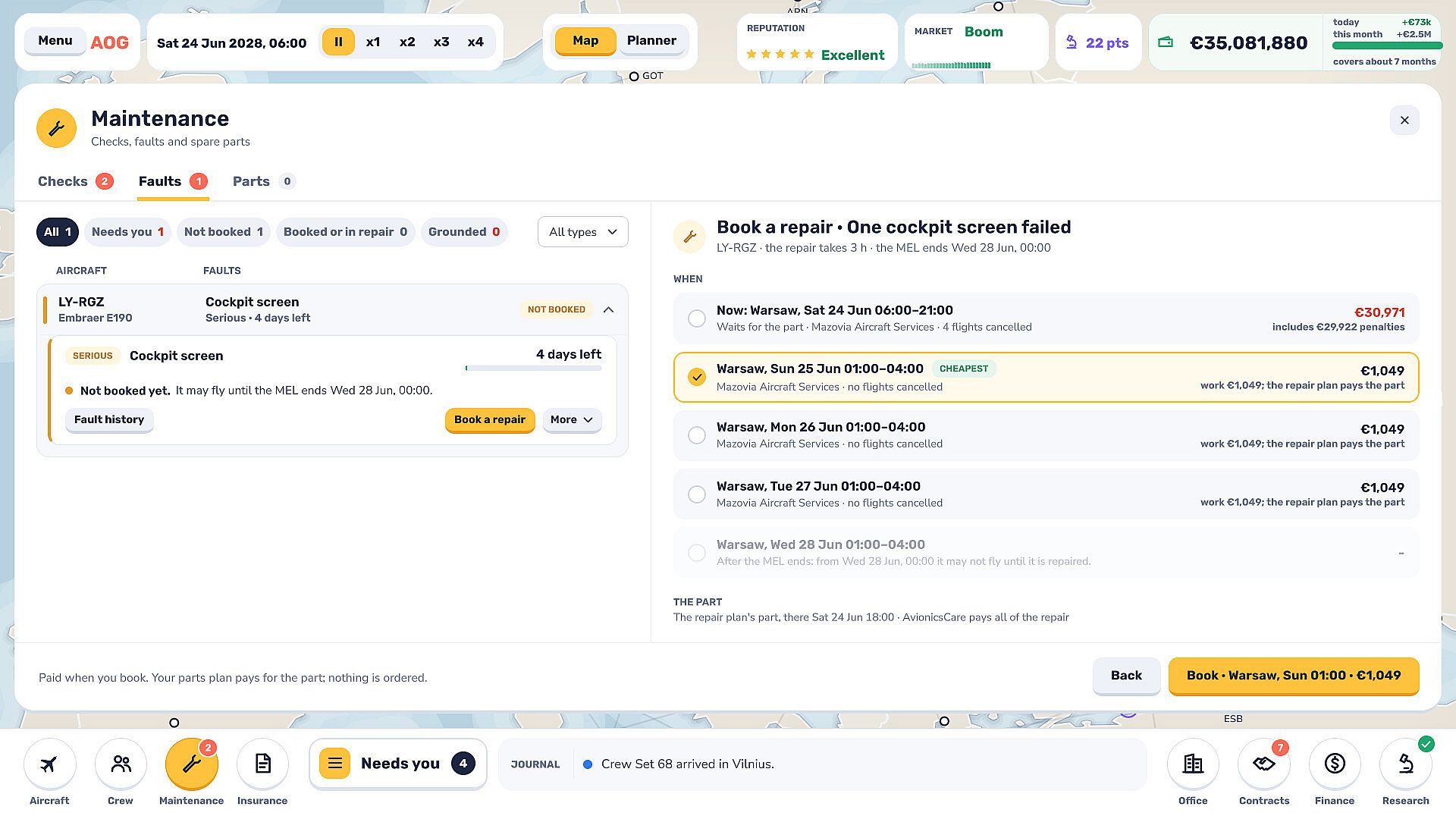
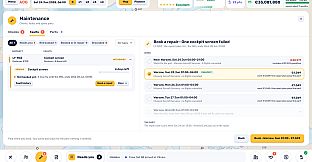
Crew management requires tracking duty limits, rest periods, days off, and home bases while hiring from a weekly market and handling vacation requests. Aircraft upkeep involves ordering parts, addressing faults at three severity levels, and deciding whether to repair immediately or defer within allowed windows. Failures to meet deadlines result in aircraft on ground status, halting operations.
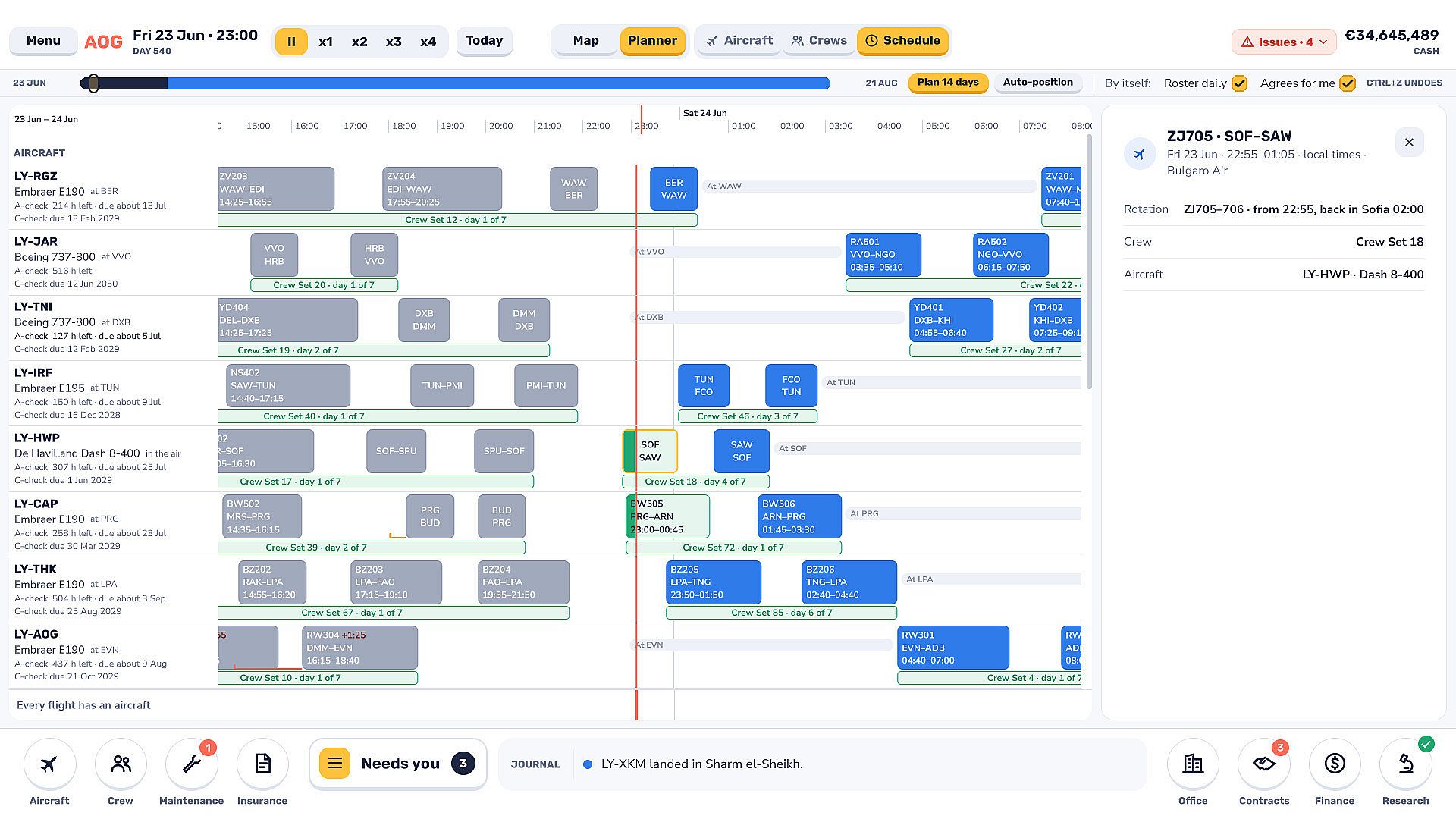
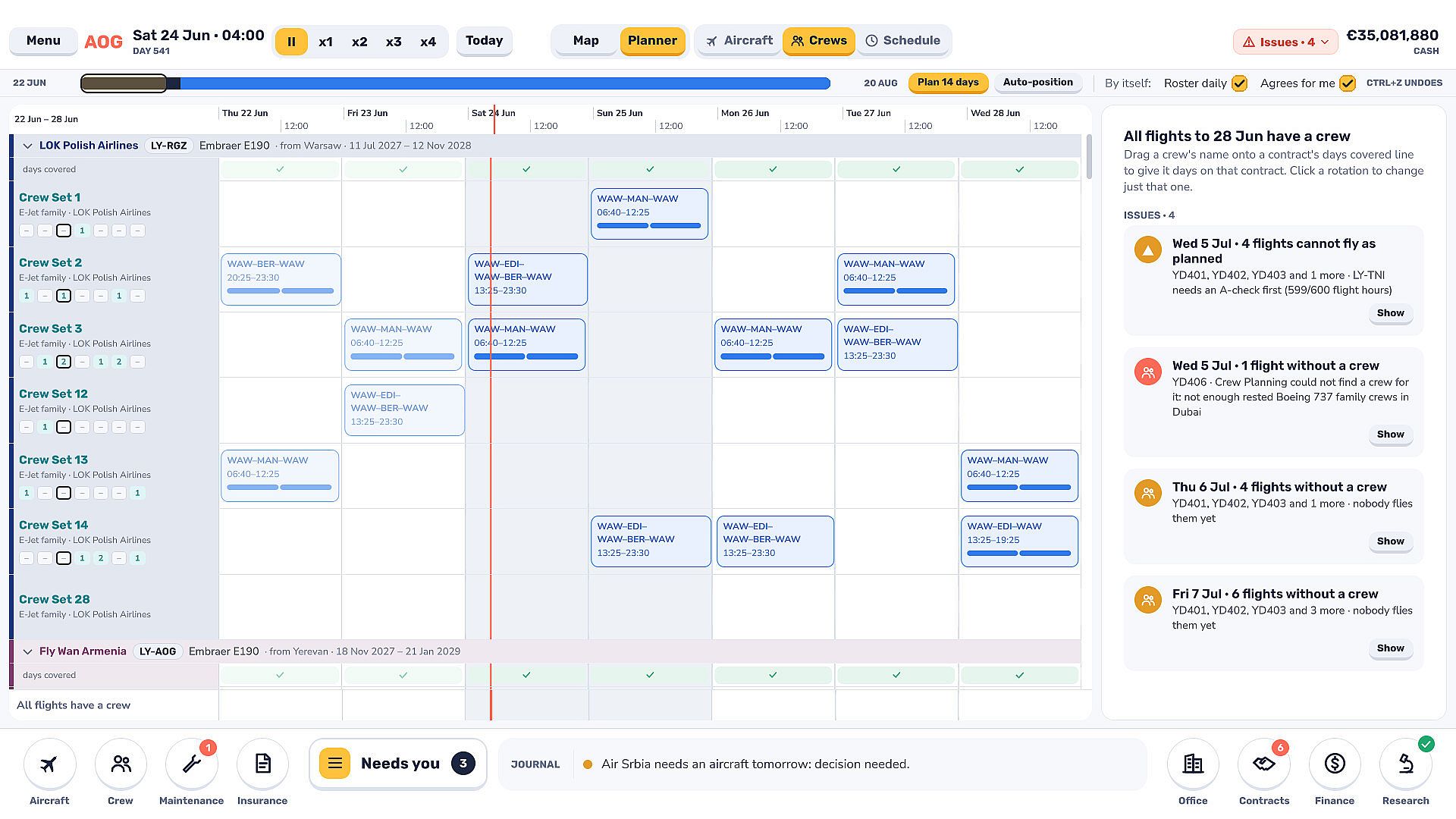
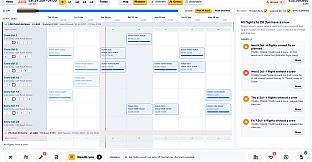
Additional layers include responding to disruptions like delays, sick crews, bird strikes, or weather events, either by repairing or arranging substitute flights through partner airlines. The full-screen planner offers tabs for aircraft assignments, crew rotations, and a zoomable schedule timeline, with undo options for planning steps. Hover explanations cover aviation terms such as MEL, block hour, rotation, and IOSA throughout the interface.
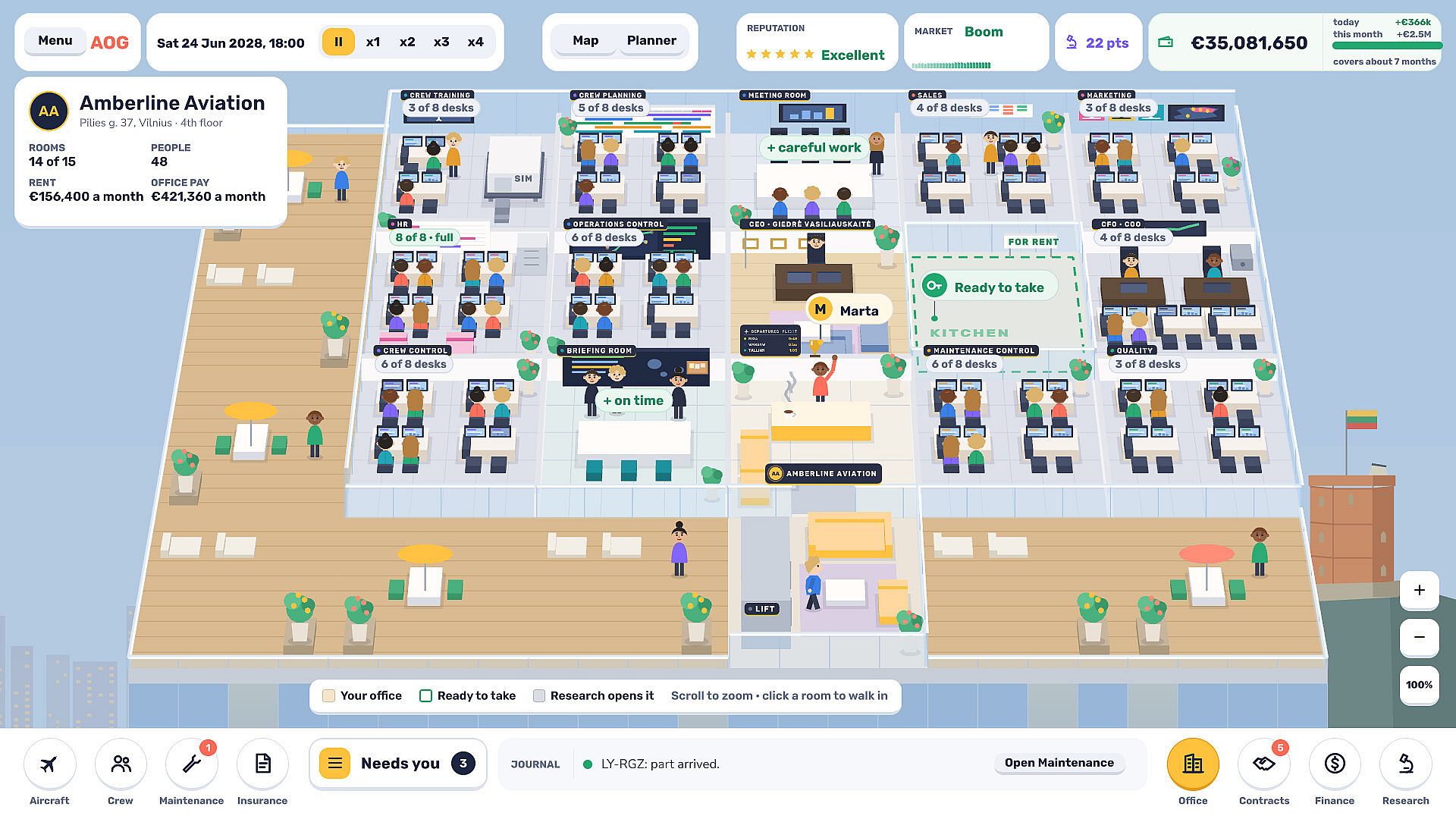
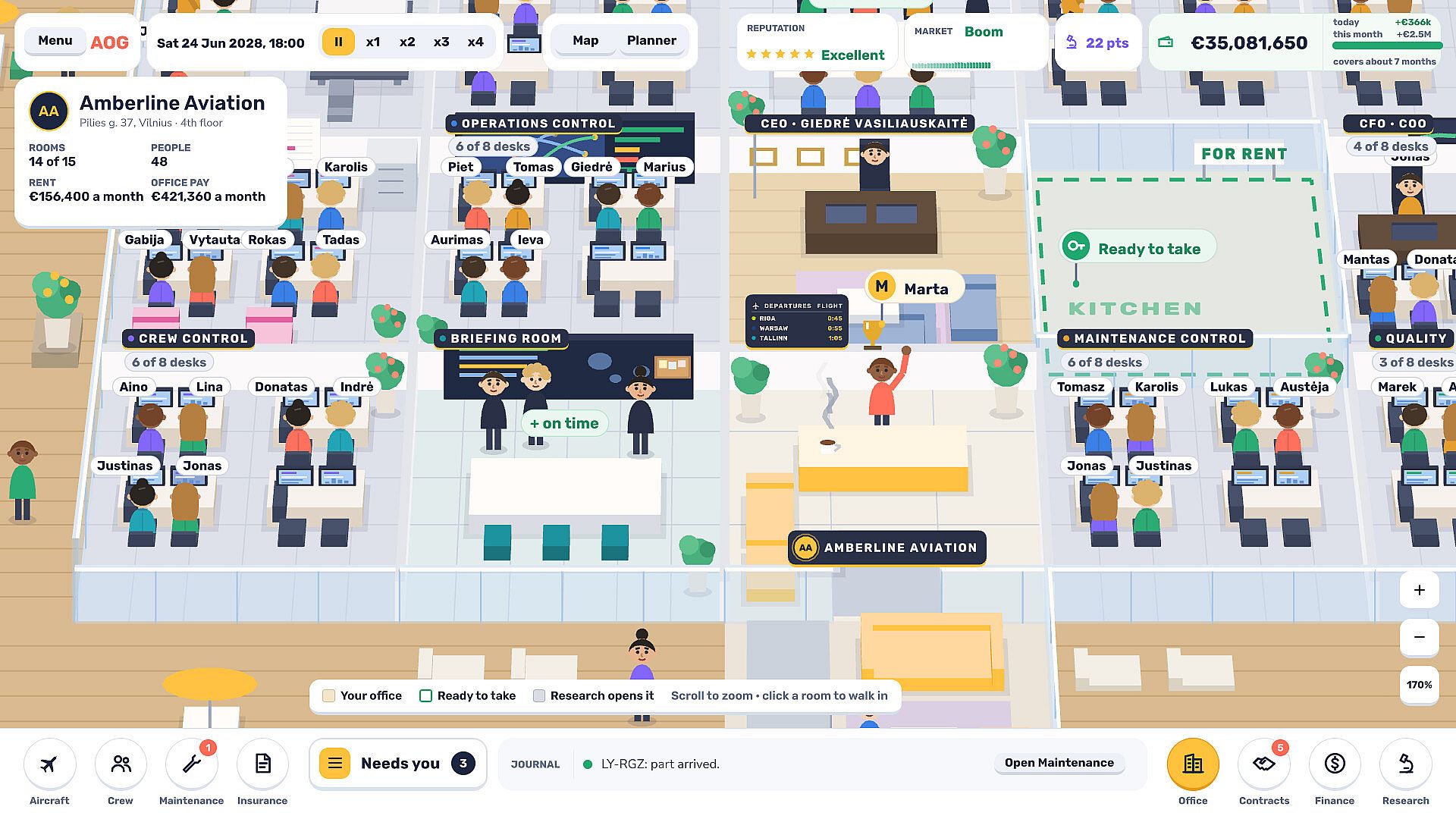
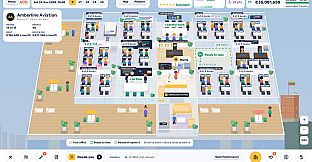
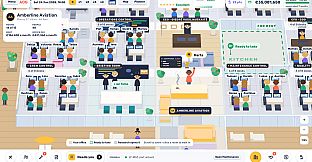
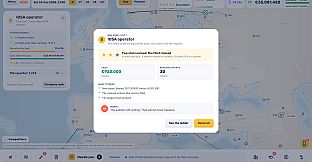
Client relationships evolve based on performance, with 185 airlines progressing from Cold to Partner status for better rates and renewals. Punctuality metrics influence monthly contract evaluations, while top carriers demand experienced crews and newer aircraft. Audits for IOSA certification add preparation and follow-up tasks. The office expands with specialized departments like Operations Control and Maintenance Control, staffed by personnel whose levels, pay, and mood affect efficiency.
Game Modes
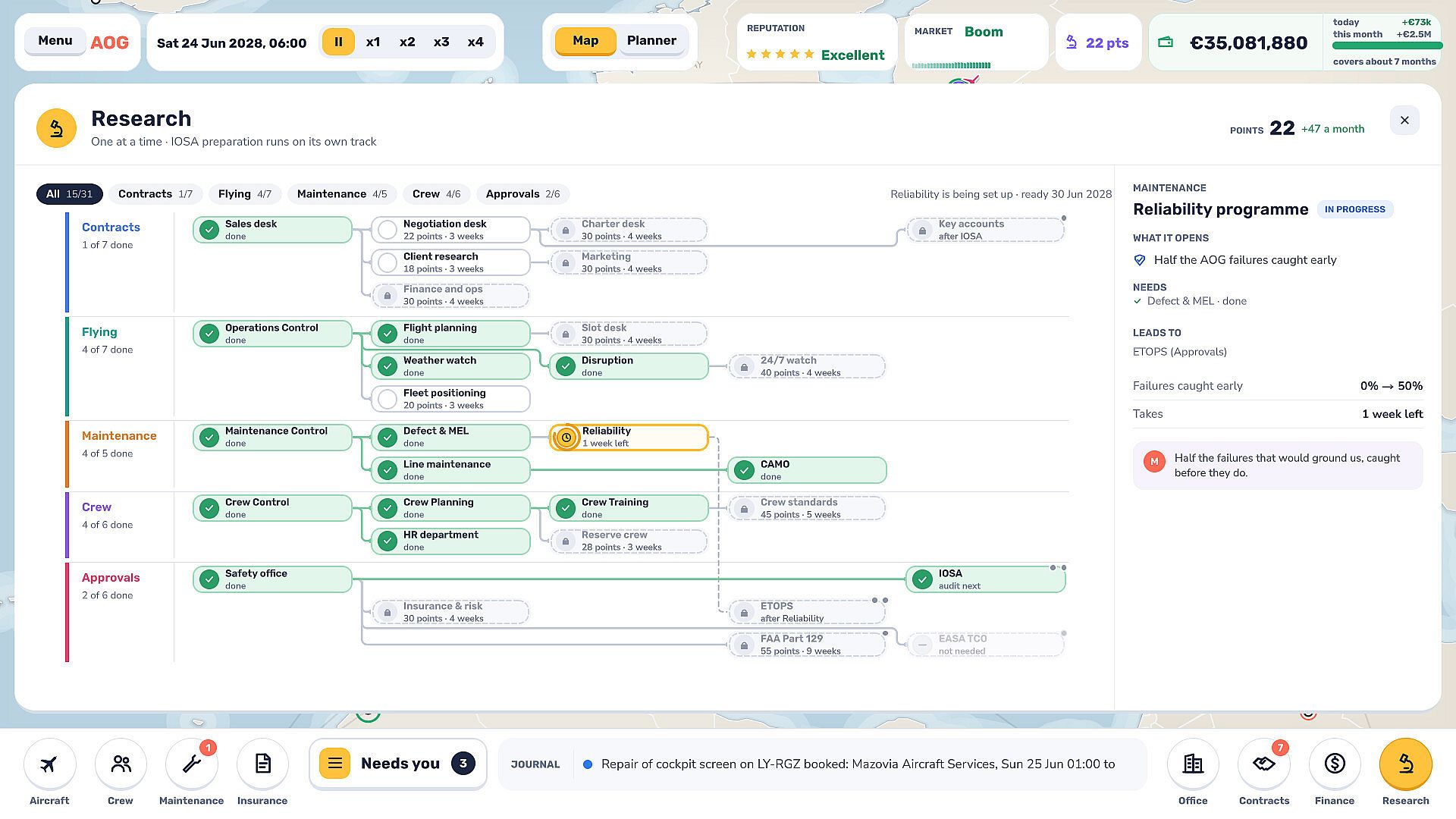
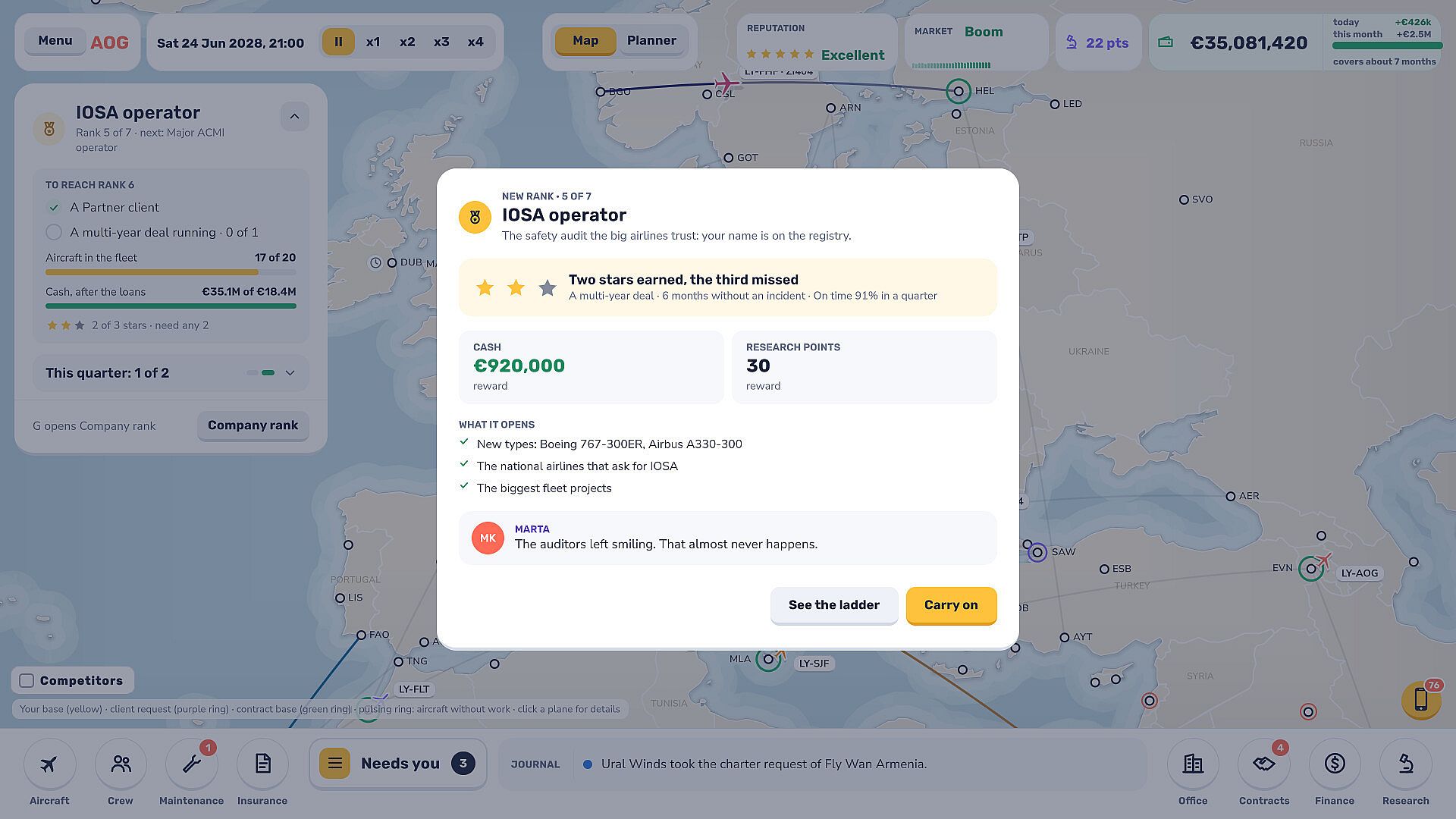
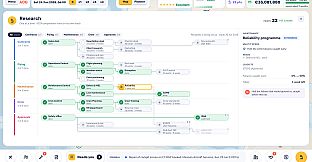
Two primary modes support different playstyles. Career mode follows a progression through seven company ranks, each tied to milestones such as securing the first long contract, establishing a control room, or passing an IOSA audit. These ranks unlock new aircraft types from 70-seat turboprops to 500-seat jets, additional clients, and larger contracts, along with a research tree of 31 steps that automates routine tasks while leaving key decisions to the player.
Free play allows custom settings on Easy, Normal, Hard, or fully tailored difficulty levels without the structured rank progression. Both modes feature the same underlying systems for contracts, scheduling, crew legality, and maintenance, with the economy balanced through extensive bot testing across full five-year simulations on every difficulty and starting region.
Progression and Management Systems
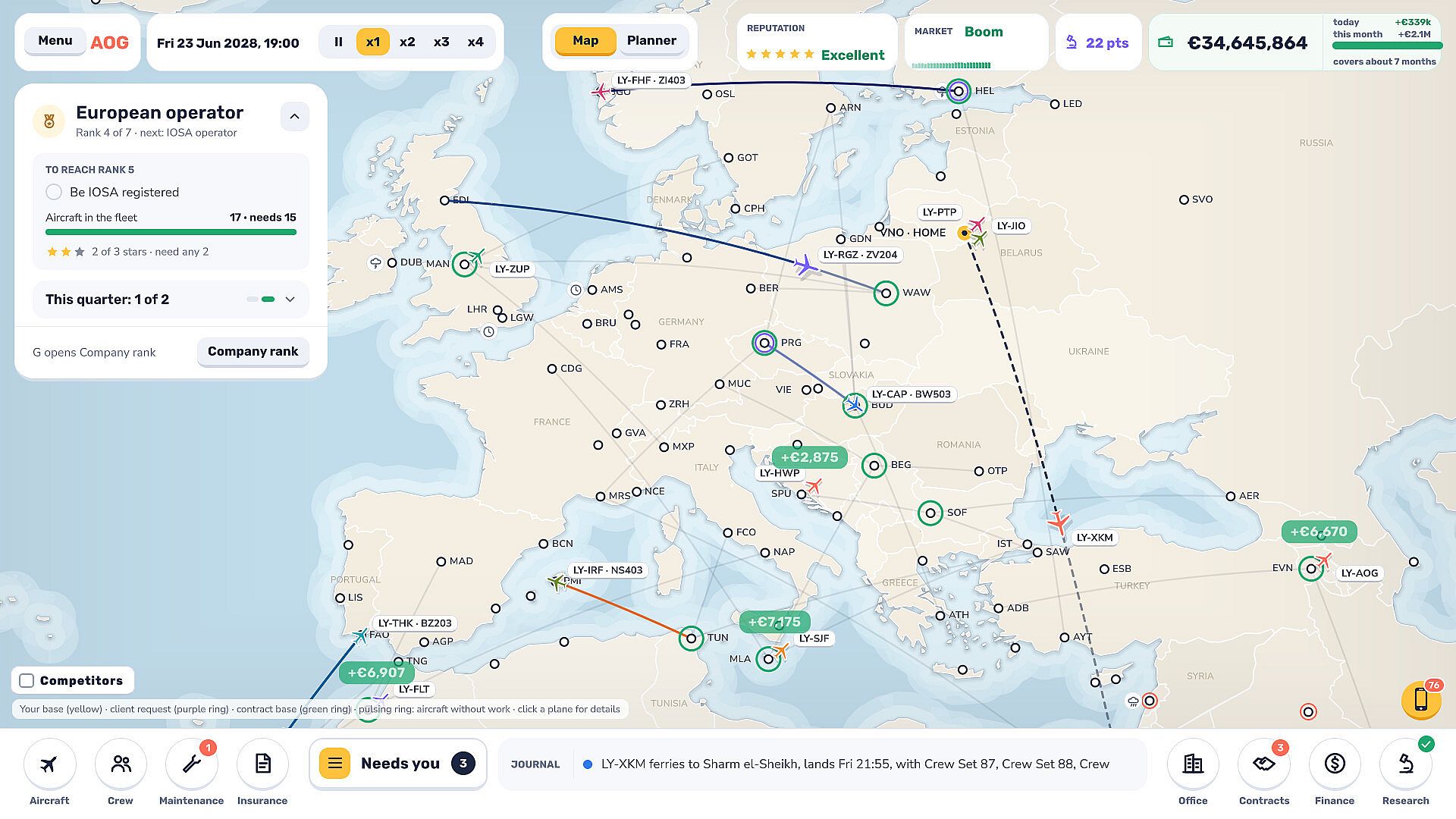
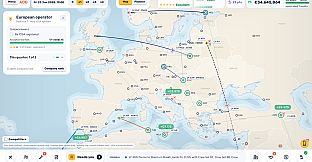
Company growth incorporates insurance choices with selectable deductibles and liability coverage that influence payouts during incidents. A real map displays aircraft movements in real time, while rival ACMI operators compete for contracts and crews, visible through a rivals map view and monthly market magazine. The best operator each year receives a trophy.
Staff management extends to hiring and retaining personnel across departments, where poor treatment leads to departures. Sound design features calm lo-fi music and subtle interface audio with independent volume controls. A guided tutorial led by operations advisor Marta introduces core mechanics, with options to pause or skip at any point.
Is It Worth Playing?
This simulation appeals to players who enjoy detailed operational management and long-term strategy in an aviation context. The verified systems for contract negotiation, crew scheduling, maintenance planning, and client reputation create a cohesive experience that rewards careful planning and adaptation to disruptions. Career progression provides clear goals, while free play offers flexibility for experimentation with custom rules.
The economy receives ongoing validation through bot-driven testing, supporting fair difficulty scaling. Early access status means the title continues to receive refinements, and the depth of mechanics such as IOSA audits, fault deferrals, and department staffing suits those seeking a focused single-player management challenge rather than action or multiplayer elements. Players interested in realistic airline support operations will find substantial replay value across different home bases and aircraft fleets.