



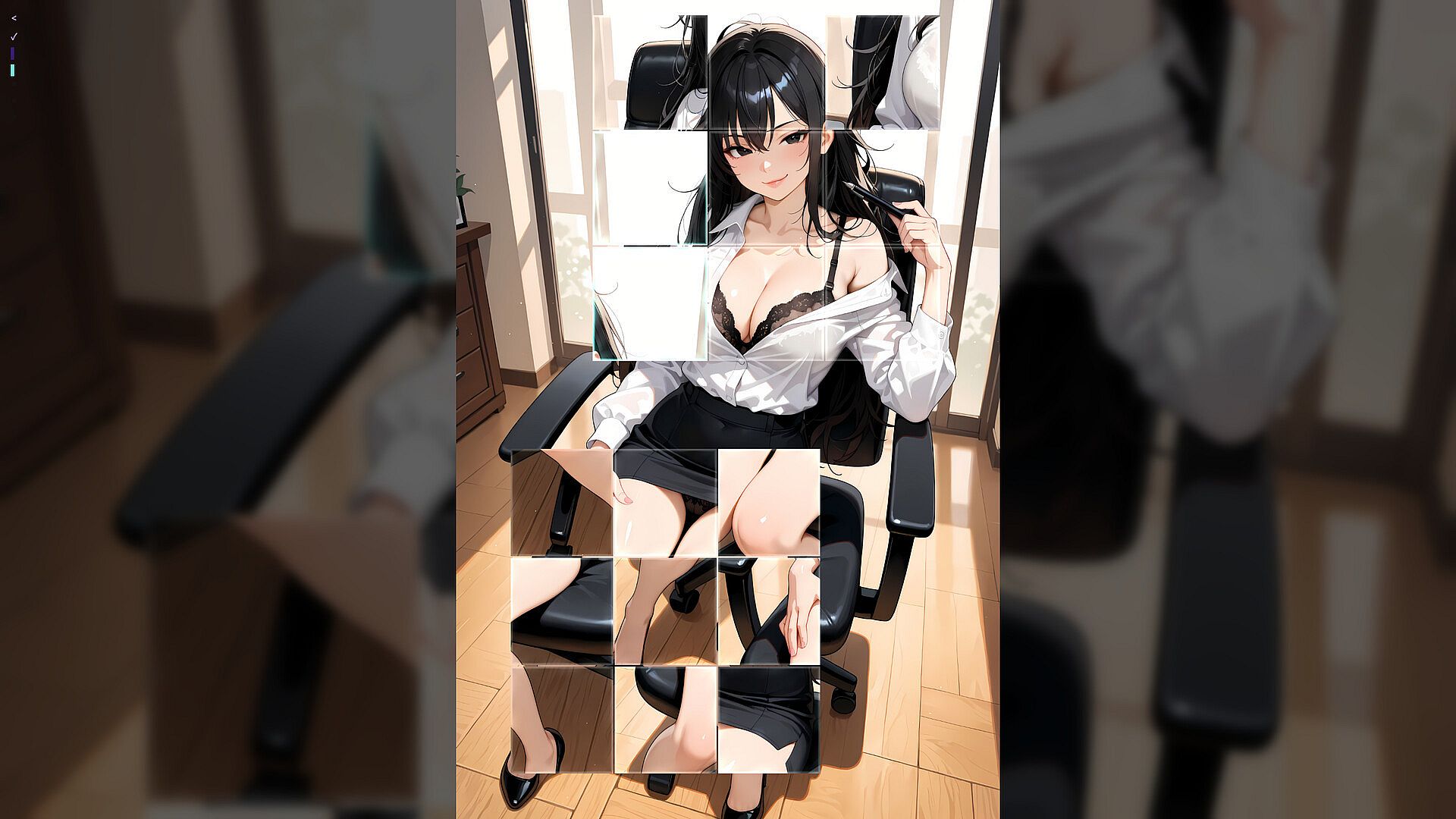
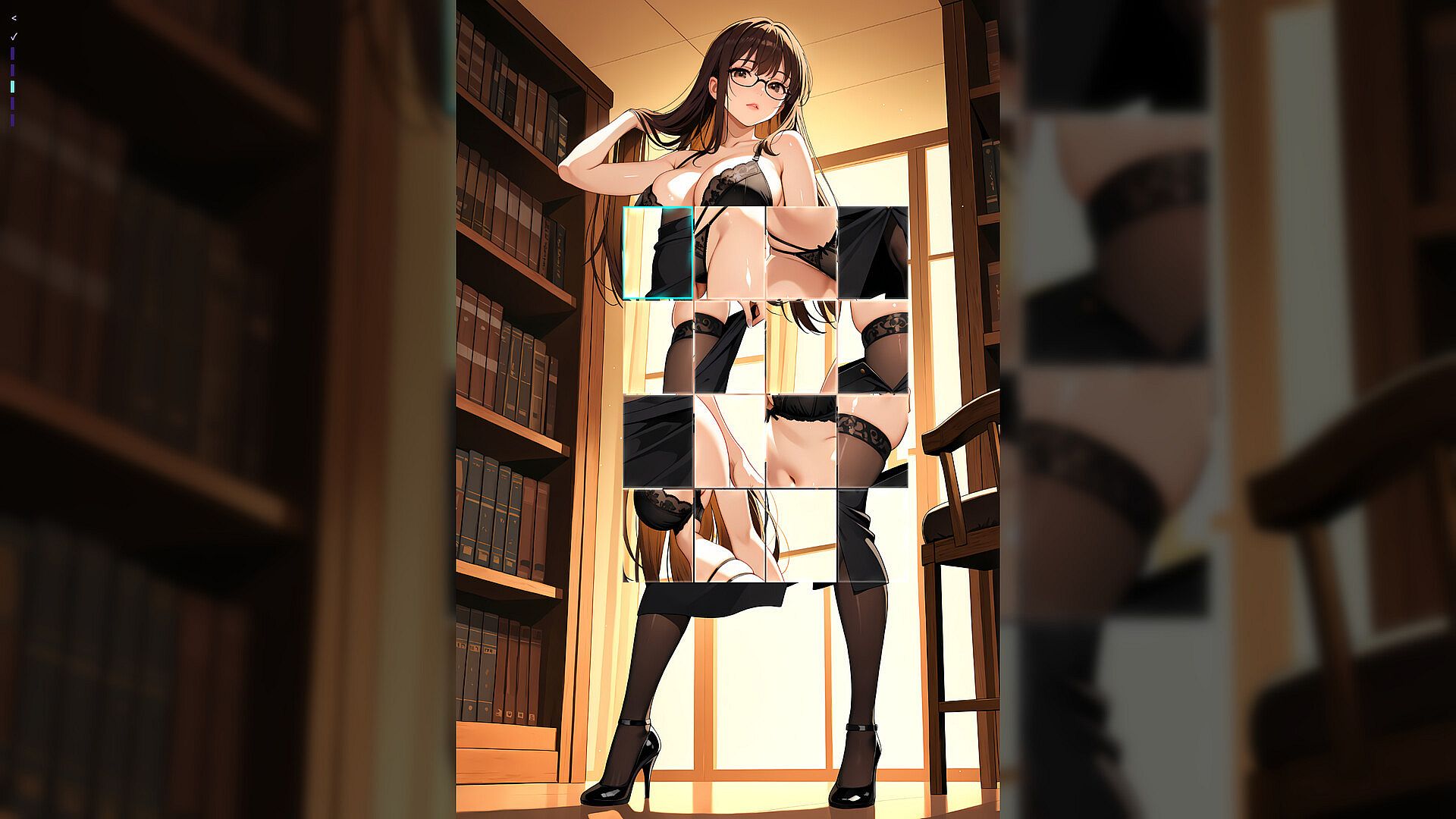
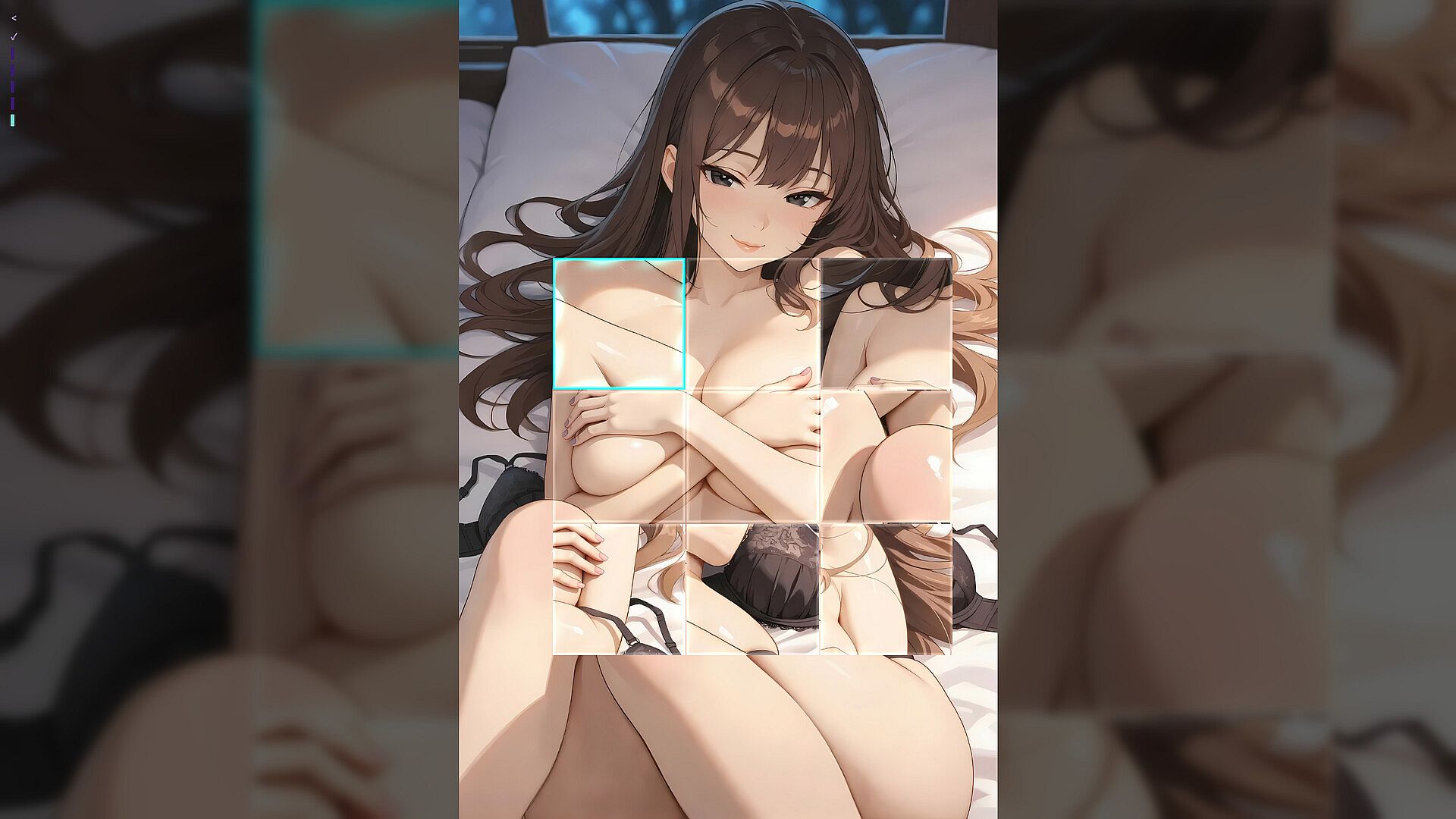
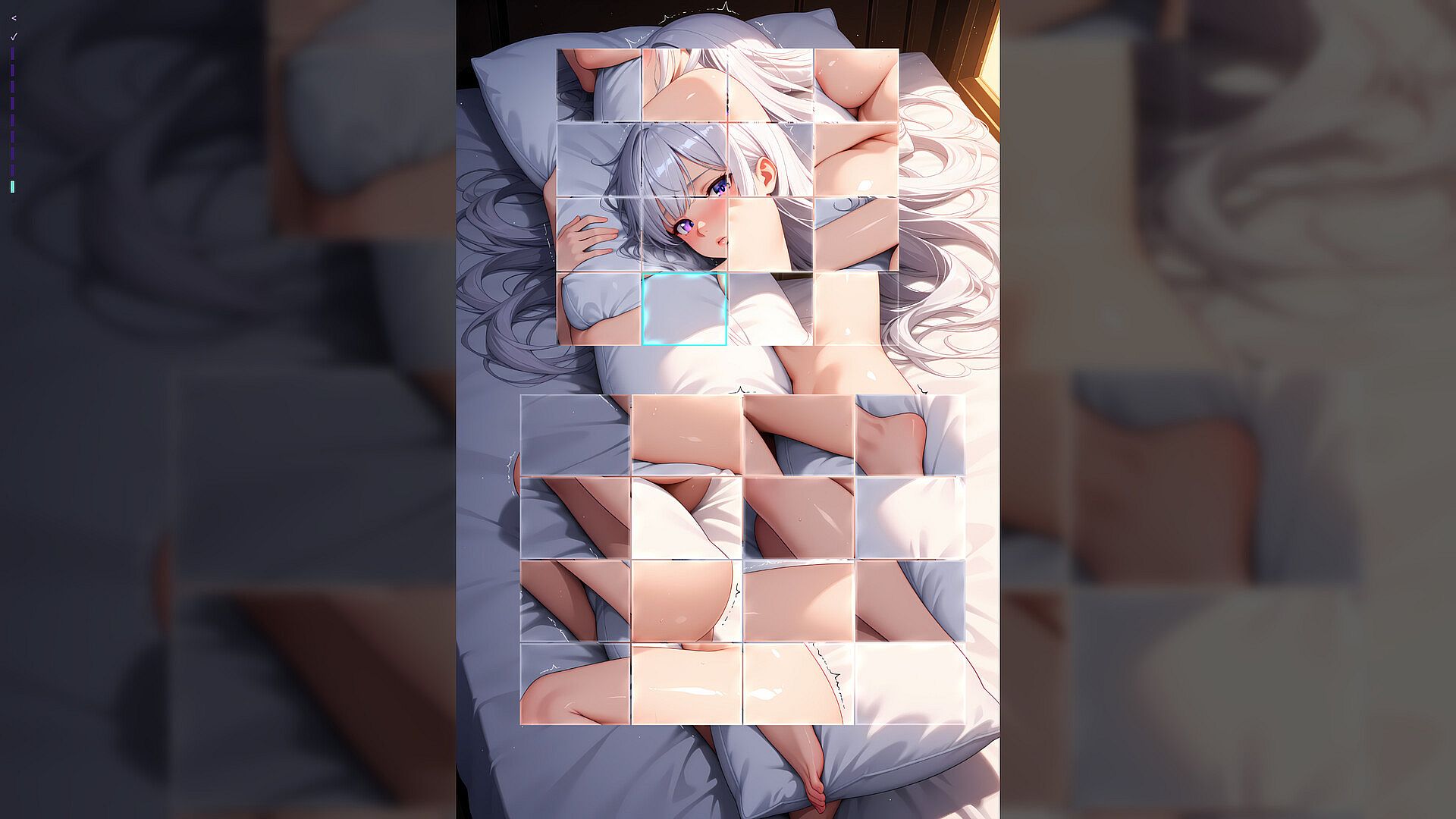
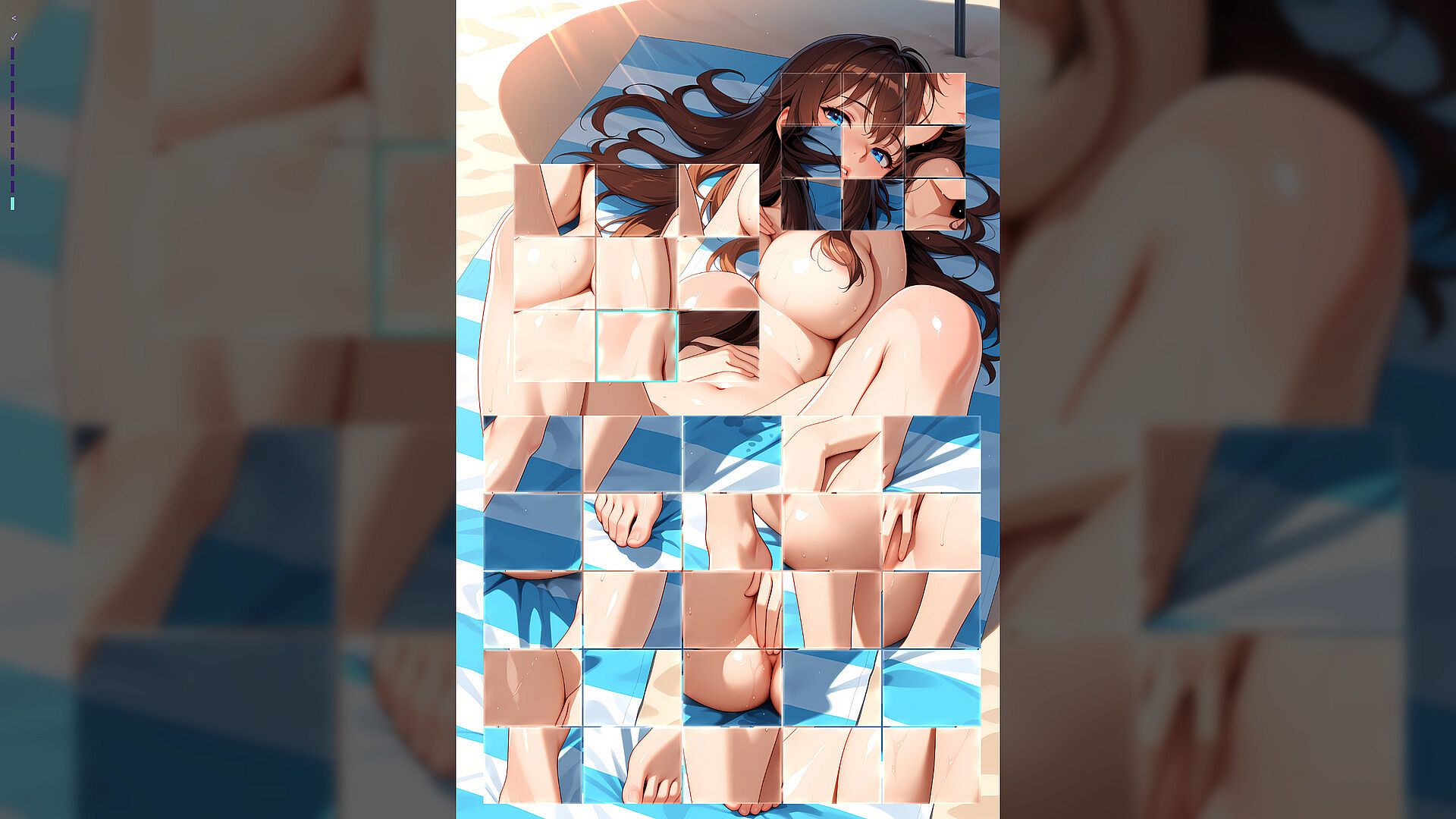
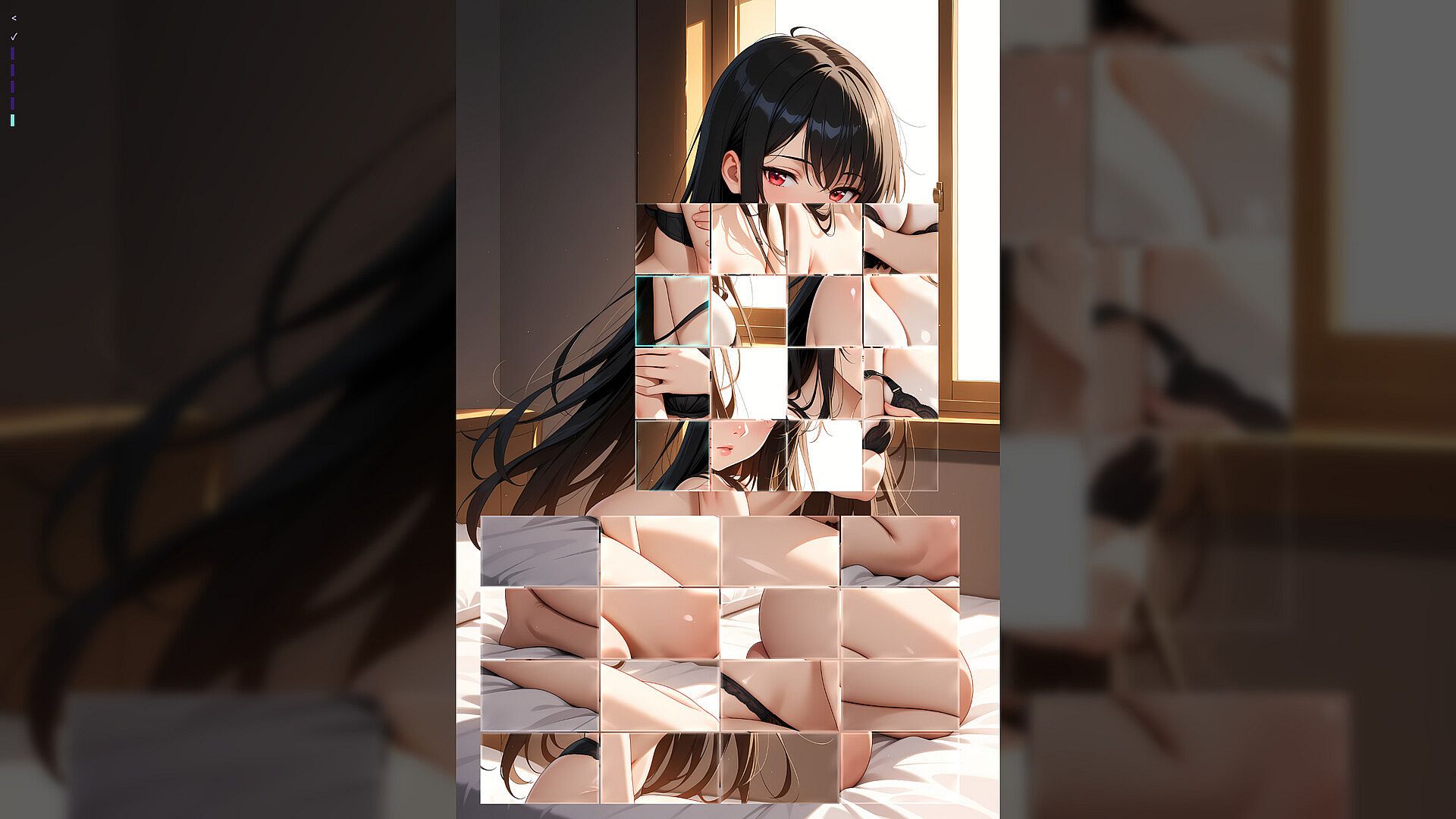
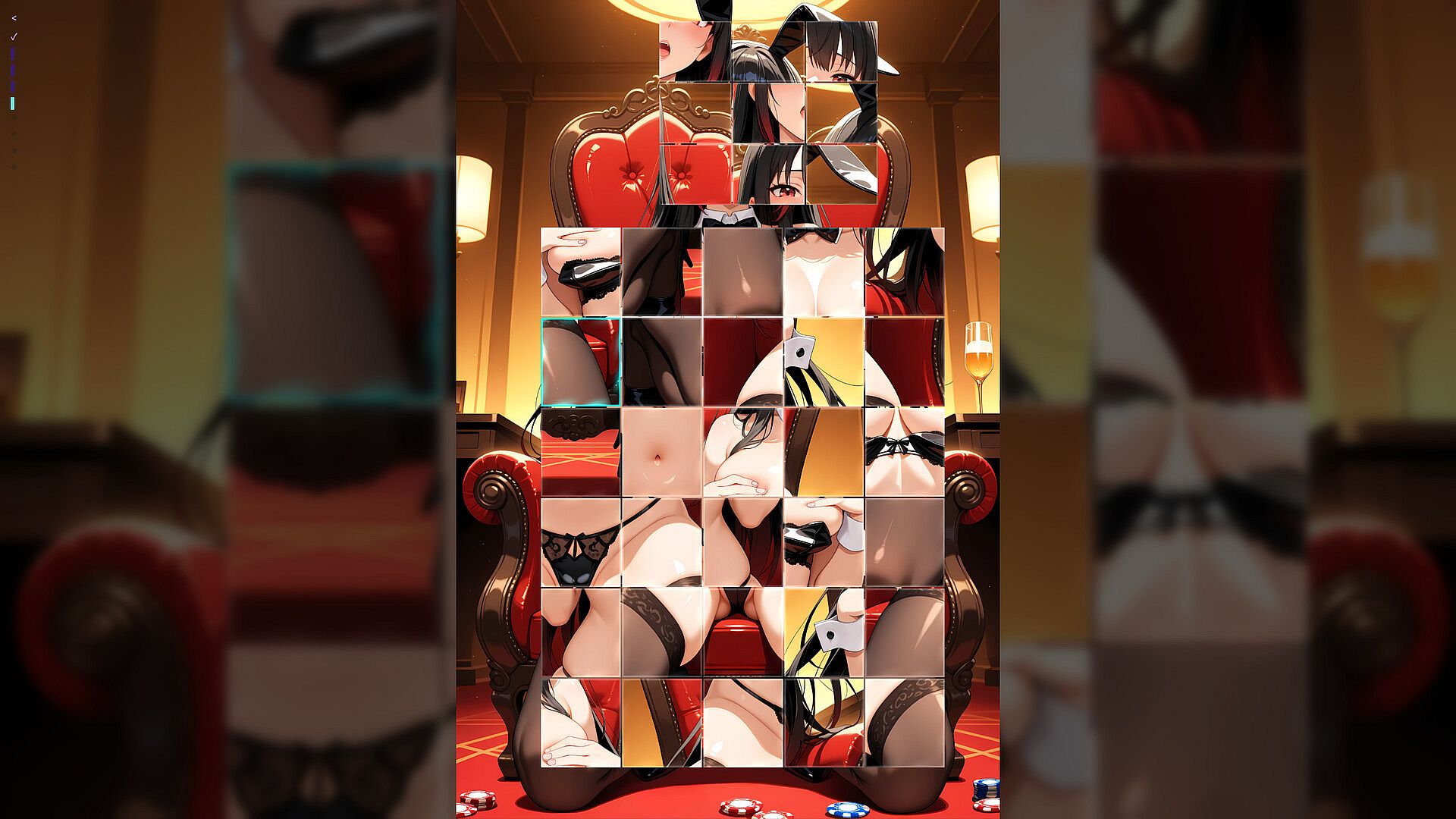
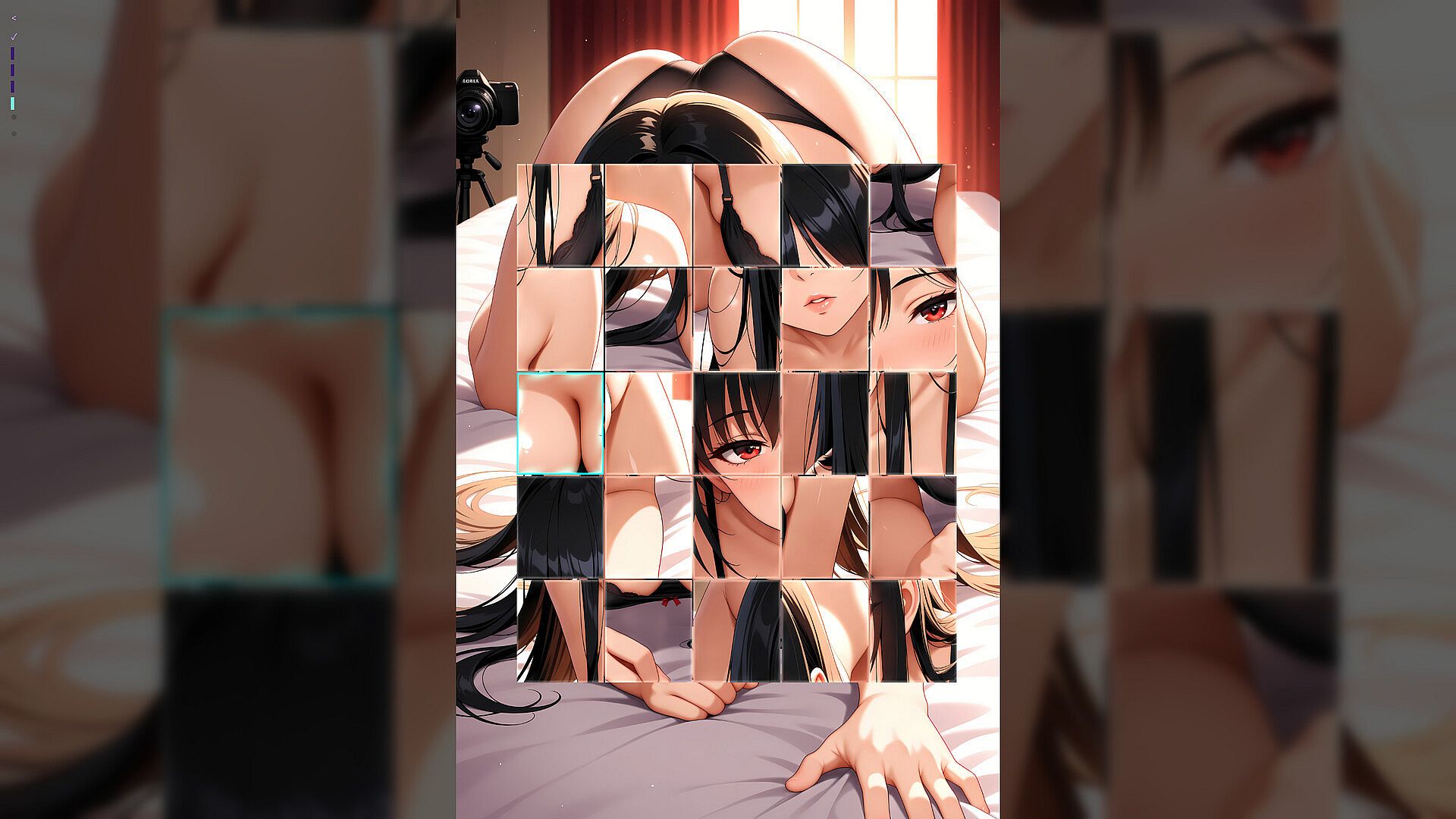
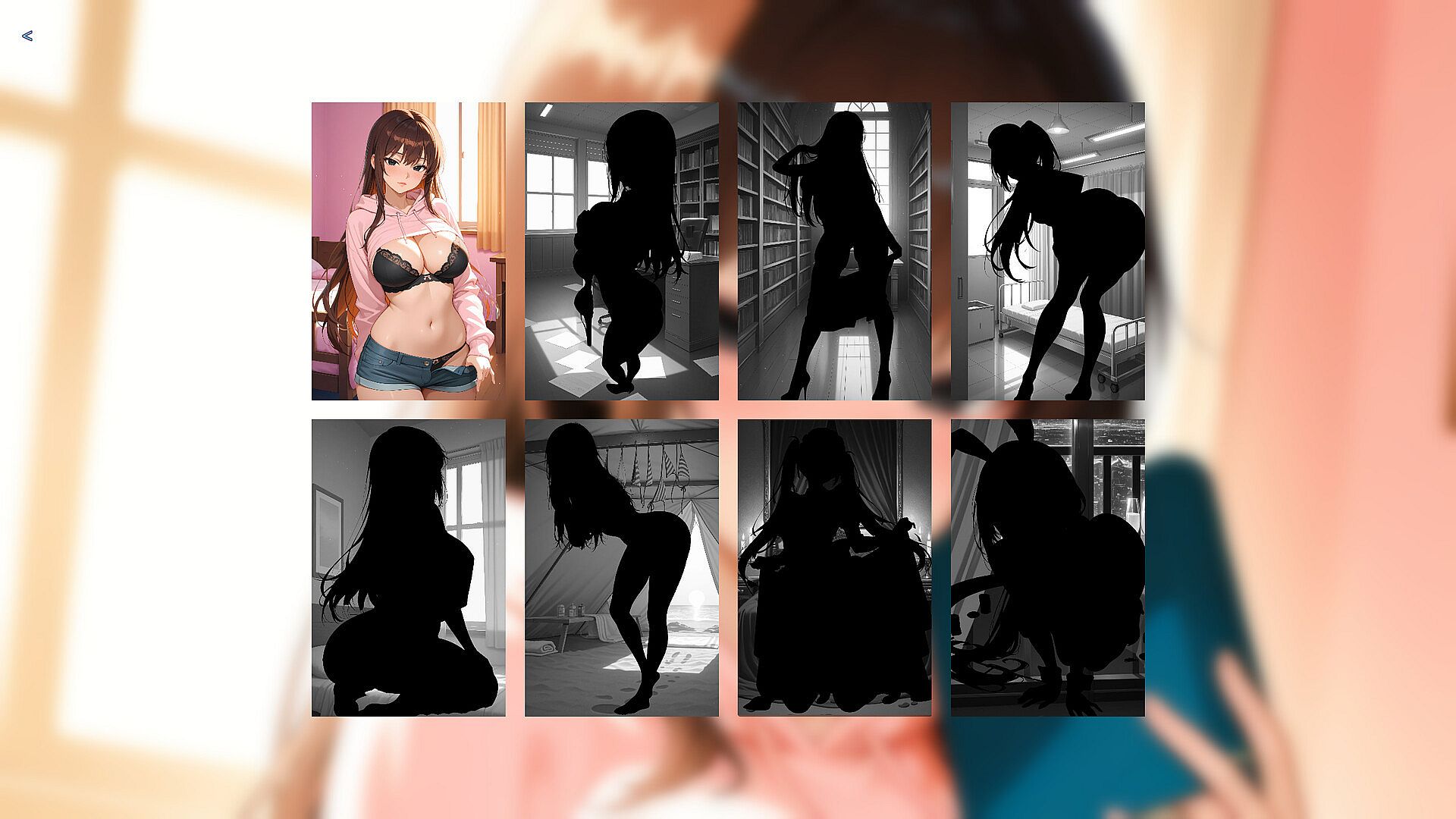

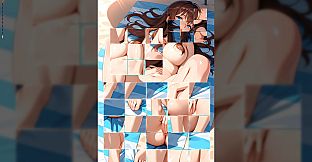
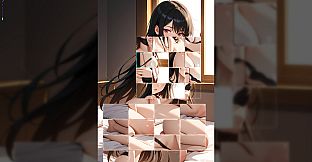

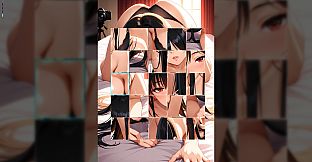
Anime Angels (feat. Luca Brasil) is a tile-swapping puzzle game available on PC that combines casual strategy elements with simulation aspects through its focus on assembling anime artwork. Players rearrange tiles on a grid to reconstruct images of anime girls created by artist Luca Brasil, gradually uncovering complete pictures as they advance. The experience centers on matching and positioning pieces correctly across multiple stages, rewarding completion with access to the full suggestive illustrations in each set.
Gameplay
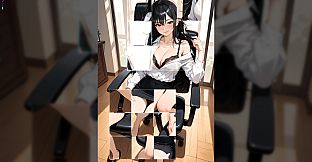
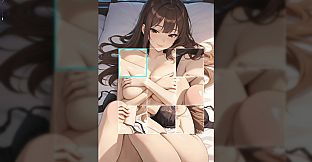
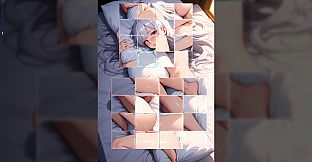
The core loop involves selecting and swapping adjacent tiles to align them into the correct positions that form the target image. Progress occurs step by step within each picture, with partial reveals building toward the finished artwork. Controls support mouse clicks for direct swaps, keyboard inputs for navigation, or controller options, allowing play with one hand throughout. This setup keeps sessions straightforward and accessible without complex button combinations or timing requirements.
Each completed stage unlocks the next in sequence, encouraging steady advancement through the collection. A quick solve feature lets players bypass remaining swaps to view the assembled picture immediately if desired. The art itself features high detail from the professional artist, with themes centered on anime aesthetics that appeal to fans of the style. Sessions remain short and repeatable, suiting casual play periods where focus stays on visual assembly rather than competitive scoring or resource management.
Game Modes
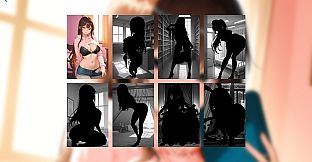
Progression follows a linear path through eight distinct picture sets. Each set contains five or more stages, totaling 62 individual pictures across the full experience. Players move sequentially from one set to the next after finishing prior stages, with no branching paths or alternate routes confirmed in the available details.
The structure emphasizes completion of these sets at a personal pace, incorporating the option to accelerate any stage via auto-complete. This approach blends puzzle solving with visual rewards, where the primary activity remains tile arrangement without additional layers like timers, limited moves, or shared elements across sets.
Visual Style and Accessibility
Artwork drives the appeal, showcasing professional illustrations of anime characters in suggestive poses that become clearer with each successful swap. The presentation prioritizes clean visuals and smooth tile movement to maintain focus on the assembly process. Support for multiple input methods ensures broad accessibility, including options suited to players who prefer minimal physical effort or alternative devices.
Simulation aspects appear in the methodical buildup of images, where repeated engagement with the same mechanics across sets creates a consistent rhythm. Indie production values keep the scope contained to puzzle assembly and art appreciation, avoiding expansive narratives or external systems.
Target Audience
This title suits individuals interested in relaxed puzzle mechanics paired with anime-themed visuals. It appeals to those who enjoy strategy through spatial arrangement and casual simulation of image reconstruction without demanding high skill ceilings or long commitments. The one-handed design and quick solve tool make it practical for short sessions or players seeking low-pressure entertainment.
Progression through the sets provides ongoing variety in the specific images encountered, though the fundamental swapping remains uniform. Fans of tile-based puzzles or collectors of digital art in this genre will find the format familiar and direct.
Is It Worth Playing?
The game delivers a focused puzzle experience centered on tile swapping to reveal anime artwork across its eight sets and 62 pictures. Its accessibility features, including controller support and instant completion options, lower barriers for casual participants. As a new release in the indie casual and strategy space, it offers straightforward value for those drawn to visual assembly tasks and suggestive anime illustrations by Luca Brasil.
Player interest will likely hinge on tolerance for repetitive swapping mechanics and appreciation of the art style. Those who value quick, one-handed sessions with clear progression will find it aligns well, while others seeking deeper systems or variety beyond the core loop may prefer alternatives. The current state emphasizes solo play with no confirmed updates or additional content layers at launch.