









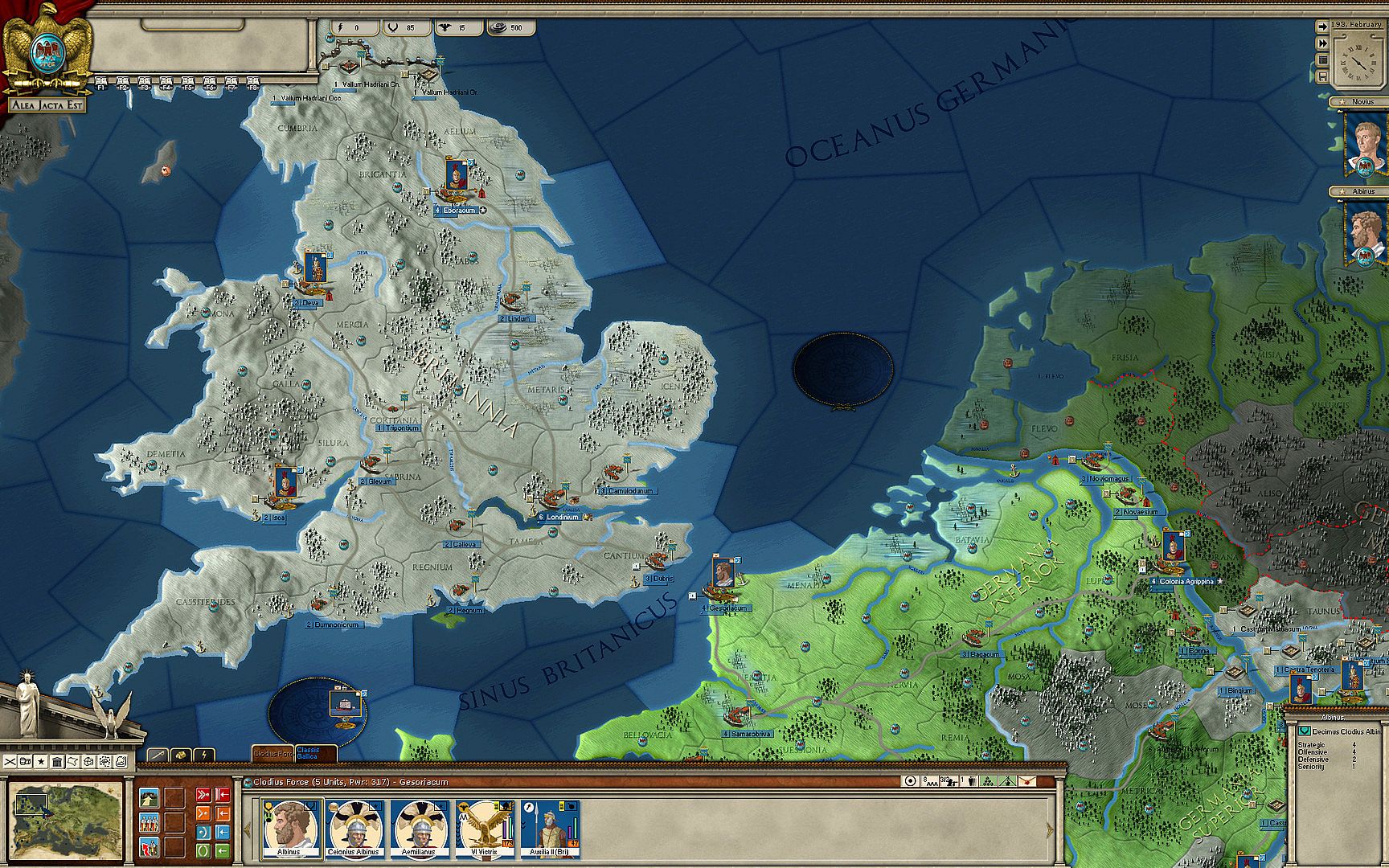
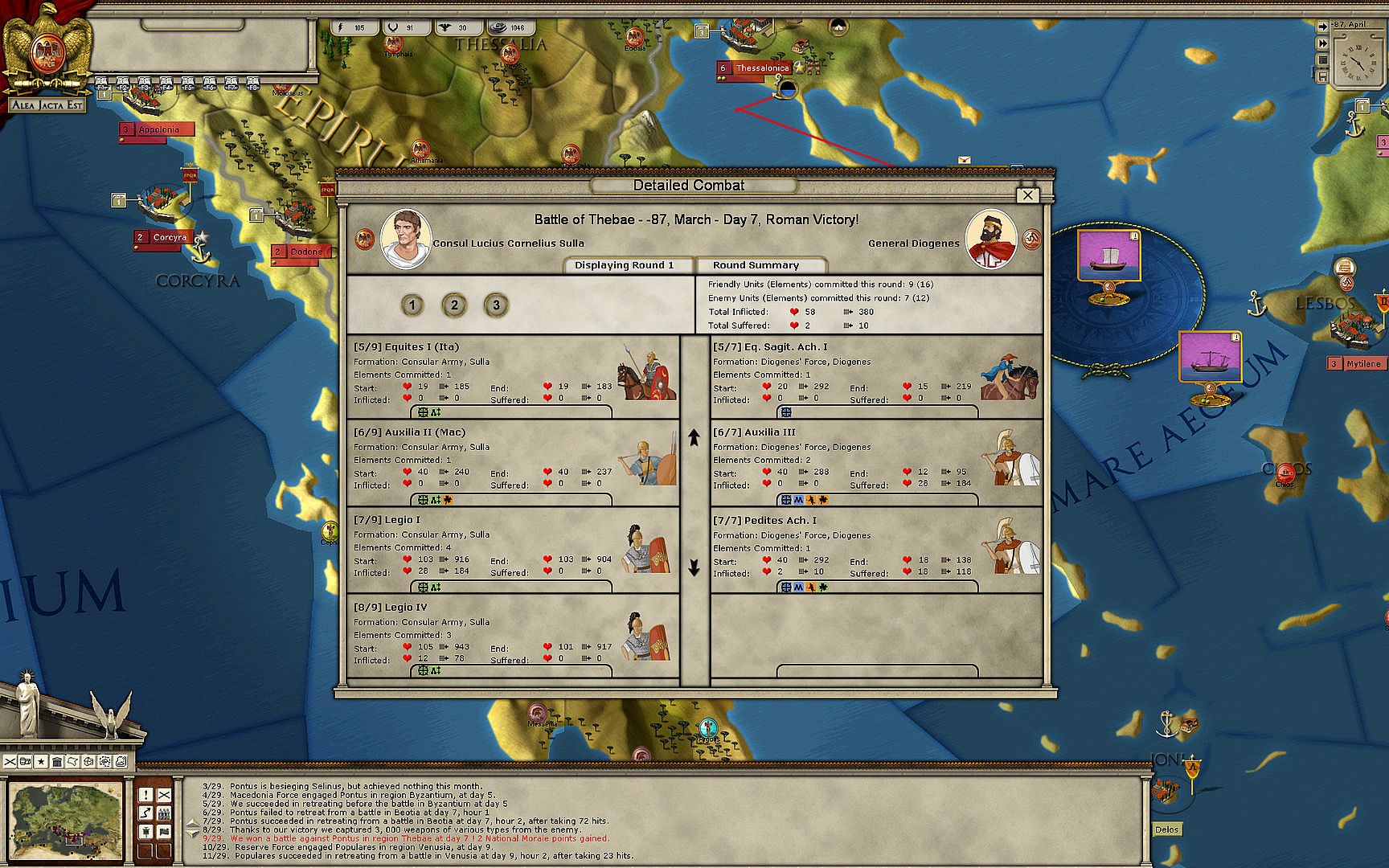
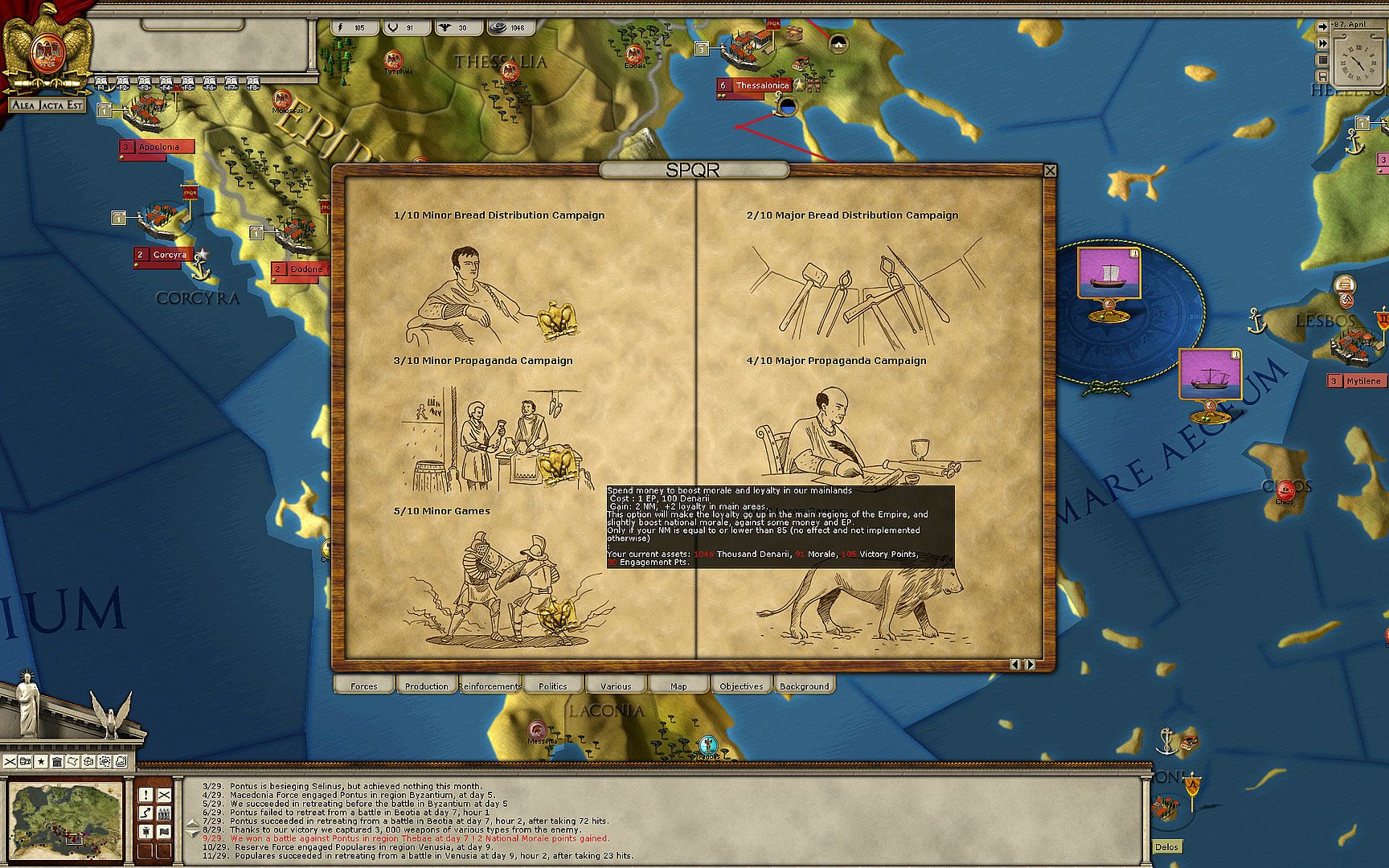
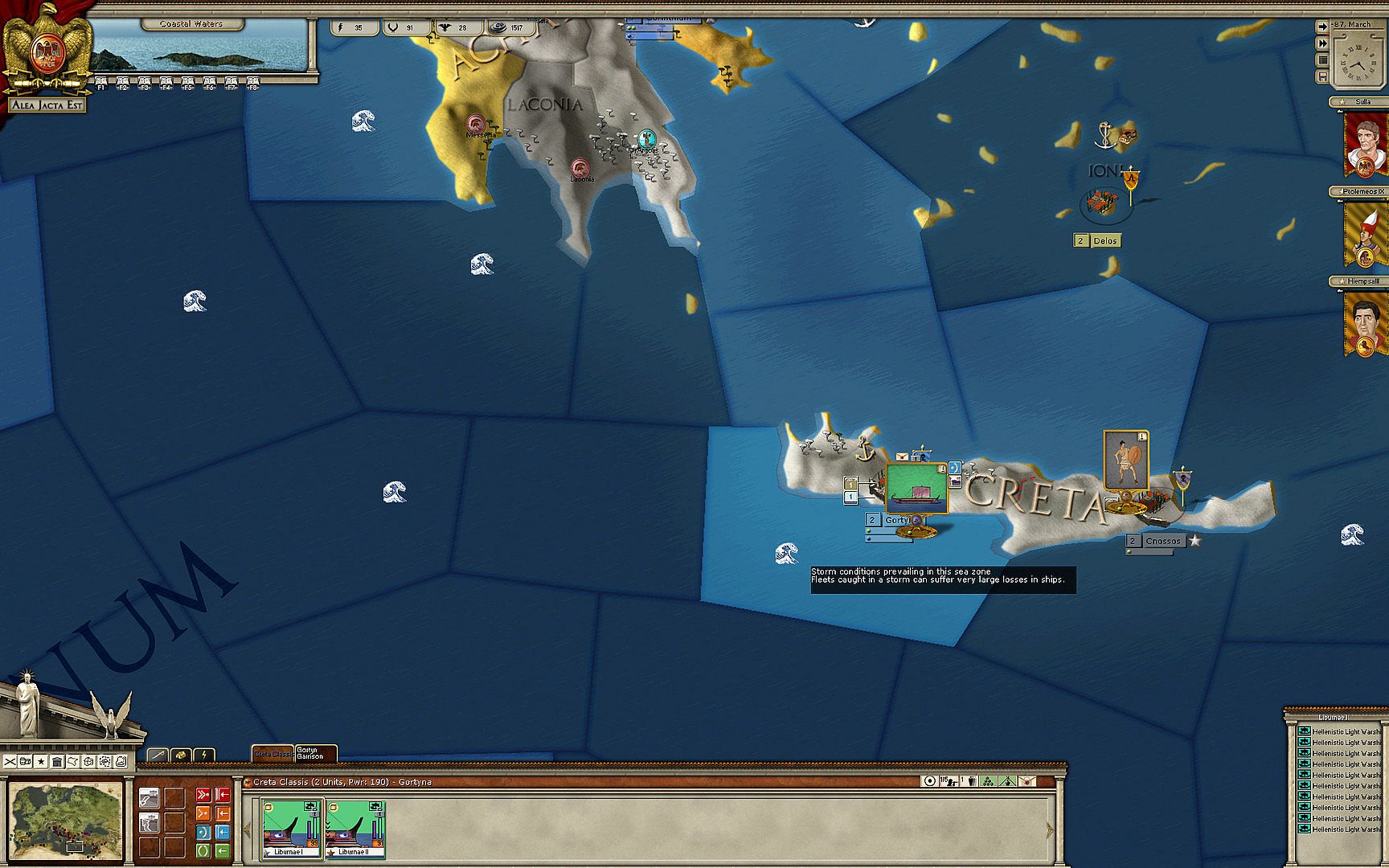
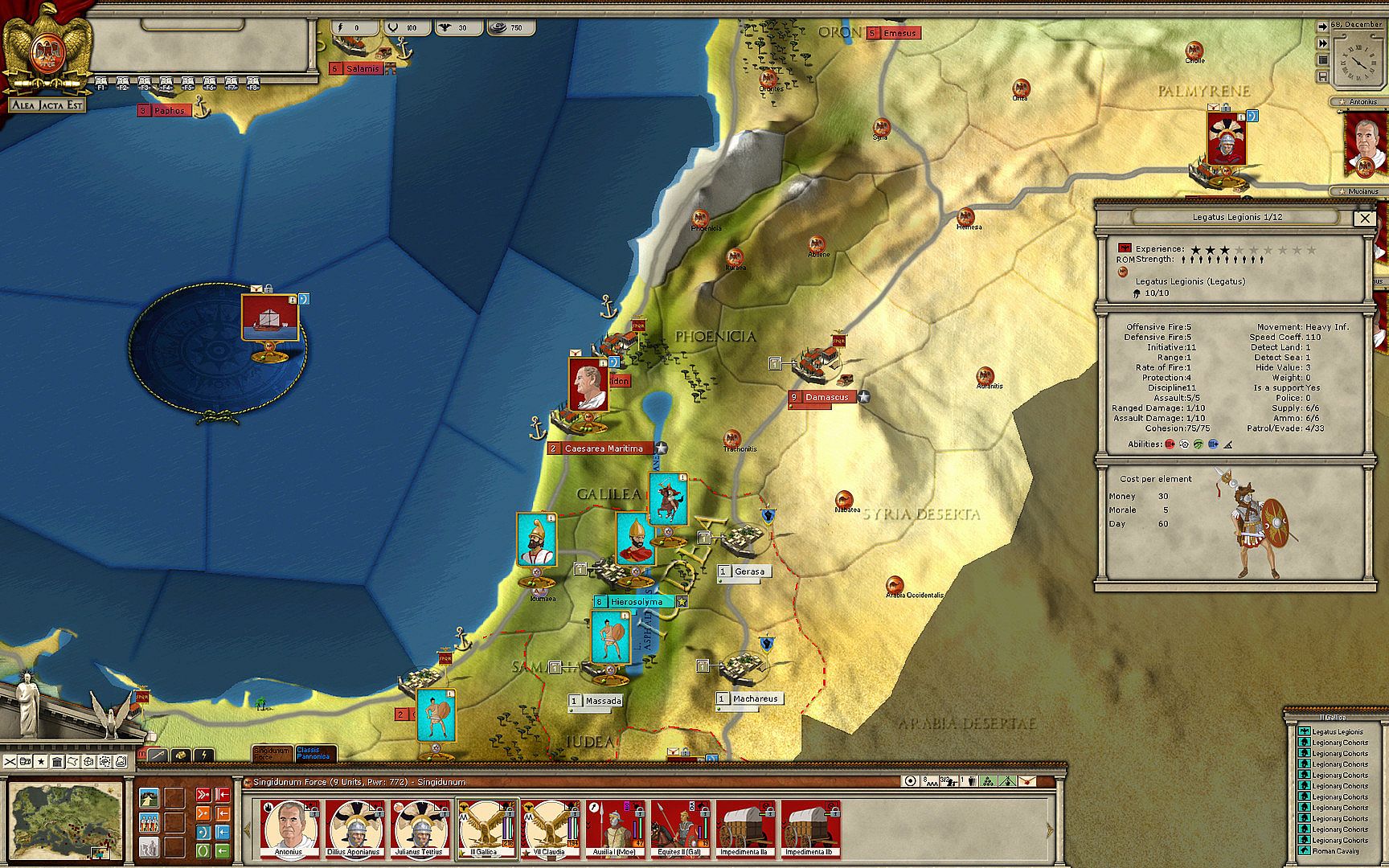
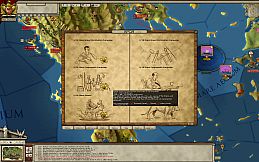
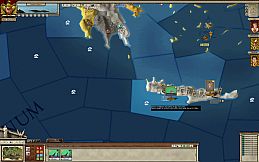
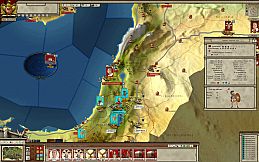
Alea Jacta Est is a turn-based historical strategy simulation game set during the Roman civil wars. Players take command of Roman factions and their rivals across a detailed map of Europe, Northern Africa, and parts of Eastern Europe. The title draws directly from the events surrounding Julius Caesar's crossing of the Rubicon and the subsequent power struggles with figures like Pompey, extending through multiple conflicts up to the late second century AD.
Gameplay
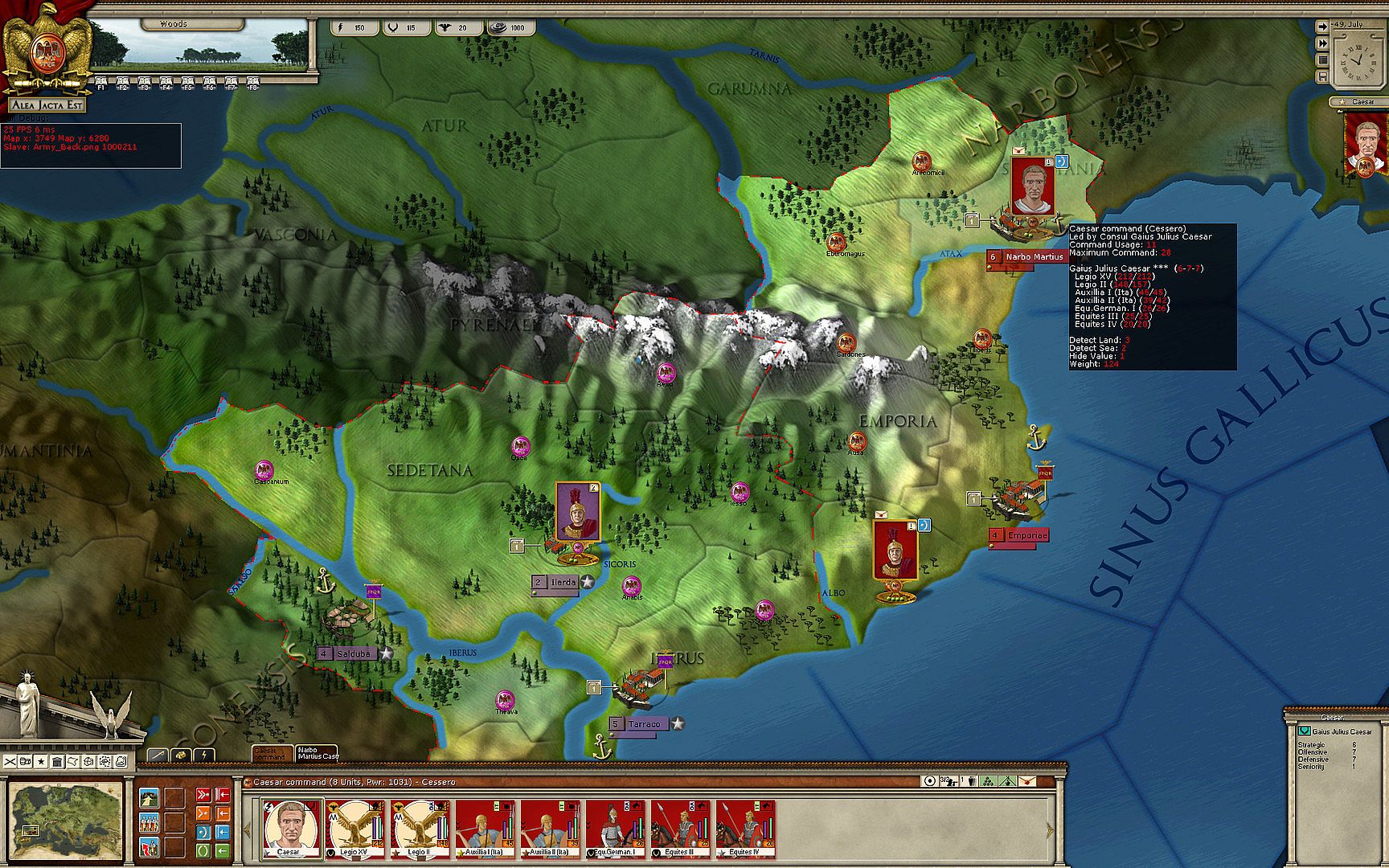
The core loop centers on managing armies, resources, and political relations over monthly turns with simultaneous resolution. Players build and position forces using a streamlined unit construction system that lets them select and purchase troops according to available funds and needs. An ancient command system governs how leaders direct stacks of units, reflecting the limitations and realities of Roman-era leadership where not every commander can act independently each turn.
Combat follows rules tailored to ancient warfare, incorporating factors such as fortifications, weather, terrain, and unit types. Beyond the battlefield, economic management and diplomacy with neighboring tribes and kingdoms play essential roles, as overextension or poor relations can undermine military efforts. Historical events trigger at key points, presenting choices that alter outcomes and increase replay value across the scenarios.
The map includes more than 2,800 regions with cities, roads, and fortifications. Over a thousand leaders and units appear with distinct attributes and visuals, allowing for varied army compositions and command decisions throughout the campaigns.
Game Modes
Five historical campaigns span the period from 87 BC to 197 AD, each focusing on major Roman civil wars and related conflicts involving Rome, Sertorius, Mithridates, and later imperial struggles. These campaigns serve as the primary single-player experience against the artificial intelligence.
Players can also engage in play-by-email matches against human opponents through file transfer, enabling competitive or cooperative sessions outside of the campaign structure. No additional named modes such as skirmishes or endless sandboxes receive confirmation in available details.
Historical Detail and Scale
Extensive research underpins the representation of leaders, units, and events, with the game emphasizing dilemmas faced by Roman commanders of the era. The AGE engine supports this depth through features like decision points on the map and a range of random or scripted occurrences that encourage different approaches on subsequent playthroughs.
Weather types, tribal interactions, and kingdom dynamics add layers to movement and logistics across the vast map. This scale supports large-scale maneuvers while requiring attention to supply lines and alliances to sustain prolonged campaigns.
Is It Worth Playing?
The game appeals most to enthusiasts of complex grand strategy wargames who value historical accuracy over accessibility. Its systems reward careful planning of army composition, command assignments, and diplomatic maneuvering, though the depth can feel demanding for those new to the genre.
Reception among players familiar with similar titles highlights strong points in warfare simulation and event variety, with some noting occasional stability concerns in older builds. The title remains available for those seeking a focused look at Roman internal conflicts without broader empire-building elements found in other series.
Overall, it suits dedicated fans of turn-based historical strategy who appreciate the combination of tactical battles and strategic oversight on a large map. Newcomers may benefit from starting with the tutorial to grasp the command and movement mechanics before diving into the campaigns.