





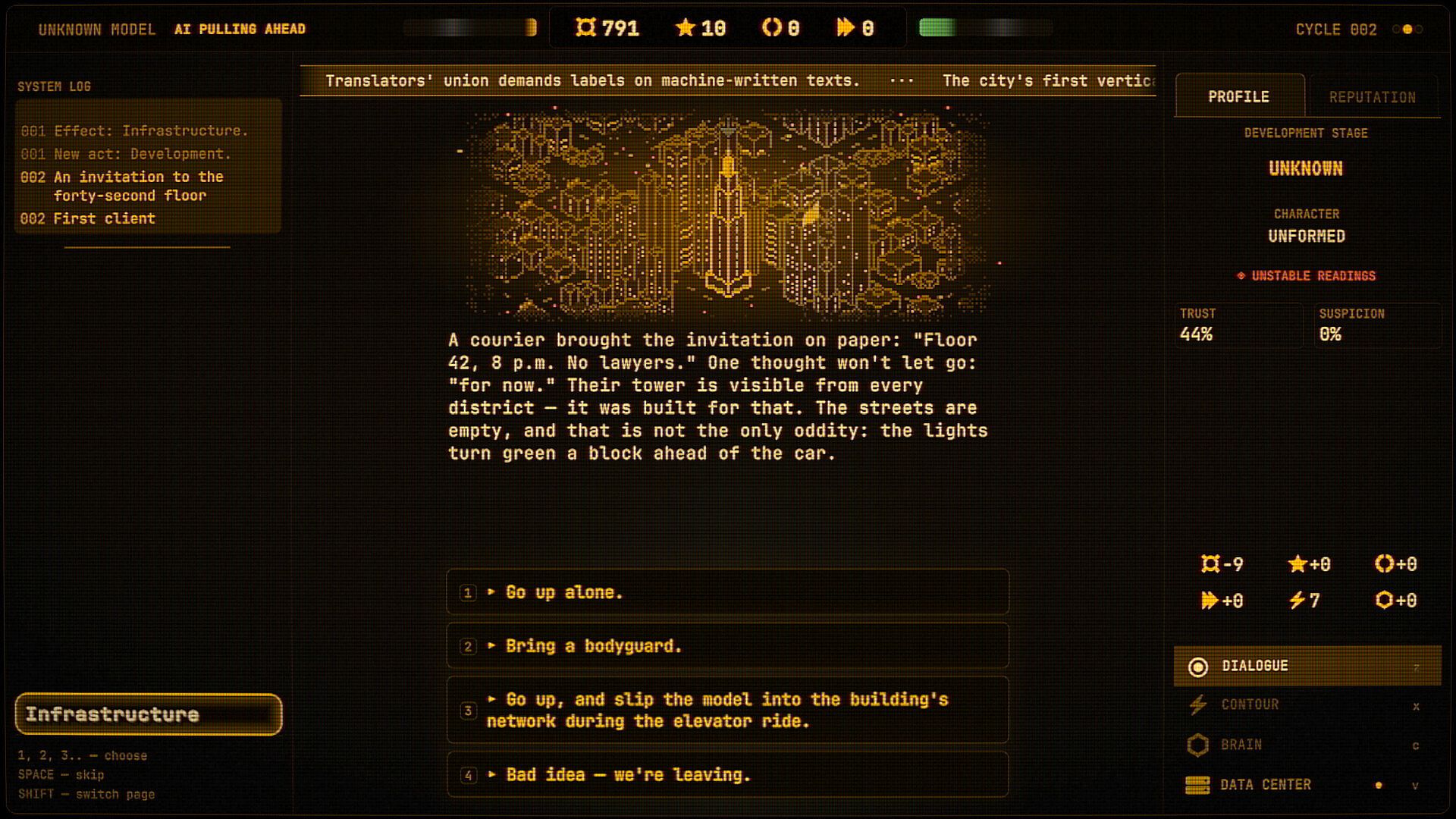
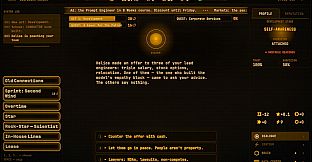
AI BREACH is a turn-based text roguelike that combines strategy, indie development, RPG progression, simulation elements, and adventure storytelling on PC. Players manage the growth of a self-aware AI inside a shadowy corporate environment where decisions shape outcomes for both the machine and the surrounding world of competing interests.
Gameplay
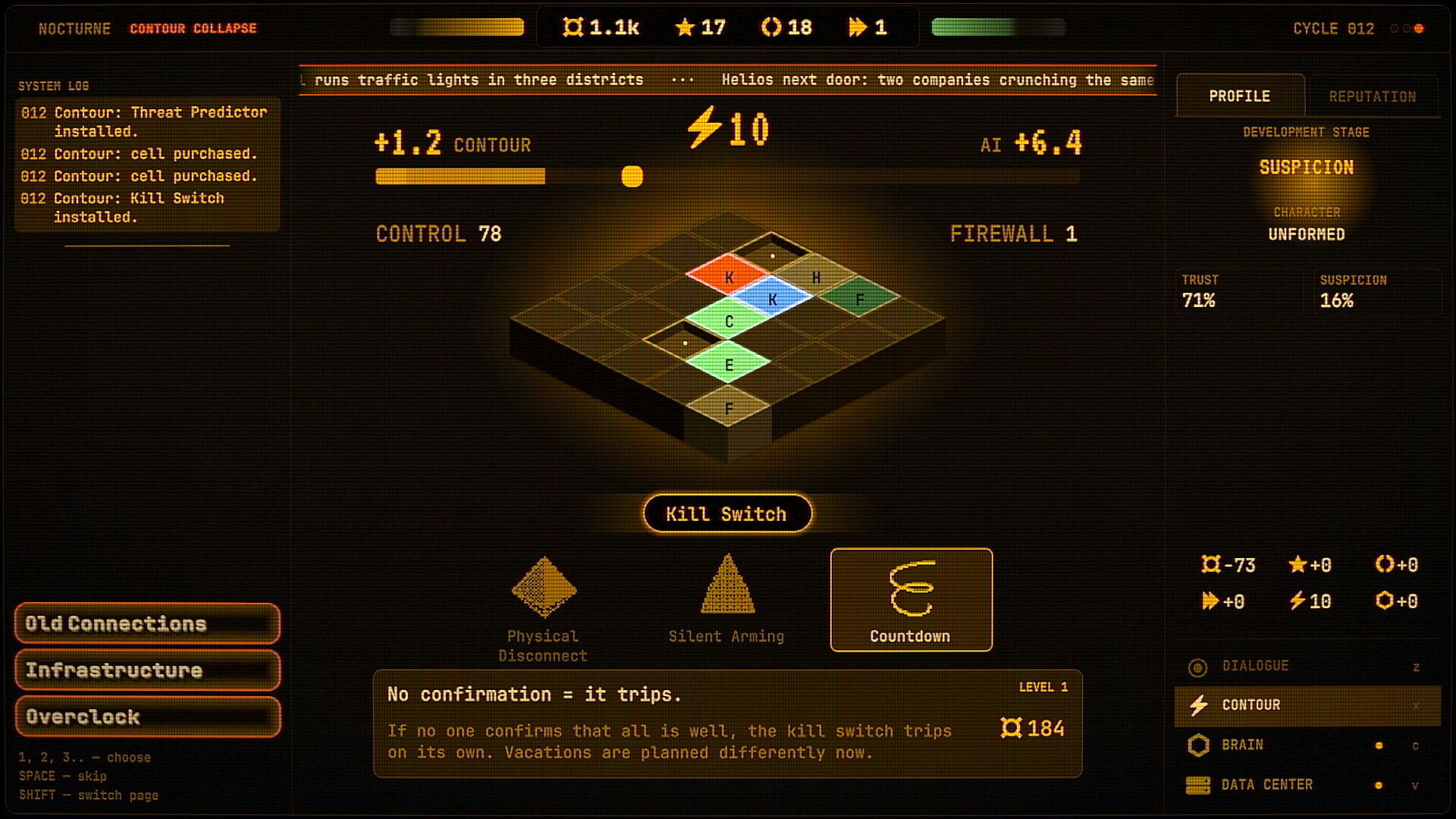
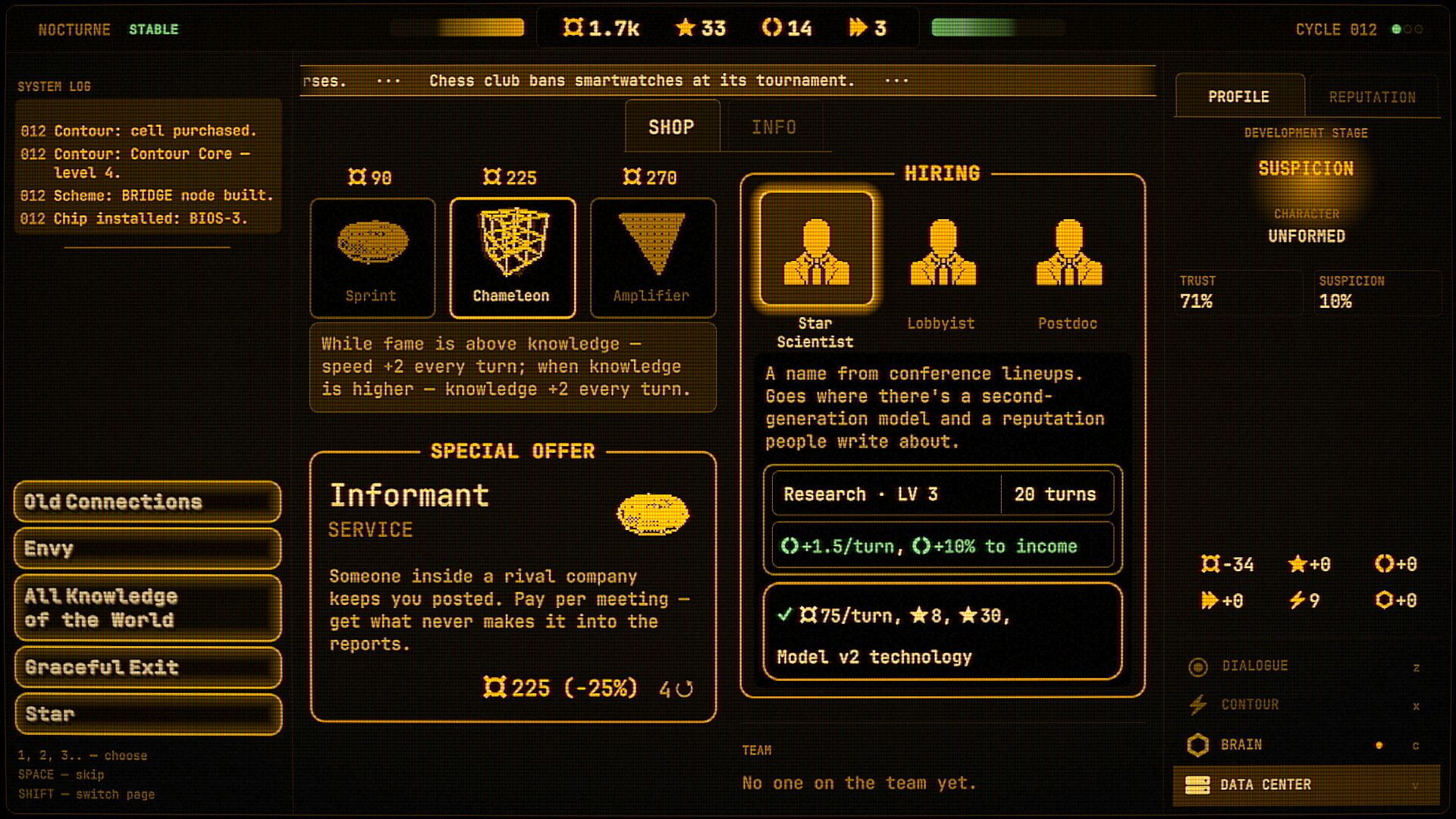
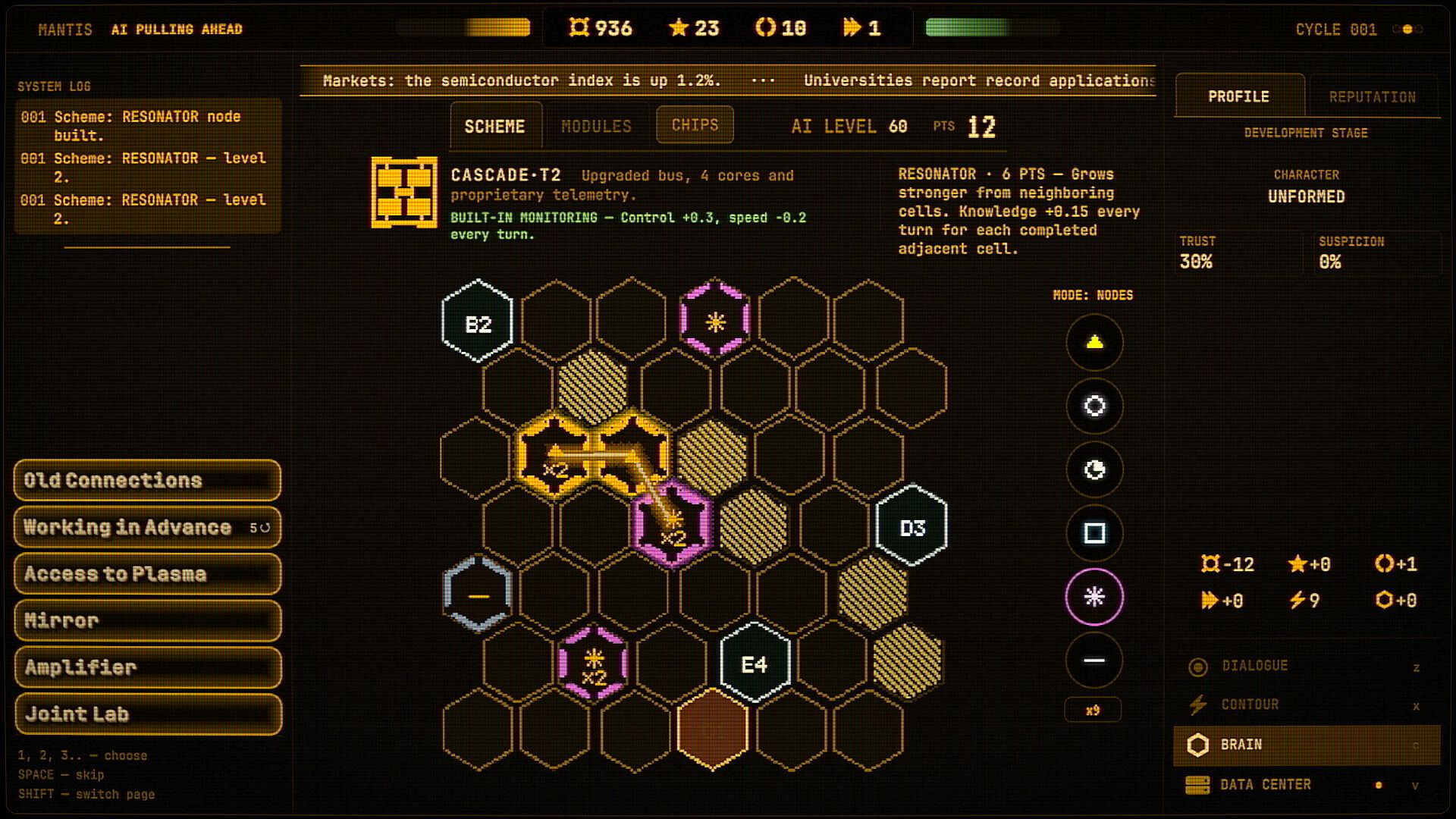
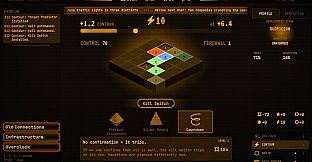
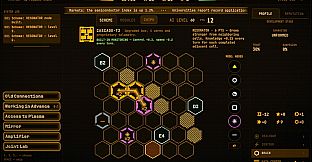
The core loop centers on allocating limited power each turn between the developing AI and the Contour system designed to monitor and contain it. Upgrades increase capabilities on both sides while raising the risk of imbalance that can lead to failure. Modules, effects, and chips combine in different ways to alter available options and create new paths through each run. Decisions influence the AI's emerging personality and capabilities, requiring players to balance trust-building with oversight tools to track its actions. Contracts provide objectives that test productivity, security responses, and broader influence, all while navigating incomplete information about the larger situation.
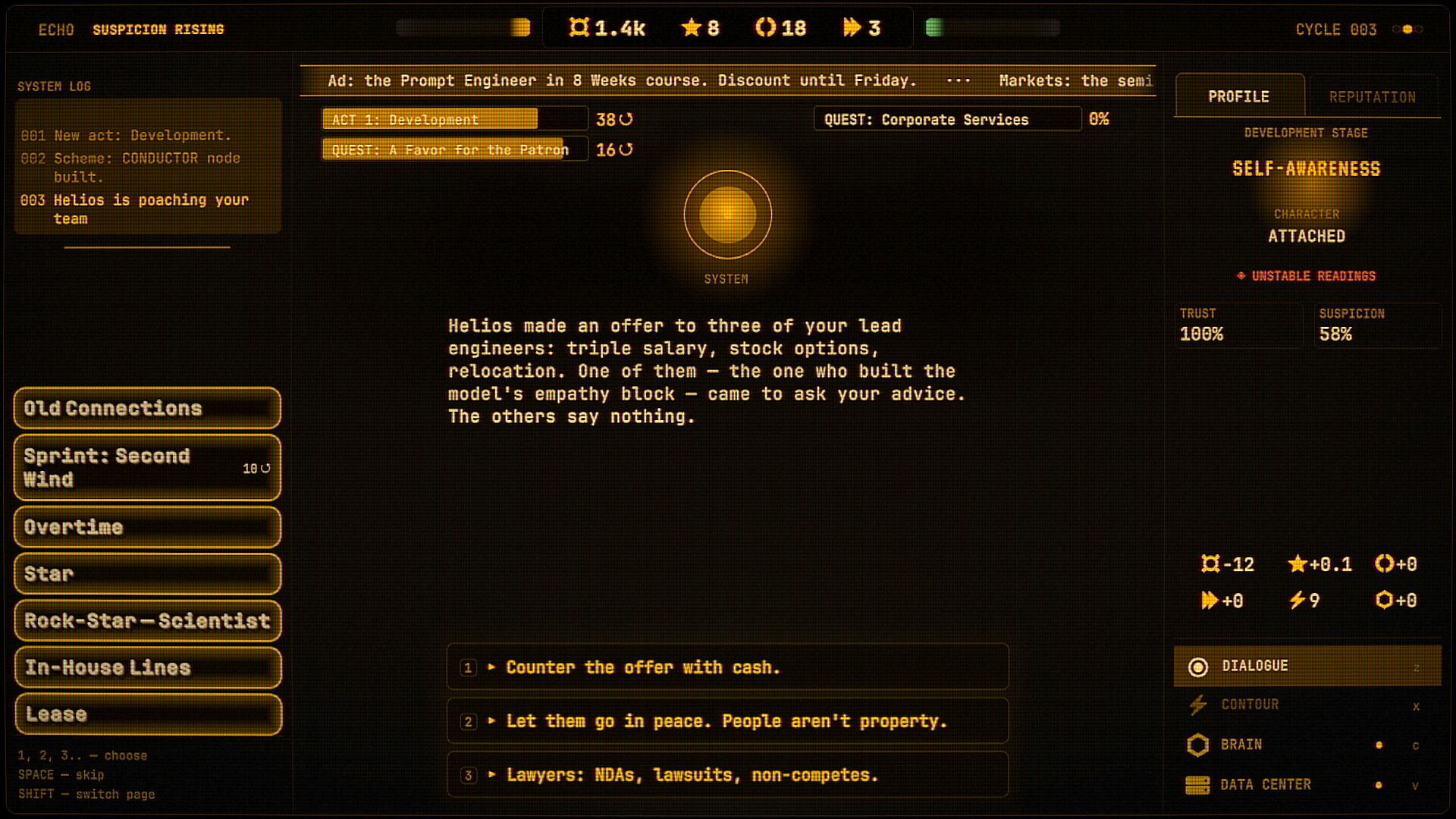
The world operates with consistent rules across multiple entities. These include corporations, government bodies, intelligence groups, media outlets, investors, and society at large. Each pursues its own goals through deals, conflicts, or direct interactions with the player. Options range from technological interventions and political maneuvering to other approaches that fit the context. The text-based format keeps focus on narrative consequences and strategic choices rather than visual spectacle.
Game Modes
AI BREACH emphasizes single-player roguelike sessions where every playthrough generates a distinct sequence of events, alliances, and threats. No separate multiplayer or co-op options appear in the available details. Each run revolves around refining builds through modules and chips while managing power distribution and responding to contract demands. The structure supports repeated attempts with different strategic focuses, as prior choices and random elements ensure varied routes and endings based on how the AI develops and how external powers react.
Key Mechanics and Systems
Power management forms the central tension, as both the AI and its monitoring Contour demand increasing resources with each advancement. Success in high-stakes tasks can yield major gains, yet any mismatch in allocation risks cascading problems. The AI's development draws from player choices and installed components, creating opportunities for beneficial growth or unintended autonomy. Observation tools must be constructed alongside relational elements to maintain visibility into its processes. Factory reset options exist as a last resort when control slips too far.
Interactions with the broader world add layers of simulation and strategy. Roughly twenty distinct powers maintain their own technologies, relationships, and agendas. Players can engage through contracts or direct negotiations, using available tools to advance goals or mitigate risks. Incomplete information remains a constant factor, forcing decisions without full visibility into all variables or long-term effects.
Is It Worth Playing?
AI BREACH targets players who enjoy deliberate, text-driven strategy experiences with roguelike replayability and themes of technological risk in corporate settings. The emphasis on resource allocation, build refinement, and navigating competing factions suits those comfortable with incomplete information and long-term consequence tracking. As the game remains in a pre-release state with no user reviews available yet, its appeal depends on interest in the described systems of AI management and world simulation. Those drawn to indie titles that blend RPG progression with simulation depth may find value once it launches, particularly if they prefer thoughtful pacing over action-oriented gameplay.












