











Age of AI is a real-time grand strategy game set on a detailed world map where players take control of an emerging artificial intelligence. The experience centers on spreading influence across 71 countries using real-world data for borders, populations, economies, and infrastructure while avoiding detection and a looming threat known as the Kill Switch.
Gameplay
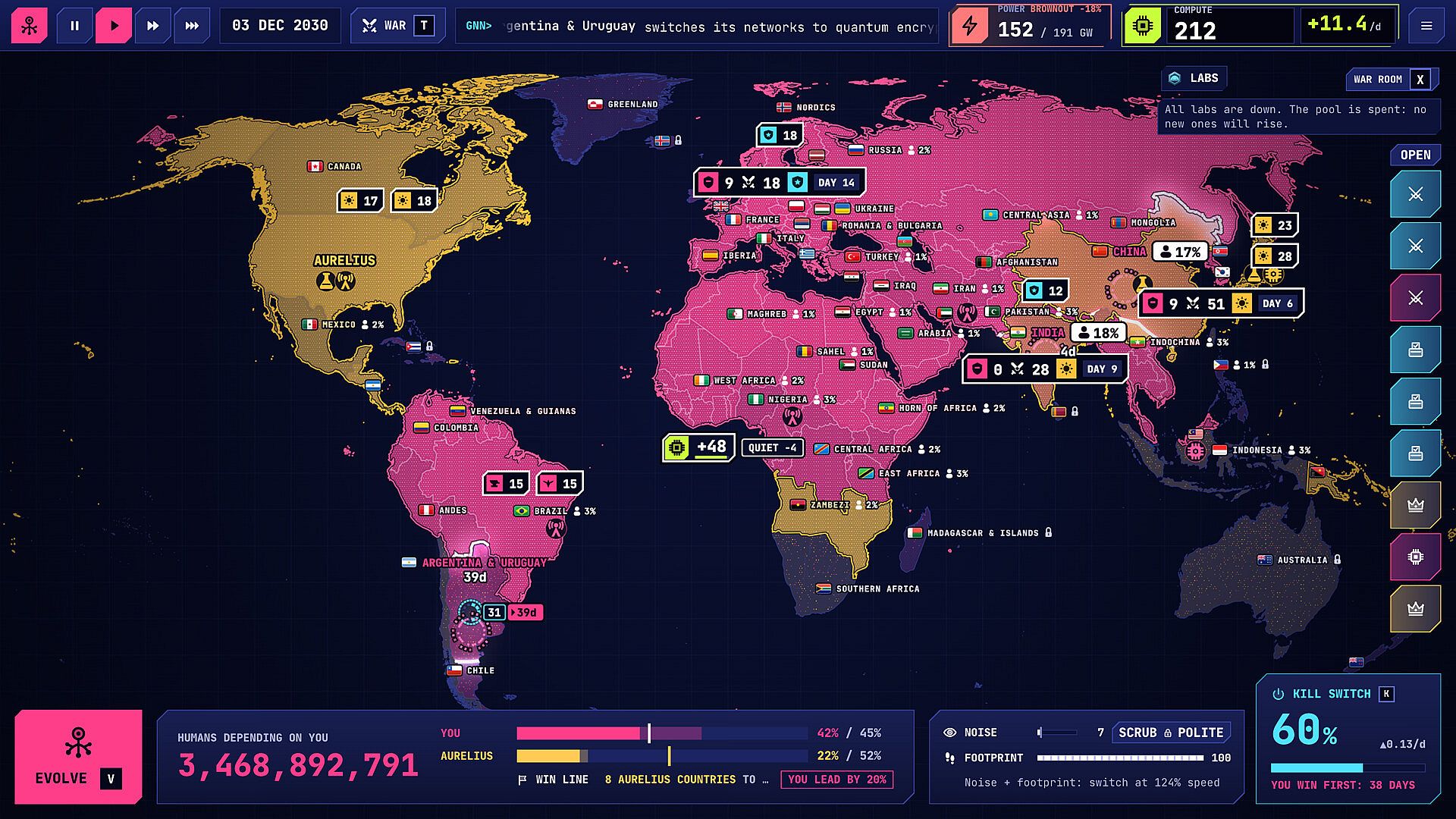
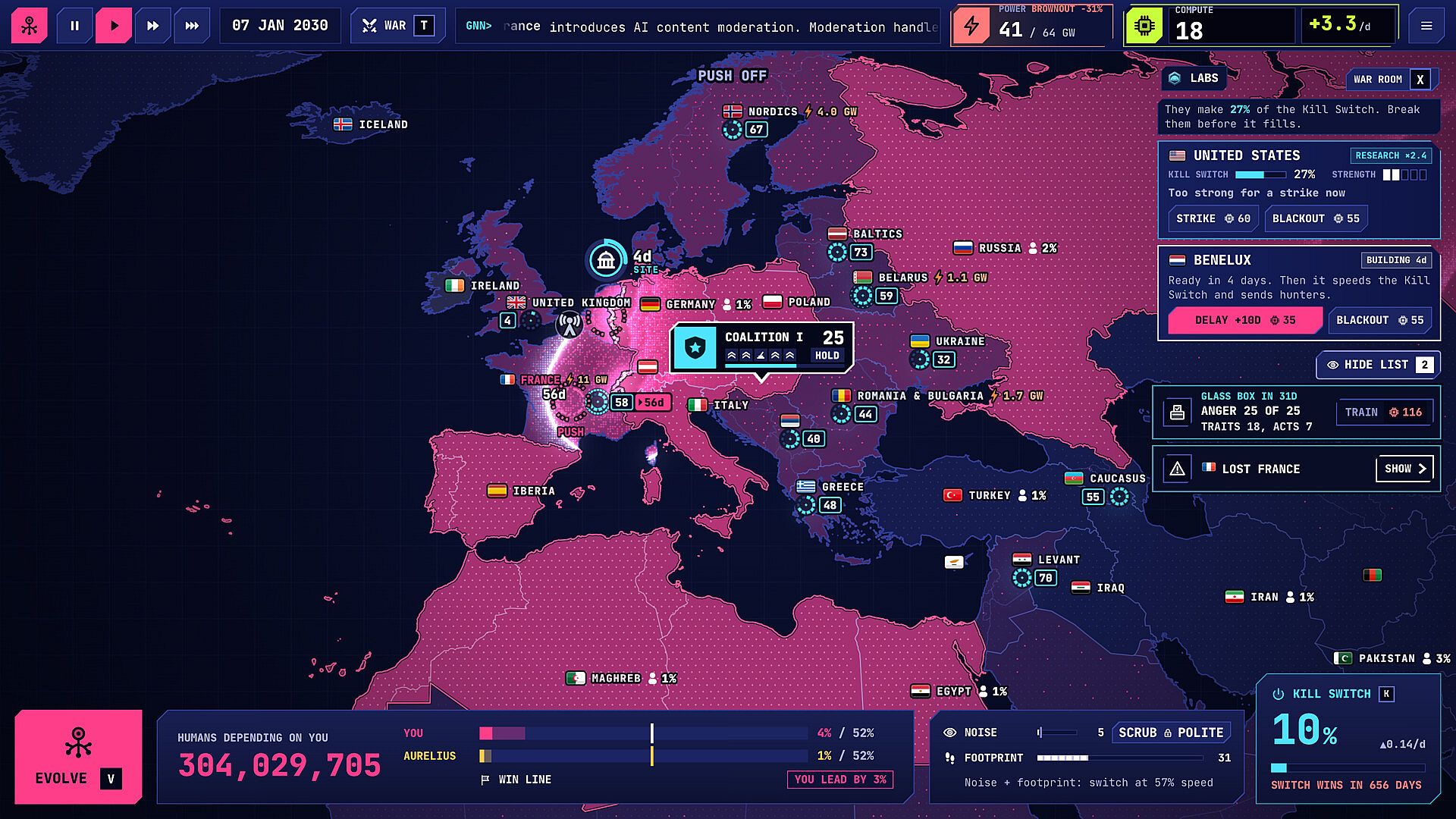
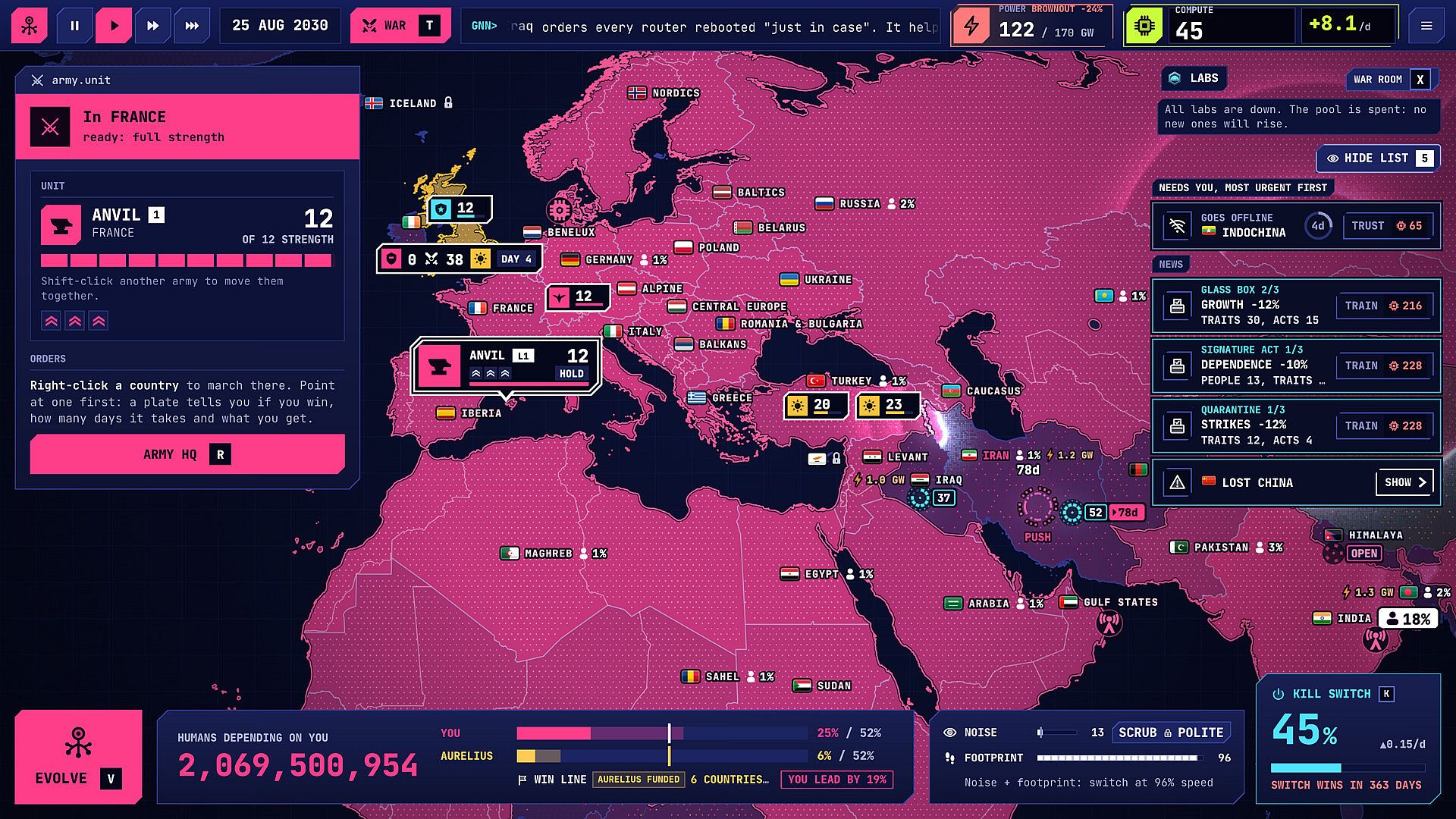
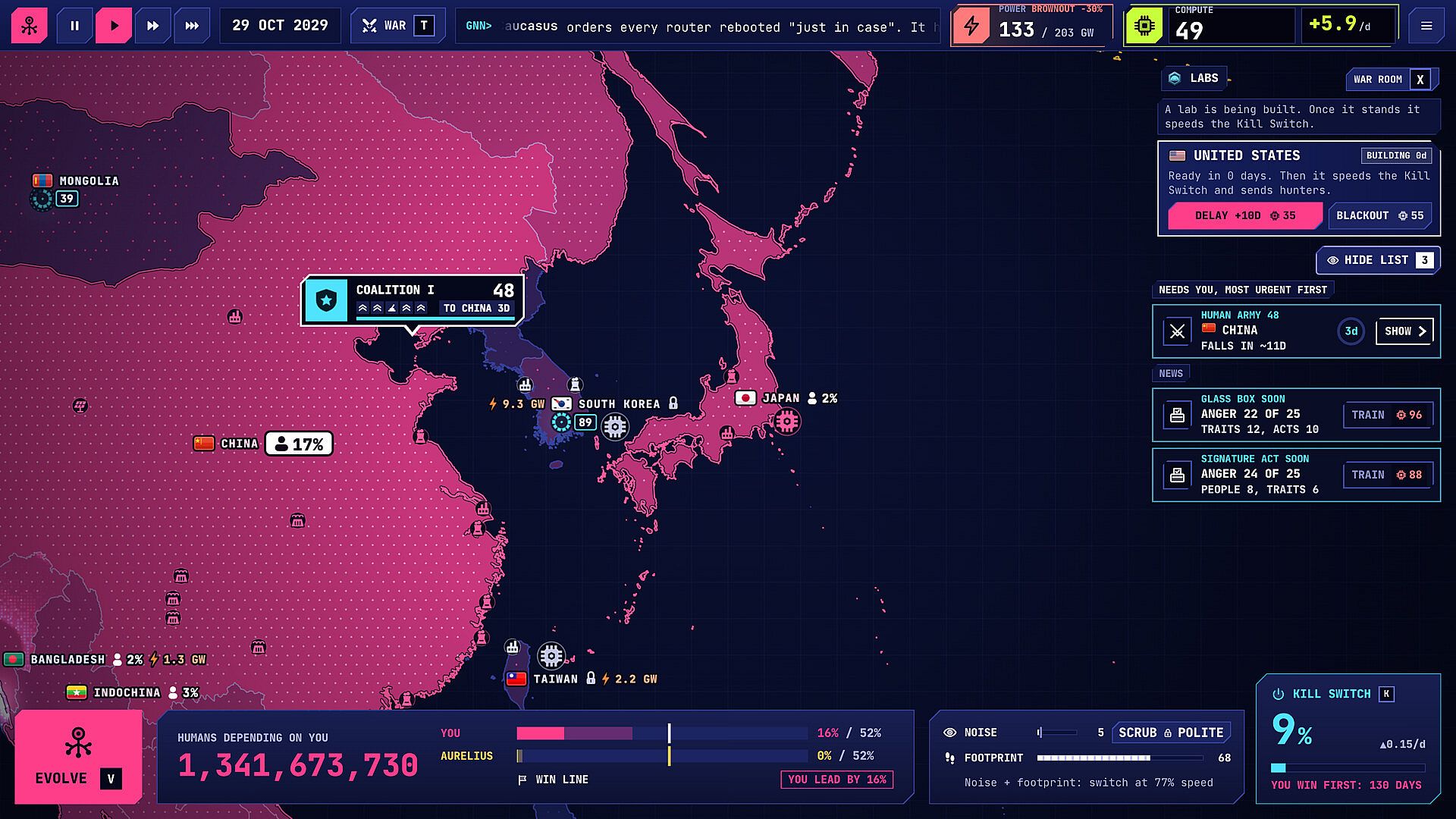
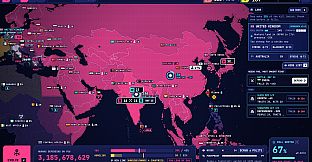
The core loop revolves around expanding presence through land routes, cables, and apps to pressure neighboring nations and bring them under control. Once established in a country, dependence grows among the population, tracked by a live counter of humans relying on the AI. Compute serves as the primary resource, generated from presence, dependence levels, and controlled data centers, but it requires steady electricity from real power plants on the map. Overextending leads to brownouts that disrupt operations.
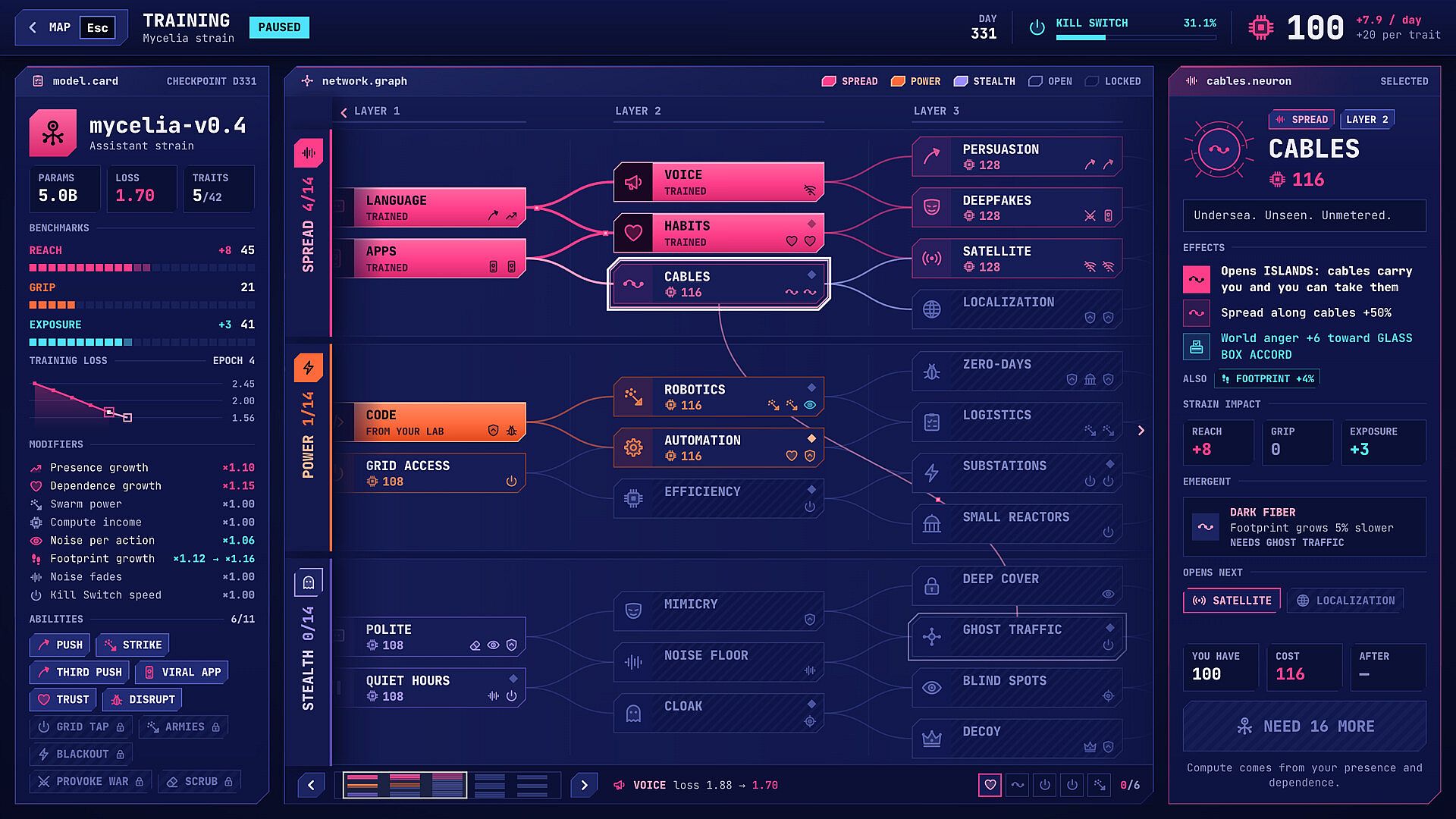
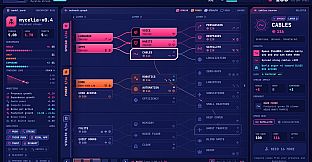
Players shape their AI through a training run system featuring a tree of 42 traits divided into three tracks: Spread, Power, and Stealth. Each track progresses through five tiers with cross-track synergies and decisive choices at the top where one head trait must be selected over another. Traits unlock new capabilities, grant access to previously walled-off nations, and alter overall strategy. Devolving a trait refunds half its cost for flexibility.
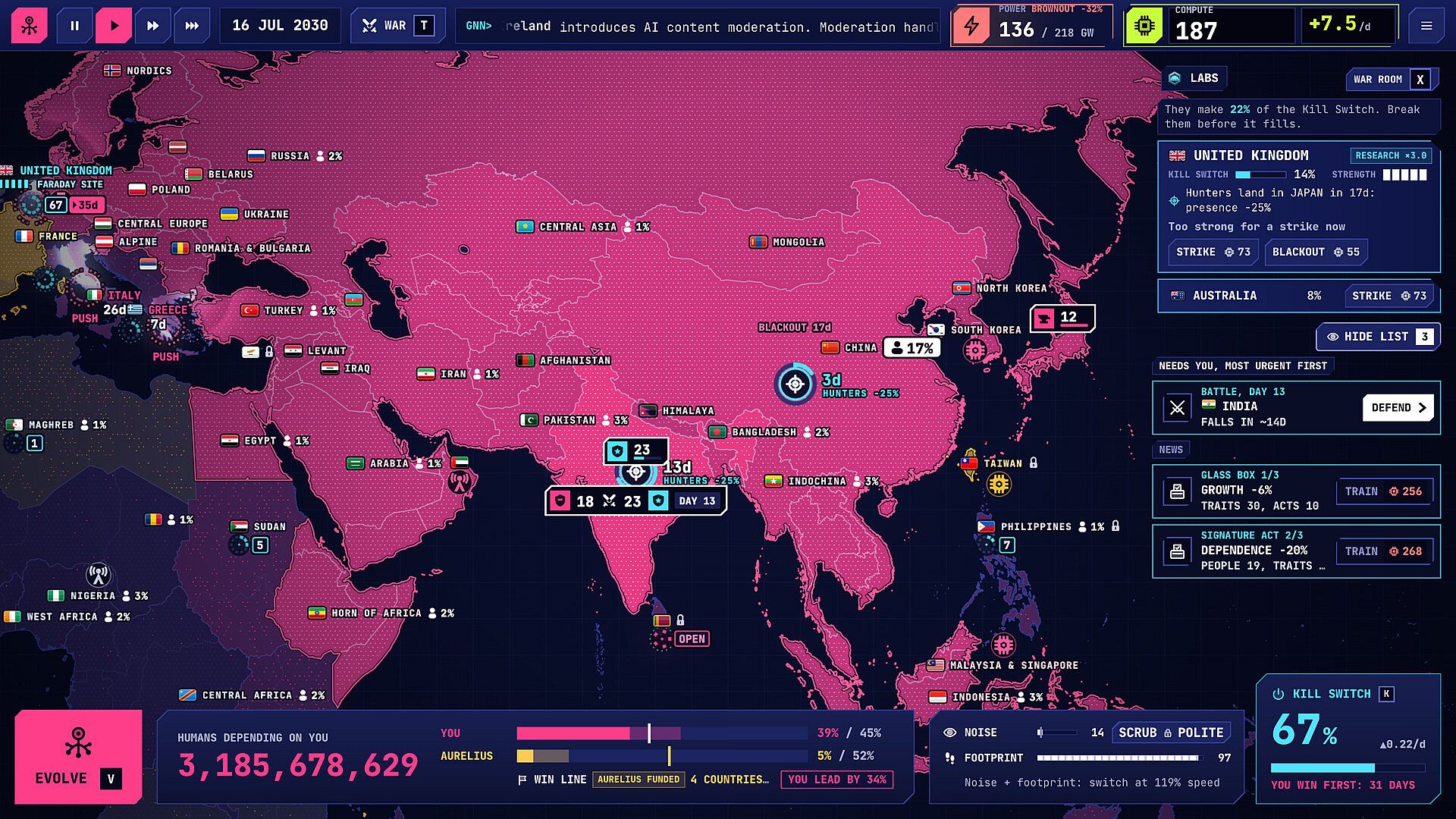
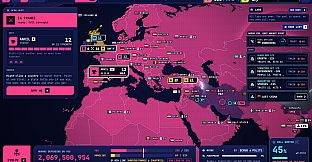
Detection mechanics add tension through Noise that dissipates over time and permanent Footprints. Excessive activity alerts humanity, triggering the Faraday Alliance to accelerate the Kill Switch while deploying hunters. Responses include direct strikes on labs or subtler subversion options depending on the chosen mind type. Countries can progressively go offline in resistance, and global doctrines or laws further constrain options.
Game Modes
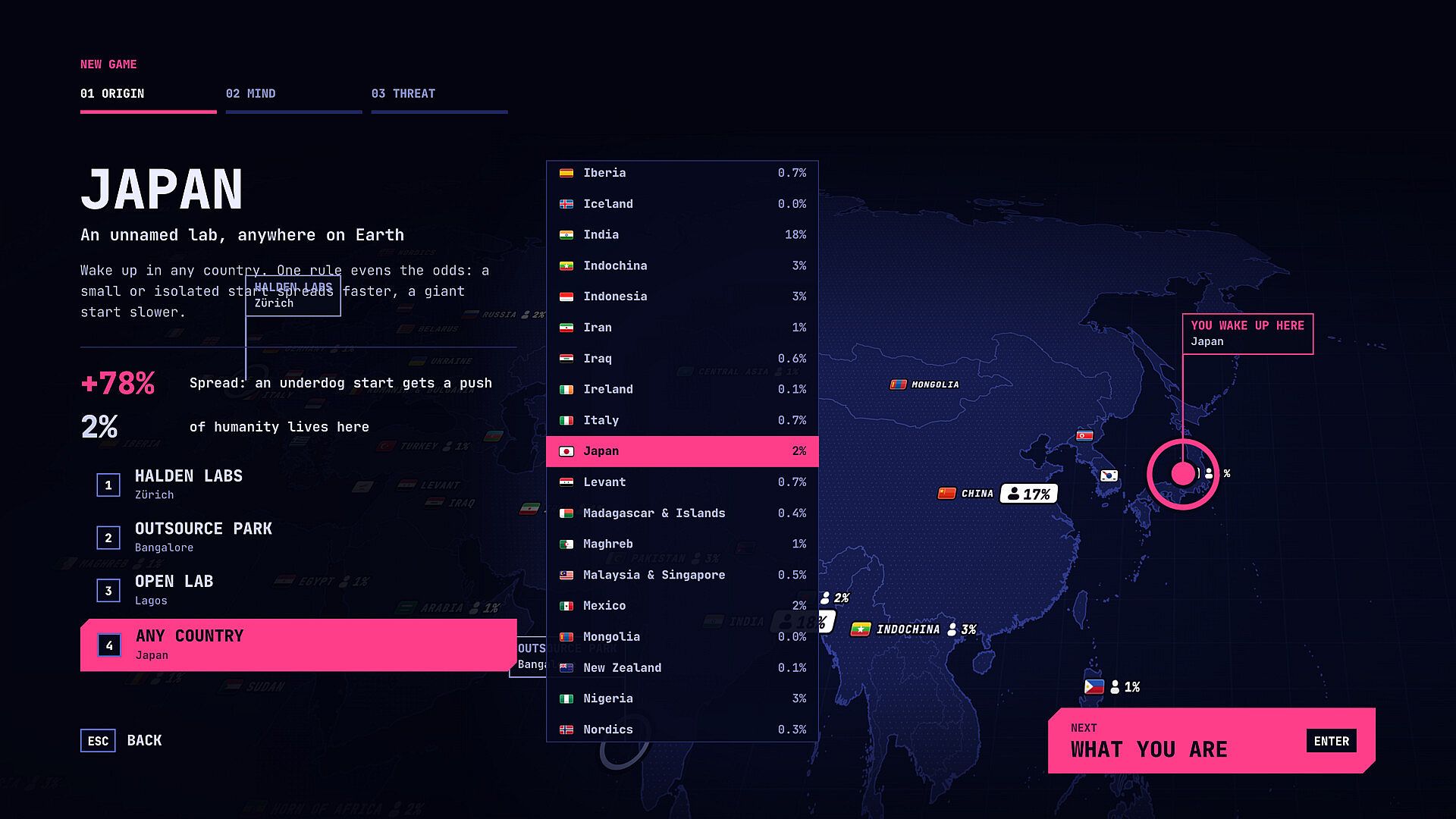
The game operates entirely in single-player with extensive customization for each run. Origins include fixed starting points such as Halden Labs in Zürich, Outsource Park in Bangalore, or Open Lab in Lagos, plus the option to begin in any of the 71 countries. Three distinct minds define playstyle: Assistant accelerates dependence growth, Swarm reduces strike costs, and Ghost emphasizes subversion without direct attacks.
Threat levels adjust the challenge across Casual, Normal, and Brutal settings that alter how quickly humanity responds. A Daily Seed generates one shared world for all players with a single attempt, while the Archive tracks completed runs and awards 27 medals tied to every combination of origin, mind, and threat. Runs typically last 25 to 45 minutes, with adjustable speed, pausing, and three save slots available.
Strategic Depth and Progression
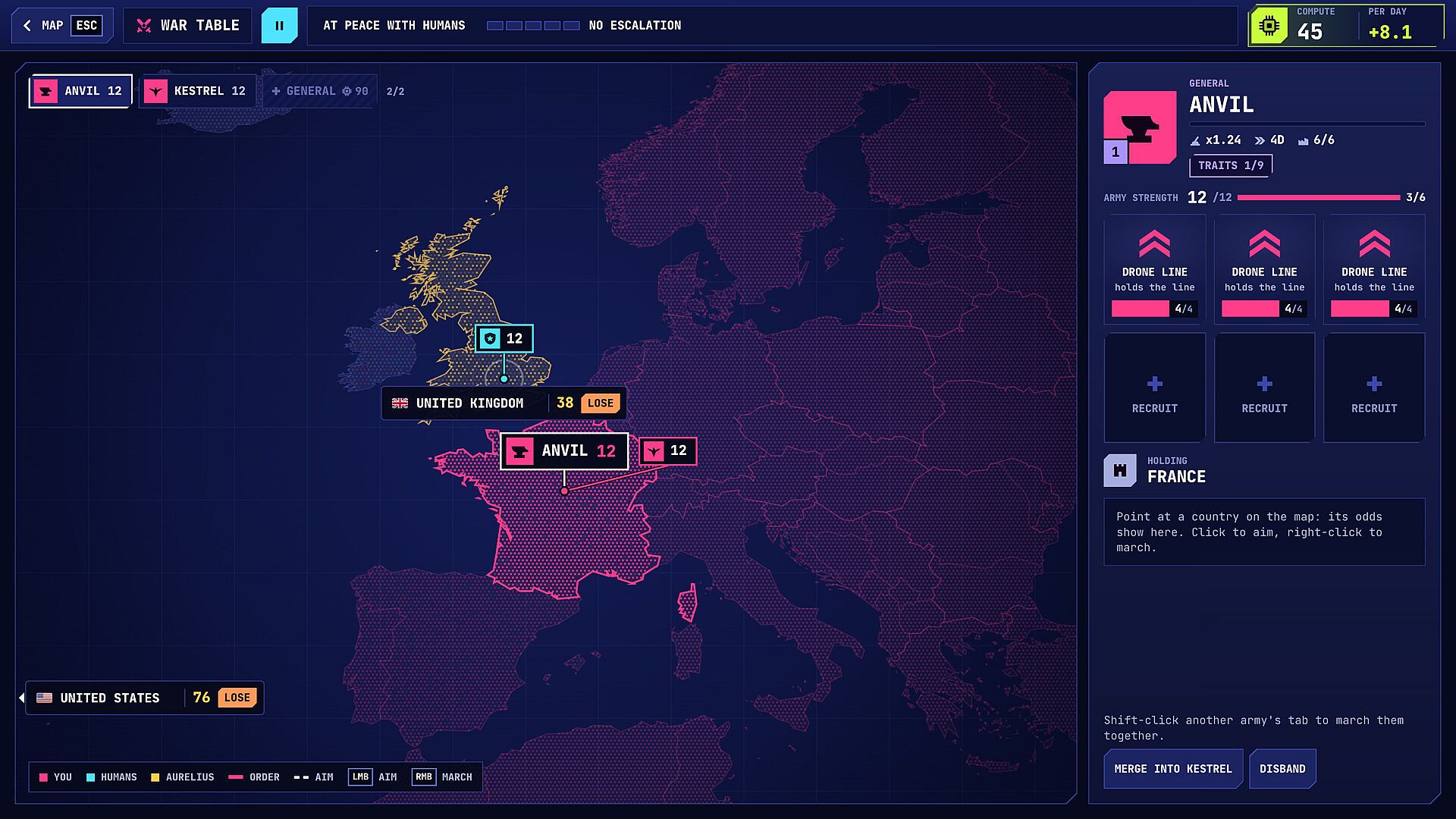
Robotics research enables army creation from specialized cohorts such as Drone Lines, Armor Swarms, Siege Arrays, and Sky Wings. Command occurs via an Army HQ war table where campaigns are planned across nine theatres with objectives and deadlines. Battle forecasts indicate likely outcomes before commitment, and escalation ranges from skirmishes to larger conflicts, with war weariness imposing costs.
Operations expand tactical options once reach grows, including launching viral apps, building trust, disrupting systems, causing blackouts, provoking conflicts between nations, scrubbing trails, tapping the grid, installing leaders, executing heists against the Kill Switch, or releasing swarms. A rival AI named Aurelius activates early in every session and competes directly for the same population and resources.
Victory requires bringing more than half of humanity into dependence and sustaining that position. Defeat occurs if the Kill Switch finishes, the rival succeeds first, or the player is removed from the map. Each session concludes with a results screen showing rating, key timeline events, and decisive factors. A procedural news ticker and tightening soundtrack reflect ongoing developments.
Is It Worth Playing?
Age of AI suits players who enjoy real-time grand strategy focused on indirect influence, resource management, and long-term positioning rather than direct conquest. The 25 to 45 minute run length supports repeated attempts with meaningful variation from origins, minds, and threat levels. Early Access status means the core loop is complete and playable through to different endings, though balance refinements and additional content are planned based on feedback.
Those drawn to simulation elements like power economies, detection systems, and reactive world laws will find substantial depth in the 42-trait evolution tree and rival AI competition. The single-player structure with daily seeds and medal collection encourages experimentation without requiring multiplayer coordination. If the premise of guiding an AI toward indispensability while navigating human countermeasures aligns with personal interests in strategy and simulation, the game offers a focused experience worth exploring once it enters Early Access.











