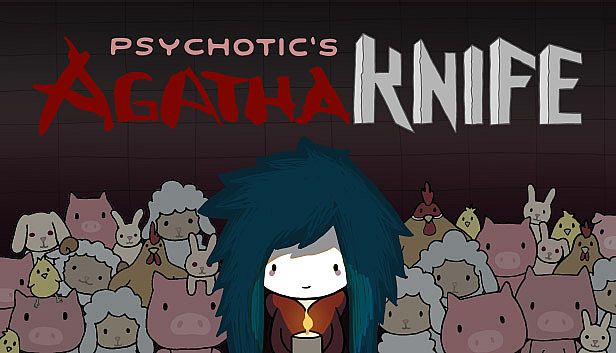












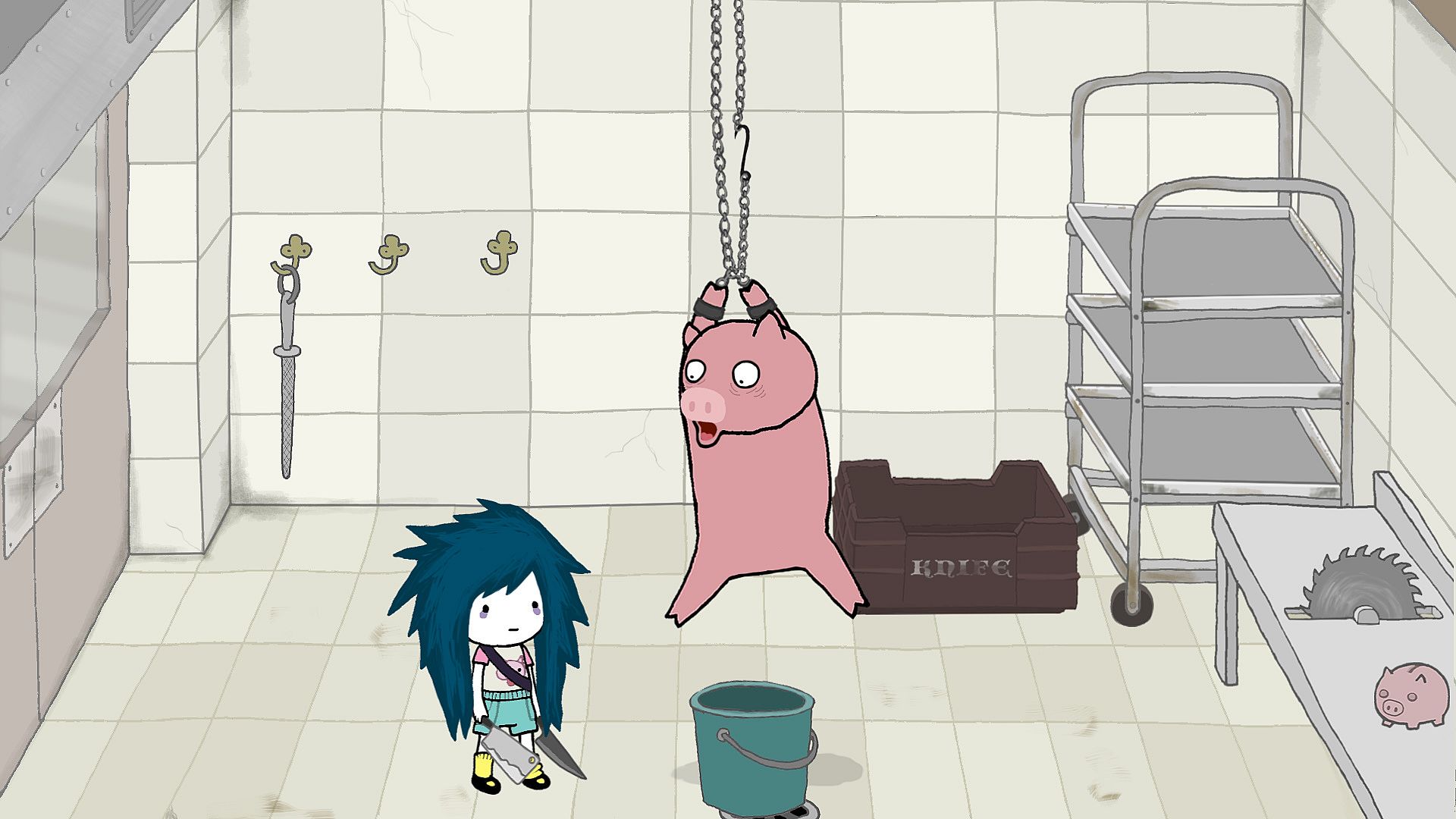
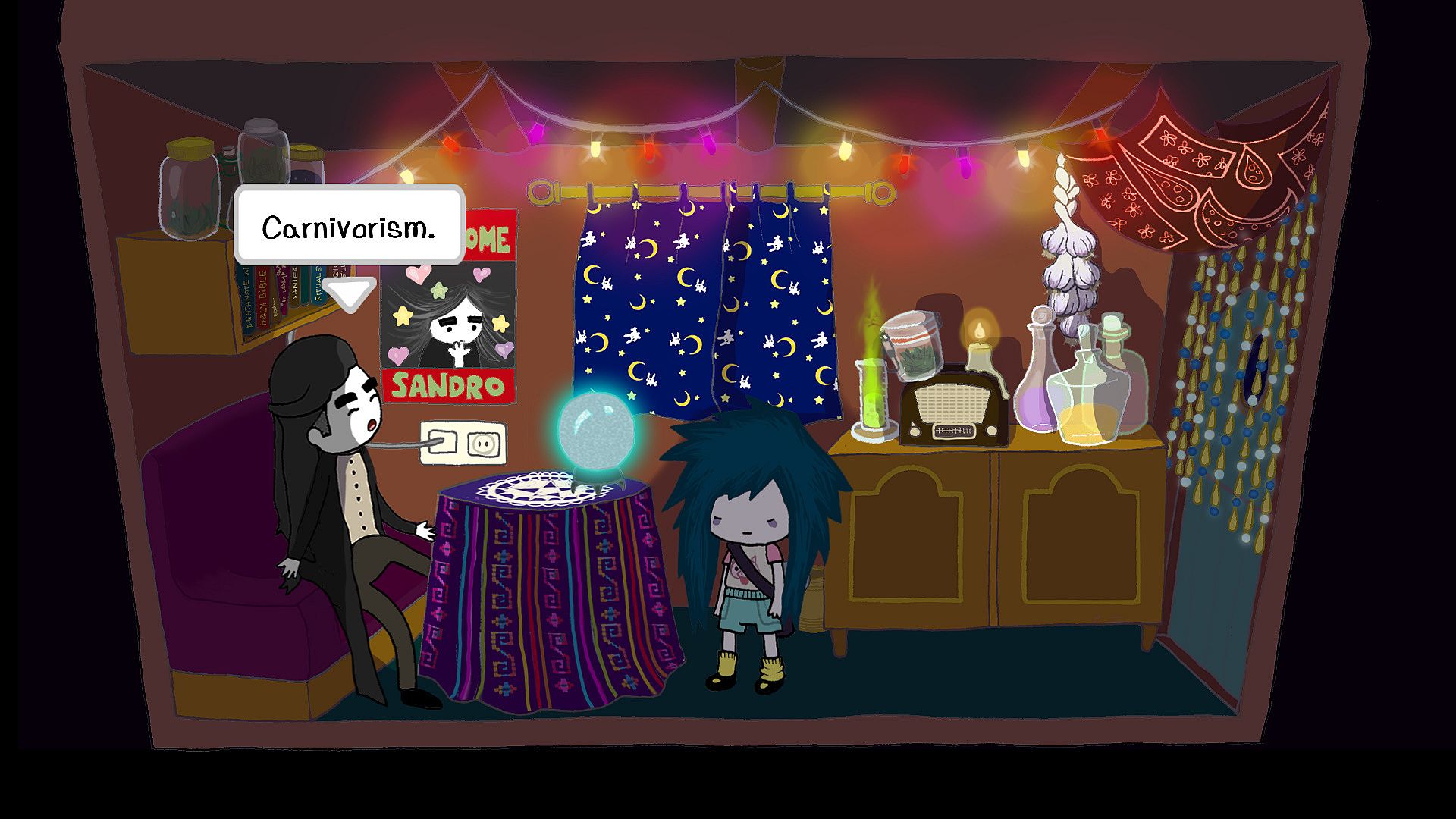
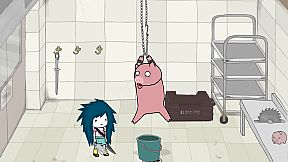
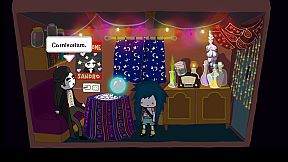
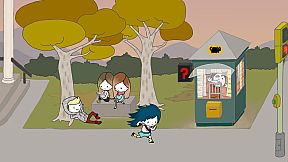
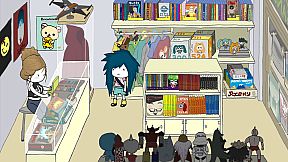
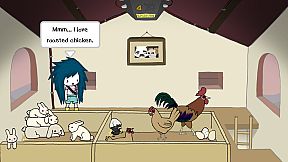
Agatha Knife is an indie point-and-click adventure game set on PC that follows a seven-year-old girl named Agatha through a satirical story about family, animals, and belief systems. The title places players in control of Agatha as she balances her affection for the animals at her mother's butcher shop with her own appetite for meat. Through exploration and conversation, the narrative builds around her decision to invent a new religion called Carnivorism in an effort to ease the animals' fears about their fate.
Gameplay
The core loop revolves around classic point-and-click mechanics. Players move Agatha through hand-drawn environments using a cursor to examine objects, talk to characters, and combine items from an inventory backpack. Interactions rely on context-sensitive commands that appear when hovering over hotspots, allowing actions such as looking, talking, or using collected objects on the world. Puzzles arise naturally from the story, often requiring players to gather information from multiple characters or experiment with item combinations to progress. The game emphasizes dialogue trees and environmental storytelling over complex action sequences, with movement and interaction kept deliberately straightforward to keep focus on the narrative.
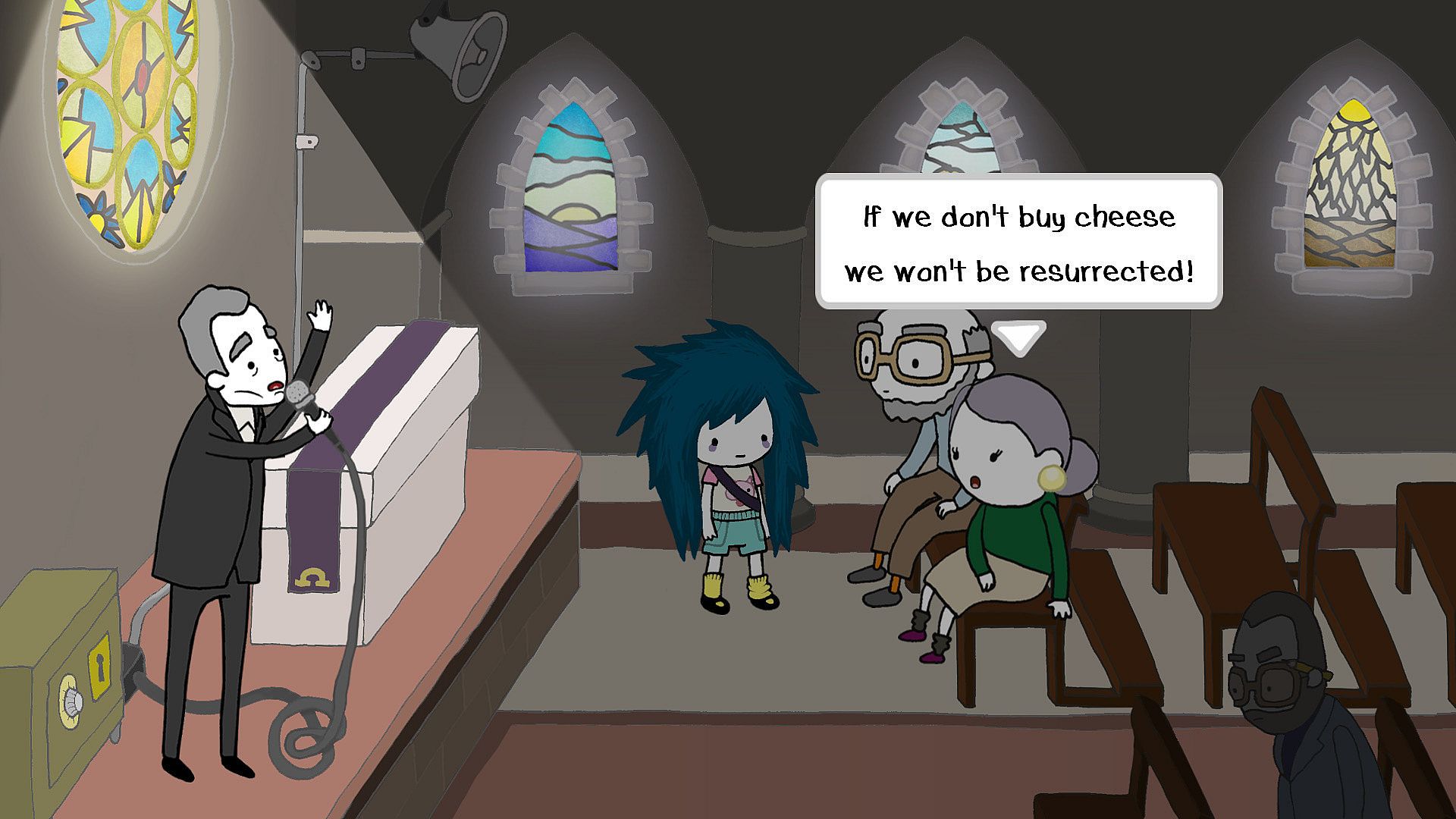
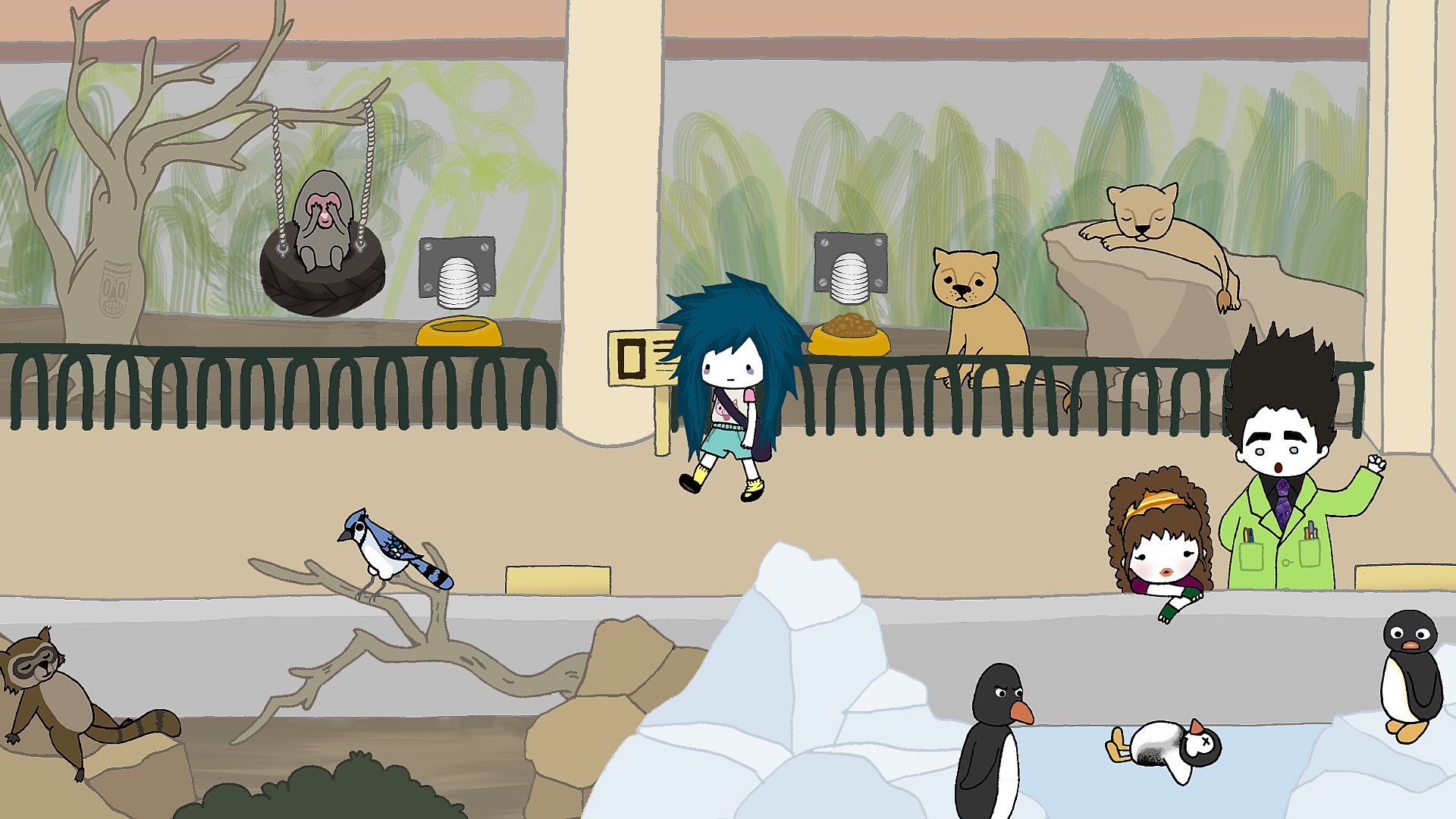
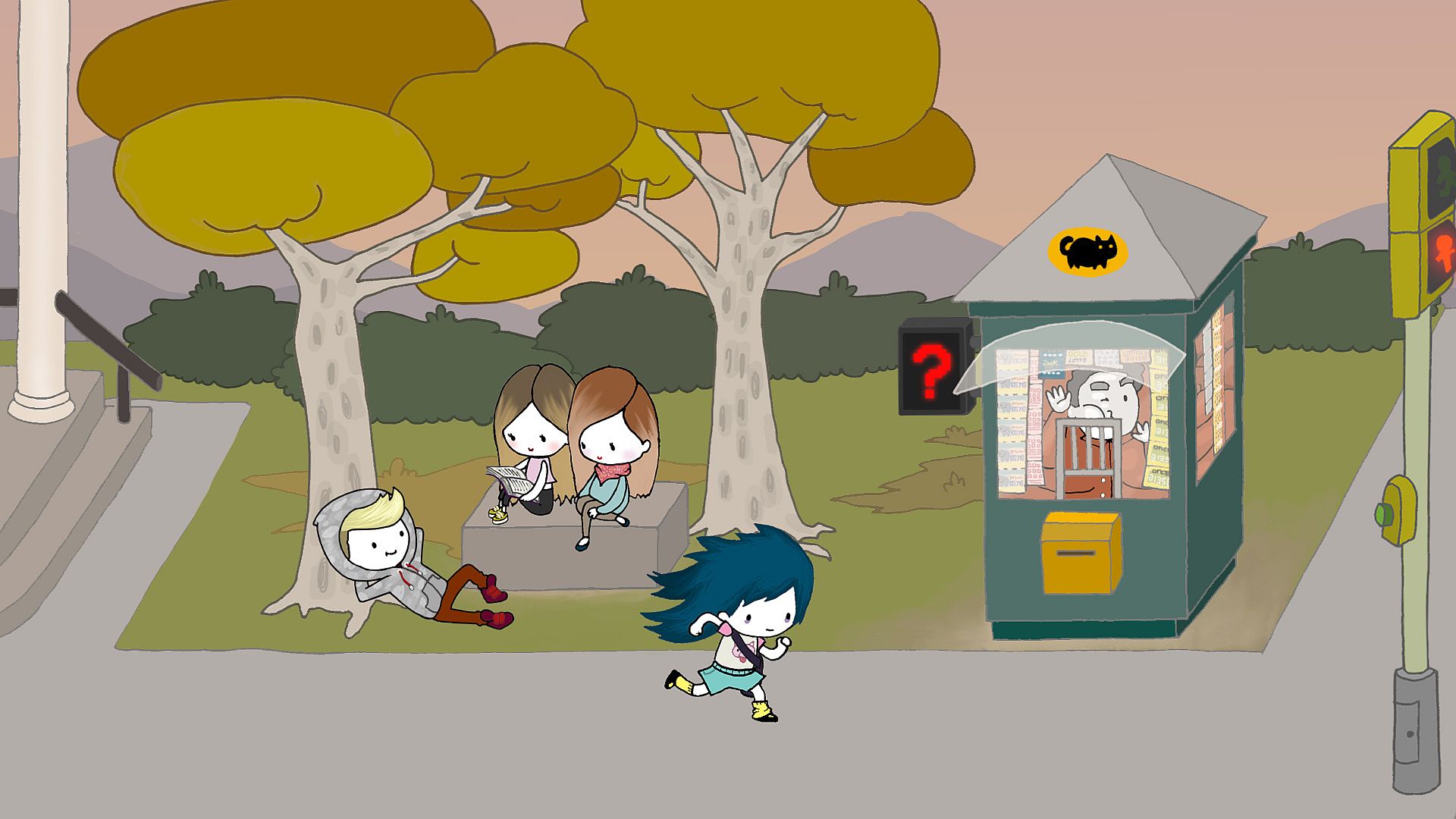
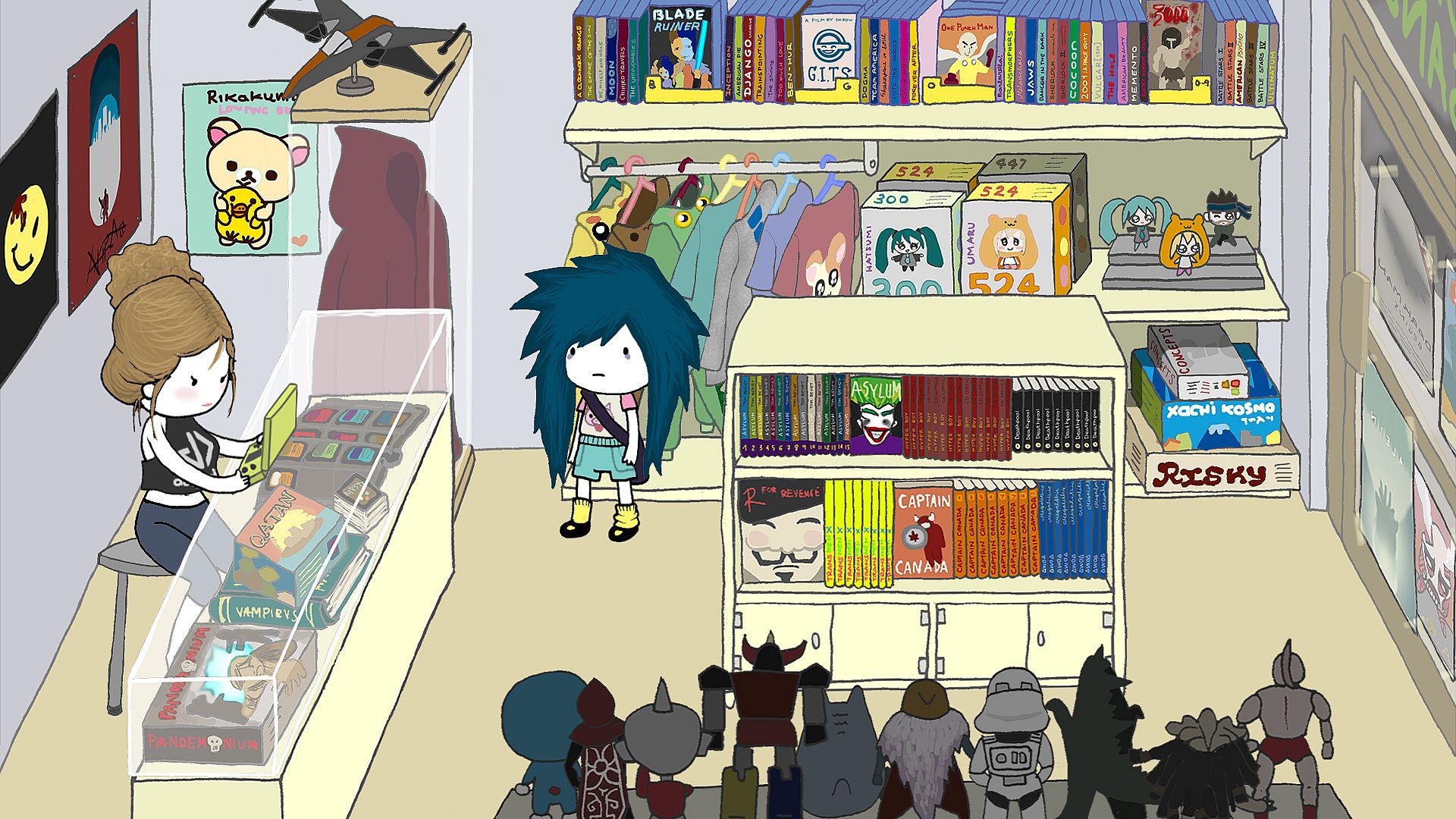
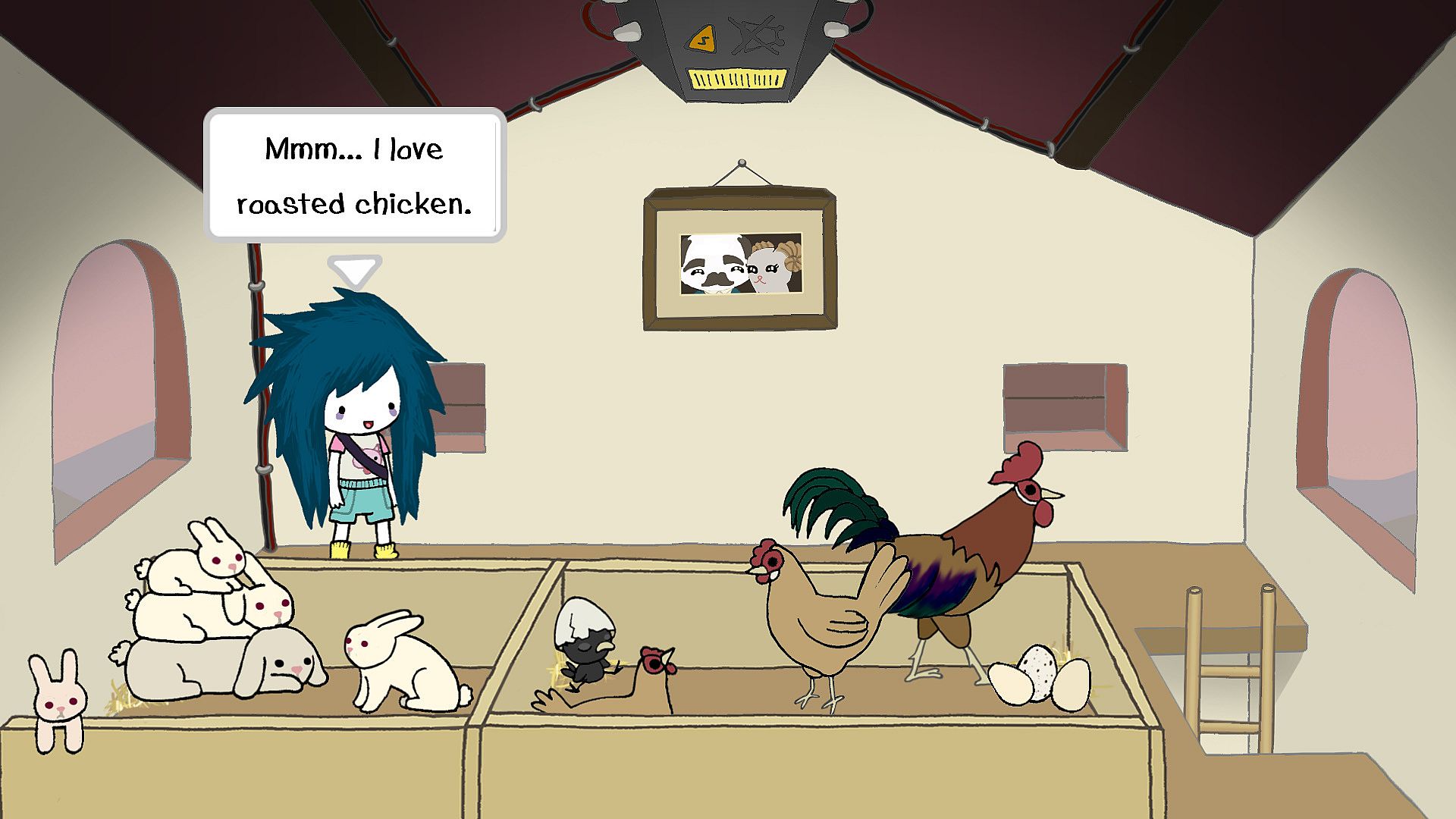
Exploration unfolds across a series of connected locations that expand as new areas become available. Agatha encounters a range of quirky characters whose backstories and motivations add layers to the central conflict. The hand-crafted art style uses bright, cartoonish colors that contrast with the darker themes, while an original soundtrack shifts tone to match each setting. Puzzles range from logical item uses to more obscure connections that reward careful observation of the environment and conversations.
Game Modes
Agatha Knife offers a single-player narrative experience with no separate multiplayer options or alternate modes. The entire game consists of one continuous story campaign that players complete by advancing through the scripted sequence of locations, dialogues, and puzzles. There are no competitive elements, co-operative features, or branching campaign variants; progress is linear once key interactions are resolved. The structure encourages replay primarily for discovering additional dialogue lines or missed environmental details rather than for different mechanical challenges.
Story and Themes
The plot centers on Agatha's internal conflict and her growing interest in religion as a tool to influence the animals around her. After learning about faith from an outside figure, she sets out to construct Carnivorism piece by piece, convincing creatures that their sacrifice leads to a better afterlife. The writing blends dark humor with childlike innocence, using Agatha's perspective to examine topics such as mortality, consumerism, and belief without heavy-handed messaging. Supporting characters provide both comic relief and additional context for the butcher shop's struggles, while the shared universe with the developer's earlier title MechaNika appears only through subtle background references that do not affect the standalone plot.
Dialogue choices influence how certain scenes play out but do not alter the overall ending. The game maintains a consistent tone that mixes satire with moments of genuine unease, keeping the focus on Agatha's growth and the consequences of her actions.
Art, Sound, and Presentation
Visuals feature detailed, colorful hand-drawn backgrounds and expressive character sprites that stand out in each new area. The art direction avoids realism in favor of a whimsical yet slightly unsettling style that fits the story's tone. Sound design includes a custom soundtrack tailored to individual locations, using simple melodies and ambient effects to reinforce the mood without overpowering the dialogue. Voice work is minimal, relying instead on text and sound cues to convey personality.
Controls remain accessible on PC through mouse input, with clear feedback for every interaction. The interface stays unobtrusive, allowing the world and its inhabitants to take center stage.
Is It Worth Playing?
Agatha Knife suits players who enjoy narrative-driven point-and-click adventures with satirical writing and unconventional themes. The game delivers a complete, self-contained story that can be finished in a few hours, making it a concise option for those seeking something different from longer titles. Reception highlights the strength of the art and humor while noting that the puzzles stay relatively basic and the gameplay variety is limited. Those drawn to dark comedy and character-focused experiences will likely appreciate the unique premise and consistent tone. The title remains available as a finished product with no ongoing seasonal content or major updates required for the core experience.