





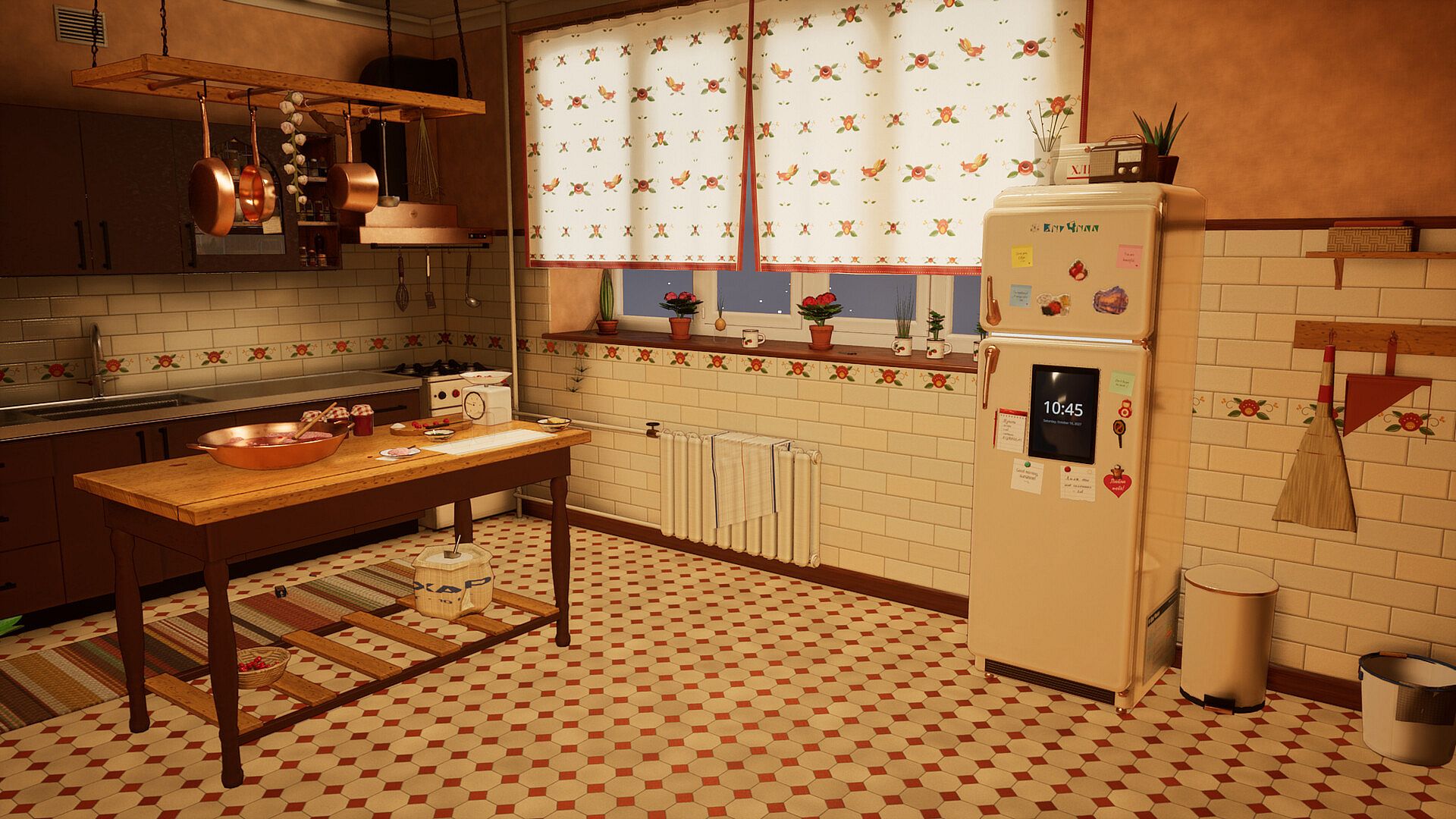
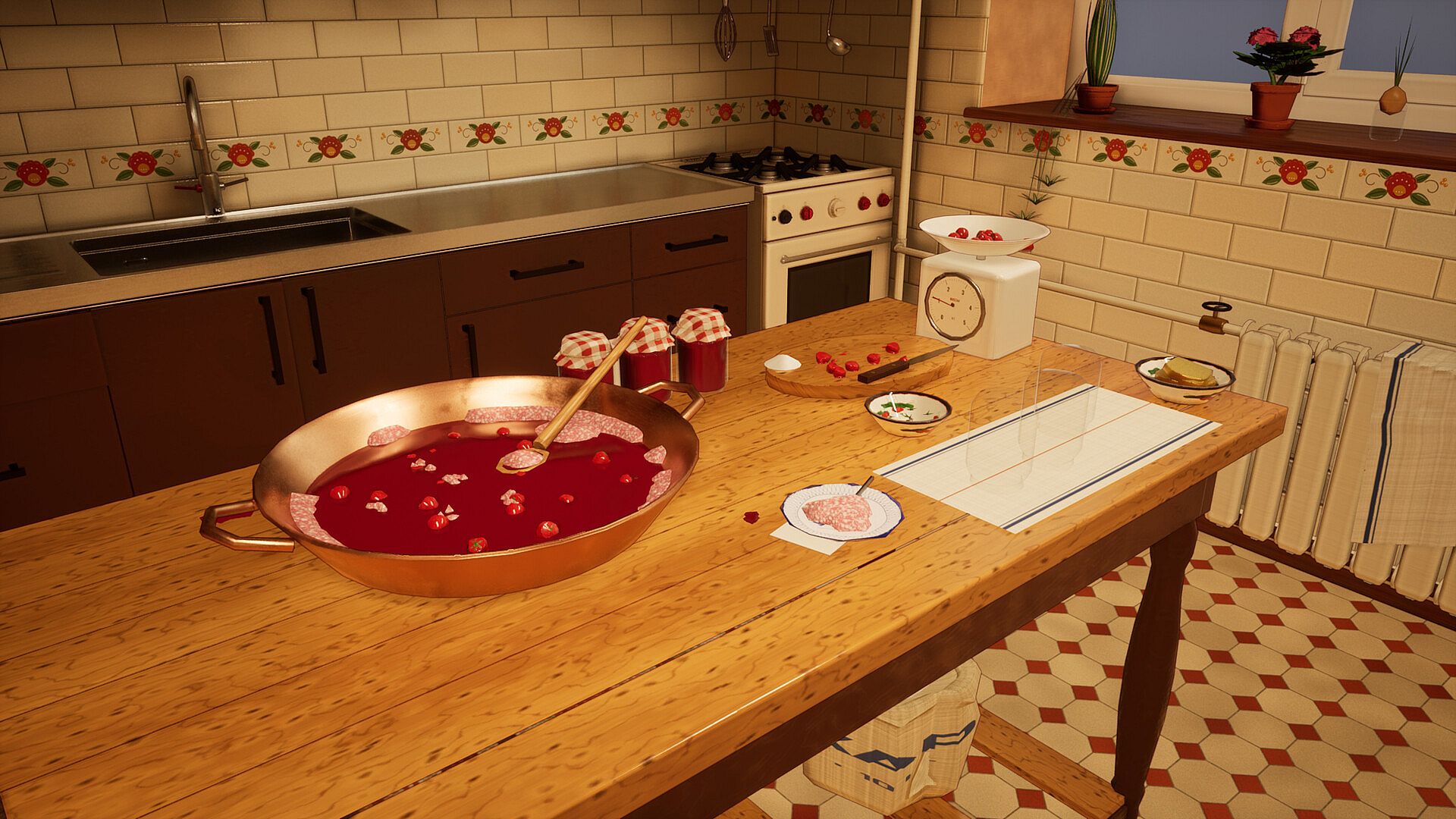
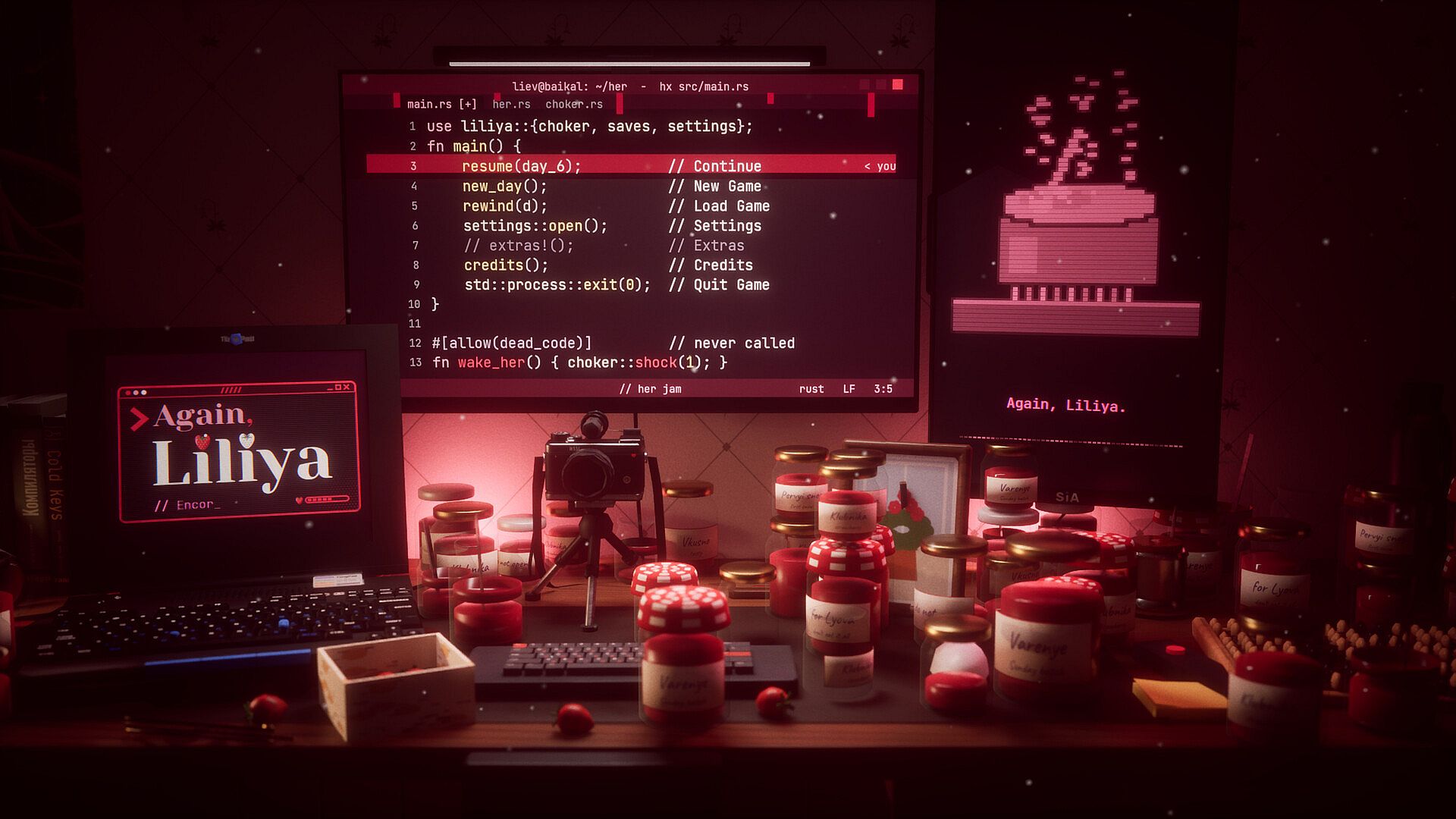



Again, Liliya is a first-person psychological mystery adventure game set in a modest flat in Novosibirsk. The story unfolds in reverse, beginning on a Saturday in October 2027 when the protagonist's wife Liliya prepares strawberry jam, then shifting earlier with each new morning. Players experience daily routines that gradually reveal layers of a relationship through changing details rather than direct exposition.
Gameplay
The core loop centers on a single apartment environment where time moves backward day by day. Each morning the tear-off calendar advances in the opposite direction, and Liliya appears as a slightly different person. Routine tasks include writing code at a corner desk, assisting with jam preparation, sharing evening television programs, and examining notes, jar labels, and letters scattered throughout the home. These elements are presented in Russian but rendered readable in English for the player.
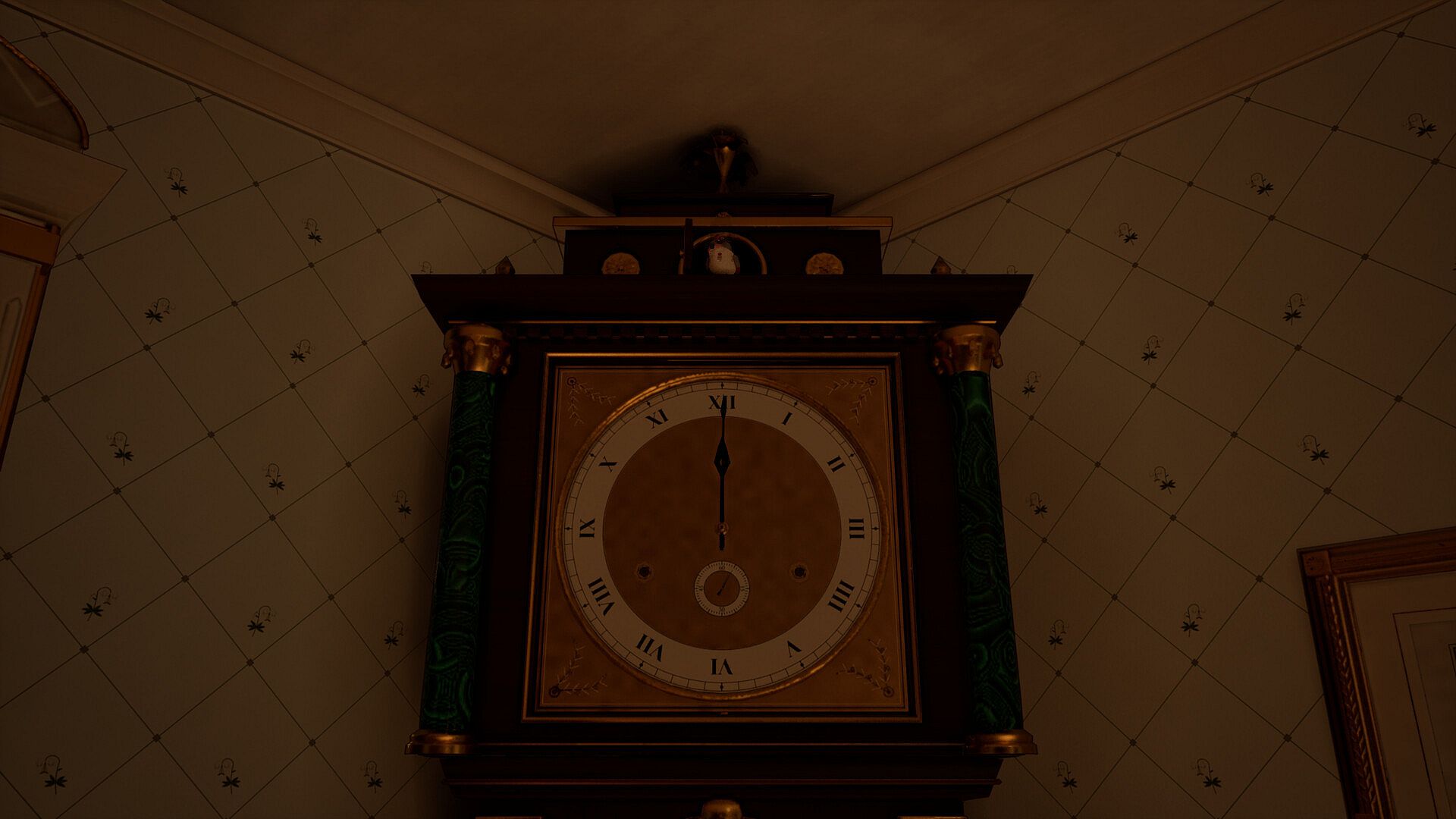
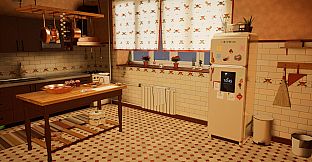
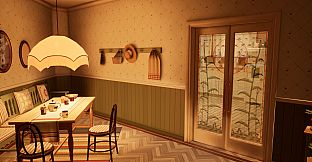
Exploration rewards close attention to small environmental details such as Gzhel tiles, a tiled stove, a cuckoo clock figure that moves at midnight, and a parrot with occasional commentary. Choices arise in how closely the player follows Liliya's lead during shared activities or wanders independently to observe her actions alone. Some evenings introduce tension that encourages the use of a torch for navigation through darker moments.
The backwards structure means players witness consequences before causes, building understanding through accumulated inconsistencies in the household objects and conversations. Work on code provides a consistent anchor amid shifting domestic scenes, sometimes serving as the clearest point of stability in a given day.
Game Modes
Again, Liliya offers a single-player narrative experience with no separate multiplayer or competitive modes. The entire game takes place within the one flat across a sequence of reversed days, focusing on personal discovery rather than external challenges or branching campaigns. Progression follows the fixed calendar structure, with replay value tied to noticing additional details on subsequent passes through the same spaces.
Story and Setting
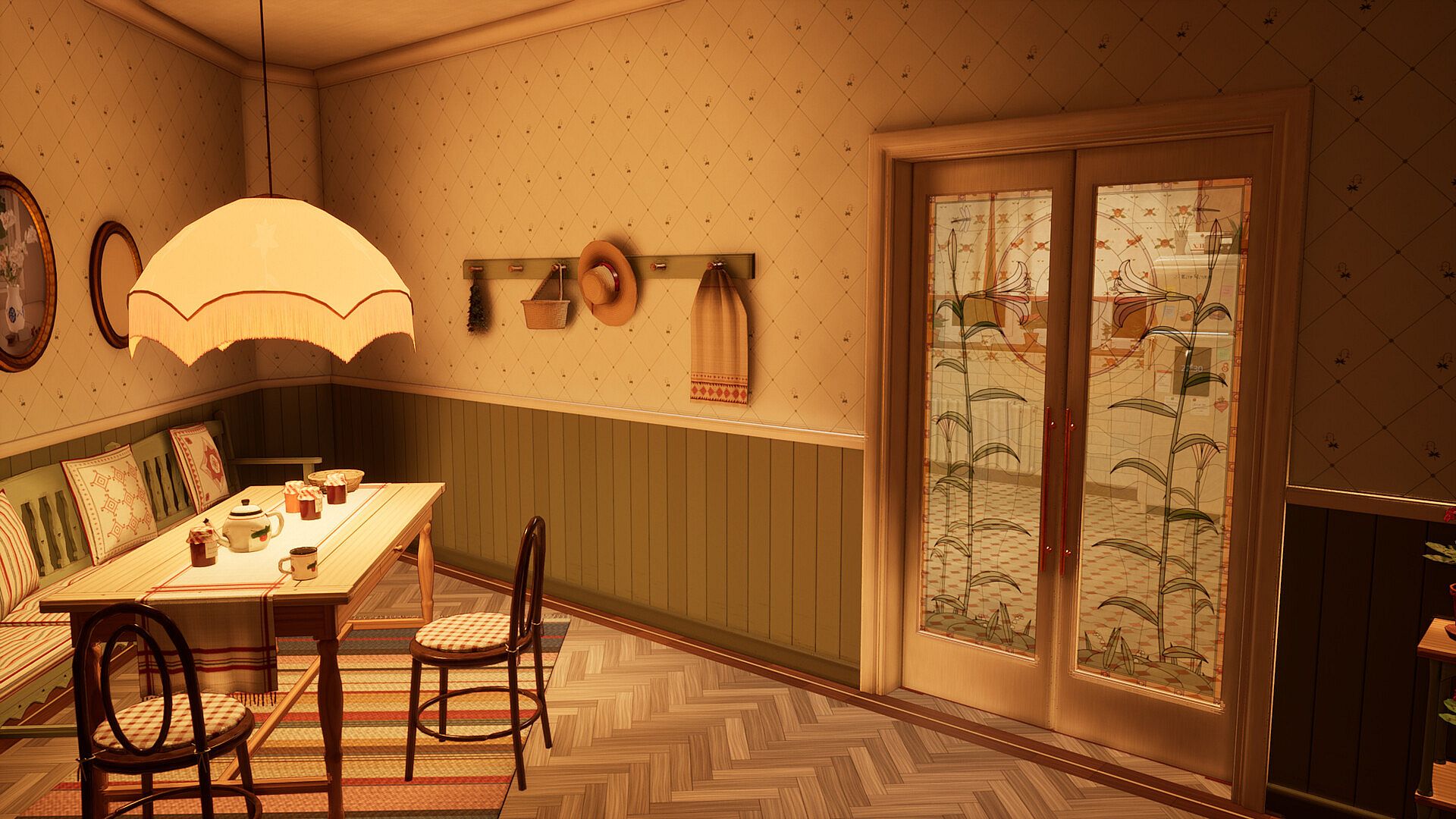
The narrative stays confined to the intimate space of a Russian apartment, using everyday objects and routines to convey emotional undercurrents. Notes on the fridge and scattered documents accumulate meaning as days recede, while the wife's evolving behavior each morning signals deeper shifts in the relationship. Atmospheric touches like the midnight cuckoo and the parrot add texture without expanding the physical scope beyond the home.
The setting draws from specific cultural elements such as traditional tilework and household items common in the region, grounding the mystery in a believable domestic environment. Frightening sequences appear selectively, often tied to nighttime exploration rather than constant threat.
Is It Worth Playing?
Again, Liliya targets players who enjoy slow-burn psychological stories told through environmental storytelling and reversed timelines. Its single-player focus and emphasis on observation over action suit those interested in intimate, detail-driven adventures rather than fast-paced challenges or large-scale worlds. The game remains unreleased with a date to be announced, so current information rests on the developer's description of its mechanics and themes. Those drawn to first-person mysteries involving personal relationships and subtle revelations may find the premise compelling once it launches, particularly if they appreciate games that reward careful reading of the environment over direct confrontation.











